

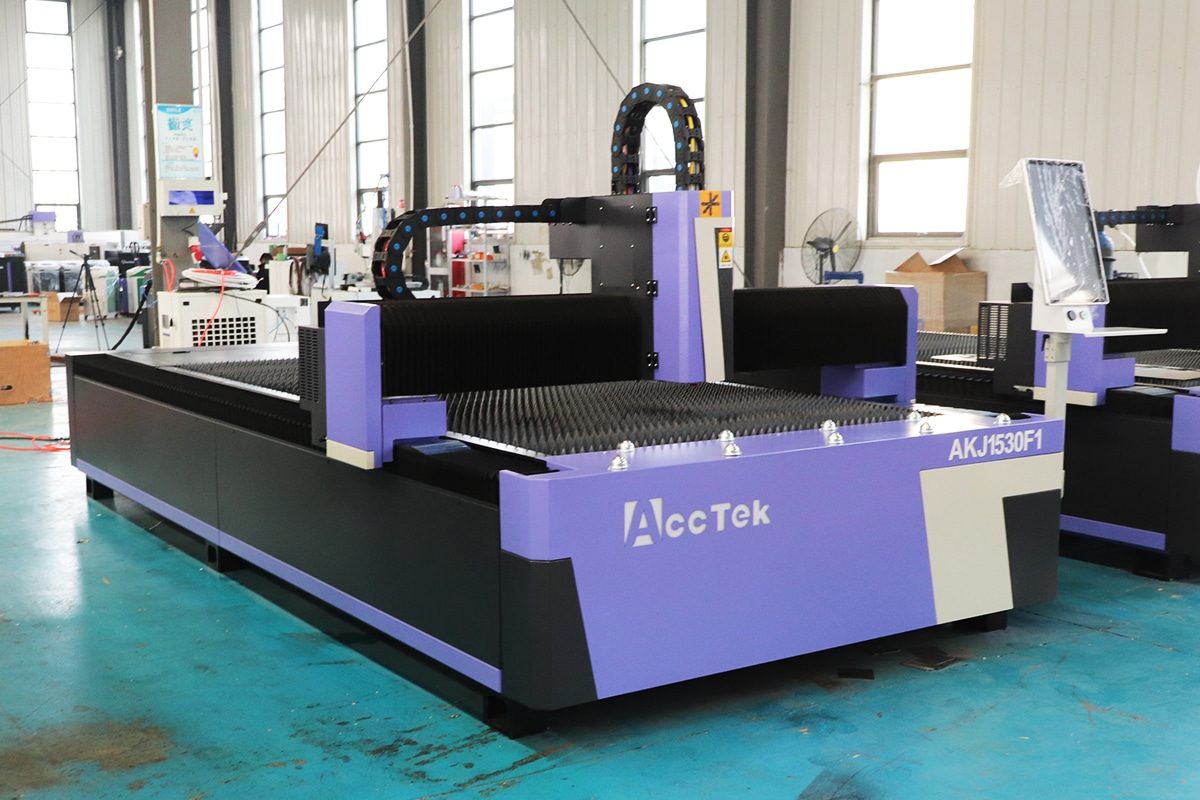
Ventilation Requirements For Operating Laser Cutting Machines
Laser cutting machines play a central role in modern manufacturing, providing precise, efficient processing of metals and suitable nonmetallic materials. However, the intense heat generated during cutting can release smoke, fine particles, fumes, and gases. The nature and quantity of these emissions depend on the material, its coatings or additives, and the processing conditions. Without effective control, contaminants can enter the workplace air and expose operators and nearby personnel to potentially harmful substances. Proper ventilation is therefore a fundamental part of safe laser cutting operations.
Effective ventilation starts with capturing contaminated air at or near the cutting zone, before it spreads into occupied areas. Local exhaust ventilation draws these emissions away from the process and directs them through suitable collection, treatment, and discharge arrangements. Its effectiveness depends on how well the extraction system matches the source of contamination. Selecting a fan alone is insufficient; capture points, ductwork, air cleaning equipment, and discharge locations must function together as a coordinated system.
Ventilation requirements vary between installations, so a single airflow recommendation cannot reliably cover every machine or application. System selection should consider the manufacturer’s specifications, materials being processed, production workload, machine enclosure, and available ventilation infrastructure. Adequate airflow and static pressure are essential, while filtration must suit the contaminants generated. Regular inspections, filter maintenance, and performance checks help preserve effective extraction as operating conditions change. These measures support exposure control and help limit the accumulation of smoke and debris inside the equipment.
This article examines the main ventilation requirements for operating laser cutting machines, including emission sources, extraction methods, airflow considerations, filtration options, installation practices, and ongoing maintenance. Understanding these factors helps businesses plan suitable systems, evaluate existing arrangements, and integrate ventilation into everyday operating procedures, with attention to worker protection, equipment reliability, and applicable workplace and environmental requirements.
Table of Contents
Understanding Laser Cutting Emissions
Laser cutting produces airborne contaminants as concentrated thermal energy interacts with the workpiece. Depending on the material and operating conditions, these emissions can include metal fumes, fine and ultrafine particles, smoke, volatile organic compounds (VOCs), and hazardous gases. Their composition reflects the entire material being processed, including coatings, adhesives, pigments, surface treatments, and protective films. Understanding these emissions is essential for selecting suitable materials and designing effective ventilation. OSHA identifies fumes and vapors generated by laser cutting as hazards that require adequate ventilation to control exposure.
How Laser Cutting Generates Airborne Contaminants
A laser beam concentrates energy into a small area, rapidly heating the workpiece. Depending on the process, the material melts, vaporizes, oxidizes, or undergoes thermal decomposition. Assist gas helps clear material from the cutting zone, carrying some of the resulting contaminants into the surrounding enclosure or extraction system. As hot metal vapor cools, it can condense into extremely small particles that may combine into larger clusters. Research on metal laser cutting has documented emissions with different particle sizes and chemical compositions across materials and operating conditions.
Organic materials, including wood and plastics, release contaminants as their chemical structures break down under heat. This decomposition can generate gases and vapors alongside suspended particles. Some emissions remain airborne after the cutting operation ends, creating potential exposure when an enclosure is opened. A study of acrylic laser cutting identified particle and chemical releases during post-cut handling, demonstrating why extraction and an appropriate clearance period matter beyond the time when the beam is active.
Emission levels depend on the material formulation, laser settings, cutting duration, and effectiveness of containment and extraction. Visible smoke provides only a partial indication of the contaminants present: gases and very small particles can escape visual detection. Ventilation performance therefore needs to be evaluated against the actual process and its expected contaminants.
Emissions From Metal Cutting
Metal cutting primarily creates airborne particles containing metals and metal oxides. The base alloy influences their composition, while surface contamination and coatings can introduce additional substances. An assessment should identify both the metal grade and its surface condition before determining suitable extraction and exposure controls.
Carbon Steel and Stainless Steel
Laser cutting carbon steel can produce iron-rich particles and manganese-containing emissions, depending on the alloy. These contaminants require effective capture even when the material appears clean and uncoated. Research examining laser cutting emissions has identified iron and manganese oxides in particles generated from carbon steel. Stainless steel introduces additional alloying elements, with chromium-containing particles among the emissions identified during cutting.
Stainless steel also requires consideration of nickel and the potential formation of hexavalent chromium, or Cr(VI). The presence and concentration of particular chromium species depend on the process conditions; total chromium content alone does not establish Cr(VI) exposure. OSHA identifies hot work on chromium-containing metals as a potential source of Cr(VI), which can cause cancer and other serious health effects. Material-specific exposure assessment is therefore important when establishing controls for stainless steel cutting.
Aluminum and Other Nonferrous Metals
Laser cutting aluminum can generate aluminum-containing particles, including oxide particles. Other nonferrous materials, such as titanium, copper, and their alloys, produce emissions that depend on their composition and processing conditions. Alloying elements must be considered alongside the principal metal because a familiar material name may conceal constituents that affect exposure risk. Research comparing several metals confirms that laser cutting produces material-dependent particle characteristics.
The collected material can also create hazards within the extraction system. Fine aluminum and magnesium dusts can be combustible under suitable conditions, making collector selection, accumulation control, and maintenance important parts of ventilation planning. The combustibility of the actual collected dust should be assessed rather than assumed from the bulk workpiece alone. OSHA specifically recognizes aluminum and magnesium among metals associated with combustible dust hazards.
Galvanized, Painted, and Coated Metals
Galvanized steel introduces zinc from its protective coating. Heating zinc-containing materials can generate zinc oxide fumes, exposure to which is associated with metal fume fever. This illness can cause fever, chills, muscle aches, and other flu-like symptoms. Brass also warrants attention because its zinc content can contribute to zinc oxide emissions during high-temperature processing.
Painted, plated, and otherwise coated metals require assessment of the surface layer as well as the substrate. Depending on their formulation, coatings may introduce lead, cadmium, chromium compounds, or organic decomposition products. OSHA’s guidance for thermal cutting identifies several coated and alloyed metals as requiring particular exposure controls. Protective films, primers, oils, and residual cleaning products should also be identified before processing. Where a coating is unsuitable, an approved removal method or an alternative manufacturing process should be selected.
Emissions From Nonmetal Cutting
Nonmetal emissions vary widely because materials within the same broad category can have very different formulations. A plastic sheet, textile, or composite may contain additives and layers that substantially change its thermal decomposition products. Material approval should therefore apply to the specific product and machine combination.
Wood, Plywood, and MDF
Laser cutting wood produces smoke, airborne particles, and gaseous decomposition products. Incomplete combustion can generate carbon monoxide, while thermal breakdown releases VOCs. Research involving wood and cardboard has measured both particulate emissions and gaseous contaminants during laser processing, reinforcing the need for effective extraction even when cutting familiar, untreated materials.
Plywood and medium-density fiberboard (MDF) add adhesives and binders to the emission profile. Some wood-based panels contain formaldehyde-based resins, while other products use different binding systems. HSE identifies wood dust, formaldehyde, and resin-related substances as considerations when assessing MDF exposure. Laser processing adds intense local heating, so a board’s normal indoor-emission rating should not be treated as evidence that its cutting emissions are harmless. Supplier information about the board, adhesive, finish, and suitability for laser processing should guide material selection.
Acrylic and Other Approved Plastics
Acrylic, commonly supplied as polymethyl methacrylate (PMMA), is widely processed using compatible CO₂ laser cutting systems. Heating PMMA can release methyl methacrylate vapor and other organic compounds, together with fine and ultrafine particles. Its ability to produce a clean-looking cut does not remove the need to control these emissions. Studies of acrylic laser cutting have identified both particulate and chemical contaminants, including releases after cutting has finished.
Other plastics should be processed only when the exact formulation is approved for the machine and extraction arrangement. Colorants, fillers, flame retardants, adhesives, and surface layers can alter the hazards. A product described as suitable for laser engraving may also require a separate assessment before through-cutting. Manufacturer guidance should establish the permitted application, material thickness, operating conditions, and required emission controls.
Paper, Textiles, Leather, Rubber, and Composites
Paper and cardboard can generate substantial quantities of smoke and very small particles despite their low thickness and familiar appearance. Inks, laminations, coatings, and adhesives introduce additional variables. Research on desktop laser processing found particularly high particle emissions from cardboard under unventilated test conditions, demonstrating that lightweight materials can still place significant demands on extraction.
Textile emissions depend on the fiber type, dyes, finishes, and backing materials. Natural fibers and synthetic polymers have different decomposition profiles, and blends require consideration of every component. Certain nitrogen-containing fibers can generate particularly hazardous gases during thermal breakdown. Lawrence Berkeley National Laboratory identifies hydrogen cyanide and benzene among potential emissions from laser cutting aromatic polyamide fibers.
Leather requires attention to tanning chemicals, pigments, finishes, and any synthetic backing. Artificial leather must be checked for PVC, while leather containing chromium(VI) is identified by laser equipment manufacturer Trotec as unsuitable for processing. Rubber likewise requires formulation-specific approval because elastomers can contain different polymers, fillers, curing agents, and additives. A material’s flexibility or commercial description does not establish its suitability.
Composites combine hazards from the reinforcement, resin, adhesive, and surface layers. Processing can produce resin decomposition products together with airborne fragments or fibers. Common carbon-fiber, epoxy, and phenolic systems are unsuitable for many general-purpose laser cutting machines. These materials require explicit manufacturer approval and a process-specific assessment before any specialized laser application is considered.
Materials That Should Not Be Laser Processed
PVC and PVC-containing products should be excluded from routine laser processing. These can include vinyl sheets, synthetic leather, films, and coated fabrics. Laser heating can release hydrogen chloride, a hazardous gas that also creates corrosion problems. Product names and appearance are insufficient to distinguish PVC-containing materials from suitable alternatives; reliable supplier identification is essential.
PTFE, commonly known as Teflon, and other unapproved fluoropolymers should also be excluded. Their thermal decomposition can produce highly hazardous fluorinated substances, including hydrogen fluoride under relevant conditions. General-purpose extraction equipment should not be assumed capable of making these materials acceptable. Equipment manufacturer guidance identifies both PVC and PTFE as materials that should never enter its laser cutting systems.
Other materials commonly prohibited by machine or facility rules include ABS, certain foams, beryllium oxide, and unapproved resin-based composites. Reasons include toxic decomposition products, fire behavior, and dangerous airborne particles. Some materials, such as thick polycarbonate, also cut poorly and may ignite. The applicable prohibited-material list must reflect the specific machine and process rather than treating every plastic or composite as interchangeable.
Unknown materials, unidentified coatings, and mixed scrap should remain outside the approved workflow until their composition and processing suitability are established. Review the safety data sheet, particularly information on hazardous decomposition, alongside supplier documentation and machine instructions. A small test cut cannot establish safety because hazardous emissions may be invisible or difficult to detect. Stanford’s guidance recommends developing machine-specific lists of permitted and prohibited materials.
Understanding laser cutting emissions starts with identifying the complete workpiece composition and the conditions under which it will be processed. Metals can produce fine particles containing alloying elements, while organic materials can release smoke, VOCs, and hazardous gases. Coatings, adhesives, and additives may introduce hazards beyond those associated with the base material. These differences explain why ventilation must be matched to the actual application. Reliable material approval, effective capture at the cutting zone, and verification of exposure control provide the foundation for managing laser-generated airborne contaminants.
Why Adequate Ventilation Is Essential
Adequate ventilation is a fundamental requirement for operating laser cutting machines safely and consistently. During cutting, concentrated heat generates airborne particles, fumes, and gaseous contaminants that must be controlled before they spread through the workplace. Effective ventilation protects workers, limits contamination inside the machine, and supports reliable production. Its performance depends on capturing emissions at the cutting zone, maintaining suitable airflow, and managing the extracted air appropriately. OSHA identifies ventilation as an essential control for hazardous fumes and vapors produced during laser cutting and other laser–material interactions.
Protecting Worker Health
The primary purpose of laser cutting ventilation is to reduce exposure to airborne contaminants. Depending on the workpiece, these may include metal-containing particles, smoke, volatile organic compounds (VOCs), and toxic gases. Fine and ultrafine particles can reach deep into the respiratory system, while gases and vapors create additional exposure pathways. Research on laser cutting has documented both particulate and gaseous emissions, including contaminants generated when processing common materials such as wood, cardboard, and plastics.
Health effects depend on the substances present, their concentrations, and the duration of exposure. Some contaminants can irritate the eyes and respiratory tract, while others present more serious long-term risks. For example, hot processing of chromium-containing metals can generate hexavalent chromium under certain conditions. This substance can cause cancer and damage the respiratory system and other organs. These differences make material identification and exposure assessment important when determining the necessary ventilation controls.
Local exhaust ventilation helps protect workers by capturing contaminants close to their source. This reduces the amount entering the operator’s breathing zone and spreading toward other employees. General room ventilation provides fresh air and supports overall air quality, but concentrated process emissions require effective source capture. The extraction arrangement should match the machine enclosure, cutting area, materials, and production workload. HSE describes source extraction as a means of controlling contaminant clouds before people breathe them in.
Protection must also extend beyond the period when the laser is cutting. Residual contaminants can remain inside an enclosure or continue to emerge from recently processed material. Opening the machine too soon can release them directly toward the operator. Research involving acrylic laser cutting found particle releases after the enclosure lid was opened, supporting the need for an appropriate extraction clearance period established for the machine and process.
Protecting Equipment and Cutting Performance
Effective extraction helps limit the accumulation of smoke, dust, and condensed residues inside the machine. Depending on its design, exposed lenses, mirrors, and protective optical components can become contaminated during processing. Deposits on optical surfaces can reduce available laser power and potentially damage the optics. Manufacturer maintenance guidance identifies accumulated smoke and resin as causes of power loss and optical damage, making emission control and routine cleaning important for equipment reliability.
Removing airborne debris also helps protect the quality of the workpiece. Smoke and particles that settle back onto the material can create surface deposits, discoloration, or additional cleaning requirements. These effects are particularly relevant when processing materials that produce substantial smoke or sticky residues. Properly designed airflow carries contaminants away from the active area and supports cleaner, more consistent cutting and engraving results. Manufacturer guidance links effective extraction with reduced residue buildup and more stable processing conditions.
Consistent extraction can consequently reduce avoidable cleaning interruptions, rework, and rejected parts. However, these benefits depend on maintaining the ventilation system itself. Blocked ducts, leaking connections, accumulated debris, and loaded filters can weaken extraction even while the fan continues running. Epilog recommends inspecting and cleaning exhaust components and checking for obstructions or damaged connections when smoke or odors indicate a problem. Treating extraction as part of routine machine maintenance helps preserve its contribution to production performance.
Maintaining a Suitable Working Environment
Adequate ventilation helps prevent laser-generated contaminants from spreading throughout shared production areas. Escaped smoke and vapors can affect employees performing nearby tasks, while airborne particles may settle on benches, stored materials, and surrounding equipment. Capturing emissions within the machine helps contain this contamination and reduces its impact on adjacent workspaces. Suitable building ventilation then supplies fresh air and supports comfortable working conditions. HSE associates good workplace ventilation with reduced exposure to air pollutants, improved concentration, and greater satisfaction with the working environment.
The supply of replacement air must be coordinated with extraction. Air removed from a building needs a suitable incoming air path so that the exhaust system can maintain its intended performance. Poorly positioned supply outlets, open doors, or strong cross-drafts can interfere with contaminant capture. Ventilation planning should therefore consider the surrounding room and building, including other extraction systems operating at the same time. HSE’s guidance on local exhaust ventilation addresses these wider design considerations, including the provision of make-up air.
Extracted contaminants also require appropriate treatment and discharge. Outdoor exhaust should be arranged to prevent contaminated air from returning through air intakes, doors, or windows. Where recirculation is permitted, filtration must suit the actual contaminants, with suitable maintenance and performance checks. A particle filter alone does not establish control of gaseous pollutants. HSE warns that unsuitable or poorly functioning recirculating filters can return harmful contaminants to the workplace. An acceptable environment therefore depends on verified control performance as well as the presence of ventilation equipment.
Adequate ventilation supports three closely connected goals: protecting worker health, preserving equipment performance, and maintaining a suitable workplace. Effective source capture reduces exposure and contaminant spread, while removing smoke and debris helps limit optical contamination and unwanted deposits on finished parts. These benefits depend on a system matched to the materials and production conditions, supported by suitable replacement air, appropriate exhaust management, and regular maintenance. Ventilation should be treated as an integral part of laser cutting operations, with its effectiveness maintained throughout cutting and the necessary post-cut clearance period.
Assessing Ventilation Needs Before Installation
Assessing ventilation needs before installing laser cutting machines helps establish an effective system from the beginning. The assessment should connect the materials being processed, the contaminants they may generate, the ways workers could encounter those contaminants, and the demands of the planned production schedule. Building layout, replacement air, exhaust routing, and maintenance access also influence the final design. Gathering this information early gives equipment suppliers and ventilation specialists a practical basis for specifying controls and defining how their performance will be verified. HSE recommends identifying processes, emission sources, and the degree of control required when developing a ventilation specification.
Reviewing Materials and Safety Information
Start by preparing an inventory of the materials expected to enter production. Record the exact metal grade, polymer type, wood product, or composite formulation wherever possible. Include coatings, plating, paints, adhesives, protective films, backing layers, and surface treatments. Supplier documentation should identify the complete product, since these additional constituents can influence emissions and determine whether a material is suitable for laser processing.
Review the available safety data sheets (SDSs), paying particular attention to composition, exposure controls, fire hazards, and hazardous decomposition products. Section 3 provides ingredient information, Section 8 addresses exposure limits and control measures, and Section 10 covers stability, reactivity, and hazardous decomposition products. Section 5 may provide further information about hazardous combustion products. These details help identify substances that require consideration in the ventilation assessment.
An SDS should be considered alongside the laser manufacturer’s instructions and the material supplier’s processing guidance. Obtain additional information when documentation does not address high-temperature decomposition or the intended laser application. Unknown materials and unidentified coatings should remain outside the approved production plan until their suitability is established. Materials prohibited by the machine manufacturer should be excluded; for example, MIT’s laser cutting machine guidance specifically identifies hydrogen chloride emissions as a reason to avoid PVC.
Mapping Sources and Exposure Routes
The assessment should identify where contaminants may be released throughout the working cycle. Examine the cutting and piercing zones, extraction openings, enclosure gaps, loading areas, and any arrangements for processing oversized workpieces. Also consider unloading, handling recently cut parts, removing scrap, cleaning the cutting bed, and maintaining the extraction system. Mapping these activities helps reveal sources that could be overlooked if attention is limited to the laser beam itself.
Post-cut exposure deserves particular attention. Contaminants may remain inside the enclosure after processing, and opening the machine can release them toward the operator. Research on acrylic laser cutting documented particle emissions following lid opening, demonstrating the importance of including extraction clearance and unloading procedures in the installation assessment. The required clearance period should be established for the specific machine and operating conditions.
Map worker positions and likely contaminant movement on the proposed floor plan. Consider operators, maintenance personnel, nearby workstations, pedestrian routes, and adjoining occupied areas. Review doors, windows, supply-air outlets, and building air intakes that could affect airflow or allow discharged contaminants to return indoors. This provides the ventilation designer with information about how and where emissions arise and who needs protection. HSE identifies the contaminant properties, generation points, and applicable exposure limits as essential design inputs.
Evaluating Production Conditions
Ventilation requirements should reflect the intended production workload. Document operating hours, actual cutting time, batch sizes, material thicknesses, cutting patterns, and the frequency of material changes. Identify jobs involving prolonged cutting, repeated piercing, substantial smoke generation, or frequent enclosure opening. Include the number of machines expected to operate simultaneously and any planned expansion. These details allow suppliers to evaluate both routine work and the most demanding credible operating conditions.
Obtain the machine manufacturer’s extraction specifications, including the required airflow, exhaust connections, and pressure conditions. Airflow and static pressure must be considered together when selecting the fan and extraction equipment. The proposed duct length, bends, branches, and filtration arrangement influence the resistance the system must overcome. A fan’s advertised maximum airflow therefore needs to be evaluated against the actual installation. Epilog’s ventilation guidance identifies both airflow and static pressure as necessary information for specifying an exhaust system.
Assess the building conditions at the same time. Confirm the available replacement air, interaction with existing ventilation, suitable discharge locations, and the space needed for ducts, collectors, and maintenance. Evaluate whether outdoor discharge or an appropriately assessed filtration arrangement is suitable for the contaminants involved. Where air recirculation is proposed, the assessment must establish that the selected system can control the relevant pollutants throughout its service interval. HSE warns that unsuitable or malfunctioning recirculating filters can return harmful contaminants to the workplace.
Involving Qualified Specialists
Bring the laser supplier, ventilation designer, and workplace safety personnel into the assessment early. An occupational hygienist can help identify relevant contaminants, assess potential exposure, and determine whether air sampling is needed. A ventilation engineer can translate the process information into an extraction design, while building services specialists can address replacement air and interactions with existing systems. Select professionals with experience relevant to laser-generated fumes, the materials involved, and the proposed production scale. HSE recommends using ventilation engineers who can demonstrate suitable experience.
Additional expertise may be needed where combustible dust, hazardous coatings, reactive metals, or complex shared extraction systems are involved. Relevant specialists should evaluate these conditions and identify applicable fire, building, occupational exposure, and environmental requirements. Establish responsibilities for design, installation, testing, training, and maintenance before purchasing the system.
Define commissioning and acceptance criteria during the planning stage. After installation, commissioning should verify performance under the intended operating conditions, including contaminant capture and the necessary airflow measurements. Exposure sampling may also be required. Request a commissioning report, operating instructions, acceptable indicator readings, and maintenance requirements. HSE describes commissioning as a means of demonstrating effective control and establishing a benchmark for subsequent examinations and tests.
A useful pre-installation assessment turns the planned laser cutting operation into a clear ventilation specification. It identifies approved materials, anticipated contaminants, release points, worker exposure routes, and production demands, while accounting for the surrounding building. Qualified specialists can then select suitable extraction, air treatment, replacement air, and discharge arrangements. Establishing acceptance criteria before installation also provides a clear way to verify performance afterward. This preparation supports a system that meets the needs of the actual workplace and can be operated, checked, and maintained effectively.
Ventilation Strategies and Their Functions
Ventilation for laser cutting combines several functions: capturing contaminants where they form, containing emissions within the machine, treating or discharging extracted air, and maintaining suitable conditions throughout the workplace. Different systems contribute to these functions in different ways. Local exhaust ventilation controls emissions at their source, enclosures support containment, and general ventilation supplies fresh air to the surrounding room. Ambient air cleaners may provide supplementary filtration, while air assist supports the cutting process. Understanding these roles helps ensure that each component contributes to an effective overall arrangement.
Local Exhaust Ventilation
Local exhaust ventilation (LEV) captures contaminated air close to the cutting process and carries it away through a controlled extraction path. A typical system includes extraction openings or a hood, ductwork, an air mover, and suitable air-cleaning or discharge arrangements. Its central purpose is to prevent laser-generated fumes, particles, and vapors from entering workers’ breathing zones or spreading throughout the building. Effective performance depends on capturing the contaminant cloud under the conditions in which it is generated.
Laser cutting machines may extract air beneath the cutting table, above the workpiece, through rear openings, or through a combination of locations. These arrangements address emissions moving in different directions within the processing chamber. For example, table extraction can remove contaminants from the cutting area, while extraction above the material helps clear suspended smoke. The distribution of airflow should follow the machine manufacturer’s design and the application requirements. Manufacturer guidance describes coordinated table and rear extraction as a way to remove smoke and particles while reducing contamination inside the machine.
LEV requires sufficient airflow at the actual operating resistance of the system. Duct restrictions, loaded filters, leaks, and blocked extraction openings can reduce capture performance. Airflow indicators, inspections, and maintenance help confirm that the system continues to operate as intended.
Enclosures and Containment
Enclosures physically separate the emission source from the surrounding workplace and help direct contaminated air toward extraction points. When properly designed and exhausted, an enclosure maintains inward airflow through its intended openings, reducing the likelihood of fumes escaping. Effective containment depends on the relationship between enclosure geometry, incoming air, extraction locations, and the movement of contaminants. HSE’s ventilation guidance identifies inward airflow, suitable pressure relationships, and controlled air movement as important enclosure design principles.
An enclosure must include suitable air-entry paths so that the extraction system can establish the required flow. Doors, access panels, and pass-through openings should be used according to the manufacturer’s instructions because changes to these openings can alter containment. A housing designed for laser radiation protection also needs an appropriate extraction arrangement to control airborne emissions.
Containment remains important after cutting stops. Residual contaminants can escape when the enclosure is opened, so extraction should continue for the clearance period established for the machine and process. Research on acrylic laser cutting documented particle releases following lid opening, highlighting the need to consider unloading as part of emission control.
General Workplace Ventilation
General workplace ventilation supplies outdoor air and removes indoor air across the room or building. It supports fresh-air provision, helps manage heat and humidity, and contributes to suitable conditions for employees working around the laser cutting machine. Natural ventilation, mechanical ventilation, or a combination may serve these broader building functions. HSE distinguishes this general provision of fresh air from the specific extraction needed to control hazardous process emissions.
General ventilation also provides replacement air for air discharged by the laser extraction system. The supply and exhaust arrangements should work together so that extraction maintains its intended performance. Supply outlets and other air movements need careful positioning because strong cross-drafts can interfere with contaminant capture. The design should account for other exhaust systems operating in the same building.
Room ventilation complements source extraction. Allowing concentrated laser emissions to enter the workplace before diluting them can expose operators and nearby employees along the airflow path. Effective planning therefore prioritizes capture at the machine while maintaining suitable fresh-air provision throughout occupied areas.
Ambient Air Cleaners and Portable Extraction
Ambient air cleaners draw air from the surrounding room, pass it through filtration media, and return the treated air. They may help reduce background airborne particles that remain after effective source controls are in place. Their contribution depends on airflow capacity, placement, filter performance, and the pollutants present. Because they collect contaminants after those contaminants have entered the room, their location and capacity do not by themselves establish protection at the operator’s breathing zone.
Particle removal and gas removal require different treatment methods. High-efficiency particle filters capture airborne particles, while activated carbon or other specialized media may remove selected gases and vapors. Performance against one pollutant does not establish performance against every component of laser emissions. EPA guidance explains that filters commonly target either particles or gases and that all filters require appropriate replacement. These filtration principles are relevant when evaluating an air cleaner, although suitability for industrial laser emissions requires a separate assessment.
Portable extraction can perform a different role. A suitable unit connected directly to the machine’s exhaust ports can provide source extraction, even though the equipment itself is movable. A unit using a capture arm must maintain effective capture over the relevant emission source, which can be challenging when the cutting position changes. Machine manufacturers may offer or recommend compatible standalone filtration units connected directly to their laser cutting systems.
Where filtered air returns indoors, the system must be assessed for the actual contaminants and operating workload. Filter condition, sealing, replacement intervals, and appropriate performance checks are essential. HSE warns that incorrect or malfunctioning recirculating filters can return harmful contaminants to the workplace.
Air Assist Versus Fume Extraction
Air assist delivers a directed stream of air near the laser nozzle and workpiece. On many nonmetal cutting systems, it helps move debris away from the immediate processing area, manage local heat, and reduce flaming under suitable operating conditions. Its settings influence the cutting result and should follow the material and machine guidance. Epilog describes air assist as a stream directed at the cutting surface to move heat and combustible gases away from the immediate work area.
Industrial metal cutting may use compressed air, nitrogen, oxygen, or another specified assist gas. These gases help eject molten material and influence reactions at the cut edge. Oxygen can support an oxidation reaction, while nitrogen or argon can help protect the edge from oxidation during fusion cutting. These are process functions rather than methods of collecting airborne contaminants.
Fume extraction draws contaminated air into a system that carries it toward treatment or discharge. Air assist moves material and gases locally, so effective extraction must collect the resulting emissions. Increasing assist pressure cannot compensate for inadequate extraction. Both systems should operate together according to the manufacturer’s specifications, with settings appropriate to the material and process.
Each ventilation strategy has a defined role in controlling laser cutting emissions. Local exhaust captures contaminants at the source, enclosures support containment, and general ventilation supplies fresh air and replacement air. Ambient filtration may supplement these controls, while a properly selected portable extractor can provide source capture when connected or positioned appropriately. Air assist supports cutting and debris movement, with fume extraction responsible for removing contaminated air. Coordinating these functions creates a practical foundation for effective exposure control, reliable processing, and suitable workplace conditions.
Requirements for Different Machine Configurations
Laser cutting machines require ventilation arrangements suited to their physical layout, emission sources, and operating conditions. A compact enclosed machine presents different capture challenges from a large flatbed cutter, a rotating tube system, or an automated production line. The extraction design must account for where contaminants form, how they move, and when workers may encounter them. Manufacturer specifications provide the starting point, supported by assessment of the materials, workload, building conditions, and maintenance requirements. Each installation should ultimately demonstrate effective contaminant control under its intended operating conditions.
Enclosed Desktop and CO₂ Laser Cutting Machines
Enclosed desktop machines and larger CO₂ laser cutting systems require extraction connected to the designated exhaust ports. The arrangement should draw contaminated air through the processing chamber and carry it toward suitable treatment or discharge. Required airflow varies between machine models, so the specification must reflect the enclosure, extraction connections, and intended application. Manufacturers publish model-specific exhaust requirements and recommend compatible filtration equipment where a standalone extraction unit is used.
Ductwork should follow the manufacturer’s requirements for material, diameter, routing, and connections. Excessive flexible duct length, unnecessary bends, leaks, and restrictions can weaken extraction. The fan or filtration unit must deliver the required airflow against the resistance of the complete installation. Where filtered air returns indoors, the assessment should also establish that the treatment system is suitable for both the particulate and gaseous contaminants expected from approved materials.
The enclosure should remain in its approved operating configuration during cutting, with extraction continuing for an appropriate clearance period afterward. Opening the lid immediately after a job can release residual contaminants toward the operator. Research involving acrylic laser cutting documented particle emissions following lid opening, demonstrating why unloading procedures form part of ventilation control.
Industrial Flatbed Metal Laser Cutting Machines
Industrial flatbed metal laser cutting machines require extraction capable of capturing fumes across the active processing area. Downdraft extraction beneath the workpiece is a common arrangement, often using divided sections to concentrate airflow where cutting occurs. Collector sizing depends on factors such as table dimensions, workpiece coverage, active extraction zones, cutting heads, material, and operating time. Consequently, laser power alone is insufficient for specifying the extraction system.
Where the table uses extraction zones or dampers, their operation should remain coordinated with the cutting location. Blocked passages, accumulated slag, or malfunctioning dampers can impair capture in particular areas even when the main fan continues running. The installation assessment should also cover piercing, cutting near sheet edges, exchange-table movements, and access-door opening, since containment conditions can change during these activities.
Metal fume collection requires particular attention to fine particles, hot debris, and the properties of accumulated dust. Some collected metal dusts can present fire or explosion hazards, and combining residues from different metals may introduce additional risks. Collector construction, ignition control, dust handling, and any necessary protection measures should follow a material-specific hazard assessment. Extraction equipment suppliers identify these considerations as important when selecting systems for thermal cutting applications.
Tube and Profile Laser Cutting Machines
Tube and profile laser cutting machines require ventilation that accounts for both the external cutting area and the interior of hollow workpieces. Contaminants can enter the tube during processing, so extraction confined to the surrounding cabin may leave an additional release pathway untreated. Depending on the machine design, manufacturers may combine cabin extraction with axial extraction through the tube or chuck. For example, OMP describes a tube cutting system with separate extraction paths serving the cutting cabin and the mobile chuck.
The assessment should consider the range of tube diameters, lengths, wall thicknesses, and cross-sectional shapes to be processed. Rotation, feeding, cut openings, and changing workpiece geometry can affect airflow through and around the material. The extraction arrangement should therefore be checked across representative jobs, including open profiles that do not provide the same internal airflow path as closed tubes.
Loading and unloading points also need attention. Recently processed sections, scrap, and tube ends may carry residual contamination beyond the cutting cabin. Operating procedures should address clearance before access, handling of cut sections, and cleaning of internal extraction passages. Any adaptations for unusual profiles should be reviewed with the machine supplier so that capture performance and machine guarding remain effective.
Open Processing Areas and Large Workpieces
Open processing areas create more demanding capture conditions because the source is less enclosed and may move over a wide area. Large workpieces can obstruct airflow or place parts of the cutting path beyond the effective reach of a fixed hood. Ventilation design should therefore examine the complete range of cutting positions, workpiece orientations, and operator locations.
Suitable approaches may include purpose-designed downdraft tables, partial enclosures, extraction positioned near the cutting head, or several coordinated capture points. The selected arrangement must capture emissions before they pass through occupied breathing zones. Hood position, distance from the source, contaminant movement, and interference from cross-drafts all influence performance. HSE’s LEV guidance emphasizes matching hood design and airflow to the process and the contaminant source.
Room ventilation and ambient filtration can support overall workplace conditions, but source capture still needs to be demonstrated throughout the processing area. Additional assessment may be necessary when workpiece dimensions or cutting positions change substantially. Physical changes to hoods, screens, or enclosures should also preserve the machine’s required access controls and laser safety arrangements.
Automated and Multiple-Machine Installations
Automated installations require extraction that follows the complete production cycle, including cutting, transfer, unloading, and any necessary clearance period. Longer production runs and increased machine utilization should be reflected in filter capacity, cleaning arrangements, dust storage, and maintenance planning. Automation also makes reliable indication of extraction performance important, since an operator may spend less time immediately beside the cutting enclosure.
Multiple machines may use separate collectors or a shared extraction system. A shared system must maintain the required airflow at each operating machine across the permitted combinations of use. Branch resistance, damper positions, filter loading, and changing demand should be evaluated together. If the design assumes a limit on simultaneous operation, the control arrangement should enforce that limit. HSE identifies complex processes with multiple extraction points as applications that commonly require expert design.
Shared collection also requires assessment of whether the materials and collected residues are compatible. Consider how a collector fault, maintenance shutdown, or extraction failure could affect connected machines. Suitable alarms and process interlocks should be specified according to the risk assessment, with clear responsibilities for responding to faults.
Commissioning should verify the installation under representative operating combinations and document the performance required at individual extraction points. Airflow indicators, operating instructions, and maintenance records provide a basis for ongoing checks. Adding machines or changing ductwork should trigger review of the design and, where necessary, recommissioning.
Ventilation requirements must follow the machine’s configuration and the movement of its emissions. Enclosed laser cutting machines need effective chamber extraction and clearance procedures, flatbed laser cutting machines require capture across active cutting zones, and tube laser cutting systems must address contamination inside hollow workpieces. Open processing areas need carefully positioned capture, while automated and shared installations require coordinated airflow and reliable controls. Manufacturer guidance, specialist design, and commissioning under realistic production conditions establish whether each arrangement provides effective protection.
Airflow Sizing and Performance Requirements
Effective laser cutting ventilation depends on delivering sufficient airflow where contaminants are generated and maintaining that performance throughout production. Sizing requires an assessment of the machine, capture arrangement, ductwork, filtration, and operating conditions. Airflow volume describes how much air moves through the system, while velocity describes its speed at a particular location. Both matter, but their significance depends on where they are measured. A suitable design connects these measurements with demonstrated contaminant control and establishes benchmarks for routine inspection and maintenance.
Establishing the Required Extraction Flow
The machine manufacturer’s extraction specifications provide the starting point for determining the required airflow. Confirm whether the requirement applies to the entire machine, an individual exhaust connection, or a particular operating configuration. Obtain the associated pressure requirement and clarify assumptions about ductwork, filtration, and auxiliary equipment.
Airflow and pressure must be considered together. Ducts, bends, dampers, filters, and discharge components create resistance that affects the volume a fan delivers. Fan selection should therefore consider the complete system and its expected operating range. A free-air capacity rating does not establish the airflow available after installation.
The specification should also reflect the actual materials, coatings, emission characteristics, cutting duration, enclosure openings, and simultaneous machine operation. Approved changes to the standard arrangement, including openings for oversized workpieces, may alter containment conditions. The equipment supplier and ventilation designer should review these conditions before finalizing the extraction requirements. HSE guidance emphasizes providing designers with information about the process, contaminants, and emission sources.
Understanding Different Air Velocities
Capture Velocity
Capture velocity describes the air movement needed at a contaminant source to draw its emissions into an extraction hood. Its meaning depends on the source’s position and distance from the hood. Strong airflow at the opening can coexist with inadequate capture farther away. Thermal plumes, assist-gas jets, cross-drafts, and workpiece geometry can influence performance.
A capture-velocity specification should therefore identify where it applies. Values established for another process should not automatically become requirements for laser cutting installations.
Face and Opening Velocity
Face velocity is the average air speed through the defined entrance plane of a hood or partial enclosure. Opening velocity describes airflow through a specified opening, such as a slot, gap, or inlet. The measurement location must be clear because these velocities can differ substantially.
An average can also conceal weak-flow areas. Measurements should assess distribution and direction, with observations used to check containment. Velocity at a slot behind a hood should not be confused with velocity across its entrance.
Duct Transport Velocity
Duct transport velocity is the air speed needed to convey collected particles through ductwork while limiting settlement. The appropriate conditions depend on particle properties, loading, air density, and other operating factors. Inadequate transport can allow deposits to accumulate and restrict the duct. Moisture or condensation can make buildup worse.
Duct sizing should maintain suitable transport conditions across branches and permitted combinations of machine operation. Excessive velocity can increase resistance, noise, energy consumption, and wear. The objective is reliable transport within a properly selected operating range.
Understanding Airflow Calculations
Airflow calculations connect the size of a defined opening or duct with the average speed of air passing through it. For a given target velocity, a larger opening requires a greater volume of air. At an unchanged airflow volume, a smaller opening has a higher average velocity. Designers use these relationships to assess opening sizes, duct dimensions, and extraction demand.
Calculations require the actual clear cross-sectional area. Rectangular sections require internal width and height measurements, while circular ducts require an accurate internal diameter. Area, velocity, and time units must remain consistent. Results may be expressed in cubic meters per hour or cubic feet per minute.
The velocity must represent the same cross-section used in the calculation. Because airflow is often uneven, several readings may be needed to establish a representative average. Suitable measurement locations and instrument corrections also matter.
A capture velocity measured at a source outside a hood cannot simply be combined with the duct area. External capture also depends on distance and hood geometry. Calculated flow must ultimately be checked against actual containment performance.
Cutting-Table Size, Coverage, and Extraction Zones
Cutting-table dimensions influence extraction demand, but bed size alone does not establish the required airflow. Workpiece coverage, exposed openings, active extraction sections, cutting technology, and production intensity also matter. A large sheet covering most of the table creates different airflow conditions from small components or a sheet containing numerous completed cutouts.
Zoned extraction directs airflow beneath selected sections of the table. This can reduce the total extraction volume required, provided the active sections remain coordinated with the cutting location. The design must account for the maximum number of zones operating together, including transitions between sections. Donaldson identifies table coverage, open zones, cutting heads, and operating conditions as collector-sizing variables.
Verification should cover representative workpiece arrangements and cutting positions. Existing openings in the material can increase extraction demand, while damaged dampers, leaking partitions, or obstructed passages can undermine local performance. The relevant question is whether emissions remain controlled across the intended operating range.
Installed Performance and Filter Loading
The system must maintain its required extraction airflow throughout the permitted filter operating range. As particles accumulate, filter resistance generally increases. Without appropriate adjustment or cleaning, airflow may decline, and capture can weaken. Fan selection should accommodate the specified resistance before filter cleaning or replacement, while airflow controls should prevent excessive extraction when filters are clean.
Where fitted, automatic filter cleaning helps manage loading but must follow the collector manufacturer’s instructions. Adjustable fan speed or other controls can compensate for changing resistance within the designed operating limits. These arrangements should preserve the required airflow as filter and cutting conditions change.
Differential pressure provides useful information about filter condition, but it does not establish that every extraction point receives adequate airflow. Readings should be interpreted alongside inspections, airflow checks, and observations of emission capture.
Commissioning should record airflow, relevant velocities, pressures, filter condition, and operating configuration. Testing should include representative cutting tasks and permitted combinations of active zones or machines. Containment observations and exposure measurements may also be necessary. HSE commissioning guidance calls for quantitative measurements, qualitative assessment, and confirmation of performance at every hood. These results establish benchmarks for later checks.
Air Changes Per Hour and Their Limitations
Air changes per hour, commonly abbreviated as ACH, describes an hourly airflow volume relative to the volume of a room. It provides a general ventilation measure. The stated rate should identify whether it represents outdoor-air supply, exhaust, total circulation, or another defined airflow basis.
ACH does not establish effective capture at laser cutting machines. Rooms with the same rate can have different exposure conditions because of emission strength, worker position, airflow direction, and mixing. Total circulation also does not indicate how effectively a system removes each contaminant.
An air change does not mean that every portion of contaminated room air has been replaced. Supply air may travel directly toward an exhaust outlet, while other areas remain poorly ventilated. Idealized clearance estimates commonly assume effective mixing and that contaminant generation has stopped. Actual clearance can take longer where air stagnates or mixing is incomplete. CDC guidance explicitly identifies these limitations in its airborne-contaminant removal estimates. Such estimates do not establish laser cutting extraction requirements.
Airflow sizing should connect emission capture at the cutting zone with reliable transport through the extraction system. Capture velocity, face and opening velocity, and duct transport velocity describe different functions and require clearly identified measurement locations. Calculations depend on representative measurements and consistent units, while equipment selection must address system resistance, table coverage, extraction zones, and filter loading. Commissioning verifies installed performance and establishes operating benchmarks. ACH supports general ventilation assessment, while effective control of laser cutting emissions requires verified extraction at the source.
Ductwork and Exhaust Fan Requirements
Ductwork and exhaust fans form the connection between contaminant capture at the laser cutting machine and safe air treatment or discharge. Their design determines whether the required extraction flow reaches the cutting area and remains stable during production. Duct dimensions, routing, fittings, leakage, and filter resistance all influence performance. Fan selection must account for these conditions, while the installation must allow practical inspection, cleaning, and repair. Treating the ducts, collector, fan, and discharge arrangement as one system helps maintain effective extraction throughout their service life.
Duct Diameter, Routing, and Fittings
Duct diameter should be selected from the required airflow and appropriate contaminant transport velocity. Undersized ducts create excessive resistance and may reduce extraction at the machine. Oversized ducts can lower air velocity enough to encourage particle settlement. Both conditions can impair performance, so increasing or reducing duct size should follow an engineering assessment. Equipment guidance identifies deposition, abrasion, and unnecessary energy consumption among the consequences of unsuitable conveying velocities.
Routing should minimize unnecessary length and changes in direction while preserving access and suitable discharge arrangements. Smooth bends, gradual transitions, and well-designed branch junctions help limit turbulence and pressure losses. Flexible ducting should be restricted to the length needed for approved connections or movement, with sharp bends, sagging, and compression avoided. Laser manufacturer guidance recommends keeping flexible exhaust connections short to support airflow.
Every fitting must be included in the resistance calculation. Reducers, dampers, junctions, silencers, and discharge components can materially affect the airflow available at the machine. Shared systems also require branch balancing so that each operating connection receives its specified flow. Adding a branch or changing a damper position can alter distribution elsewhere, making review necessary after modifications.
Duct Material and Connection Integrity
Duct materials must suit the temperature, particle loading, chemical properties, and mechanical demands of the extracted air. Metal ductwork is commonly specified for laser exhaust systems because ordinary flexible plastic or vinyl ducting may be unsuitable where heat or ignition hazards are present. Any alternative material should have explicit approval for the application. Epilog recommends rigid or flexible metal ducting and permits certain other connections only when supplied by the filtration manufacturer with suitable fire-resistant properties.
Material selection should also address corrosion and abrasion. Galvanized steel may suit many applications, while other conditions may require a different material or protective construction. Duct thickness, supports, and connections should withstand the operating pressure and anticipated wear. The complete arrangement should retain its shape and integrity under normal operation.
Joints, clamps, flanges, gaskets, and inspection covers must maintain an effective seal. Connection materials should be compatible with the temperature and contaminants involved. Filter housings require particular attention because damaged seals or incorrect installation can allow contaminated air to bypass the filtration media. Manufacturer troubleshooting guidance identifies loose covers, damaged gaskets, and improperly fitted filters as potential leakage sources.
Selecting the Exhaust Fan
Select the fan to deliver the required extraction volume against the resistance of the complete installed system. This includes the machine’s extraction path, ducts, fittings, collector, filters, and discharge equipment. The operating point should be established from the fan’s performance data and the system resistance. Motor power, outlet diameter, or an advertised free-air capacity alone does not establish suitability.
Filter resistance changes during use, so selection should account for the maximum permitted operating resistance before cleaning or replacement. Appropriate control may also be necessary to prevent excessive airflow when filters are clean. Variable-speed operation can help maintain the intended flow where it forms part of the engineered design. Equipment guidance emphasizes both changing filter resistance and the effects of inlet and outlet arrangements when selecting dust collection fans.
Fan construction must suit its position in the system and the air it handles. Consider temperature, residual particles, corrosion, deposits, and any relevant fire or explosion hazards. Centrifugal fans commonly serve extraction systems requiring airflow against substantial resistance, but the impeller type and construction must match the application. Efficiency, noise, vibration, and maintenance requirements should be assessed alongside airflow performance.
Fan Location and Leakage Control
Fan location influences which parts of the system operate under suction and which operate under positive pressure. Where practicable, contaminated ductwork inside occupied areas should remain under negative pressure relative to the workplace. Leakage then tends to draw room air into the duct rather than release contaminated air outward. HSE identifies maintaining as much ductwork as possible under negative pressure as an important design objective.
This pressure arrangement does not remove the need for sealed connections. Air entering through leaks can consume extraction capacity and reduce flow at the machine. Positive-pressure sections also require careful sealing because outward leakage may expose occupied areas to residual contaminants. Fan and collector positions should therefore be coordinated with filtration, discharge, and maintenance requirements.
Locating suitable fans outside occupied areas can help manage indoor noise and positive-pressure exhaust sections. Outdoor equipment must remain accessible and suitable for its environment. The discharge arrangement should prevent exhaust from returning through building openings or air intakes. These requirements should be resolved as part of the overall installation design.
Maintenance Access
Maintenance access should be incorporated before duct routes and equipment positions are finalized. Technicians need safe access to inspection covers, likely accumulation points, dampers, filters, fans, drives, and dust containers. Adequate working space should permit component removal and cleaning without unnecessary dismantling of surrounding equipment. HSE guidance identifies accessible inspection openings and service access as essential features for maintaining extraction performance.
Provide suitable measurement points so that airflow and pressure can be checked against commissioning benchmarks. Indicators should be readable during normal operation, and documentation should identify acceptable readings and the action required when performance deteriorates. Means of safely isolating equipment should support the manufacturer’s maintenance procedures.
Inspection schedules should address material buildup, corrosion, abrasion, damaged seals, loose connections, filter condition, and abnormal fan vibration. Cleaning methods must suit the collected contaminants and control their release during servicing. After work that could affect extraction, confirm that covers and connections are correctly restored and verify performance before returning the laser to production. HSE recommends documented checking, maintenance, and repair arrangements for LEV systems.
Effective ductwork and fan design maintain the required extraction flow while controlling resistance, deposits, and leakage. Duct diameter must support suitable transport conditions, routing should limit unnecessary losses, and materials must withstand the extracted air and operating environment. The fan must deliver the specified volume at the installed resistance, including permitted filter loading. Suitable pressure relationships, sealed connections, and practical maintenance access help preserve performance. Together, these requirements support reliable contaminant capture and a system that can be inspected, serviced, and verified throughout operation.
Filtration and Air-Treatment Requirements
Filtration and air treatment must address the specific contaminants generated by the laser cutting process. Airborne particles, organic vapors, and hazardous gases require different control mechanisms, so a single filter cannot be assumed to handle every emission. Effective systems combine suitable treatment stages with sufficient extraction airflow, sealed housings, and documented maintenance. Selection should reflect the materials processed, contaminant concentrations, production workload, and whether treated air is discharged outdoors or returned indoors. The treatment system must also remain effective as particles accumulate and gas-removal media approach their service limits.
Prefilters and Particle Separation
Prefilters remove larger particles and debris before contaminated air reaches more sensitive downstream stages. Depending on the application, preliminary separation may use a drop-out chamber, coarse filter, or another purpose-designed separator. Reducing the initial particle load helps preserve fine-filter capacity and limits unnecessary replacement costs. Laser extraction manufacturers commonly arrange filtration in stages, with preliminary collection protecting the subsequent high-efficiency particle filter.
The separation method should match the particle characteristics and production conditions. Fine metal fumes, fibrous debris, sticky residues, and larger fragments behave differently and can place different demands on the system. A separator that handles coarse debris effectively may still allow much smaller particles to pass through. Downstream filtration must therefore be selected for the contaminants remaining after preliminary separation.
Where sparks or hot particles could enter the collector, a suitable spark-reduction or interception stage may be necessary. Its selection should form part of the overall fire-risk assessment, including the properties of collected dust and downstream media. Such equipment reduces specified ignition hazards within its design limits; it does not establish complete protection against collector fires. Manufacturer guidance describes dedicated spark arrestors as protective components for laser extraction applications.
Fine-Particle and HEPA Filtration
Fine-particle filtration addresses the smaller airborne contaminants that remain after preliminary separation. Laser cutting can produce very small particles, so filter selection should consider efficiency across relevant particle sizes, operating airflow, loading capacity, and pressure resistance. Industrial systems may use suitable cartridge filters as the principal particle-removal stage, with additional high-efficiency filtration where required by the exposure assessment or discharge arrangement.
HEPA filtration provides a high level of particle removal when correctly specified and installed. A commonly cited U.S. HEPA definition requires at least 99.97% removal at a particle size of 0.3 micrometers under the applicable test conditions. This size is not a lower collection limit: HEPA filters can also capture smaller particles efficiently. Procurement specifications should identify the applicable classification, test standard, rated airflow, and supporting performance documentation.
Filter efficiency describes performance through the filter under defined conditions. The installed system also depends on correct seating, effective gaskets, intact housings, and prevention of bypass leakage. A high-efficiency element cannot remove emissions that escape capture or pass around its seals. Damaged media and installation defects can compromise protection even when the fan operates normally.
Particle filtration also needs to be distinguished from gas treatment. HEPA media capture particles but do not provide general removal of gases and vapors. Where air recirculation is proposed, both the particle and gas components of the emission profile require assessment. HSE warns that unsuitable or malfunctioning recirculating filters can return harmful contaminants to the workplace.
Activated Carbon and Other Gas-Phase Media
Activated carbon removes selected gaseous contaminants by adsorption, in which pollutants attach to its internal surfaces. It is commonly used to reduce certain organic vapors and odors associated with laser processing. Performance depends on matching the carbon to the chemicals present and providing sufficient media capacity and contact time. Airflow, bed depth, and the mass of carbon all influence the treatment available before contaminants leave the unit.
Gas-phase media should be selected for the complete anticipated emission mixture. Conventional activated carbon does not provide universal protection against all gases, and suitability must be established for each important contaminant. Temperature, moisture, concentration, and competition between substances can affect adsorption capacity. EPA guidance identifies moisture and other exhaust-stream conditions as important considerations in carbon adsorber design.
Some pollutants require specially treated carbon or other reactive media. For example, chemically impregnated carbon can be formulated to target particular acidic gases. The specification should identify the target substances, operating conditions, expected capacity, and monitoring requirements. A general description such as “carbon filter” provides insufficient information to establish performance against a particular hazardous gas.
Filter Saturation and Breakthrough
Particle loading and gas breakthrough represent different mechanisms of performance loss. As particles accumulate, resistance generally increases and extraction airflow may fall unless the system compensates appropriately. Differential-pressure monitoring can help identify loading, while airflow checks confirm whether the required extraction volume remains available. Cleaning or replacement should follow validated operating limits and the equipment manufacturer’s instructions.
Gas-removal media can lose effectiveness without a substantial increase in resistance. Breakthrough occurs when a significant concentration of the target pollutant begins to emerge downstream, potentially before the entire media bed reaches its maximum capacity. EPA distinguishes breakthrough capacity from total saturation capacity and identifies outlet pollutant concentration as an important performance indicator for carbon adsorbers.
A blockage indicator therefore cannot be treated as proof that carbon media remain effective. Laser extraction manufacturer guidance specifically notes that a filter-condition display may indicate physical blockage without detecting exhausted carbon unless suitable gas monitoring is provided. Replacement planning should consider the contaminants, operating hours, production throughput, manufacturer guidance, and appropriate measurements.
Odor should not serve as the sole replacement trigger. Monitoring must address the pollutants that matter, using suitable methods and action limits. Maintenance records should document filter changes, pressure trends, airflow checks, and relevant test results. Spent filters and media also retain collected contaminants, so handling and disposal arrangements should reflect their contents.
Specialized Treatment Systems
Some approved industrial applications require treatment beyond conventional particle filters and carbon beds. Wet scrubbers can remove selected gaseous pollutants by absorption into a suitable liquid, sometimes supported by chemical reactions. Their effectiveness depends on the pollutant, liquid chemistry, contact conditions, and operating flow. Monitoring may include pressure differential, liquid flow, pollutant concentration, and solution condition.
Wet particle collectors require a separate assessment of compatibility, collection performance, sludge handling, and maintenance. Water-based collection is unsuitable for some reactive dusts without specifically engineered controls. Certain aluminum dusts can react with water to generate hydrogen, introducing additional hazards. OSHA has documented hydrogen accumulation associated with wet aluminum dust collection, reinforcing the need for material-specific design.
Thermal or catalytic oxidation may be considered for suitable industrial exhaust streams containing organic contaminants. These systems destroy selected compounds through controlled oxidation rather than storing them in filter media. Selection requires specialist evaluation of pollutant composition, concentration, temperature, residence time, and potential interference with treatment. EPA identifies these parameters as important in catalytic oxidizer design and monitoring.
Specialized treatment should be integrated into the complete extraction design. Additional pressure losses, secondary wastes, operating controls, and discharge requirements must be addressed, with commissioning and monitoring appropriate to the technology selected.
Effective air treatment matches each stage to a defined contaminant-control function. Prefilters reduce coarse loading, fine-particle and HEPA filters control smaller particles, and selected gas-phase media address suitable vapors and gases. Particle loading and gas breakthrough require different monitoring approaches, supported by documented replacement criteria. Specialized systems may be necessary for particular approved processes. Throughout the installation, adequate airflow, sealed components, verified treatment performance, and suitable maintenance remain essential to reliable emission control.
Exhaust Discharge, Recirculation, and Make-Up Air
Laser cutting ventilation must address where extracted air goes and how the building replaces it. Outdoor discharge removes process air from the workplace, while indoor recirculation returns treated air and places greater reliance on filtration and monitoring. Both arrangements must work with the building’s heating, ventilation, and air-conditioning systems. Suitable replacement air, controlled airflow, and coordinated operation help preserve extraction performance and workplace comfort. Energy management should support these functions while maintaining the contaminant controls required for the materials and production conditions.
Outdoor Exhaust Discharge
Outdoor discharge carries extracted air away from occupied indoor spaces through a suitable exhaust outlet. The air may require particle filtration or additional treatment before release, depending on its composition and applicable environmental requirements. Moving emissions outdoors does not remove the need to assess their effects on surrounding people, buildings, and air intakes. Equipment guidance identifies discharge quality and environmental obligations as important considerations when planning collector exhaust.
Outlet location and design should prevent contaminated air from returning through doors, windows, ventilation intakes, or nearby occupied areas. Roof geometry, adjacent structures, wind direction, discharge momentum, and building wakes can influence plume movement. A ventilation designer should establish suitable outlet height, direction, and placement for the site. HSE guidance emphasizes discharging beyond building recirculation zones to reduce re-entry.
The outlet arrangement also affects extraction performance. Stacks, weather protection, silencers, and other discharge components add resistance that must be included when selecting the fan. Weather protection should preserve the intended discharge pattern and airflow. Inspection access should allow deterioration, deposits, or obstructions to be identified before they impair operation.
Indoor Recirculation
Indoor recirculation returns extracted air to the workplace after treatment. It can reduce the loss of conditioned air, but its suitability depends on the full emission profile and the reliability of the treatment system. The assessment must address normal operation, changing production conditions, filter deterioration, and foreseeable failures. HSE’s review of recirculating extraction warns that incorrect or malfunctioning filters can return harmful contaminants to occupied areas.
Particle removal and gas removal require separate consideration. High-efficiency particle filtration does not establish control of vapors or gases, while gas-phase media have substance-specific capabilities and finite service lives. The system should have documented performance for the relevant contaminants, suitable seals, replacement criteria, and monitoring matched to its risks. A label describing a unit as a laser fume extractor does not by itself establish that its exhaust is suitable for indoor return.
Where treatment failure could create dangerous conditions, suitable detection, alarms, and protective responses should be incorporated. Depending on the assessment, these may include stopping the process or diverting air to an approved outdoor discharge arrangement. The controls and their testing requirements should be documented. HSE identifies monitoring and appropriate alarm or diversion arrangements as important safeguards for such recirculating systems.
Recirculated air also serves a different purpose from outdoor-air supply. Returning filtered process air does not provide fresh air for occupants or automatically satisfy the building’s general ventilation needs. These requirements must remain part of the overall HVAC assessment.
Replacement or Make-Up Air
Air exhausted outdoors must be replaced so that the extraction system can operate as intended. Replacement, or make-up, air may enter through designed passive openings, existing building ventilation, or a dedicated mechanical supply. Its provision should be planned alongside extraction rather than left to uncontrolled leakage through the building. OSHA describes dedicated make-up air as a way to manage drafts, pressure differences, and the temperature of incoming air.
The required supply should be established from the complete building air balance. Account for existing outdoor-air supplies, other exhaust systems, permitted transfer air, and the intended pressure relationships between spaces. This avoids treating each machine as an isolated installation or adding replacement capacity without considering air already supplied elsewhere. Multiple-machine operation and changes in production demand should also be included.
Insufficient replacement air can weaken extraction, create strong drafts, and make doors difficult to operate. Where naturally vented combustion appliances are present, excessive building depressurization can also interfere with flue operation. HSE identifies these conditions among warning signs of inadequate make-up air.
Supply openings must remain unobstructed, and mechanical supply should operate in coordination with exhaust. The final arrangement should maintain the required extraction and building pressure conditions across the permitted operating configurations.
Workplace Airflow and HVAC Coordination
Supply-air placement should support contaminant control and employee comfort. Strong jets directed across an open cutting area or extraction opening can disturb capture and carry emissions toward workers. Air distribution should therefore be coordinated with machine position, enclosure openings, operator locations, and nearby workstations. OSHA’s guidance recommends positioning make-up air registers so that they avoid disrupting emission controls and locating outdoor intakes away from contamination sources.
The HVAC assessment should include interactions with other extraction equipment, loading doors, seasonal ventilation settings, and adjacent rooms. Changes in these conditions can alter airflow even when the laser extraction fan remains unchanged. Commissioning should examine representative operating combinations and confirm that ventilation performance remains satisfactory.
Controls should coordinate extraction, replacement air, and the production process. Building schedules or energy-saving settings should preserve the air supply needed during cutting and the required post-cut clearance period. Where a fault could compromise protection, the operating sequence should define the necessary alarm and response. Coordination between the machine supplier, ventilation designer, and HVAC contractor helps establish these functions clearly.
Heating, Cooling, and Energy Management
Outdoor extraction removes air that may already have been heated, cooled, or dehumidified. Replacing it can create a substantial conditioning load, particularly during long production shifts or extreme weather. Planning should consider airflow, operating hours, outdoor conditions, indoor temperature requirements, and humidity control. Collector guidance identifies replacement of conditioned exhaust air as an important operating cost.
Energy-efficient operation begins with effective capture and controlled airflow. Suitable enclosures, correctly functioning extraction zones, efficient fans, maintained filters, and appropriately designed variable-speed control can reduce unnecessary energy use. Adjustments must preserve the required capture and duct transport conditions throughout operation.
Heat recovery may be evaluated where the exhaust characteristics and installation make it suitable. Energy can be transferred from exhaust to incoming air through an appropriate heat-exchange arrangement. Industrial exhaust requires specialist consideration of contamination transfer, leakage, corrosion, fouling, condensation, and maintenance access. The selected arrangement must preserve the necessary separation between contaminated exhaust and clean supply air. Government energy guidance identifies heat recovery as a means of reducing ventilation-related heating demand.
Recirculation and heat recovery should therefore be assessed as distinct options, each with its own controls and operating costs. The comparison should include treatment performance, monitoring, maintenance, fan energy, and building conditioning needs.
Exhaust management requires coordination between the laser extraction system and the building. Outdoor discharge must prevent re-entry and address release requirements, while indoor recirculation requires verified treatment and suitable safeguards. Planned make-up air maintains extraction performance and intended pressure relationships. HVAC coordination supports effective capture and comfortable working conditions, while efficient airflow control and suitable heat recovery can reduce energy demand. These elements should be designed, commissioned, and maintained as one connected system.
Fire, Explosion, and Assist-Gas Hazards
Ventilation for laser cutting must address ignition hazards and changes in atmospheric oxygen as well as airborne contamination. Sparks and hot particles can enter extraction equipment, collected dust may present combustion or reactivity hazards, and assist-gas releases can create dangerous conditions. Nitrogen and similar gases can displace oxygen, while oxygen leaks can make materials ignite more easily and burn more intensely. Effective protection therefore combines suitable extraction, material-specific hazard assessment, properly maintained gas equipment, appropriate monitoring, and a documented emergency response.
Sparks, Embers, and Hot Particles
Laser cutting can generate sparks, molten droplets, and hot fragments that reach the cutting bed, scrap containers, or extraction system. Combustible materials may also produce glowing embers or smoldering residues. When these enter ductwork or collectors, they can encounter accumulated dust and filter media, creating an ignition pathway beyond the immediate cutting area. Extraction design must therefore consider the temperature and ignition potential of collected material alongside airflow performance.
Suitable preliminary separation, spark interception, temperature detection, or fire-protection equipment may be necessary, depending on the process. These components should be selected and integrated according to the machine and collector manufacturers’ requirements. Dedicated spark-reduction systems are available for laser applications, but their protective functions have defined operating limits. A spark arrestor should not be treated as complete protection against every fire or explosion scenario.
Housekeeping is equally important. Scrap, deposits, and collected residues should be removed using methods appropriate to the material and equipment. Inspection should address cutting-bed cavities, extraction passages, containers, and filters where hot material or combustible deposits could accumulate. Operating and monitoring arrangements must match the machine’s approved production mode, including any conditions governing automated operation.
Combustible and Reactive Dust
Materials can behave differently when reduced to fine dust. Under suitable conditions, combustible particles suspended in air can burn rapidly or produce an explosion. OSHA identifies wood, plastics, rubber, and several metals among materials that can create explosible dust hazards. The risk depends on the actual collected material, particle characteristics, concentration, ignition sources, and degree of confinement.
The properties of the bulk workpiece alone are insufficient for selecting a collector. A qualified assessment should establish the combustibility and reactivity of representative residues, using testing where necessary. Material compatibility also matters: collecting different metals or combining metal residues with other combustible materials may introduce additional hazards. Thermal cutting guidance specifically identifies risks associated with collecting dissimilar metals and their oxides together.
Depending on the findings, protection may include suitable collector construction, ignition control, electrical bonding and grounding, explosion venting or suppression, and isolation between connected equipment. These measures require coordinated design. A device intended to intercept sparks does not necessarily perform the functions of explosion isolation or pressure relief.
Reactive dust also requires attention during cleaning and waste handling. Certain aluminum dusts can react with water and generate hydrogen, creating hazards in wet collectors or stored residues. Collection liquids, cleaning methods, containers, and disposal arrangements must therefore be compatible with the material. OSHA has documented hydrogen accumulation associated with wet aluminum dust collection.
Nitrogen and Other Oxygen-Displacing Gases
Nitrogen, argon, and helium can displace the oxygen needed for breathing. Releases may arise from normal process use, damaged hoses, leaking connections, failed valves, or supply-system faults. Risks increase where gas can accumulate in enclosed equipment, poorly ventilated rooms, pits, or other restricted spaces. Nitrogen provides no reliable sensory warning of oxygen displacement, and a person can become incapacitated before recognizing the danger. The U.S. Chemical Safety Board has documented fatal incidents involving these conditions.
Gas-risk assessment should consider supply pressure, potential release rates, room volume, ventilation availability, and credible equipment failures. It should also address maintenance access and entry into machine enclosures or connected spaces. Where indicated, oxygen monitoring, alarms, automatic gas isolation, and ventilation interlocks should be provided. Monitor positions and alarm settings must reflect the assessed release and airflow conditions.
OSHA defines an oxygen-deficient atmosphere as containing less than 19.5% oxygen by volume under its permit-required confined-space standard. This definition should not be used as a routine operating target or as proof that an atmosphere above that value is free of other hazards.
Recirculating particle filters and ordinary carbon beds do not restore oxygen displaced by assist gas. Control requires appropriate gas-system integrity, fresh-air provision, release management, and atmospheric monitoring where necessary.
Oxygen-Enrichment Risks
Oxygen supports combustion, and elevated concentrations can make ignition easier and fires more severe. Leaks from hoses, valves, regulators, and connections can enrich a poorly ventilated area. Clothing, dust, oils, and other materials may then burn more vigorously than they would in normal air. HSE identifies oxygen enrichment, incompatible materials, and unsuitable equipment among the main causes of oxygen-related fires and explosions.
Under OSHA’s permit-required confined-space standard, oxygen concentrations above 23.5% are defined as oxygen-enriched. This regulatory boundary is not a universal dividing line between safe and unsafe fire conditions; increases above normal atmospheric oxygen still require assessment.
Oxygen systems require components, seals, regulators, and maintenance materials approved for oxygen service. Equipment must be protected from oil, grease, and other incompatible contamination. Ventilation, leak prevention, correct isolation, and suitable monitoring should address foreseeable releases. Oxygen must never be used to improve breathing conditions, replace ventilation air, or blow dust from machinery or clothing.
Emergency Response
Emergency planning should cover machine fires, collector fires, suspected dust explosions, gas leaks, oxygen alarms, and loss of essential ventilation. Employees need clear instructions for raising the alarm, leaving the affected area, contacting emergency services, and preventing unauthorized entry. Stopping the laser or isolating gas supplies should be undertaken only when it can be done safely through the established emergency controls, without delaying evacuation.
The response of extraction equipment must be defined for the installed system. Some protective arrangements stop airflow or isolate sections, while others require a controlled ventilation sequence. Operators should follow the manufacturer-approved emergency procedure rather than assume that leaving the fan running—or switching it off—is appropriate for every incident. Laser extraction products may incorporate specific temperature-triggered shutdown and suppression functions that must remain coordinated with the machine.
Firefighting should be limited to trained, authorized personnel acting within the site’s emergency plan. Extinguishing agents must suit the burning material. Combustible metal fires may require a metal-specific Class D agent; water, carbon dioxide, or ordinary multipurpose extinguishers may be unsuitable. Employees should not open a burning collector, disturb burning dust, or attempt improvised extinguishing methods. OSHA’s fire-protection guidance emphasizes the distinct extinguishing requirements of combustible metals.
Suspected oxygen deficiency requires immediate evacuation and specialist response. Nobody should enter the affected area to attempt an unplanned rescue. Dust masks and filtering respirators do not supply oxygen. The Chemical Safety Board has documented rescuers becoming additional victims and emphasizes trained rescue procedures with suitable breathing equipment. Re-entry should follow competent assessment, necessary repairs, and confirmation of safe conditions.
Fire, explosion, and assist-gas risks require controls beyond routine fume removal. Hot particles can ignite collected residues, fine dust may be combustible or reactive, and gas releases can create oxygen-deficient or oxygen-enriched atmospheres. Effective protection depends on material-specific assessment, compatible collection equipment, maintained gas systems, suitable monitoring, and coordinated protective controls. A documented emergency plan must define evacuation, safe shutdown, firefighting limits, specialist rescue, and conditions for restarting production.
Regulations, Standards, and Responsibilities
Ventilation requirements for laser cutting arise from several overlapping duties: controlling worker exposure, operating equipment safely, preventing fire and explosion, and managing environmental emissions and waste. The applicable rules depend on the installation location, materials processed, equipment configuration, and production conditions. A compliant project therefore requires an assessment of the complete operation. Employers, equipment suppliers, ventilation designers, installers, and maintenance personnel should understand their responsibilities and document how the required performance will be achieved and maintained.
Occupational Exposure Requirements
Exposure assessment should identify the substances that laser processing can release from base materials, coatings, adhesives, protective films, and surface contamination. The relevant requirements may address individual metals, specific chemical compounds, gases, vapors, or particular airborne particle fractions. A general dust measurement may not provide enough information to assess exposure to a hazardous constituent.
Occupational exposure limits must be interpreted using their specified averaging periods and measurement methods. A full-shift average, a short-term limit, and a ceiling limit serve different purposes. Sampling should represent the relevant workers and tasks, including activities such as unloading, machine cleaning, collector servicing, and filter replacement. Personal sampling and appropriately selected analytical methods may be necessary to determine what workers actually breathe.
Exposure limits are one part of the control assessment. The absence of a published limit does not establish that a substance is harmless, and some jurisdictions impose additional duties for carcinogens, mutagens, or respiratory sensitizers. Airflow readings, filter specifications, and visible cleanliness should support the assessment of exposure control rather than serve as its only evidence.
United States Requirements
For general-industry workplaces covered by federal OSHA, applicable permissible exposure limits include those in 29 CFR 1910.1000. This regulation requires feasible administrative or engineering controls to be determined and implemented to achieve compliance, with additional protective measures where necessary. Substance-specific standards can impose further obligations. For example, where applicable, the hexavalent chromium standard addresses exposure determination, control measures, and other protective requirements. Applicability must be assessed from the actual process and exposure conditions.
Hazard communication obligations under 29 CFR 1910.1200 may require a written program, appropriate labels, access to safety data sheets, and employee information and training. Where respirator use is required, 29 CFR 1910.134 requires an appropriate respiratory protection program, including selection, medical evaluation, training, maintenance, and fit testing for tight-fitting facepieces. Respiratory protection must be integrated with the required exposure controls.
The responsible occupational safety authority must also be identified. OSHA-approved State Plans must be at least as effective as federal OSHA, and some have different or more stringent requirements. A facility should therefore confirm the rules applicable to its state, industry, and workforce.
Outdoor exhaust introduces a separate environmental assessment. Depending on the facility, pollutants, emissions, and proposed modifications, air permitting or other environmental requirements may apply. Many Clean Air Act permitting programs are administered by state, local, or tribal authorities. Permit applicability should be checked early enough to inform equipment selection and installation planning.
United Kingdom Requirements
In Great Britain, the Control of Substances Hazardous to Health Regulations 2002, as amended, require employers to assess and prevent or adequately control exposure to hazardous substances. Relevant workplace exposure limits are published through EH40 and its updates. Meeting a limit is only part of the required control approach; exposure to carcinogens, mutagens, and asthmagens must also be reduced as low as reasonably practicable.
Where local exhaust ventilation provides exposure control, the employer must ensure that it is suitable, correctly installed, properly used, and maintained. Commissioning should establish that the system controls the intended emissions and should record performance benchmarks. Routine checks and maintenance support continuing control, alongside statutory thorough examination and testing. For most LEV systems, the maximum examination interval is 14 months; some specified processes require shorter intervals. This examination does not replace more frequent operational checks.
Fire and explosion risks may also bring the Dangerous Substances and Explosive Atmospheres Regulations 2002 into consideration. Relevant hazards can include combustible collected dust, flammable substances, and oxygen-related risks. These require assessment alongside the health risks addressed through COSHH.
Northern Ireland has separate legislation and enforcement arrangements, including the Control of Substances Hazardous to Health Regulations (Northern Ireland) 2003. HSENI guidance identifies thorough examination and testing of LEV at least every 14 months and retention of the examination report for at least five years. Businesses should confirm the requirements applicable to their particular installation and processes.
Other Jurisdictions and Applicable Codes
Within the European Union, national legislation implementing the Chemical Agents Directive establishes duties concerning chemical risk assessment, prevention, and protection. Its control approach includes collective measures at the source, such as ventilation, with personal protection where exposure cannot be prevented through other means. Employers must check the national exposure limits and implementation requirements applicable to the installation.
Canada has federal, provincial, and territorial occupational health and safety jurisdictions. The governing legislation and exposure limits depend on the workplace and its activities. Businesses operating across several provinces or territories should assess each location against its applicable requirements.
Australian installations should confirm the relevant Commonwealth, state, or territory requirements and the exposure-limit list in force. Safe Work Australia identifies a transition from workplace exposure standards to workplace exposure limits on 1 December 2026. Projects spanning that transition should review the incoming limits and confirm implementation with the relevant regulator. Safe Work Australia develops national policy and guidance but is not the workplace enforcement authority.
Local building, mechanical, fire, electrical, environmental, and waste requirements may also affect the design. Matters requiring review can include collector location, combustible-dust protection, duct penetrations, exhaust discharge, replacement air, and waste storage. The project team should establish which approvals and inspections are required before ordering equipment or modifying the building.
Standards and Manufacturer Instructions
Technical standards provide structured methods for addressing particular hazards. IEC 60825-1 concerns laser-product classification and associated safety requirements, while ISO 11553-1 addresses laser-radiation hazards in laser processing machines. ANSI Z136 standards guide safe laser use, including manufacturing applications. Their scope should be understood: laser-radiation classification does not establish adequate control of airborne contaminants.
Ventilation design and verification should use relevant guidance, such as HSE’s HSG258. Combustible-dust assessments may also involve standards such as NFPA 660 where relevant to the material and jurisdiction. The applicable edition and legal status must be confirmed. Consensus standards are not automatically regulations, although incorporation into law or an enforceable code can make specified provisions mandatory. OSHA expressly distinguishes voluntary laser-safety standards from its regulations and identifies how incorporation by reference operates.
Manufacturer instructions should define the machine’s intended operating conditions, extraction connections, required airflow and pressure, permitted materials, and maintenance procedures. The installed system must be checked against these requirements and the actual workplace conditions. Modifications that affect extraction or containment should be reviewed and, where necessary, followed by further commissioning.
Responsibilities should be recorded clearly. Employers should establish the required control, provide training, maintain equipment, and act on defects. Designers should match extraction to the sources, installers should verify performance, and examiners should assess continued effectiveness. Supplier documentation, commissioning reports, operating instructions, and maintenance records allow these responsibilities to be carried through the equipment’s service life.
Regulatory compliance requires identifying the governing jurisdiction, assessing actual exposure and safety risks, and demonstrating effective control. Exposure limits, technical standards, manufacturer instructions, and environmental approvals each address different aspects of the installation. Clear responsibilities, competent design, commissioning, training, maintenance, and retained records help maintain compliance. Changes to materials, production, equipment, or applicable requirements should trigger a review of the existing controls.
Commissioning and Performance Verification
Commissioning establishes whether an installed ventilation system delivers its specified performance and effectively controls laser cutting emissions. It combines inspection, airflow and pressure measurements, operational testing, and assessment of containment and exposure. Verification should reflect the materials, workloads, and machine configurations intended for production. The resulting measurements and observations provide a baseline for routine checks, maintenance, and future examinations. Clear acceptance criteria also help identify defects that must be corrected before the affected operations begin.
Commissioning Before Production
Commissioning should take place before routine production and be planned with the machine supplier, ventilation contractor, employer, and competent specialists. The commissioning team should review the design specification, manufacturer instructions, intended materials, and required operating conditions. Initial inspections should confirm that the installed arrangement matches the approved design, including extraction connections, ductwork, filters, fan configuration, controls, replacement air, and discharge arrangements. Testing should demonstrate that the installation controls exposure during normal working conditions.
Following the initial equipment and control checks, controlled production trials should represent the expected operating range. Relevant conditions include different workpiece coverage, cutting positions, extraction-zone transitions, and the highest-demand permitted combinations of machines. Automated installations also require consideration of sustained production and simultaneous cutting and material handling, which can increase collector loading. The verified operating limits should be clear before production is released.
Airflow and Pressure Measurements
Measurements should establish the airflow delivered at relevant machine connections and extraction points. Depending on the arrangement, assessment may include duct airflow, enclosure-opening velocities, capture conditions, and pressure differences. Instruments should be suitable for the measurement range and environment, with calibration status recorded.
Measurement locations must allow meaningful, repeatable results. Duct readings should use appropriate straight sections where practicable, avoiding excessive disturbance from bends or other fittings. Multiple readings may be necessary because velocity varies across a duct or opening. Records should identify test locations, operating equipment, damper settings, and the condition of the system during testing.
Pressure measurements help explain system resistance and filter condition, but they must be interpreted alongside airflow. Commissioning should address performance across the permitted filter-resistance range. A system that provides sufficient extraction only with clean filters may lose control as loading increases. The designer and supplier should establish how the required airflow will be maintained and how the operating limits will be verified.
Containment and Exposure Assessment
Containment assessment examines whether emissions remain within the intended capture arrangement throughout the operating cycle. Suitable visualization methods and observations can reveal leakage, disruptive drafts, weak capture areas, and airflow toward workers. Checks should consider enclosure openings, workpiece obstructions, loading and unloading, and nearby ventilation systems. Any visualization method must suit the process and preserve the machine’s laser-safety arrangements.
Exposure assessment determines whether workers receive adequate protection under the tested conditions. Where required, an occupational hygienist should select sampling methods for the relevant particles, chemical constituents, gases, or vapors. Personal breathing-zone sampling can characterize worker exposure, while background sampling helps investigate contaminant escape and control performance. These measurements serve different purposes.
Sampling should represent the relevant tasks and reference periods, including cleaning and maintenance where significant exposure can occur. Results must be interpreted with operating observations and sufficient consideration of variability. One favorable measurement does not necessarily establish control across different shifts, materials, or workloads.
Indicators, Alarms, and Interlocks
Indicators should provide operators with a clear way to recognize whether extraction remains within its acceptable operating range. During commissioning, their readings should be checked against measured performance. Suitable warning and alarm thresholds should reflect the system design and exposure risk. A fan-running signal alone does not confirm adequate extraction at the machine, and a filter-pressure display should not automatically be treated as an indication of airflow at every hood.
Where interlocks form part of the control strategy, commissioning should verify the documented response to inadequate extraction. Testing should establish whether the system correctly prevents processing, initiates a controlled stop, or takes another specified protective action. Startup, shutdown, fault recovery, and restart behavior should also be checked using safe, manufacturer-approved methods. Any required extraction run-on period or enclosure-clearance delay should be supported by the assessment. Operators need instructions for responding to faults and restoring verified operation.
Records and Acceptance Criteria
Acceptance criteria should be agreed before testing. They should connect the design requirements with effective control under defined operating conditions. Relevant criteria can include airflow at each extraction point, pressure ranges, suitable velocity distribution, containment, treatment performance, and the required response of indicators and protective controls. Exposure results should be assessed against applicable requirements and the control objectives.
The commissioning report should identify the system, responsible parties, test date, methods, instruments, operating configurations, measurements, observations, and conclusions. Drawings or photographs should locate test points. The report should record defects, corrective work, retest results, and any restrictions on use. HSE guidance also identifies calibration information and quantitative and qualitative results as important commissioning records.
Acceptance should follow resolution and verification of defects that compromise control. Operating instructions, maintenance schedules, and logbooks should reflect the accepted configuration. Operators and supervisors should understand the normal readings, warning conditions, inspection responsibilities, and limits established during commissioning.
Reassessment After Changes
Performance should be reviewed when changes could affect emissions, airflow, treatment, or exposure. Examples include introducing different materials or coatings, increasing production, adding machines, changing extraction zones, modifying ductwork, or replacing fans and filter media with different specifications. Building alterations and HVAC changes can also affect replacement air and cross-drafts.
The extent of reassessment should match the change. Routine replacement with the specified component may require functional checks, while a substantial modification may require balancing, renewed containment assessment, exposure monitoring, or recommissioning. HSE guidance notes that changing part of an LEV system or its use may require recommissioning.
Unexpected emission escape, abnormal readings, repeated alarms, or deteriorating exposure results should also trigger investigation. Following corrective work, a competent person should verify that the affected control is effective before normal use resumes. Updated results and operating limits should be incorporated into the system documentation.
Commissioning verifies that ventilation controls laser cutting emissions under defined production conditions. Reliable acceptance combines airflow and pressure measurements with containment observations, appropriate exposure assessment, and testing of indicators and protective controls. Clear records establish benchmarks for continued operation. Reassessment after relevant changes, defects, or abnormal results helps ensure that the installation continues to provide the protection demonstrated during commissioning.
Operating Procedures, Training, and Respiratory Protection
Effective ventilation depends on consistent operating practices throughout the cutting cycle. Written procedures should explain how to confirm extraction performance, maintain containment during processing, allow emissions to clear before opening the machine, and handle residues safely. Instructions should reflect the installed equipment, approved materials, and conditions verified during commissioning. Training should enable workers to recognize abnormal conditions and take the correct action. Respiratory protection should address identified residual exposures and specific tasks within a managed protection program.
Before Cutting
Confirm that the material is approved for the machine and covered by the workplace risk assessment. Review coatings, protective films, adhesives, and surface contamination as well as the base material. Unknown materials or unassessed finishes should be referred for evaluation before processing. Some materials can generate hazardous decomposition products or damage equipment, making material identification an essential control.
Check that the extraction system is connected, available for use, and operating within its documented limits. Inspect accessible hoses, ducts, connections, filter housings, and collection containers for damage, leakage, obstruction, or overdue servicing. Start extraction according to the approved sequence and check the relevant airflow indicators. Compare readings with the accepted operating range rather than relying on fan noise or airflow felt by hand. Record and report defects that could affect control.
Prepare the work area so that material placement, stored items, and nearby equipment do not obstruct extraction or replacement-air openings. Remove accumulated waste using the approved housekeeping method. Confirm that guards, enclosure panels, and access arrangements are ready for operation, and that the selected extraction zones match the intended work. Required checks should be completed before laser processing begins.
During Cutting
Maintain the enclosure, guards, and extraction arrangement in their approved operating positions. Do not bypass interlocks or open protective access points to inspect cutting while hazardous laser radiation remains accessible. Observation should use the machine’s approved viewing arrangements. Any operating mode involving accessible laser radiation requires its own assessed controls and authorized procedures.
Monitor extraction indicators and respond to alarms promptly. Escaping fumes, unusual deposits, changing fan noise, or abnormal readings may indicate deteriorating control. Avoid altering dampers, moving capture hoods, or directing portable fans toward the process unless these actions form part of the approved procedure. Airflow indicators should provide a clear indication of whether extraction remains adequate.
If extraction fails or emissions escape unexpectedly, stop further processing through the specified control sequence and notify the responsible person. Investigate the cause before restarting. Suspected fire, collector overheating, or gas leakage requires the site’s emergency procedure, including evacuation where indicated. The behavior of extraction equipment during an emergency should follow the installation’s assessed response sequence.
After Cutting and Before Opening
Completion of the cutting program does not establish that the enclosure is ready to open. Residual airborne contaminants may remain after emission generation stops. Follow the manufacturer’s extraction run-on instructions and the clearance conditions established during commissioning. The required delay should reflect the actual enclosure, airflow, materials, and processing conditions. HSE guidance emphasizes establishing clearance time and maintaining ventilation throughout that period.
Keep access points closed until the specified clearance and machine-safety conditions have been met. A timer should be interpreted together with confirmation that extraction has operated correctly. If airflow has failed, the passage of the usual delay does not demonstrate clearance. Likewise, an apparently clear enclosure or the absence of odor should not be the sole basis for opening. Follow the documented response to abnormal conditions before gaining access.
Unload and clean the machine using the approved procedure, maintaining extraction where specified. Use cleaning equipment suitable for the residue’s health, fire, and reactivity hazards. Avoid methods that disperse hazardous deposits into the workplace. Ordinary vacuum cleaners may be unsuitable for combustible or hazardous dust.
Where cleaning or servicing exposes workers to hazardous motion, unexpected startup, or other hazardous energy, apply the required isolation procedure before work begins. Routine access and maintenance may require different safeguards; an emergency-stop button or interlocked door should not automatically be treated as an energy-isolation device.
Training and Respiratory Protection
Training should explain approved materials, extraction startup, acceptable indicator readings, enclosure use, clearance requirements, and shutdown. Workers should practice recognizing faults, reporting defects, and responding to alarms. Cleaning, filter handling, and maintenance need task-specific instruction because exposure conditions differ from normal cutting. Supervisors should check that procedures are understood and followed, with refresher instruction after relevant changes or identified problems.
Respiratory protection should be selected from an assessment of the contaminants, expected concentrations, task duration, and required protection. It may be needed for particular maintenance activities, residual exposures, or defined temporary conditions while engineering controls are being established. A particle filter does not protect against gases or vapors; appropriate cartridges, filters, or other respirator types must match the assessed hazard.
Tight-fitting respirators require a suitable fit test for the selected make, model, and size. Users must also perform the prescribed seal check whenever they put the respirator on. Facial hair or other equipment must not interfere with the seal. Where a tight seal cannot be achieved, a competent assessment should identify a suitable alternative. A daily seal check does not replace formal fit testing.
Required respirator use should be supported by the applicable protection program, including medical evaluation where required, training, inspection, cleaning, storage, and replacement arrangements. Gas and vapor cartridges need an appropriate service-life indicator or an established change schedule supported by objective information. Workers should understand when to leave the exposure area and how to report damaged equipment or breathing difficulties.
Air-purifying respirators do not supply oxygen and are unsuitable for oxygen-deficient or immediately dangerous atmospheres. Suspected hazardous gas releases require the assessed emergency response. Wearing a filtering respirator does not authorize entry into such an atmosphere.
Reliable operating procedures carry ventilation performance through preparation, cutting, clearance, unloading, and cleaning. Workers should verify extraction before starting, maintain containment during processing, respond correctly to faults, and observe established clearance conditions before opening. Training makes these requirements practical and repeatable. Where respiratory protection is needed, suitable selection, fit, maintenance, and program management are essential to its effectiveness.
Maintenance and Troubleshooting
Laser cutting ventilation requires maintenance to preserve the performance established during commissioning. Dust accumulation, filter loading, damaged seals, blocked ducts, and changes in production can gradually reduce capture or treatment effectiveness. A maintenance program should combine routine operator checks, scheduled servicing, periodic performance testing, and prompt investigation of faults. Troubleshooting should identify the cause of a problem and verify that corrective work restores effective control. Records provide the baseline and operating history needed to make those decisions.
Routine Operator Checks
Before starting work, operators should confirm that extraction is running and that the relevant airflow indicators show acceptable conditions. Accessible hoses, ducts, connections, enclosure seals, and collection containers should be checked for damage, obstruction, leakage, or excessive accumulation. Unusual noise, vibration, escaping fumes, or repeated alarms should be reported promptly. Checks must follow the equipment instructions and remain within the operator’s training and authorization.
Operators should also confirm that extraction openings remain unobstructed and that approved damper or zone settings have not been changed. Readings should be compared with documented operating ranges. Fan noise or airflow felt by hand does not establish adequate performance. Where a defect could compromise control, the affected operation should follow the specified stop-and-report procedure until the problem has been assessed.
Filter Replacement and Waste Handling
Filter replacement should follow the manufacturer’s criteria and the actual application. Relevant triggers may include pressure limits, declining airflow, damage, specified service intervals, or evidence that gas-treatment media are approaching their effective capacity. Replacement frequency varies with the volume and composition of emissions. A sudden reduction in filter life should prompt investigation of material or production changes as well as the extraction equipment.
Use the specified replacement elements, seals, and fitting arrangements. Only filters designed for cleaning should undergo the approved cleaning process. Washing, brushing, or manually blowing out unsuitable media can damage filters and alter performance. Filter removal and collector servicing should follow the required isolation and exposure-control procedures, including suitable personal protection and containment of disturbed residue.
Collected dust, spent filters, saturated media, and contaminated cleaning materials require assessment before disposal. Handling arrangements should account for toxicity, combustibility, reactivity, and compatibility with other wastes. Classification should use reliable knowledge of the materials and process, with testing where necessary. Containers, labeling, storage, transport, and disposal must suit the waste and applicable local requirements.
After replacement, confirm correct assembly, restore the required operating configuration, and check airflow, pressure, alarms, and containment as appropriate. The system should return to service only after the affected control has been verified.
Periodic System Inspection
Periodic inspection should cover the complete installation, including capture points, enclosures, zone dampers, ducts, collectors, fans, controls, replacement-air arrangements, and discharge equipment. A competent person should look for deposits, corrosion, wear, damaged connections, loose supports, and deterioration that routine external checks may miss. Functional and measurement checks should compare current performance with commissioning benchmarks. Inspection frequency should reflect manufacturer instructions, operating conditions, risk, and applicable statutory requirements.
Maintenance and formal performance examination serve related but different purposes. Replacing worn components does not by itself demonstrate effective capture, while a successful examination does not remove the need for routine servicing. Significant repairs or modifications should be followed by suitable verification, with recommissioning where the change affects the original design or operating conditions.
Common Ventilation Problems
Troubleshooting should use the system drawings, operating history, commissioning results, and manufacturer guidance. Investigation should consider the process, workplace airflow, and extraction equipment together. Adjustments should remain within authorized operating limits.
Smoke Escaping From the Machine
Escaping smoke can indicate inadequate extraction, poor containment, disrupted airflow, or an operating configuration outside the verified range. Possible causes include blocked passages, leaking connections, incorrectly positioned dampers, obstructed replacement air, and drafts from doors or nearby fans. The timing matters: leakage during cutting suggests different causes from a plume released when the enclosure opens.
Stop the affected processing through the approved sequence and establish where and when emissions escape. Compare current conditions with the accepted arrangement before making changes. Check table coverage, active extraction zones, and enclosure openings as well as total airflow. Thermal cutting systems must accommodate changing workpiece openings and maintain effective extraction across their intended operating conditions.
Low Airflow or Rapid Filter Loading
Low airflow may result from clogged filters, duct deposits, crushed hoses, closed dampers, fan problems, or inadequate replacement air. Instrument faults can also produce misleading readings. A competent investigation should compare airflow and pressures at defined locations to identify where performance has changed. Increasing fan speed without understanding the cause can move the installation outside its intended operating range.
Rapid filter loading may reflect increased production, different materials, sticky particulate, ineffective prefiltration, or unsuitable collector capacity. For equipment designed with automatic filter cleaning, its operation and supporting utilities should be checked according to the manual. Review the process and collector together: replacing filters repeatedly may leave the underlying problem unresolved.
Persistent Odors or Contamination
Persistent odors require investigation of both capture and gas treatment. Odor near the machine may suggest emission escape, while odor at a treated-air outlet may indicate exhausted media, unsuitable media, leakage, or inadequate treatment conditions. Some filter-condition displays indicate physical blockage and cannot detect carbon exhaustion unless suitable additional sensing is provided. Acceptable airflow therefore does not establish effective gas removal.
Gas-treatment assessment should consider the target contaminants, media selection, service history, and appropriate outlet monitoring. Activated carbon has finite capacity, and breakthrough can occur before its maximum saturation capacity is reached. Absence of odor does not establish acceptable exposure because some airborne contaminants cannot be reliably detected by smell.
Persistent particulate deposits also warrant investigation. Check capture performance and, where contamination appears downstream of filtration, assess filter condition, seating, seals, and possible bypass. Appropriate measurements or integrity checks should verify the effectiveness of repairs.
Maintenance Records
Maintain a system logbook that records operator checks, readings, servicing, filter changes, faults, corrective work, and verification results. Entries should identify the date, responsible person, affected equipment, and operating conditions. Include replacement-part details and relevant changes in materials or production. Drawings, manuals, commissioning reports, and examination records should remain available to those maintaining and assessing the system.
Review records for recurring problems and gradual deterioration. Trends in pressure, airflow, alarm frequency, and filter life can help improve maintenance planning. Record whether corrective actions restored the required performance and update instructions when the accepted configuration changes. Retention periods should follow the applicable legal and operational requirements.
Effective maintenance preserves capture, airflow, filtration, and safe waste handling throughout the ventilation system’s service life. Routine checks identify developing faults, while competent inspections and performance measurements establish whether control remains adequate. Troubleshooting should distinguish capture problems, particle-filter loading, and gas-treatment failure. Verified repairs and useful records help prevent recurrence and support dependable operation.
Selecting a Ventilation System
Selecting ventilation for laser cutting installations requires a clear understanding of the process, the contaminants generated, and the conditions under which extraction must operate. The purchasing process should connect these requirements with a documented technical proposal, measurable acceptance criteria, and realistic operating costs. Equipment suppliers and ventilation specialists should coordinate their responsibilities so that the machine, capture arrangement, ductwork, collector, controls, and building services function together. Selection should consider both initial performance and the ability to maintain effective control throughout the system’s service life.
Information to Give Suppliers
Provide the machine manufacturer, model, laser type, working area, enclosure configuration, and extraction-connection details. Include the manufacturer’s required airflow and pressure, together with any restrictions on the extraction arrangement. Explain whether the installation involves a single machine, shared extraction, automated handling, or planned expansion. Suppliers need sufficient information about the process and emission sources to select suitable controls.
Describe the materials and thicknesses processed, including coatings, protective films, adhesives, oils, and other surface contamination. Supply available safety information and identify variations between jobs. Explain the expected cutting hours, production intensity, workpiece coverage, and combinations of active extraction zones or machines. These details affect contaminant loading and extraction demand; table dimensions alone do not establish collector capacity.
Give suppliers drawings or photographs showing machine locations, proposed duct routes, available equipment space, maintenance access, and possible discharge locations. Describe existing ventilation, replacement-air arrangements, nearby workstations, and relevant building restrictions. Identify known fire, explosion, environmental, or waste-handling requirements. A site visit can help suppliers confirm conditions that drawings may not reveal.
State the project’s control objectives, installation schedule, documentation requirements, and acceptance expectations. Define responsibilities for machine connections, ductwork, electrical work, building modifications, commissioning, and training. Providing the same specifications to competing suppliers makes proposals easier to compare and reduces misunderstandings about the scope of supply.
Evaluating Technical Proposals
A technical proposal should explain how the complete installation will achieve the required capture and containment. Request the proposed airflow at each relevant connection, associated pressure requirements, duct arrangement, fan selection, and operating limits. The fan’s performance should be assessed against system resistance, including the permitted filter-loading range. Maximum advertised airflow does not establish the performance available at the machine after installation.
Review the air-treatment stages against the actual emissions. The proposal should identify which stages control particles and which address gases or vapors, together with their intended performance and replacement criteria. Gas-treatment media have finite capacity, and breakthrough can occur before maximum saturation. Ask how treatment effectiveness will be monitored and how the system will respond when performance deteriorates. A general claim that equipment “removes fumes” provides insufficient detail for evaluating these functions.
Assess practical operation and maintenance. Filters, collection containers, dampers, fans, and test points should be accessible for the tasks they require. Review the proposed handling of collected residues, relevant fire or explosion safeguards, and compatibility with the materials being processed. Discharge and replacement-air arrangements should be explained, while any indoor recirculation proposal requires a specific assessment of treatment, monitoring, and failure consequences.
Require a commissioning plan with agreed acceptance criteria. It should address representative operating conditions, airflow and pressure measurements, containment observations, and exposure assessment where necessary. The completed report should establish benchmarks for later checks and identify the verified operating configurations. Clarify who will correct deficiencies and demonstrate satisfactory performance before acceptance.
Supplier competence and continuing support also matter. Ask for relevant experience, examples of comparable installations, and references. Confirm the availability of manuals, operator training, maintenance guidance, replacement parts, and technical assistance. Evaluate whether the proposed service arrangements suit the demands of your operation.
Comparing Lifetime Costs
Compare the total cost of proposals that meet the required control objectives. Initial expenditure may include design, equipment, ductwork, installation, electrical connections, building work, commissioning, and training. Establish which activities and components each quotation covers. Use a consistent evaluation period and operating assumptions so that differences reflect the proposals themselves.
Recurring costs include electricity, replacement filters, gas-treatment media, compressed air where used, maintenance labor, inspections, repairs, and waste handling. Component availability and service access influence downtime as well as direct maintenance expense. Include eventual replacement and decommissioning where relevant. The US Department of Energy identifies equipment, energy, maintenance, and decommissioning as important components of fan-system lifecycle cost.
Account for the energy required to condition replacement air. Outdoor exhaust can increase heating or cooling demand when conditioned workplace air is discharged. Estimates should reflect the local climate, extraction volume, and production schedule. Any proposed savings from recirculation must be considered alongside the additional treatment, monitoring, maintenance, and safeguards needed for that arrangement.
Ask suppliers to explain the assumptions behind energy and consumable estimates. Filter life, operating hours, material mix, and future production changes can substantially affect the outcome. Comparing several realistic operating scenarios helps identify proposals with manageable long-term costs while preserving the required performance.
Suitable ventilation systems begin with an accurate specification and a supplier capable of addressing the actual process. Technical proposals should explain capture, airflow, treatment, safeguards, maintenance, and performance verification. Lifetime-cost comparisons should include installation, energy, consumables, servicing, downtime, and waste. Clear responsibilities and measurable acceptance criteria help turn equipment selection into a dependable working installation.
Frequently Asked Questions
Laser cutting ventilation requirements depend on the machine, materials, production conditions, and characteristics of the emissions. Effective control requires suitable capture, reliable airflow, appropriate treatment, and continuing verification. The following questions address common decisions about extraction capacity, workplace ventilation, filtration, recirculation, shared systems, and operator checks. Answers should be applied alongside the equipment instructions and the assessment of the actual installation.
How Much Airflow Do Laser Cutting Machines Need?
There is no single airflow requirement suitable for every laser cutting machine. The starting point is the manufacturer’s specified extraction flow and associated pressure requirement. The design must then account for enclosure openings, cutting-table coverage, extraction zones, materials, operating intensity, and simultaneous machine use. A fan’s advertised maximum capacity does not establish the airflow available through an installed system because ducts, fittings, filters, and discharge components create resistance.
The required flow must reach the relevant extraction points throughout the permitted operating range, including filter loading. Commissioning should confirm airflow, pressure, containment, and performance under representative cutting conditions. Room air-change rates provide additional information about general ventilation but do not establish effective capture at the cutting source.
Can an Open Window Provide Enough Ventilation?
An open window generally cannot provide reliable source capture for laser cutting emissions. Natural airflow changes with weather, temperature, and surrounding openings, and contaminants may pass through workers’ breathing zones before leaving the building. Drafts can also disrupt an extraction hood’s capture zone. An open window should therefore not be assumed to provide adequate protection.
Windows or other openings may contribute replacement air where their location and effect have been assessed. They should support the designed extraction arrangement without creating disruptive cross-drafts. The installation needs evidence of effective contaminant control under its intended operating conditions.
Does a HEPA Filter Remove All Laser Cutting Emissions?
A HEPA filter controls airborne particles, including fine particulate, but does not remove gases and vapors. Laser cutting can generate both particulate and gaseous contaminants, depending on the material and its coatings or surface contamination. A HEPA-rated element therefore does not establish that the complete emission mixture is controlled. Filter housing integrity, seals, airflow, and maintenance also affect installed performance.
Gases and vapors may require separately selected adsorption media or another treatment method. Activated carbon has finite capacity and must suit the target contaminants and operating conditions. Its performance can decline through breakthrough even when particle extraction remains satisfactory. Treatment should be selected and monitored against the actual process emissions.
Can Filtered Exhaust Air Be Returned Indoors?
Indoor recirculation may be suitable for some installations, but it requires a specific assessment of the contaminants, treatment effectiveness, applicable requirements, and consequences of failure. The system must address the relevant particulate and gaseous pollutants. HSE research highlights that unsuitable or ineffective filters in recirculating extraction systems can return harmful contaminants to the workplace.
The assessment should establish monitoring, maintenance, replacement criteria, and the response to deteriorating performance. Additional restrictions may apply to particular hazardous substances or combustible materials. Savings in heating or cooling costs do not demonstrate that recirculation provides adequate exposure control. Any proposal should be reviewed by competent specialists before implementation.
Can One Extraction System Serve Several Machines?
One extraction system can serve several machines when it is designed for the intended combination of equipment and operating conditions. The fan, collector, ductwork, branch controls, and replacement-air arrangements must support the required performance at each active connection. Changes in machine demand should not leave another branch with inadequate extraction. Commissioning should verify the permitted operating configurations and establish benchmarks at the relevant extraction points.
Material compatibility also matters. Combining dust from different processes or metals can introduce fire, explosion, or reaction hazards that require assessment before selecting a shared collector. Where the design depends on limiting simultaneous operation, the control arrangements must reliably maintain that limit. Adding another machine later requires review of both capacity and hazards.
How Can Operators Tell Whether Extraction Is Working?
Operators should check the designated airflow indicators and compare readings with the acceptable ranges established for the installation. Relevant alarms should be investigated according to the operating procedure. Fan noise, airflow felt by hand, or movement of a loose piece of paper does not provide a dependable assessment of adequate capture. Indicators must be suitable for the system and maintained so that their readings remain meaningful.
Escaping fumes, unexpected odors, abnormal deposits, unusual vibration, or repeated alarms should trigger reporting and investigation. Their absence does not prove that exposure is adequately controlled. Routine checks must be supported by periodic measurements, inspection, and exposure assessment where necessary. Operators should understand when to stop the affected process and who is responsible for verifying repairs before restart.
Adequate laser cutting ventilation depends on verified performance under actual operating conditions. Open windows cannot be assumed to provide source control, HEPA filtration does not address gases, and recirculation requires specific assessment. Shared extraction is feasible when capacity and material hazards are properly addressed. Clear operating indicators, competent inspections, maintenance, and commissioning records help confirm that the installation continues to control emissions effectively.
Summary
Effective ventilation is essential for controlling the airborne contaminants generated during laser cutting. Requirements depend on the machine, materials, coatings, production intensity, and workplace conditions. Enclosures and local exhaust ventilation should capture emissions near their source, supported by planned replacement air and coordinated general ventilation. Air assist supports the cutting process but does not replace fume extraction. Material approval and exposure assessment should guide the control strategy.
Extraction capacity must be established for the installed system, considering both airflow and pressure. Duct resistance, cutting-table coverage, active extraction zones, simultaneous machine operation, and filter loading affect performance. Capture velocity, opening velocity, and duct transport velocity serve different purposes. Room air-change rates describe general ventilation and cannot establish effective source capture. Manufacturer specifications provide a starting point, followed by competent design and verification under representative operating conditions.
Air treatment must address the actual contaminants. HEPA filters control particles but do not remove gases or vapors, which may require separately selected treatment. Outdoor discharge must avoid exposing people or allowing pollutants to re-enter buildings. Indoor recirculation requires assessment of treatment effectiveness, monitoring, and failure response. Fire, combustible dust, assist-gas, and waste hazards also need coordinated controls. Energy-saving measures must preserve the required protection.
Commissioning should confirm containment, airflow, pressure, and appropriate exposure control while establishing measurable acceptance criteria. Operators need clear instructions for pre-use checks, cutting, clearance before opening, and fault response. Maintenance, filter replacement, suitable respiratory protection where required, and retained records support continuing effectiveness. Applicable regulations, standards, and responsibilities must be identified for the installation. Supplier selection should consider technical evidence and lifetime costs, including energy, consumables, servicing, and disposal. Relevant changes should trigger reassessment so that control remains effective as production evolves.
Get Laser Cutting Solutions
AccTek Group provides intelligent laser cutting equipment and technical support to help manufacturers match machine capability with production requirements. Our range includes fiber laser cutting systems for sheet and tube processing and CO2 laser cutting machines for suitable materials. Configurable working areas, laser power options, and automation features allow equipment selection to reflect your parts, workload, and workshop layout.
Ventilation should be considered alongside the machine from the beginning. Discuss your materials, coatings, thicknesses, operating hours, and expected output so that equipment selection can account for the intended application. Review enclosure arrangements, extraction connections, supporting equipment, and maintenance access during project planning. Coordinate these machine requirements with your ventilation provider to establish suitable capture, filtration, discharge, and replacement-air arrangements for the installation.
Sample testing can help you evaluate a proposed solution before purchase. AccTek Group offers sample evaluation and reporting services, allowing customers to define testing objectives and review results against their requirements. Provide representative materials and drawings, and agree on the cutting quality, accuracy, and productivity measures that matter to your operation. Documented results provide a stronger basis for discussing machine configurations and process settings.
Installation preparation and operator knowledge are equally important. AccTek Group supports customers through installation planning, equipment setup, training, documentation, and ongoing technical assistance. Include commissioning responsibilities, routine checks, maintenance schedules, and spare-parts requirements in your implementation discussions. Clear responsibilities help connect equipment delivery with practical operation and continuing performance.
Contact AccTek Group to discuss new laser cutting installations, production expansion, or equipment upgrades. Share your material specifications, part dimensions, production targets, available space, existing extraction details, and budget priorities. Our team can help you explore suitable equipment options and define the next steps toward coordinated laser cutting solutions that support consistent quality, dependable production, and maintainable emission control.