

Introduction
Laser Marking Machines Suitable For Plastic
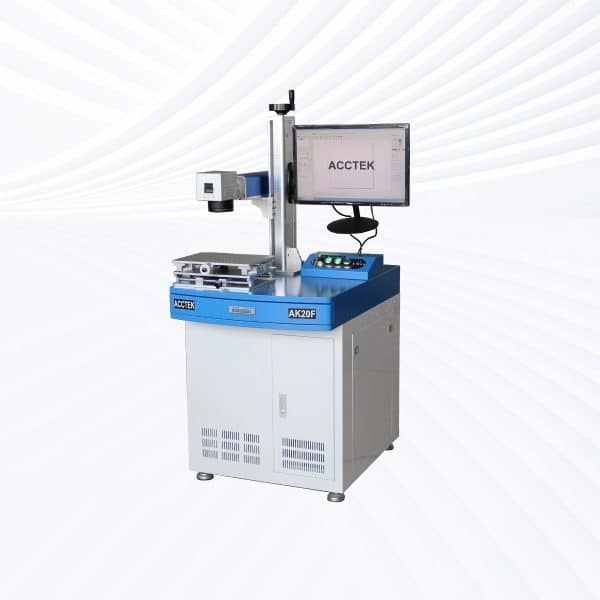
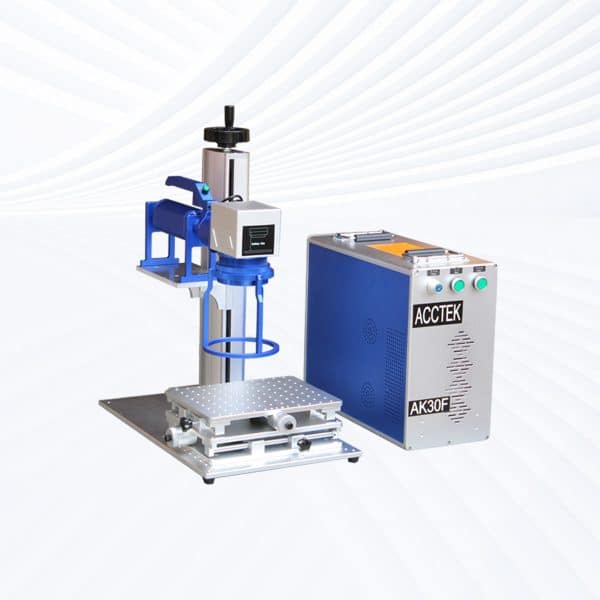
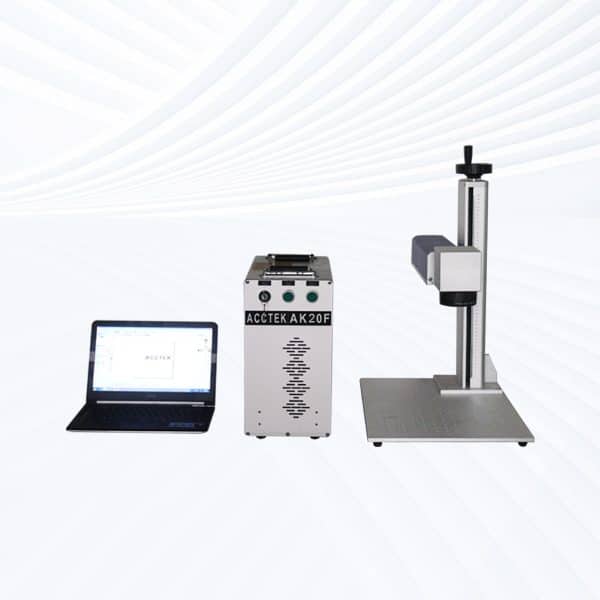

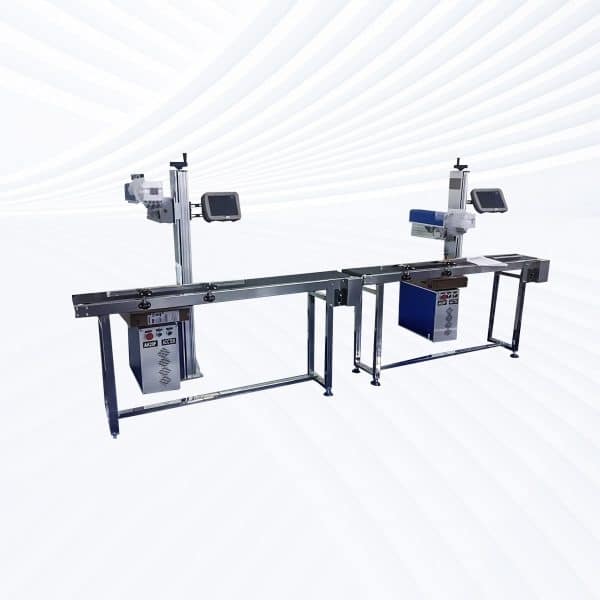
Advantages of Laser Marking Plastic
Permanent and Wear-Resistant Marks
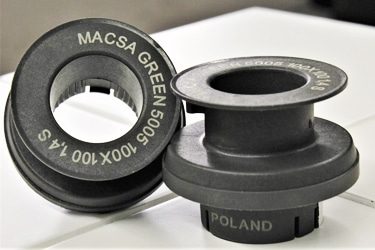
Laser marking creates permanent markings directly on plastic surfaces. These marks resist fading, scratching, and environmental exposure, ensuring that serial numbers, barcodes, and product information remain clearly visible throughout the entire product lifecycle.
High Precision and Fine Detail
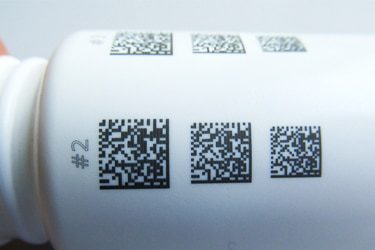
Laser marking technology provides extremely high precision, allowing manufacturers to create small text, detailed logos, and machine-readable codes. This level of accuracy is especially important for compact plastic components used in electronics, medical devices, and precision products.
Non-Contact Processing
Laser marking is a non-contact process that does not apply mechanical pressure to the plastic surface. This helps prevent deformation, cracking, or damage, making it suitable for delicate plastic parts and thin plastic components.
Clean and Environmentally Friendly Process
Unlike traditional marking methods that require inks, solvents, or labels, laser marking is a clean process. It produces minimal waste and eliminates consumables, helping manufacturers maintain environmentally friendly, efficient production.
Wide Compatibility with Plastics
Laser marking systems can mark a wide variety of plastic materials, including ABS, polycarbonate, polyethylene, polypropylene, and many engineered plastics. This versatility allows manufacturers to mark different plastic products using the same system.
High Speed and Production Efficiency
Laser marking machines operate at high speeds and integrate easily with automated production lines. This enables manufacturers to mark large quantities of plastic components quickly while maintaining consistent quality and improving overall production efficiency.
Compatible Materials
- ABS
- PC
- PE
- HDPE
- LDPE
- PP
- PS
- EPS
- PVC
- Rigid PVC
- Nylon
- PA6
- PA66
- Delrin
- PET
- PETG
- Acrylic
- PBT
- PEEK
- PPS
- PEI
- PU
- TPU
- TPE
- ASA
- SAN
- PVDF
- EVA
- Polyacetal
- LCP
- PAR
- PPO
- PAI
- FEP
- PTFE
- PFA
- Cellulose Acetate
- PI
- PLA
- Reinforced Plastics
Laser Marking VS Other Marking Methods
| Comparison Item | Laser Marking | Screen Printing | Pad Printing | Digital Printing |
|---|---|---|---|---|
| Marking Method | Uses a focused laser beam to alter or engrave the plastic surface | Ink is transferred through a mesh screen onto the plastic surface | Ink is transferred from an etched plate using a silicone pad | Ink is directly printed onto the plastic surface using digital printers |
| Contact with Material | Non-contact process | Contact process | Contact process | Contact process |
| Durability of Marks | Permanent and highly resistant to wear, heat, and chemicals | Moderate durability; ink may fade or peel over time | Moderate durability depending on ink quality | Lower durability compared with laser marking |
| Use of Consumables | No inks, solvents, or plates required | Requires inks, screens, and cleaning chemicals | Requires inks, pads, and etched plates | Requires ink cartridges and maintenance fluids |
| Environmental Impact | Clean and environmentally friendly process | Ink and solvent use can generate chemical waste | Uses chemical inks and cleaning agents | Ink cartridges and waste materials impact the environment |
| Precision and Detail | Extremely high precision suitable for micro text and codes | Good detail, but limited by screen resolution | Suitable for small graphics but limited fine detail | High-resolution image printing possible |
| Suitability for Barcodes/QR Codes | Excellent for high-contrast machine-readable codes | Possible, but may lack precision for small codes | Possible but less reliable for complex codes | Good for detailed and high-resolution codes |
| Surface Compatibility | Works on many plastic shapes and textures | Best suited for flat surfaces | Suitable for curved or irregular surfaces | Mostly suitable for flat surfaces |
| Setup Time | Minimal setup with digital file input | Longer setup due to screen preparation | Requires plate preparation and setup | Minimal setup required |
| Production Speed | High-speed marking suitable for automation | Moderate production speed | Moderate speed depending on setup | Fast for small production runs |
| Maintenance Requirements | Low maintenance with minimal wear parts | Screens require cleaning and replacement | Pads and plates require regular maintenance | Printers require maintenance and ink replacement |
| Marking Consistency | Highly consistent due to digital laser control | Consistency depends on ink distribution | May vary due to pad wear or pressure changes | Good consistency, but it depends on printer calibration |
| Operating Costs | Low long-term cost due to no consumables | Ongoing cost for inks and screens | Ongoing cost for inks and pad replacement | Continuous cost for ink cartridges |
| Material Damage Risk | Very low risk due to non-contact marking | Low risk, but ink adhesion may vary | Slight pressure applied during printing | Low risk but may require surface preparation |
| Traceability and Industrial Use | Ideal for permanent product identification and traceability | Limited durability for long-term traceability | Suitable for product labeling | Mostly used for decorative or temporary markings |
Laser Marking Capacity
| Item | Engraving | Annealing | Etching | Foaming | Deep Marking | Color Marking | QR Code Marking | Photo Marking |
|---|---|---|---|---|---|---|---|---|
| Ceramics | Yes | Yes | Yes | No | Yes | No | Yes | Yes |
| Glass | No | Yes | Yes | No | No | Yes | Yes | Yes |
| Leather | Yes | No | Yes | Yes | No | No | Yes | Yes |
| Stainless Steel | Yes | Yes | Yes | No | Yes | Yes | Yes | Yes |
| Carbon Steel | Yes | Yes | Yes | No | Yes | Yes | Yes | Yes |
| Aluminum | Yes | Yes | Yes | No | Yes | Yes | Yes | Yes |
| Titanium | Yes | Yes | Yes | No | Yes | Yes | Yes | Yes |
| ABS | Yes | No | Yes | Yes | No | No | Yes | Yes |
| Acrylic | Yes | No | Yes | Yes | No | No | Yes | Yes |
| Polycarbonate | Yes | No | Yes | Yes | No | No | Yes | Yes |
| Rubber | Yes | No | Yes | Yes | No | No | Yes | Yes |
| Marble | Yes | No | Yes | No | No | No | Yes | Yes |
| Granite | Yes | No | Yes | No | No | No | Yes | Yes |
| Wood | Yes | No | Yes | Yes | No | Yes | Yes | Yes |
| MDF | Yes | No | Yes | Yes | No | Yes | Yes | Yes |
| Paper | Yes | No | Yes | Yes | No | No | Yes | Yes |
| Cardboard | Yes | No | Yes | Yes | No | No | Yes | Yes |
| Textile | Yes | No | Yes | Yes | No | No | Yes | Yes |
| Ceramic-Coated Metal | Yes | Yes | Yes | No | Yes | Yes | Yes | Yes |
| Anodized Aluminum | Yes | Yes | Yes | No | Yes | Yes | Yes | Yes |
| Composite Materials | Yes | No | Yes | Yes | No | No | Yes | Yes |
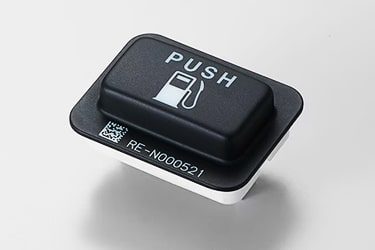
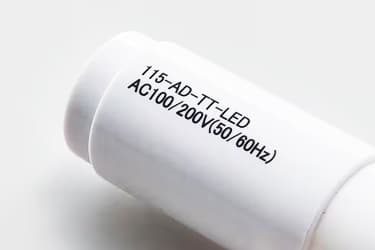
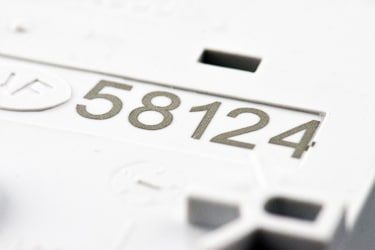
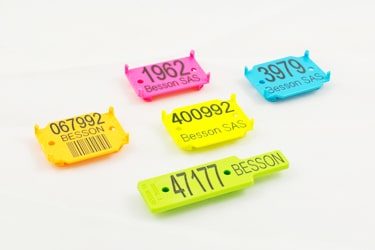
Applications of Laser Marking Plastic
Customer Testimonials
Related Resources
What Is the Marking Speed of Laser Marking Machines?
This article explores typical laser marking speeds, the factors that affect processing speed and cycle time, and how laser type, material, power, and settings influence marking performance.
Applications of Laser Marking Machines
This article explores the applications of laser marking machines across the automotive, electronics, medical, packaging, metalworking, consumer goods, traceability, automation, and personalization sectors.
How Do Laser Parameters Affect The Marking Effect?
This article explores how laser power, speed, frequency, pulse width, focus, wavelength, hatch spacing, and material properties influence marking quality, depth, contrast, and precision.
How Does Laser Beam Quality Affect Marking Results?
This article explores how laser beam quality affects marking clarity, contrast, line width, edge sharpness, depth control, heat input, material response, and marking repeatability.
Frequently Asked Questions
How Does Laser Marking Work on Plastic?
- How the Process Works: A laser beam is directed onto the plastic surface, where its energy is absorbed and converted into heat. This heat causes localized changes depending on the type of plastic and the laser settings. The process is guided by software, enabling precise, repeatable marking patterns.
- Types of Marking Effects: Plastics respond to lasers in several ways. Foaming occurs when the heat creates tiny gas bubbles within the material, producing a raised, lighter-colored mark. Carbonization is common in darker plastics, where the material darkens due to thermal decomposition. Color change happens when the chemical structure is altered without removing material, often seen in engineered plastics. Engraving can also be used, where a thin layer of material is removed to create depth.
- Material-Specific Behavior: Different plastics react differently to laser energy. Materials such as ABS, polycarbonate, and acrylic are commonly marked because they respond well and produce a clear contrast. Some plastics are specially formulated with additives to improve laser marking performance. Others may melt, burn, or produce poor-quality marks if not properly matched with the correct laser type.
- Laser Types and Compatibility: CO2 lasers are widely used for many plastics, especially organic or non-metallic types, because their wavelength is well absorbed. Fiber lasers can be used for certain engineered plastics, particularly those with additives that enhance absorption. The choice of laser affects marking quality and efficiency.
- Parameter Control: Power, speed, frequency, and focus must be carefully adjusted. Too much energy can cause excessive melting, deformation, or burning, while too little results in faint or inconsistent marks. Proper tuning ensures clean edges and good contrast.
Can Plastic Markings Fade Over Time?
- How Laser Marking Affects Plastics: Laser marking creates contrast by changing the plastic’s surface or internal structure through heat. This may involve foaming, carbonization, or color change. Because the mark is part of the material rather than applied on top, it is more resistant to wear and fading than traditional methods. However, the stability of the mark depends on how the plastic reacts to these changes.
- Material Type and Stability: Different plastics have different resistance to fading. Engineering plastics like polycarbonate or ABS tend to hold marks well over time. However, some plastics are more sensitive to environmental factors. For example, certain polymers may degrade when exposed to ultraviolet (UV) light, causing both the material and the marking to fade or discolor.
- Environmental Exposure: External conditions play a major role in fading. Prolonged exposure to sunlight, heat, moisture, or chemicals can affect the visibility of laser marks. UV radiation is particularly important, as it can break down the polymer structure, reducing contrast. Harsh cleaning agents or abrasion can also wear down surface-level markings.
- Marking Method and Depth: The type of marking influences durability. Surface-level marks, such as light color changes, are more prone to fading compared to deeper engravings or strong carbonized marks. Deeper or more pronounced markings tend to retain contrast longer because they are less affected by surface wear.
- Use of Additives and Coatings: Some plastics are formulated with laser-sensitive additives that improve marking quality and durability. Protective coatings or UV stabilizers can also help preserve the mark over time, especially in outdoor or harsh environments.
How Does Plastic Density Affect Laser Marking Quality?
- Energy Absorption and Heat Distribution: Higher-density plastics tend to absorb and distribute laser energy more evenly. This allows for more controlled heating and smoother marking results. In contrast, low-density plastics, such as foams or highly porous materials, may absorb energy unevenly. This can lead to inconsistent marks, with some areas appearing darker or deeper than others.
- Marking Consistency and Surface Quality: Dense plastics generally produce cleaner and more defined marks. Because the material structure is more uniform, the laser interaction is predictable, resulting in sharp edges and consistent contrast. Low-density plastics may produce rougher or less uniform markings due to variations in internal structure, which can scatter heat and energy.
- Depth and Material Response: Density also affects how deeply the laser can modify the material. In higher-density plastics, energy is concentrated near the surface, allowing for controlled marking without excessive penetration. In lower-density materials, the laser may penetrate more easily, sometimes causing unwanted deformation, melting, or irregular depth.
- Thermal Stability and Deformation: Low-density plastics are more prone to melting, warping, or shrinking under heat. This can distort the marking and reduce precision. Higher-density plastics typically have better thermal stability, which helps maintain shape and detail during the marking process.
- Contrast and Visual Appearance: Dense plastics often produce better contrast because the marking effect, such as foaming or carbonization, occurs more uniformly. In low-density materials, contrast may be uneven or less visible due to irregular surface reactions.
- Parameter Sensitivity: Low-density plastics require more careful parameter control. Lower power and faster speeds are often needed to prevent damage. Higher-density plastics are generally more forgiving, allowing a wider range of settings while still producing acceptable results.
Can It Produce High Contrast In Laser Marking Plastics?
- Material Selection and Composition: The type of plastic is the most important factor. Materials like ABS, polycarbonate, and acrylic can produce clear, high-contrast marks because they respond well to laser energy. Some plastics are specially formulated with laser-sensitive additives that enhance color change or foaming, making it easier to achieve sharp contrast. In contrast, certain plastics may produce weak or inconsistent marks without these additives.
- Marking Mechanisms: Different marking effects create contrast in different ways. Foaming produces light-colored, raised marks on darker plastics, while carbonization creates dark marks on lighter materials. Color change occurs when the laser alters the chemical structure without removing material. Engraving can also improve contrast by adding depth and shadow. Choosing the right mechanism for the specific plastic is key.
- Laser Parameters (Power, Speed, Frequency): Proper parameter control is essential. Higher power or slower speeds increase energy input, which can enhance contrast by strengthening the marking effect. However, too much energy can cause melting, burning, or deformation, which reduces clarity. Lower power or faster speeds may result in faint marks. Fine-tuning these settings ensures a balance between visibility and quality.
- Surface Finish and Color: The base color and texture of the plastic influence contrast. Dark plastics often produce better results with foaming, while light plastics benefit from carbonization or engraving. Smooth surfaces allow for more uniform marking, while rough surfaces may scatter the effect.
- Use of Additives and Coatings: Laser-enhancing additives in plastics can significantly improve contrast and consistency. In some cases, surface treatments or coatings are used to increase mark visibility.
- Multiple Passes and Precision Control: Using multiple passes can gradually build contrast without overheating the material. This approach helps maintain sharp edges and avoids defects.
How Does Surface Finish Affect Laser Marking Plastics?
- Energy Absorption and Interaction: Smooth, polished surfaces tend to reflect more laser energy, which can reduce the efficiency of marking. This may result in lighter or less pronounced marks unless power or exposure is increased. In contrast, rough or matte surfaces absorb energy more effectively, allowing for stronger and more consistent marking at lower energy levels.
- Contrast and Visibility: Surface finish directly influences contrast. On glossy plastics, marks may appear less visible because light reflects evenly across the surface, reducing the visual difference between marked and unmarked areas. Matte or textured surfaces scatter light, which enhances the visibility of the mark and improves contrast. This is especially important for readability in applications like barcodes or labels.
- Edge Sharpness and Detail: A smooth surface generally allows for sharper and more precise edges because the laser interacts with a uniform surface. This is beneficial for fine details and small text. However, if the surface is too reflective, it may reduce marking consistency. Rough surfaces, while better for contrast, can slightly reduce edge sharpness because the laser interacts unevenly with peaks and valleys in the material.
- Heat Distribution and Material Response: Surface finish can also affect how heat spreads. Polished surfaces may lead to more localized heating, while textured surfaces distribute heat more unevenly. This can influence the marking effect, such as foaming or carbonization, and may require adjustments in laser parameters.
- Consistency and Repeatability: Uniform surface finishes produce more predictable results. Variations in texture or coating across a part can lead to inconsistent marking quality, with some areas appearing darker or deeper than others.
- Coatings and Treatments: Some plastics have coatings or surface treatments that enhance laser marking performance. These can improve contrast, reduce reflectivity, and provide more consistent results.
How Is Depth Controlled In Laser Marking Plastics?
- Laser Power and Energy Input: Power is the primary factor influencing depth. Higher power increases the amount of energy delivered to the plastic, allowing the laser to penetrate deeper or remove more material. Lower power results in shallow surface changes such as color shift or light foaming. However, excessive power can cause burning, charring, or distortion, especially in heat-sensitive plastics. The goal is to apply enough energy to achieve the desired depth without damaging the surrounding area.
- Marking Speed: Speed determines how long the laser remains on a specific point. Slower speeds increase exposure time, allowing more heat to build up and resulting in deeper marks. Faster speeds reduce interaction time, producing shallower marks. Adjusting speed alongside power provides fine control over depth.
- Number of Passes: Depth can be increased gradually by running multiple passes instead of using high power in a single pass. Each pass removes or modifies a thin layer of material, allowing better control and reducing the risk of melting or warping. This method is especially useful for achieving clean and precise engravings.
- Frequency and Pulse Settings: For pulsed lasers, frequency affects how energy is distributed. Lower frequencies often deliver higher peak energy per pulse, which can increase material removal and depth. Higher frequencies spread the energy more evenly, resulting in smoother but shallower marks.
- Focus and Beam Control: A properly focused beam concentrates energy into a small area, increasing intensity and enabling deeper penetration. Slightly defocusing the beam spreads the energy, reducing depth and producing more surface-level effects.
- Material Properties: Different plastics respond differently based on composition and density. Harder or higher-density plastics may require more energy for deeper marking, while softer plastics reach depth more quickly but are more prone to deformation.
What Are Common Defects In Laser Marking Plastics?
- Burning and Charring: One of the most common defects is excessive burning or charring. This happens when too much laser energy is applied, often due to high power or slow speeds. Instead of a clean mark, the surface may turn black, rough, or carbonized beyond the intended design. This reduces visual quality and can weaken the material locally.
- Melting and Deformation: Plastics are heat-sensitive, so improper settings can cause melting rather than controlled marking. This may lead to warped surfaces, raised edges, or distorted shapes. Fine details can become blurred or lost entirely if the material softens too much during processing.
- Low or Inconsistent Contrast: Poor contrast is another frequent issue. Some plastics do not respond strongly to laser energy, resulting in faint or barely visible marks. Inconsistent energy distribution or variations in material composition can also cause uneven contrast across the marking area.
- Surface Discoloration: Unintended discoloration can occur when heat affects areas beyond the intended mark. This may appear as yellowing, whitening, or dark halos around the design. It reduces the overall appearance and indicates poor control of the heat-affected zone.
- Rough or Uneven Texture: Instead of smooth marking, the surface may become rough or grainy. This can result from excessive energy, improper focus, or multiple uncontrolled passes. Rough textures reduce clarity and can affect the functionality of marked parts.
- Edge Distortion and Loss of Detail: If parameters are not optimized, edges may appear blurred or widened. Small text and fine features may lose definition due to heat spreading beyond the intended marking area.
- Bubbling or Foaming Defects: While foaming is sometimes desirable, uncontrolled foaming can create irregular or uneven marks. This is common when energy input is too high or inconsistent.
How To Deal With The Fumes Generated When Laser Marking Plastics?
- Use of Effective Ventilation Systems: The most important solution is a proper ventilation or fume extraction system. Local exhaust ventilation (LEV) should be installed near the laser marking area to capture fumes at the source. These systems pull contaminated air away from the work zone and filter it before releasing it. High-quality systems often include multi-stage filtration, such as particulate filters (HEPA) and activated carbon filters for gases and odors.
- Air Assist and Flow Management: Air assist systems can help direct fumes away from the marking point during processing. By blowing a controlled stream of air across the surface, they reduce the buildup of smoke and prevent it from settling back onto the material, which can also improve marking clarity.
- Material Selection and Safety Awareness: Choosing the right plastic is critical. Some plastics produce minimal fumes, while others release hazardous gases when exposed to a laser. For example, PVC should never be processed because it emits toxic chlorine gas. Always verify that the material is laser-safe before marking.
- Enclosed Systems and Filtration Units: Using enclosed laser marking machines helps contain fumes and prevents them from spreading into the workspace. Integrated filtration units within enclosed systems provide an additional layer of protection by continuously cleaning the air inside the machine.
- Personal Protective Equipment (PPE): In addition to engineering controls, PPE may be required. Respirators or masks with appropriate filters can protect operators from inhaling fine particles or gases, especially in environments where ventilation is limited or during maintenance tasks.
- Regular Maintenance of Equipment: Fume extraction systems must be maintained regularly to remain effective. Filters should be replaced according to manufacturer recommendations, and airflow should be checked to ensure proper operation. Poorly maintained systems can allow harmful fumes to escape.
- Workplace Practices and Training: Operators should be trained to recognize hazardous materials and follow safe operating procedures. Keeping the workspace clean and ensuring proper airflow reduces the accumulation of residues and airborne particles.