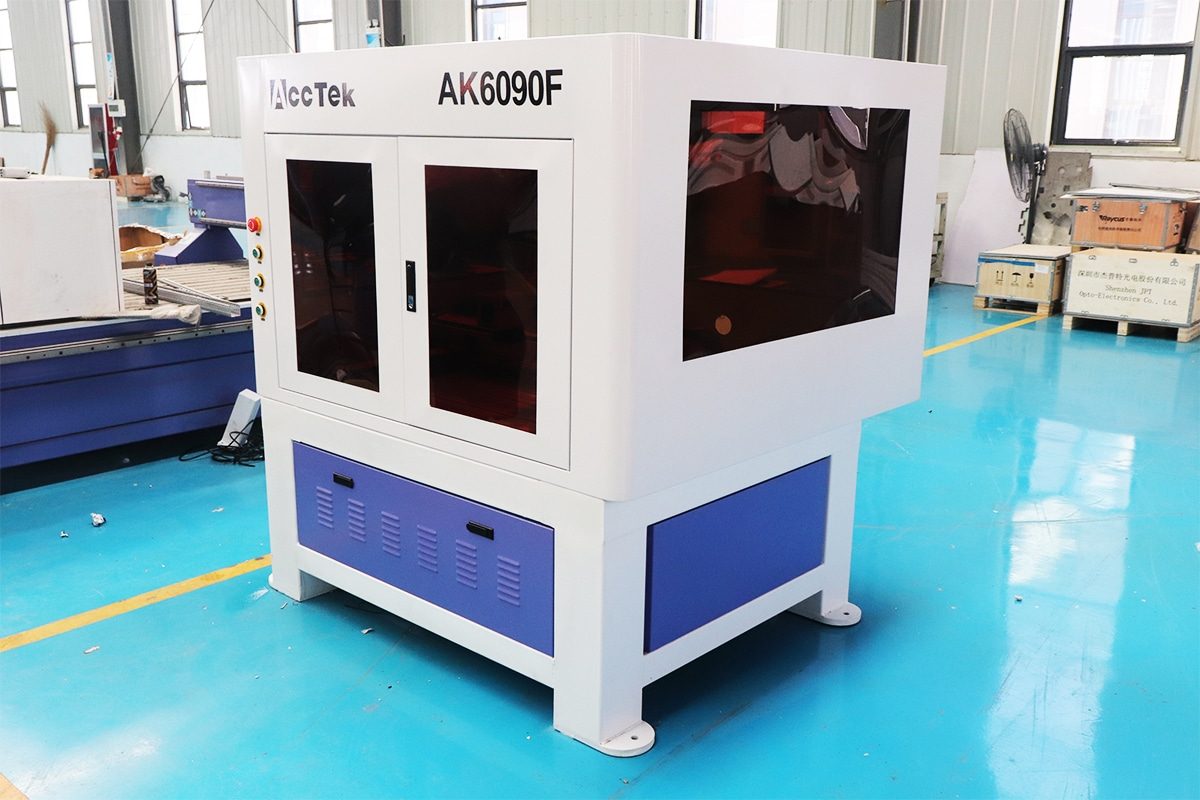
Modern manufacturing and product customization demand marking solutions that are not only precise but also adaptable to complex shapes. This raises an important question: Can lasers be used for marking on curved or irregular surfaces? As industries increasingly work with cylindrical, spherical, textured, and free-form components, traditional marking methods such as ink printing or mechanical engraving often fall short in terms of durability, accuracy, and consistency. Laser marking, however, has emerged as a highly versatile technology capable of overcoming many of these limitations.
Laser marking uses a focused beam of light to alter the surface of a material, creating permanent, high-contrast marks without physical contact. This non-contact nature makes lasers especially appealing for irregular geometries, where uneven pressure or tool access can compromise results. From medical devices and automotive parts to jewelry, electronics, and aerospace components, manufacturers are exploring laser systems to mark serial numbers, barcodes, logos, and traceability data on surfaces that are anything but flat.
Advancements in laser optics, software control, and motion systems have further expanded what is possible, enabling accurate focus adjustment and precise beam positioning even on complex contours. Understanding how laser marking works on curved or irregular surfaces—and the challenges and solutions involved—is essential for businesses looking to adopt this technology effectively.
In the context of laser marking, the phrase curved or irregular surfaces goes far beyond simply meaning “not flat.” It describes any surface where the laser beam cannot remain at a constant focal distance or strike the material at a uniform angle throughout the marking process. Since laser marking relies on precise energy delivery, even small variations in height, slope, or surface texture can affect mark clarity, depth, and contrast. Understanding the different types of curved and irregular geometries is critical because each type interacts with the laser beam in a unique way and may require different technical solutions, ranging from simple mechanical aids to advanced 3D control systems.
Simple curved surfaces are geometries that curve in a single, predictable direction. Common examples include cylindrical rods, pipes, rings, tubes, and rounded containers. From a laser-marking standpoint, these surfaces are the most manageable form of curvature. The main challenge is maintaining a consistent focal distance as the laser moves across or around the curve. This is often solved using rotary fixtures that rotate the part in sync with the laser, allowing the beam to remain properly focused. With correct alignment and parameter settings, lasers can produce sharp, evenly spaced marks on simple curved surfaces with little distortion.
Compound curvature occurs when a surface curves in two or more directions simultaneously, such as on spheres, domes, ergonomic housings, or sculpted components. These shapes are far more complex because the focal distance and beam angle change continuously across the marking area. Without compensation, this can result in uneven line thickness, inconsistent marking depth, or faded edges. To address this, advanced systems use dynamic focusing, multi-axis motion, or 3D laser marking software that adjusts the focal point in real time. These technologies allow the laser to “follow” the surface contour, maintaining consistent energy delivery across complex geometries.
Many industrial parts include steps, recesses, raised features, knurling, threads, or textured finishes. While these parts may not appear dramatically curved, the sudden changes in surface height pose a significant challenge for laser marking. As the laser crosses from one level to another, it can go out of focus, reducing mark quality or skipping material entirely. Fine-tuning laser parameters such as pulse duration, power, and speed becomes essential. In some cases, multiple marking passes or height-compensation systems are used to ensure that every feature—no matter how small—receives a clear and legible mark.
In laser marking, “curved or irregular” surfaces encompass a wide spectrum—from simple cylinders to unpredictable organic forms. Each surface type presents different challenges related to focus control, beam angle, and energy consistency. By clearly understanding these categories, manufacturers can choose the right laser technology, accessories, and software to achieve precise, durable, and high-quality markings, even on the most complex surface geometries.
Laser marking works by delivering a tightly controlled amount of energy to a very specific location on a material’s surface. On flat parts, the physics are straightforward: the laser remains in focus, strikes the surface at a consistent angle, and predictably transfers energy. Curved or irregular surfaces break these assumptions. Changes in height, slope, texture, and motion all alter how the laser beam behaves before and after it contacts the material. These effects compound, making mark quality harder to control. To understand why non-flat surfaces are challenging, it’s essential to look closely at the underlying physics that governs focus, energy density, reflection, and motion.
A laser’s effectiveness depends heavily on its focal point. At perfect focus, the beam converges into its smallest possible spot, creating high energy density. On curved or uneven surfaces, the distance between the laser optics and the material constantly changes. Even a shift of a few millimeters can move the surface outside the depth of focus. As this happens, the spot size grows, energy spreads out, and marking intensity drops. The result can be faint lines, uneven contrast, or inconsistent mark depth. On steep curves or stepped features, the laser may rapidly move in and out of focus, creating visibly uneven results across a single mark.
Laser marking systems typically operate in a flat, two-dimensional coordinate system. When flat artwork is applied to a curved surface, the geometry no longer maps evenly. A constant laser speed across a curved surface does not translate to constant spacing on the material. This leads to stretching, compression, or skewing of text and graphics. Fine details such as sharp corners or small characters may blur or merge. For codes like QR or Data Matrix symbols, distortion can compromise readability. Correcting this requires understanding the surface geometry and mathematically transforming the artwork before marking begins.
Irregular surfaces often have non-uniform finishes—cast textures, coatings, oxidation layers, or machining marks. Each variation changes how heat is absorbed and dissipated. Rough surfaces increase surface area and may absorb more energy, while polished or coated areas reflect more light. When these material effects interact with changing focus and angles, the laser–material response becomes highly variable. This can result in inconsistent color, depth, or edge quality within the same mark. Process windows narrow significantly, meaning laser parameters must be controlled with much greater precision.
To mark curved or irregular surfaces, movement is almost always required. The part may rotate, tilt, or move along multiple axes, or the laser head itself may follow a complex path. The laser firing must remain perfectly synchronized with this motion. Any delay or mismatch causes visible defects such as stretched characters, overlapping lines, or gaps. When focus adjustment is added—such as dynamic Z-axis control—the complexity increases further. Real-time coordination between motion systems, focus mechanisms, and laser pulses becomes a critical engineering challenge.
Curved and irregular surfaces challenge laser marking because they fundamentally change how laser energy is delivered and absorbed. Variations in focus, spot size, angle of incidence, surface finish, and motion all interact, often amplifying one another. These physics-based challenges explain why marking non-flat parts requires advanced control strategies, precise synchronization, and careful process optimization. By understanding these core principles, it becomes clear why laser marking on complex geometries is possible—but never trivial.
When marking curved or irregular surfaces, the choice of laser type plays a decisive role in both feasibility and final mark quality. Different lasers interact with materials in fundamentally different ways due to variations in wavelength, pulse duration, beam quality, and thermal behavior. On non-flat surfaces—where focus shifts, angles vary, and textures change—these differences become even more pronounced. Some laser types are more forgiving of defocus, while others excel at maintaining detail despite steep angles or sensitive materials. Understanding how each laser technology behaves helps manufacturers match the laser to the geometry, material, and performance requirements of the application.
Green lasers, operating at 532 nm, fill an important niche between infrared and ultraviolet systems. Many materials that reflect infrared light—such as copper, brass, gold, and certain plastics—absorb green wavelengths more efficiently. This improved absorption is particularly helpful on curved surfaces, where changing angles can otherwise increase reflectivity. Green lasers provide a good balance between marking speed, precision, and thermal control. They are commonly used in electronics manufacturing, battery components, and precision metal parts with moderate curvature or fine surface features. However, like UV systems, they still require careful focus management on highly irregular geometries.
Ultrashort pulse lasers deliver energy in pulses lasting trillionths or quadrillionths of a second. This extremely short interaction time prevents heat from spreading into the surrounding material, resulting in virtually no heat-affected zone. On curved or irregular surfaces, this makes the marking process far more forgiving, as slight defocus or angle changes do not lead to excessive melting or discoloration. These lasers can mark delicate, complex, or organic shapes with exceptional precision and surface integrity. They are used in advanced applications such as aerospace components, medical implants, and microelectronics. The main drawbacks are high system cost, complexity, and lower throughput.
Each laser type brings unique strengths to the challenge of marking curved and irregular surfaces. Fiber lasers offer speed and versatility for metals, CO2 lasers excel on organic materials with gentle contours, UV and green lasers provide superior control and absorption for precision work, and ultrashort pulse lasers deliver unmatched quality on the most complex geometries. Selecting the appropriate laser technology requires balancing material compatibility, surface complexity, marking quality, and production efficiency to achieve reliable and consistent results.
Marking curved or irregular surfaces with lasers is not a single, fixed process—it is a spectrum of methods that scale in complexity as the geometry of the part becomes more challenging. Each method represents a different balance between simplicity, cost, flexibility, and marking precision. In some cases, the physics of the laser itself provides enough tolerance to accommodate mild curvature. In others, sophisticated motion control, focus adjustment, or real-time surface mapping is required. Understanding these methods in increasing order of capability makes it easier to choose a solution that meets both technical and economic requirements without overengineering the system.
At the simplest level, some curved or irregular surfaces can be marked without any additional hardware or motion control. Every laser marking system has a finite depth of focus, within which the spot size and energy density remain acceptable. If the curvature is gentle and the marking area is small, the entire mark may fall within this tolerance. This approach is commonly used for short serial numbers, small logos, or date codes on slightly curved housings or rounded edges. While inexpensive and fast, it offers limited control. As mark size increases or curvature becomes more pronounced, distortion, uneven contrast, or inconsistent depth quickly appear.
Rotary axis marking is a proven and widely used method for cylindrical components. The part is mounted on a motorized rotary axis that spins in precise synchronization with the laser’s scanning motion. This effectively converts the curved surface into a flat, linear motion from the laser’s perspective. The laser maintains consistent focus and spacing across the entire circumference, allowing for clean text, graphics, and even barcodes. Rotary marking excels for parts with a single, consistent axis—such as pipes, tubes, rings, and bottles—but it cannot compensate for tapering, variable diameters, or non-round shapes.
Dynamic focus galvo systems add a controllable Z-axis to traditional X–Y scanning mirrors. As the laser beam moves laterally, the focal point shifts in real time to follow changes in surface height. This method is especially effective for shallow domes, compound curves, and parts with gradual height variation. By maintaining optimal focus across the surface, dynamic focus preserves line width, contrast, and edge sharpness. However, this approach depends on accurate surface data and works best when the geometry is known and repeatable. Highly irregular or unpredictable shapes still pose challenges.
Multi-axis stage systems physically reposition the part relative to a fixed laser head. Using linear and rotational stages, the part can be moved, tilted, or rotated so that the marking surface remains close to perpendicular to the laser beam. This method provides excellent control over focus and angle of incidence, making it ideal for parts with multiple faces, stepped features, or complex orientations. While highly accurate, multi-axis stages are mechanically slower than galvo-based systems and are best suited for lower-volume or high-precision applications where cycle time is less critical.
Robot-assisted laser marking introduces a high level of flexibility by using an industrial robotic arm to position either the laser head or the workpiece. Robots can follow complex 3D paths, maintain a consistent stand-off distance, and approach surfaces from optimal angles. This makes them well-suited for large, heavy, or highly irregular components such as automotive body parts or aerospace structures. However, robots introduce additional variables such as arm accuracy, repeatability, and calibration drift. Achieving consistent marking quality requires advanced programming, vision systems, and frequent validation.
The most advanced marking method combines 3D scanning with adaptive laser control. First, the part is scanned to generate a detailed surface model. This data is then used to correct artwork distortion, dynamically adjust focus, and synchronize motion with the exact surface geometry. The laser effectively “knows” the shape of the part before marking begins. This approach delivers the highest possible quality on complex or organic shapes, ensuring uniform depth, contrast, and geometry. The trade-offs include high system cost, longer setup times, and greater integration complexity.
Laser marking methods for curved and irregular surfaces range from simple focus-tolerant techniques to fully adaptive 3D workflows. Each step up in sophistication improves consistency, accuracy, and surface adaptability while increasing cost and system complexity. By matching the marking method to the true complexity of the part, manufacturers can achieve reliable, high-quality results without unnecessary technical overhead.
In laser marking, optics determine how the laser beam behaves before it ever reaches the surface. When marking curved or irregular parts, optical selection becomes even more critical because the beam must remain effective despite changes in height, angle, and geometry. The wrong optics can cause rapid loss of focus, inconsistent line width, and geometric distortion, even if the laser source itself is well-suited to the material. Conversely, carefully chosen optics can significantly increase tolerance to surface variation, improve mark uniformity, and reduce the need for complex motion systems. Understanding how different optical choices affect spot size, depth of focus, and beam orientation is essential for successful marking on non-flat surfaces.
Field size, spot size, and depth of focus are interdependent optical parameters that must be balanced carefully. A larger field size allows the laser to mark wider areas without repositioning, which is efficient for production. However, as the field size increases, the spot size generally grows, and the depth of focus decreases. On curved or irregular surfaces, a shallow depth of focus is problematic because small height variations quickly push the surface out of optimal focus. Reducing the field size typically results in a smaller spot and a deeper focus range, making the system more forgiving. For non-flat marking, sacrificing some field size in favor of greater focus tolerance often leads to better and more consistent results.
Telecentric lenses are designed to keep the laser beam parallel to the optical axis across the entire marking field. This means the beam strikes the surface at nearly the same angle regardless of position within the field. On curved or irregular surfaces, this greatly reduces perspective distortion and variation in feature size. Telecentric optics are especially valuable for precision applications such as barcodes, data matrices, and micro-text on contoured parts. While they improve geometric accuracy, they do not inherently increase depth of focus. Additionally, telecentric lenses are larger, heavier, and more expensive, and they usually offer smaller marking fields compared to standard lenses.
Longer focal length lenses spread the convergence of the laser beam over a greater distance, which directly increases the depth of focus. This makes them more tolerant of height variation and gentle curvature. On curved surfaces, this added tolerance helps maintain more consistent energy density even as the surface rises or falls. The trade-off is a larger minimum spot size, which reduces the ability to mark very fine details. Longer focal length lenses are therefore well-suited for applications where readability, contrast, and consistency matter more than ultra-fine resolution, such as serial numbers or logos on contoured industrial parts.
Dynamic focus modules actively adjust the focal position of the laser during marking. Instead of relying on passive optical tolerance, these systems use motorized lenses or adjustable optics to move the focal point in real time. This allows the laser to follow surface height changes precisely, maintaining optimal focus across compound curves or shallow 3D shapes. Dynamic focus modules are often paired with surface models or pre-programmed height maps. While highly effective, they add complexity to the system, require precise calibration, and depend on accurate knowledge of the part geometry to deliver consistent results.
Optics are a foundational element of successful laser marking on curved and irregular surfaces. Balancing field size, spot size, and depth of focus determines how forgiving the system is to height variation. Telecentric lenses improve geometric accuracy, longer focal length lenses increase focus tolerance, and dynamic focus modules provide active compensation for complex shapes. By selecting optics that align with the true surface challenges of the application, manufacturers can significantly improve mark quality and reliability without changing the laser source itself.
Artwork design plays a decisive role in the success of laser marking on curved or irregular surfaces. Even with advanced lasers, optics, and motion systems, poorly designed artwork can lead to unreadable text, distorted graphics, or unreliable codes. Curvature and surface variation change how the laser interacts with the material, how marks are perceived visually, and how scanners interpret them. Effective artwork design anticipates these effects and compensates for them at the design stage. By adapting mark type, geometry, and readability priorities, designers can greatly improve marking consistency and reduce dependence on complex hardware solutions.
The interaction between laser energy and material is already complex on flat surfaces; on curved or irregular parts, that complexity increases. Some marking methods are more forgiving than others. For example, annealing marks on stainless steel rely on controlled oxidation rather than material removal, making them less sensitive to small focus shifts. Engraved marks, by contrast, require consistent energy density to maintain uniform depth and can become uneven on curved geometry. On plastics, foaming or color-change marking often provides better contrast across varying angles than engraving or ablation. Selecting a mark type that tolerates variations in focus and angle helps ensure a consistent appearance across the entire surface.
Machine-readable codes are especially vulnerable to curvature-induced distortion. On curved surfaces, individual cells or bars may vary slightly in size, spacing, or edge sharpness. To compensate, codes should be designed with increased robustness. This includes using larger module sizes, lowering data density, and maximizing error correction levels. Adequate quiet zones are critical, particularly on textured or uneven surfaces. High contrast between marked and unmarked areas improves scan reliability, even when lighting or surface angle is less than ideal. Designing for robustness often means accepting a slightly larger code footprint in exchange for consistent readability.
Flat artwork naturally distorts when applied to curved or irregular surfaces. Without correction, text may appear stretched, compressed, or unevenly spaced. Distortion compensation involves mathematically transforming the artwork before marking so that it appears correct once mapped onto the surface. For cylindrical parts, this may involve scaling or unwrapping the design. For compound curves, more complex surface mapping is required. Many modern laser marking systems support this type of compensation using 3D models or surface data. Proper warping ensures that logos remain proportionally correct and codes maintain uniform geometry after marking.
Fine details are the first to fail when marking on challenging surfaces. Thin lines and delicate serif fonts depend on precise focus and stable energy delivery. On curved or irregular surfaces, even small deviations can cause these features to blur, break, or disappear entirely. Bold, sans-serif fonts with consistent stroke widths are far more resilient. Increasing line thickness, character height, and spacing helps preserve legibility despite surface variation. Simplifying artwork is often the most effective way to improve marking reliability without changing the laser setup.
Marks serve different audiences, and curved surfaces can amplify the trade-offs between visual and machine readability. Human readers can often tolerate mild distortion, uneven depth, or varying contrast, especially if the mark is large and well placed. Machine readers, however, require precise geometry and consistent contrast. Designers must decide which requirement takes priority. In some cases, separating the two—placing a human-readable label in one area and a machine-readable code in another—produces better overall results. Placement relative to curvature and viewing angle should also be considered carefully.
Designing artwork for curved and irregular surfaces requires a proactive approach that accounts for material behavior, geometry, and readability demands. Choosing forgiving mark types, strengthening machine-readable codes, compensating for distortion, simplifying fonts, and clearly defining readability priorities all contribute to reliable results. When artwork is designed with surface complexity in mind, laser marking becomes more consistent, legible, and effective—even on the most challenging geometries.
When laser marking curved or irregular surfaces, fixturing and part presentation quietly control the entire process. Unlike flat parts, complex geometries magnify even the smallest inconsistencies in positioning, orientation, or stability. A fraction of a millimeter of movement can change focus, alter the laser’s angle of incidence, or shift artwork placement enough to degrade mark quality. While lasers, optics, and software receive much of the attention, it is the fixture that ensures the laser interacts with the part in the same way every time. In many production environments, improving fixturing yields larger gains in consistency and reliability than any adjustment to laser parameters.
Repeatable part positioning is the foundation of consistent laser marking, especially on curved or irregular surfaces. Repeatability means controlling not only X and Y location, but also Z height and angular orientation. On curved parts, small changes in tilt or rotation can significantly alter the laser’s focal distance and incidence angle. Effective fixtures use defined datums, hard stops, and locating features that constrain all degrees of freedom. For asymmetrical or organic parts, custom nests or contoured supports are often necessary to prevent unintended rotation. The objective is to ensure that the same surface region is presented to the laser in the same orientation every cycle, regardless of operator or production speed.
In rotary marking applications, runout control is critical. Runout occurs when the part’s center of rotation does not align perfectly with the rotary axis. Even small amounts of eccentricity cause the surface to oscillate toward and away from the laser during rotation. This leads to fluctuating focus, inconsistent mark depth, and visible distortion—particularly problematic for fine text or machine-readable codes. High-precision chucks, collets, or mandrels help minimize this effect. In some cases, referencing the part from internal features or functional surfaces rather than outer diameters provides better rotational accuracy. Regular inspection and maintenance of rotary components are also essential to preserve consistency over time.
Laser marking depends on a predictable interaction between the beam and the surface. On curved or irregular parts, variations in surface condition can amplify marking inconsistencies. Oils, residues, oxidation layers, coatings, or uneven textures can change absorption and reflection characteristics across the surface. One area may mark dark and clean, while another appears faint or uneven. Establishing consistent surface preparation—such as cleaning, drying, or controlled pre-treatment—reduces this variability. In some applications, controlling surface roughness or coating thickness becomes just as important as controlling geometry, especially when high visual or scanning consistency is required.
Many curved or irregular parts are thin-walled, lightweight, or made from heat-sensitive materials such as plastics, polymers, or medical-grade alloys. Poor fixturing can allow parts to flex, vibrate, or trap heat during marking. Excess heat buildup may cause warping, discoloration, or internal stress. Thoughtful fixture design can mitigate these risks by providing thermal mass, heat sinks, or strategic contact points that dissipate heat without interfering with the laser path. In some cases, fixtures must also accommodate cooling intervals or airflow between cycles to maintain dimensional and cosmetic integrity.
Fixturing and part presentation are often overlooked, yet they form the backbone of reliable laser marking on curved and irregular surfaces. By ensuring repeatable positioning, minimizing rotary runout, stabilizing surface condition, and managing heat effectively, fixtures reduce variability before the laser ever fires. Investing in robust fixturing not only improves mark quality and consistency but also simplifies process control, reduces scrap, and extends the capability of existing laser marking systems.
When marking curved or irregular surfaces, process parameters become the primary means of controlling consistency. Unlike flat parts, where focus and angle are stable, non-flat geometry introduces unavoidable variation in how laser energy reaches the surface. Instead of attempting to eliminate these variations, experienced laser users tune process parameters to make the marking process more tolerant and forgiving. Small changes in power, speed, pulse behavior, and marking strategy can dramatically influence contrast, depth, edge quality, and thermal stability. Understanding how each parameter behaves on complex geometry allows for predictable, repeatable results even under less-than-ideal conditions.
These four parameters define how energy is delivered to the material, and on curved or irregular surfaces, they must be balanced carefully. High peak power combined with fast speed may work on flat parts, but on curved geometry, it often causes overburning at high spots and weak marks in recessed areas. Reducing peak power while slowing marking speed spreads energy more evenly and reduces sensitivity to focus shifts. Pulse frequency and pulse width further refine this balance by controlling how energy accumulates over time. Shorter pulses with appropriate frequency help limit heat diffusion, which is critical where the beam strikes at varying angles. The goal is not maximum aggressiveness, but controlled, repeatable energy delivery.
Filled marks such as logos, symbols, or large characters require careful hatch planning on non-flat surfaces. Tight hatch spacing increases coverage but also increases overlap between pulses, amplifying heat buildup and making the process more sensitive to focus variation. On curved geometry, slightly wider hatch spacing often produces more uniform visual results. Alternating hatch directions between layers—such as rotating the fill angle—helps average out inconsistencies caused by surface slope. In some cases, contour-only marking combined with light fill can deliver better readability than dense fills on highly irregular parts.
Single-pass marking concentrates energy into one interaction, which can exaggerate any focus or angle error. Multiple lighter passes distribute energy gradually, allowing the mark to build up evenly across varying geometry. This approach is especially effective for engraving metals or producing dark annealed marks on stainless steel. Each pass compensates slightly for variations encountered in the previous one, improving uniformity. While multi-pass marking increases cycle time, it often reduces scrap and rework, making it a practical trade-off for complex surfaces.
Perfect focus across a curved or irregular surface is rarely achievable without advanced hardware. A focus offset strategy intentionally positions the focal point slightly above or below the nominal surface. This increases the effective depth of focus, making the process less sensitive to height variation. Although spot size increases and fine detail may be reduced, overall consistency often improves. Focus offset is particularly useful for cylindrical parts with small diameter variation or surfaces with gentle but unavoidable waviness. Finding the optimal offset requires testing, as too much defocus can reduce contrast excessively.
An assist gas or an air knife can play a valuable supporting role when marking irregular geometry. Airflow removes debris, vaporized material, and smoke that might otherwise redeposit unevenly on curved surfaces. It also helps cool the marking area, reducing thermal accumulation in thin or heat-sensitive parts. In engraving or ablation processes, assist gas improves edge cleanliness and visual uniformity. Care must be taken to position airflow so it does not disturb the molten pool or deflect debris back onto the surface.
On curved and irregular surfaces, process parameters are less about optimization for speed and more about stabilization. Adjusting power, speed, pulse characteristics, hatch strategy, number of passes, focus offset, and assist gas use allows the marking process to tolerate geometric variation. By prioritizing consistency over aggressiveness, manufacturers can achieve reliable, high-quality laser marks even when perfect focus and angle cannot be maintained across the entire surface.
When laser marking curved or irregular surfaces, material behavior becomes one of the most decisive factors in process success. Geometry alone introduces variability in focus, angle, and energy density, but material properties determine how those variations translate into visible results. Absorption rate, reflectivity, thermal conductivity, and sensitivity to heat all change how a material responds when the laser no longer strikes a flat, uniform surface. A marking strategy that works reliably on flat parts may produce uneven contrast, discoloration, or damage once curvature is involved. Understanding material-specific behavior allows process engineers to anticipate these effects and adjust methods and parameters accordingly.
Stainless steel is one of the most forgiving metals for laser marking, but curvature still introduces challenges. Annealing is often preferred on curved surfaces because it relies on controlled oxidation rather than material removal. This makes it more tolerant of slight focus changes and angle variation. However, achieving uniform color on compound curves can be difficult because oxide formation is highly temperature-dependent. Engraving stainless steel on irregular geometry requires careful energy control to avoid shallow marks in low spots and excessive depth on high points. Thin or complex stainless parts can also trap heat, increasing the risk of distortion or unintended coloration, making multi-pass strategies and cooling intervals beneficial.
Aluminum presents a more complex challenge due to its high reflectivity and excellent thermal conductivity. On curved surfaces, changing angles of incidence can significantly alter how much energy is absorbed versus reflected. This often results in uneven mark contrast or inconsistent depth. Bare aluminum typically requires higher energy input, which increases sensitivity to focus variation. Anodized aluminum is easier to mark because the anodic layer absorbs laser energy more consistently, even on curved geometry. Careful tuning of speed, power, and pulse characteristics is essential to prevent excessive heat buildup or surface roughness on irregular aluminum parts.
Titanium is frequently marked in medical, aerospace, and high-performance applications, where surface integrity is critical. Color marking on titanium relies on precise thermal control to generate specific oxide layers. On curved or irregular surfaces, maintaining uniform color is challenging because even small temperature differences change the resulting hue. Engraving is more tolerant of geometry variation but must be carefully managed to avoid microcracking or surface stress. Titanium’s relatively low thermal conductivity causes heat to localize, especially on thin or complex parts, making multiple light passes and conservative energy settings important.
Copper and brass are among the most difficult metals to mark, particularly on curved surfaces. Their high reflectivity at infrared wavelengths means that energy absorption drops sharply as the angle of incidence changes. This effect is amplified on curved geometry, often producing weak or inconsistent marks. Shorter wavelengths, such as green or ultrashort pulse lasers, improve absorption and reduce reflectivity issues. Because these metals conduct heat extremely well, heat spreads rapidly, which can limit marking depth and contrast. Slow speeds, multiple passes, and careful wavelength selection are often required for consistent results.
Plastics exhibit the widest range of laser responses, and curved geometry amplifies this variability. Some plastics mark through color change or foaming, which can be relatively forgiving of focus variation. Others require engraving or ablation, which demands more precise energy control. Curved plastic parts are particularly sensitive to heat accumulation, which can cause melting, warping, or surface gloss changes. Fillers, pigments, and additives further influence absorption and marking behavior. Lower power, higher speed, and multi-pass approaches are commonly used to maintain visual consistency while protecting part integrity on irregular shapes.
Material behavior plays a decisive role in laser marking on curved and irregular surfaces. Stainless steel, aluminum, titanium, copper alloys, plastics, and glass each respond differently to changes in focus, angle, and heat input. These material-specific effects are amplified by non-flat geometry. By tailoring laser type, marking method, and parameters to both the material and the surface shape, manufacturers can achieve consistent, high-quality marks while minimizing defects and process variability.
Laser marking on curved or irregular surfaces is not an experimental concept—it is a proven, production-ready solution used daily in industries where reliability, precision, and traceability are mandatory. In many real-world applications, parts are rarely flat. They are cylindrical, tapered, cast, contoured, or organically shaped by design. These industries have validated laser marking on complex geometry because it delivers permanent, contamination-free marks without compromising part integrity. The following applications demonstrate not only that laser marking works on curved and irregular surfaces, but that it often outperforms traditional marking methods in demanding environments.
Medical devices and implants represent one of the most demanding use cases for laser marking on curved and irregular surfaces. Components such as bone screws, plates, joint implants, catheters, and surgical instruments often feature threads, tapers, domes, and ergonomic curves. Laser marking is used to apply unique device identifiers (UDI), serial numbers, and manufacturer information that must remain legible after sterilization, implantation, and long-term use. Advanced laser processes allow markings to be applied without creating burrs, stress risers, or contamination, preserving biocompatibility. The success of laser marking in this field demonstrates its precision and repeatability on complex, life-critical components.
Aerospace and automotive parts frequently involve complex geometries produced by casting, forging, or advanced machining. Examples include turbine blades, housings, shafts, brackets, and structural components with compound curvature. Laser marking provides permanent identification for traceability, quality control, and regulatory compliance. These marks must withstand extreme temperatures, vibration, fuels, and chemicals. Laser marking systems equipped with rotary axes, multi-axis stages, or robotic positioning apply consistent marks without weakening the part or altering aerodynamic or structural properties. The widespread adoption of laser marking in these sectors proves its reliability on non-flat, high-performance components.
Industrial tools and hardware rarely offer flat, easy-to-mark surfaces. Wrenches, drills, cutting tools, fasteners, and fittings commonly feature round handles, knurled grips, chamfers, and stepped profiles. Laser marking is used to add branding, size indicators, safety information, and batch codes directly onto these irregular surfaces. The process produces durable marks that resist wear, oils, and abrasion. Even on hardened steel or coated tools, lasers can be tuned to create readable, consistent marks without affecting tool performance, making them ideal for both mass-produced and premium tools.
Packaging and consumer goods are dominated by curved and molded shapes such as bottles, caps, containers, and housings. Laser marking is widely used to apply date codes, lot numbers, branding, and decorative elements on plastics, glass, and coated metals. Unlike ink or labels, laser marks are permanent, tamper-resistant, and require no consumables. High-speed laser marking systems can mark curved packaging surfaces in-line without slowing production. This makes laser marking especially valuable in food, beverage, cosmetics, and personal care industries where hygiene, durability, and readability are critical.
Jewelry and luxury products demand both precision and aesthetics. Rings, bracelets, watches, and decorative metal components often have small, highly curved surfaces that require discreet yet flawless marking. Laser engraving is used for branding, authentication marks, serial numbers, and personalization on precious metals and gemstones. Advanced laser marking systems enable engraving on inner ring bands, domed surfaces, and intricate contours without mechanical contact or surface damage. The ability to produce clean, precise marks on such delicate and irregular shapes highlights the finesse of laser marking technology.
Across medical, aerospace, automotive, industrial, consumer, and luxury markets, laser marking on curved and irregular surfaces is not only possible—it is essential. These applications prove that with proper system design, process control, and material understanding, lasers deliver permanent, precise, and reliable marks on complex geometry. The success of these industries demonstrates that surface shape is no longer a limitation, but simply a design parameter that laser marking can accommodate.
Laser marking on curved and irregular surfaces becomes far more reliable when it follows structured, geometry-specific workflows. Each type of surface introduces predictable challenges related to focus stability, angle of incidence, artwork distortion, and surface condition. Rather than adjusting parameters randomly, successful manufacturers develop repeatable workflows that address these challenges systematically. These workflows integrate fixturing, optics, motion control, artwork preparation, and process validation into a cohesive sequence. The result is higher consistency, faster setup, and fewer surprises during production, even on complex geometries.
Cylindrical parts are among the most common curved geometries and benefit from a well-established workflow. The process begins with precision fixturing to center the part accurately on a rotary axis. Minimizing runout is critical, as even small eccentricity causes focus variation during rotation. Artwork is prepared by “unwrapping” it so that linear motion in the laser corresponds correctly to the rotational motion of the part. Focus is set at the nominal surface diameter, often with a slight offset to increase depth-of-focus tolerance. Parameters are optimized for uniform energy delivery, typically favoring moderate power, stable speed, and consistent pulse behavior. Final validation includes checking mark continuity around the full circumference and verifying readability at multiple rotational positions.
Domes and curved housings introduce compound curvature, meaning the surface height and angle change in multiple directions. The workflow starts by defining the exact marking area and identifying the highest and lowest surface points. Dynamic focus or multi-axis positioning is then configured to maintain optimal focus across the entire area. Artwork distortion compensation is applied so that logos, text, or codes appear correct when viewed normally. Multi-pass marking is often used to even out contrast and reduce sensitivity to focus variation. Inspection focuses on edge clarity, uniform line width, and visual consistency from different viewing angles.
Rough cast or textured surfaces combine geometric irregularity with variable surface finish. A best practice workflow begins with surface preparation, such as cleaning or standardizing the surface condition, to reduce variability in laser absorption. Focus is typically set slightly below the average surface height to accommodate peaks and valleys. Larger spot sizes and robust mark types—such as deeper engraving or bold annealing—are preferred to maintain readability. Slower speeds and multiple passes help compensate for uneven energy absorption. Validation includes checking legibility under varying lighting conditions, as textured surfaces can scatter light unpredictably.
Highly irregular parts require the most advanced and controlled workflow. The process often begins with 3D scanning or detailed CAD data to capture the exact surface geometry. This data is used to adapt artwork, correct distortion, and generate marking paths that follow the surface precisely. Dynamic focus, robotic positioning, or multi-axis stages synchronize motion and focus in real time. Extensive testing is conducted to refine parameters and verify repeatability. Quality validation may include machine vision inspection or scanning of machine-readable codes from multiple angles. Although complex, this workflow enables high-quality marking on parts that would otherwise be considered unmarkable.
Best practice workflows tailored to specific geometries transform laser marking from a trial-and-error process into a predictable manufacturing operation. Cylindrical parts, domes, textured surfaces, and highly irregular components each require distinct approaches to fixturing, focus control, artwork preparation, and parameter tuning. By following geometry-specific workflows, manufacturers can achieve consistent, high-quality results while reducing setup time, scrap, and process variability—even on the most challenging surfaces.
Quality control is the final and most critical step in proving that laser marking on curved or irregular surfaces is successful. Because non-flat geometry introduces additional variability in focus, angle of incidence, and surface interaction, quality cannot be assumed simply because the laser fired correctly. A “good” mark must meet functional, visual, and durability requirements consistently—not just on a single part, but across entire production runs. Effective quality control combines human evaluation, objective machine testing, environmental validation, and statistical monitoring to ensure the marking process remains reliable despite geometric complexity.
Human visual inspection remains a powerful and flexible quality tool, particularly for marks intended to be read by people. Inspectors evaluate contrast, clarity, edge definition, and overall uniformity. On curved or irregular surfaces, this inspection must be performed from multiple viewing angles and distances, as curvature can hide defects such as shallow engraving, uneven contrast, or distorted characters. Consistent lighting is critical, since shadows and reflections can exaggerate or mask issues. Trained inspectors also look for secondary effects such as heat discoloration, surface warping, or unintended texture changes that may indicate excessive energy input or poor fixturing.
Machine-readable marks demand objective verification. Barcodes and Data Matrix codes on curved surfaces are especially vulnerable to distortion, non-uniform cell size, and compromised quiet zones. Verification tools measure parameters such as symbol contrast, modulation, axial non-uniformity, and decode margin. Testing should simulate real-world conditions, including off-axis scanning angles and varying distances. Multiple scans across different parts and production lots are necessary to confirm consistency. A code that scans once but fails intermittently is not acceptable in production environments where traceability is critical.
Laser marking is often selected for its permanence, but durability must be demonstrated, not assumed. Durability testing evaluates how marks hold up under real-use conditions such as abrasion, chemical exposure, cleaning, heat cycling, or environmental aging. On curved or irregular surfaces, stress and wear may concentrate at edges or high-contact areas. Marks should remain legible and functional after repeated handling or exposure. Any loss of contrast, flaking, or surface degradation indicates that the marking method or parameters need adjustment to ensure long-term performance.
Consistent quality depends on a stable, capable process. Process capability studies quantify variation in key mark characteristics such as contrast, depth, or code grade. On curved geometry, this data helps identify whether natural variation stays within acceptable limits. Statistical process control tools track trends over time, alerting operators to drift caused by fixturing wear, optics contamination, or material variation. A capable process minimizes reliance on inspection by ensuring that quality is inherent to the process rather than corrected after the fact.
A high-quality laser mark on curved or irregular surfaces is one that consistently meets visual, functional, and durability requirements throughout production and use. Achieving this requires more than a single inspection step—it demands a layered quality control strategy that includes human inspection, objective machine testing, durability validation, and ongoing process monitoring. By applying these practices, manufacturers can confidently verify that their laser marking process delivers reliable, repeatable results despite geometric complexity.
Laser marking on curved or irregular surfaces introduces multiple interacting variables that do not exist—or are far less pronounced—on flat parts. Focus changes, varying angles of incidence, uneven thermal flow, surface texture, and motion synchronization all influence how the laser interacts with the material. When something goes wrong, the symptoms are often consistent and repeatable, even if they appear subtle at first. Understanding these problems in depth allows engineers and operators to diagnose the root cause quickly and apply focused corrective actions rather than repeatedly adjusting parameters by trial and error.
Common laser marking problems on curved or irregular surfaces are rarely mysterious once the underlying physics is understood. Defocus, angle variation, uneven absorption, thermal imbalance, and optical contamination are the dominant root causes. By diagnosing symptoms accurately and applying targeted corrective actions—rather than repeatedly adjusting settings blindly—manufacturers can stabilize the process, improve yield, and achieve consistent, high-quality marks on even the most challenging geometries.
Laser marking is often promoted as a clean, precise, and non-contact process, but the safety and compliance requirements can be substantial—especially for curved or irregular surfaces. Why? Because these jobs commonly introduce more motion (rotary axes, XYZ stages, robots), larger working envelopes, higher risk of reflections from changing angles, and more difficult fume capture as the marking point moves around the part. A safe laser marking setup is not just about protecting eyes from a beam; it’s a full system approach that addresses radiation exposure, mechanical hazards, emissions, electrical safety, and documentation. Getting this right protects people, reduces downtime, and makes audits and customer approvals far easier.
Best practice is to design the system so that it remains Class 1 during normal operation, and to strictly control any Class 4 exposure that may occur during maintenance, alignment, or troubleshooting.
Mitigation typically includes fully enclosed cells, beam dumps, non-reflective internal coatings, carefully designed baffles, and interlocked access. Relying on “safe placement angles” is risky because curved parts make reflection angles vary continuously.
These controls must be validated during commissioning and revalidated after changes to optics, enclosures, or motion systems.
A common compliance failure is using “generic laser glasses” that don’t match the actual wavelength or provide inadequate optical density.
Laser marking can generate airborne hazards, particularly during engraving/ablation or when marking plastics, painted parts, anodized layers, and coated metals. On curved/irregular parts, emissions control is harder because the marking point may move or rotate, so capture can’t be designed around a single fixed spot.
In regulated environments, you may also need maintenance logs, filter change records, and possibly air monitoring, depending on local regulations and materials.
Key mitigations include guarding, light curtains or area scanners, safe-speed/limited-force robot modes, and robust lockout/tagout procedures for maintenance. Importantly, the safety system must treat motion and laser emission as linked hazards—stopping one should usually stop the other.
Industrial lasers have high-voltage components, and marking can generate localized heating, sparks, or smoldering debris—especially if coatings, oils, adhesives, or plastic residues are present. Geometry can make this worse: if the focus “rides” closer on one edge or corner, energy density can spike and ignite contamination.
Fire risk is often underestimated in “simple” marking jobs that become more aggressive due to irregular geometry or thicker coatings.
For curved/irregular marking specifically, your documentation should reflect the real risk factors: reflective surfaces, changing angles, moving axes, and variable emissions.
Safety and compliance in laser marking—especially on curved or irregular surfaces—require a layered, system-level approach. The main risks expand beyond the beam itself to include unpredictable reflections from changing surface angles, moving equipment hazards from rotary/robotic setups, airborne emissions that shift with part motion, and thermal/fire risks driven by localized energy spikes. The most reliable path is engineered safety: proper enclosures, interlocks, fume extraction, motion guarding, and strict procedures for setup and maintenance, backed by training and documentation. When these controls are built in from the start, laser marking becomes not only effective on complex geometry but also safe, compliant, and audit-ready.
Selecting laser marking systems for curved or irregular surfaces is a systems-engineering decision, not a single-component purchase. The laser source, optics, motion hardware, fixturing, software, safety, and process capability all interact, and curvature magnifies any weakness. The right choice comes from translating real production needs into technical requirements, then choosing the minimum feature set that reliably meets those needs with margin. Overbuying adds cost and complexity; underbuying creates scrap, rework, and chronic instability. The guidance below walks through a disciplined way to choose a system that will perform predictably on non-flat geometry.
Begin with the fundamentals: the part and the mark. Define the material(s), surface finish, coatings, and expected variability between batches. Curved parts often vary more than drawings suggest—diameter tolerances, casting variation, or surface waviness can all affect marking. Next, define the mark’s function: human-readable ID, machine-readable code, regulatory marking, branding, or decoration. Each function has a different tolerance to distortion, contrast variation, and depth inconsistency. Also, clarify permanence requirements (abrasion, chemicals, sterilization), acceptable cycle time, and quality metrics (visual acceptance vs verified code grade). These answers anchor every downstream decision.
Small, localized marks on gentle curves may tolerate passive focus. Large graphics, codes, or marks crossing multiple surface transitions typically require active compensation through motion or focus control.
Avoid choosing advanced features “just in case” unless future parts clearly demand them.
The initial purchase price is only one part of the total cost. Robustness—how well the system tolerates real-world variation—often determines long-term economics. A lower-cost system that operates near its limits may require constant tuning, higher scrap rates, and more operator intervention. Conversely, a slightly higher investment in optics, motion control, or fixturing can dramatically reduce variability and maintenance. Consider also the cost of downtime, operator training, safety compliance, and future part changes. A system with moderate headroom is often cheaper over its lifetime than a minimally specified one.
Finally, consider how the system fits into your broader production environment. Can it integrate with existing fixtures, automation, or quality systems? Is the software flexible enough to handle artwork compensation, multiple recipes, and future geometry changes? Can safety and fume control scale if throughput increases? Validation plan—especially for machine-readable codes and regulated industries—by ensuring the system can demonstrate stable, repeatable performance across worst-case geometry.
Choosing laser marking systems for curved or irregular surfaces requires a clear-eyed assessment of part requirements, true geometry complexity, and acceptable risk. Start with the mark’s purpose, classify the surface realistically, and select features that directly address the challenges you face today, with a modest margin for tomorrow. By balancing budget against robustness and integration needs, manufacturers can invest in systems that deliver consistent, high-quality marking without unnecessary complexity or cost.
Laser marking can absolutely be used for curved or irregular surfaces, but success depends on understanding and managing the unique challenges these geometries introduce. Unlike flat parts, curved and irregular surfaces change the laser’s focus, angle of incidence, and energy distribution across the mark. These factors directly influence contrast, depth, distortion, and long-term durability. As the article has shown, reliable marking is not achieved by a single adjustment, but through a coordinated approach that combines the right laser type, optics, motion control, fixturing, artwork design, and process parameters.
From simple cylindrical parts to highly organic shapes, proven solutions already exist and are widely used in medical, aerospace, automotive, consumer, and luxury industries. Advanced tools such as rotary axes, dynamic focus systems, multi-axis motion, and 3D scanning have expanded what is possible, while thoughtful artwork design and parameter tuning make processes more tolerant of unavoidable variation. Equally important are quality control, safety, and compliance practices, which ensure marks remain readable, durable, and consistent throughout production and product life.
In short, curved or irregular geometry is no longer a barrier to laser marking. When the process is engineered holistically—matching system capability to geometry complexity—lasers deliver precise, permanent, and repeatable marks on even the most challenging surfaces.