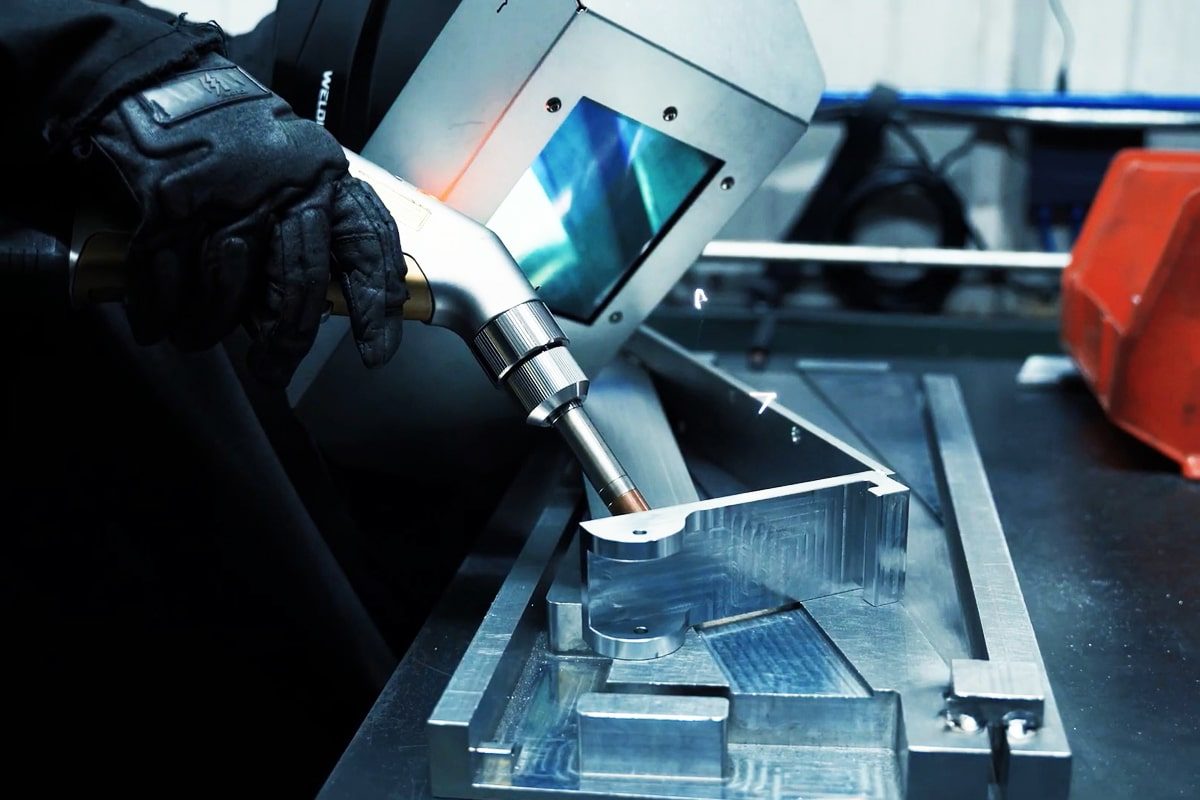
Copper is a material valued for its excellent electrical and thermal conductivity, corrosion resistance, and mechanical strength. These same properties, however, create specific challenges in laser welding. To achieve high-quality welds, it’s essential to understand how copper behaves under laser energy and how factors such as heat flow, reflectivity, surface condition, and alloying influence the process.
Copper’s thermal conductivity is among the highest of all industrial metals, meaning it rapidly draws heat away from the weld zone. This makes it difficult to maintain the localized temperature needed for melting and fusion. If the heat input is too low, incomplete penetration and weak bonding occur. Conversely, excessive laser power can cause keyhole instability or spattering. Successful welding requires balancing power density, speed, and focus to ensure sufficient energy is retained in the joint without overheating surrounding areas.
Copper strongly reflects infrared laser light—especially at common wavelengths like 1064 nm (used in fiber and Nd:YAG lasers). More than 90% of the energy can bounce off the surface instead of being absorbed. This not only reduces welding efficiency but can also damage nearby optics. Green and blue lasers, operating at shorter wavelengths (around 515 nm and 450 nm, respectively), are absorbed more effectively by copper, offering greater stability and energy efficiency.
Copper’s surface condition plays a critical role in laser welding performance. Oxide films, dirt, oil, or other contaminants can scatter the laser beam and reduce energy absorption. Even a thin layer of oxide can disrupt the weld pool and cause porosity or irregular fusion. Therefore, pre-cleaning—using mechanical polishing, chemical cleaning, or laser surface treatment—is essential to achieve consistent results. Maintaining a clean, smooth, and oxide-free surface helps ensure stable energy coupling and high-quality welds.
In summary, welding copper demands careful management of its physical and chemical properties. High thermal conductivity requires precise energy control; strong reflectivity calls for suitable laser wavelengths; and surface cleanliness is non-negotiable for consistent absorption. Additionally, knowing how alloying elements affect behavior under the laser is key to optimizing performance. By mastering these characteristics, manufacturers can unlock the full potential of laser welding for copper applications, ensuring durable, efficient, and defect-free joints.
Despite copper’s challenges as a highly reflective and thermally conductive material, laser welding has proven to be one of the most effective joining methods available for it, especially as technology advances. Compared to traditional methods like TIG or MIG welding, laser welding offers unmatched precision, efficiency, and adaptability. When properly configured, it enables manufacturers to create clean, reliable welds in applications where electrical conductivity, minimal distortion, and high repeatability are critical.
Laser welding delivers an exceptionally concentrated energy beam, allowing for rapid and localized heating. This high energy density enables copper to reach its melting point almost instantly, even with its tendency to dissipate heat. As a result, the weld pool forms and solidifies quickly, minimizing thermal stress and preventing excessive heat spread into adjacent areas. The ability to focus energy so precisely makes laser welding ideal for thin copper components, micro-welding, and parts requiring tight thermal control—such as battery tabs or electronic connectors.
One of the standout advantages of laser welding is its precise control over energy input, penetration depth, and weld geometry. The beam can be finely adjusted in power, focus, and duration, allowing engineers to tailor parameters for different copper thicknesses and alloy compositions. This level of control ensures repeatable, high-quality joints, even in intricate assemblies. In addition, real-time monitoring and closed-loop feedback systems can automatically correct variations during the process, maintaining consistent weld integrity.
Laser welding is a non-contact process that requires minimal filler material and produces very little spatter or contamination. The narrow, focused heat input results in small heat-affected zones (HAZ), significantly reducing distortion, warping, and residual stress. This cleanliness and precision make it especially suited for high-purity or electrically sensitive applications, such as power electronics, motors, and sensors, where even minor contamination can compromise performance.
In essence, laser welding combines concentrated energy, precision control, and clean processing with automation readiness—making it the preferred choice for joining copper in modern manufacturing. Its ability to deliver high-quality, low-distortion welds while maintaining speed and consistency gives it a decisive edge over traditional methods. As laser technology continues to advance, its role in copper-based applications will only grow, driving innovation across energy, electronics, and transportation industries.
Selecting the right laser source is critical for achieving stable, high-quality welds in copper. Because copper reflects much of the energy at conventional laser wavelengths, the choice of laser directly affects absorption efficiency, weld penetration, and process stability. Advances in laser technology have produced several viable options—each with distinct characteristics suited to different thicknesses, joint designs, and production environments.
Green lasers operate at roughly half the wavelength of infrared lasers and are absorbed far more efficiently by copper. At around 515–532 nm, the absorption rate can exceed 40–60%, greatly improving energy coupling and reducing reflectivity-related instability. This allows for lower power requirements, smoother weld pools, and greater process control, particularly when working with thin copper foils or delicate assemblies. Green lasers are particularly beneficial in applications like electric motor windings, battery tab connections, and precision electronic components, where thermal management and joint integrity are crucial. Though typically more expensive and less powerful than infrared systems, their superior absorption often offsets these drawbacks through improved efficiency and reduced rework.
Blue lasers represent the latest frontier in copper welding technology. Operating near 450 nm, they offer the highest absorption efficiency—often above 65–70%. This makes them extremely effective for directly melting copper with minimal reflection losses. Blue lasers enable smooth, stable keyhole formation even at relatively low power levels, resulting in precise and visually clean welds. They are particularly suited for fine-feature welding, microelectronics, and high-speed joining of thin copper layers, as seen in battery manufacturing and electrical interconnections. While still an emerging technology with higher equipment costs and limited output power compared to fiber lasers, blue lasers are rapidly gaining traction for their unmatched absorption and precision capabilities.
To overcome the individual limitations of single-wavelength systems, hybrid and dual-beam laser configurations are becoming increasingly popular. These systems combine the strengths of different wavelengths—such as a high-power infrared laser paired with a green or blue beam—to stabilize the welding process. The shorter wavelength preheats and enhances absorption on the copper surface, while the infrared beam provides deep penetration. This synergy enables consistent, high-speed welding across various copper thicknesses and joint types. Hybrid setups can also integrate multiple beams with spatial or temporal modulation, allowing dynamic control of heat input and reducing common issues like spatter or porosity.
In summary, the choice of laser source for copper welding depends on the balance between absorption efficiency, penetration depth, and application requirements. Fiber lasers offer proven performance for high-power, large-scale operations; green and blue lasers provide superior absorption and control for fine or thermally sensitive applications; and hybrid configurations deliver the best of both worlds. As laser technology continues to evolve, these sources are making copper welding more reliable, efficient, and adaptable than ever before—pushing the boundaries of what’s possible in precision manufacturing.
Laser welding of copper can operate in two primary modes—conduction and keyhole—depending on the laser power density, beam focus, and material characteristics. Understanding the differences between these modes is crucial, as each offers distinct advantages and challenges that directly affect weld geometry, penetration depth, and overall joint quality. The selection of mode is typically guided by the specific application, component thickness, and desired balance between speed, precision, and structural strength.
Conduction mode welding occurs when the laser energy input is relatively low, typically below the threshold required to vaporize the material. In this mode, the laser heats the copper surface until it melts, but no vapor cavity (or “keyhole”) is formed. Heat is conducted from the surface into the material, creating a shallow and wide weld pool.
For copper, the conduction mode is particularly useful for thin sheets, foils, or precision components where deep penetration is unnecessary and minimal thermal distortion is desired. The resulting welds have smooth surfaces, limited spatter, and excellent aesthetic quality. However, because copper dissipates heat rapidly, maintaining a stable conduction weld requires tight control of laser power, beam size, and welding speed. If the energy input is too low, incomplete fusion or lack of bonding can occur; too high, and the process may transition unpredictably into keyhole mode.
The conduction approach is favored in applications such as electronic contacts, fine wire connections, and thin battery tabs—where shallow, clean welds are required and component integrity must be preserved.
Keyhole mode welding occurs when the laser power density is high enough to vaporize the copper surface, creating a narrow, deep cavity (the “keyhole”) filled with vaporized metal and plasma. This cavity allows the laser beam to penetrate deeply into the material, increasing energy absorption and enabling full-depth fusion in thicker components.
In copper, achieving a stable keyhole can be challenging due to its reflectivity and thermal conductivity, which can cause fluctuations in absorption and vapor pressure. Once stabilized, however, keyhole mode provides deep, narrow welds with strong metallurgical bonds and minimal filler material. High-speed, high-precision systems—particularly those using green or blue lasers—help maintain stability by ensuring consistent absorption and reducing keyhole collapse or porosity.
Keyhole mode is commonly employed in heavy-duty applications such as busbar joining, motor rotor welding, and high-current electrical connectors, where deep penetration and mechanical strength are essential.
In summary, conduction and keyhole modes represent two distinct approaches to laser welding copper, each suited to specific material thicknesses and performance requirements. Conduction mode emphasizes surface quality, precision, and low thermal impact—ideal for thin materials and delicate assemblies. Keyhole mode prioritizes depth, strength, and efficiency for thicker joints or structural components. Mastery of both modes, and the ability to transition between them through precise control of laser parameters, is key to optimizing copper welding performance across a wide range of industrial applications.
Achieving consistent, high-quality welds in copper requires precise control of multiple process parameters. Because copper’s high reflectivity and thermal conductivity make it sensitive to variations in heat input and beam interaction, even small adjustments can significantly impact weld penetration, stability, and appearance. Understanding how these parameters interact—and how to optimize them—is essential for balancing energy efficiency, weld quality, and production speed.
Laser power and energy density are the foundation of any welding setup. Copper requires high energy input to overcome its reflective surface and rapid heat dissipation. Insufficient power results in poor penetration or incomplete fusion, while excessive energy can cause spatter, porosity, or burn-through. The key is to maintain a power density high enough to ensure stable melting—typically in the range where the process transitions from conduction to keyhole mode. Advanced laser welding systems allow dynamic control of power, enabling fine-tuning during the weld to accommodate variations in joint geometry or material thickness.
In pulsed laser welding, pulse duration and frequency determine how energy is delivered over time. Short pulses (in the microsecond range) help limit heat input and minimize thermal distortion, making them ideal for precision joints and thin materials. Longer pulses or higher repetition rates allow deeper penetration but can increase the risk of overheating or keyhole instability. For copper, which absorbs more energy as its surface temperature rises, pulse shaping—gradually ramping up and down the laser power within each pulse—can stabilize the melt pool and prevent excessive reflection at the start of the pulse.
The focus position—the distance between the laser’s focal point and the workpiece surface—directly influences weld penetration and energy coupling. A slightly defocused beam (offset above or below the surface) can help stabilize absorption and control the weld pool shape. Too deep a focus may cause excessive penetration and keyhole collapse; too shallow may lead to surface melting without sufficient fusion. For copper, fine-tuning the focus position is especially important because small deviations can shift the process from conduction to keyhole mode or vice versa.
Welding speed determines how long the laser interacts with the material at each point. Slower speeds increase energy input per unit length, leading to deeper penetration but also greater heat-affected zones (HAZ) and distortion. Faster speeds minimize thermal input but risk incomplete fusion. The optimal speed depends on laser power, material thickness, and desired weld profile. In copper welding, precise synchronization of power and speed is critical to maintaining a stable weld pool and preventing defects like underfill or keyhole collapse.
Shielding gases protect the molten pool from oxidation and contamination, ensuring clean, strong welds. Argon and helium are commonly used; argon offers good shielding and stability, while helium provides better heat transfer and deeper penetration due to its higher thermal conductivity. For copper, helium, or mixed gas blends are often preferred, especially for thicker sections or high-power welding, as they enhance melt pool dynamics and reduce surface oxidation. Proper gas flow direction and nozzle design are also important to prevent turbulence that could disturb the weld pool.
Surface condition has a major impact on laser absorption and weld quality. Copper surfaces often develop oxide films or contaminants that scatter the laser beam and cause inconsistent melting. Cleaning the surface before welding—through mechanical polishing, ultrasonic cleaning, or chemical etching—is essential. In some cases, preheating or laser surface cleaning is used to remove oxides and improve energy coupling. A clean, smooth, and oxide-free surface ensures stable process initiation, consistent absorption, and defect-free welds.
In summary, mastering laser welding of copper requires an integrated understanding of key process parameters and their interactions. Laser power, pulse characteristics, and focus determine how energy is delivered; beam oscillation and welding speed control how it’s distributed; shielding gas and surface preparation ensure a clean, stable environment. Each parameter must be fine-tuned to balance penetration, quality, and efficiency. When optimized together, these variables enable precise, repeatable, and high-strength copper welds suited for demanding applications across electronics, automotive, and energy industries.
Laser welding of copper offers precision and performance unmatched by conventional methods, but it also comes with distinct challenges rooted in the metal’s physical properties. Issues such as high reflectivity, porosity, spatter, cracking, and oxidation can compromise weld quality and consistency if not properly managed. Each challenge, however, has proven engineering solutions that leverage advancements in laser technology, process optimization, and material preparation. Understanding these factors is key to achieving stable, defect-free copper welds.
Laser welding copper presents a unique set of challenges, each stemming from the metal’s exceptional thermal and optical properties. High reflectivity requires optimized wavelengths or surface preparation; porosity and spatter demand stable keyhole dynamics and precise control of laser parameters; cracking and oxidation call for careful management of thermal and atmospheric conditions. By combining advanced laser sources, real-time monitoring, and thorough material preparation, manufacturers can overcome these obstacles and achieve reliable, high-performance copper welds suitable for the most demanding industrial applications.
Copper’s thermal and optical characteristics make laser welding highly sensitive to material thickness. The way heat flows, how the laser couples with the surface, and the resulting weld geometry all change significantly as thickness increases. Whether joining ultra-thin foils or multi-millimeter busbars, the proper selection of laser type, power, focus, and travel speed must match the thickness to achieve strong, defect-free joints. Understanding how different thickness ranges behave under laser energy is essential for optimizing process stability and weld quality.
Thin copper foils and sheets are common in electronics, battery tabs, and micro-connectors, where precision and minimal thermal impact are critical. However, their low mass and high thermal conductivity make them extremely sensitive to overheating or burn-through. Even small variations in power density can cause warping, excessive melting, or distortion.
For these materials, low-power, high-absorption laser sources—such as green or blue lasers—are preferred. They deliver energy efficiently and uniformly, avoiding sudden temperature spikes. Pulsed laser operation or short-pulse fiber lasers allow fine control of heat input, while beam oscillation (wobble) improves energy distribution and reduces local stress. Maintaining a tight focus and clean surface is crucial to ensure consistent coupling. Shielding gas should be applied gently to avoid disturbing the thin molten pool. The goal in thin-section welding is not deep penetration, but rather precise fusion and smooth seams without thermal damage to surrounding components.
This range represents the most common copper thicknesses used in electrical connectors, motor parts, and power electronics. In this category, both conduction and keyhole welding modes are viable depending on power and application. The challenge lies in balancing penetration depth with process stability, as copper’s reflectivity and heat dissipation can cause inconsistent absorption and keyhole collapse.
Fiber lasers, when properly tuned, perform well for these thicknesses—especially when combined with real-time power modulation or wobble techniques to stabilize the weld pool. Green and blue lasers also excel, providing better absorption and reduced spatter. For joints up to about 2–3 mm, single-pass welding is often sufficient, but uniform shielding and precise focus positioning are essential to prevent porosity or underfill. Preheating the material slightly can help maintain stable melting and minimize stress gradients during cooling.
Welding thick copper sections introduces greater complexity due to the metal’s high thermal conductivity and the need for deep penetration. The laser must deliver enough concentrated energy to sustain a stable keyhole without excessive reflection or melt ejection. If parameters are not optimized, issues such as incomplete fusion, porosity, or spatter can occur.
High-power infrared fiber lasers—often exceeding several kilowatts—are typically used for thick copper welding. In some cases, hybrid systems that combine laser and arc welding or multi-beam configurations (e.g., infrared + green) are employed to improve penetration efficiency and weld stability. Maintaining beam quality and focus alignment is critical; even slight misalignment can destabilize the keyhole. Shielding gases with high thermal conductivity, like helium or helium-argon mixtures, are recommended to promote deeper heat transfer and protect the weld pool from oxidation. For particularly thick joints, multiple passes or filler wire may be used to achieve complete fusion without compromising mechanical strength.
Copper’s response to laser welding varies significantly with thickness. Thin foils demand ultra-precise, low-energy control to prevent burn-through; medium sections benefit from balanced power and beam motion strategies to stabilize melting; and thick sections require high-power, focused energy delivery to achieve deep, defect-free welds. Each range presents its own thermal and optical challenges, but with careful adjustment of wavelength, power, speed, and shielding, laser welding can produce high-quality joints across all thicknesses. Mastering these considerations allows manufacturers to fully leverage copper’s electrical and thermal advantages in applications from microelectronics to heavy electrical systems.
The success of laser welding copper depends not only on the laser source and process parameters but also on how the joint itself is designed. Joint geometry determines how the laser interacts with the material, how heat is distributed, and how molten metal flows during solidification. Because copper’s high thermal conductivity and reflectivity make the process sensitive to beam alignment and heat input, joint design must ensure efficient energy absorption, proper fusion, and minimal defects. The three most common configurations—butt joints, lap joints, and fillet or T-joints—each have unique characteristics and best practices for achieving optimal weld quality.
Butt joints involve joining two copper pieces edge-to-edge along a common plane. They are often used in components requiring smooth, flush surfaces and high structural integrity, such as electrical busbars, heat exchangers, and precision connectors.
In copper welding, butt joints present a challenge because of the narrow interaction zone and the need for precise fit-up. Even slight gaps can lead to incomplete fusion or penetration issues, as copper’s high heat conduction quickly dissipates the laser energy. To overcome this, the edges must be machined or prepared with tight tolerances, typically under a 0.05 mm gap for thin sections. Using keyhole mode welding with high-power fiber or green lasers allows deeper penetration and strong bonding. Beam oscillation or multi-pass strategies can help bridge small gaps and distribute heat evenly, reducing the risk of undercut or porosity. Preheating may be applied for thicker sections to stabilize the weld pool and minimize residual stress.
Lap joints are commonly used when joining thin copper foils or layered conductors, such as in battery tabs, electrical terminals, and flexible circuits. In this configuration, one copper sheet overlaps another, and the laser penetrates through the top layer to fuse both materials.
While lap joints offer easier alignment and mechanical stability, they pose unique challenges in copper welding. The high reflectivity of the top layer can cause uneven energy absorption, leading to inconsistent penetration. Additionally, trapped gas or surface oxides between the layers may result in porosity or delamination. To address these issues, short-wavelength lasers (green or blue) are often used for better absorption and energy coupling. Controlling focus position—slightly below the interface—ensures both layers melt simultaneously for a strong bond. Beam wobble techniques can help distribute heat and enhance fusion uniformity, while a proper clamping setup minimizes gaps between layers. Shielding gas flow should be optimized to prevent oxidation without disturbing the delicate molten pool.
Fillet and T-joints are used where copper components meet at an angle—commonly in electrical busbar assemblies, motor windings, and mechanical housings. These joints often experience higher thermal stress because of their three-dimensional geometry and variable heat flow paths.
For copper, ensuring consistent penetration along the joint line is crucial. Focus positioning plays a key role—too shallow and the weld lacks fusion at the root; too deep and the base material can overheat. Keyhole mode welding is typically preferred for thicker sections, providing sufficient depth and strength, while conduction mode may be used for smaller fillet welds or thin components to maintain surface quality. Beam oscillation is particularly effective in fillet and T-joints, as it helps distribute energy across uneven geometries and promotes better wetting along both sides of the joint. Proper joint design with smooth transitions and good fit-up prevents hot cracking or localized overheating.
Choosing the right joint design is essential to achieving reliable, high-quality laser welds in copper. Butt joints require precision fit-up and stable energy control for full-depth fusion; lap joints demand careful management of overlap, focus, and gas flow to avoid porosity; and fillet or T-joints benefit from beam motion control and optimized focus to ensure uniform penetration and strength. Each design presents its own set of challenges tied to copper’s thermal and optical properties, but with correct preparation, alignment, and process tuning, these joints can deliver strong, electrically and mechanically sound connections suitable for modern industrial applications.
Laser welding copper demands meticulous control before, during, and after the process. Because copper’s reflectivity, thermal conductivity, and susceptibility to oxidation can affect weld quality at every stage, proper pre- and post-weld treatments are essential. These treatments ensure stable energy absorption, strong metallurgical bonding, and a clean, durable weld surface. Neglecting them can lead to inconsistent penetration, porosity, cracking, or reduced electrical and thermal performance. The three most critical areas of focus are cleaning and preparation, pre-heating, and cooling and post-processing.
Surface condition is one of the most decisive factors in successful copper laser welding. Copper rapidly forms oxide layers and attracts contaminants such as oils, grease, or dust, all of which interfere with laser absorption and can cause defects like porosity, lack of fusion, or unstable keyhole formation. Even thin oxide films scatter laser light and trap gases during melting.
To ensure consistent results, surfaces must be thoroughly cleaned and oxide-free before welding. Common cleaning methods include mechanical polishing, fine abrasive brushing, ultrasonic cleaning, or chemical etching to remove contaminants. In advanced production lines, laser cleaning is increasingly used as a pre-treatment—it vaporizes surface oxides and organic residues precisely without damaging the base material. Maintaining a smooth, reflective surface enhances laser coupling efficiency and stability during welding. Components should also be handled with gloves or clean tools after preparation to prevent recontamination.
Pre-heating is particularly useful when welding thicker copper sections or dissimilar joints where large temperature gradients can create thermal stress and cracking. Copper’s high thermal conductivity quickly draws heat away from the weld zone, making it difficult to maintain a consistent molten pool at the start of the weld. By pre-heating the material to moderate temperatures—typically between 100℃ and 300℃, depending on thickness—this thermal imbalance can be reduced.
Pre-heating minimizes the risk of incomplete fusion, improves wetting, and helps stabilize keyhole formation. It also lessens residual stresses and distortion during cooling, leading to stronger, more uniform welds. Methods for pre-heating include hot plates, infrared lamps, or induction systems integrated into the welding station. However, it is crucial to avoid overheating, as excessive preheat can increase oxidation or cause undesired grain growth in the copper microstructure.
After welding, the cooling rate significantly affects the weld’s microstructure, mechanical integrity, and electrical conductivity. Copper welds tend to cool rapidly due to the material’s high heat conductivity, which can lead to internal stresses or micro-cracks if not properly controlled. Managing the cooling rate—especially for thicker components—helps maintain ductility and reduce residual stress. Controlled cooling can be achieved by adjusting fixture design, using thermal barriers, or preheating surrounding structures to even out heat flow.
Post-weld cleaning is equally important to remove any oxidation or surface discoloration formed during welding. Techniques such as light abrasive polishing, chemical passivation, or laser cleaning can restore surface finish and conductivity. For applications where weld conductivity is critical—such as in electrical connectors or busbars—post-weld inspection and conductivity testing are recommended to verify performance. In high-reliability applications, non-destructive testing methods like visual inspection, ultrasonic testing, or X-ray analysis may also be used to confirm weld integrity.
Pre and post-weld treatments are vital for ensuring the reliability and performance of laser-welded copper components. Cleaning and preparation remove oxides and contaminants that hinder energy absorption; pre-heating reduces thermal gradients and stabilizes the weld pool; and controlled cooling and post-processing maintain structural and electrical integrity. Together, these steps help prevent common welding defects such as porosity, cracking, and oxidation. By integrating proper treatments into the production workflow, manufacturers can consistently achieve high-quality, durable, and conductive copper welds that meet the demanding standards of modern industries.
Achieving reliable, high-quality welds in copper requires not only precise process control but also effective real-time monitoring and post-weld inspection. Because copper’s high reflectivity and rapid thermal behavior make the welding process sensitive to fluctuations, continuous quality assurance is essential. Modern laser systems integrate advanced sensors and diagnostic tools that track weld conditions as they happen—detecting defects like porosity, cracking, or lack of fusion before they compromise the final product. Equally important are post-weld testing methods that confirm the structural, electrical, and aesthetic integrity of the joint. The three primary pillars of quality assurance in copper laser welding are vision and pyrometry, acoustic and optical sensors, and post-weld testing.
High-speed vision systems and pyrometers play a vital role in monitoring laser welding of copper. Vision cameras, often coaxial with the laser beam, capture live images or video of the melt pool and weld seam. These images help detect surface defects, misalignment, or changes in weld width and consistency. In automated production, vision-based feedback can guide laser positioning or stop the process if a deviation occurs, ensuring that every weld meets dimensional tolerances.
Pyrometry, on the other hand, measures the thermal emission from the weld zone in real time. Because copper’s reflectivity makes temperature control difficult, non-contact infrared pyrometers or multi-wavelength systems are used to estimate the melt pool temperature with high accuracy. Monitoring temperature profiles helps detect overheating, lack of fusion, or energy fluctuations. For instance, a sudden temperature drop might indicate a gap or poor absorption, while excessive temperature rise may signal keyhole instability. Combined vision and pyrometry systems provide both spatial and thermal insights, making them indispensable for precise control and documentation in high-volume copper welding processes.
Acoustic and optical sensing technologies provide deeper insight into the physical dynamics of the laser welding process. These systems detect real-time changes in sound, light, and plasma emissions that correlate directly with weld stability and defect formation.
Acoustic emission sensors listen for specific frequency patterns produced by keyhole formation, spatter, or cracking events. A stable keyhole generates a consistent sound signature, whereas irregularities produce sharp spikes or variations—early warnings of porosity, blowouts, or incomplete penetration. Similarly, optical sensors monitor light intensity and plasma radiation emitted from the keyhole or molten pool. Changes in these optical signals can reveal issues like keyhole collapse, excessive vaporization, or contamination on the copper surface.
Modern laser welding systems often combine both acoustic and optical feedback in a closed-loop control setup, where detected irregularities trigger automatic parameter adjustments—such as reducing power or modifying beam oscillation—to maintain stability. This level of real-time intelligence allows manufacturers to reduce scrap, improve yield, and ensure consistent weld quality even in high-speed or complex production environments.
Even with advanced real-time monitoring, post-weld inspection remains essential for verifying mechanical strength, electrical conductivity, and overall weld integrity. For copper welds, visual inspection is the first step—evaluating surface smoothness, discoloration, and bead uniformity. However, subsurface defects like porosity or cracks require more advanced testing.
Non-destructive testing (NDT) methods such as ultrasonic testing, X-ray inspection, and eddy current testing can detect internal voids or discontinuities without damaging the part. These methods are critical for components used in high-reliability applications like battery modules, busbars, and electrical connectors. For conductive parts, electrical resistance testing can confirm that the weld maintains low resistance and optimal current flow, ensuring performance in real-world conditions. In R&D and quality validation stages, destructive testing methods—like tensile, shear, or microhardness testing—are used to quantify mechanical performance and verify process parameters.
Quality monitoring and inspection are the backbone of consistent, defect-free laser welding in copper. Vision and pyrometry systems ensure precise alignment, thermal control, and weld consistency in real time. Acoustic and optical sensors provide deep process feedback, allowing rapid detection and correction of keyhole or melt pool instabilities. Post-weld testing, through both non-destructive and destructive methods, confirms the mechanical and electrical integrity of the final joint. Together, these tools form a comprehensive quality assurance framework—transforming laser welding from a delicate process into a controlled, repeatable, and industry-proven solution for copper joining applications.
Laser welding of copper demands not only technical precision but also consistent maintenance and rigorous safety practices. Because copper’s reflectivity, high energy input, and vaporization behavior can strain equipment and pose hazards to operators, maintaining system reliability and ensuring safe working conditions are crucial. Effective maintenance keeps the laser system performing at peak efficiency, while proper safety measures protect both personnel and the workplace. The three most important focus areas are optics maintenance, dust and fume extraction, and eye and skin protection.
In copper laser welding, the optical system—comprising lenses, mirrors, protective windows, and focusing heads—is critical to achieving accurate energy delivery. However, copper’s reflective nature and the tendency for spatter and vaporized metal to redeposit on optical components can quickly degrade beam quality. Even a thin layer of contamination can scatter the beam, reduce focus precision, and lower energy transmission, leading to inconsistent welds or potential damage to the optics themselves.
Regular inspection and cleaning of the optical path are essential. Protective glass or quartz windows should be checked frequently for signs of discoloration, pitting, or residue buildup. Using filtered, dry air or nitrogen purge systems helps protect optics from contamination by maintaining positive pressure inside the laser head. Cleaning should only be performed using approved lint-free materials and optical-grade solvents, as improper handling can scratch coatings or alter beam alignment.
Maintaining correct focus calibration and beam alignment is equally important, especially in automated systems where even minor deviations can shift weld position or affect penetration. Many manufacturers integrate automated calibration systems that monitor and adjust focus in real time, ensuring consistent performance over extended operation. Proper optics maintenance directly translates to longer component life, stable power output, and higher-quality welds.
Copper laser welding produces metal vapors, fine particulate matter, and fumes that must be carefully managed to protect both equipment and personnel. When copper vaporizes under high-energy laser beams, it condenses into fine oxide particles that can contaminate optical systems and pose respiratory hazards. Prolonged exposure to copper fumes can lead to health issues such as metal fume fever or respiratory irritation, making efficient extraction and filtration systems essential in any welding environment.
Modern dust and fume extraction systems use multi-stage filtration—typically involving pre-filters, HEPA filters, and activated carbon filters—to capture metallic particles and harmful gases. Extraction nozzles should be positioned close to the weld zone to efficiently capture fumes without disturbing shielding gas flow. Regular filter maintenance and air quality monitoring help ensure consistent extraction efficiency.
In addition to protecting workers, effective fume management also maintains equipment performance. Reducing airborne particulates minimizes contamination of lenses, sensors, and mechanical components, thereby extending system life and maintaining process stability.
Laser welding presents serious risks to unprotected eyes and skin due to the intense optical radiation produced during operation. Infrared, green, or blue laser beams used in copper welding can cause irreversible eye damage—even from reflected or scattered light—and skin burns upon direct exposure. Because copper is highly reflective, secondary reflections from the workpiece or surrounding surfaces can be especially hazardous.
To mitigate these risks, all operators and nearby personnel must wear laser-rated protective eyewear specifically matched to the laser wavelength and power level in use. For instance, glasses designed for 1064 nm infrared lasers will not protect against 515 nm green or 450 nm blue lasers. Proper labeling and compliance with safety standards (such as EN 207/208 or ANSI Z136.1) are mandatory.
Welding areas should be enclosed in laser-safe barriers or protective cabins, equipped with interlocks that disable the beam if a door or panel is opened. Surfaces inside the enclosure should be matte and non-reflective to minimize stray reflections. Operators should also wear protective gloves, long sleeves, and flame-resistant clothing to prevent exposure to hot spatter or radiant heat. For robotic or automated setups, remote monitoring can further reduce direct operator exposure.
Maintaining laser welding systems and enforcing strict safety measures are non-negotiable in copper welding operations. Optics maintenance ensures consistent beam quality, prevents contamination, and extends equipment life. Dust and fume extraction protects operators’ health and safeguards optical and mechanical components from degradation. Eye and skin protection, supported by proper enclosures and laser-rated PPE, is essential to prevent serious injuries caused by reflected or direct laser radiation. Together, these practices form a robust framework for sustainable, efficient, and safe copper laser welding—ensuring not only high-quality production but also a secure, compliant working environment.
Laser welding of copper has evolved from a specialized technique into a cornerstone of modern manufacturing. As industries demand higher precision, better electrical performance, and reduced material waste, laser welding provides the ideal solution—offering high speed, minimal distortion, and superior control. Copper’s unique combination of electrical conductivity, thermal efficiency, and corrosion resistance makes it indispensable across numerous sectors. From electric vehicles to architectural design, laser welding enables strong, clean, and efficient joints that traditional methods often struggle to achieve. Below are the primary industries where copper laser welding plays a vital role.
The rise of electric mobility has created enormous demand for advanced copper joining technologies. Laser welding is now a core process in battery pack assembly, motor manufacturing, and high-voltage electrical systems—all of which rely on copper for its excellent conductivity.
In battery production, laser welding is used to join thin copper foils, busbars, and terminals with exceptional precision. These joints must carry high current with minimal resistance, making clean, low-porosity welds essential. Green and blue lasers, with their high absorption efficiency, are particularly effective for welding delicate copper tabs and connectors without damaging surrounding materials.
In EV motors, laser welding joins hairpin windings, busbar connections, and stator components, replacing mechanical crimping and soldering. This results in improved electrical performance, reduced weight, and enhanced durability. Additionally, automated laser welding lines offer the speed, repeatability, and traceability required for mass EV production—making it one of the most transformative applications of the technology.
Laser welding has become a preferred joining method in the electrical and electronics industries, where precision, cleanliness, and thermal control are critical. Copper is used extensively in connectors, sensors, switchgear, and printed circuit board (PCB) components.
In microelectronics, laser welding enables the production of miniature joints with micron-level accuracy, ensuring reliable conductivity in compact designs. Pulsed and short-wavelength lasers allow for minimal heat-affected zones, protecting sensitive electronic components from thermal damage. In larger-scale electrical assemblies—such as switchgear terminals and power connectors—fiber and green lasers provide robust, repeatable joints capable of handling high current loads.
Laser welding also supports the growing trend toward miniaturization and automation in electronics manufacturing, enabling high throughput with consistent quality and no need for consumables like solder or filler materials.
In the power generation and distribution sectors, copper components must handle extreme electrical loads and environmental conditions. Laser welding provides a clean, strong, and conductive joining method for busbars, contact terminals, and transformer windings.
Traditional methods such as brazing or mechanical fastening often lead to higher resistance and oxidation issues over time. In contrast, laser-welded joints deliver low electrical resistance, long-term stability, and high mechanical strength. For high-power systems and substations, fiber or hybrid laser systems are used to weld thick copper busbars and connectors, ensuring reliable performance with minimal maintenance. The precision and repeatability of laser welding also support the production of custom or high-efficiency energy systems, where material integrity and current flow consistency are critical.
Copper’s superior thermal conductivity makes it a key material in heating, ventilation, air conditioning (HVAC) systems, and heat exchangers. Laser welding is increasingly replacing traditional brazing or soldering in these applications due to its ability to create strong, leak-free joints without fluxes or filler materials.
For heat exchangers, laser welding provides deep, narrow welds that ensure excellent thermal transfer and mechanical durability, even in complex geometries. The non-contact nature of the process minimizes distortion and preserves the dimensional accuracy of delicate fins and tubing. Additionally, automated laser systems can join hundreds of small copper joints rapidly, improving production speed and reducing energy consumption compared to conventional joining techniques.
In HVAC manufacturing, laser welding is used to assemble copper tubing, manifolds, and heat sinks with high reliability and corrosion resistance. The clean, precise nature of the process also eliminates the risk of introducing impurities that could affect performance or long-term sealing integrity.
Beyond industrial and electrical uses, laser welding has also gained popularity in art, design, and architectural fabrication. Copper’s visual warmth and resistance to corrosion make it an attractive material for decorative panels, sculptures, lighting fixtures, and structural elements.
In these creative applications, laser welding allows artists and fabricators to achieve seamless joints, intricate detailing, and smooth finishes without distortion or discoloration. The ability to precisely control the weld’s shape and penetration enables invisible or aesthetic seams that preserve copper’s natural beauty. Moreover, the process’s cleanliness eliminates the need for post-weld grinding or polishing, reducing production time and material waste.
Architectural firms increasingly use laser welding for high-end copper facades, custom fixtures, and artistic installations, where structural integrity must align with visual appeal.
Laser welding has become an enabling technology for industries that depend on copper’s exceptional electrical and thermal properties. In electric vehicles, it supports high-performance energy systems and lightweight motor designs. In electronics and power transmission, it ensures precise, conductive, and durable joints. In HVAC and heat exchangers, it offers clean, efficient bonding with superior thermal transfer. And in art and architecture, it delivers flawless aesthetics with structural strength. Across these diverse sectors, laser welding continues to redefine what is possible with copper—combining advanced technology, efficiency, and precision to meet the evolving demands of modern manufacturing and design.
Laser welding has transformed the way copper components are joined, offering precision, speed, and cleanliness that traditional methods often struggle to match. However, to fully appreciate its advantages, it’s important to understand how it compares to other established copper joining processes—particularly TIG welding, resistance welding, and ultrasonic welding. Each technique has its own strengths and limitations depending on application, material thickness, production volume, and quality requirements. By comparing these methods, manufacturers can better determine where laser welding provides the most value and when alternative approaches may still be suitable.
TIG welding, or Gas Tungsten Arc Welding (GTAW), has long been a conventional choice for joining copper due to its simplicity and accessibility. It produces high-quality welds with good control over heat input and filler material addition. However, when working with copper, TIG welding faces several inherent limitations.
Copper’s high thermal conductivity draws heat rapidly away from the weld area, making it difficult to maintain a stable molten pool. This often requires preheating the material to several hundred degrees Celsius to prevent lack of fusion or cracking. The process is also relatively slow and operator-dependent, which limits its suitability for high-volume production. TIG welds tend to introduce wider heat-affected zones, leading to distortion and potential degradation of mechanical or electrical properties—especially in precision components or thin sections.
By contrast, laser welding delivers concentrated energy with far less overall heat input. This allows for faster processing, narrower weld seams, minimal distortion, and no need for filler materials in most cases. It also enables automation and repeatability—key advantages over manual TIG operations. While TIG remains useful for small-scale repairs or thick copper components, laser welding outperforms it in efficiency, precision, and scalability.
Resistance welding joins copper through localized heating generated by passing a high electrical current through the materials under pressure. It’s widely used for wire terminations, connectors, and small electrical assemblies due to its speed and simplicity. However, because copper has very low electrical resistance, it requires extremely high currents to achieve proper heating—posing challenges in power consumption, electrode wear, and process consistency.
Electrode degradation is a significant issue: copper’s softness and conductivity cause rapid erosion and sticking, increasing maintenance frequency and production downtime. Additionally, resistance welding provides limited flexibility for complex geometries or multi-layer joints, as uniform current distribution becomes difficult to maintain.
Laser welding, in comparison, eliminates the need for physical contact or current flow. It provides non-contact, precision-controlled energy delivery that can penetrate multiple layers without damaging surrounding materials. This makes it ideal for battery modules, busbars, and electronics, where clean, repeatable welds are critical. Furthermore, laser systems can be easily integrated into automated production lines, offering better long-term consistency and lower maintenance than resistance welding setups.
Ultrasonic welding joins materials by applying high-frequency mechanical vibrations under pressure. It is particularly effective for thin copper foils, wires, and battery tabs, where heat-sensitive materials must be protected. The process produces solid-state bonds without melting the metal, minimizing oxidation and maintaining electrical conductivity.
While ultrasonic welding offers excellent performance for small-scale or delicate joints, it has notable limitations. It is not suitable for thicker copper components or applications requiring deep penetration. The mechanical vibrations also place stress on fixtures and tooling, leading to wear and requiring regular maintenance. Joint geometry and surface flatness are critical—any deviation can cause inconsistent bonding or weak connections.
Laser welding, by contrast, can join both thin and thick copper materials with precise control over penetration depth and heat input. It produces fully fused metallurgical bonds, providing higher mechanical strength and durability than ultrasonic welds. Moreover, laser systems can handle a broader range of component geometries and are better suited for automated, high-volume manufacturing environments where repeatability and precision are paramount.
Each copper joining method—TIG, resistance, and ultrasonic welding—has its place depending on application needs, but laser welding stands out for its speed, precision, and adaptability. Unlike TIG, it minimizes heat input and distortion while enabling full automation. Compared to resistance welding, it avoids electrode wear and provides cleaner, more consistent joints without physical contact. And unlike ultrasonic welding, it supports a wider range of thicknesses and geometries, producing strong, fused bonds ideal for structural and electrical applications alike.
As industries such as electric vehicles, power electronics, and renewable energy push for higher performance and production efficiency, laser welding increasingly represents the optimal balance of quality, reliability, and scalability. It doesn’t merely replace traditional methods—it redefines what’s possible in joining copper for the next generation of advanced manufacturing.
Laser welding has become a breakthrough technology for joining copper, overcoming the challenges posed by its high reflectivity, rapid heat dissipation, and oxidation tendencies. By using advanced laser sources—such as fiber, green, and blue lasers—and optimizing key process parameters, manufacturers can now achieve clean, stable, and high-strength welds that were once difficult or impossible with traditional methods.
Compared to TIG, resistance, or ultrasonic welding, laser welding delivers unmatched precision, speed, and automation capability. It minimizes thermal distortion, eliminates the need for filler materials, and produces welds with superior electrical and mechanical properties. Proper surface preparation, pre-heating, and post-weld inspection ensure consistent results, while real-time monitoring and sensor feedback maintain process stability and quality control.
Across industries—from electric vehicles and power systems to electronics, HVAC, and architectural fabrication—laser welding enables stronger, more efficient, and aesthetically refined copper joints. It supports both mass production and intricate, high-precision applications with equal reliability.
In essence, laser welding transforms copper from a challenging material into a high-performance manufacturing asset. By combining the right laser technology, process control, and safety practices, engineers can achieve durable, conductive, and defect-free welds—setting a new benchmark for quality and innovation in copper joining.