

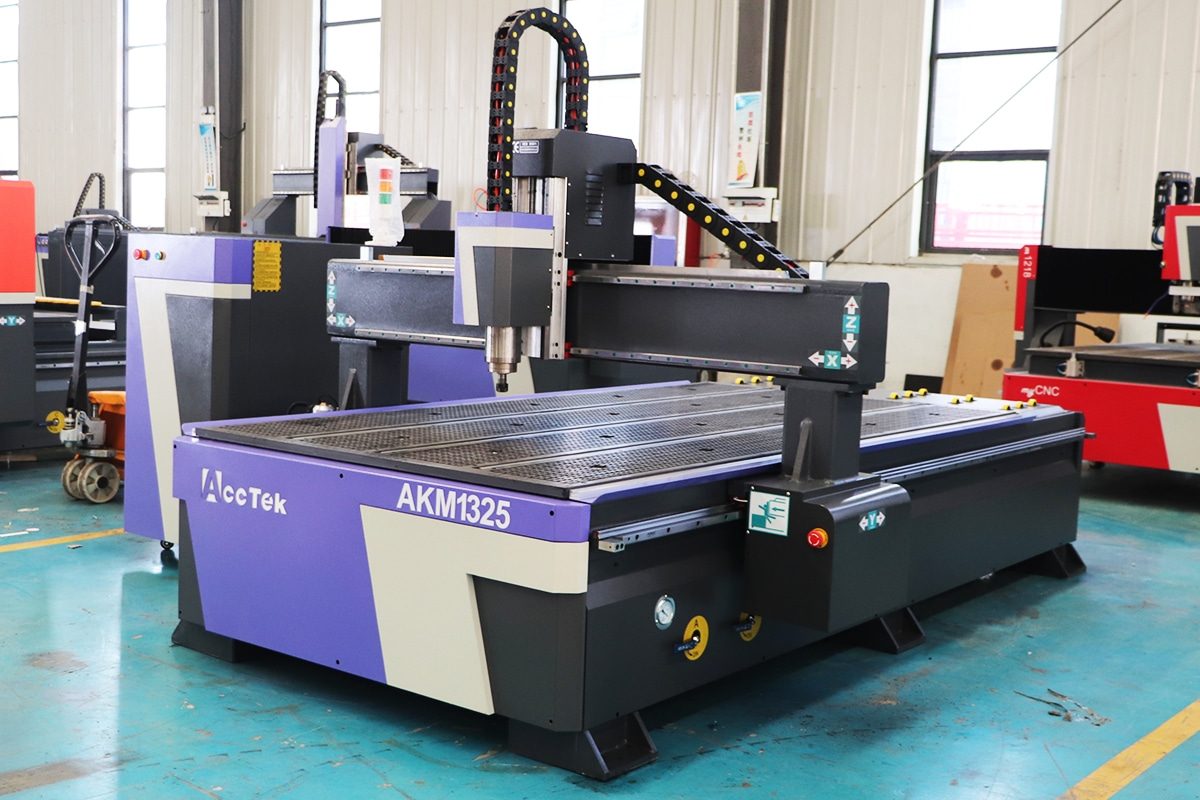
How To Perform Double-Sided Machining Using CNC Routers
Double-sided machining is an essential CNC routing technique used to create parts that require detailed features on both faces of a workpiece. Unlike single-sided operations, where all cuts are completed from one direction, double-sided machining involves flipping the material during the manufacturing process to machine the opposite side with precise alignment. This method is widely used in woodworking, plastic fabrication, foam modeling, mold making, sign production, and advanced prototyping, especially when producing complex three-dimensional parts or components with undercuts, contours, and through-features that cannot be completed from a single setup.
The main challenge in double-sided CNC machining is maintaining accurate registration between the two machining operations. Even a small misalignment during the flipping process can lead to dimensional errors, mismatched contours, or unusable parts. To solve this problem, machinists rely on alignment strategies such as dowel pins, locating holes, custom fixtures, vacuum tables, or indexed workholding systems. Proper planning of the machining sequence, material positioning, and toolpath origin is critical for achieving clean transitions between both sides of the workpiece.
Modern CNC routers and CAM software have made double-sided machining more accessible and efficient than ever before. Most professional CAM systems now include dedicated tools for creating mirrored toolpaths, managing flip operations, and simulating both machining stages before production begins. However, success still depends heavily on careful setup preparation, accurate zeroing, and a thorough understanding of machine coordinates and work offsets.
This article explains the complete process of performing double-sided machining using CNC routers, including design preparation, workholding methods, alignment techniques, CAM programming, setup procedures, and common mistakes to avoid. Whether you are producing functional mechanical components, artistic carvings, or precision molds, mastering double-sided machining can significantly expand the capabilities of your CNC routing workflow.
Table of Contents
Understanding Double-Sided CNC Machining
Double-sided CNC machining is a machining technique in which both surfaces of a workpiece are processed separately using a CNC router. Instead of completing all cutting operations from one direction, the material is flipped during the machining process so the opposite side can also be milled, drilled, carved, or shaped. This approach allows manufacturers to create highly detailed parts with features that extend through the material or require machining access from multiple directions.
In modern CNC manufacturing, double-sided machining has become increasingly important because product designs are becoming more complex, lightweight, and precision-oriented. Many components now include curved surfaces, deep pockets, internal cavities, recessed areas, and intricate contours that cannot be fully produced with single-sided machining alone. By machining both faces of a part, CNC operators can achieve greater design flexibility, improved dimensional accuracy, and higher-quality finished products.
One of the most important aspects of double-sided machining is maintaining alignment between the two operations. After the workpiece is flipped, the CNC router must continue machining in exactly the correct position relative to the first side. Accurate alignment methods, such as dowel pins, locating holes, fixture plates, vacuum tables, and edge references, are commonly used to ensure both sides match perfectly. Even small positioning errors can result in visible offsets, uneven wall thicknesses, or unusable parts.
Double-sided machining is widely used across industries such as woodworking, plastic fabrication, aerospace, automotive manufacturing, mold making, sign production, and prototype development because it enables the production of more advanced and structurally accurate components.
What Is Double-Sided Machining
Double-sided machining is the process of machining two opposing sides of a material blank during separate CNC operations. The workpiece is first machined on one side, then carefully flipped or rotated into a predetermined orientation so the second side can be machined using another set of programmed toolpaths.
Unlike single-sided machining, where all operations are limited to one accessible surface, double-sided machining expands the machining area to include the entire thickness of the material. This makes it possible to create through-features, mirrored contours, deep cavities, complex 3D geometries, and fully sculpted shapes that would otherwise be difficult or impossible to produce.
The process usually begins with preparing a CAD model that contains geometry for both sides of the part. CAM software is then used to generate separate toolpaths for the front and back machining operations. To maintain positional accuracy, machinists establish a reliable reference system using alignment holes, registration pins, or fixture-based positioning methods.
Depending on the complexity of the project, double-sided machining may involve simple two-sided flips or more advanced indexed setups. Some industrial CNC systems even automate the repositioning process using rotary axes or specialized fixtures, reducing manual intervention and improving repeatability.
Why Double-Sided Machining Is Necessary
Complex Geometry
Modern product designs often contain shapes that cannot be reached from a single machining direction. Features such as deep pockets, recessed cavities, curved surfaces, undercuts, and multi-level contours require access from both sides of the material.
For example, a 3D carved mold or sculpted decorative panel may contain details on both the front and rear surfaces. Attempting to machine all these features from one side could result in inaccessible cutting areas or excessive tool length requirements that reduce machining stability. Double-sided machining solves this problem by allowing the CNC router to approach the workpiece from multiple directions.
This capability is especially valuable in industries where products require intricate detailing, lightweight internal structures, or highly customized shapes.
Reduced Material Thickness
When machining thin materials, removing excessive material from only one side can weaken the structure and increase the risk of deformation. Thin workpieces may flex, vibrate, or warp during machining if the cutting forces become unbalanced.
Double-sided machining distributes material removal more evenly across both surfaces. Instead of cutting a deep pocket entirely from one direction, the operation can be divided between the front and back sides. This reduces stress concentration and helps maintain structural stability throughout the machining process.
Balanced machining also improves dimensional consistency and reduces the likelihood of material failure, especially when working with delicate plastics, thin wood panels, or lightweight composite sheets.
Improved Surface Quality
Surface finish quality is often significantly improved when both sides of a workpiece are machined separately. Certain materials produce cleaner edges or smoother surfaces depending on the cutting direction and tool approach angle.
In woodworking, machining from both sides can minimize tear-out and splintering along visible edges. In plastics and composites, it can reduce chipping, melting, or edge fraying. By carefully planning toolpaths for each side, machinists can optimize cutting conditions to produce cleaner finishes and sharper details.
Double-sided machining also reduces the amount of manual sanding, trimming, and post-processing required after production, improving both efficiency and final appearance.
Better Structural Accuracy
Many machined components require precise alignment between features located on opposite sides of the material. Examples include drilled holes, threaded inserts, alignment slots, mounting channels, and interlocking mechanical parts.
Double-sided machining ensures these features remain properly positioned relative to one another. Accurate flipping and referencing methods allow the CNC router to maintain consistent dimensions and wall thicknesses throughout the entire part.
This level of accuracy is essential in industries such as aerospace, automotive manufacturing, robotics, and industrial equipment production, where even small dimensional errors can affect assembly performance and product reliability.
Advanced Product Design
As manufacturing technologies continue to evolve, designers are creating increasingly sophisticated products with organic shapes, lightweight structures, ergonomic surfaces, and integrated functional features. Many of these designs require machining access from multiple directions.
Double-sided machining gives engineers and designers greater creative freedom by removing many of the limitations associated with one-sided processing. Products can incorporate complex contours, hollow sections, hidden cavities, decorative carvings, and precision-fit assemblies while maintaining high structural integrity.
This machining approach supports both aesthetic and functional innovation, making it a critical technique in modern CNC manufacturing.
Common Applications
Woodworking
In woodworking, double-sided machining is commonly used for furniture components, cabinet doors, decorative carvings, musical instruments, and custom architectural elements. Many wood products contain visible front-side details combined with rear-side relief cuts or assembly features.
Examples include carved chair backs, sculpted table legs, layered signage, and 3D artistic panels. Machining both sides allows woodworkers to create smoother contours, cleaner edge transitions, and more detailed surface textures while reducing tear-out and sanding work.
Plastic Fabrication
Plastic components frequently require features on both sides, including pockets, cutouts, recessed areas, and mounting holes. Double-sided machining allows manufacturers to create lightweight yet highly detailed parts with improved dimensional consistency.
Industries such as electronics, medical devices, packaging, and signage often use this process to produce custom plastic housings, display components, acrylic panels, and engineering prototypes. Machining from both sides also helps minimize heat buildup and material distortion during cutting.
Composite Manufacturing
Composite materials such as carbon fiber, fiberglass, and reinforced laminates are widely used in aerospace, automotive, marine, and sporting equipment industries. These materials often require highly precise machining while maintaining structural integrity.
Double-sided machining reduces cutting stress and helps prevent delamination by balancing machining forces across both surfaces. It also improves access to complex geometries commonly found in lightweight structural components and aerodynamic designs.
Metalworking
Many CNC routers are capable of machining aluminum and other soft metals. Double-sided machining is often necessary when producing metal parts that contain pockets, channels, contours, or drilled features on opposing faces.
Examples include brackets, mounting plates, enclosures, molds, and lightweight mechanical components. Accurate alignment between both machining operations is essential to ensure proper fit and mechanical performance after assembly.
Foam Processing
Foam machining is commonly used for mold production, packaging inserts, theatrical props, sculptures, architectural models, and prototype development. Large foam parts often contain complex organic shapes that require machining from multiple directions.
Double-sided machining enables smoother 3D contours, better symmetry, and more accurate dimensional control while reducing the need for extensive manual shaping. This is especially important when producing large-scale prototypes or artistic forms with detailed surface geometry.
Double-sided CNC machining is an essential manufacturing technique that allows CNC routers to process both surfaces of a workpiece with high precision and flexibility. By flipping the material during machining, manufacturers can create complex geometries, improve structural accuracy, reduce material stress, and achieve higher-quality surface finishes that are difficult to accomplish with single-sided operations alone.
The process is widely used in woodworking, plastics, composites, metalworking, and foam fabrication because it supports advanced product designs and more sophisticated manufacturing requirements. However, successful double-sided machining depends heavily on proper setup planning, accurate alignment methods, reliable workholding systems, and precise coordinate management.
As CNC technology and CAM software continue to advance, double-sided machining is becoming more efficient, accessible, and capable of producing increasingly complex components. Mastering this technique allows machinists and manufacturers to expand the capabilities of CNC routers while improving production quality, consistency, and design possibilities.
CNC Router Requirements For Double-Sided Machining
Double-sided machining places higher demands on a CNC router than standard single-face cutting. Since the workpiece must be flipped and machined from both sides while maintaining perfect alignment, even small machine errors can lead to mismatched features, uneven depths, or rejected parts. To achieve accurate and repeatable results, the CNC router must provide stable motion control, consistent spindle performance, a rigid worktable, and advanced controller functions that support precise repositioning.
The following machine requirements are essential for reliable double-sided machining operations.
Machine Accuracy
Machine accuracy is one of the most important requirements for double-sided machining. When a part is flipped over, the second-side operations must align perfectly with the features already machined on the first side. Any positioning error can create visible offsets, incorrect hole alignment, or dimensional inconsistencies.
A CNC router used for double-sided work should offer high positioning accuracy and repeatability across all axes. Repeatability is especially critical because the machine must return to the same coordinates after the workpiece has been repositioned. Even a small deviation can affect the final result.
Several machine components influence overall accuracy:
- Linear guide rails and ball screws should be manufactured with tight tolerances to minimize backlash.
- Servo motors generally provide more precise motion control than stepper motors, especially during complex machining operations.
- The machine frame should be rigid enough to resist vibration and deflection during cutting.
- Proper machine calibration is necessary to maintain consistent alignment over time.
In addition, the machine should support reliable workpiece referencing methods. Many manufacturers use locating pins, dowel holes, or vacuum positioning systems to ensure the material returns to the same location after flipping. Without accurate referencing, even a highly precise machine cannot guarantee proper two-sided alignment.
For industries such as furniture manufacturing, sign making, aerospace, mold production, and custom woodworking, high machine accuracy directly affects product quality and assembly precision.
Spindle Performance
The spindle plays a major role in maintaining machining quality on both sides of the workpiece. A weak or unstable spindle can introduce vibration, inconsistent cutting depths, poor edge quality, and dimensional errors that become more noticeable during double-sided operations.
A CNC router intended for double-sided machining should have sufficient spindle power to handle different materials and cutting loads without losing stability. Hardwoods, plastics, composites, and aluminum all require different spindle characteristics, but in every case, stable cutting performance is essential.
Important spindle considerations include:
- Consistent RPM control throughout the machining process
- Low vibration and minimal runout for accurate cutting
- Adequate torque at different speed ranges
- Efficient cooling systems for long machining cycles
- Compatibility with automatic tool changers when multiple tools are required
Spindle runout is particularly important in double-sided machining. Excessive runout can cause slight dimensional variations that become obvious when both sides of the part must align precisely. High-quality spindles reduce these inconsistencies and improve overall surface finish.
Tool holding systems also affect spindle performance. Precision collets and properly balanced cutting tools help maintain concentricity and reduce vibration during machining. This becomes especially important when machining detailed contours or thin materials from both sides.
Worktable Stability
A stable worktable is essential for maintaining consistent positioning during double-sided machining. Since the workpiece must often be removed, flipped, and reinstalled, the table must hold the material securely while preventing movement or distortion.
Any instability in the worktable can cause alignment problems between the first and second machining operations. Even slight material shifting can lead to inaccurate cuts, poor edge matching, or assembly issues.
Common workholding systems used for double-sided machining include:
- Vacuum tables
- T-slot clamping systems
- Pneumatic fixtures
- Dedicated jigs and fixtures
- Alignment pin systems
Vacuum tables are widely used because they provide even holding pressure across large surfaces without interfering with tool movement. However, the vacuum system must be strong enough to maintain consistent material positioning throughout the cutting process.
For smaller or irregularly shaped parts, custom fixtures and locating pins are often necessary. These fixtures help ensure that the workpiece returns to the same orientation after flipping. In many production environments, fixture quality is just as important as machine accuracy.
The table surface itself should also remain flat and rigid over time. Warped or uneven spoilboards can create thickness variations that affect machining depth on both sides. Regular resurfacing of spoilboards helps maintain consistent cutting conditions.
Machine vibration control is another important factor. A rigid table structure reduces chatter and improves cutting stability, particularly during high-speed routing operations.
CNC Controller Features
The CNC controller is responsible for coordinating machine movement, tool paths, and positioning accuracy during double-sided machining. Advanced controller features can significantly improve setup efficiency, reduce alignment errors, and simplify the overall machining process.
One of the most important controller capabilities is support for coordinate system management. The controller should allow operators to define accurate work offsets and maintain consistent reference points when the material is flipped.
Useful controller functions for double-sided machining include:
- Multiple work coordinate systems
- Fixture offset management
- Tool length compensation
- Origin reset functions
- Automatic probing systems
- Rotary axis synchronization when required
- Simulation and toolpath verification features
Automatic probing systems are especially valuable because they help operators locate reference points quickly and accurately. Probing can reduce manual measurement errors and improve repeatability between machining operations.
Some advanced CNC controllers also support mirrored machining functions. These features simplify programming for symmetrical parts by automatically generating the opposite-side toolpath based on the original machining data.
The controller should also provide smooth motion interpolation and stable data processing during high-speed machining. Poor controller performance can cause inconsistent movement, surface defects, or dimensional inaccuracies.
Modern controllers often integrate with CAD/CAM software to streamline programming and reduce setup complexity. This integration is beneficial for double-sided machining because it helps ensure that both machining operations remain properly aligned within the digital workflow.
Double-sided machining requires more than simply flipping a workpiece and machining the opposite side. The process depends heavily on machine precision, stable cutting performance, reliable workholding, and intelligent controller functions. Every component of the CNC router must work together to maintain accurate alignment between both machining operations.
Machine accuracy ensures that the second-side features match the first side correctly, while spindle performance affects surface quality and dimensional consistency. A rigid and stable worktable prevents material movement during repositioning, and advanced CNC controller features simplify coordinate management and improve repeatability.
When selecting a CNC router for double-sided machining, manufacturers should focus on overall system stability rather than only cutting speed or spindle power. A well-designed machine with accurate positioning, dependable workholding, and advanced control capabilities will produce higher-quality parts, reduce setup errors, and improve production efficiency over time.
Materials Suitable For Double-Sided Machining
Double-sided machining is widely used in CNC routing to create complex parts with features on both faces of a workpiece. The process requires materials that can maintain dimensional stability, hold securely during repositioning, and tolerate precise cutting operations from multiple orientations. While many materials can be machined on both sides, some perform better than others due to their rigidity, surface consistency, and ease of alignment.
Choosing the right material is important because double-sided machining depends heavily on accurate registration between the first and second setups. Materials that warp, flex, or deform easily can lead to alignment errors and inconsistent results. Below are some of the most common and reliable materials used for double-sided CNC router machining.
Wood
Wood is one of the most popular materials for double-sided machining because it is easy to cut, widely available, and compatible with most CNC routers. Both solid wood and engineered wood products can be machined from two sides to produce decorative carvings, furniture components, signs, molds, and artistic projects.
Hardwoods such as maple, walnut, oak, and cherry are commonly used when durability and surface finish are priorities. These woods hold detail well and produce clean edges during routing. Softwoods like pine and cedar are easier to machine but may compress more easily during clamping, which can affect alignment accuracy.
Engineered woods such as plywood, MDF, and birch plywood are especially suitable for double-sided machining because they offer better dimensional stability than natural wood. MDF provides a smooth and uniform cutting surface, making it ideal for prototypes, signage, and mold patterns. Plywood resists warping and maintains structural strength during flipping and repositioning.
However, wood materials are sensitive to humidity and temperature changes. Moisture absorption can cause expansion or warping, which may reduce alignment precision between machining operations. Proper storage and acclimation of the material before machining can help minimize these issues.
Plastics
Many plastics are highly compatible with double-sided CNC machining due to their consistent density and predictable cutting behavior. Plastics are often used for industrial components, display parts, enclosures, medical devices, and prototypes that require detailed features on both sides.
Acrylic is commonly used because it machines cleanly and produces smooth surfaces suitable for transparent or decorative applications. ABS plastic is another popular option because it is tough, impact-resistant, and relatively easy to machine without cracking.
Polycarbonate offers excellent strength and durability, although it may generate more heat during machining and requires careful feed and speed control. HDPE and PVC are also widely used for industrial applications because they are lightweight, moisture-resistant, and stable during cutting.
One advantage of plastics in double-sided machining is their dimensional consistency. Unlike wood, plastics are generally less affected by humidity, which improves repeatability during part flipping and alignment. However, some plastics can flex under cutting pressure or soften from excessive heat buildup, especially in thin sections. Proper tool selection and chip evacuation are important to maintain accuracy and surface quality.
Foam
Foam materials are frequently used in double-sided CNC routing for prototyping, model making, packaging designs, molds, and composite tooling. Because foam is lightweight and easy to machine, it allows rapid production of complex 3D shapes with minimal tool wear.
High-density polyurethane foam is one of the most common choices for CNC machining. It provides sufficient rigidity for accurate cutting while remaining easy to shape. Expanded polystyrene (EPS) and extruded polystyrene (XPS) foams are also widely used for large-scale prototypes and architectural models.
Double-sided machining is particularly useful when creating fully contoured foam parts, such as sculptures, aerodynamic models, or mold patterns. Since foam can be machined quickly, manufacturers can produce detailed geometry on both sides in a relatively short time.
Despite these advantages, foam materials can compress easily under clamping pressure. Excessive force may distort the workpiece and reduce alignment accuracy between operations. Vacuum tables, soft clamping methods, or custom fixtures are often used to secure foam parts without damaging them.
Aluminum
Aluminum is one of the most commonly machined metals in CNC routing and is well-suited for double-sided machining when the router is rigid enough for metal cutting operations. Aluminum parts often require features on both sides, including pockets, holes, contours, and engraved details.
Compared to steel, aluminum is lightweight and easier to machine, making it practical for CNC routers equipped with appropriate spindles and tooling. Grades such as 6061 aluminum are especially popular because they provide a good balance of machinability, strength, and corrosion resistance.
Double-sided machining of aluminum is commonly used in aerospace components, automotive parts, electronic housings, fixtures, and custom mechanical assemblies. The material can maintain tight tolerances when proper workholding and alignment systems are used.
However, aluminum machining generates more cutting forces than wood or plastic. Secure fixturing is critical to prevent movement when the workpiece is flipped. Heat buildup and chip removal must also be carefully managed to avoid tool wear and poor surface finishes. Lubrication or mist cooling is often used to improve cutting performance and dimensional accuracy.
Composite Materials
Composite materials combine two or more materials to achieve improved strength, reduced weight, or enhanced durability. Many composite materials can be machined on both sides using CNC routers, particularly in industries such as aerospace, marine manufacturing, automotive production, and sporting equipment.
Carbon fiber composites are widely used because of their exceptional strength-to-weight ratio. Fiberglass composites are also common and are often used in panels, molds, and structural components. These materials frequently require double-sided machining to create accurate contours, drilled features, and complex edge profiles.
Phenolic composites and laminated materials are also suitable for CNC routing because they provide high rigidity and dimensional stability. Their layered construction often helps maintain alignment accuracy during multi-sided operations.
Machining composites requires additional care because some materials are abrasive and can wear cutting tools quickly. Carbon fiber and fiberglass also produce fine dust particles that require proper extraction systems and protective equipment. Specialized tooling, slower cutting strategies, and stable fixturing are important to achieve clean results and prevent delamination.
Double-sided machining can be performed on a wide range of materials, but success largely depends on material stability, workholding quality, and machining strategy. Wood remains a versatile and cost-effective option for decorative and structural projects, while plastics offer excellent consistency and precision for industrial applications. Foam is ideal for rapid prototyping and large-scale models due to its lightweight nature and ease of shaping.
For more demanding applications, aluminum provides strength and durability while still being machinable on CNC routers with proper setup conditions. Composite materials, including carbon fiber and fiberglass, are also highly suitable for double-sided machining when advanced tooling and dust control measures are used.
Selecting the appropriate material helps improve alignment accuracy, surface finish quality, and overall machining efficiency. By understanding the characteristics of each material type, manufacturers and CNC operators can achieve more reliable results in double-sided machining operations.
CAD Design Considerations
Successful double-sided machining begins long before the CNC router starts cutting. A well-prepared CAD design helps ensure that both sides of the workpiece align correctly, maintain structural integrity, and can be machined efficiently without unnecessary repositioning errors. Since double-sided machining involves flipping or rotating the material during production, the CAD model must account for alignment, registration, and machining access from the very beginning.
Careful CAD planning reduces setup mistakes, improves repeatability, and shortens machining time. Features such as locating holes, reference edges, and consistent coordinate systems are essential for maintaining accuracy between operations. Designers must also consider material thickness, tool accessibility, and areas that may become fragile after one side has been machined.
The following CAD design considerations are especially important when preparing parts for double-sided CNC routing.
Designing For Double-Sided Machining
When creating CAD models for double-sided machining, the design should clearly separate features that belong to the first side from those machined on the second side. This helps simplify CAM programming and reduces the risk of orientation mistakes during setup.
Designers often begin by identifying which side will serve as the primary reference surface. Features that require the highest precision are usually machined first while the material is still fully supported and rigid. Afterward, the workpiece can be flipped to complete the remaining operations.
It is important to consider how the part will be held during each machining stage. Areas needed for clamping, vacuum hold-down, or fixture contact should remain intact until the final operations. Removing too much material too early can weaken the workpiece and increase the chance of movement during the second setup.
The CAD model should also account for tool reach and cutting access. Deep pockets, undercuts, or narrow internal features may become difficult to machine after the part is flipped. In some cases, redesigning certain features or adjusting machining sequences can improve accessibility and reduce tool deflection.
Another important factor is symmetry. Symmetrical parts are generally easier to align during flipping because both sides share consistent geometry. Irregular or asymmetrical parts may require additional reference features to ensure correct orientation throughout the machining process.
Using Registration Features
Registration features are among the most important elements in double-sided machining. These features help accurately reposition the workpiece after flipping so that the second machining operation aligns perfectly with the first.
Common registration features include dowel pin holes, alignment slots, reference pockets, and locating edges. Dowel pin holes are especially popular because they provide highly repeatable positioning. These holes are usually machined during the first setup and then used to align the part precisely during the second operation.
In many CAD designs, registration holes are placed outside the final part boundary whenever possible. This prevents visible marks on the finished component and allows the alignment system to remain stable throughout machining. For smaller parts, registration holes may be integrated directly into non-critical areas of the design.
The placement of registration features should maximize stability and minimize rotational error. Positioning holes too close together can allow slight angular misalignment during flipping. A wider spacing between locating points generally improves positioning accuracy.
Designers should also consider how registration features interact with fixtures and spoilboards. Properly designed locating systems reduce setup time, improve repeatability, and allow multiple identical parts to be machined more efficiently.
Maintaining Consistent Origins
Maintaining a consistent origin point is critical in double-sided CNC machining. The origin, often referred to as the work coordinate zero point, serves as the reference location for all machining operations. If the origin changes between setups, the second side may not align correctly with the first.
In CAD design, the coordinate system should be established early and remain consistent throughout modeling and CAM programming. Many machinists place the origin at a corner of the stock material, the center of the workpiece, or a fixed registration point, depending on the fixture design.
Center-origin setups are commonly used for symmetrical parts because flipping the material preserves the relationship between both sides. Corner-based origins are often easier to locate physically on the machine but may require more careful alignment after repositioning.
The CAD model should clearly define part orientation for both machining operations. Including reference labels, directional markers, or setup notes can help prevent accidental flipping errors during production.
Consistency between CAD, CAM, and machine setup is equally important. Any mismatch in coordinate orientation, axis direction, or stock dimensions can lead to mirrored features, offset cuts, or failed machining operations. Clear documentation and standardized setup procedures help reduce these risks.
Avoiding Weak Areas
Double-sided machining can remove significant amounts of material from both faces of a workpiece, which may create structurally weak areas during production. CAD designers must carefully evaluate how material removal affects rigidity and support throughout the machining process.
Thin walls, narrow bridges, and unsupported sections are especially vulnerable to vibration, flexing, or breakage after one side has already been partially machined. These weak areas may shift under cutting pressure, causing dimensional inaccuracies or poor surface finishes.
To reduce these problems, designers often leave additional support material in place until the final machining stages. Temporary tabs, support ribs, or uncut sections can help maintain rigidity while both sides are being processed. These supports are later removed during finishing operations.
Internal corners and sharp transitions should also be designed carefully. Sudden changes in wall thickness can concentrate stress and increase the likelihood of cracking or deformation, especially in plastics and composite materials. Smooth transitions and gradual curves generally improve structural stability.
Material selection also influences part strength during machining. Softer materials such as foam or thin plastics may require additional reinforcement or custom fixtures to prevent distortion. In contrast, rigid materials like aluminum can maintain stability more effectively but may still require strategic support for thin features.
CAD design plays a major role in the success of double-sided machining using CNC routers. Proper planning helps ensure that both sides of the workpiece align accurately, maintain structural stability, and can be machined efficiently without setup complications. Designers must think beyond the final shape of the part and consider how the material will behave throughout each machining stage.
Key considerations include organizing the design for two-sided operations, incorporating reliable registration features, maintaining consistent origin points, and preventing weak or unsupported areas from developing during machining. Attention to these details improves accuracy, reduces machining errors, and increases overall production efficiency.
By integrating these CAD design principles early in the development process, machinists and manufacturers can achieve better surface quality, tighter tolerances, and more consistent results in double-sided CNC router applications.
CAM Programming For Double-Sided Machining
CAM programming is one of the most critical stages in successful double-sided machining using CNC routers. Even with an accurate CAD model and proper fixturing, poor CAM setup can lead to alignment errors, incorrect tool movements, or damaged parts during the second machining operation. CAM software acts as the bridge between the digital design and the physical machining process, translating the CAD model into precise toolpaths for both sides of the workpiece.
Double-sided machining requires careful planning because the workpiece must be repositioned or flipped while maintaining exact alignment between operations. The CAM programmer must define machining sequences, coordinate systems, tool changes, and flipping orientation accurately to ensure both sides match perfectly. Proper simulation and verification are also essential to prevent collisions, mirrored geometry, or machining offsets.
The following CAM programming considerations are especially important when preparing CNC router operations for double-sided machining.
Creating Separate Toolpaths
In double-sided machining, each side of the workpiece typically requires its own dedicated set of toolpaths. Separating the operations helps organize the machining process and reduces the chance of programming errors during setup and execution.
The first group of toolpaths is usually created for the primary side of the material. These operations often include roughing, pocketing, drilling, contouring, and creating registration features such as dowel holes or alignment slots. Once the first side is complete, the workpiece is flipped and the second set of toolpaths is executed.
Creating separate machining operations allows the programmer to control cutting priorities more effectively. Features that require maximum rigidity are often machined first while the stock is fully supported. More delicate features or finishing passes may be reserved for the second setup.
CAM software also allows programmers to organize operations by tool type, machining strategy, or material removal sequence. Proper organization improves workflow efficiency and makes troubleshooting easier if adjustments are needed later.
Clear naming conventions are especially important in double-sided machining programs. Labels such as “Top Side,” “Bottom Side,” “Operation 1,” or “Flip Side” help operators identify the correct machining sequence and reduce the risk of loading the wrong program during production.
Defining The Flip Axis
Defining the correct flip axis is one of the most important steps in CAM programming for double-sided machining. The flip axis determines how the software reorients the part model after the workpiece is physically turned over on the CNC router.
Most double-sided machining setups involve flipping the material around either the X-axis or the Y-axis. The selected axis must match the actual physical flipping direction used during machine setup. If the wrong flip axis is defined, the second-side features may appear mirrored, rotated incorrectly, or completely misaligned.
Many CAM systems include dedicated double-sided machining functions that automatically generate mirrored setups based on the chosen flip direction. These tools simplify programming and reduce the likelihood of orientation mistakes.
The programmer must also consider how the material will be positioned against fixtures, locating pins, or machine stops after flipping. Any mismatch between the digital setup and physical setup can create dimensional errors between both sides of the part.
Using visual setup references inside the CAM software can help verify orientation before machining begins. Some machinists include temporary engraving marks or directional indicators on scrap material to confirm that the workpiece has been flipped correctly during setup testing.
Simulating Both Operations
Simulation is an essential part of CAM programming for double-sided machining because it allows programmers to verify both machining operations before running the CNC router. Simulation helps detect alignment problems, tool collisions, excessive material removal, and setup mistakes that could otherwise damage the workpiece.
Modern CAM software can simulate the complete machining process, including flipping the part between operations. This allows programmers to inspect how features from both sides align and ensure that all geometry is machined correctly.
Simulation is especially important when machining complex 3D parts, deep pockets, or thin-wall components. These features may create hidden collisions or unsupported areas that are difficult to identify from toolpaths alone.
Material removal simulation also helps confirm that sufficient stock remains for clamping and support throughout both operations. Removing too much material too early may cause the part to shift or vibrate during the second setup.
Another advantage of simulation is improved cycle time estimation. By reviewing both operations digitally, programmers can optimize cutting strategies, reduce unnecessary tool movements, and improve machining efficiency before production begins.
Tool Selection
Tool selection plays a major role in the accuracy and surface quality of double-sided machining operations. Different cutting tools may be required for roughing, finishing, drilling, engraving, or contouring features on each side of the workpiece.
End mills are commonly used for pocketing and contouring operations, while ball nose tools are preferred for 3D surfaces and smooth curved finishes. Drill bits are often used for registration holes because they produce highly accurate locating features for flipping alignment.
The material being machined also influences tool selection. Wood and foam generally allow aggressive cutting with larger tools, while aluminum and composites often require specialized cutters designed for chip evacuation and reduced vibration.
Tool length is another important consideration in double-sided machining. Long tools may be necessary to reach deep features, but excessive tool length can increase deflection and reduce cutting accuracy. Shorter tools generally provide better rigidity and cleaner finishes when possible.
Consistency between the tools used on both sides is also important. Using significantly different tool geometries or diameters may create slight mismatches between features that are intended to align perfectly across both machining operations.
Managing Tool Length Offsets
Tool length offsets are critical for maintaining accurate cutting depths during double-sided machining. Since the workpiece is repositioned between operations, even small differences in tool calibration can cause depth inconsistencies or misaligned surfaces.
Each tool used in the CNC router must have an accurately measured length offset entered into the machine controller or CAM system. Incorrect offsets can result in tools cutting too deeply, leaving excess material, or failing to reach intended features.
When machining both sides of a part, maintaining consistent Z-axis referencing is especially important. Many machinists re-zero the Z-axis after flipping the material to account for slight variations in stock thickness or fixture positioning.
Automatic tool setters and touch probes are often used to improve repeatability and reduce setup errors. These systems help ensure that all tool lengths are measured consistently throughout the machining process.
Tool wear should also be monitored during longer machining jobs. As cutting tools wear down, dimensional accuracy may gradually change, particularly in precision applications involving aluminum or composite materials. Regular inspection and recalibration help maintain consistency between both machining operations.
CAM programming is a vital part of successful double-sided machining using CNC routers. Accurate toolpath generation, proper flip-axis definition, and careful operation planning ensure that both sides of the workpiece align correctly and produce consistent results. Without proper CAM preparation, even well-designed parts can suffer from orientation errors, poor surface quality, or dimensional inaccuracies.
Key programming considerations include creating separate toolpaths for each setup, defining the correct flipping direction, simulating both operations before machining, selecting appropriate cutting tools, and managing tool length offsets carefully. Each of these factors contributes to better machining precision, improved efficiency, and reduced setup errors.
By combining thoughtful CAM programming with accurate fixturing and reliable machine setup procedures, CNC operators can achieve high-quality double-sided machining results across a wide range of materials and applications.
Workholding Methods
Workholding is one of the most important aspects of double-sided machining using CNC routers. Since the workpiece must be machined from both sides, it needs to remain stable, accurately aligned, and securely positioned throughout multiple operations. Even small amounts of movement during machining or repositioning can lead to misalignment, poor surface finishes, or dimensional inaccuracies between the two sides of the part.
Unlike single-sided machining, double-sided operations require the workpiece to be removed, flipped, or repositioned while maintaining a precise relationship with the machine’s coordinate system. This makes reliable workholding essential for achieving repeatable results. The chosen method must provide sufficient holding force without damaging the material or obstructing cutting access.
Different workholding methods are suitable for different materials, part sizes, machining forces, and production volumes. Some methods prioritize speed and flexibility, while others focus on maximum precision and repeatability. The following are some of the most commonly used workholding solutions for double-sided CNC router machining.
Vacuum Hold-Down Systems
Vacuum hold-down systems are widely used in CNC routing because they provide a strong and evenly distributed holding force without requiring physical clamps around the workpiece. These systems use vacuum pumps to create suction between the machine table and the material, securing the workpiece during machining operations.
Vacuum workholding is especially useful for large flat sheets such as plywood, MDF, plastics, composite panels, and aluminum sheets. Since no clamps are blocking the cutting area, the CNC router can access more of the workpiece surface without repositioning obstacles.
In double-sided machining, vacuum tables help maintain consistent positioning during the first operation. After flipping the part, locating pins or registration stops are often used together with the vacuum system to ensure accurate realignment for the second side.
There are several types of vacuum systems, including full-table vacuum beds, pod-and-rail systems, and custom gasketed fixtures. Full-table systems are common in production environments because they allow quick loading and unloading of sheet materials. Pod systems provide more flexibility for irregularly shaped parts.
However, vacuum hold-down effectiveness depends heavily on surface area and material flatness. Small parts or porous materials may not generate enough suction to remain secure during aggressive cutting operations. Additional tabs, fixtures, or mechanical supports are sometimes required to improve stability.
Mechanical Clamps
Mechanical clamps are one of the simplest and most versatile workholding solutions for double-sided machining. These clamps physically secure the workpiece to the CNC table or fixture using adjustable pressure.
Common types include step clamps, cam clamps, toggle clamps, edge clamps, and low-profile clamps. Mechanical clamping is particularly useful for heavy materials, thick stock, or parts that require strong resistance against cutting forces.
In double-sided machining, clamps are often used during roughing operations where machining forces are highest. They can also provide additional support when vacuum hold-down alone is insufficient.
One challenge with mechanical clamps is avoiding interference with the cutting tool. Clamp placement must be carefully planned to ensure the router bit does not collide with the workholding hardware during machining. In many cases, machining operations are divided into stages so clamps can be repositioned safely if needed.
Low-profile clamps are especially useful because they minimize obstruction around the cutting area. Soft jaws or protective pads may also be added to prevent surface damage on delicate materials such as plastics or finished wood surfaces.
Mechanical clamps offer excellent reliability and adaptability, but they typically require more setup time than vacuum systems. Accurate repositioning after flipping also depends on additional locating methods, such as stops or dowel pins.
Custom Fixtures
Custom fixtures are specialized workholding devices designed specifically for a particular part or machining process. These fixtures are commonly used in high-precision or high-volume double-sided machining applications where repeatability and setup speed are critical.
A custom fixture may include locating surfaces, nesting pockets, support ribs, vacuum channels, or integrated clamping systems that match the geometry of the workpiece. By precisely controlling part placement, fixtures help maintain accurate alignment between both machining operations.
Custom fixtures are especially valuable for irregularly shaped parts that cannot be held securely using standard clamps or vacuum systems alone. They are commonly used in industries such as aerospace, automotive manufacturing, furniture production, and composite fabrication.
In double-sided machining, fixtures are often designed with built-in registration features so the part can be flipped and repositioned consistently. Some fixtures allow the workpiece to rotate around a fixed axis while maintaining alignment, reducing setup complexity.
Although custom fixtures improve efficiency and precision, they require additional design time and manufacturing cost. For small production runs or prototype work, simpler workholding methods may be more practical. However, for repetitive production, custom fixtures can significantly reduce setup errors and machining time.
Dowel Pin Systems
Dowel pin systems are among the most accurate and commonly used alignment methods in double-sided CNC machining. These systems use precision holes and matching pins to position the workpiece consistently after flipping.
During the first machining operation, registration holes are typically drilled into the material or spoilboard. The workpiece is then repositioned onto dowel pins for the second setup, ensuring that both sides align accurately with the programmed toolpaths.
Dowel pins are highly effective because they provide repeatable positioning with minimal operator adjustment. This makes them especially useful for precision parts, symmetrical components, and production environments where consistency is essential.
The placement of dowel pins is critical for preventing rotational or positional errors. Pins should be spaced far enough apart to improve stability and reduce alignment variation. Some machinists use one round pin and one diamond-shaped locating pin to accommodate slight material expansion without introducing stress.
Dowel pin systems are often combined with vacuum tables or mechanical clamps for additional holding strength. Together, these methods provide both accurate positioning and secure workpiece stability throughout machining operations.
Adhesive Workholding
Adhesive workholding is commonly used for thin, delicate, or irregularly shaped materials that may be difficult to clamp mechanically. This method uses double-sided tape, temporary adhesive sprays, glue layers, or specialized bonding systems to secure the workpiece to a sacrificial spoilboard or fixture.
Adhesive methods are particularly useful for foam, thin plastics, veneers, and lightweight composite materials. Since no clamps are surrounding the part, the CNC router can machine the entire surface area with fewer obstructions.
In double-sided machining, adhesive workholding is often combined with registration pins or locating stops to maintain alignment after flipping. Some setups use a temporary carrier board that remains attached to the workpiece during both machining operations.
One advantage of adhesive workholding is reduced vibration, especially when machining thin materials that might flex under cutting pressure. However, adhesive strength must be carefully matched to the machining forces involved. Weak bonding can allow the part to shift, while overly strong adhesives may damage delicate materials during removal.
Surface cleanliness is also important for reliable adhesion. Dust, oil, or uneven surfaces can reduce bonding strength and compromise machining accuracy. Operators must carefully prepare both the workpiece and the spoilboard before applying adhesive systems.
Effective workholding is essential for successful double-sided machining using CNC routers. Since the workpiece must be repositioned between operations, the chosen holding method must provide both strong stability and accurate alignment throughout the machining process. Poor workholding can lead to vibration, movement, and positioning errors that reduce part quality and machining precision.
Vacuum hold-down systems offer fast and unobstructed workholding for sheet materials, while mechanical clamps provide strong support for heavier or more demanding applications. Custom fixtures improve repeatability for complex or high-volume production work, and dowel pin systems help maintain precise alignment between both sides of the workpiece. Adhesive workholding provides a practical solution for thin or delicate materials that are difficult to secure using conventional methods.
Selecting the appropriate workholding method depends on the material type, part geometry, machining forces, and production requirements. By combining reliable workholding with proper CAD and CAM preparation, CNC operators can achieve accurate, repeatable, and high-quality double-sided machining results.
Establishing Accurate Registration
Accurate registration is one of the most critical requirements in double-sided machining using CNC routers. Registration refers to the process of precisely aligning the workpiece after it has been flipped or repositioned so that the machining operations on both sides match correctly. Even a small alignment error can cause visible offsets, mismatched contours, uneven wall thicknesses, or failed parts.
Because double-sided machining involves multiple setups, maintaining a consistent relationship between the workpiece and the machine coordinate system is essential. Registration methods help ensure that the second machining operation is positioned exactly where the CAM program expects it to be. Proper registration improves dimensional accuracy, repeatability, and overall machining quality.
There are several registration techniques used in CNC routing, ranging from simple manual alignment methods to advanced automated probing systems. The most suitable method depends on factors such as part complexity, tolerance requirements, material type, and production volume.
Importance Of Registration
Registration accuracy directly affects the success of double-sided machining operations. Since both sides of the part must align precisely, any positional error introduced during flipping or repositioning can lead to significant dimensional problems.
Poor registration may cause drilled holes to miss their intended locations, contours to become uneven, or thin walls to shift out of alignment. In decorative or symmetrical parts, even minor misalignment can become highly visible and reduce the overall quality of the finished product.
Accurate registration is especially important for parts with tight tolerances, complex 3D surfaces, or features that intersect from both sides. Industries such as aerospace, automotive manufacturing, mold making, and precision woodworking often require extremely reliable alignment systems to maintain consistency across production runs.
Good registration methods also improve efficiency by reducing setup time and minimizing the need for manual adjustments. Repeatable alignment allows operators to machine multiple identical parts with greater confidence and fewer errors.
In addition, proper registration helps protect tooling and fixtures. Misaligned setups can cause cutting tools to enter unexpected areas, potentially damaging the workpiece, spoilboard, or CNC router itself.
Pin Registration Method
The pin registration method is one of the most widely used alignment techniques in double-sided CNC machining. This method uses precision holes and locating pins to position the workpiece accurately after flipping.
During the first machining operation, registration holes are drilled into the workpiece or sacrificial spoilboard. These holes are carefully placed in relation to the CAD model and machine coordinates. After the first side is completed, the workpiece is flipped and repositioned onto dowel pins that match the registration holes.
Because dowel pins provide highly repeatable positioning, this method delivers excellent alignment accuracy for both simple and complex parts. Pin registration is commonly used in woodworking, plastics machining, aluminum fabrication, and composite manufacturing.
Proper pin placement is important for minimizing rotational error. Registration points should generally be spaced as far apart as practical to improve stability and maintain consistent orientation. Many setups use two pins to fully define the part position, while larger parts may use additional locating features for extra support.
One advantage of pin registration is its simplicity and reliability. Once the holes and pins are properly established, setup becomes faster and more repeatable for future production runs. However, care must be taken to machine the registration holes accurately during the first operation, since any error will carry over to the second side.
Edge Registration
Edge registration is a simpler alignment method that uses the edges of the material as reference points during repositioning. The workpiece is typically placed against fixed stops, fences, or locating blocks mounted on the CNC table or spoilboard.
This method is commonly used for rectangular sheet materials such as plywood, MDF, acrylic, or aluminum panels. Since the material edges serve as reference surfaces, setup can be completed quickly without drilling dedicated registration holes.
In double-sided machining, the operator flips the material while maintaining contact with the same locating edges or stops. Accurate edge preparation is essential because warped, damaged, or uneven material edges can introduce positioning errors.
Edge registration is often suitable for projects with moderate tolerance requirements or large flat parts where small alignment variations are less critical. It is commonly used in cabinet manufacturing, signage production, and panel machining applications.
However, edge registration is generally less precise than pin-based systems because it depends more heavily on operator consistency and material quality. Small particles, debris, or slight shifts during clamping can affect positioning accuracy. For high-precision applications, edge registration is often combined with additional locating methods to improve repeatability.
Probing Systems
Probing systems provide an advanced and highly accurate method for establishing registration during double-sided machining. These systems use electronic touch probes or sensors to automatically locate reference points on the workpiece and update the machine coordinates accordingly.
After the workpiece is flipped, the CNC router uses the probe to measure predefined features such as holes, edges, surfaces, or locating points. The machine then compensates for slight positional differences by adjusting the coordinate system before machining begins.
Probing systems are especially valuable in precision manufacturing environments where tight tolerances and repeatability are critical. They are commonly used in aerospace, metalworking, mold production, and high-end machining operations.
One major advantage of probing is reduced operator dependency. Since the machine automatically measures the workpiece position, there is less risk of manual setup error. Probing also helps compensate for slight variations in material size, fixture positioning, or thermal expansion.
Modern CNC routers may include built-in touch probes or support aftermarket probing accessories. Some advanced systems can even perform automatic part verification and alignment correction between machining operations.
Although probing systems improve accuracy, they also increase setup complexity and equipment cost. Proper calibration and maintenance are necessary to ensure reliable measurements over time.
Fixture-Based Registration
Fixture-based registration uses specially designed fixtures or jigs to control the position and orientation of the workpiece during both machining operations. These fixtures are often custom-built for specific parts or production processes.
A fixture may include locating pins, nesting pockets, support surfaces, vacuum channels, or clamping mechanisms that precisely match the geometry of the workpiece. Once the part is placed into the fixture, it automatically aligns with the CNC machine coordinates.
Fixture-based registration is widely used in high-volume manufacturing because it improves repeatability, reduces setup time, and minimizes operator error. It is especially useful for irregularly shaped parts that cannot be aligned reliably using simple edge stops or manual positioning methods.
In double-sided machining, fixtures are often designed to support the part in both orientations. Some fixtures allow the part to rotate or flip within the fixture itself while maintaining accurate alignment between operations.
Fixtures can also improve machining stability by supporting thin walls, curved surfaces, or delicate features during cutting. This reduces vibration and helps maintain dimensional accuracy throughout the machining process.
The primary disadvantage of fixture-based registration is the additional design and manufacturing cost. However, for repetitive production work, custom fixtures can significantly improve efficiency and consistency.
Accurate registration is essential for achieving successful double-sided machining results on CNC routers. Since the workpiece must be repositioned between operations, reliable alignment methods are necessary to ensure that both sides of the part match correctly and maintain dimensional accuracy.
Several registration techniques are commonly used depending on the application requirements. Pin registration systems provide excellent repeatability through precision locating holes and dowel pins, while edge registration offers a simpler solution for flat sheet materials. Probing systems improve accuracy through automated measurement and coordinate correction, and fixture-based registration provides highly controlled positioning for complex or high-volume production work.
Choosing the appropriate registration method depends on factors such as material type, part geometry, tolerance requirements, and production volume. By implementing accurate and repeatable registration techniques, CNC operators can reduce setup errors, improve machining precision, and achieve higher-quality results in double-sided machining applications.
Machining The First Side
Machining the first side of a workpiece is one of the most important stages in double-sided CNC router operations. The accuracy and stability established during this initial setup directly affect the alignment and quality of the second machining operation. Any errors introduced during the first side can carry through the entire process, making proper preparation and machining strategy essential.
The first-side operation typically includes preparing the material, securing the workpiece, creating registration features, and performing roughing and finishing cuts. Since the material still retains its maximum rigidity during this stage, many machinists prioritize critical alignment features and major material removal operations before flipping the part.
Careful attention to setup accuracy, workholding stability, and toolpath sequencing helps ensure that the workpiece can be repositioned precisely for the second side. The following steps are key considerations when machining the first side of a double-sided CNC project.
Surface Preparation
Proper surface preparation is essential for maintaining accurate workholding and consistent machining results. Before machining begins, the material surface should be inspected for defects, warping, contamination, or uneven thickness that could affect alignment or cutting accuracy.
Dust, oil, moisture, and debris should be removed from both the workpiece and the CNC table. Clean surfaces improve vacuum performance, adhesive bonding, and fixture contact, reducing the risk of movement during machining operations.
Flatness is especially important in double-sided machining. Warped or twisted materials can shift during cutting or create inconsistent Z-axis depths across the workpiece. If necessary, the material may need to be surfaced or flattened before machining critical features.
For wood materials, proper acclimation to the shop environment can help reduce movement caused by humidity changes. Plastics and aluminum should also be checked for protective films, burrs, or surface irregularities that may interfere with fixturing or probing systems.
The spoilboard condition should also be verified before machining begins. A worn or uneven spoilboard can introduce alignment inconsistencies and reduce the effectiveness of vacuum hold-down systems. Many operators periodically resurface the spoilboard to maintain a flat and reliable machining surface.
Securing The Material
Reliable workholding is critical during the first machining operation because the workpiece must remain completely stable while cutting forces are applied. Any movement during machining can compromise alignment and affect the accuracy of the second-side setup.
Several workholding methods may be used depending on the material and part geometry, including vacuum hold-down systems, mechanical clamps, custom fixtures, adhesive workholding, or combinations of these methods.
The material should be positioned carefully against locating stops, registration pins, or fixture references before tightening clamps or activating vacuum systems. Consistent positioning during the first setup establishes the foundation for accurate repositioning later.
Clamping pressure should be strong enough to prevent movement but not excessive enough to deform the material. Softer materials such as foam, plastics, or thin wood panels may require special care to avoid compression or distortion during machining.
Operators must also consider tool clearance when securing the material. Clamps, screws, or fixture components should not interfere with the cutting path. In many cases, low-profile clamps or strategic clamp placement are used to maximize machining access while maintaining stability.
Machining Alignment Holes First
Alignment holes, also called registration holes, are typically machined early in the first-side operation because they serve as the primary reference points for repositioning the workpiece during the second setup.
These holes are commonly drilled using precision drill bits or end mills and are carefully located according to the CAD and CAM setup. Dowel pins or locating pins will later fit into these holes to ensure accurate alignment after the material is flipped.
Machining the registration features first offers several advantages. Since the workpiece still retains full rigidity at this stage, the holes can be produced with higher positional accuracy. Early machining also allows operators to verify alignment before completing additional machining operations.
The placement of alignment holes is important for minimizing rotational error. Holes should generally be spaced apart to improve stability and maintain consistent orientation during repositioning. In many cases, the holes are located outside the final part boundary, so they can be removed later without affecting the finished component.
Some machinists also machine shallow reference pockets, engraved markers, or edge locating features during this stage to assist with manual setup verification after flipping the part.
Roughing Operations
Roughing operations are typically performed after the alignment features have been completed. The purpose of roughing is to remove the majority of excess material quickly and efficiently while leaving enough stock for finishing passes later.
During roughing, larger cutting tools and more aggressive cutting parameters are commonly used to maximize material removal rates. Pocketing, contouring, facing, and bulk material removal are often completed during this stage.
Since the workpiece remains structurally stronger before large amounts of material are removed, roughing operations are usually safer and more stable during the first-side setup. However, care must still be taken to preserve sufficient support material for the second machining operation.
In double-sided machining, operators often avoid fully separating the part from the stock during roughing. Tabs, support ribs, or partial material bridges may be left in place to maintain rigidity and prevent movement after flipping.
The toolpath strategy is also important during roughing. Balanced material removal helps reduce stress buildup and minimizes distortion, especially in plastics, composites, and aluminum. Proper chip evacuation and heat management are equally important for maintaining cutting performance and dimensional stability.
Finishing Operations
Finishing operations are responsible for achieving the final surface quality, dimensional accuracy, and detail on the first side of the workpiece. These operations typically use smaller cutting tools, lighter passes, and finer feed rates compared to roughing operations.
Finishing may include contour finishing, 3D surface machining, engraving, chamfering, or precision pocket cleanup. Smooth finishing passes improve surface appearance and reduce the amount of manual post-processing required after machining.
In double-sided machining, some finishing features may be completed on the first side while others are reserved for the second operation. The sequencing depends on part geometry, workholding requirements, and accessibility after flipping.
Tool deflection becomes more important during finishing because smaller tools and fine-detail features are more sensitive to vibration and cutting forces. Stable workholding and proper tool selection help maintain clean edges and consistent dimensional accuracy.
Surface quality inspection is often performed after the finishing operations are completed. Operators may verify dimensions, check alignment hole accuracy, and inspect critical surfaces before flipping the part for the second-side setup.
Machining the first side of a workpiece establishes the foundation for successful double-sided CNC router operations. Proper preparation, stable workholding, and accurate alignment features are essential for ensuring that the second machining operation aligns correctly and produces high-quality results.
The process typically begins with careful surface preparation and secure material positioning, followed by machining registration holes that will later guide the repositioning process. Roughing operations remove the majority of material while preserving part stability, and finishing operations refine the final surface quality and dimensional accuracy of the first side.
By carefully managing each stage of the first-side machining process, CNC operators can reduce setup errors, improve alignment precision, and achieve more reliable double-sided machining performance across a wide range of materials and applications.
Flipping The Workpiece
Flipping the workpiece is one of the most sensitive stages in double-sided CNC router machining. After the first side has been completed, the material must be repositioned accurately so the second machining operation aligns perfectly with the first. Even a small error during flipping can cause visible offsets, mismatched features, or dimensional inaccuracies that may ruin the part.
This stage requires careful handling, proper orientation control, and precise registration. The workpiece must be cleaned, flipped in the correct direction, repositioned accurately on locating features, and checked for stability before machining resumes. Since the material may already contain pockets, contours, or thin sections from the first operation, extra care is often needed to avoid damaging the part during repositioning.
The following considerations help ensure accurate and repeatable workpiece flipping during double-sided machining operations.
Cleaning Before Flipping
Cleaning the workpiece and machine surface before flipping is an important step that is often overlooked. Chips, dust, adhesive residue, or small debris trapped beneath the material can introduce alignment errors and affect machining accuracy during the second operation.
After the first-side machining is complete, the CNC table, spoilboard, fixtures, and registration areas should be thoroughly cleaned. Compressed air, vacuum systems, or soft brushes are commonly used to remove chips and fine particles from the work area. Particular attention should be given to locating holes, dowel pins, fixture pockets, and contact surfaces.
The underside of the workpiece should also be inspected carefully. Material buildup, burrs, or leftover tabs can prevent the part from sitting flat against the fixture or spoilboard after flipping. In aluminum machining, small burrs around drilled holes may need to be removed to ensure proper seating on registration pins.
Cleaning is especially important for precision parts where even minor debris can create measurable alignment errors. A single wood chip or metal shaving trapped beneath the workpiece may slightly tilt the material, affecting cutting depth and positional accuracy across the second side.
In vacuum workholding setups, cleaning also helps maintain proper suction performance. Dust or debris can reduce vacuum sealing efficiency and increase the risk of movement during machining.
Correct Flip Direction
Maintaining the correct flip direction is critical in double-sided machining. The workpiece must be rotated exactly as defined in the CAD and CAM setup so the second-side toolpaths align properly with the first-side features.
Most CNC setups are programmed for flipping around either the X-axis or the Y-axis. Flipping the material incorrectly can mirror the geometry, rotate features out of position, or completely misalign the second machining operation.
To avoid confusion, many machinists mark the workpiece with arrows, labels, or orientation indicators before machining begins. These markings help confirm the correct flipping direction during setup and reduce the risk of operator error.
CAM software simulations are also useful for verifying the expected flip orientation before machining starts. Some operators perform dry runs or setup checks using scrap material to confirm that the flipping procedure matches the programmed toolpaths.
Complex or asymmetrical parts require additional attention because orientation mistakes may not be immediately obvious after repositioning. In these cases, visual reference marks, fixture keys, or dedicated locating features can help ensure consistent orientation between setups.
Standardized shop procedures can further reduce mistakes. Consistently using the same flipping direction, setup sequence, and fixture layout across projects improves repeatability and operator confidence.
Repositioning On Registration Pins
Registration pins are one of the most reliable methods for accurately repositioning the workpiece after flipping. These pins fit into alignment holes machined during the first operation, helping maintain precise positioning between both machining stages.
When placing the workpiece onto the registration pins, the material should seat fully and evenly without forcing or excessive pressure. Misalignment, debris, or burrs can prevent proper seating and create positional errors.
Operators should confirm that the workpiece contacts all locating surfaces consistently before securing it with clamps, vacuum hold-down, or adhesive systems. Any gap between the material and fixture surfaces can affect machining depth and alignment accuracy.
In some setups, tapered lead-ins or chamfered registration holes are used to simplify positioning and reduce the chance of damaging the holes during installation. Precision dowel pins are commonly preferred because they provide highly repeatable positioning with minimal tolerance variation.
For larger or heavier workpieces, careful handling is important to avoid stressing the registration system. Sudden impacts or excessive force can enlarge locating holes or damage the pins, reducing alignment accuracy over time.
Some machinists also verify alignment manually after repositioning by probing reference features or measuring known dimensions before starting the second-side machining operation.
Rechecking Material Flatness
After flipping and repositioning the workpiece, it is important to confirm that the material remains flat and fully supported. Machining operations performed on the first side may have altered the structural rigidity of the part, making it more susceptible to flexing or distortion.
Thin walls, large pockets, or partially machined contours can create uneven pressure distribution when the workpiece is reclamped. As a result, the material may not sit flat against the spoilboard or fixture during the second operation.
Operators should inspect the workpiece visually and physically after repositioning. Any rocking, lifting, or visible gaps may indicate that additional support or repositioning is necessary before machining continues.
Dial indicators, probing systems, or touch-off measurements may also be used to verify flatness and confirm consistent Z-axis positioning across the workpiece surface. In high-precision applications, even slight variations in flatness can affect machining depth and surface quality.
Additional support blocks, vacuum zones, or soft backing materials may be used to stabilize thin or flexible sections during the second-side setup. In some cases, temporary support structures created during the first operation remain in place until final finishing is completed.
Maintaining proper flatness helps improve dimensional accuracy, reduce vibration, and ensure consistent cutting performance throughout the second machining operation.
Flipping the workpiece is a critical step in double-sided CNC router machining because it directly affects alignment accuracy and final part quality. Careful handling and proper setup procedures help ensure that the second machining operation matches the first with minimal positional error.
Important steps include thoroughly cleaning the workpiece and machine surfaces before repositioning, following the correct flip direction defined in the CAM setup, accurately seating the material on registration pins, and verifying that the workpiece remains flat and fully supported after flipping. Each of these actions contributes to improved alignment precision and machining consistency.
By following a controlled and repeatable flipping process, CNC operators can reduce setup mistakes, maintain tighter tolerances, and achieve more reliable results in double-sided machining applications.
Machining The Second Side
Machining the second side is the final major stage in double-sided CNC router operations. At this point, the workpiece has already undergone the first machining setup and has been flipped into its secondary position using the chosen registration method. The accuracy of the second-side machining depends heavily on how well the material was aligned, secured, and referenced during the earlier stages of the process.
This phase requires careful verification before cutting begins because any alignment error introduced during repositioning will directly affect the final geometry of the part. Unlike the first setup, the workpiece may now contain thin walls, deep pockets, or partially finished features that reduce rigidity and make the material more sensitive to vibration or movement.
The second-side operation is typically responsible for completing the final geometry of the part, refining surface finishes, and machining features that intersect or align with the first-side cuts. Proper machine referencing, alignment checks, and controlled machining strategies are essential for achieving accurate and consistent results.
Re-Zeroing The Machine
Re-zeroing the machine is one of the first and most important steps before machining the second side. After the workpiece has been flipped and repositioned, the CNC router must confirm or re-establish the correct work coordinate system to ensure the toolpaths align with the existing features from the first operation.
In many setups, the X and Y coordinates remain fixed through the use of registration pins, locating stops, or fixtures. However, the Z-axis often requires recalibration because slight variations in material thickness, fixture seating, or workpiece flatness can affect cutting depth.
Operators commonly use touch-off tools, probing systems, or manual edge-finding methods to establish the new zero position. Automatic touch probes are especially useful because they improve repeatability and reduce operator error during setup.
It is important to verify that the coordinate orientation matches the CAM setup after flipping. A mistake in axis orientation or zero-point selection can cause mirrored geometry, offset cuts, or tool collisions.
Some machinists also perform a dry run above the workpiece before cutting begins. This allows them to visually confirm tool movement, coordinate alignment, and setup orientation without risking damage to the material or machine.
Verifying Alignment Before Full Machining
Before beginning full machining operations on the second side, alignment should be carefully verified to confirm that the workpiece is positioned correctly. This step helps prevent costly machining errors and ensures that both sides of the part will match accurately.
One common method is to machine or probe a small test feature in a non-critical area of the material. Operators may also use the CNC router to trace existing contours or check reference hole positions before running the complete program.
Visual inspection can help identify obvious alignment issues, especially on symmetrical parts or projects with intersecting geometry. For higher-precision applications, dial indicators, touch probes, or measurement tools are often used to confirm positional accuracy more precisely.
Registration holes and locating surfaces should also be inspected to ensure the workpiece is seated fully and evenly. Any debris, burrs, or incomplete seating can create slight shifts that affect machining alignment.
CAM software simulation data can also be referenced during setup verification. Comparing the actual workpiece orientation to the simulated setup helps operators confirm that the flipping direction and coordinate system are correct.
Taking time to verify alignment before machining reduces the risk of scrapping expensive materials and minimizes the chance of damaging tooling or fixtures due to incorrect positioning.
Completing Final Geometry
The second-side machining operation is typically responsible for completing the final geometry of the part. This may include finishing contours, machining intersecting pockets, cutting through remaining material, or refining 3D surfaces that could not be completed during the first setup.
Many parts require features from both sides to align precisely, such as through-holes, internal cavities, or mirrored contours. Accurate registration and machine calibration are especially important when machining these interconnected features.
During this stage, operators often use lighter finishing passes and smaller cutting tools to achieve smooth surface quality and precise dimensional accuracy. Ball nose cutters, finishing end mills, engraving tools, and chamfer mills are commonly used depending on the part design.
In some cases, the second-side operation also removes support tabs or temporary material bridges left in place during the first machining stage. These supports help maintain rigidity during earlier operations but must be removed carefully to avoid damaging the finished part.
Cutting strategy remains important throughout final geometry machining. Gradual material removal, proper feed rates, and controlled stepovers help reduce vibration and maintain surface quality, especially on thin or delicate features.
After machining is complete, operators typically inspect the finished geometry for alignment consistency, dimensional accuracy, and surface defects before removing the part from the fixture.
Managing Thin Areas
Thin areas become more vulnerable during second-side machining because much of the material support may already have been removed during the first operation. Thin walls, narrow ribs, and partially hollow sections can flex, vibrate, or deform under cutting pressure if not properly supported.
To reduce these risks, machinists often leave temporary support structures in place until the final stages of machining. Tabs, support ribs, or sacrificial backing materials can help stabilize delicate sections while the remaining features are being cut.
Tool selection also plays a major role in managing thin areas. Smaller cutting depths, reduced feed rates, and sharp finishing tools help minimize cutting forces and reduce stress on fragile features.
Vacuum hold-down systems, soft fixtures, or custom support blocks may be used to improve stability during the second-side setup. Additional support is especially important when machining flexible plastics, foam materials, or thin aluminum sections.
Heat buildup can also affect thin areas, particularly in plastics and metals. Excessive heat may cause warping, melting, or dimensional distortion. Proper chip evacuation, spindle speed control, and cooling methods help maintain part stability during machining.
Operators should monitor thin sections carefully throughout the machining process. Unusual vibration, chatter, or material movement may indicate insufficient support or overly aggressive cutting parameters.
Machining the second side is the final step that brings together all previous stages of the double-sided CNC routing process. Accurate machine referencing, careful alignment verification, and controlled cutting strategies are essential for ensuring that the second-side features match perfectly with the first-side geometry.
Key tasks during this stage include re-zeroing the machine after flipping the workpiece, verifying alignment before full machining begins, completing the final geometry of the part, and carefully managing thin or delicate areas that may be vulnerable to movement or deformation.
By maintaining accurate registration, stable workholding, and proper machining parameters throughout the second-side operation, CNC operators can achieve precise alignment, high-quality surface finishes, and reliable double-sided machining results across a wide range of materials and applications.
Common Errors In Double-Sided Machining
Double-sided machining using CNC routers offers significant advantages for producing complex parts, but it also introduces additional challenges compared to single-sided operations. Because the workpiece must be removed, flipped, and repositioned between machining stages, even small setup or machining errors can affect alignment, dimensional accuracy, and overall part quality.
Many machining problems in double-sided operations originate from inconsistencies in registration, workholding, material stability, or cutting conditions. These issues can lead to visible offsets between both sides of the part, poor surface finishes, or structural weaknesses in thin sections.
Understanding the most common errors in double-sided machining helps operators identify problems early and improve process reliability. Careful setup procedures, proper CAM programming, stable fixturing, and controlled machining strategies can significantly reduce these risks.
Misalignment
Misalignment is one of the most common and serious problems in double-sided machining. It occurs when the second-side machining operation does not line up correctly with the features created during the first setup.
Even very small alignment errors can become highly visible in finished parts, especially when machining contours, through-holes, pockets, or mirrored features that must match precisely from both sides. Misalignment may cause uneven wall thicknesses, shifted edges, or mismatched surfaces.
Several factors can contribute to misalignment, including incorrect flip direction, inaccurate registration holes, poor fixture positioning, or inconsistent machine zero settings. Improper seating on dowel pins or debris trapped beneath the workpiece can also create slight positional shifts.
CAM programming errors are another common source of alignment problems. Incorrectly defined flip axes, mirrored coordinate systems, or mismatched origin points can cause the second-side toolpaths to machine in the wrong location.
To reduce misalignment, operators should use reliable registration systems, verify machine coordinates carefully, and inspect alignment before full machining begins. Dry runs, probing systems, and test cuts can help identify positioning errors before they affect the final part.
Material Movement
Material movement during machining can significantly reduce accuracy in double-sided operations. If the workpiece shifts even slightly while cutting forces are applied, the alignment between both sides may become inconsistent.
Movement can occur for several reasons, including insufficient clamping force, poor vacuum hold-down performance, weak adhesive bonding, or excessive cutting forces. Thin materials and partially machined workpieces are especially vulnerable because they become less rigid as material is removed.
Aggressive roughing operations can also introduce vibration or chatter that causes the material to shift. In some cases, thermal expansion or stress release within the material may contribute to movement during longer machining cycles.
Improper support during the second-side setup is another common issue. Features such as deep pockets or hollowed-out sections may prevent the workpiece from sitting flat against the fixture or spoilboard, increasing the chance of flexing or instability.
To minimize material movement, operators should ensure that the workpiece is fully supported, securely clamped, and evenly seated before machining begins. Using additional support structures, optimized cutting parameters, and stable fixturing systems can greatly improve machining consistency.
Tool Deflection
Tool deflection occurs when cutting forces cause the CNC router bit to bend slightly during machining. This problem becomes more noticeable in double-sided machining because dimensional inaccuracies on one side can affect alignment and fit on the opposite side.
Long cutting tools, small-diameter end mills, and aggressive cutting parameters increase the likelihood of tool deflection. Harder materials, such as aluminum and composite materials, place greater stress on the tool and can amplify the problem further.
Deflection may cause oversized or undersized features, tapered walls, poor surface finishes, or inconsistent cutting depths. In double-sided machining, even small dimensional variations can create visible mismatches where features from both sides are intended to align.
Thin or unsupported workpiece areas can worsen tool deflection by allowing vibration and chatter during cutting. High spindle speeds combined with excessive feed rates may also reduce cutting stability.
To reduce tool deflection, machinists often use shorter and more rigid tools whenever possible. Proper feed and speed selection, lighter finishing passes, and stable workholding also help improve cutting accuracy. In precision applications, toolpath strategies may be adjusted to reduce side loading and maintain consistent cutting forces.
Inconsistent Material Thickness
Variations in material thickness can create major challenges during double-sided machining because the relationship between the first and second machining operations depends on predictable stock dimensions.
Wood, plastics, foam, and composite materials may contain thickness variations caused by manufacturing tolerances, warping, or moisture absorption. Even small inconsistencies can affect cutting depth, surface alignment, and final wall thickness.
When the material thickness differs from the CAM setup assumptions, the second-side operations may cut too deeply or leave excess material behind. This problem becomes especially noticeable in parts with through-features or symmetrical geometry.
Uneven spoilboards or improper workpiece seating can create similar issues by causing the material to tilt slightly during machining. Thin materials are particularly sensitive because minor height differences become proportionally more significant.
To reduce thickness-related errors, operators should measure the stock material carefully before machining begins. Surfacing the spoilboard, flattening warped material, and re-zeroing the Z-axis after flipping can help improve dimensional consistency.
Some advanced CNC systems also use probing routines to measure material thickness automatically and adjust machining parameters accordingly.
Thermal Expansion
Thermal expansion occurs when heat generated during machining causes the material, tooling, or machine components to expand slightly. While the dimensional changes may appear small, they can still affect precision in double-sided machining applications.
Aluminum and plastics are especially sensitive to heat buildup during cutting. Excessive spindle speeds, dull tools, poor chip evacuation, or inadequate cooling can increase temperatures and cause temporary dimensional distortion.
Heat can also affect the CNC router structure itself. Long machining cycles or changing shop temperatures may alter machine dimensions slightly, influencing positional accuracy over time.
In double-sided machining, thermal expansion can lead to mismatched features, inconsistent hole spacing, or slight alignment offsets between operations. Thin materials are particularly vulnerable because they may warp or deform more easily as temperatures change.
To minimize thermal expansion effects, machinists often use proper cutting parameters, sharp tools, effective chip removal, and cooling systems where appropriate. Allowing materials to acclimate to the shop environment before machining can also improve dimensional stability.
Consistent operating temperatures and routine machine calibration help maintain accuracy during precision double-sided machining work.
Double-sided machining introduces several potential sources of error that can affect alignment accuracy, surface quality, and dimensional consistency. Because the workpiece must be repositioned between operations, maintaining stable workholding, accurate registration, and controlled machining conditions is essential for achieving reliable results.
Common problems include misalignment between machining setups, material movement during cutting, tool deflection under load, inconsistent material thickness, and thermal expansion caused by heat buildup. Each of these issues can create visible defects or dimensional inaccuracies if not managed properly.
By understanding these common errors and implementing preventive measures such as accurate registration systems, stable fixtures, proper tool selection, and careful machine calibration, CNC operators can improve machining precision and reduce the likelihood of failed parts in double-sided machining applications.
Improving Accuracy In Double-Sided Machining
Accuracy is one of the most important factors in successful double-sided machining using CNC routers. Since the workpiece must be machined from two different orientations, even minor inconsistencies in setup, tooling, or machine calibration can lead to visible alignment errors and dimensional problems. Maintaining precision throughout both operations requires careful attention to fixturing, machine condition, workholding stability, and cutting strategy.
Improving accuracy involves reducing every possible source of variation during the machining process. This includes ensuring that the workpiece remains securely positioned, minimizing movement between setups, maintaining a flat machining surface, and using properly calibrated equipment. Small improvements in setup consistency can significantly increase repeatability and reduce scrap rates in double-sided machining applications.
The following practices are among the most effective ways to improve machining accuracy and maintain consistent results across both sides of a CNC-routed part.
Use Precision Fixtures
Precision fixtures are one of the most effective tools for improving accuracy in double-sided machining. These fixtures are designed to hold and position the workpiece consistently throughout both machining operations, reducing the chance of alignment errors during flipping and repositioning.
A well-designed fixture typically includes locating pins, support surfaces, alignment stops, and clamping mechanisms that match the geometry of the part. This allows the workpiece to return to the same position each time it is loaded onto the machine.
Precision fixtures are especially valuable for complex parts, irregular shapes, and production runs where repeatability is critical. By reducing operator dependency during setup, fixtures help maintain consistent alignment and minimize variation between parts.
Fixtures can also improve stability during machining by supporting thin or delicate areas of the workpiece. Additional support reduces vibration and deflection, which helps maintain dimensional accuracy and improve surface finish quality.
Although precision fixtures require additional setup and manufacturing effort, they often reduce machining errors, improve efficiency, and shorten production time in the long run.
Surface The Spoilboard Regularly
The spoilboard serves as the foundation for the entire machining setup, making its condition extremely important for double-sided machining accuracy. Over time, repeated cutting operations can leave grooves, uneven wear, and surface irregularities that affect material flatness and positioning consistency.
Surfacing the spoilboard regularly helps maintain a flat and level reference surface across the CNC router table. This process involves using a large surfacing cutter to remove a thin layer of material from the spoilboard, eliminating high spots and restoring uniformity.
A flat spoilboard improves vacuum hold-down performance, fixture stability, and Z-axis consistency during machining. It also helps ensure that the workpiece sits evenly during both machining operations, reducing the risk of depth variation or alignment problems.
Spoilboard maintenance is especially important when machining large panels, thin materials, or precision parts that require accurate surface alignment between both sides.
Operators should also inspect the spoilboard for damage, contamination, or excessive wear before beginning critical machining jobs. In some cases, replacing heavily worn spoilboards may be necessary to maintain optimal machining accuracy.
Minimize Re-Clamping
Every time a workpiece is unclamped and repositioned, there is a possibility of introducing slight alignment variation. Minimizing unnecessary re-clamping helps maintain consistent positioning and reduces the chance of setup-related errors in double-sided machining.
Whenever possible, the machining strategy should be planned so that both operations can be completed with minimal disturbance to the workpiece. Reliable registration systems, such as dowel pins, locating stops, or custom fixtures, help maintain alignment even after flipping.
Some machinists use fixture systems that allow the part to rotate or flip while remaining attached to the same base structure. This reduces handling errors and improves repeatability during production.
Excessive re-clamping can also increase the risk of material distortion, especially when working with softer materials such as plastics, foam, or thin wood panels. Uneven clamping pressure may slightly deform the material and affect machining accuracy.
Reducing handling and repositioning steps not only improves dimensional consistency but also shortens setup time and improves overall workflow efficiency.
Use Short, Rigid Tools
Tool rigidity plays a major role in machining accuracy. Long or flexible cutting tools are more prone to deflection, vibration, and chatter during machining, which can lead to dimensional inaccuracies and poor surface finishes.
Using shorter and more rigid tools helps improve cutting stability and maintain tighter tolerances in double-sided machining applications. Short tools experience less bending under cutting forces, allowing them to produce cleaner edges and more accurate geometry.
Tool selection should also match the material and machining requirements. Larger diameter tools generally provide better rigidity during roughing operations, while smaller finishing tools should be used carefully to avoid excessive deflection.
Sharp cutting edges are equally important for maintaining accuracy. Dull tools increase cutting resistance, generate more heat, and create additional stress on both the workpiece and the machine.
Proper tool holders and spindle maintenance also contribute to rigidity. Excessive runout or poor tool clamping can amplify vibration and reduce machining precision, especially during fine finishing operations or deep cutting passes.
Verify Machine Calibration
Machine calibration is essential for maintaining accurate and repeatable machining performance. Even a well-designed setup can produce poor results if the CNC router itself is not properly calibrated.
Calibration involves verifying that the machine axes move accurately according to the programmed coordinates. This includes checking X, Y, and Z-axis positioning accuracy, spindle alignment, backlash, squareness, and tool offset consistency.
Over time, machine components may wear or shift due to vibration, thermal expansion, or heavy use. Loose bearings, worn drive systems, or improperly tensioned belts can introduce positioning errors that affect alignment between both sides of the workpiece.
Regular calibration checks help identify these problems before they impact production quality. Many operators use dial indicators, calibration blocks, probing systems, or laser measurement tools to verify machine accuracy.
Tool length offsets and probing systems should also be checked regularly to ensure consistent Z-axis referencing during both machining operations.
Environmental conditions can also influence calibration stability. Large temperature fluctuations may affect machine dimensions slightly, particularly during precision aluminum or composite machining. Maintaining a stable shop environment can help improve long-term accuracy.
Improving accuracy in double-sided machining requires attention to every stage of the CNC routing process, from fixturing and spoilboard preparation to tooling and machine calibration. Since the workpiece must be repositioned between operations, maintaining consistent alignment and minimizing variation are critical for achieving high-quality results.
Precision fixtures help ensure repeatable positioning, while regularly surfaced spoilboards provide a stable and level foundation for machining. Minimizing unnecessary re-clamping reduces handling errors, and short, rigid tools improve cutting stability and dimensional accuracy. Regular machine calibration further ensures that the CNC router performs consistently and maintains accurate positioning throughout both machining operations.
By combining these practices with proper registration methods and careful machining strategies, CNC operators can significantly improve alignment precision, surface quality, and overall reliability in double-sided machining applications.
Advanced Double-Sided Machining Techniques
As CNC routing technology continues to evolve, advanced double-sided machining techniques are allowing manufacturers to produce increasingly complex parts with higher precision and greater efficiency. These methods go beyond basic two-sided cutting and incorporate automation, advanced fixturing, multi-axis motion, and intelligent alignment systems to improve productivity and machining capability.
Advanced techniques are especially valuable in industries such as aerospace, automotive manufacturing, furniture production, mold making, marine fabrication, and custom artistic design. They enable CNC routers to handle intricate geometries, improve repeatability across production runs, and reduce manual setup time.
Many of these methods combine modern CAD/CAM software with specialized hardware such as rotary axes, vacuum automation systems, and touch probes. When implemented correctly, advanced double-sided machining techniques can significantly expand the capabilities of CNC routers and improve the quality of finished parts.
3D Sculptural Machining
3D sculptural machining is one of the most demanding forms of double-sided CNC routing. This technique is used to create highly detailed three-dimensional surfaces, contours, and organic shapes that require machining access from multiple orientations.
Examples include artistic sculptures, decorative carvings, furniture components, molds, prototypes, and aerodynamic models. Since many sculptural forms contain deep undercuts or curved geometry that cannot be fully machined from a single side, double-sided machining becomes necessary to complete the part accurately.
In this process, the CAD model is typically divided into separate machining operations for the front and back sides. Accurate registration is critical because even slight alignment errors can create visible seams or mismatched surfaces between the two machining stages.
Ball nose end mills are commonly used for sculptural machining because they produce smooth surface transitions and fine detail. CAM software often generates complex 3D toolpaths with small stepovers to achieve high-quality finishes.
Material selection also plays an important role in sculptural machining. Foam, wood, plastics, and certain composite materials are commonly used because they allow detailed shaping while minimizing tool wear.
Because 3D sculptural machining can involve long machining times and intricate toolpaths, simulation and collision checking are especially important to prevent machining errors and maintain consistent surface quality.
Rotary Axis Integration
Rotary axis integration adds another level of capability to double-sided CNC machining by allowing the workpiece to rotate automatically during machining operations. This setup typically involves adding a fourth axis, often referred to as an A-axis, to the CNC router.
With rotary integration, cylindrical or multi-sided parts can be machined more efficiently without requiring repeated manual repositioning. Instead of flipping the workpiece manually, the rotary axis rotates the material to predefined angles while maintaining accurate machine coordinates.
This technique is commonly used for columns, furniture legs, decorative carvings, turbine components, and complex cylindrical parts. Rotary machining can also improve surface continuity because the part remains registered within a single setup throughout multiple machining orientations.
In advanced double-sided operations, rotary systems may be combined with standard flat-table machining to create highly detailed parts with features on multiple surfaces.
CAM programming becomes more complex when rotary axes are involved because toolpaths must account for rotational positioning and synchronized motion. Proper post-processing and machine calibration are essential to maintain accurate geometry.
Rotary systems also require stable workholding to prevent vibration during rotation. Tailstocks, chucks, or custom rotary fixtures are often used to support the material securely throughout machining.
Vacuum Fixture Automation
Vacuum fixture automation improves efficiency and consistency in double-sided machining by integrating programmable vacuum systems into the CNC workflow. These systems automatically control vacuum zones, fixture activation, and material hold-down during machining operations.
Automated vacuum systems are particularly useful in high-volume production environments where reducing setup time and improving repeatability are critical. Instead of manually repositioning clamps or adjusting hold-down systems, the machine can activate specific vacuum zones based on the current machining operation.
Custom vacuum fixtures may include gasket channels, dedicated locating pockets, and multiple independently controlled suction areas designed specifically for the workpiece geometry. This allows different sections of the part to remain securely supported as material is progressively removed.
In double-sided machining, automated vacuum systems can help maintain consistent workholding after the part is flipped. Some advanced setups use dedicated fixtures for both sides of the workpiece, allowing rapid repositioning with minimal manual adjustment.
Vacuum automation also improves machining accessibility because it reduces the need for physical clamps around the cutting area. This allows more aggressive toolpaths and fewer interruptions during machining.
However, vacuum fixture systems require careful design and maintenance. Air leaks, damaged seals, or insufficient vacuum pressure can reduce holding strength and increase the risk of material movement.
Probe-Assisted Alignment
Probe-assisted alignment uses electronic touch probes or sensor systems to improve positioning accuracy during double-sided machining. These systems automatically measure reference points on the workpiece and adjust the machine coordinates accordingly.
After flipping the material, the CNC router uses the probe to locate alignment holes, edges, surfaces, or predefined datum features. The machine can then compensate for slight setup variations and ensure that the second-side toolpaths align precisely with the first-side geometry.
Probe-assisted systems significantly reduce manual setup errors and improve repeatability, especially for precision machining applications involving aluminum, composites, or complex 3D surfaces.
Advanced probing systems can also perform automatic workpiece inspection, feature verification, and dimensional correction before machining begins. This allows operators to detect alignment issues early and reduce the risk of scrapped parts.
In production environments, probe-assisted alignment can greatly shorten setup time because operators no longer need to manually locate the workpiece after each flip operation.
Proper probe calibration is essential for maintaining accuracy. Environmental conditions, machine vibration, or damaged probe tips can affect measurement consistency if not monitored carefully.
Multi-Part Nesting
Multi-part nesting is an advanced machining strategy that allows multiple components to be machined from a single sheet of material during double-sided operations. This technique improves material utilization, reduces waste, and increases production efficiency.
In nested machining setups, CAD/CAM software arranges multiple parts within the available stock material while optimizing spacing, grain direction, and machining access. Registration systems are then used to ensure that all parts align correctly after flipping.
Double-sided nesting is commonly used in woodworking, cabinet manufacturing, signage production, plastics fabrication, and composite panel machining. It is especially effective for batch production where multiple identical components are required.
Careful toolpath planning is necessary because partially machined parts may become unstable as material is removed. Tabs, support bridges, or vacuum zones are often used to maintain part stability throughout both machining operations.
Accurate registration becomes even more important in nested machining because a single alignment error can affect multiple parts simultaneously. Operators must ensure that the material is repositioned consistently after flipping to maintain dimensional accuracy across the entire sheet.
Advanced nesting software can also optimize machining sequences, reduce tool changes, and improve cutting efficiency, helping manufacturers maximize productivity while minimizing material waste.
Advanced double-sided machining techniques significantly expand the capabilities of CNC routers by improving precision, automation, and production efficiency. These methods allow manufacturers to produce more complex geometries, reduce setup time, and maintain higher levels of repeatability across demanding machining applications.
Techniques such as 3D sculptural machining and rotary axis integration enable the creation of intricate multi-surface components, while vacuum fixture automation and probe-assisted alignment improve workholding consistency and setup accuracy. Multi-part nesting further increases productivity by optimizing material usage and streamlining batch production workflows.
By combining advanced CAD/CAM programming, precise registration systems, automated fixturing, and intelligent machine control, CNC operators can achieve highly accurate and efficient double-sided machining results across a wide range of materials and industries.
Software Features That Simplify Double-Sided Machining
Modern CAD and CAM software has significantly improved the efficiency and accuracy of double-sided machining using CNC routers. In the past, creating precise two-sided machining setups required extensive manual calculations, repeated setup verification, and a high level of operator experience. Today, advanced software features simplify many of these tasks by automating alignment processes, improving simulation capabilities, and integrating digital manufacturing tools directly into the workflow.
Software plays a central role in every stage of double-sided machining, from initial part design and toolpath generation to setup verification and machine control. Well-designed software systems help reduce setup errors, improve repeatability, shorten programming time, and minimize material waste.
Many modern CNC workflows now combine CAD modeling, CAM programming, simulation, and machine communication into a single integrated environment. This allows machinists and manufacturers to manage complex double-sided operations more efficiently while maintaining high levels of precision.
CAD/CAM Integration
CAD/CAM integration is one of the most important software advancements for simplifying double-sided machining. Integrated systems allow the CAD model and machining operations to remain connected throughout the entire manufacturing process, reducing programming errors and improving workflow efficiency.
In a fully integrated environment, changes made to the CAD model automatically update the associated CAM toolpaths. This is especially useful in double-sided machining because modifications to one side of the part often affect the alignment, geometry, or machining strategy of the opposite side.
Integrated software platforms also simplify coordinate management and part orientation. The system can automatically maintain consistent reference points, origins, and flip-axis definitions between both machining setups.
Many CAD/CAM programs include dedicated tools specifically designed for double-sided machining workflows. These functions allow users to define top and bottom machining operations, generate mirrored toolpaths, and manage registration features more efficiently.
Another advantage of CAD/CAM integration is improved communication between design and manufacturing teams. Engineers, programmers, and machine operators can work from the same digital model, reducing the likelihood of version mismatches or setup confusion.
Integrated systems also help streamline documentation by automatically generating setup sheets, tooling information, fixture layouts, and machining instructions directly from the CAD data.
Simulation Tools
Simulation tools are essential for reducing errors and improving confidence in double-sided machining operations. These tools allow programmers to visualize the complete machining process before running the CNC router, helping identify potential problems early in the workflow.
Modern simulation systems can display both machining operations, including the flipping process between setups. Operators can verify that the second-side geometry aligns correctly with the first-side features and confirm that the workpiece orientation matches the intended setup.
Simulation is especially valuable for complex 3D parts, deep pockets, thin walls, and intricate toolpaths where collisions or alignment errors may not be immediately obvious from the CAM program alone.
Many CAM systems include material removal simulation, which shows how the workpiece changes shape during machining. This helps operators verify that sufficient support material remains throughout both operations and reduces the risk of instability during cutting.
Advanced simulations can also detect potential collisions involving the spindle, tool holder, fixtures, clamps, or machine components. Identifying these issues digitally helps prevent costly machine damage and reduces setup trial-and-error.
Cycle time estimation is another important benefit of simulation tools. By analyzing both machining operations virtually, programmers can optimize cutting strategies, reduce unnecessary movements, and improve overall machining efficiency.
Automatic Alignment Functions
Automatic alignment functions simplify one of the most challenging aspects of double-sided machining: accurately repositioning the workpiece after flipping. These software features help ensure that the second-side toolpaths align correctly with the existing geometry from the first machining operation.
Many CAM systems include built-in alignment tools that automatically generate registration holes, locating features, or mirrored coordinate systems based on the CAD model. This reduces the need for manual calculations and lowers the risk of setup mistakes.
Some advanced systems integrate directly with machine probing hardware. After the workpiece is flipped, the CNC router uses touch probes or sensors to measure reference points on the material. The software then adjusts the coordinate system automatically to compensate for slight positioning differences.
Automatic alignment functions are especially useful in production environments where repeatability and setup speed are critical. They reduce operator dependency and help maintain consistent alignment across multiple parts.
Certain software platforms also support visual setup verification, allowing operators to compare the physical workpiece orientation with the programmed setup digitally before machining begins.
By automating alignment tasks, these systems reduce setup time, improve precision, and lower the chance of scrapped parts caused by positioning errors.
Digital Twin Technology
Digital twin technology is an advanced manufacturing concept that creates a virtual representation of the CNC machine, workpiece, tooling, fixtures, and machining environment. This digital model behaves like the real machining system and allows operators to simulate and analyze machining operations in highly detailed conditions.
In double-sided machining, digital twins provide a more accurate understanding of how the workpiece will behave during both setups. The software can simulate flipping operations, machine movement, material removal, fixture interaction, and even machine dynamics in real time.
Digital twin systems help identify problems that standard simulations may miss, including machine limitations, vibration risks, thermal distortion, or fixture interference during complex machining sequences.
Another major advantage is predictive analysis. By monitoring real machining data and comparing it to the digital model, the system can detect deviations, estimate tool wear, and predict potential errors before they occur.
Digital twins are particularly valuable in high-precision industries such as aerospace, automotive manufacturing, medical device production, and advanced composite machining, where tolerances are extremely tight.
Although digital twin technology requires advanced software and machine integration, it offers significant improvements in process optimization, setup verification, and machining reliability for complex double-sided operations.
Modern software features have transformed double-sided CNC machining by improving accuracy, reducing setup complexity, and streamlining the entire manufacturing workflow. Integrated CAD/CAM systems simplify toolpath generation and coordinate management, while simulation tools help verify machining operations before cutting begins.
Automatic alignment functions reduce positioning errors during flipping and improve repeatability across multiple setups. Digital twin technology further enhances machining reliability by creating highly detailed virtual models capable of predicting machine behavior and identifying potential problems in advance.
By combining advanced software capabilities with proper machine setup and fixturing techniques, CNC operators can achieve faster programming, more accurate alignment, improved surface quality, and greater overall efficiency in double-sided machining applications.
Safety Considerations
Safety is a critical aspect of double-sided machining using CNC routers. While CNC systems automate much of the cutting process, double-sided operations introduce additional handling, setup, and alignment steps that can increase the risk of accidents if proper precautions are not followed. Operators must manage both machining hazards and manual repositioning tasks while maintaining a safe and organized work environment.
Double-sided machining often involves multiple setups, tool changes, workpiece flipping, and complex fixturing systems. These operations can expose operators to rotating tools, moving machine components, sharp material edges, airborne dust, and heavy workpieces. Maintaining safe procedures throughout the entire machining process helps prevent injuries, equipment damage, and production errors.
Good safety practices also improve machining reliability. Secure setups, properly maintained tools, and clean work environments reduce the likelihood of unexpected movement, tool breakage, or machine malfunctions during operation.
The following safety considerations are especially important when performing double-sided machining with CNC routers.
Secure Workholding
Secure workholding is one of the most important safety requirements in CNC machining. A poorly secured workpiece can shift, vibrate, or become dislodged during cutting, creating serious safety hazards and potentially damaging the machine or tooling.
Before machining begins, operators should verify that all clamps, vacuum systems, fixtures, adhesive setups, or locating pins are positioned correctly and tightened securely. The workpiece must remain stable throughout both machining operations, especially after flipping, when material rigidity may be reduced.
Vacuum hold-down systems should be checked for proper suction and seal integrity before running the program. Any air leaks or weak holding zones can reduce clamping force and increase the chance of movement during machining.
When using mechanical clamps, care should be taken to ensure that the clamps do not interfere with the cutting path. Loose clamps or improperly positioned hardware can collide with the cutting tool and create dangerous situations.
Large or heavy workpieces may require additional support to prevent sagging or shifting during machining. Operators should also inspect fixtures and spoilboards regularly for wear, cracks, or damage that could reduce holding stability.
Proper workholding not only improves machining accuracy but also greatly reduces the risk of tool breakage, part ejection, and machine damage.
Tool Inspection
Cutting tools should always be inspected carefully before beginning double-sided machining operations. Damaged, worn, or improperly installed tools can fail during machining and create serious safety hazards.
Operators should check tools for chipped cutting edges, excessive wear, cracks, corrosion, or buildup from previous machining operations. Dull tools generate more heat, increase cutting forces, and place additional stress on both the machine and workpiece.
Tool holders, collets, and spindle interfaces should also be inspected for cleanliness and proper tightening. Poor tool clamping can cause excessive runout, vibration, or tool pullout during machining.
Since double-sided machining often involves multiple tool changes and long machining cycles, it is important to verify that all tool length offsets and spindle settings are correct before starting the program. Incorrect tool setup may lead to unexpected collisions or excessive cutting depth.
Special attention should be given to tools used for aluminum or composite machining because these materials can accelerate tool wear and generate higher cutting forces. Regular replacement schedules and proper tool maintenance help maintain safe and stable cutting conditions.
Running a test pass or dry run after tool changes can help confirm that the setup is correct before full machining begins.
Dust Extraction
Dust extraction is especially important in CNC routing because machining operations generate large amounts of airborne particles, chips, and debris. Double-sided machining may increase dust exposure due to longer machining times and repeated handling of the workpiece between setups.
Wood dust, plastic particles, foam debris, and composite material dust can create serious respiratory hazards if inhaled regularly. Certain materials, such as carbon fiber and fiberglass composites, produce fine abrasive particles that require particularly effective dust control systems.
A properly functioning dust extraction system helps remove debris directly from the cutting area, improving both safety and machining performance. Effective chip removal also reduces heat buildup, improves surface quality, and prevents chips from interfering with workholding or alignment systems.
Operators should regularly inspect dust collection hoses, filters, and extraction ports to ensure adequate airflow and prevent blockages. Accumulated dust inside the machine or shop environment can also increase fire risk, especially when machining wood or fine combustible materials.
Personal protective equipment such as dust masks, respirators, and safety glasses should be used when necessary, particularly during cleanup or when machining hazardous materials.
Maintaining a clean work environment improves visibility, reduces slipping hazards, and supports safer machine operation overall.
Proper Handling During Flipping
Flipping the workpiece between machining operations introduces additional manual handling risks, especially when working with large, heavy, or partially machined components.
Operators should handle workpieces carefully to avoid dropping, damaging, or misaligning the material during repositioning. Machined edges, thin sections, or sharp corners may become more fragile after the first operation and require extra support during handling.
Heavy materials such as aluminum plates, dense hardwoods, or large composite panels may require lifting assistance, support tables, or multiple operators to reposition safely. Attempting to flip oversized workpieces without proper support increases the risk of injury and material damage.
Before flipping, the machine should be fully stopped, and the spindle should come to a complete halt. Operators should never reach into the machining area while the spindle is moving or while automatic machine motion is active.
The work area should also be cleaned before repositioning the part. Chips, debris, or loose tools left on the machine table can interfere with alignment and create unsafe handling conditions.
Clear communication and consistent setup procedures are especially important in production environments where multiple operators may be involved in the machining process.
Electrical And Machine Safety
Electrical and machine safety practices are essential for protecting both operators and CNC equipment during double-sided machining operations.
Operators should inspect power cables, emergency stop systems, limit switches, and machine guards regularly to ensure proper function. Damaged electrical components or loose wiring can create shock hazards or unexpected machine behavior.
Machine enclosures, safety shields, and guarding systems should remain in place during machining whenever possible. These protective features help contain chips, broken tools, and moving components inside the machining area.
Emergency stop buttons should always remain accessible, and operators should understand the machine shutdown procedures before beginning any machining operation.
Routine maintenance is also important for machine safety. Lubrication systems, spindle bearings, drive components, and cooling systems should be inspected regularly to reduce the risk of mechanical failure during operation.
Operators should avoid wearing loose clothing, jewelry, or gloves near rotating machinery because these items can become caught in moving components. Long hair should also be secured properly before operating the CNC router.
Proper training is one of the most important safety measures. Operators should understand the machine controls, CAM setup procedures, emergency systems, and material-specific machining risks before performing double-sided machining operations independently.
Safety is a fundamental part of successful double-sided CNC router machining. Because these operations involve multiple setups, workpiece repositioning, and complex machining processes, operators must carefully manage both machine-related and manual handling risks throughout the workflow.
Secure workholding helps prevent material movement and tool collisions, while regular tool inspection reduces the risk of breakage and unstable cutting conditions. Effective dust extraction systems improve air quality and reduce debris-related hazards, especially when machining wood, plastics, or composite materials. Proper handling procedures during flipping help protect both operators and workpieces, and routine electrical and machine safety checks ensure reliable equipment performance.
By following consistent safety practices, maintaining clean and organized work areas, and ensuring proper operator training, manufacturers and CNC operators can improve both workplace safety and machining reliability during double-sided machining operations.
Maintenance Practices For Accurate Double-Sided Machining
Accurate double-sided machining depends not only on proper setup and programming but also on the overall condition of the CNC router and its supporting systems. Even a well-designed machining process can produce inconsistent results if the machine is poorly maintained or if critical components begin to wear over time. Since double-sided machining requires precise repositioning and alignment between operations, small mechanical inaccuracies can quickly become noticeable in the finished part.
Routine maintenance helps preserve machine precision, improve repeatability, and reduce unexpected downtime. Properly maintained CNC routers operate more smoothly, maintain tighter tolerances, and produce more consistent machining results across both sides of the workpiece.
Maintenance practices should focus on machine calibration, workholding systems, registration components, cutting tools, and motion hardware. Regular inspection and preventive maintenance allow operators to identify potential issues before they affect machining accuracy or lead to equipment failure.
The following maintenance practices are especially important for maintaining reliable and accurate double-sided CNC machining performance.
Regular Machine Calibration
Regular machine calibration is essential for maintaining positional accuracy during double-sided machining. Since both machining operations rely on precise alignment between the workpiece and the machine coordinate system, even small calibration errors can cause noticeable mismatches between both sides of the part.
Calibration involves verifying that the CNC router moves accurately along the X, Y, and Z axes according to the programmed coordinates. This includes checking axis travel accuracy, machine squareness, spindle alignment, backlash, and repeatability.
Over time, machine components may shift slightly due to vibration, thermal expansion, wear, or heavy usage. Belts can stretch, bearings may loosen, and drive systems can develop minor inaccuracies that affect positioning precision.
Operators often use dial indicators, calibration blocks, laser measurement systems, or probing tools to test machine accuracy. These measurements help identify errors before they impact production quality.
Spindle calibration is also important because excessive runout can reduce cutting precision and increase tool wear. In double-sided machining, inaccurate spindle alignment may create slight dimensional inconsistencies between both operations.
Maintaining a regular calibration schedule helps ensure that the CNC router continues to perform consistently and maintains the tight tolerances required for precision double-sided machining applications.
Maintaining Vacuum Systems
Vacuum systems play a major role in workholding stability for many CNC routing operations, especially when machining large panels or thin materials. A poorly maintained vacuum system can reduce holding force and increase the risk of material movement during machining.
Routine vacuum system maintenance includes inspecting pumps, hoses, seals, filters, and vacuum zones for wear or leaks. Even small air leaks can reduce suction performance and compromise workpiece stability during cutting.
Dust buildup inside vacuum channels or filters can also reduce airflow efficiency over time. Cleaning vacuum surfaces regularly helps maintain consistent suction and improves workholding reliability.
Spoilboards used with vacuum systems should be resurfaced periodically to maintain flatness and ensure proper vacuum sealing. Warped or uneven spoilboards may allow air leakage beneath the workpiece, reducing holding effectiveness.
Vacuum pump performance should also be monitored regularly. Changes in noise level, operating temperature, or suction strength may indicate maintenance issues that require attention.
In double-sided machining, reliable vacuum performance is especially important because partially machined parts may become thinner and more flexible after the first operation. Consistent holding pressure helps maintain alignment accuracy during the second setup.
Cleaning Registration Systems
Registration systems are responsible for maintaining accurate alignment between both machining operations, making cleanliness and maintenance extremely important. Dirt, chips, adhesive residue, or burrs on locating surfaces can introduce small positioning errors that affect machining accuracy.
Dowel pins, locating holes, edge stops, and fixture surfaces should be cleaned regularly to ensure proper seating and repeatable positioning. Even tiny particles trapped between the workpiece and locating surfaces can create measurable alignment variations.
Operators should inspect registration pins for wear, bending, or damage that could affect positioning consistency. Worn pins may fit loosely inside alignment holes and reduce repeatability during flipping operations.
Registration holes machined into spoilboards or fixtures should also be checked for wear over time. Frequent loading and unloading can enlarge holes slightly, especially in softer materials such as MDF or plastic fixtures.
When machining aluminum or other metals, burrs around registration holes should be removed carefully to prevent improper seating on locating pins.
Maintaining clean and precise registration systems improves setup consistency, reduces alignment errors, and helps ensure accurate positioning throughout both machining operations.
Monitoring Tool Wear
Tool wear directly affects machining accuracy, surface quality, and cutting stability during double-sided machining operations. As cutting tools become worn, they generate more heat, create higher cutting forces, and lose dimensional precision.
Worn tools may produce rough surfaces, inaccurate contours, oversized cuts, or inconsistent depths. In double-sided machining, these errors can become more noticeable because features from both sides must align precisely.
Operators should inspect tools regularly for dull cutting edges, chipping, excessive wear, buildup, or damage. Tool wear tends to increase more rapidly when machining abrasive materials such as composites, fiberglass, hardwoods, or aluminum.
Monitoring spindle load, cutting noise, and surface finish quality can also help identify tool wear before it becomes severe. Sudden increases in vibration or cutting resistance may indicate that the tool needs replacement.
Maintaining accurate tool length offsets is equally important. Changes in tool length due to wear or improper installation can affect Z-axis accuracy during both machining operations.
Many production environments use scheduled tool replacement intervals to maintain consistent machining quality and reduce the risk of unexpected tool failure during operation.
Lubricating Motion Components
Proper lubrication of motion components is essential for maintaining smooth machine movement and accurate positioning. CNC routers rely on linear rails, bearings, ball screws, rack-and-pinion systems, and drive mechanisms to move precisely during machining operations.
Without adequate lubrication, these components may develop excessive friction, wear prematurely, or produce inconsistent motion that affects machining accuracy.
Lubrication helps reduce backlash, minimize vibration, and maintain smooth axis movement during cutting. This is especially important in double-sided machining, where repeatable positioning between operations is critical.
Operators should follow the manufacturer’s recommended lubrication schedule and use the correct lubricants for each machine component. Over-lubrication can attract dust and debris, while insufficient lubrication increases wear and mechanical stress.
Linear guides and ball screws should also be cleaned regularly before lubrication to remove accumulated dust, chips, or abrasive particles that may damage the motion system.
Machine movement should be monitored for unusual noise, resistance, or vibration. These symptoms may indicate worn bearings, damaged rails, or lubrication problems that require maintenance.
Consistent lubrication improves machine lifespan, maintains motion accuracy, and supports more stable machining performance over time.
Regular maintenance is essential for maintaining accurate and reliable double-sided machining performance on CNC routers. Since these operations require precise alignment and repeatable positioning between setups, even small mechanical issues can affect dimensional accuracy and surface quality.
Key maintenance practices include regular machine calibration, proper vacuum system maintenance, cleaning registration components, monitoring tool wear, and lubricating motion systems. Each of these tasks helps preserve machine precision, improve workholding stability, and reduce the likelihood of alignment errors during machining.
By implementing a consistent preventive maintenance program, CNC operators can improve machining reliability, extend equipment lifespan, reduce downtime, and achieve more accurate double-sided machining results across a wide range of materials and applications.
Production Optimization Strategies
Efficient production is essential for maximizing the benefits of double-sided machining using CNC routers. While accurate machining and reliable registration are important, long-term productivity also depends on how well the manufacturing process is organized and optimized. Poor workflow planning, inconsistent setups, and unnecessary machine downtime can significantly reduce efficiency and increase production costs.
Production optimization focuses on improving repeatability, reducing setup time, minimizing material waste, and increasing machining consistency across multiple parts and production runs. In double-sided machining, optimization becomes especially important because the process involves multiple setups, part flipping, alignment verification, and coordinated machining operations on both sides of the workpiece.
Manufacturers often combine standardized fixturing, organized workflows, optimized toolpaths, and operator training to improve overall productivity. These strategies help reduce human error, improve machining quality, and create more predictable production processes.
The following production optimization methods are commonly used to improve efficiency and consistency in double-sided CNC routing operations.
Standardized Fixtures
Standardized fixtures are one of the most effective ways to improve efficiency in double-sided machining. Instead of creating entirely new setups for every project, manufacturers use repeatable fixture systems that support multiple part types or machining operations.
These fixtures often include standardized locating pins, alignment stops, vacuum zones, and clamping systems that allow operators to position workpieces quickly and consistently. By reducing setup variation, standardized fixtures improve repeatability and shorten machine preparation time.
Standardized fixtures are especially useful in batch production and high-volume manufacturing environments where the same parts are machined repeatedly. Operators can load and unload parts more quickly while maintaining consistent positioning between machining operations.
Modular fixture systems provide additional flexibility because components can be rearranged or adjusted to accommodate different part sizes and geometries. This reduces the need to manufacture entirely new fixtures for every project.
Well-designed fixtures also improve machining stability and reduce alignment errors during flipping. Consistent workholding contributes directly to better dimensional accuracy and fewer rejected parts.
Although fixture standardization may require an initial investment in design and tooling, it often leads to significant long-term improvements in productivity, setup consistency, and workflow efficiency.
Workflow Documentation
Clear workflow documentation is essential for maintaining consistency in double-sided machining operations. Since the process involves multiple setup stages, machine configurations, and alignment procedures, standardized instructions help reduce mistakes and improve repeatability.
Documentation may include setup sheets, fixture diagrams, tool lists, machine offsets, registration procedures, flipping instructions, and quality inspection checkpoints. Well-organized documentation helps ensure that every operator follows the same process regardless of shift or experience level.
In production environments, documented workflows reduce reliance on individual operator memory and improve communication between programmers, machinists, and quality control personnel.
Visual references are especially useful in double-sided machining. Photos, diagrams, or labeled CAD screenshots can help operators verify part orientation, flip direction, and registration setup before machining begins.
Workflow documentation also improves troubleshooting efficiency. If alignment errors or machining problems occur, operators can review the process step by step to identify potential causes more quickly.
As machining processes evolve, documentation should be updated regularly to reflect tooling changes, fixture modifications, software updates, or improved machining strategies.
Batch Processing
Batch processing improves production efficiency by machining multiple parts in a coordinated sequence rather than producing each part individually from start to finish. This approach reduces setup time, improves machine utilization, and increases workflow consistency.
In double-sided machining, batch processing often involves machining the first side of multiple parts before flipping and machining the second side in a separate operation. This reduces the number of machine setup changes and allows operators to streamline the production workflow.
Batch production is especially effective when combined with standardized fixtures and nested toolpaths. Multiple workpieces can be positioned on the CNC table simultaneously, allowing the router to process several parts during a single machining cycle.
Material handling efficiency also improves with batch processing. Operators spend less time loading tools, adjusting fixtures, and reconfiguring machine setups between individual parts.
However, batch processing requires careful organization to prevent alignment mistakes during flipping and repositioning. Clear labeling systems, organized storage racks, and documented setup procedures help maintain consistency throughout the production cycle.
Quality checks should also be performed regularly during batch production to detect setup drift, tool wear, or registration problems before large quantities of parts are affected.
Toolpath Optimization
Toolpath optimization is an important strategy for improving machining efficiency, reducing cycle time, and maintaining consistent cutting performance in double-sided machining operations.
Optimized toolpaths reduce unnecessary machine movement, minimize rapid positioning distances, and improve cutting efficiency while maintaining accurate geometry. Efficient programming can significantly shorten machining time, especially when producing complex parts or large production batches.
CAM software often includes advanced optimization features such as automatic toolpath smoothing, high-speed machining strategies, adaptive clearing, and optimized cutting sequences. These functions help maintain stable cutting conditions and reduce machine stress during operation.
Toolpath organization also affects setup efficiency. Grouping operations by tool type reduces unnecessary tool changes and improves workflow consistency. Roughing, finishing, drilling, and engraving operations should be sequenced carefully to maintain part stability throughout both machining stages.
In double-sided machining, optimized toolpaths also help preserve material support and reduce the risk of part movement during flipping. Strategic material removal sequences maintain rigidity and improve overall machining stability.
Simulation tools are commonly used to analyze and refine toolpaths before production begins. This helps identify inefficient movements, potential collisions, or unnecessary machining operations that may increase cycle time.
Operator Training
Operator training is one of the most important factors in achieving consistent and efficient double-sided machining production. Even with advanced software and high-quality equipment, improper setup or handling can still lead to alignment errors, damaged parts, or machine downtime.
Well-trained operators understand how to manage registration systems, workholding setups, tool calibration, flipping procedures, and machine safety protocols. They are also better equipped to identify potential problems before they affect production quality.
Training should include both technical and procedural instruction. Operators should understand CAD/CAM workflows, machine coordinate systems, probing methods, tool selection, and maintenance requirements in addition to standard operating procedures.
Hands-on practice is especially important for double-sided machining because proper flipping and alignment often require experience and attention to detail. Simulated setups, test projects, and supervised production runs can help operators develop confidence and consistency.
Cross-training operators on multiple machines and processes also improves production flexibility and reduces downtime caused by staffing limitations.
Continuous training programs are valuable as software, tooling, and machining technologies evolve. Keeping operators updated on new techniques and equipment helps maintain long-term productivity and machining quality.
Production optimization is essential for improving efficiency, consistency, and profitability in double-sided CNC router machining. Since the process involves multiple setups, alignment stages, and coordinated machining operations, organized workflows and repeatable procedures play a major role in overall production success.
Strategies such as standardized fixtures, detailed workflow documentation, batch processing, optimized toolpaths, and comprehensive operator training help reduce setup time, minimize machining errors, and improve repeatability across production runs. These methods also improve machine utilization, reduce material waste, and support more stable machining conditions.
By combining efficient production planning with accurate machining practices and proper operator training, manufacturers can achieve faster cycle times, higher-quality results, and more reliable double-sided machining performance across a wide range of applications.
Summary
Double-sided machining using CNC routers is an advanced manufacturing process that allows complex parts to be machined accurately on both faces of a workpiece. By machining from multiple orientations, manufacturers can create detailed geometries, deeper features, improved surface finishes, and more precise components than would be possible with single-sided machining alone. This technique is widely used in woodworking, plastics fabrication, foam modeling, aluminum machining, composite manufacturing, mold making, and many other industrial applications.
Successful double-sided machining depends on careful planning throughout every stage of the process. Material selection plays an important role because dimensional stability, rigidity, and machinability directly affect alignment accuracy and machining quality. Proper CAD design and CAM programming are equally important for defining registration features, organizing toolpaths, managing coordinate systems, and simulating both machining operations before production begins.
Accurate workholding and registration systems form the foundation of reliable double-sided machining. Vacuum tables, mechanical clamps, custom fixtures, dowel pins, and probing systems help maintain precise alignment after the workpiece is flipped. The first machining operation establishes the critical reference features used during the second setup, making surface preparation, secure fixturing, and proper machining strategy essential for achieving consistent results.
During the flipping and second-side machining stages, operators must carefully verify alignment, re-zero the machine if necessary, and monitor material stability to prevent errors. Attention to tool condition, spoilboard flatness, machine calibration, and fixture maintenance further improves machining precision and repeatability.
Modern CAD/CAM software, simulation tools, digital alignment systems, and advanced automation technologies have greatly simplified double-sided machining workflows. Features such as probe-assisted alignment, rotary axis integration, digital twin simulation, and automated vacuum fixturing allow manufacturers to produce increasingly complex parts with greater efficiency and consistency.
Ultimately, successful double-sided CNC routing combines accurate machine setup, reliable registration, optimized machining strategies, regular maintenance, and proper operator training. When all of these factors are managed effectively, CNC routers can produce highly accurate, repeatable, and high-quality double-sided machined parts across a wide range of industries and applications.
Get CNC Routing Solutions
Choosing the right CNC routing solution is essential for achieving accurate, efficient, and reliable double-sided machining results. Whether you are producing furniture components, molds, signage, composite parts, aluminum products, or complex 3D designs, the quality of your CNC router and technical support directly affects production performance, machining precision, and long-term operating efficiency.
As a professional manufacturer of intelligent laser and CNC equipment, AccTek Group provides advanced CNC routing solutions designed to meet the needs of modern manufacturing industries. With extensive experience in CNC technology, AccTek Group offers a wide range of CNC routers suitable for woodworking, plastics processing, foam machining, aluminum fabrication, composite manufacturing, and customized industrial applications.
AccTek Group CNC routers are designed with precision machining, stable structural construction, and intelligent control systems to support demanding double-sided machining operations. Features such as high-rigidity machine frames, precision linear guide systems, powerful spindle configurations, vacuum worktables, and advanced control software help ensure accurate alignment and consistent cutting quality during multi-sided machining processes.
For manufacturers requiring complex double-sided machining capabilities, AccTek Group also offers customized solutions that can include rotary axis integration, vacuum fixture systems, automatic tool changers, probing systems, and specialized workholding configurations. These features improve production efficiency, reduce setup time, and enhance machining accuracy for both small-scale workshops and large industrial production environments.
In addition to equipment manufacturing, AccTek Group provides technical consultation, machine configuration support, installation guidance, operator training, and after-sales service to help customers optimize their CNC machining workflows. Proper machine selection and professional technical support are especially important for double-sided machining applications where precision registration and stable workholding are critical.
By partnering with an experienced CNC equipment manufacturer such as AccTek Group, businesses can improve machining efficiency, maintain higher production accuracy, and achieve more reliable double-sided CNC routing performance across a wide range of materials and industries.