

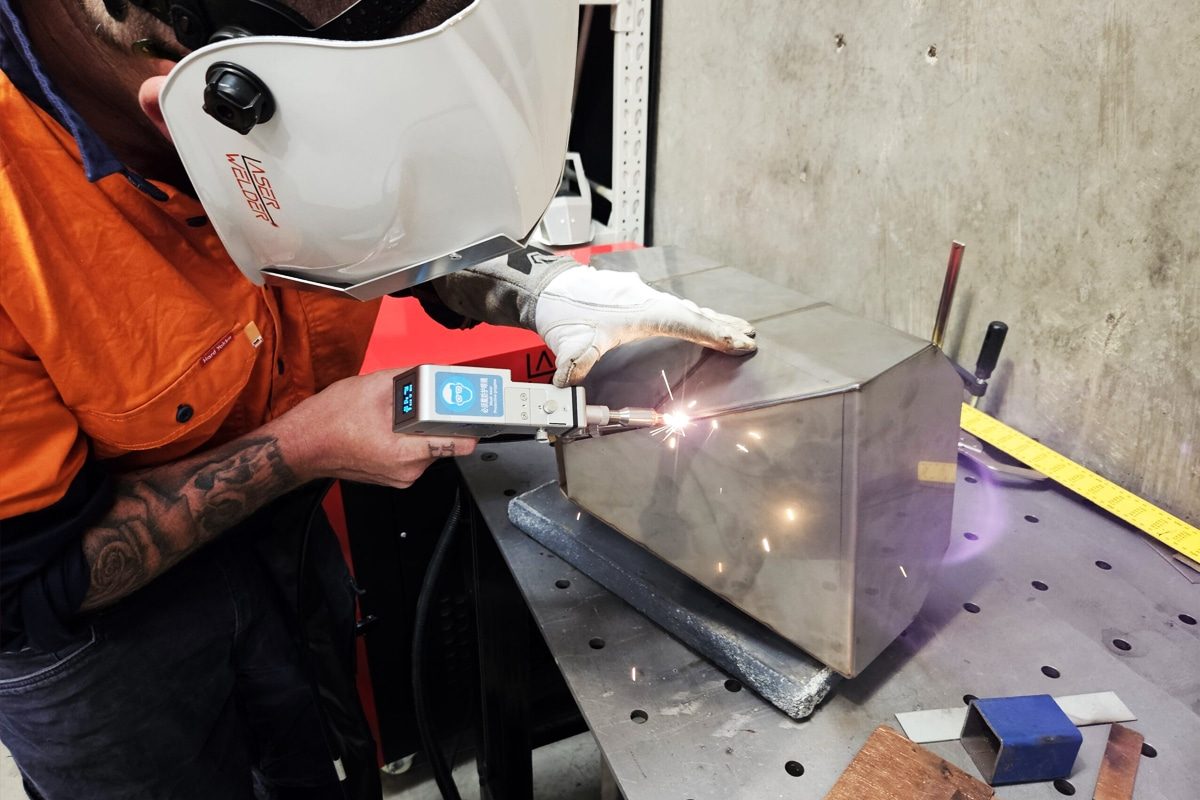
Fundamentals of Laser Welding
Laser Welding Basics
Joint Fusion Mechanisms
Autogenous Laser Welding
Metallurgical Mechanism
Process Characteristics
Autogenous laser welding is defined by several distinct process characteristics:
- High Power Density and Energy Efficiency: Concentrated laser energy allows deep penetration with minimal overall heat input.
- Small Heat-Affected Zone (HAZ): The localized nature of heating results in minimal microstructural alteration beyond the fusion boundary.
- Rapid Solidification: Fast cooling reduces distortion and enhances dimensional accuracy.
- Clean Process Environment: When shielded properly, it produces oxide-free, smooth weld surfaces with negligible spatter or contamination.
- High Repeatability and Automation Potential: The process is highly consistent and compatible with robotic or CNC systems.
Technical Considerations and Process Parameters
- Laser Power and Beam Parameters: Power density directly determines the penetration mode and weld morphology. Fine-tuning parameters such as spot size, focal position, and beam quality (M² factor) ensures energy is delivered precisely where needed. Beam defocusing or oscillation can help stabilize the molten pool and minimize defects.
- Joint Design and Fit-Up: Autogenous laser welding requires high-precision joints with minimal gap or mismatch. Ideal joint geometries include butt joints, lap joints, and edge joints, typically with gap tolerances below 0.05 mm for thin sheets. Accurate fixturing and alignment are essential to maintain beam focus and avoid misfocusing.
- Material Properties: Material reflectivity and thermal conductivity significantly affect energy absorption. Reflective materials (e.g., Al, Cu) often require higher initial laser power or shorter wavelengths (~1 µm from fiber or disk lasers) to achieve stable coupling. Alloy composition influences susceptibility to cracking or porosity.
- Shielding Gas and Atmosphere Control: Shielding gases (argon, helium, nitrogen) protect the molten pool from oxidation. Gas selection affects penetration depth and weld surface quality—helium enhances penetration and reduces plasma formation, while argon stabilizes the arc and provides smoother surfaces. Gas nozzle design and flow direction are critical to avoid turbulence or contamination.
- Cooling and Heat-Input Management: The rapid heating and cooling inherent to laser welding minimize distortion but can create residual stresses or hard microstructures in some materials. Pulse shaping, beam oscillation, or controlled preheating can help mitigate thermal gradients.
- Joint Thickness Limitation: Autogenous laser welding is generally suitable for thin to medium sections (up to ~5 mm). For thicker materials, filler addition or hybrid laser-arc processes are used to ensure full penetration and maintain mechanical strength.
Advantages
Autogenous laser welding offers a unique set of technical, economic, and operational advantages that make it ideal for precision manufacturing and high-reliability applications:
- Simplicity and Process Efficiency: The absence of filler wire, powder feeders, or flux reduces system complexity. This simplicity translates to lower setup time, faster production, and fewer process variables to control.
- Low Material and Operational Costs: Since no consumables are required, ongoing material costs are minimized. Additionally, reduced cleaning, machining, and post-processing requirements further cut operational expenses.
- High Precision and Aesthetic Quality: The laser’s focused beam produces clean, uniform weld seams with smooth bead surfaces and minimal discoloration—attributes critical for components in the medical, electronics, and optical sectors.
- Minimal Heat-Affected Zone and Distortion: The small, concentrated heat source ensures narrow HAZ regions and minimal residual stress. This is particularly valuable in thin or delicate components, where distortion could compromise dimensional accuracy.
- Superior Automation and Reproducibility: Autogenous laser welding integrates seamlessly with robotic systems, vision-based seam tracking, and CNC controllers, enabling high-speed, repeatable operations with minimal operator intervention.
- Clean, Environmentally Friendly Process: The process requires no flux, filler, or emissions-producing materials, making it one of the cleanest fusion methods. The resulting welds typically require no grinding or polishing.
- High Speed and Productivity: Laser welding can be performed at travel speeds several times faster than TIG or MIG welding, especially for thin materials. High beam intensity enables one-pass welding even for demanding precision joints.
Limitations
Despite its precision and cleanliness, autogenous laser welding also presents several technical and practical limitations:
- High Fit-Up Sensitivity: Because no filler material bridges gaps or compensates for misalignments, joint preparation must be exceptionally accurate. Even a small gap or offset can lead to incomplete fusion or a lack of penetration.
- Restricted Thickness and Gap-Bridging Capability: The process is best suited for thin sections. For thicker joints, the limited melt volume and absence of filler restrict penetration depth, leading to potential root defects.
- Material Constraints: Certain alloys—especially those with high sulfur or carbon content—are prone to cracking under rapid solidification. Aluminum alloys with volatile constituents (e.g., Mg, Zn) may suffer from porosity or hot cracking if not carefully managed.
- No Alloy Composition Adjustment: Without filler material, there is no way to tailor the weld chemistry for improved ductility, toughness, or corrosion resistance. This limits the process for applications requiring enhanced metallurgical control.
- Potential Stress Concentration and Fatigue Sensitivity: Narrow, deep weld profiles can form notch-like geometries that act as stress concentrators under cyclic loading. In dynamic applications, additional surface finishing or reinforcement may be needed.
- Stringent Surface Preparation Requirements: Surface contaminants, oxides, and coatings can severely affect energy absorption and weld integrity. Therefore, thorough cleaning, degreasing, and oxide removal are mandatory before welding.
- High Equipment Cost and Complexity: Although operational costs are low, the initial investment in high-power laser systems, optics, and precision motion control equipment can be significant.
Typical Applications
Autogenous laser welding finds broad application in industries where dimensional precision, minimal distortion, and high-quality surface finish are paramount:
- Aerospace and Aviation: Used for titanium and nickel alloy components, thin-walled structures, and sensor housings. Laser welding provides lightweight, distortion-free joints for critical parts such as fuel system components and instrument casings.
- Automotive Industry: Commonly employed in the production of airbag igniters, injector nozzles, battery tabs, transmission parts, and gear assemblies. The process allows precise, high-speed joining of small components with consistent quality.
- Medical Devices and Surgical Instruments: Ideal for stainless steel, titanium, and cobalt-chrome alloys used in catheters, pacemakers, stents, and surgical tools. The process ensures contamination-free joints and excellent biocompatibility.
- Microelectronics and Sensors: Extensively used for hermetic sealing of sensors, microbatteries, MEMS packages, and laser diode housings. The fine control of heat input protects sensitive internal components from damage.
- Optical and Precision Instrumentation: Autogenous laser welding ensures airtight and optically clean joints in laser housings, fiber-optic assemblies, and photonic components, where dimensional stability and alignment are crucial.
- Energy and Nuclear Applications: Used in joining corrosion-resistant alloys and stainless steels in fuel cells, nuclear instrumentation, and containment systems requiring defect-free, hermetic joints.
Filler Laser Welding
Metallurgical Mechanism
Process Characteristics
Filler laser welding exhibits several distinct operational and metallurgical features that set it apart from autogenous welding:
- Enhanced Gap Bridging: The introduction of filler enables tolerance for gaps or mismatched edges up to several tenths of a millimeter, far exceeding autogenous capabilities. This relaxes manufacturing precision requirements and allows more flexible part design.
- Controlled Composition and Dilution: The filler can modify the weld’s composition, improving ductility, corrosion resistance, and mechanical properties. By adjusting the dilution ratio (mixing between base and filler metals), engineers can fine-tune the weld chemistry to suit specific performance goals.
- Thermal Buffering and Pool Stabilization: The filler material absorbs some of the laser’s energy and moderates cooling rates, reducing the risk of porosity or cracking. The additional melt volume also promotes a smoother bead surface and deeper, more uniform penetration.
- Larger Melt Pool and Broader Heat-Affected Zone (HAZ): Due to added material and higher total heat input, the weld pool is larger than in autogenous welding. This can slightly increase the HAZ size and distortion risk, but also provides stronger, more ductile joints when properly managed.
- Flexible Process Integration: Filler laser welding can be implemented in both continuous-wave and pulsed laser modes. It can also be integrated with robotic or CNC systems for repeatable, automated production. When combined with sensors and real-time control, it supports adaptive welding to accommodate variable joint conditions.
- Advanced Process Variants: Modern filler laser welding techniques include hot-wire feeding, where the filler wire is preheated by resistance or induction to improve deposition efficiency, and dual-beam or hybrid laser-arc systems, which combine laser precision with arc flexibility for thicker or highly conductive materials.
Technical Considerations and Process Parameters
- Filler Material Selection: The filler’s composition must complement the base material and desired weld performance. Selection criteria include melting point, thermal expansion, corrosion resistance, and solidification behavior. For example:
- Nickel-based fillers enhance ductility and corrosion resistance in steel and dissimilar joints.
- Silicon-aluminum fillers improve flow and reduce cracking in aluminum alloys.
- Copper-based fillers ensure conductivity and minimize brittleness in electrical applications.
- Filler Feed Mechanism and Control: The filler wire is typically delivered through servo-driven feeders capable of fine speed control (0.1–10 m/min). Coaxial feeding allows isotropic welds in any direction, while side-feeding provides better visibility and control for flat or fillet joints. Feed angle and distance from the laser focus affect melt dynamics and dilution.
- Laser Parameters: Beam characteristics—power, spot size, focal position, and travel speed—determine penetration and energy distribution. The laser must supply enough energy to melt both the base metal and filler while maintaining a stable pool. Pulse modulation or beam oscillation helps prevent defects and enhances wetting.
- Joint Geometry and Gap Bridging: Filler-assisted welding accommodates a wide range of joint geometries: butt, lap, T-joints, and fillets. It can fill small voids or irregular edges, allowing design flexibility and tolerance for manufacturing variability.
- Shielding Gas and Atmosphere Control: The shielding gas protects the weld from oxidation and contamination. Argon provides excellent shielding and arc stability, helium enhances penetration, and mixed gases can balance both. For reactive metals (Ti, Zr), fully inert chambers or trailing gas shields are required.
- Heat Input and Cooling Management: The additional thermal mass from filler increases total heat input, which can broaden the HAZ. Proper control of beam focus, travel speed, and filler preheating is needed to balance penetration and minimize distortion. Preheating or post-weld heat treatment may be applied to reduce residual stress in thick sections or crack-sensitive alloys.
- Post-Weld Processing: Filler laser welds often undergo surface finishing, mechanical dressing, or passivation to improve aesthetics and corrosion resistance. In high-performance applications (aerospace, energy), post-weld heat treatment (PWHT) is used to relieve stresses and homogenize the microstructure.
Advantages
Filler-assisted laser welding provides several engineering and production advantages over the autogenous method:
- Improved Joint Strength and Mechanical Performance: Filler materials enhance the mechanical properties of the joint—improving tensile strength, ductility, and fatigue resistance. In alloys prone to cracking, the filler modifies solidification behavior to produce tougher, more resilient welds.
- Gap-Bridging and Misfit Compensation: The filler enables effective welding of joints with tolerances beyond the strict limits of autogenous processes. This capability reduces manufacturing and assembly precision requirements, increasing production efficiency and lowering rejection rates.
- Versatility in Materials and Thicknesses: Filler laser welding accommodates a wider range of materials, including thick sections and dissimilar metals. It is suitable for carbon steels, stainless steels, aluminum, copper, and nickel alloys—materials that may pose challenges in autogenous mode.
- Tailored Weld Metal Composition: Engineers can deliberately modify weld chemistry to improve corrosion resistance (e.g., using high-chromium fillers for stainless steels), enhance high-temperature strength, or prevent unwanted metallurgical reactions.
- Robustness for Structural or Demanding Applications: Filler-assisted welding produces joints capable of handling higher loads, thermal cycling, and vibration. It is therefore well-suited to structural, pressure-containing, or safety-critical components where weld performance under stress is crucial.
- Reduced Defect Sensitivity: Filler addition can minimize porosity, solidification cracking, and underfill defects by controlling weld pool geometry and solidification gradients.
Limitations
Despite its enhanced flexibility, filler laser welding introduces several complexities and trade-offs:
- Increased Process Complexity: Coordinating filler feeding with laser power and motion requires additional control systems, precise calibration, and operator skill. More variables increase the likelihood of parameter sensitivity and setup time.
- Higher Material Cost: The use of filler wire or powder adds consumable costs. Specialized filler alloys for dissimilar or high-performance joints can be expensive.
- Possibility of Contamination or Defects: Improper feeding, surface contamination, or inconsistent filler deposition can cause porosity, inclusions, or incomplete fusion. Oxidized or moisture-contaminated wire can lead to hydrogen embrittlement or porosity in sensitive alloys.
- Larger Heat Input and Broader HAZ: The added material volume increases heat absorption and prolongs cooling time, which can lead to distortion, residual stress, and microstructural coarsening, especially in thin sections.
- Post-Weld Processing Requirements: Depending on the filler and material, bead finishing, surface cleaning, or stress-relief treatments may be needed to achieve desired aesthetics and mechanical uniformity.
- Need for Filler Selection and Qualification: Choosing the correct filler requires detailed metallurgical understanding. Filler-wire qualification tests are necessary to ensure weld quality, corrosion compatibility, and mechanical integrity—adding to development time and cost.
Typical Applications
Filler laser welding is widely used in industries where joint strength, gap tolerance, and metallurgical control are critical:
- Aerospace and Aviation: Joining of thick titanium and nickel-based components, turbine casings, engine mounts, and structural brackets, where high strength and fatigue resistance are essential.
- Automotive Manufacturing: Structural components such as body-in-white reinforcements, exhaust systems, gear housings, and powertrain parts. Filler addition compensates for assembly tolerances and enhances weld robustness.
- Energy and Power Generation: Welding of heat exchangers, turbine blades, and pressure vessels made from stainless steels or nickel alloys requires a tailored composition for corrosion and thermal resistance.
- Shipbuilding and Offshore Engineering: Used for joining medium-to-thick steel sections and dissimilar metal joints in marine environments demanding strong, corrosion-resistant welds.
- Medical and Pharmaceutical Equipment: Production of high-integrity stainless steel assemblies and containment systems requiring smooth, pore-free welds that can be polished and sterilized.
- Tooling and Additive Manufacturing Integration: Used in laser cladding and repair applications where filler powder restores worn surfaces or modifies the surface chemistry for enhanced wear or corrosion performance.
Comparative Analysis: Autogenous vs Filler Laser Welding
Material Compatibility
Joint Fit-Up and Geometry
Thickness and Penetration
Mechanical Performance
Thermal Effects and Distortion
Productivity and Automation
Cost Considerations
Surface Finish and Aesthetics
Quality and Inspection
Practical Guidance for Process Selection
Define the Joint Geometry and Fit-Up
Assess Material Properties
Determine Thickness and Penetration Requirements
Define Mechanical Performance and Code Requirements
Production Volume, Automation, and Cost Considerations
Finish and Inspection Requirements
Process Availability and Control Maturity
Best Practice Guidance & Process Optimization
Best Practices and Optimization for Autogenous Laser Welding
Autogenous laser welding, being a filler-free process, places absolute emphasis on precision and cleanliness. The process window is narrow, and even small deviations in preparation or parameter control can result in a lack of fusion or metallurgical defects. Optimization, therefore, centers on laser beam quality, joint preparation, and heat management.
- Joint Preparation and Fit-Up Control
- Precision Machining and Alignment: Achieving a tight and consistent joint gap is critical. The edges should be square and burr-free, with a gap ideally below 0.05 mm for thin sheets. Even minor misalignment can cause incomplete penetration or keyhole instability.
- Clean Surfaces: Autogenous laser welding is extremely sensitive to contamination. Remove all oxides, oils, and coatings from the joint area through mechanical cleaning, solvent degreasing, or chemical pickling. Residual contaminants can cause porosity or inconsistent absorption.
- Accurate Fixturing: Use rigid, thermally stable fixtures to prevent movement during welding. Optical or vision-based seam tracking systems are recommended for maintaining precise beam alignment along the joint.
- Laser Beam and Focus Optimization
- Beam Quality and Spot Size: The laser beam should exhibit a high beam quality (low M² value) for deep penetration and consistent energy distribution. Fine-tune the focal position—typically slightly below the surface for keyhole laser welding—to ensure stable melt pool formation.
- Power Density Control: Optimize power to balance penetration and spatter control. Too low power results in incomplete fusion; too high power causes excessive vaporization, undercut, or keyhole collapse.
- Travel Speed and Pulse Modulation: Adjust the travel speed to achieve the desired weld aspect ratio. Pulsed or modulated laser operation can help control heat input, reducing distortion in thin materials.
- Shielding Gas and Environmental Control
- Inert Gas Shielding: Use high-purity argon or helium to prevent oxidation and plasma formation. Helium enhances penetration and reduces plume interference, while argon provides better bead smoothness. Maintain laminar flow directed tangentially to the weld.
- Atmospheric Control for Reactive Metals: When welding titanium, zirconium, or magnesium alloys, weld in an inert chamber or with trailing shields to maintain oxygen levels below 50 ppm.
- Thermal Management and Distortion Minimization
- Heat Input Regulation: Autogenous laser welds solidify rapidly; however, excessive heat can increase the HAZ or induce residual stress. Optimize parameters to maintain stable keyhole formation while minimizing overall energy input.
- Cooling Strategy: Employ controlled cooling or interpass delays for multi-seam welds. Rapid, uneven cooling can cause residual stress or cracking in certain alloys.
- Process Monitoring and Quality Control
- Real-Time Process Feedback: Use sensors for plume intensity, back-reflection, and melt pool temperature monitoring. These provide early warnings of defects such as keyhole instability or incomplete penetration.
- Post-Weld Inspection: Apply optical or X-ray inspection for precision components, ensuring full penetration and uniform bead profile. Non-contact profilometers can verify dimensional accuracy.
Best Practices and Optimization for Filler Laser Welding
Filler-assisted laser welding introduces additional degrees of control—but also additional complexity. Process optimization here involves not only managing the laser parameters but also synchronizing the filler feed, controlling dilution, and maintaining metallurgical stability. Successful optimization ensures consistent filler melting, uniform mixing, and defect-free fusion.
- Filler Material Selection and Conditioning
- Chemical Compatibility: Choose filler material based on the base metal’s composition and service requirements. The filler should promote metallurgical compatibility and prevent the formation of brittle or crack-prone phases. For instance, use nickel-based fillers for steel-to-nickel joints or silicon-aluminum wires for aluminum alloys.
- Wire and Powder Cleanliness: Contaminated filler wires can introduce oxides, hydrogen, or impurities that cause porosity. Store filler materials in dry, temperature-controlled conditions and clean them immediately before use.
- Filler Diameter and Feedability: Select filler diameter to match weld size and feed rate capability. Common diameters range from 0.4 to 1.6 mm. Finer wires allow smoother feeding in precision welds but require more precise feed control.
- Filler Feed Mechanism and Synchronization
- Feed Angle and Positioning: Position the filler wire so that it enters the leading edge of the molten pool, usually at a 30°–60° angle. Incorrect placement can cause spatter or incomplete melting.
- Coaxial vs. Off-Axis Feeding: Coaxial feeding (aligned with the beam) is ideal for robotic or multi-directional welding, while off-axis feeding offers better visibility and control for linear seams.
- Feed Rate Optimization: Synchronize filler feed rate with laser travel speed and power to maintain consistent dilution. Too low a rate leads to underfill and porosity; too high causes excessive reinforcement or poor fusion.
- Laser and Process Parameter Optimization
- Power and Focus Coordination: Adjust laser power to fully melt both base and filler materials without overheating. A slightly defocused beam can help distribute heat more evenly and stabilize the melt pool.
- Travel Speed: Match travel speed to maintain continuous filler deposition and avoid bead irregularities. For thicker sections, slower travel may be required to ensure full penetration.
- Oscillation and Beam Shaping: Beam oscillation techniques (e.g., circular or linear) improve filler wetting and uniformity, reducing defects like undercut and porosity.
- Shielding Gas and Environmental Control
- Gas Selection: Use high-purity argon or helium as shielding gas. In some cases, gas mixtures (e.g., 70% He + 30% Ar) are used to balance penetration and bead appearance.
- Gas Flow Dynamics: Direct gas flow across the molten pool to prevent oxidation and remove vaporized contaminants. Avoid turbulence that could disturb filler deposition.
- Secondary or Trailing Shields: For reactive alloys or long welds, use secondary shielding behind the torch to protect the cooling bead.
- Thermal and Metallurgical Management
- Preheating and Interpass Control: For crack-sensitive alloys, apply preheating (typically 100–200°C) to reduce thermal gradients. Maintain consistent interpass temperature to prevent stress accumulation in multi-pass welds.
- Control of Dilution: Aim for balanced mixing between base and filler metals—typically 30–50% dilution—to achieve uniform chemistry and microstructure.
- Post-Weld Heat Treatment: Perform stress-relief annealing or aging when required to restore ductility, especially in steels, nickel alloys, or titanium components.
- Monitoring and Quality Assurance
- Process Monitoring Systems: Employ optical sensors, pyrometers, or acoustic emission monitoring to detect deviations in melt pool dynamics or filler feed stability.
- Inspection and Testing: Conduct radiographic, ultrasonic, or dye-penetrant testing to verify internal integrity. For structural applications, perform tensile and fatigue testing to validate mechanical properties.