

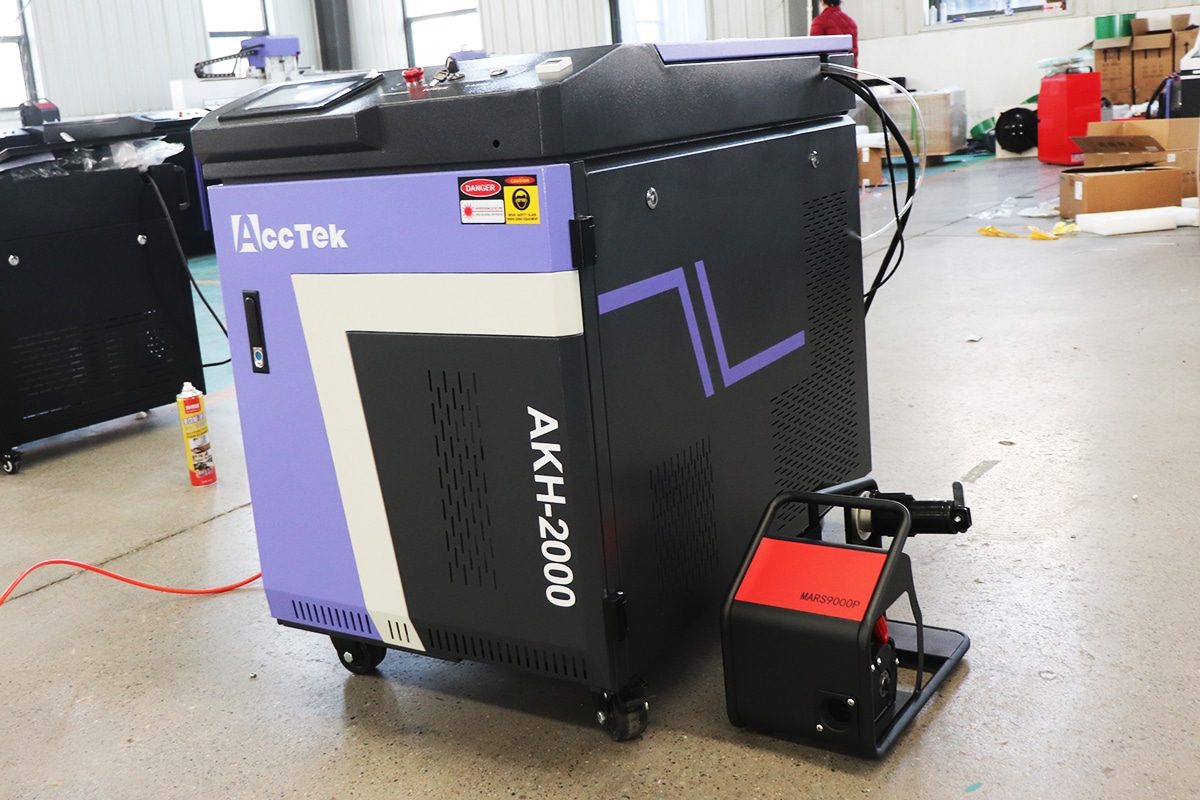
Understanding the Weldability of Laser Welding
Laser welding has become an important joining technology in modern manufacturing because of its high precision, concentrated heat input, fast welding speed, narrow heat-affected zone, and strong potential for automation. It is widely used in industries that require accurate, efficient, and repeatable welding, including automotive manufacturing, aerospace, electronics, machinery, battery production, medical equipment, and metal fabrication. However, achieving a strong and reliable laser-welded joint depends on more than selecting suitable laser welding machines. One of the most important considerations is the weldability of the materials being joined.
Weldability refers to the ability of a material or combination of materials to form a sound welded joint under specific welding conditions while meeting the required mechanical, dimensional, and functional performance. In laser welding, weldability is influenced by material composition, thermal conductivity, melting characteristics, surface reflectivity, thickness, joint configuration, and sensitivity to defects such as cracking, porosity, oxidation, or excessive hardness. The highly concentrated energy and rapid heating and cooling associated with laser welding can produce excellent results, but they can also create metallurgical challenges that differ from those found in conventional welding processes.
Different materials respond differently to laser energy. Carbon steel, stainless steel, aluminum alloys, titanium alloys, copper, and other engineering materials each present unique welding characteristics. Dissimilar-material combinations can introduce additional difficulties because of differences in melting temperature, thermal expansion, chemical compatibility, and intermetallic compound formation.
Understanding laser weldability is therefore essential for selecting suitable materials, designing joints, setting welding parameters, choosing shielding methods, and preventing defects. This article explains the fundamental factors that determine weldability in laser welding, examines the behavior of commonly welded materials, discusses typical challenges and defects, and provides practical guidance for improving weld quality, reliability, and production efficiency.
Table of Contents
What Weldability Means in Laser Welding
Weldability in laser welding describes how successfully a material, joint design, and welding process can work together to produce a stable, defect-free, and mechanically reliable welded connection. It is not determined by the base material alone. Instead, weldability depends on a combination of material properties, laser parameters, joint geometry, surface condition, shielding method, heat flow, and metallurgical behavior during rapid heating and cooling.
A material may be considered generally weldable but still require carefully controlled parameters to prevent defects under laser welding conditions. Similarly, a well-selected laser process may fail to produce satisfactory results if the joint fit-up is poor or if the material is highly sensitive to cracking, porosity, or undesirable phase transformation. For this reason, laser weldability should be evaluated from several perspectives, including material weldability, process weldability, joint weldability, and metallurgical weldability.
Good weldability means that the welding process can consistently produce joints with adequate penetration, proper fusion, acceptable appearance, minimal defects, controlled distortion, and required mechanical properties. In industrial production, weldability is also closely connected with process stability, repeatability, inspection requirements, production speed, and overall manufacturing reliability.
Material Weldability
Material weldability refers to the inherent ability of a material to be joined by laser welding without developing unacceptable defects or performance problems. It is strongly influenced by chemical composition, thermal conductivity, melting temperature, reflectivity, coefficient of thermal expansion, strength level, and sensitivity to rapid thermal cycles.
Some materials, such as many low-carbon steels and austenitic stainless steels, generally offer good laser weldability because they can tolerate rapid heating and cooling with relatively low cracking susceptibility. Other materials may require greater process control. Aluminum alloys, for example, can present challenges related to high reflectivity, rapid heat conduction, oxide layers, and porosity. Copper can also be difficult to weld with certain laser wavelengths because of its high thermal conductivity and reflectivity.
Material thickness also affects weldability. Thin materials may be easier to penetrate but more sensitive to burn-through and distortion, while thick sections require sufficient energy density and careful penetration control. Understanding material weldability helps manufacturers determine whether preheating, filler metal, special shielding, surface treatment, or alternative laser sources may be required.
Process Weldability
Process weldability describes how effectively a material can be welded within the operating characteristics and parameter range of a particular laser welding process. Even a material with good fundamental weldability may produce poor results if laser power, welding speed, focal position, beam diameter, pulse characteristics, shielding gas, or heat input are not properly controlled.
Laser welding has a relatively narrow process window for certain applications because its energy is highly concentrated. Small changes in focal position, joint gap, beam alignment, or travel speed can significantly influence penetration depth and weld shape. Excessive energy input may cause spatter, undercut, excessive keyhole instability, or burn-through, while insufficient energy may result in incomplete penetration or lack of fusion.
Good process weldability means that a sufficiently wide and stable parameter window exists to produce acceptable welds repeatedly. The wider this process window, the easier it generally becomes to maintain consistent production quality despite minor variations in material condition, fit-up, or machine operation.
Joint Weldability
Joint weldability concerns how the geometry, fit-up, accessibility, and configuration of the joint influence the ability to produce a successful laser weld. Common joint designs include butt joints, lap joints, corner joints, edge joints, and T-joints. Each configuration presents different requirements for beam positioning, penetration depth, heat distribution, and tolerance control.
Laser welding usually requires accurate joint preparation because the focused beam is relatively narrow. Excessive gaps, misalignment, inconsistent edge preparation, or poor clamping can result in lack of fusion, underfill, irregular bead geometry, or incomplete penetration. Butt joints, in particular, often require tight gap control when no filler wire is used.
Joint thickness, overlap distance, access angle, and component rigidity can also influence weldability. A properly designed joint supports consistent beam interaction and helps control heat flow and shrinkage. Therefore, joint design should be considered during the early stages of product development rather than treating welding simply as a final assembly operation.
Metallurgical Weldability
Metallurgical weldability refers to how the material’s microstructure and chemical composition respond to the rapid thermal cycle created by laser welding. During welding, the material experiences rapid melting, solidification, heating, and cooling. These changes can alter grain structure, hardness, phase distribution, residual stress, and local mechanical properties.
Some alloys are more sensitive to hot cracking, cold cracking, brittle phase formation, grain growth, or excessive hardening. High-carbon steels, for example, may form hard martensitic structures in the heat-affected zone if cooling is too rapid. Certain aluminum alloys may experience solidification cracking or loss of strength near the weld. Dissimilar-metal welding can introduce further metallurgical challenges because different materials may form brittle intermetallic compounds.
Good metallurgical weldability means that the weld metal and heat-affected zone can develop acceptable microstructures without excessive brittleness, cracking, or performance degradation. Parameter optimization, filler materials, preheating, post-weld treatment, and controlled cooling may sometimes be required to improve metallurgical performance.
Ability to Form a Sound Weld
A central measure of weldability is whether the process can form a structurally sound weld with sufficient fusion, penetration, and continuity. A sound laser weld should connect the components completely while remaining free from unacceptable defects such as lack of fusion, incomplete penetration, undercut, excessive spatter, cavities, or inclusions.
The ability to form a sound weld depends on proper interaction between the laser beam and the material. Energy density must be high enough to melt the required volume of material while maintaining a stable molten pool or keyhole. The beam must also remain correctly positioned relative to the joint.
Surface preparation plays an important role. Oil, rust, coatings, oxide layers, moisture, and other contaminants can interfere with laser absorption and introduce gases or inclusions into the molten pool. Accurate cleaning, clamping, and beam alignment therefore contribute directly to weld quality.
Ability to Avoid Cracking and Porosity
Resistance to cracking and porosity is another important aspect of laser weldability. Cracks can develop during solidification or after cooling because of thermal stress, brittle microstructures, alloy segregation, hydrogen, or unfavorable weld geometry. Cracking is particularly serious because even very small cracks can significantly reduce fatigue life and structural reliability.
Porosity develops when gases become trapped in the molten metal during rapid solidification. It can be caused by surface contamination, moisture, dissolved gases, unstable keyhole behavior, oxide layers, or inappropriate shielding. Aluminum alloys can be particularly sensitive to hydrogen-related porosity.
Improving resistance to these defects may involve cleaning the material, optimizing welding speed and power, stabilizing the keyhole, selecting appropriate shielding gas, adjusting focal position, or using filler wire. Materials that tolerate a reasonably broad parameter range without developing cracks or significant porosity are generally considered easier to weld reliably.
Ability to Maintain Mechanical Properties
Successful weldability also requires the welded joint to retain the mechanical properties needed for its intended service. These properties may include tensile strength, yield strength, hardness, ductility, impact resistance, fatigue resistance, corrosion resistance, or fracture toughness.
Laser welding generally provides advantages in this area because its concentrated heat source creates a relatively narrow heat-affected zone. Lower total heat input can reduce microstructural changes compared with many conventional fusion welding methods. However, rapid cooling can sometimes create hard or brittle phases, particularly in certain steels.
Some precipitation-hardened aluminum alloys may lose strength in the heat-affected zone, while stainless steels may experience changes in corrosion behavior if heat input and shielding are poorly controlled. Maintaining mechanical properties therefore requires proper material selection and accurate control of heat input, cooling rate, filler composition, and post-weld treatment when necessary.
Ability to Control Distortion
Weldability is also related to how effectively thermal distortion can be controlled. Welding produces localized heating and cooling, which causes expansion, contraction, and residual stress. Excessive distortion can create dimensional errors, misalignment, warping, or difficulty during later assembly operations.
Laser welding is generally favorable for distortion control because it uses a concentrated heat source and can operate at high travel speeds. As a result, less total heat may be introduced into the workpiece compared with many traditional welding methods. This makes laser welding especially suitable for thin sheet, precision components, and assemblies with tight dimensional tolerances.
However, distortion can still occur if welding parameters are excessive, joint design is unbalanced, components are poorly restrained, or the welding sequence is inappropriate. Fixture design, clamping strategy, welding direction, beam path, and heat input optimization all contribute to maintaining dimensional stability.
Relationship Between Weldability and Production Reliability
Weldability has a direct influence on production reliability because a weld that can only be achieved under extremely narrow conditions is difficult to reproduce consistently in high-volume manufacturing. Good production weldability means the process can tolerate reasonable variations in joint fit-up, surface condition, material properties, machine positioning, and operating environment without producing unacceptable defects.
A stable welding process reduces scrap, rework, inspection failures, and machine downtime. It also simplifies automation because robots and laser welding systems can operate within a predictable processing window. Consistent weldability therefore supports higher production speeds, better quality control, and lower manufacturing costs.
Production reliability also depends on monitoring and quality assurance. Systems such as seam tracking, vision inspection, power monitoring, penetration monitoring, and closed-loop process control can help compensate for small variations and maintain stable weld quality. In this sense, weldability is not only a material property but also an important measure of how robust the complete manufacturing process is.
Weldability in laser welding is a broad concept that describes the ability of materials, joint designs, and welding parameters to work together to create reliable and repeatable welded connections. It includes material weldability, process weldability, joint weldability, and metallurgical weldability, each of which influences the final quality and performance of the joint.
A material with good laser weldability should allow adequate fusion and penetration while resisting cracking, porosity, excessive hardness, distortion, and undesirable microstructural changes. At the same time, the finished weld should retain the mechanical, dimensional, corrosion, and service properties required for its intended application.
Laser weldability is also closely connected with manufacturing consistency. A broad and stable processing window makes it easier to automate production, maintain repeatable quality, reduce defects, and control production costs. Factors such as material composition, surface condition, joint preparation, laser power, welding speed, focal position, shielding gas, and thermal behavior must therefore be considered together.
By understanding weldability as a combination of material behavior and process capability rather than simply asking whether a material “can be welded,” manufacturers can make better decisions about material selection, joint design, parameter development, quality control, and equipment configuration. This approach helps achieve stronger welds, fewer defects, greater dimensional accuracy, and more reliable laser welding production.
How Laser Welding Works
Laser welding joins materials by concentrating a high-intensity laser beam onto a small area of the workpiece. The material absorbs part of the laser energy and converts it into heat, causing localized melting. As the beam moves along the joint, a molten pool forms and then solidifies behind the heat source to create a continuous weld. Because the laser delivers energy with high precision and a relatively small beam diameter, laser welding can produce deep, narrow welds with limited heat input and a small heat-affected zone.
The exact welding mechanism depends on laser power density, beam size, welding speed, material properties, joint configuration, wavelength, and surface condition. At lower power densities, welding generally occurs through heat conduction, producing relatively shallow and wide welds. At higher power densities, the material can vaporize and form a narrow cavity known as a keyhole. This keyhole allows laser energy to penetrate deeper into the material, creating a narrow weld with a high depth-to-width ratio.
The behavior of the molten pool, keyhole stability, heat flow, and solidification process all influence weld quality. Understanding these mechanisms is essential for evaluating weldability, because defects such as porosity, cracking, spatter, lack of fusion, and distortion often originate from unstable thermal or fluid behavior during welding.
Laser Energy Absorption
Laser welding begins when the laser beam reaches the surface of the workpiece. Not all incident laser energy is immediately absorbed. A portion may be reflected, while the remaining energy enters the material and contributes to heating. The proportion of absorbed energy depends heavily on material type, laser wavelength, surface condition, temperature, and angle of incidence.
Highly reflective metals such as copper and aluminum can reflect a large portion of incoming laser energy, particularly when their surfaces are cold and smooth. As their temperature rises, however, absorption generally increases. This means that initiating a stable weld may sometimes require higher power density than maintaining the weld once melting has begun.
Surface condition also affects absorption. Oxides, coatings, roughness, contamination, or previous surface treatment can change the way the laser interacts with the material. Some oxide layers increase absorption, while contaminants can cause inconsistent heating or introduce defects.
The wavelength of the laser is another major factor. Different metals absorb different wavelengths with varying efficiency. Proper matching of laser wavelength and material characteristics can therefore improve energy coupling, increase process stability, and reduce the power required for welding.
Conversion of Laser Energy into Heat
Once laser energy is absorbed by the workpiece, it is converted into thermal energy. This conversion raises the local temperature very rapidly because the laser concentrates substantial energy into a small area.
Initially, the surface temperature increases through direct absorption. Heat then flows away from the illuminated region through thermal conduction. If sufficient energy is delivered, the material reaches its melting temperature and begins to form a liquid phase. With even higher power density, part of the material may reach the vaporization temperature.
The rate at which heat accumulates depends on the balance between incoming laser energy and heat losses through conduction, radiation, convection, and vaporization. Metals with high thermal conductivity, such as copper and aluminum, transfer heat away from the weld region quickly. As a result, they may require higher laser power or slower welding speed to reach sufficient melting temperatures.
Materials with lower thermal conductivity tend to retain heat more locally, which can make melting easier but may also increase the risk of overheating if parameters are not properly controlled.
The conversion of absorbed laser energy into heat therefore establishes the thermal conditions that determine whether welding occurs in conduction mode, transition mode, or keyhole mode.
Formation of the Molten Pool
As the temperature of the irradiated region reaches the melting point, a molten pool forms beneath and around the laser beam. This molten region is the foundation of the welded joint.
The size and shape of the molten pool depend on power density, welding speed, focal position, material thermal properties, joint geometry, and shielding conditions. A larger molten pool generally develops with higher heat input, while higher travel speed tends to reduce pool size because the laser interacts with each location for a shorter period.
The molten pool is not static. Liquid metal continuously moves under the influence of surface tension, temperature gradients, recoil pressure from vaporization, gravity, and electromagnetic effects in certain conditions. These forces affect penetration shape and weld-bead appearance.
A stable molten pool helps produce smooth fusion boundaries and consistent penetration. An unstable molten pool may lead to undercut, irregular bead shape, excessive spatter, lack of fusion, or porosity.
Because laser welding uses highly concentrated energy, molten pools can be relatively small and rapidly moving. This is one reason laser welding requires precise control of beam position and joint fit-up.
Heat Conduction Welding
Heat conduction welding occurs when laser power density is high enough to melt the workpiece but not high enough to create sustained vaporization and a stable keyhole. In this mode, the surface absorbs laser energy, and heat is transferred deeper into the material mainly through thermal conduction.
The resulting weld is usually relatively shallow and wide compared with a keyhole weld. Penetration depth is limited because heat must travel from the surface into the underlying material.
Heat conduction welding is often useful for thin materials, delicate components, cosmetic welds, and applications where deep penetration is not required. It can produce smooth weld surfaces and may reduce some of the instability associated with keyhole formation.
However, conduction welding can become inefficient when deeper penetration is necessary. Increasing the laser power beyond a certain point may cause the process to transition from conduction mode to keyhole mode.
The weldability of a material in conduction mode depends strongly on thermal conductivity and surface absorption. Materials that quickly dissipate heat may require increased energy input, while materials with lower thermal conductivity may reach melting conditions more easily.
Keyhole Welding
Keyhole welding occurs when laser power density becomes high enough to vaporize material at the center of the interaction zone. The vapor pressure pushes molten metal away from the beam path, creating a narrow cavity known as a keyhole.
The laser beam can penetrate this cavity and interact with its internal walls. Multiple reflections within the keyhole improve energy absorption and allow heat to be delivered deep inside the material rather than only at the surface.
This mechanism enables laser welding to create narrow welds with significantly greater penetration than conduction welding. Deep penetration can often be achieved with relatively limited overall heat input, producing a high depth-to-width ratio and a small heat-affected zone.
Keyhole welding is widely used for medium- and thick-section materials, high-speed welding, and applications requiring strong penetration with minimal distortion.
Although keyhole welding is highly efficient, it is also more sensitive to instability. If the keyhole repeatedly collapses or changes shape, defects such as porosity, spatter, undercut, or inconsistent penetration can develop.
Keyhole Formation and Stability
A stable keyhole forms when vapor pressure inside the cavity is sufficient to balance the forces that tend to close it. These closing forces include surface tension, hydrostatic pressure, and the pressure of surrounding molten metal.
As the laser heats and vaporizes material, metal vapor escapes from the cavity and generates recoil pressure. This pressure keeps the keyhole open while the laser continues to supply sufficient energy.
Keyhole stability depends on laser power, welding speed, focal position, material composition, viscosity, surface tension, shielding gas, and joint conditions. If laser power is too low, the keyhole may not fully develop or may collapse intermittently. If power is excessive, violent vaporization may occur, causing instability and spatter.
Beam oscillation, focus control, and proper parameter selection can sometimes improve keyhole stability by distributing energy more effectively. Process monitoring may also be used to detect changes in optical emission, reflected light, acoustic signals, or plasma behavior that indicate instability.
Maintaining a stable keyhole is especially important in deep-penetration welding because keyhole fluctuations strongly influence weld depth and internal defect formation.
Molten-Metal Flow
The liquid metal surrounding the laser interaction zone moves continuously during welding. This molten-metal flow plays an important role in determining weld-pool shape, penetration, surface quality, and defect formation.
One major driving force is surface-tension variation caused by temperature differences across the weld pool. This phenomenon, often described as Marangoni flow, can cause molten metal to move from hotter regions toward cooler regions or in the opposite direction depending on surface chemistry.
Recoil pressure from evaporating metal can push molten material away from the center of the laser beam. In keyhole welding, this flow helps shape the keyhole walls and the surrounding liquid region.
Welding speed also influences flow behavior. At high speeds, the molten pool becomes elongated behind the laser beam, while slower speeds may allow greater lateral spreading.
Unstable molten-metal flow can contribute to spatter, humping, undercut, lack of fusion, and trapped gas. In some applications, beam oscillation is intentionally used to modify weld-pool circulation, widen the weld, improve gap bridging, or reduce localized overheating.
Understanding molten-metal flow is therefore important when optimizing laser welding parameters for both weld quality and process stability.
Solidification of the Weld Pool
After the laser beam moves away from a location, the molten metal rapidly loses heat and begins to solidify. Solidification transforms the liquid weld pool into the final welded joint.
Because laser welding often involves high travel speeds and low total heat input, cooling rates can be very high. Rapid solidification can produce fine microstructures, which may improve certain mechanical properties. However, rapid cooling can also create undesirable phases in some alloys.
The solidification pattern depends on temperature gradients, cooling rate, alloy composition, weld geometry, and grain-growth behavior. Grains generally begin forming at the fusion boundary and grow toward the center of the weld pool.
During solidification, alloying elements may segregate into specific regions, potentially increasing susceptibility to hot cracking or local brittleness. Gas dissolved in the molten metal can also become trapped if it cannot escape before solidification is complete, leading to porosity.
Controlling cooling conditions, filler composition, welding parameters, and weld-pool geometry can therefore help improve solidification behavior and reduce metallurgical defects.
Formation of the Heat-Affected Zone
Not all material surrounding the weld melts. Adjacent regions may be heated to temperatures high enough to alter their microstructure or properties without reaching the melting point. This region is known as the heat-affected zone, or HAZ.
The width and characteristics of the HAZ depend on heat input, welding speed, thermal conductivity, material composition, and section thickness. One of the primary advantages of laser welding is its relatively narrow HAZ compared with many conventional welding processes.
A narrow HAZ generally reduces distortion, residual stress, and unwanted property changes. However, even a small HAZ can experience significant metallurgical transformations.
In carbon and alloy steels, rapid cooling may increase hardness and produce martensitic structures. In precipitation-hardened aluminum alloys, heat exposure can reduce local strength. Stainless steels may experience changes affecting corrosion resistance under unsuitable thermal conditions.
For this reason, evaluating laser weldability requires attention not only to the weld metal but also to the properties of the surrounding HAZ.
Differences Between Continuous-Wave and Pulsed Laser Welding
Continuous-wave laser welding uses a laser beam that delivers energy continuously during the welding process. It is commonly used for high-speed production, long seams, deep-penetration welding, and applications requiring consistent heat input.
Because energy is supplied continuously, continuous-wave laser welding can maintain a stable molten pool and keyhole when parameters are correctly set. It is particularly suitable for automated manufacturing environments where productivity and repeatability are important.
Pulsed laser welding delivers energy in short pulses separated by intervals with little or no laser output. Each pulse rapidly heats and melts a localized region before the material begins cooling between pulses.
This approach provides greater control over total heat input and is often useful for thin components, small welds, precision assemblies, heat-sensitive parts, spot welding, and applications where minimizing distortion is especially important.
Pulse duration, peak power, frequency, and overlap determine the final weld characteristics. Short, high-energy pulses can provide high instantaneous power while limiting overall thermal exposure.
The choice between continuous-wave and pulsed welding depends on material type, thickness, joint design, penetration requirements, productivity targets, and allowable heat input. Neither method is universally superior. The most suitable option is the one that provides the required penetration, quality, and stability while minimizing defects and thermal damage.
Laser welding works by directing concentrated optical energy onto the surface of a workpiece, where part of that energy is absorbed and converted into heat. As the temperature rises, the material melts and forms a weld pool. Depending on power density and processing conditions, welding may occur through heat conduction or through a deep-penetration keyhole mechanism.
In heat conduction welding, energy is transferred primarily from the surface into the material through thermal conduction, producing relatively shallow welds. In keyhole welding, vaporization creates a cavity that allows laser energy to penetrate more deeply, producing narrow welds with high depth-to-width ratios.
The quality of the finished joint depends heavily on the stability of the molten pool and keyhole. Molten-metal flow determines how heat and material are distributed around the weld, while rapid solidification influences microstructure, porosity, cracking susceptibility, and mechanical properties. At the same time, thermal exposure creates a heat-affected zone whose properties may differ from those of the original material.
Continuous-wave and pulsed laser welding systems provide different ways of controlling energy delivery. Continuous-wave welding is well suited to high-speed seam welding and deep penetration, while pulsed welding provides greater control for localized and heat-sensitive applications.
Understanding these mechanisms is fundamental to understanding laser weldability. Laser energy absorption, heat transfer, keyhole behavior, weld-pool dynamics, solidification, and heat-affected-zone formation all determine whether a material can be welded consistently without defects. Proper control of these processes helps manufacturers achieve stable penetration, strong joints, limited distortion, and reliable production quality.
Main Factors That Determine Laser Weldability
Laser weldability is determined by the interaction between material properties, component geometry, surface condition, joint configuration, welding parameters, and the surrounding welding environment. Unlike conventional welding methods, laser welding concentrates a large amount of energy into a very small area. This produces rapid heating, melting, and cooling, making the process highly efficient but also sensitive to changes in material and operating conditions.
Several physical properties directly influence how a material responds to laser energy. Material composition affects solidification behavior and cracking susceptibility, while thermal conductivity and specific heat capacity determine how quickly heat spreads through the workpiece. Melting and boiling temperatures influence the amount of energy required to create and maintain the molten pool or keyhole. Laser absorptivity and reflectivity control how efficiently incident laser energy enters the material, while electrical conductivity often relates indirectly to thermal behavior in metallic materials.
Other factors become equally important during practical production. The coefficient of thermal expansion influences residual stress and distortion, while material thickness affects penetration requirements and heat distribution. Surface oxides, coatings, oil, moisture, and roughness can change laser absorption and contribute to porosity or spatter. Joint design, parameter selection, and shielding conditions ultimately determine whether these material characteristics can be managed successfully.
Understanding these factors individually and collectively allows manufacturers to establish a stable processing window, reduce defects, and achieve reliable laser-welded joints.
Material Composition
Material composition is one of the most important factors affecting laser weldability because alloying elements determine melting behavior, phase transformations, solidification characteristics, hardness, and susceptibility to cracking. Even relatively small differences in chemical composition can significantly change how a material responds to the rapid thermal cycle of laser welding.
In steels, carbon content has a particularly strong influence. Low-carbon steels are generally easier to laser weld because they have relatively low hardenability and cracking susceptibility. As carbon and alloying-element content increases, rapid cooling may produce hard martensitic structures in the weld or heat-affected zone. This can increase brittleness and the risk of cold cracking.
Stainless steels are generally well suited to laser welding, but composition still affects ferrite formation, solidification cracking, and corrosion performance. Aluminum alloys may contain magnesium, silicon, copper, zinc, or other elements that influence cracking susceptibility and vaporization behavior. Certain volatile alloying elements can evaporate under high laser energy density, contributing to instability or porosity.
Material composition becomes even more critical when welding dissimilar metals. Differences in chemical compatibility may cause brittle intermetallic compounds to form at the interface. Therefore, composition must be considered when selecting laser parameters, filler materials, preheating conditions, and post-weld treatments.
Thermal Conductivity
Thermal conductivity determines how rapidly heat is transferred away from the laser interaction zone into the surrounding material. It strongly affects energy efficiency, weld-pool size, penetration depth, cooling rate, and the amount of laser power required to establish stable welding.
Materials with high thermal conductivity, such as copper and aluminum, conduct heat away from the welding zone very quickly. This can make it more difficult to establish sufficient local temperatures for melting, particularly at the beginning of welding. Higher laser power density, reduced travel speed, optimized beam size, or a laser wavelength with better absorption may therefore be required.
Materials with lower thermal conductivity retain more energy close to the beam interaction area. This can make localized melting easier and reduce the energy required for penetration. However, excessive energy concentration can increase the risk of overheating, excessive penetration, or vaporization.
Thermal conductivity also affects temperature gradients and cooling rates after the laser passes. These thermal conditions influence microstructure, residual stress, hardness, and distortion. When two materials with significantly different thermal conductivities are welded together, heat distribution can become highly asymmetric, requiring adjustments in beam position or energy distribution.
Melting Temperature
The melting temperature determines the thermal level that must be reached before a material can form the molten pool required for fusion welding. Materials with higher melting temperatures generally require more concentrated energy to initiate and maintain melting, although melting temperature alone does not determine overall welding difficulty.
Laser power, beam diameter, welding speed, thermal conductivity, and absorptivity work together to determine whether the melting point can be reached efficiently. A material with a relatively low melting temperature but very high reflectivity and thermal conductivity may still be more difficult to laser weld than a material with a higher melting temperature that absorbs laser energy efficiently.
Melting temperature becomes particularly important during dissimilar-metal welding. When the two materials have substantially different melting points, one material may melt excessively before the other develops adequate fusion. This can result in irregular mixing, poor interface bonding, excessive intermetallic formation, or burn-through.
The difference between the melting temperature of the base material and that of surface coatings is also important. Low-melting coatings may vaporize before the underlying material melts, creating gas pressure and increasing the risk of porosity or spatter.
Boiling Temperature
Boiling temperature influences when significant material vaporization begins during laser welding. Vaporization is especially important in keyhole welding, where metal vapor generates recoil pressure that opens and maintains the keyhole.
When sufficient laser energy raises the local temperature near or above the boiling point, material vapor leaves the surface and pushes against the surrounding molten metal. Properly controlled vaporization supports stable deep-penetration welding. However, excessive vaporization can destabilize the keyhole and cause spatter, undercut, metal loss, irregular penetration, or porosity.
The boiling temperatures of individual alloying elements can also affect weldability. Some alloying elements have considerably lower boiling temperatures than the primary base metal and may preferentially evaporate during laser welding. This can change weld composition and generate additional vapor within the molten pool.
The problem can be especially important when welding coated materials. Zinc-coated steel is a common example because zinc vaporizes at a much lower temperature than steel melts. If vapor cannot escape properly from a lap joint, pressure can disturb the molten pool and cause pores or spatter.
Laser Absorptivity
Laser absorptivity describes the fraction of incident laser energy that a material absorbs rather than reflects. Higher absorptivity generally allows the material to reach welding temperature more efficiently, while low absorptivity means that more incoming energy is reflected and does not initially contribute to heating.
Absorptivity depends on material type, laser wavelength, surface roughness, oxidation, temperature, angle of incidence, and physical state. Importantly, absorptivity is not constant throughout the welding process. A cold solid surface can behave very differently from molten material. Absorption often increases substantially after heating and melting begin.
This change can create nonlinear behavior during welding. Considerable energy may initially be required to establish the molten pool, after which energy coupling becomes much more efficient. If parameters are not controlled properly, this transition can result in sudden increases in penetration.
Laser wavelength also plays an important role. Highly reflective metals such as copper can absorb shorter laser wavelengths more effectively than some longer near-infrared wavelengths. Selecting an appropriate laser source can therefore significantly improve process efficiency and stability for difficult materials.
Reflectivity
Reflectivity is closely related to absorptivity and represents the amount of incident laser energy reflected away from the workpiece. Highly reflective materials can be challenging because less energy is initially available for heating and melting.
Copper, aluminum, gold, and certain other metals can exhibit high reflectivity at common industrial laser wavelengths. When the material is cold, a large percentage of the incident energy may be reflected. After melting begins, however, reflectivity usually decreases and energy coupling improves.
High reflectivity creates several practical concerns. Greater laser power may be required to initiate the weld, while rapid changes in absorption after melting can make penetration difficult to control. Reflected laser radiation can also travel back through the optical system, so laser equipment intended for highly reflective materials may incorporate protective designs and monitoring features.
Surface treatments, beam angle, beam shape, wavelength selection, and high-brightness laser sources can help improve welding performance. The objective is not simply to overcome reflection with additional power, but to establish predictable and stable energy absorption throughout the welding cycle.
Electrical Conductivity
Electrical conductivity does not directly determine the ability of a material to absorb laser radiation in every situation, but it is closely associated with the physical behavior of many metallic materials and can provide useful insight into welding characteristics.
Metals with very high electrical conductivity frequently also have high thermal conductivity. Copper is a prominent example. Its excellent electrical and thermal conductivity means heat introduced by the laser spreads rapidly away from the interaction area. Combined with high reflectivity at some laser wavelengths, this can make copper particularly challenging to weld.
The relationship is important when designing welding processes for electrical components such as busbars, battery connections, terminals, connectors, and conductive assemblies. The welding process must achieve sufficient fusion without creating excessive thermal damage to nearby components.
Electrical conductivity may also change after welding due to microstructural changes, alloy mixing, porosity, or the formation of intermetallic compounds. For components where electrical performance is critical, weldability must therefore include not only the ability to create a mechanically sound joint but also the ability to maintain acceptable electrical resistance through the connection.
Coefficient of Thermal Expansion
The coefficient of thermal expansion describes how much a material expands as its temperature rises and contracts as it cools. During laser welding, the weld region experiences extremely rapid temperature changes, making thermal expansion an important factor in residual stress, distortion, and cracking.
Material close to the laser beam expands during heating while surrounding cooler material restricts that expansion. As the weld cools and contracts, stresses develop within the weld and adjacent base material. If these stresses become excessive, they may cause distortion or contribute to cracking.
Laser welding generally limits these effects because its concentrated beam and high travel speed result in relatively low total heat input. Nevertheless, thin components, precision assemblies, long welds, and materials with high thermal expansion coefficients can still experience dimensional changes.
Dissimilar-material welding is particularly sensitive when the two materials have significantly different expansion coefficients. During cooling, unequal contraction creates stresses at the interface. These stresses can weaken the joint or promote cracking. Joint geometry, welding sequence, restraint, heat input, and material selection must therefore be considered when managing thermal expansion differences.
Specific Heat Capacity
Specific heat capacity indicates the amount of energy required to raise the temperature of a given mass of material. It influences how quickly a material heats when exposed to the laser beam and therefore affects the energy required to reach melting conditions.
A material with a relatively high specific heat capacity requires more thermal energy to achieve the same temperature increase than a material with a lower specific heat capacity, assuming similar mass and other conditions. However, laser weldability cannot be predicted from specific heat capacity alone because absorptivity, thermal conductivity, melting temperature, and beam characteristics also influence heating behavior.
During parameter development, specific heat capacity contributes to determining the relationship between laser power, travel speed, material thickness, and resulting temperature distribution. Materials requiring more energy for heating may need higher power or longer interaction time.
Specific heat also affects cooling behavior and thermal gradients after welding. Together with thermal conductivity and density, it influences thermal diffusivity, which describes how rapidly temperature changes spread through a material. These characteristics affect weld-pool dimensions, cooling rate, microstructural development, and heat-affected-zone formation.
Material Thickness
Material thickness strongly influences the amount of energy required for complete penetration, the choice of welding mode, allowable welding speed, and joint preparation requirements. Thin and thick materials present different weldability challenges.
Thin sheets can often be welded at high speed with relatively low overall energy input. However, because the available material volume is small, excessive power can quickly cause burn-through, excessive penetration, undercut, or distortion. Precise control of power and beam position is therefore particularly important.
As thickness increases, greater energy is required to achieve adequate penetration. Keyhole welding is commonly used because it can produce deep, narrow welds efficiently. Higher power, reduced travel speed, multiple passes, filler wire, or optimized beam shaping may be necessary for thicker sections.
Thickness differences between components can complicate welding because the thicker component acts as a larger heat sink. Beam positioning may need to be shifted toward the thicker material to achieve balanced melting. Large differences in thickness can otherwise cause excessive melting of the thin component while leaving insufficient fusion in the thick component.
Surface Condition
Surface condition has a major influence on laser energy absorption, molten-pool cleanliness, and defect formation. Rust, oil, grease, dust, moisture, oxide films, paint, plating, and other contaminants can interfere with consistent laser-material interaction.
Contaminants may vaporize rapidly when exposed to the laser beam. If the resulting gases become trapped in the molten pool before solidification, porosity can form. Organic contamination can also cause spatter, unstable plasma formation, discoloration, or poor surface appearance.
Oxide layers are particularly important for materials such as aluminum. Aluminum oxide has a much higher melting temperature than the underlying aluminum, and an uncontrolled oxide layer can interfere with smooth fusion. Surface oxides may also influence laser absorption in ways that make energy coupling less predictable.
Surface roughness changes optical behavior as well. A roughened surface may absorb more laser energy than a polished surface because of multiple reflections and altered beam interaction.
Cleaning and surface preparation should therefore be controlled as part of the welding process. Consistent surface conditions help maintain a repeatable processing window and reduce unexpected variations in penetration or defect formation.
Joint Design
Joint design determines how efficiently the laser beam reaches the interface, how molten material flows between components, and how sensitive the process is to gaps or misalignment. Because the laser beam can be very narrow, joint fit-up requirements are often stricter than in welding processes with wider heat sources.
Butt joints can provide efficient full-penetration welding but generally require accurate edge alignment and tight gap control, particularly when filler wire is not used. Excessive gaps can cause underfill or complete failure to bridge the joint.
Lap joints offer easier positioning but introduce additional considerations such as penetration through the upper sheet, interface fusion, trapped gases, and coating vaporization. T-joints, corner joints, and edge joints each create different requirements for beam angle and penetration control.
Joint design also affects heat flow and restraint. Poorly designed joints may concentrate residual stresses or make distortion more likely. When laser welding is selected during the initial product-design stage, dimensions, tolerances, access, clamping surfaces, and welding paths can be optimized together. Good design therefore improves both fundamental weldability and production consistency.
Welding Parameters
Welding parameters determine how laser energy is delivered to the joint and are among the most controllable factors affecting weldability. Major parameters include laser power, welding speed, beam diameter, focal position, power density, waveform, pulse duration, pulse frequency, beam oscillation, wire-feed rate, and beam incidence angle.
Laser power and welding speed largely determine heat input and penetration. Insufficient energy can produce lack of fusion or incomplete penetration, while excessive energy can create burn-through, spatter, excessive keyhole formation, undercut, or metal evaporation.
Focal position affects beam diameter and power density at the workpiece. Even a relatively small focus change can alter penetration and keyhole stability. Beam oscillation can broaden the weld, improve joint-gap tolerance, influence molten-metal flow, and distribute energy more evenly.
Pulsed welding requires additional control of peak power, pulse duration, frequency, and pulse overlap. Each parameter affects thermal accumulation and solidification.
Good weldability is associated with a stable process window rather than a single successful parameter setting. A robust parameter range allows consistent welds even when small variations occur in material thickness, fit-up, surface condition, or equipment positioning.
Shielding Conditions
Shielding conditions influence oxidation, contamination, plasma behavior, weld appearance, and metallurgical quality. During welding, molten and heated metal can react rapidly with oxygen, nitrogen, moisture, or other gases in the surrounding atmosphere.
Shielding gas protects the molten pool and adjacent heated material from unwanted atmospheric reactions. Argon, helium, nitrogen, or gas mixtures may be used depending on the material and application. Gas selection affects not only chemical protection but also heat transfer, plasma formation, keyhole behavior, and surface appearance.
Insufficient shielding can cause oxidation, discoloration, porosity, reduced corrosion resistance, or embrittlement. Reactive metals such as titanium are particularly sensitive and may require extensive shielding of the weld pool, cooling weld bead, and sometimes the backside of the joint.
Gas-flow rate and nozzle position are also important. Flow that is too low may provide inadequate protection, while excessively high flow can disturb the molten pool or draw surrounding air into the shielding region through turbulence.
Backside shielding may be necessary when complete penetration exposes the weld root to the atmosphere. Consistent shielding conditions are therefore essential for maintaining both weld quality and repeatability.
Laser weldability is controlled by a combination of physical material properties and manufacturing conditions rather than by any single characteristic. Material composition influences solidification, hardness, cracking tendency, and phase formation, while thermal conductivity, specific heat capacity, and melting temperature determine how energy is distributed and how easily a molten pool can be established.
Boiling temperature influences vaporization and keyhole formation, while laser absorptivity and reflectivity control how effectively optical energy enters the workpiece. Electrical conductivity is often associated with materials that also conduct heat efficiently and can be particularly relevant when welding electrical components. The coefficient of thermal expansion affects residual stress and distortion as the welded assembly heats and cools.
Practical conditions are equally important. Material thickness determines penetration requirements and heat input, while surface cleanliness strongly influences energy absorption and the risk of porosity or spatter. Joint design affects beam access, gap tolerance, penetration, and stress distribution. Welding parameters control the actual thermal cycle, and shielding conditions protect the molten metal from atmospheric contamination.
These factors are highly interconnected. For example, a reflective material with high thermal conductivity may still be welded successfully when an appropriate laser wavelength, power density, joint configuration, and welding speed are selected. Conversely, a material considered inherently easy to weld can produce poor results when surfaces are contaminated, or joint fit-up is inconsistent.
Evaluating laser weldability therefore requires a complete process perspective. By matching material characteristics with suitable joint design, surface preparation, laser parameters, and shielding conditions, manufacturers can establish a wider and more stable processing window. This reduces cracking, porosity, incomplete fusion, distortion, and other defects while improving weld strength, repeatability, productivity, and overall manufacturing reliability.
Influence of Material Composition and Metallurgy
Material composition and metallurgical behavior are fundamental to laser weldability because welding does much more than simply melt two surfaces together. The laser creates an intense, highly localized thermal cycle in which the base metal may heat, melt, mix, solidify, and cool within a very short period. These rapid changes can significantly alter microstructure, phase distribution, hardness, strength, ductility, corrosion resistance, and susceptibility to defects.
The chemical composition of the base metal determines how it responds to this thermal cycle. Carbon, chromium, nickel, manganese, silicon, magnesium, copper, zinc, titanium, and other alloying elements can influence melting behavior, hardenability, solidification, cracking tendency, and phase formation. In steels, carbon content and carbon equivalent are commonly used to estimate hardenability and cracking susceptibility. In aluminum, nickel, titanium, and other alloy systems, precipitation reactions, segregation, and brittle phase formation may become more important.
Laser welding generally produces high heating and cooling rates because of its concentrated energy input. These characteristics can be beneficial by limiting the width of the heat-affected zone, but they can also create martensitic transformation, precipitation changes, elemental segregation, or residual stresses. When dissimilar materials are welded, metallurgical compatibility becomes even more critical because mixing may generate brittle intermetallic compounds.
Understanding composition and metallurgy therefore allows welding parameters and material combinations to be selected more intelligently, improving joint integrity and long-term reliability.
Base-Metal Chemical Composition
Base-metal chemical composition determines the fundamental metallurgical response of a material during laser welding. The percentage and distribution of major alloying elements affect melting temperature, solidification temperature range, thermal behavior, phase stability, strength, corrosion resistance, and cracking susceptibility.
Even materials belonging to the same general alloy family can respond differently if their chemical compositions vary. Two steels with similar mechanical strength, for example, may have very different laser weldability if one contains more carbon or strong hardening elements. Likewise, aluminum alloys can vary significantly in weldability depending on whether their main strengthening additions are magnesium, silicon, copper, zinc, or combinations of these elements.
Chemical composition also influences the temperature range between the beginning and completion of solidification. A wide solidification range can increase the time during which partially solidified material is vulnerable to hot cracking. Certain elements may also concentrate along grain boundaries and weaken these regions during cooling.
For this reason, alloy designation alone is not always sufficient when evaluating laser weldability. Actual composition limits, heat treatment conditions, manufacturing history, and allowable variation should also be considered, especially in high-integrity or high-volume production.
Alloying Elements
Alloying elements are intentionally added to metals to improve properties such as strength, hardness, corrosion resistance, toughness, wear resistance, or high-temperature performance. However, the same elements that improve base-metal performance can significantly affect welding behavior.
In steels, manganese and silicon can influence deoxidation and strength, while chromium, molybdenum, nickel, vanadium, and other elements affect hardenability and phase transformations. Chromium and molybdenum can increase the tendency toward hard structures during rapid cooling, whereas nickel may improve toughness in certain compositions.
In stainless steels, chromium provides corrosion resistance, and nickel helps stabilize austenitic structures. The balance between ferrite- and austenite-forming elements affects solidification behavior and resistance to hot cracking.
In aluminum alloys, magnesium and silicon are common strengthening elements and can form Mg₂Si precipitates, while copper and zinc contribute to high strength in certain heat-treatable alloys. However, some high-strength aluminum alloys are more prone to solidification cracking or strength loss in the heat-affected zone.
Alloying elements may also have different vaporization tendencies under concentrated laser energy. Elements with relatively low boiling temperatures can preferentially evaporate, altering local weld composition and potentially contributing to porosity or process instability.
Carbon Content
Carbon content is one of the most important indicators of weldability in carbon and low-alloy steels. Carbon strongly affects hardenability, strength, microstructure, and susceptibility to cracking.
Low-carbon steels are generally easier to laser weld because their rapid cooling tends to produce relatively ductile microstructures. As carbon content increases, the likelihood of forming martensite in the weld metal and heat-affected zone also increases. Martensite can provide high hardness and strength but may significantly reduce ductility and increase cracking susceptibility.
Laser welding is particularly relevant in this regard because its concentrated heat input and relatively narrow weld zone often produce high cooling rates. These cooling rates can create harder microstructures than might be expected with slower conventional welding processes.
Higher-carbon steels may therefore require measures such as preheating, reduced cooling rate, modified heat input, suitable filler wire, or post-weld heat treatment. The exact requirements depend on carbon level, alloy content, joint thickness, restraint, hydrogen exposure, and required properties.
Carbon content should not be evaluated alone, however, because other alloying elements can also strongly increase hardenability. This is why carbon equivalent is commonly considered alongside the actual carbon percentage.
Carbon Equivalent
Carbon equivalent is a calculated value used primarily for steels to estimate how the combined effects of carbon and alloying elements influence hardenability and weldability. It provides a more useful indication of cracking susceptibility than carbon content alone when alloying elements such as manganese, chromium, molybdenum, nickel, copper, or vanadium are present.
A relatively low carbon equivalent generally indicates lower hardenability and better resistance to hydrogen-assisted cracking. As carbon equivalent increases, the heat-affected zone is more likely to form hard microstructures during rapid cooling, increasing the need for more careful thermal control.
For laser welding, carbon equivalent can be especially useful because the process commonly produces rapid cooling rates. A steel that performs acceptably under a slower welding process may respond differently under concentrated laser heating if martensite formation becomes more pronounced.
However, carbon equivalent should be treated as a screening tool rather than an absolute predictor of laser weldability. Different carbon-equivalent formulas are used for different steel families, and the final behavior also depends on section thickness, cooling rate, hydrogen level, joint restraint, and welding conditions.
For higher-strength steels, a detailed examination of transformation behavior and hardness may therefore be more informative than relying only on a single carbon-equivalent value.
Hardenability
Hardenability describes the tendency of a material, particularly steel, to form hard microstructures during cooling. It is influenced by carbon content, alloying elements, austenite grain size, and cooling rate.
In laser welding, high hardenability can become a concern because the weld and heat-affected zone may cool extremely quickly. If cooling through critical transformation temperature ranges is sufficiently rapid, austenite can transform into martensite rather than softer ferrite, pearlite, or bainite structures.
High hardness is not automatically undesirable. Certain applications may benefit from increased local strength. However, excessive hardness can reduce toughness and increase sensitivity to cracking, especially when hydrogen and residual stress are also present.
The combination of high hardenability, high restraint, and hydrogen contamination creates a particularly unfavorable condition for cold cracking. Surface cleanliness and shielding therefore become important in addition to thermal control.
Preheating can reduce cooling rates, while optimized laser power and welding speed can modify the thermal cycle. Post-weld heat treatment or tempering may also be used when necessary to reduce hardness and residual stress.
Understanding hardenability helps predict whether laser welding will produce a suitable microstructure or whether additional process controls will be required.
Grain Structure
Grain structure strongly influences the mechanical and metallurgical properties of the welded joint. Grain size, orientation, and morphology can affect strength, toughness, ductility, fatigue resistance, and cracking behavior.
During laser welding, part of the base metal melts completely while adjacent regions experience varying degrees of heating. In the fusion zone, the original grain structure is destroyed and new grains form as the molten metal solidifies. Growth frequently begins epitaxially from partially melted grains at the fusion boundary and progresses toward the center of the weld.
Because of the steep thermal gradients commonly associated with laser welding, elongated columnar grains may develop in the direction of heat flow. In other conditions, more equiaxed grains may form.
The heat-affected zone can also experience grain growth, particularly in regions heated to high temperatures without melting. Excessively coarse grains may reduce toughness and increase crack sensitivity in some materials.
Rapid laser welding can limit the time available for grain growth and often creates a relatively narrow affected region. However, parameters such as heat input, beam oscillation, travel speed, and cooling conditions still influence final grain structure.
Controlling grain behavior is particularly important in high-strength alloys and applications exposed to fatigue, impact loading, or demanding service environments.
Phase Transformations
Phase transformations occur when a material changes from one crystal structure or microstructural phase to another as its temperature changes. These transformations can significantly affect laser-welded joint properties.
Steels provide a common example. During welding, portions of the material may heat above the austenitizing temperature and transform to austenite. As the material cools, this austenite may transform into ferrite, pearlite, bainite, martensite, or combinations of these structures depending on composition and cooling rate.
Because laser welding can produce very rapid cooling, martensite formation may be more pronounced than with processes that apply broader and slower heating. This can increase hardness but may reduce toughness and increase cracking susceptibility.
Stainless steels also undergo phase changes governed by the balance of ferrite- and austenite-stabilizing elements. Improper phase balance can affect cracking resistance, mechanical performance, or corrosion behavior.
Titanium alloys and other advanced materials may experience transformations between alpha, beta, or related phases, while nickel-based alloys can develop complex solidification structures.
Understanding phase transformations allows welding engineers to predict microstructural changes and adjust heat input, cooling rate, preheating, filler composition, or post-weld treatments accordingly.
Precipitation Behavior
Many engineering alloys achieve high strength through precipitation hardening. In these materials, very small particles form within the metal matrix and hinder dislocation movement, increasing strength.
Laser welding can disturb this carefully controlled precipitation structure. The thermal cycle may dissolve existing precipitates, cause them to grow excessively, or create precipitate-free regions. As a result, the weld or heat-affected zone may have lower strength than the original base metal.
Heat-treatable aluminum alloys are particularly sensitive to this effect. In alloys strengthened through Mg₂Si, copper-containing phases, or other precipitation systems, welding heat can locally overage or dissolve strengthening precipitates. The resulting softened heat-affected zone may become the weakest part of the joint.
Precipitation behavior is also important in nickel-based superalloys and some high-strength steels. Improper thermal cycles can produce undesirable precipitates or reduce the effectiveness of strengthening phases.
Laser welding offers an advantage because the heat-affected zone is often narrow, limiting the volume of material exposed to damaging temperatures. However, the thermal cycle is still sufficient to modify precipitation behavior. Post-weld aging or other heat treatments may be required when restoration of mechanical properties is important.
Intermetallic Compound Formation
Intermetallic compounds are ordered phases formed between certain metallic elements. They can have very different properties from the original metals and are especially important in dissimilar-material laser welding.
When metals such as aluminum and steel, aluminum and copper, or titanium and steel are joined, elements from both sides may mix in the molten zone or reaction layer. This interaction can form intermetallic compounds that are significantly harder and more brittle than either base metal.
A very thin intermetallic layer may sometimes be acceptable or even necessary for bonding. However, if the layer becomes too thick or contains unfavorable phases, joint ductility and fatigue performance can deteriorate substantially.
Laser welding can be advantageous for controlling intermetallic formation because its concentrated heat input and high travel speed limit the time available for diffusion and chemical reaction. Precise control of penetration can also reduce excessive mixing.
Techniques such as offsetting the laser beam toward one material, using filler metals or interlayers, controlling heat input, or employing beam oscillation may help manage intermetallic growth.
When dissimilar metals are involved, successful weldability often depends less on whether melting can occur and more on whether the resulting reaction products can be controlled.
Segregation During Solidification
Segregation occurs when alloying elements become unevenly distributed as the molten weld metal solidifies. During solidification, some elements are preferentially rejected from the growing solid phase and become concentrated in the remaining liquid.
As solidification continues, these elements can accumulate between dendrites or near grain boundaries. Local composition can therefore differ substantially from the average composition of the base metal.
Segregation can reduce weldability by promoting brittle phases, hot cracking, reduced corrosion resistance, or local hardness variations. Elements with strong partitioning behavior can be particularly problematic.
Laser welding produces rapid solidification, which can reduce the time available for large-scale diffusion but does not eliminate segregation. In fact, strong thermal gradients and directional solidification may create characteristic compositional patterns within the fusion zone.
The extent of segregation depends on alloy composition, solidification rate, temperature gradient, weld-pool flow, and filler-metal selection. Proper control of these factors can help reduce harmful concentration of elements.
For crack-sensitive alloys, modifying the weld-metal composition with suitable filler material is often an effective way to change solidification behavior and reduce segregation-related weakness.
Inclusion Content
Inclusions are nonmetallic particles present within metals. They may originate from manufacturing processes, deoxidation products, oxides, sulfides, nitrides, slag-related contamination, or external surface contaminants.
The type, size, shape, distribution, and quantity of inclusions can influence laser weldability. Large or brittle inclusions may act as stress concentrators and provide initiation sites for cracks. Inclusions can also influence nucleation during solidification and may alter local grain structure.
Certain inclusions may become trapped within the fusion zone as the laser melts and resolidifies the material. Others may react, dissolve, or float toward the weld surface depending on density and molten-metal flow.
Surface-generated oxide inclusions are especially relevant when preparation and shielding are inadequate. Aluminum oxide, for example, is highly stable and can remain as oxide fragments if the surface is not properly prepared.
Clean base material generally provides greater process consistency and improves fatigue performance in demanding applications. For high-integrity welding, material quality specifications may therefore include restrictions on inclusion content in addition to ordinary composition requirements.
Laser welding cannot fully compensate for poor base-metal cleanliness, so inclusion control begins with material selection and production quality.
Residual Elements
Residual elements are small quantities of elements that remain in a material even though they may not have been intentionally added for alloying purposes. They can originate from raw materials, recycled scrap, refining processes, coatings, or previous manufacturing operations.
Although present in relatively low concentrations, residual elements can sometimes have a significant effect on weldability. Sulfur and phosphorus in steels are classic examples. Excessive levels can segregate during solidification and increase susceptibility to hot cracking or reduce ductility.
Other residual elements may affect hardenability, corrosion performance, inclusion formation, or grain-boundary behavior. Their influence can become particularly important when the thermal cycle of laser welding produces rapid solidification and limited time for redistribution.
In recycled or mixed-source metals, residual-element levels may vary from batch to batch. This can lead to unexpected differences in welding response even when the materials meet the same nominal grade designation.
For critical applications, tighter chemical controls may therefore be required than those used for general-purpose material procurement. Material certificates, traceability, incoming inspection, and welding qualification procedures can help identify composition-related variation before it affects production.
Residual-element control contributes to maintaining a consistent and predictable laser welding process.
Metallurgical Compatibility Between Dissimilar Materials
Metallurgical compatibility is one of the most important considerations when laser welding dissimilar materials. Two metals may both have good individual weldability but perform poorly when joined together because their compositions and physical properties interact unfavorably.
Differences in melting temperature can cause one material to melt excessively before the other reaches sufficient fusion temperature. Differences in thermal conductivity can create asymmetric heat distribution, while different coefficients of thermal expansion can generate high residual stresses during cooling.
Chemical compatibility is equally important. If the two materials readily react to form brittle intermetallic compounds, excessive mixing can dramatically reduce joint toughness and ductility. Aluminum-to-steel, aluminum-to-copper, titanium-to-steel, and certain nickel-containing combinations require particularly careful control.
Differences in solubility can also lead to segregation or phase separation within the weld. When the metals have limited mutual solubility, the resulting fusion zone may contain heterogeneous regions with poor mechanical properties.
Laser welding provides useful tools for controlling these problems because beam position, penetration depth, power distribution, and interaction time can be adjusted very precisely. The beam may be offset toward the higher-melting material, for example, allowing controlled melting of one side while limiting dilution from the other.
Filler metals, interlayers, surface coatings, beam oscillation, and hybrid joining strategies may also be used to improve compatibility. Successful dissimilar-material welding therefore depends on controlling both thermal interaction and chemical reaction at the interface.
Material composition and metallurgy have a decisive influence on laser weldability because they determine how a material responds to melting, rapid solidification, heating, and cooling. Base-metal composition establishes the fundamental behavior of the alloy, while individual alloying elements influence hardenability, phase stability, cracking susceptibility, corrosion resistance, and solidification characteristics.
In steels, carbon content and carbon equivalent provide useful indicators of hardenability and potential cracking risk. Rapid cooling during laser welding can promote martensite formation in higher-carbon or highly alloyed steels, making thermal management important. Grain structure and phase transformations further determine the balance between strength, hardness, ductility, and toughness in the completed joint.
Precipitation-hardened alloys present different challenges because welding heat can dissolve, overage, or redistribute strengthening precipitates. During solidification, segregation may concentrate alloying elements at grain boundaries or interdendritic regions, potentially encouraging cracking or brittle phase formation. Inclusion content and residual elements can further influence weld cleanliness and consistency.
Metallurgical considerations become especially critical in dissimilar-material welding. Differences in chemical composition, melting behavior, thermal expansion, and elemental solubility can produce brittle intermetallic compounds or unfavorable phase structures. Successful joining therefore requires careful control of heat input, penetration, dilution, filler composition, and interface reactions.
Laser welding offers significant metallurgical advantages because its concentrated heat source, high travel speed, and precise energy control can limit the size of the heat-affected zone and reduce unnecessary thermal exposure. However, these same characteristics produce rapid thermal cycles that can intensify hardening and transformation effects. Understanding the underlying metallurgy makes it possible to select suitable materials and welding conditions, minimize defects, preserve mechanical properties, and achieve reliable laser-welded joints.
Influence of Thermal Properties on Weldability
Thermal properties play a central role in determining laser weldability because laser welding depends on extremely rapid and localized heating. When a focused laser beam strikes a material, absorbed energy raises the temperature within a very small region, causing melting and, in keyhole welding, partial vaporization. The way this heat is absorbed, distributed, stored, and removed determines whether a stable weld pool can be created and whether the final joint develops acceptable penetration, geometry, microstructure, and mechanical properties.
Important thermal characteristics include thermal conductivity, thermal diffusivity, melting range, latent heat of fusion, heat capacity, and coefficient of thermal expansion. These properties control how rapidly heat moves away from the welding zone, how much energy is needed to reach and maintain melting, and how much dimensional change occurs during heating and cooling. They also influence cooling rate, temperature gradients, residual stress, distortion, solidification behavior, and heat-affected-zone development.
Laser welding is particularly sensitive to these factors because its thermal cycle is much faster than that of many conventional welding processes. High heating and cooling rates can create narrow heat-affected zones and low distortion, but they may also promote hard phases, cracking, porosity, or unstable weld-pool behavior in certain materials. Understanding thermal properties therefore helps determine suitable laser power, welding speed, focal position, beam size, preheating requirements, and other process conditions.
Thermal Conductivity
Thermal conductivity describes how readily heat moves through a material. It is one of the most important thermal properties affecting laser welding because it determines how quickly energy introduced at the surface is conducted into surrounding regions.
Materials with high thermal conductivity rapidly carry heat away from the laser interaction zone. Copper and aluminum are common examples. Because heat escapes quickly, a relatively high laser power density may be required to establish and maintain a molten pool. Welding speeds may also need to be adjusted so that sufficient energy remains concentrated at the joint.
High thermal conductivity can reduce local overheating but may make initial weld formation more difficult. If insufficient energy is supplied, incomplete fusion or inadequate penetration can occur.
Materials with lower thermal conductivity retain more heat around the laser spot. This generally allows melting to occur more easily and can support deeper penetration at a given power level. However, localized heat accumulation can increase the risk of excessive penetration, vaporization, or a larger heat-affected zone when parameters are poorly controlled.
Thermal conductivity also influences cooling after welding. Highly conductive materials can cool the weld rapidly by drawing heat into the surrounding base metal, while less conductive materials may retain elevated temperatures for longer periods.
Thermal Diffusivity
Thermal diffusivity describes how quickly temperature changes spread through a material. It reflects the combined influence of thermal conductivity, density, and heat capacity and provides useful information about how rapidly a material responds to localized heating.
A material with high thermal diffusivity distributes heat quickly throughout the surrounding region. During laser welding, this can prevent heat from remaining concentrated beneath the beam, making it more difficult to establish a deep molten zone unless sufficient power density is available.
High thermal diffusivity can also produce rapid cooling once the laser has moved away. This may reduce the size of the heat-affected zone but increase the risk of hard or brittle microstructures in materials sensitive to rapid transformation.
Low thermal diffusivity means that temperature changes spread more slowly. Heat therefore remains concentrated near the laser interaction area for a longer time. Such materials may be easier to melt locally, but they can experience steep thermal gradients between the hot weld region and the cooler surrounding material.
Thermal diffusivity is particularly important when comparing materials with similar melting temperatures but different heat-transfer characteristics. Two materials may require substantially different laser parameters because one redistributes thermal energy much faster than the other.
Melting Range
The melting range is the temperature interval between the beginning of melting and complete liquefaction of an alloy. Pure metals generally melt at a specific temperature, while most engineering alloys melt over a range between their solidus and liquidus temperatures.
The width of this melting range can strongly influence weld-pool behavior and solidification cracking susceptibility. Alloys with a wide solidification interval spend more time in a partially solid and partially liquid condition during cooling. During this stage, the developing solid structure may have limited ability to accommodate shrinkage strains.
If insufficient liquid metal remains available to feed spaces between solidifying grains, hot cracks can develop. This is particularly important in certain aluminum alloys, nickel alloys, and other crack-sensitive materials.
A narrow melting range generally allows the transition from liquid to solid to occur more rapidly and may reduce vulnerability to some forms of solidification cracking. However, actual weldability still depends on composition, joint restraint, grain structure, and cooling conditions.
Understanding the melting range helps when selecting filler materials and adjusting welding parameters. Suitable filler composition can sometimes modify the weld-metal solidification range and reduce crack sensitivity.
Latent Heat of Fusion
Latent heat of fusion is the energy required to transform a material from solid to liquid at its melting condition without producing a corresponding increase in temperature during the phase change. It influences the total laser energy required to create and sustain the molten pool.
Materials with a high latent heat of fusion require more energy to melt a given volume once the melting temperature has been reached. Consequently, laser power and interaction time must be sufficient not only to heat the material but also to supply the additional energy required for the solid-to-liquid transformation.
If available energy is insufficient, the molten region may remain too small, resulting in incomplete fusion or insufficient penetration. If energy delivery is excessive, vaporization and unstable keyhole behavior may occur.
Latent heat also influences solidification. As the molten metal transforms back into a solid, latent heat is released. This affects local cooling behavior and the rate at which the solidification front moves through the weld pool.
Although latent heat of fusion is rarely considered in isolation during practical parameter setting, it forms part of the overall thermal energy balance that determines laser power requirements, molten-pool size, penetration capability, and solidification behavior.
Heat Capacity
Heat capacity describes how much thermal energy a material can absorb for a given increase in temperature. In laser welding, it influences how quickly the workpiece reaches melting temperature after absorbing laser energy.
Materials with relatively high heat capacity require more energy to produce a given temperature rise. Greater laser power, longer interaction time, or reduced welding speed may therefore be necessary to bring the weld region to the required temperature.
Materials with lower heat capacity heat more rapidly under equivalent energy input. This can make melting easier but may also increase sensitivity to excessive local heating if laser parameters are not properly controlled.
Heat capacity also affects the amount of thermal energy stored in the surrounding material. This becomes particularly important during repeated or closely spaced welding operations, where retained heat from previous welds can influence subsequent weld-pool behavior.
Heat capacity works together with thermal conductivity and density to determine how heat is distributed and how rapidly a component responds to changing laser input. As a result, materials with similar melting points may still require very different welding conditions because their ability to store and transport thermal energy differs substantially.
Thermal Expansion
Thermal expansion describes the dimensional change that occurs as a material heats and cools. During laser welding, the area immediately surrounding the weld expands rapidly as its temperature increases and then contracts during cooling.
Because this expansion and contraction are constrained by surrounding cooler material, internal stresses develop. If these stresses exceed the material’s ability to accommodate deformation, distortion or cracking may result.
Materials with high coefficients of thermal expansion tend to experience greater dimensional change for the same temperature increase. Thin sheets, long weld seams, and precision assemblies can therefore be particularly sensitive to warping or misalignment.
Laser welding generally offers good distortion control because the concentrated heat source minimizes the amount of material exposed to high temperature. Nevertheless, very steep local thermal gradients can still produce significant residual stress.
Thermal expansion becomes especially important when welding dissimilar materials. If the two materials expand and contract at different rates, substantial stresses can develop at the interface during cooling. These stresses may promote cracking, delamination, or fatigue damage.
Joint design, fixture rigidity, welding sequence, heat input, and preheating may all be adjusted to manage thermal-expansion effects.
Cooling Rate
Cooling rate has a major influence on weld microstructure, hardness, grain formation, residual stress, precipitation behavior, and cracking susceptibility. Laser welding typically produces high cooling rates because energy is concentrated in a small area and the surrounding base material acts as an effective heat sink.
Rapid cooling can be beneficial. It limits the amount of time that surrounding material remains at elevated temperature, resulting in a narrow heat-affected zone and reduced overall thermal distortion.
However, high cooling rates can also create metallurgical problems. In carbon and alloy steels, rapid cooling may transform austenite into hard martensite, potentially reducing toughness and increasing cold-cracking susceptibility. In precipitation-hardened materials, the thermal cycle can alter strengthening phases and produce locally softened regions.
Cooling rate also affects solidification of the weld pool. Rapid solidification can create fine microstructures, but gases trapped in the molten metal may have less time to escape, contributing to porosity.
Cooling behavior can be modified through preheating, laser parameter adjustment, joint design, component thickness, or post-weld heat treatment. Proper cooling-rate control is therefore critical when balancing productivity, microstructure, and mechanical performance.
Temperature Gradient
Temperature gradient refers to the rate of temperature change across a given distance within the workpiece. Laser welding typically creates very steep temperature gradients because the beam heats a small region to extremely high temperatures while surrounding material remains much cooler.
These steep gradients contribute to the narrow weld and heat-affected zone characteristic of laser welding. They also drive heat flow away from the weld and influence the direction of solidification.
Within the molten pool, temperature gradients create variations in surface tension. These variations can generate strong fluid circulation known as Marangoni convection. The resulting molten-metal flow affects weld-pool width, penetration depth, surface shape, and the distribution of alloying elements.
High temperature gradients can also generate substantial thermal stress because neighboring regions attempt to expand by different amounts. In highly restrained joints, this may increase the risk of distortion or cracking.
During solidification, the relationship between temperature gradient and solidification rate influences whether columnar or equiaxed grains develop. Controlling welding speed, beam shape, oscillation, and heat input can therefore modify temperature distribution and influence both weld geometry and microstructure.
Heat Accumulation
Heat accumulation occurs when thermal energy introduced during welding is not fully dissipated before additional energy is supplied. This can happen during slow welding, repeated laser pulses, overlapping weld paths, closely spaced seams, or the welding of components with poor heat dissipation.
As heat accumulates, the initial temperature of the material entering the welding zone rises. Consequently, less additional laser energy is required to reach melting temperature. If parameters remain unchanged, penetration may gradually increase along the weld.
Excessive heat accumulation can cause the molten pool to enlarge, increase distortion, widen the heat-affected zone, or promote excessive vaporization and spatter. It can also alter the cooling rate and produce different microstructures between the beginning and end of a weld.
Pulsed laser welding is especially sensitive to pulse frequency and overlap. If the interval between pulses is too short, temperature may continue rising from one pulse to the next.
Component geometry also influences heat accumulation. Small or thin parts generally have less thermal mass and can heat rapidly during repeated welding.
Managing heat accumulation may require adjusting welding speed, pulse frequency, laser power, welding sequence, fixture design, or allowing more efficient heat dissipation.
Rapid Heating and Cooling Characteristics
Rapid heating and cooling are defining characteristics of laser welding. The focused beam can raise the local temperature from ambient conditions to melting or vaporization levels in a very short period. Once the beam moves away, surrounding cooler material quickly removes heat from the weld.
This rapid thermal cycle provides several advantages. It reduces overall heat input, limits the width of the heat-affected zone, minimizes component distortion, and allows high welding speeds. These characteristics make laser welding attractive for precision assemblies and heat-sensitive applications.
However, rapid thermal cycling can also create metallurgical challenges. Materials may not have sufficient time to reach equilibrium microstructures. Instead, metastable or nonequilibrium phases can form. In steels, this may mean increased martensite formation, while precipitation-hardened alloys may experience localized dissolution or changes in strengthening precipitates.
Rapid solidification can also trap gases and alloying elements before they have time to redistribute, increasing the possibility of porosity or microsegregation.
The ability of a material to tolerate these rapid changes is therefore an important part of laser weldability. Some materials respond very well, while others require preheating, filler addition, modified beam delivery, or post-weld treatment.
Effect of Thermal Properties on Penetration and Weld-Pool Stability
Thermal properties collectively determine how easily laser energy can produce the penetration depth and weld-pool behavior required for a successful joint. Penetration depends not only on laser power but also on how efficiently the material retains or removes heat.
High thermal conductivity and diffusivity transfer energy away from the interaction zone, which can reduce penetration at a given power and speed. Increasing power density or reducing welding speed may compensate, but excessive adjustments can introduce instability once sufficient melting is established.
Heat capacity and latent heat determine how much energy is required to raise the material temperature and transform it into liquid. Melting range influences the amount and behavior of partially solidified metal around the weld pool, while thermal expansion affects the mechanical stresses acting around the joint.
In keyhole-mode welding, stable penetration requires a balance among laser heating, vapor pressure, heat conduction, surface tension, and molten-metal flow. Changing thermal conditions can disrupt this balance. For example, progressive heat accumulation can deepen penetration during a long seam, while sudden changes in thickness or component geometry can alter heat dissipation and destabilize the keyhole.
Temperature gradients also drive weld-pool circulation. If fluid flow becomes excessively strong or irregular, the weld may develop spatter, undercut, humping, porosity, or inconsistent penetration.
Successful laser welding therefore requires parameters that match the complete thermal behavior of the material rather than simply its melting point.
Thermal properties strongly influence laser weldability because they determine how laser-generated heat is distributed, stored, and removed throughout the welding cycle. Thermal conductivity and thermal diffusivity control how rapidly energy moves away from the welding region, directly affecting the power required for melting and penetration. Heat capacity and latent heat of fusion determine how much energy must be supplied to raise the material temperature and establish a molten pool.
The melting range influences solidification behavior and susceptibility to hot cracking, while thermal expansion affects residual stress and distortion. Cooling rate and temperature gradients determine weld and heat-affected-zone microstructures, grain development, hardness, precipitation behavior, and cracking tendency.
Laser welding is characterized by extremely rapid heating and cooling. These conditions make it possible to achieve narrow welds, small heat-affected zones, high travel speeds, and limited overall distortion. At the same time, rapid thermal cycling can create hard or metastable phases, trap gases, promote microsegregation, and generate steep local stresses in metallurgically sensitive materials.
Heat accumulation introduces an additional variable, particularly in repetitive, pulsed, or closely spaced welding. As component temperature increases, penetration and weld-pool dimensions can change even if machine settings remain constant.
Ultimately, thermal properties directly influence penetration depth and weld-pool stability. Successful laser welding requires laser power, welding speed, beam characteristics, and thermal-management strategies to be matched to the specific behavior of the material and component. By understanding these interactions, manufacturers can establish more stable welding conditions, minimize cracking, porosity, distortion, and penetration variation, and achieve consistent joint quality across production.
Laser Absorption and Material Reflectivity
Laser absorption and material reflectivity are fundamental factors in laser weldability because they determine how efficiently optical energy is transferred from the laser beam into the workpiece. When a laser beam reaches a metal surface, part of the energy is absorbed, part is reflected, and a small portion may be transmitted depending on the material and wavelength. For most opaque metals used in welding, transmission is negligible, so the balance between absorption and reflection largely controls how much energy is available for heating and melting.
The amount of absorbed energy is not fixed. It depends on laser wavelength, material type, surface roughness, oxide condition, coatings, temperature, angle of incidence, and whether the process operates in conduction or keyhole mode. Highly reflective metals such as copper, aluminum, silver, and gold can initially absorb only a relatively small portion of certain laser wavelengths, making weld initiation more difficult. Once the surface heats and melts, however, absorptivity often increases significantly.
The type of laser source also matters. Fiber and disk lasers typically operate near a wavelength of about 1 μm, while CO2 lasers operate at a much longer wavelength near 10.6 μm. Metals interact differently with these wavelengths, leading to differences in energy coupling, required power, penetration behavior, and process stability.
Stable laser absorption is therefore essential for achieving consistent weld penetration, reliable keyhole formation, controlled molten-metal flow, and repeatable production quality.
Laser Wavelength
Laser wavelength strongly influences how effectively a material absorbs incoming radiation. Different metals have different optical responses across the electromagnetic spectrum, meaning a wavelength that couples efficiently with one material may be poorly absorbed by another.
Modern industrial laser welding commonly uses near-infrared wavelengths around 1 μm, especially with fiber and disk lasers. These wavelengths are generally absorbed more effectively by many metals than the longer wavelength produced by traditional CO2 lasers. This improved coupling is one reason fiber lasers have become widely used for welding steels, stainless steels, aluminum alloys, and many other industrial metals.
The effect of wavelength is especially important for reflective materials. Copper, for example, can be difficult to weld with conventional near-infrared lasers because its cold surface reflects a large proportion of the incident energy. Shorter-wavelength lasers, including green and blue sources, can provide significantly improved absorption for copper and similar conductive metals.
Wavelength selection affects not only initial energy absorption but also the stability of the transition from solid heating to melting and keyhole formation. Better wavelength matching can reduce the laser power required, improve weld initiation, limit reflected energy, and broaden the stable processing window.
Material Absorption Characteristics
Material absorption characteristics describe how efficiently a specific material converts incident laser radiation into thermal energy. Absorptivity varies widely among metals and depends on electronic structure, electrical conductivity, wavelength, temperature, and surface condition.
Many steels and nickel-based alloys provide relatively favorable absorption at common industrial laser wavelengths, making it comparatively easy to establish a molten pool. Highly conductive and reflective materials such as copper and aluminum may initially absorb less energy, requiring higher power density or optimized wavelength selection.
Absorption also changes as the material transitions from solid to liquid. A cold polished metal surface may reflect most incident radiation, while the same surface can absorb substantially more after it becomes hot, oxidized, roughened, or molten.
This changing absorption means that laser welding is not always a linear process. A power level that appears insufficient during initial heating may suddenly produce strong melting once the surface temperature increases. Proper parameter control is necessary to manage this transition and avoid sudden excessive penetration or keyhole instability.
Understanding material-specific absorption behavior helps determine suitable laser type, wavelength, beam size, power level, and welding speed.
Reflective Metals
Reflective metals present some of the greatest challenges in laser welding because much of the incident laser energy can initially be reflected instead of absorbed. Copper, aluminum, silver, and gold are typical examples.
High reflectivity makes weld initiation more difficult because the workpiece may not heat sufficiently at moderate power densities. As a result, higher peak power, smaller beam diameter, reduced welding speed, or a more favorable laser wavelength may be necessary.
The challenge becomes more complicated because reflectivity usually decreases as the metal heats and melts. Once melting begins, absorption can rise quickly, causing a sudden increase in energy coupling. If laser power is not controlled appropriately, penetration can change rapidly, and the keyhole may become unstable.
Reflected radiation can also return toward the laser delivery system. Modern welding equipment used for reflective metals may therefore incorporate optical isolation, back-reflection monitoring, protective components, and control systems designed to prevent damage.
For difficult reflective materials, shorter-wavelength lasers, beam modulation, wobble welding, controlled preheating, and carefully designed parameter ramps can improve stability and reduce the risk associated with sudden changes in absorption.
Surface Roughness
Surface roughness changes the way laser radiation interacts with the workpiece. A highly polished metal surface tends to reflect light in a more directional manner, while a rough surface produces multiple local reflections and scattering.
Moderate surface roughness can increase effective absorption because incident radiation may strike small surface features at different angles and undergo repeated reflections before escaping. This allows more energy to be absorbed compared with a perfectly smooth and highly reflective surface.
However, greater roughness is not always beneficial. Excessively irregular surfaces can cause inconsistent beam interaction, uneven melting, local overheating, or unstable weld initiation. If roughness varies significantly along the joint, penetration may also fluctuate even when laser power and travel speed remain constant.
Surface finish is therefore important for process repeatability. Components intended for precision laser welding should ideally have controlled and consistent surface conditions rather than random variations in polishing, grinding, machining, or oxidation.
Surface roughness must also be considered together with cleanliness. A rough surface can trap oil, moisture, dust, or oxide particles, which may contribute to porosity and spatter during welding.
Surface Oxidation
Surface oxidation can significantly change laser absorption. Oxide layers generally have optical properties that differ from those of the underlying metal and may absorb laser radiation more effectively than a clean, polished metallic surface.
In some cases, a thin oxide layer can improve initial energy coupling and make weld initiation easier. However, this does not mean oxidation is desirable for welding quality. Oxide thickness and composition may vary unpredictably, producing inconsistent absorption along the joint.
Oxides can also contaminate the molten pool. Aluminum oxide is particularly important because its melting temperature is substantially higher than that of aluminum. If oxide films are incorporated into the weld rather than properly disrupted or removed, they can contribute to inclusions, lack of fusion, or irregular molten-metal flow.
For reactive materials such as titanium, surface oxidation during welding can significantly degrade ductility and corrosion performance. Adequate shielding and surface preparation are therefore essential.
Consistent laser weldability generally requires controlled surface cleanliness rather than relying on oxidation to improve absorption. Mechanical cleaning, chemical treatment, or laser cleaning may be used to establish a stable and repeatable surface condition before welding.
Surface Coatings
Surface coatings can either improve or complicate laser energy absorption depending on their composition, thickness, optical properties, and vaporization behavior. Common coatings include zinc, nickel, chromium, paint, protective films, and functional metallic layers.
Some coatings absorb laser energy more efficiently than the underlying base material, which can improve initial heating. However, coatings may also melt or vaporize at temperatures considerably lower than the base metal. Rapid vapor generation can disturb the molten pool and create spatter, porosity, or unstable keyhole behavior.
Zinc-coated steel is a well-known example. Zinc vaporizes at a temperature far below the melting temperature of steel. In lap welding, zinc vapor trapped between overlapping sheets may build pressure and erupt through the molten weld pool unless sufficient escape paths are provided.
Organic coatings, paint, and oils can produce gases and decomposition products when exposed to the laser. These contaminants should generally be removed from the weld region before processing.
Where coated components must be welded directly, joint design, beam positioning, welding speed, and gap control may need to be adjusted to manage coating vaporization and maintain stable energy coupling.
Temperature-Dependent Absorption
Laser absorptivity changes as material temperature rises. This temperature dependence is particularly important for highly reflective metals.
At room temperature, a polished metal surface may reflect a large proportion of incoming laser energy. As the surface heats, its electrical and optical properties change, often increasing absorption. Once melting occurs, the liquid surface can absorb even more effectively.
This creates a positive feedback effect. Initial absorption raises the temperature, higher temperature increases absorption, and increased absorption causes more rapid heating. The transition can occur quickly, especially with high-power-density laser beams.
For stable welding, the process must be controlled through this transition. Excessively high power intended to overcome cold-state reflectivity may become too intense after the material begins absorbing efficiently, causing excessive penetration, violent vaporization, or spatter.
Power ramping, pulsed initiation, beam modulation, preheating, and wavelength optimization can help manage temperature-dependent absorption. Understanding this behavior is particularly important when developing stable welding parameters for copper, aluminum, and other highly reflective materials.
Angle of Incidence
The angle at which the laser beam reaches the workpiece influences reflection and absorption. When a beam strikes a surface perpendicular or close to perpendicular, energy coupling is generally easier to control, and beam positioning is more predictable.
As the angle of incidence becomes increasingly oblique, more radiation may be reflected away from the intended interaction zone. The effective beam footprint also becomes elongated, reducing power density over the surface.
Angle effects can become important when welding curved components, fillet joints, corners, complex three-dimensional structures, or areas where the welding head cannot remain perpendicular to the workpiece.
Changes in incidence angle along a robot welding path may cause variations in absorption and penetration. If these changes are not accounted for, one section of the weld may receive sufficient effective energy while another develops incomplete fusion.
Beam orientation can also influence the direction of reflected radiation, which is particularly important with highly reflective materials.
For automated welding, maintaining a controlled beam angle through robot programming, seam tracking, and appropriate fixture design helps improve penetration consistency and energy-coupling stability.
Multiple Reflections Inside the Keyhole
Once keyhole welding is established, laser absorption becomes considerably more efficient because the beam can undergo multiple reflections inside the narrow vapor cavity.
Instead of interacting with the material surface only once, incoming radiation enters the keyhole and strikes its internal walls repeatedly. At each interaction, part of the energy is absorbed while the remaining energy is reflected deeper or toward another part of the cavity.
These multiple reflections greatly increase the total amount of energy transferred to the material. This mechanism allows the laser to deliver energy deep beneath the original workpiece surface and is responsible for the high depth-to-width ratios achievable with keyhole laser welding.
The effect also explains why energy coupling can change dramatically when the process transitions from conduction welding to keyhole welding. Before keyhole formation, a reflective surface may absorb relatively little energy. After a stable cavity forms, internal reflections substantially improve absorption.
However, the keyhole must remain stable. If it repeatedly collapses or changes shape, absorption patterns fluctuate, causing variations in penetration, molten-metal flow, and vapor pressure. These fluctuations can contribute to porosity, spatter, and irregular weld geometry.
Fiber Laser Absorption
Fiber lasers are widely used in modern laser welding and commonly operate at near-infrared wavelengths around 1 μm. This wavelength provides relatively efficient coupling with many engineering metals compared with longer-wavelength CO2 lasers.
Steels, stainless steels, nickel alloys, and titanium alloys generally respond well to fiber laser energy. Aluminum can also be welded effectively, although its reflectivity and thermal conductivity require careful parameter control.
Copper presents a greater challenge at conventional fiber-laser wavelengths because cold copper strongly reflects near-infrared radiation. Nevertheless, high-brightness fiber lasers, smaller focused spots, power modulation, and modern back-reflection-resistant systems have made fiber-laser welding of copper increasingly practical.
Another advantage of fiber lasers is their excellent beam quality and ability to focus energy into a small spot. High power density can help overcome initial reflection and quickly establish melting or keyhole conditions.
Because energy coupling changes rapidly after melting begins, power control remains important. Advanced fiber laser welding systems may use waveform control, beam oscillation, or dual-beam configurations to stabilize absorption and reduce defects in challenging materials.
Disk Laser Absorption
Disk lasers typically operate in a near-infrared wavelength region similar to many fiber lasers, often around 1 μm. Their interaction with metallic materials is therefore broadly comparable in terms of fundamental absorption characteristics.
Many steels, stainless steels, nickel alloys, and titanium alloys absorb disk-laser radiation effectively enough for stable conduction or keyhole welding. Aluminum and copper remain more reflective and require greater attention to power density, surface condition, wavelength interaction, and weld initiation.
Disk lasers can provide high beam quality and high continuous output power, making them suitable for deep-penetration welding and high-speed automated manufacturing. Their beam characteristics allow energy to be focused tightly, helping establish stable keyholes even in materials that initially exhibit moderate reflectivity.
As with fiber lasers, energy absorption generally increases after melting and keyhole formation. Therefore, parameter settings must account for the transition between initial surface heating and the more efficient coupling that develops during steady-state welding.
In practical applications, the weldability difference between disk and fiber laser welding systems is often influenced as much by beam delivery, beam profile, power control, and process design as by wavelength alone.
CO2 Laser Absorption
CO2 lasers operate at a wavelength of approximately 10.6 μm, considerably longer than the near-infrared wavelength used by fiber and disk lasers. Metals generally reflect this longer wavelength more strongly at room temperature, which can make initial energy coupling less efficient.
Historically, CO2 lasers were widely used for high-power cutting and welding, particularly before high-power solid-state lasers became commercially dominant. They can still produce high-quality deep-penetration welds when sufficient power density is achieved, and process conditions are properly controlled.
Because cold metallic surfaces often absorb CO2 laser radiation relatively poorly, surface preparation or coatings were sometimes used to improve initial coupling. Once melting and keyhole formation occur, multiple reflections within the keyhole increase effective absorption and allow stable deep welding.
CO2 lasers also require beam delivery through mirrors rather than flexible optical fibers because their wavelength is not efficiently transmitted through standard silica fibers. This can make integration with some robotic systems more complex.
For many modern metal-welding applications, fiber and disk lasers offer higher electrical efficiency, easier beam delivery, and better absorption characteristics. However, CO2 laser behavior remains important for understanding how wavelength affects laser-material interaction.
Effects of Poor Energy Coupling
Poor energy coupling occurs when insufficient or inconsistent laser energy is absorbed by the workpiece. It can result from high reflectivity, inappropriate wavelength, unstable surface conditions, incorrect beam angle, contamination, improper focus, or fluctuations in keyhole behavior.
One of the most direct consequences is insufficient penetration. If too little energy enters the material, the molten pool may remain shallow and fail to fuse the joint completely. Lack of fusion and incomplete penetration can significantly reduce joint strength and fatigue performance.
Unstable coupling can also create penetration fluctuations. A highly reflective surface may initially resist melting and then suddenly absorb much more energy once its temperature rises. This abrupt change can cause alternating shallow and deep regions along the weld.
Poor coupling may contribute to keyhole instability, spatter, porosity, undercut, irregular bead geometry, and inconsistent weld width. Manufacturers may attempt to compensate by increasing laser power, but excessive power can create additional problems once absorption improves.
Energy coupling also affects process efficiency. If a large percentage of laser energy is reflected, higher power is required to achieve the same welding result, increasing energy consumption and potentially reducing available processing speed.
In highly reflective materials, reflected energy can also pose a risk to optical components and the laser source. Stable absorption is therefore essential not only for weld quality but also for equipment reliability.
Laser absorption and material reflectivity directly determine how efficiently laser welding systems transfer optical energy into the workpiece. The interaction is influenced by laser wavelength, material composition, surface condition, temperature, angle of incidence, and welding mode. Because these factors can change during welding, absorptivity should be viewed as a dynamic characteristic rather than a fixed material value.
Highly reflective metals such as copper and aluminum can be difficult to weld because their cold surfaces may reflect a large portion of incident laser energy. As temperature rises and melting begins, however, absorption generally increases. This change can improve energy coupling but can also create sudden variations in penetration if laser power is not properly controlled.
Surface roughness, oxidation, and coatings further modify absorption. While certain surface conditions may improve initial coupling, inconsistent oxides, contamination, or volatile coatings can introduce porosity, spatter, and unstable weld behavior. Beam angle must also be controlled to avoid unnecessary reflection and variations in power density.
Once keyhole welding begins, multiple internal reflections substantially increase absorption and enable deep penetration. This mechanism reduces the importance of initial surface reflectivity during steady-state welding but makes keyhole stability critical.
Fiber and disk lasers, typically operating around 1 μm, generally provide favorable absorption for many industrial metals, whereas CO2 lasers operate at a much longer wavelength and are often more strongly reflected by metallic surfaces. Regardless of the laser source, poor or unstable energy coupling can cause incomplete fusion, variable penetration, keyhole instability, porosity, spatter, and reduced production efficiency.
Matching laser wavelength and beam characteristics to material absorption behavior is therefore essential for achieving stable penetration, reliable weld quality, and efficient laser welding production.
Laser Weldability of Common Metals
The laser weldability of metals varies considerably because each material responds differently to concentrated laser energy, rapid melting, keyhole formation, and high cooling rates. Chemical composition, thermal conductivity, reflectivity, melting behavior, solidification range, coefficient of thermal expansion, and metallurgical transformations all influence whether a metal can form a strong and defect-free laser-welded joint.
Many steels and stainless steels have favorable laser weldability because they absorb common industrial laser wavelengths reasonably well and can achieve deep penetration at high welding speeds. However, increasing carbon content, alloy concentration, or strength level can increase susceptibility to hardening, cracking, or heat-affected-zone property changes. Aluminum and copper present different challenges because their high thermal conductivity and reflectivity make initial energy coupling more difficult. Titanium and nickel-based alloys can produce high-quality laser welds but require careful control of shielding and metallurgical conditions.
Coatings introduce additional considerations. Galvanized steel, for example, may generate zinc vapor that destabilizes the molten pool if it cannot escape from the joint. Precious and refractory metals also require specialized parameter selection because of extreme reflectivity, thermal behavior, melting temperatures, or environmental sensitivity.
Consequently, there is no universal set of laser welding parameters suitable for every metal. Understanding the specific weldability characteristics of each material family is essential for selecting the laser source, power, travel speed, beam configuration, shielding method, filler material, and thermal-management strategy required for reliable production.
Carbon Steel
Carbon steel generally offers good laser weldability, particularly when the carbon content is low. Low-carbon steels can typically be welded at high speeds with deep penetration, a narrow heat-affected zone, and relatively little distortion. Their favorable combination of laser absorption and metallurgical behavior makes them common materials for automotive components, sheet-metal assemblies, structural products, and fabricated equipment.
As carbon content increases, however, weldability becomes more challenging. The rapid cooling associated with laser welding can transform austenite into hard martensitic structures within the weld and heat-affected zone. Excessive hardness can decrease ductility and toughness and increase susceptibility to hydrogen-assisted or delayed cracking.
Medium- and high-carbon steels may therefore require preheating, reduced cooling rates, filler material, or post-weld heat treatment depending on thickness, restraint, and service requirements. Surface contamination should also be minimized because hydrogen-producing contaminants can increase cracking risk.
Despite these challenges, the concentrated heat source of laser welding can be advantageous because it limits the volume of material undergoing metallurgical change. Appropriate control of heat input and cooling behavior can produce strong carbon-steel joints with high dimensional accuracy.
Low-Alloy Steel
Low-alloy steels contain controlled quantities of elements such as manganese, chromium, nickel, molybdenum, silicon, or vanadium to achieve greater strength, hardness, toughness, or corrosion resistance than ordinary carbon steel. Their laser weldability depends strongly on alloy content, carbon equivalent, hardenability, and heat-treatment condition.
Many low-alloy steels can be laser welded successfully. However, alloying elements often increase hardenability, making the heat-affected zone more likely to develop martensite during the rapid cooling characteristic of laser welding. The resulting hardness may improve local strength but can reduce toughness and increase cracking sensitivity.
The risk generally increases with higher carbon equivalent, thicker components, highly restrained joints, and exposure to hydrogen. Preheating may be used to moderate cooling, while post-weld tempering may be appropriate when excessive hardness must be reduced.
Laser welding’s low overall heat input can limit distortion and produce a comparatively narrow heat-affected zone, which is useful for high-precision low-alloy steel components. Successful welding nevertheless requires the laser thermal cycle to be matched to the particular steel grade rather than assuming that all low-alloy steels behave similarly.
High-Strength Steel
High-strength steels are increasingly used where reduced component weight must be combined with high load-bearing capability. They include various high-strength low-alloy steels, advanced high-strength steels, quenched-and-tempered grades, and other specially processed materials.
Laser welding is attractive for these steels because the narrow heat-affected zone and limited overall heat input reduce distortion. However, the same rapid thermal cycle can alter the carefully engineered microstructure responsible for their high mechanical performance.
Depending on the steel grade, portions of the weld may harden because of martensite formation, while other parts of the heat-affected zone can soften as existing martensite is tempered or strengthening structures are altered. This local variation in hardness and strength can influence fracture behavior and fatigue performance.
Hydrogen-assisted cracking may also become a concern in highly hardenable grades. Good surface preparation, low hydrogen levels, suitable shielding, and controlled cooling are therefore important.
Laser power, welding speed, beam size, and sometimes filler addition should be optimized specifically for the high-strength steel involved. Weldability must ultimately be evaluated according to the properties of the completed joint rather than weld appearance alone.
Stainless Steel
Stainless steel generally has excellent laser weldability and is one of the most commonly laser-welded material families. Its relatively favorable absorption characteristics, comparatively low thermal conductivity, and ability to produce narrow, clean welds make laser welding well suited to precision stainless-steel fabrication.
Austenitic stainless steels are particularly suitable, although their composition must be considered when controlling solidification cracking. The ferrite-austenite balance in the weld metal influences hot-cracking resistance, and filler selection may be important in demanding applications.
Ferritic stainless steels can also be laser welded, but excessive grain growth in the heat-affected zone can reduce toughness in some grades. Martensitic stainless steels may harden considerably after rapid cooling and can require preheating or post-weld heat treatment.
Shielding is important because oxidation can discolor the weld and reduce corrosion performance. Argon, helium, or appropriate mixtures are commonly used, and backside shielding may be necessary for full-penetration joints requiring high corrosion resistance.
With appropriate shielding and parameter control, laser welding can produce stainless-steel joints with narrow beads, low distortion, high travel speeds, and excellent appearance.
Aluminum and Aluminum Alloys
Aluminum and its alloys are highly suitable for many laser welding applications, but their physical and metallurgical characteristics create several challenges. High thermal conductivity rapidly removes heat from the welding zone, while relatively high reflectivity at common near-infrared wavelengths can reduce initial laser absorption.
Once melting and keyhole formation begin, energy coupling improves substantially. However, sudden changes in absorption can make weld initiation and keyhole stability sensitive to parameter selection. High-brightness fiber lasers, suitable beam configurations, and shorter-wavelength laser sources can improve processing of difficult aluminum applications.
Porosity is another major concern. Hydrogen has much greater solubility in molten aluminum than in solid aluminum, so dissolved hydrogen can form pores as the weld rapidly solidifies. Careful cleaning and moisture control are therefore important.
Solidification cracking varies considerably among alloy families. Some 2xxx and 7xxx series alloys can be particularly crack-sensitive, while many 5xxx and 6xxx alloys can be welded effectively when suitable parameters and, where necessary, filler materials are used.
Heat-treatable alloys may also experience strength reduction in the heat-affected zone because welding modifies strengthening precipitates.
Copper and Copper Alloys
Copper is one of the most challenging metals to laser weld because of its extremely high thermal conductivity and high reflectivity at conventional near-infrared laser wavelengths. A cold copper surface may reflect a substantial portion of incident energy while simultaneously conducting absorbed heat rapidly away from the weld zone.
This combination can make initial melting difficult. Once copper begins to melt, absorption increases, potentially causing an abrupt transition from insufficient heating to strong penetration. Precise power control is therefore especially important.
Modern high-brightness fiber lasers can successfully weld many copper components, while green and blue lasers provide significantly improved absorption characteristics for copper and can offer greater stability in certain applications.
Porosity, spatter, and keyhole instability can occur if energy input fluctuates. Copper alloys introduce additional challenges because volatile elements such as zinc in brass may vaporize preferentially.
Laser welding is particularly attractive for copper electrical connections, battery components, busbars, and electronic assemblies because it offers non-contact processing and precise heat localization. Joint quality should be evaluated for both mechanical integrity and electrical conductivity.
Titanium and Titanium Alloys
Titanium and titanium alloys generally respond very well to concentrated laser heating and can produce strong, narrow welds with limited distortion. However, their high chemical reactivity at elevated temperatures makes atmospheric protection critical.
Hot titanium readily reacts with oxygen, nitrogen, and hydrogen. Contamination can increase hardness and embrittle the weld, reducing ductility and long-term performance. Effective shielding must therefore protect not only the molten pool but also the hot weld bead while it cools. Backside shielding may also be required for complete-penetration joints.
Surface preparation is equally important. Oils, moisture, oxides, and other contaminants should be removed before welding to minimize hydrogen pickup and unwanted reactions.
Different titanium alloys experience different phase transformations during rapid heating and cooling. For example, alpha-beta alloys may develop altered alpha and beta distributions or martensitic structures depending on composition and cooling rate.
When cleanliness, shielding, and thermal conditions are properly controlled, laser welding can provide excellent titanium joint quality, with a small heat-affected zone and high dimensional precision.
Nickel-Based Alloys
Nickel-based alloys are widely used in demanding applications requiring excellent corrosion resistance, high-temperature strength, oxidation resistance, or creep performance. Many nickel alloys can be laser welded successfully, but their complex chemical compositions require careful metallurgical control.
Certain grades are sensitive to solidification cracking, liquation cracking, or other hot-cracking mechanisms. Elements may segregate during solidification and create low-melting constituents along interdendritic or grain-boundary regions. In some nickel superalloys, undesirable secondary phases can also form.
Precipitation-strengthened alloys introduce additional concerns because welding can alter the distribution of strengthening precipitates in the fusion zone and heat-affected zone. Subsequent heat treatment may therefore be needed to restore desired properties.
Laser welding can be particularly advantageous because its high travel speed and localized heating minimize the width of the heat-affected zone. Nevertheless, extremely high cooling rates and steep thermal gradients must be considered.
Proper filler selection, shielding, joint preparation, and heat treatment can significantly improve weldability. For critical aerospace, energy, and chemical-processing applications, metallurgical examination and mechanical testing are often important parts of welding qualification.
Magnesium Alloys
Magnesium alloys offer a high strength-to-weight ratio and are used in lightweight transportation, electronics, and specialized engineering applications. Laser welding is capable of joining magnesium efficiently because the concentrated energy source enables high travel speeds and a relatively small heat-affected zone.
However, magnesium’s low boiling temperature relative to its melting temperature can result in significant vaporization under excessive laser power density. Strong vaporization may destabilize the keyhole, cause spatter, remove alloying elements, and produce irregular penetration.
Porosity is another important concern. Gas entrapment and unstable keyhole collapse can leave pores inside the rapidly solidifying weld. Some magnesium alloys may also be susceptible to solidification cracking depending on composition and joint restraint.
Oxidation must be controlled because magnesium is chemically active at elevated temperatures. Appropriate shielding gas and clean surfaces are therefore important.
The process window can be relatively sensitive, particularly for thin sections. Precise control of laser power, focus, welding speed, and beam motion helps prevent burn-through and excessive vaporization while maintaining sufficient fusion.
Galvanized Steel
Galvanized steel presents a special laser-welding challenge because the zinc coating behaves very differently from the underlying steel. Zinc has a much lower boiling point than steel’s melting point. During welding, zinc can therefore vaporize rapidly before the surrounding steel becomes fully molten.
In a butt joint where vapor can escape freely, this may be manageable. Lap joints are more difficult because zinc trapped between overlapping sheets can generate high vapor pressure. The vapor may erupt through the molten pool, causing spatter, porosity, undercut, blowholes, or unstable penetration.
One effective approach is to provide a controlled gap between the sheets so zinc vapor can escape without violently disturbing the weld pool. Beam oscillation, dual-beam arrangements, tailored power distributions, or modified welding speeds can also improve process stability.
Despite these complications, laser welding is widely used for galvanized automotive sheet because of its high speed and automation capability. Reliable production depends on managing zinc vaporization rather than simply increasing laser power.
Coated Metals
Coated metals include materials with metallic, organic, ceramic, conversion, or functional surface layers. Their weldability depends not only on the base metal but also on how the coating interacts with laser energy and high temperatures.
A coating may absorb laser radiation differently from the substrate, changing the amount and distribution of heat during weld initiation. Some coatings melt before the base metal, while others decompose or vaporize rapidly.
Volatile coatings can release gases into the molten pool, creating porosity, spatter, and unstable keyhole behavior. Organic paints or protective films may generate decomposition products that contaminate the weld. High-temperature coatings can remain as inclusions or interfere with fusion if they are not removed or displaced.
In some applications, coatings are intentionally removed from a narrow region before welding using mechanical, chemical, or laser cleaning. In others, the welding process and joint geometry are designed to tolerate the coating.
Consistent coating thickness and composition are important for repeatable production because variation in the coating can change both laser absorption and vapor-generation behavior.
Precious Metals
Precious metals such as gold, silver, platinum, and palladium are laser welded in jewelry, electronics, medical products, sensors, and other high-value applications. Their weldability varies significantly according to optical and thermal properties.
Gold and silver can be highly reflective at common near-infrared laser wavelengths, making initial energy coupling more difficult. Silver is especially challenging because it combines very high reflectivity with extremely high thermal conductivity. High peak power or wavelengths that provide better absorption may be advantageous.
Pulsed laser welding is commonly useful for small precious-metal components because it provides precise energy control and limits the amount of heat introduced into surrounding areas. This is particularly valuable for delicate assemblies and repair operations.
Alloy composition also matters. Jewelry alloys containing copper, zinc, nickel, or other elements can behave differently from pure precious metals, and volatile constituents may influence porosity and spatter.
Because these materials are expensive, minimizing material loss through vaporization and spatter is particularly important. Precise beam positioning, controlled pulse energy, clean surfaces, and suitable shielding help produce narrow, aesthetically acceptable welds while preserving surrounding material.
Refractory Metals
Refractory metals such as tungsten, molybdenum, tantalum, and niobium are characterized by very high melting temperatures and excellent performance under extreme thermal conditions. Their high melting points make substantial power density necessary to establish a molten pool, while their metallurgical behavior can make welding challenging.
Tungsten is particularly difficult because of its very high melting temperature and tendency toward brittle behavior. Rapid thermal cycling and steep temperature gradients can produce significant residual stress, increasing the risk of cracking. Preheating may be useful in some applications to reduce thermal gradients.
Molybdenum can also experience embrittlement and cracking depending on purity, grain structure, contamination, and welding conditions. Tantalum and niobium are highly reactive at elevated temperatures and require excellent atmospheric protection to prevent oxygen, nitrogen, or hydrogen contamination.
Laser welding offers advantages for refractory metals because it concentrates high energy in a small region without requiring extensive heating of the entire component. However, strict control of shielding, cleanliness, heat input, and cooling is necessary.
For critical refractory-metal joints, weldability is often highly grade-specific and should be validated through metallurgical examination and mechanical testing.
The laser weldability of common metals depends on the interaction between optical, thermal, and metallurgical properties. There is no simple division between metals that are “laser weldable” and those that are not. Most engineering metals can be joined using laser technology, but the difficulty of achieving a stable, defect-free, and mechanically reliable joint varies substantially.
Carbon and low-alloy steels generally provide good weldability, although increasing carbon content and hardenability can produce martensite and increase cracking susceptibility. High-strength steels require additional attention because the laser thermal cycle can cause both hardening and localized heat-affected-zone softening. Stainless steels are generally highly suitable for laser welding, provided solidification behavior, grade-specific transformations, and shielding are properly managed.
Aluminum and copper are more difficult from an energy-coupling perspective because of their high thermal conductivity and reflectivity. Aluminum additionally requires control of porosity and solidification cracking, while copper benefits significantly from laser sources and wavelengths that improve absorption. Titanium offers excellent potential but demands stringent shielding because of its high-temperature reactivity. Nickel-based alloys require control of hot cracking, segregation, and precipitation behavior, while magnesium alloys are sensitive to vaporization, oxidation, and porosity.
Galvanized and other coated metals introduce vaporization and contamination issues that must be addressed through joint design, coating management, and parameter optimization. Precious metals require precise control to overcome reflectivity while minimizing material loss. Refractory metals demand high energy density and careful management of cracking and atmospheric contamination.
Successful laser welding therefore requires a material-specific approach. By matching laser wavelength, power, welding speed, beam configuration, shielding, filler material, and thermal control to the properties of each metal, manufacturers can achieve stable penetration, reduced defects, preserved mechanical properties, and reliable production performance.
Weldability of Dissimilar Materials
Laser welding of dissimilar materials makes it possible to combine the advantages of two different metals in a single component. Manufacturers may join materials to reduce weight, improve corrosion resistance, increase electrical or thermal conductivity, reduce cost, or create structures with different mechanical properties in different locations. Common combinations include steel and aluminum, aluminum and copper, copper and stainless steel, titanium and steel, and various nickel-based alloy combinations. However, joining dissimilar materials is usually more challenging than welding identical metals because the two materials can respond very differently to laser energy and the welding thermal cycle.
Differences in melting temperature, thermal conductivity, thermal expansion, absorptivity, chemical composition, and solidification behavior can cause uneven melting, asymmetric weld pools, excessive dilution, cracking, brittle phase formation, or unstable penetration. Even when a visually acceptable joint can be produced, metallurgical reactions at the interface may reduce ductility, fatigue strength, corrosion resistance, or electrical performance.
Laser welding offers important advantages for these applications because heat input, penetration depth, beam position, and material mixing can be controlled with high precision. Techniques such as offset beam positioning, filler-metal addition, intermediate layers, beam oscillation, and carefully controlled penetration can reduce unwanted interaction between incompatible materials.
Successful dissimilar-material welding therefore depends on controlling not only whether both materials melt, but also how much they melt, how they mix, what phases form during solidification, and how the resulting interface performs in service.
Differences in Melting Temperatures
Differences in melting temperature are one of the most obvious challenges in dissimilar-material laser welding. If one metal melts at a significantly lower temperature than the other, applying enough energy to melt the higher-melting material may overheat, vaporize, or excessively melt the lower-melting material.
This imbalance can lead to burn-through, excessive dilution, irregular weld geometry, spatter, or loss of volatile alloying elements. It can also make it difficult to produce a stable molten pool at the interface.
Steel-to-aluminum welding is a typical example. Aluminum melts at a much lower temperature than steel. If the laser is centered directly on the interface and sufficient power is used to melt substantial amounts of steel, the aluminum side may become excessively molten and react strongly with iron.
One solution is to direct more laser energy toward the higher-melting material and allow controlled heat conduction to melt only a limited amount of the lower-melting material. This approach can create an interface bond while limiting excessive material mixing.
Beam position, welding speed, power density, joint configuration, and filler composition must therefore be selected according to the thermal imbalance between the materials rather than treating the two sides equally.
Differences in Thermal Conductivity
Different thermal conductivities can cause strongly asymmetric heat flow during laser welding. One material may rapidly conduct heat away from the joint while the other retains energy close to the laser interaction zone.
Copper and aluminum, for example, conduct heat much more rapidly than many steels or nickel alloys. When a highly conductive metal is joined to a lower-conductivity material, the high-conductivity side can act as a powerful heat sink.
If the laser beam is centered exactly on the joint, one side may remain insufficiently molten while the other experiences excessive penetration. The weld pool can become asymmetric, making fusion and solidification difficult to control.
Laser power distribution may therefore need to be biased toward the more thermally conductive material. Beam oscillation or tailored beam profiles can also help distribute energy more effectively across the joint.
Thermal conductivity differences also affect cooling. The weld may solidify faster toward the highly conductive side, producing different grain structures or phase distributions across the joint.
These differences become particularly important in thin components and small electrical connections, where slight changes in heat flow can significantly alter penetration and joint dimensions.
Differences in Thermal Expansion
When dissimilar materials have different coefficients of thermal expansion, they expand and contract by different amounts during the laser welding thermal cycle. This mismatch can create substantial residual stress at the interface.
During heating, one material may expand more rapidly than the other. During cooling, the same material may contract more strongly. Because the materials are joined together, their movement is constrained, producing localized stresses.
If these stresses exceed the strength or ductility of the weld or reaction layer, cracking can occur during cooling or later in service. The problem is especially serious when brittle intermetallic compounds are also present because these phases have limited ability to accommodate strain.
Thermal-expansion mismatch can also cause distortion, interface separation, or reduced fatigue life under repeated temperature cycling.
Laser welding can help limit these problems because its low total heat input reduces the volume of material undergoing thermal expansion. However, very steep local temperature gradients still exist.
Reducing heat input, optimizing joint geometry, selecting an appropriate welding sequence, introducing compliant filler or interlayer materials, and controlling cooling can help manage thermal-expansion mismatch.
Differences in Laser Absorption
Different materials can absorb the same laser wavelength at very different efficiencies. When two dissimilar metals are welded together, this can cause unequal heating even if the laser beam is positioned symmetrically across the joint.
Steel, for example, may absorb near-infrared laser radiation more readily than cold copper or aluminum. Consequently, the steel side can heat and melt rapidly while the reflective material initially absorbs less energy.
Once the reflective material begins to melt, its absorptivity may increase sharply. This can produce sudden changes in penetration and weld-pool behavior.
Surface finish, oxidation, coatings, temperature, and laser wavelength further influence these differences. A polished copper surface and an oxidized steel surface may interact with the same laser beam very differently.
Beam positioning can compensate for unequal absorption by directing more energy toward the lower-absorptivity material. Dual-beam systems, wavelength combinations, or beam shaping can also provide better energy balance.
Stable dissimilar-material welding therefore requires consideration of how absorption changes not only between the two materials but also during the transition from cold solid surfaces to molten conditions.
Metallurgical Incompatibility
Metallurgical incompatibility occurs when two materials do not mix or react favorably during welding. Although each material may have excellent weldability individually, combining them can produce a joint with poor mechanical or chemical properties.
The two metals may have limited mutual solubility, very different crystal structures, or a strong tendency to form brittle reaction products. They may also have incompatible solidification behavior or highly different melting ranges.
Steel and aluminum are a classic example. Iron and aluminum can react to form several intermetallic phases that are substantially more brittle than either original material. Excessive mixing can therefore create a hard reaction zone with poor ductility.
Other combinations may experience phase separation instead of excessive reaction. If the molten metals do not mix uniformly, heterogeneous regions can develop inside the weld, producing inconsistent properties.
Metallurgical compatibility must therefore be evaluated using phase relationships, solubility, diffusion behavior, and expected reaction products. Successful welding often requires limiting interaction rather than maximizing fusion.
Laser welding is particularly useful because its precise energy control makes it possible to create localized bonds while reducing the volume and duration of molten interaction.
Intermetallic Compound Formation
Intermetallic compounds can form when atoms from two dissimilar metals react during melting, diffusion, or solidification. These compounds possess ordered crystal structures and often have mechanical properties very different from those of the original metals.
In many dissimilar-metal joints, a thin intermetallic layer is unavoidable and may even be necessary to establish metallurgical bonding. Problems arise when this layer becomes excessively thick or when particularly brittle phases dominate the interface.
Steel-to-aluminum welding can produce iron-aluminum intermetallic compounds, while aluminum-copper welding can form several Al-Cu reaction phases. Titanium combined with steel or certain other metals can also create brittle intermetallic structures.
The quantity and type of intermetallic compounds depend strongly on temperature, interaction time, dilution, and material composition. Excessive heat input allows more diffusion and reaction, increasing intermetallic-layer thickness.
Laser welding’s short interaction time is an advantage because it can limit reaction growth. Higher welding speeds, controlled penetration, beam offset, filler metals, and intermediate layers may further suppress unfavorable phase formation.
The goal is usually not to eliminate all intermetallic material but to control its composition, thickness, and distribution so the joint retains sufficient strength and toughness.
Elemental Diffusion
Elemental diffusion occurs when atoms move across the interface between different materials because of concentration gradients and elevated temperature. Diffusion plays an important role in establishing metallurgical bonding, but excessive diffusion can promote unwanted phase formation.
During laser welding, temperatures near the fusion boundary can become high enough for atoms from each material to migrate into the other. In a molten region, mixing can occur very rapidly through both diffusion and fluid flow. In solid-state portions of the interface, diffusion is slower but can still produce reaction layers.
Laser welding generally limits the time available for diffusion because heating and cooling occur rapidly. This can be beneficial when joining materials that would otherwise form thick brittle compounds under prolonged thermal exposure.
However, even short thermal cycles may be sufficient for highly reactive material combinations. Elemental concentration gradients can develop across very small distances and significantly influence local hardness, corrosion behavior, and fracture characteristics.
Diffusion must therefore be managed through heat-input control, interaction time, filler composition, and interface design. Intermediate layers can also act as diffusion barriers or change which elements come into direct contact.
Brittle Phase Formation
Brittle phases are among the most serious metallurgical concerns in dissimilar-material welding. These phases may form during mixing, diffusion, or solidification and can dramatically reduce joint ductility and toughness.
A weld can appear visually sound while containing a thin brittle reaction zone that becomes the preferred path for cracking under tensile, impact, or cyclic loading.
Brittle phase formation is common when material combinations have strong chemical affinity but limited mutual solubility. Intermetallic compounds are a major example, but brittle solid-solution or transformed structures may also develop.
The risk increases with excessive mixing because more atoms from the two materials come into contact and react. High heat input and slow welding speeds can also increase the time available for phase growth.
Laser welding provides several ways to control the problem. Penetration into one material can be minimized, the laser can be offset from the interface, and welding speed can be increased to shorten the thermal cycle. Filler metals or interlayers can modify the local chemical composition and prevent direct formation of unfavorable phases.
Material combinations should therefore be evaluated according to the properties of the phases produced at the interface, not only the properties of the original materials.
Galvanic Corrosion Risk
Dissimilar-metal joints can be vulnerable to galvanic corrosion when the two metals have different electrochemical potentials and are exposed to a conductive environment such as moisture or saltwater.
When two electrochemically dissimilar metals are electrically connected through the welded joint and exposed to an electrolyte, the more active metal acts as the anode and can corrode preferentially. The more noble material acts as the cathode.
The severity of galvanic corrosion depends on the specific material combination, surface-area ratio, environment, coatings, joint geometry, and quality of sealing. A small anodic area connected to a much larger cathodic area can be particularly vulnerable.
Laser welding can produce narrow, clean joints, but welding itself does not eliminate galvanic effects. In some cases, local metallurgical changes or removal of protective coatings near the weld can further alter corrosion behavior.
Protective coatings, sealing compounds, suitable intermediate materials, corrosion-resistant filler metals, and careful joint design may be needed. Surface treatments should also be restored where welding damages existing corrosion protection.
Therefore, dissimilar-material weldability must include long-term environmental durability rather than considering only immediate weld strength.
Controlling Material Mixing
Controlling the amount of material mixing is one of the most important strategies for improving dissimilar-metal laser weldability. Unlike same-material welding, complete mixing is not always desirable.
When incompatible metals are extensively melted together, the resulting weld pool may develop brittle intermetallic compounds, segregation, phase separation, or large composition gradients. Reducing dilution can therefore improve joint performance.
Laser welding is well suited to controlling mixing because the beam can be focused precisely and penetration can be adjusted through power, speed, focal position, and beam trajectory.
Instead of fully melting both materials, the process may intentionally melt primarily one material while allowing the second material to bond through limited interfacial melting. This reduces chemical interaction.
Beam oscillation can also influence molten-metal circulation and mixing. Depending on oscillation width, frequency, and pattern, it can either promote more uniform mixing or deliberately distribute heat without creating excessive dilution.
Process development must determine the optimum amount of mixing. Too little interaction can cause weak bonding or lack of fusion, while too much can create brittle phases. Successful weldability therefore depends on finding a controlled intermediate condition.
Offset Laser Positioning
Offset laser positioning is a commonly used technique for managing unequal physical and metallurgical properties in dissimilar-material welding. Instead of positioning the laser beam directly on the joint centerline, the beam is intentionally shifted toward one of the materials.
The direction and amount of offset depend on melting temperature, absorptivity, thermal conductivity, and metallurgical compatibility. The beam may be moved toward the higher-melting or more thermally conductive material so that sufficient energy is delivered there while the second material melts primarily through conduction.
Offset positioning can significantly reduce unwanted dilution. For example, when joining aluminum and steel, directing more energy into the steel side while carefully controlling interface temperature can limit the amount of iron entering the aluminum-rich molten region and help reduce intermetallic growth.
The optimum offset is usually relatively small and must be accurately maintained. Excessive displacement can result in incomplete fusion, while insufficient offset may fail to control material mixing.
Automated seam tracking and precise fixture positioning can be especially important because small changes in joint location may alter the actual beam offset and therefore change weld properties.
Filler Materials
Filler materials can improve dissimilar-material weldability by modifying weld-metal composition, compensating for gaps, controlling solidification, and reducing the formation of brittle phases.
A suitable filler metal acts as a compositional bridge between the two base materials. Instead of allowing them to mix directly in unfavorable proportions, the filler dilutes each material and shifts the weld composition toward a more desirable metallurgical range.
Filler selection may also lower cracking susceptibility, improve ductility, control melting behavior, or provide better corrosion resistance. In some applications, filler wire increases joint tolerance by providing additional molten metal to bridge gaps.
However, filler selection for dissimilar metals is more complex than for same-material welding. The filler must interact acceptably with both materials and should not introduce new brittle phases or excessive thermal mismatch.
Laser welding with filler wire also requires accurate synchronization between beam position, wire-feed speed, travel speed, and molten-pool dimensions.
Where appropriate, filler materials can significantly expand the range of dissimilar combinations that can be joined reliably while reducing the sensitivity of the process to uncontrolled base-metal dilution.
Intermediate Layers
Intermediate layers, also called interlayers, are thin layers of a third material placed between the two dissimilar base metals before welding. Their purpose is to modify chemical reactions and thermal behavior at the interface.
An interlayer can act as a metallurgical buffer, preventing two incompatible materials from directly forming an excessively brittle compound. It may instead react more favorably with each side individually.
Nickel, copper, aluminum, silver, and other materials may be used as interlayers depending on the combination being joined. The appropriate selection depends on phase compatibility, melting behavior, diffusion characteristics, mechanical properties, and corrosion requirements.
Intermediate layers can also help accommodate differences in thermal expansion by introducing a material with intermediate physical properties. In some applications, they improve wetting or reduce the amount of laser energy required to establish bonding.
Layer thickness must be carefully controlled. If the interlayer is too thin, it may not sufficiently separate the base materials. If it is too thick, it can significantly alter joint geometry or introduce a mechanically weak region.
Interlayers are especially useful when direct fusion welding consistently produces excessive intermetallic formation or poor metallurgical compatibility.
The laser weldability of dissimilar materials depends on much more than whether both metals can be melted by the laser. Successful joining requires careful management of the physical, thermal, optical, electrochemical, and metallurgical differences between the materials.
Differences in melting temperature and thermal conductivity can produce uneven melting and asymmetric weld pools, while different thermal-expansion coefficients create residual stress during cooling. Differences in laser absorption can further complicate energy distribution, particularly when one material is significantly more reflective than the other.
Metallurgical incompatibility is often the greatest challenge. Elemental diffusion and molten-metal mixing can generate intermetallic compounds, segregation, or brittle phases that significantly reduce ductility, toughness, and fatigue resistance. In service, electrically connected dissimilar metals may also face galvanic corrosion when exposed to suitable environments.
Laser welding provides valuable control over these problems because energy can be concentrated precisely at the interface. Limiting material mixing, controlling penetration, and shortening interaction time can reduce undesirable chemical reactions. Offset laser positioning allows more energy to be directed toward the material that requires it while limiting excessive melting of the other material.
Filler metals can modify weld chemistry and create a more compatible transition between base materials, while intermediate layers can prevent direct reaction and control diffusion at the interface. These techniques are often combined with precise beam positioning, optimized welding speed, shielding, and thermal management.
Dissimilar-material weldability should be evaluated according to the complete performance of the joint, including strength, ductility, fatigue resistance, corrosion behavior, and production repeatability. With appropriate control of heat input, material mixing, and interface chemistry, laser welding can reliably join many material combinations that would otherwise be difficult to integrate into a single structure.
How Material Thickness Affects Laser Weldability
Material thickness has a direct influence on laser weldability because it determines how much energy must be delivered to the joint, how deeply the laser must penetrate, how quickly heat is removed from the welding zone, and how sensitive the process is to defects such as burn-through or lack of fusion. Thin sheets, medium-thickness plates, and thick sections all respond differently to the concentrated heat input of laser welding and therefore require different process strategies.
Thin materials can usually be welded at high travel speeds with relatively low heat input, but they are highly sensitive to excessive power, poor fit-up, and beam misalignment. Medium-thickness materials generally provide a wider process window and can often be welded efficiently in keyhole mode. Thick sections require substantially greater penetration and may demand higher-power lasers, slower travel speeds, carefully controlled keyhole stability, multiple passes, or hybrid welding techniques.
Thickness also affects weld geometry. Deep welds require a higher depth-to-width ratio, while root formation becomes increasingly important as penetration requirements increase. Differences in thickness between two joined components can further complicate energy distribution because the thicker part absorbs and conducts more heat.
Understanding how thickness changes the thermal and geometric conditions of laser welding is essential for selecting suitable laser power, welding speed, focal position, joint preparation, beam configuration, filler material, and welding mode. Proper thickness-specific parameter control improves penetration consistency, reduces defects, and supports reliable production.
Thin-Sheet Welding
Thin-sheet laser welding is commonly used in automotive components, enclosures, batteries, electronics, appliances, precision assemblies, and sheet-metal fabrication. One of the major advantages of laser welding for thin materials is its ability to create narrow welds with limited overall heat input and low distortion.
Because thin sheets contain relatively little material around the joint, they heat and melt very quickly. High welding speeds are therefore often possible, which improves productivity and minimizes the width of the heat-affected zone.
However, the small thickness also creates a narrow process window. Excessive laser power, slow travel speed, or incorrect focal position can quickly produce burn-through, excessive penetration, undercut, or a widened molten pool.
Joint fit-up is especially important. Gaps between thin sheets can be difficult to bridge because there is limited molten material available. Beam misalignment can also cause the laser to miss part of the joint completely.
For these reasons, thin-sheet laser welding often requires accurate fixturing, tight dimensional tolerances, stable beam positioning, and precise control of power and speed. Beam oscillation or filler wire may be introduced when additional gap tolerance is necessary.
Medium-Thickness Welding
Medium-thickness materials are well suited to laser welding because they generally provide sufficient material volume for stable keyhole formation while still allowing high-speed single-pass penetration in many applications.
Compared with thin sheets, medium-thickness components are less sensitive to immediate burn-through because more material must be melted before full penetration occurs. This can provide a somewhat wider process window for controlling weld depth and geometry.
Keyhole-mode welding is commonly used to achieve deep and narrow penetration. Laser power, welding speed, and focal position must be balanced so the keyhole remains open and stable without producing excessive vaporization or spatter.
As thickness increases, joint preparation and fit-up become more important. Gaps or misalignment can affect fusion at the root or sidewalls, particularly when narrow laser welds are used without filler metal.
Medium-thickness welding may also require greater attention to shielding because a larger molten volume and deeper penetration can increase sensitivity to oxidation and porosity.
For many industrial applications, medium-thickness materials offer an efficient balance between penetration capability, welding speed, low distortion, and production reliability, making them particularly suitable for high-power fiber and disk laser welding systems.
Thick-Section Welding
Thick-section laser welding is more demanding because the laser must deliver enough energy to create and maintain a deep molten zone throughout a larger material thickness. The deeper the weld, the more difficult it becomes to keep the keyhole stable and ensure complete fusion along the entire joint.
High-power laser sources are generally required for thick materials. Welding speed may need to be reduced so sufficient energy reaches the lower part of the joint. However, excessive slowing can increase heat accumulation, widen the weld, enlarge the heat-affected zone, and promote distortion.
Deep keyholes can also become unstable. Vapor pressure, molten-metal flow, gravity, surface tension, and recoil forces must remain balanced over a greater depth. If the keyhole collapses locally, pores or incomplete penetration may become trapped within the weld.
Thick materials can additionally place greater demands on joint preparation. Narrow-gap configurations, machined edges, filler wire, or multi-pass strategies may be required when a single laser pass cannot produce reliable full penetration.
Although thick-section welding is possible with modern high-power lasers, successful implementation usually requires more detailed process development than thin- or medium-section welding.
Penetration Requirements
Penetration requirements increase directly with material thickness. For full-penetration welds, the laser must create fusion through the complete thickness of the joint while maintaining acceptable bead geometry at both the top surface and the root.
In thin materials, complete penetration may be achieved easily with modest laser power. In thicker materials, greater energy density and a more stable keyhole are required to carry energy deep into the workpiece.
Incomplete penetration can create an unfused region at the root that acts as a stress concentrator and reduces static strength, fatigue life, and leak tightness. Excessive penetration, on the other hand, can create excessive root reinforcement, sagging, spatter, or material loss.
Penetration is influenced by laser power, travel speed, spot size, focal position, beam quality, material absorptivity, thermal conductivity, joint gap, and shielding conditions.
For production welding, penetration should not simply reach the required depth under ideal conditions. The process should maintain that depth consistently despite small variations in material thickness, fit-up, or surface condition.
Aspect Ratio
Aspect ratio describes the relationship between weld penetration depth and weld width. Laser welding is known for producing welds with a high aspect ratio, particularly in keyhole mode.
A high aspect ratio allows thick materials to be joined with narrow welds, reducing the volume of molten material and limiting overall heat input. This is one of the major reasons laser welding can achieve deep penetration with relatively low distortion.
As material thickness increases, maintaining a suitable aspect ratio becomes more difficult. A deeper keyhole must remain stable while the weld width stays controlled. If penetration becomes too narrow relative to depth, sidewall fusion may become unreliable, or defects may become trapped.
If the weld becomes too wide, heat input rises, and the advantages of laser welding begin to decrease. Distortion, residual stress, and heat-affected-zone size may increase.
Beam quality, focal position, laser power density, and welding speed strongly affect the achievable aspect ratio. Beam oscillation can intentionally widen the weld when greater sidewall fusion or gap tolerance is needed.
The optimum aspect ratio therefore depends on thickness, joint design, mechanical requirements, and acceptable process tolerance.
Heat Input Requirements
Heat input requirements increase with thickness because more material must be heated and melted to form the joint. However, simply increasing laser power is not always sufficient to produce a reliable weld.
The energy must be distributed appropriately through the thickness. High power combined with excessive travel speed may create a deep but unstable keyhole, while low power and slow travel may produce a wide weld with insufficient penetration efficiency.
Thick materials also act as larger heat sinks. Heat is conducted away from the welding region into the surrounding base metal, which can increase the energy required to sustain penetration.
Material properties must therefore be considered together with thickness. A thick copper component, for example, may require considerably more energy than a steel component of similar thickness because of copper’s high thermal conductivity and reflectivity.
Excessive heat input can increase distortion, grain growth, residual stress, and heat-affected-zone changes. The goal is to provide enough energy to obtain stable fusion while minimizing unnecessary heating.
Laser power, speed, beam diameter, focus, oscillation, preheating, and filler addition may all be adjusted to achieve an appropriate thermal balance.
Burn-Through Risk
Burn-through occurs when the laser introduces more energy than the available material thickness can support, causing the molten metal to collapse or be expelled from the joint.
Thin sheets are particularly vulnerable because only a small volume of material needs to melt before the beam penetrates completely through the workpiece. Once full penetration is achieved, additional energy can rapidly enlarge the opening.
Burn-through can also occur in thicker parts if local thickness is reduced, the joint gap becomes too large, the welding speed slows unexpectedly, or heat accumulates in a confined region.
Material edges, corners, starts, stops, and overlapping weld paths can be especially sensitive because heat flow differs from that in the middle of a continuous joint.
To reduce burn-through risk, laser power can be ramped at weld starts and ends, travel speed can be increased, beam size can be adjusted, or focal position can be changed. Pulsed or modulated power may also help control energy delivery in thin materials.
Accurate thickness control and consistent fit-up are important because parameter settings developed for one thickness may produce excessive penetration when local material thickness changes.
Lack-of-Fusion Risk
Lack of fusion occurs when insufficient melting takes place between the joined components or along the sidewalls of the joint. The risk generally increases with material thickness because greater energy is required to achieve complete fusion.
In thick-section welding, a narrow keyhole may penetrate deeply while still failing to melt enough material along one side of the joint if beam positioning is inaccurate. Misalignment, excessive joint gaps, oxide layers, contamination, or poor edge preparation can worsen the problem.
Insufficient laser power or excessively high welding speed can also reduce fusion. If the keyhole becomes unstable, the lower part of the joint may receive inconsistent energy, creating intermittent unfused regions.
Lack of fusion is particularly serious because it may not be visible from the weld surface. Internal inspection may be required to detect it.
Beam oscillation can widen the fusion zone and improve sidewall melting, while filler wire can help bridge gaps and improve joint tolerance. For thicker sections, hybrid welding or multiple passes may provide a wider and more forgiving fusion zone.
Root Formation
Root formation refers to the shape and quality of the weld on the opposite side of a full-penetration joint. As material thickness increases, controlling the root becomes more difficult because the laser must maintain stable penetration through a deeper keyhole.
A properly formed root indicates that sufficient energy has reached the bottom of the joint and that molten metal has solidified without excessive sagging, underfill, or irregular projection.
Insufficient penetration can leave an incomplete root, while excessive energy may create excessive root reinforcement or cause molten metal to drop out of the joint.
Gravity becomes increasingly important in thicker welds because the molten volume is larger. Welding position can therefore influence root behavior.
Shielding of the underside may also be necessary, particularly for stainless steel, titanium, and other oxidation-sensitive materials. Poor root shielding can reduce corrosion resistance or introduce contamination.
Backing bars, temporary supports, shielding arrangements, root gaps, and controlled power profiles can all be used to improve root formation. Stable root geometry is especially important for pressure vessels, pipelines, sealed assemblies, and fatigue-loaded structures.
Multi-Pass Laser Welding
Multi-pass laser welding is used when material thickness exceeds the practical penetration capability of a single pass or when improved control of weld geometry is required.
Instead of attempting to melt the full thickness in one operation, the joint is filled or fused through several controlled passes. A groove or narrow-gap joint is often prepared to provide access to deeper regions.
Multi-pass welding reduces the penetration demand placed on each pass. It can improve sidewall fusion and make very thick joints possible with available laser power.
However, repeated passes introduce additional thermal cycles. Previously welded material may be reheated, altering microstructure, residual stress, hardness, or precipitation behavior. Heat accumulation must therefore be controlled.
Filler wire may be used to replace material in prepared grooves and achieve the required final geometry. Accurate coordination between laser power, wire feed, and travel speed is essential.
Compared with traditional arc multi-pass welding, laser-based multi-pass processes can still achieve relatively narrow heat-affected zones and high deposition efficiency. Nevertheless, the total production time increases compared with single-pass welding, so the number of passes should be minimized where practical.
Laser-Hybrid Welding for Thick Materials
Laser-hybrid welding combines a laser beam with another welding process, commonly gas metal arc welding, to improve the weldability of thick materials.
The laser provides deep penetration through the keyhole mechanism, while the arc process supplies additional heat and filler metal. This combination can increase joint-gap tolerance, improve sidewall fusion, and allow thicker sections to be welded efficiently.
Hybrid welding can be particularly useful where pure laser welding would require extremely tight fit-up or very high laser power. The filler metal can bridge larger gaps and modify weld composition, while the laser maintains deep penetration.
The combined heat sources create a larger molten pool than laser welding alone, so parameter interaction must be carefully controlled. Laser-arc spacing, laser power, arc current, wire-feed speed, travel speed, and joint geometry all influence weld quality.
The total heat input is generally higher than in pure laser welding, which may increase distortion or heat-affected-zone width. However, it can still be lower than that required for conventional multi-pass arc welding.
For heavy structures, shipbuilding, pipelines, thick plate fabrication, and similar applications, laser-hybrid welding can provide an effective compromise between penetration depth, gap tolerance, productivity, and joint quality.
Thickness Differences Between Joined Components
Joining components with different thicknesses creates an uneven thermal condition because the thicker component generally absorbs and conducts more heat than the thinner component.
If the laser beam is centered exactly on the interface, the thin side may melt excessively while the thick side remains insufficiently fused. This can produce burn-through, undercut, asymmetric penetration, or lack of fusion.
Beam positioning is therefore often adjusted toward the thicker component. More energy is delivered to the side that requires greater heating, while conduction and molten-metal flow help establish fusion with the thinner material.
Joint design can also help manage thickness differences. Step joints, lap joints, tailored edge geometries, or controlled offsets may distribute heat more effectively.
Material differences can further complicate the situation. If the thicker component also has higher thermal conductivity or lower laser absorptivity, even greater beam offset or energy adjustment may be required.
Fixture design is important because thickness changes can affect joint alignment and focus position. Automated systems may use seam tracking or adaptive control to maintain the correct beam location.
Successful welding of unequal-thickness components depends on balancing energy input so that both sides melt sufficiently without overheating the thinner section.
Material thickness has a major influence on laser weldability because it changes penetration requirements, heat flow, weld geometry, process tolerance, and defect risk. Thin sheets can be welded rapidly with low overall heat input, but they are highly sensitive to excessive power, gaps, and beam misalignment. Medium-thickness materials often provide favorable conditions for stable single-pass keyhole welding, while thick sections require greater energy, deeper and more stable keyholes, and more careful control of joint preparation and root formation.
As thickness increases, achieving complete penetration becomes more challenging. High aspect-ratio welds are desirable because they minimize weld width and total heat input, but excessively narrow deep welds may increase the risk of sidewall lack of fusion or internal defects. Heat input must therefore be balanced carefully to achieve sufficient penetration without causing unnecessary thermal damage.
Thin materials are particularly susceptible to burn-through, whereas thicker materials are more vulnerable to incomplete penetration and lack of fusion. Root formation becomes increasingly important in full-penetration thick-section welding because the bottom of the joint must remain properly fused and geometrically stable.
When a single-pass laser weld cannot provide reliable results, multi-pass welding or laser-hybrid welding can extend the usable thickness range. Multi-pass processes reduce the penetration requirement per pass, while hybrid welding combines deep laser penetration with the gap tolerance and filler capability of an arc process.
Thickness differences between joined components introduce additional challenges because heat is distributed unevenly. Beam offset, joint design, and adaptive parameter control can compensate for this imbalance. By matching laser power, welding speed, beam characteristics, joint geometry, and thermal strategy to material thickness, manufacturers can improve penetration consistency, minimize defects, and achieve reliable laser welding across a wide range of component dimensions.
How Joint Design Influences Weldability
Joint design has a major influence on laser weldability because it determines how effectively the laser beam reaches the joining interface, how heat is distributed between the components, how molten metal flows, and how sensitive the process is to gaps, misalignment, and dimensional variation. Unlike welding processes with relatively broad heat sources, laser welding often uses a narrow and highly concentrated beam. This makes the process capable of producing precise, deep, and low-distortion welds, but it also means that joint geometry and fit-up must usually be controlled more accurately.
Butt joints, lap joints, fillet joints, edge joints, T-joints, and flange joints each create different conditions for beam access, penetration, heat flow, and weld-pool formation. A joint that is easy to weld with an arc process may require different preparation when a laser is used because there may be less molten material available to bridge gaps or compensate for poor alignment.
Root gap, edge preparation, thickness mismatch, and beam position can all influence whether sufficient fusion is achieved. Joint accessibility also becomes important in automated laser welding, where the welding head, shielding nozzle, wire feed, sensors, and robot must have adequate clearance.
For dissimilar metals, joint design becomes even more important because geometry can be used to control dilution, heat distribution, and metallurgical interaction. A well-designed joint expands the stable processing window, reduces defects, and improves repeatability, while poor design can make even inherently weldable materials difficult to join reliably.
Butt Joints
Butt joints are among the most common configurations in laser welding because they allow the laser beam to penetrate directly through the interface between two components. When the edges are aligned accurately, butt joints can produce narrow, deep welds with very low filler-metal requirements and limited distortion.
The main challenge is fit-up accuracy. Because the focused laser beam is narrow, excessive gaps can prevent the molten metal from bridging the joint. This may result in underfill, lack of fusion, root defects, or complete separation along sections of the weld.
Edge alignment is equally important. If one sheet is positioned higher than the other, the beam may interact unevenly with the joint and produce asymmetric penetration.
For thin and medium sections, square-edge butt joints can often be welded without bevel preparation. Thicker materials may require grooves, narrow gaps, filler wire, or multiple passes.
Accurate clamping, seam tracking, and consistent part dimensions are therefore especially valuable. When joint fit-up is well controlled, butt joints allow laser welding to take full advantage of its high speed, deep penetration, and low heat input.
Lap Joints
Lap joints are formed by overlapping two components and welding through the upper material into the lower one. They are widely used in automotive body structures, battery assemblies, sheet-metal products, and other applications where overlap simplifies positioning and assembly.
Compared with butt joints, lap joints are generally more tolerant of edge-position variation because the joint does not rely on two edges meeting precisely. However, the process must produce enough penetration to melt the interface and create sufficient fusion between the two layers.
Excessive penetration may melt through both sheets or create excessive root projection, while insufficient penetration may leave the interface partially or completely unfused.
The condition between the overlapping sheets is important. Oil, oxide, moisture, coatings, or trapped gases can create porosity or spatter. Galvanized steel lap joints are particularly challenging because zinc vapor can become trapped between the sheets.
A controlled gap may sometimes be introduced to allow vapor to escape. Beam oscillation can also widen the fusion zone and improve interface bonding.
Lap-joint weldability therefore depends on overlap length, sheet thickness, interface condition, penetration depth, clamping, and accurate beam placement.
Fillet Joints
Fillet joints join two surfaces positioned at an angle, commonly near 90 degrees. The weld is deposited along the intersection of the components, making this configuration common in frames, brackets, enclosures, structural assemblies, and fabricated parts.
Laser welding of fillet joints can be more demanding than butt welding because the beam must be positioned accurately relative to the corner. Small changes in angle or beam location can cause energy to be concentrated primarily on one component, producing insufficient fusion on the other.
The geometry may also reflect or deflect part of the laser beam depending on incidence angle. Beam orientation should therefore be selected to provide balanced heating of both surfaces.
In some cases, filler wire is added to produce the required fillet size or compensate for gaps. Beam oscillation can broaden the molten region and improve fusion to both joint faces.
Accessibility is especially important because the laser head and shielding nozzle must reach the corner without interference. Accurate fixture control and seam tracking can improve repeatability when component angles or positions vary.
A well-designed fillet joint should allow clear beam access and provide sufficient material overlap for consistent fusion.
Edge Joints
Edge joints are created when the edges of two parallel or nearly parallel components are positioned together and welded along their exposed edges. This configuration is frequently used for thin sheets, sealed enclosures, tubes, containers, and precision assemblies.
Laser welding is well suited to edge joints because the beam can concentrate heat directly along the meeting edges, producing narrow welds with minimal distortion.
However, edge joints contain relatively little material near the welding line, particularly in thin sheets. This increases sensitivity to excessive heat input. Too much power or slow travel speed can cause edge melting, collapse, underfill, or burn-through.
Edge alignment must also be consistent. If the edges are vertically or laterally misaligned, the laser may melt one side more strongly than the other.
Joint clamping is important because thin edges may move during heating. Proper fixtures help maintain position and prevent opening of the joint.
For applications requiring a smooth external appearance, the low heat input of laser welding can be especially advantageous, but the process window must be carefully controlled to maintain edge geometry.
T-Joints
T-joints are formed when one component is positioned approximately perpendicular to another, creating a T-shaped cross section. They are common in stiffeners, frames, structural panels, battery components, and fabricated assemblies.
Laser welding can be applied either as a fillet weld along the outside corner or as a penetration weld through one component into the other. The selected approach affects accessibility, joint preparation, and required penetration.
When welding from the top surface through one component into the second, accurate control of penetration depth is critical. Insufficient penetration leaves the interface unfused, while excessive penetration can damage the opposite side.
T-joints can also be sensitive to gaps between the vertical and horizontal components. Because the laser produces a narrow molten pool, large gaps can significantly reduce fusion area.
Joint restraint is another consideration. The perpendicular geometry may create stiffness differences that affect distortion and residual stress.
Proper beam angle, positioning, fixture design, and, where necessary, filler wire or beam oscillation can improve weldability. T-joint design should provide both sufficient access and predictable heat transfer between the two components.
Flange Joints
Flange joints are commonly used when one or both components include bent or formed edges that create an overlapping or abutting flange for welding. They appear frequently in enclosures, automotive assemblies, housings, ducts, containers, and sheet-metal structures.
A major advantage of flange joints is that they can improve positioning and provide a predefined welding path. The formed edges can also increase local stiffness and reduce movement during welding.
However, flange geometry must be manufactured consistently. Variations in flange angle, height, radius, or contact condition can change beam position relative to the interface and cause penetration fluctuations.
Tight contact between mating flanges is usually beneficial, although controlled gaps may be required for certain coated materials to allow vapor escape.
The laser beam may be positioned along the flange edge, through an overlapping flange, or at the interface depending on the design. Beam accessibility and shielding must therefore be considered during component design.
Properly designed flange joints can simplify automated welding and improve repeatability, but forming tolerances should be compatible with the narrow process window of laser welding.
Joint Accessibility
Joint accessibility refers to whether the laser beam and associated welding equipment can reach the joint at the required position and angle. This includes access for the laser welding head, shielding gas nozzle, filler-wire system, seam-tracking sensors, vision systems, and other process equipment.
Laser welding is a line-of-sight process. The beam must have a clear optical path to the welding location. Deep recesses, narrow channels, obstructing flanges, or complex geometries may prevent the beam from reaching the joint effectively.
Even when the laser beam can reach the joint, the optimum incidence angle may not be possible because of surrounding structures. An unfavorable angle can reduce power density, increase reflection, or cause uneven heating.
In robotic applications, joint accessibility also affects torch orientation and robot movement. Tight spaces may create collision risks or force the robot into unstable positions.
Designing components with adequate clearance can significantly improve process reliability. Joint accessibility should therefore be considered early in product development rather than after the complete assembly geometry has already been finalized.
Joint Fit-Up
Joint fit-up describes how accurately the components come together before welding. It includes gap size, edge position, contact quality, angular alignment, and relative height.
Laser welding generally requires tighter fit-up than processes with larger weld pools because the focused beam may only be a fraction of a millimeter wide in some applications. If the joint moves outside the beam path or a gap becomes too large, fusion can be lost.
Poor fit-up can produce underfill, incomplete fusion, irregular penetration, porosity, or weld-bead variation. It may also require more filler material or a wider oscillating beam to compensate.
Part manufacturing accuracy therefore has a direct influence on weldability. Cutting, forming, machining, and fixturing processes should produce consistent joint geometry.
Seam tracking and adaptive beam positioning can compensate for some joint variation, while beam oscillation can increase tolerance to gaps. However, these technologies cannot fully correct severely inconsistent components.
A stable laser welding process begins with repeatable part fit-up. Better upstream dimensional control usually results in a wider and more reliable welding process window.
Root Gap
Root gap is the space between the mating edges or surfaces at the bottom of a joint. It has a strong influence on penetration, filler requirements, root formation, and the ability of molten metal to bridge the joint.
In autogenous laser welding, where no filler material is added, root gaps generally need to be tightly controlled. If the gap is too large, there may not be enough molten base metal to fill the space. This can create underfill, excessive root concavity, or incomplete joint formation.
A very small controlled gap can sometimes be beneficial. It may improve penetration conditions or allow gases and coating vapors to escape, particularly in lap joints involving galvanized materials.
For thick sections or groove joints, the root gap can help ensure access to the bottom of the joint, but excessive width increases the amount of filler material and heat required.
The optimum root gap depends on material thickness, joint type, beam diameter, penetration mode, filler-wire use, and required weld geometry.
Consistent gap control is usually more important than selecting one universal gap value because variation along the seam can cause changing penetration and bead shape.
Edge Preparation
Edge preparation determines the shape and condition of the surfaces that will be joined. It may involve square edges, bevels, grooves, chamfers, machining, grinding, or cleaning.
One advantage of laser welding is that thin and medium sections can often be joined using square edges without extensive bevel preparation. The high energy density allows deep penetration through a narrow joint, reducing machining and filler requirements.
As thickness increases, however, edge preparation may become necessary. Narrow V-grooves, U-grooves, or other joint preparations can provide access for the laser and filler wire while reducing the amount of material that must be melted.
Edge quality is also important. Rough cutting, burrs, heavy oxide, slag, or irregular geometry can interfere with beam interaction and fit-up. Laser-cut edges may often be suitable for subsequent welding, provided oxide and dimensional quality are controlled.
The selected preparation should minimize unnecessary weld volume while still providing reliable sidewall and root fusion.
Proper edge preparation can therefore improve penetration consistency, reduce filler consumption, and lower the risk of lack of fusion.
Alignment Accuracy
Alignment accuracy determines whether the laser beam remains properly positioned over the joint throughout the welding path. Because laser beams can be very small, even minor alignment errors may significantly influence weld quality.
Lateral misalignment can cause the beam to heat one component more strongly than the other. In butt joints, this may result in incomplete fusion along one edge. In lap or T-joints, it may change the amount of penetration into the lower component.
Vertical misalignment, sometimes called mismatch or hi-lo, can create uneven melting and irregular bead geometry. Angular misalignment can also change how heat is distributed through the joint.
Accurate fixturing is therefore important, especially for long weld seams or high-volume production. Dimensional changes caused by stamping, forming, machining, or thermal distortion should be considered.
Automated seam-tracking systems can detect joint position and adjust the laser path in real time. However, the accuracy required depends on beam diameter, joint geometry, and material thickness.
Greater alignment accuracy generally improves repeatability and allows the process to operate closer to optimum high-speed welding conditions.
Thickness Mismatch
Thickness mismatch occurs when the components being joined have different material thicknesses. This creates an uneven thermal condition because the thicker part usually requires more energy to achieve sufficient melting.
If the laser is centered directly on the interface, the thinner material may melt or burn through before the thicker component develops adequate fusion.
Beam position can be shifted toward the thicker component to compensate. This directs more energy into the larger thermal mass while allowing heat conduction and molten-metal flow to create fusion with the thinner part.
Joint geometry can also be modified. Step joints, tapered transitions, lap configurations, or locally machined thickness changes can reduce abrupt thermal differences.
Thickness mismatch may additionally affect stiffness and distortion. The thin component is usually more sensitive to thermal movement, while the thick component provides greater restraint.
Material properties must be considered as well. If the thicker component also has higher thermal conductivity or lower laser absorptivity, the energy imbalance becomes even greater.
Successful welding requires heat input to be distributed according to the thermal needs of each component rather than treating both sides identically.
Beam Position Relative to the Joint
Beam position relative to the joint is one of the most sensitive variables in laser welding. The beam must interact with the correct portion of each component to achieve balanced melting and sufficient penetration.
In a same-material butt joint with equal thicknesses, the beam is generally positioned near the centerline. Even small lateral deviations may reduce fusion along one edge because of the narrow beam diameter.
For joints involving thickness or material differences, deliberate beam offset may be beneficial. The beam can be shifted toward the thicker, more reflective, more thermally conductive, or higher-melting material to balance energy distribution.
Focal position also matters. Moving the focus above or below the surface changes beam diameter and power density, influencing penetration and weld width.
Beam oscillation adds another degree of control by sweeping energy across a wider area. This can improve gap tolerance, increase sidewall fusion, and modify weld-pool flow.
Maintaining the intended beam-to-joint relationship requires accurate fixtures, motion control, and sometimes real-time seam tracking. Consistent beam positioning is essential for stable penetration and repeatable weld quality.
Joint Design for Dissimilar Metals
Joint design becomes especially important when welding dissimilar metals because geometry can be used to control heat flow, dilution, penetration, and metallurgical reaction between the materials.
The two materials may have very different melting temperatures, thermal conductivities, absorption characteristics, and coefficients of thermal expansion. A symmetric joint may therefore produce highly asymmetric melting.
Joint designs can intentionally expose more of the higher-melting or higher-conductivity material to the laser while limiting melting of the more reactive material. Offset butt joints, tailored lap joints, stepped interfaces, and transition geometries are examples of approaches that may improve thermal balance.
Controlling the amount of direct mixing is often critical. Excessive fusion between incompatible metals can generate thick intermetallic layers or brittle phases. The joint may therefore be designed so one material melts substantially while the second undergoes only limited interfacial melting.
Filler metals or intermediate layers can also be incorporated into the joint to improve metallurgical compatibility. Gap design may help control filler distribution or coating-vapor escape.
For dissimilar metals, a successful joint design should be developed together with the laser process rather than adapting a geometry originally intended for conventional welding.
Joint design strongly influences laser weldability because it controls beam access, energy distribution, molten-metal flow, penetration, gap tolerance, and metallurgical interaction. The narrow and highly concentrated nature of the laser beam makes joint geometry particularly important compared with welding processes that generate larger molten pools.
Butt joints provide efficient deep penetration but generally demand precise edge alignment and tight gap control. Lap joints offer easier assembly but require careful control of interface penetration and trapped gases. Fillet joints, T-joints, edge joints, and flange joints each present different requirements for beam angle, accessibility, heat flow, and fit-up.
Root gap, edge preparation, and alignment accuracy directly affect fusion quality. Excessive gaps can create underfill and lack of fusion, while poor edge preparation can interfere with penetration and weld-pool stability. Thickness mismatch further complicates heat distribution because the thicker component generally requires more energy.
Beam position must therefore be matched to the geometry and thermal behavior of the joint. Intentional beam offset and oscillation can improve fusion, compensate for unequal thickness, and increase tolerance to joint variation.
For dissimilar metals, joint geometry becomes a metallurgical tool as well as a structural one. It can control dilution, limit intermetallic compound formation, balance unequal heating, and accommodate filler or intermediate layers.
By designing joints specifically for laser welding and maintaining consistent fit-up, manufacturers can create a wider process window, reduce burn-through, lack of fusion, porosity, and cracking, and achieve more reliable weld quality in automated production.
How Laser Welding Parameters Affect Weldability
Laser welding parameters have a direct influence on weldability because they determine how much energy reaches the workpiece, how that energy is distributed, how long the material is exposed to the beam, and how the molten pool or keyhole behaves during welding. Even a material with good inherent weldability can produce defects if the laser parameters fall outside a stable operating range. Conversely, difficult-to-weld materials can often be joined successfully when energy delivery is carefully optimized.
The most important parameters include laser power, power density, welding speed, beam diameter, focus position, beam quality, energy density, and interaction time. In pulsed welding, pulse energy, pulse duration, pulse frequency, and duty cycle add further control over the thermal cycle. Beam oscillation, wobble amplitude, wobble frequency, and incidence angle can also influence heat distribution, gap tolerance, weld-pool flow, and penetration.
These variables are highly interconnected. Increasing power can increase penetration, but its effect depends on welding speed and beam diameter. A smaller spot raises power density, while a longer interaction time increases local heat accumulation. Beam oscillation may widen the weld but reduce peak power density over a specific location.
Laser weldability therefore cannot be optimized by adjusting one parameter independently. The objective is to establish a sufficiently wide process window in which acceptable weld penetration, geometry, mechanical properties, and defect levels can be maintained despite normal production variation.Laser cutting is a powerful and efficient manufacturing process, but it also involves high-energy laser beams, heat generation, and potential hazards that require strict safety protocols. To ensure safe operation and workplace compliance, it is essential to follow proper laser safety classifications, wear appropriate personal protective equipment (PPE), implement effective fume extraction systems, and adhere to best operational practices.
Laser Power
Laser power determines the rate at which optical energy is delivered to the workpiece and is one of the primary controls over melting and penetration. Increasing laser power generally increases the amount of material that can be melted and can enable deeper keyhole penetration.
If power is too low, the material may not reach sufficient temperature for stable melting. This can result in incomplete penetration, lack of fusion, irregular bead formation, or an unstable transition between conduction and keyhole welding.
Excessive power can create different problems. Strong vaporization may destabilize the keyhole, increase spatter, produce undercut, enlarge the root, or cause burn-through in thin materials. Volatile alloying elements may also be lost.
The appropriate power level depends on material type, thickness, thermal conductivity, absorptivity, welding speed, beam size, and desired penetration. Highly conductive or reflective materials often require greater power to establish stable welding than materials that absorb laser energy efficiently.
In production, stable weldability usually requires sufficient power margin to tolerate moderate variations without operating so far above the required level that the process becomes excessively sensitive.
Power Density
Power density describes the amount of laser power concentrated over a given beam area. It determines whether the material merely heats, melts in conduction mode, or vaporizes sufficiently to establish keyhole welding.
A high-power laser does not automatically produce deep penetration if the beam is spread over a large area. Conversely, a lower-power beam focused into a very small spot can generate extremely high power density.
At relatively low power densities, heat conduction dominates, and welds tend to be shallow and wide. As power density increases, vaporization begins, and a keyhole can form, allowing energy to penetrate deeper into the material.
Excessively high power density can create violent evaporation, unstable keyholes, spatter, undercut, and material loss. It can also make the process highly sensitive to small focus or position changes.
Power density is controlled through laser power, beam diameter, beam quality, and focus position. For good weldability, it must be sufficient to establish the desired welding mode while remaining stable enough to prevent excessive vaporization or rapid changes in penetration.
Welding Speed
Welding speed determines how long the laser interacts with each section of the joint and therefore has a strong influence on heat input, penetration depth, weld width, and cooling rate.
At lower travel speeds, more energy is delivered to each unit length of the joint. This usually increases penetration and weld-pool size, but excessive slowing can cause overheating, excessive keyhole growth, burn-through, spatter, or an enlarged heat-affected zone.
Increasing welding speed reduces the energy deposited per unit length. This can narrow the weld and reduce distortion while increasing production efficiency. However, if speed becomes too high, the molten pool may become too small, or the keyhole may fail to remain stable. Lack of fusion and incomplete penetration can result.
High speeds can also lead to elongated weld pools and defects such as humping or undercut if molten metal cannot redistribute quickly enough.
The optimum speed therefore depends on power, material thickness, thermal conductivity, beam size, and joint configuration. Weldability improves when the selected speed provides a stable balance between penetration, molten-pool behavior, cooling rate, and productivity.
Beam Diameter
Beam diameter influences the size of the area receiving laser energy and therefore directly affects power density and weld geometry.
A smaller beam diameter concentrates the available power into a smaller area, increasing power density. This can promote rapid melting and deep keyhole penetration, making small spots useful for high-speed and high-aspect-ratio welding.
However, very small beam diameters reduce tolerance to joint-position errors and gaps. If the beam shifts slightly away from the seam, one component may receive most of the energy while the other remains insufficiently fused.
A larger beam diameter distributes energy across a wider area. This can produce wider welds, improve joint-gap tolerance, and reduce sensitivity to alignment errors, although higher total power may be required to maintain penetration.
The optimum beam diameter depends on desired weld width, penetration, material thickness, fit-up accuracy, and beam quality. For automated production with predictable joints, small spots can maximize speed and penetration efficiency. For components with more dimensional variation, a wider beam or oscillating beam may provide a more robust process.
Focus Position
Focus position describes where the smallest beam waist is located relative to the workpiece surface. Adjusting the focus changes the beam diameter and therefore the power density within the welding region.
Placing the focus at, above, or below the material surface can significantly change penetration shape and keyhole stability. For some deep-penetration applications, positioning the focus slightly below the surface can help maintain useful power density deeper in the joint.
If the focus is too far from the optimum location, the beam diameter becomes larger, and the available power is distributed over a wider area. Penetration may decrease, and the process can shift from keyhole to conduction welding.
Focus position is especially sensitive in applications involving varying surface height. Distorted sheets, poorly controlled fixtures, curved components, or thickness changes can alter the effective focal position during welding.
Automated focus control or height sensing can improve consistency where geometry varies. Maintaining a stable focus is important because even when laser power and travel speed remain constant, changes in focal position can produce significant differences in weld depth and width.
Rayleigh Length
Rayleigh length is an optical characteristic that describes the distance over which the focused beam remains relatively close to its minimum diameter. It is closely related to focal depth and influences how sensitive the process is to changes in workpiece height or focus position.
A short Rayleigh length typically accompanies a tightly focused beam. Such a beam can produce very high power density and deep penetration but is more sensitive to vertical positioning errors. Small changes in surface height can significantly increase beam diameter and reduce power density.
A longer Rayleigh length provides a greater depth of focus. The beam diameter changes more gradually along the propagation direction, making welding less sensitive to component-height variation.
This can be advantageous for uneven surfaces, curved components, thick joints, or manufacturing processes in which exact focal positioning is difficult to maintain. However, obtaining a longer Rayleigh length may involve a larger minimum spot or different optical configuration, which can affect maximum achievable power density.
Rayleigh length therefore represents a trade-off between intense focusing and process tolerance. Good weldability requires beam optics that match the required penetration and expected dimensional variation of the workpiece.
Beam Quality
Beam quality determines how tightly a laser beam can be focused and how well it maintains its optical characteristics during propagation. Better beam quality generally enables a smaller focused spot and greater power density for a given laser power.
High beam quality is particularly beneficial for deep-penetration welding, high travel speeds, and fine precision joints. A tightly focused beam can establish keyhole conditions efficiently and generate narrow, high-aspect-ratio welds.
However, extremely concentrated energy also increases sensitivity to joint misalignment, focus variation, and small dimensional changes. Therefore, the highest available beam quality is not necessarily the best choice for every application.
Beam quality also affects working distance and focal depth. The optical system can be designed to balance spot size, Rayleigh length, and accessibility according to production requirements.
Multimode or tailored beams may intentionally distribute energy over a larger area to improve process stability, gap bridging, or molten-pool control. Modern welding systems can also use adjustable beam profiles to influence penetration and surface heating independently.
Beam quality should therefore be selected according to the required combination of penetration, tolerance, welding speed, and joint geometry.
Energy Density
Energy density describes the amount of energy delivered over a given area during laser interaction. It combines the effects of power, beam dimensions, and exposure time and is particularly useful when comparing different pulsed or scanning conditions.
If energy density is too low, the workpiece may only heat without forming a sufficient molten pool. Lack of fusion or shallow penetration may result.
As energy density increases, the material reaches melting conditions and may transition into stable conduction or keyhole welding. Excessive energy density can produce vaporization, crater formation, spatter, burn-through, or damage to nearby features.
Energy density is especially important in precision welding because small changes in beam area or pulse duration can produce large differences in local temperature. For thin sheets, foils, battery tabs, or miniature components, this sensitivity may determine whether a weld forms correctly or destroys the component.
Because material absorptivity may change as temperature rises, the effective thermal response to a given energy density is not always linear. Parameter development must therefore evaluate actual weld behavior rather than relying only on calculated energy input.
Pulse Energy
Pulse energy is the total amount of laser energy delivered during an individual pulse. It is a fundamental parameter in pulsed laser welding and strongly influences the size and depth of each weld spot.
Low pulse energy may produce only surface heating or insufficient melting. Increasing pulse energy generally enlarges the molten region and increases penetration.
If pulse energy becomes excessive, rapid vaporization can create spatter, craters, porosity, or burn-through. Thin and delicate components are especially sensitive because a single overly energetic pulse can cause local damage.
Pulse energy should be considered together with spot diameter and pulse duration. The same total pulse energy delivered through a smaller spot produces higher energy density, while delivering it over a shorter pulse increases peak power.
For seam welding with overlapping pulses, pulse energy also affects how individual molten spots combine. Insufficient overlap or energy may create discontinuous fusion, while excessive energy accumulation can enlarge the weld unnecessarily.
Stable pulsed weldability therefore requires an appropriate balance between individual pulse penetration and cumulative heat input.
Pulse Duration
Pulse duration is the length of time that laser energy is delivered during each pulse. It can strongly affect peak power, heating rate, penetration mechanism, and thermal damage.
For a given pulse energy, a shorter pulse duration produces higher peak power. This can generate rapid melting or vaporization while limiting the time available for heat to spread into surrounding material.
Longer pulses deliver energy more gradually, allowing greater thermal conduction. They may produce wider molten zones and more extensive heating but lower instantaneous vapor pressure.
Pulse duration should be matched to material thickness and thermal properties. Very short pulses can be useful for highly localized processing, but welding normally requires sufficient duration to establish a stable molten pool and allow material flow.
If pulses are too short or intense, spatter and surface ablation may dominate instead of controlled fusion. If they are too long, excessive heat input or distortion may occur.
In precision pulsed welding, adjusting pulse shape throughout the pulse can help control initial melting, peak penetration, and gradual cooling, reducing cracking or crater formation.
Pulse Frequency
Pulse frequency describes how many laser pulses are delivered per unit of time. It determines the spacing and thermal overlap between pulses when combined with welding speed.
At low pulse frequencies, the workpiece has more time to cool between pulses. Individual weld spots may remain distinct, which is useful for spot welding but can create gaps if a continuous seam is required.
Increasing pulse frequency reduces the time between pulses. Thermal energy begins to accumulate, and overlapping molten pools can form a continuous weld.
If frequency becomes too high, excessive heat accumulation may occur. This can enlarge the weld pool, increase penetration beyond the desired level, widen the heat-affected zone, or cause burn-through in thin materials.
Pulse frequency also interacts with travel speed. A fixed frequency produces different pulse overlap when speed changes, so the two parameters should be adjusted together.
For stable seam welding, frequency should provide sufficient spatial and thermal overlap to maintain continuous fusion without introducing unnecessary heat accumulation.
Duty Cycle
Duty cycle describes the proportion of time during a pulsed or modulated welding cycle that the laser is actively delivering energy. It influences average power and the balance between heating and cooling.
A higher duty cycle means the laser remains active for a larger fraction of each cycle. This generally increases average heat input and can support deeper penetration or more continuous molten-pool behavior.
A lower duty cycle provides more cooling time between energy-delivery periods. This can reduce heat accumulation, distortion, and thermal damage, making it useful for thin or heat-sensitive materials.
However, an excessively low duty cycle may prevent the weld pool from remaining continuous or may produce insufficient fusion.
Duty cycle should be considered together with peak power, pulse frequency, and pulse duration. Two welding conditions can have the same average power but very different peak powers and thermal cycles, leading to different penetration and defect behavior.
Controlling duty cycle allows the laser process to be adapted to material sensitivity, desired penetration, and allowable heat input.
Beam Oscillation
Beam oscillation moves the laser spot repeatedly around or across the joint instead of following a simple straight path. Common patterns include circular, linear, elliptical, and figure-eight motions.
Oscillation distributes laser energy over a wider area, which can increase weld width and improve joint-gap tolerance. It is especially useful for parts where fit-up is not precise enough for a very narrow stationary beam.
Beam oscillation also modifies molten-metal flow. Controlled movement of the heat source can promote more uniform mixing, reduce localized overheating, and stabilize the weld pool.
For dissimilar materials, oscillation can help regulate the proportion of each material entering the molten pool. It can also be used to reduce excessive intermetallic formation by controlling energy distribution across the interface.
However, oscillation lowers the time-averaged energy concentration at any single point. If the oscillation path is too large or too fast relative to power, penetration can decrease.
Beam oscillation must therefore be optimized together with laser power, welding speed, amplitude, and frequency to achieve the desired balance between penetration, weld width, and process tolerance.
Wobble Amplitude
Wobble amplitude defines the size of the beam’s lateral oscillation around the nominal welding path. Increasing amplitude spreads laser energy over a wider area.
A small amplitude maintains relatively concentrated energy and can preserve deep penetration while providing modest improvements in weld width and joint tolerance.
Larger amplitudes create wider molten pools and can bridge greater joint gaps. They may also improve sidewall fusion in butt, fillet, or lap joints.
However, as amplitude increases, the laser spends less time near the centerline. If total power is unchanged, penetration depth may decrease. Excessively large wobble may also cause irregular bead shape or insufficient fusion at the root.
In dissimilar-material welding, amplitude can be selected to control how much of each material is melted. An asymmetric or offset oscillation pattern can deliberately concentrate more energy on one side.
The optimum wobble amplitude therefore depends on joint gap, thickness, desired weld width, penetration requirement, and available power.
Wobble Frequency
Wobble frequency describes how rapidly the laser beam completes its oscillation pattern. It influences the distribution of energy and the response of the molten pool.
At relatively low frequency, individual beam movements may create noticeable variations in heating along the weld. Molten metal has more time to respond to each position of the beam, which can strongly influence pool circulation.
At higher frequency, energy tends to be distributed more uniformly over the oscillation pattern. This can create a smoother and more continuous thermal effect.
If wobble frequency is too high relative to laser power and welding speed, effective interaction time at each location may become too short to produce sufficient melting. If it is too low, excessive local heating or periodic bead variation may occur.
Frequency also interacts with wobble amplitude. A large-amplitude, high-frequency motion produces very high beam velocity across the surface, while a smaller pattern creates different local energy exposure.
Optimizing wobble frequency can improve surface appearance, gap tolerance, molten-metal flow, and keyhole stability while maintaining required penetration.
Incidence Angle
Incidence angle refers to the angle at which the laser beam strikes the workpiece. It affects beam footprint, effective power density, reflectivity, penetration direction, and access to the joint.
A beam positioned approximately perpendicular to a flat workpiece generally provides efficient and predictable energy delivery. As the beam becomes more oblique, its footprint expands, reducing power density at the surface.
Reflectivity can also change with incidence angle, especially for highly reflective metals. More energy may be redirected away from the interaction zone, reducing absorption.
An angled beam may nevertheless be required for fillet joints, T-joints, complex three-dimensional components, or situations where surrounding geometry limits direct access.
Small intentional angles may also be used to prevent reflected energy from returning directly toward the optical system.
For robotic welding, incidence angle should remain as consistent as possible along the welding path. Variations caused by changing component geometry can alter penetration even when power and speed remain unchanged.
Maintaining the correct incidence angle helps preserve stable energy coupling and balanced fusion.
Interaction Time
Interaction time describes how long a specific region of material is exposed to significant laser energy. It is influenced by welding speed, beam diameter, pulse duration, and beam motion.
Longer interaction time allows more heat to accumulate, generally increasing molten-pool size and penetration. However, excessive exposure can enlarge the heat-affected zone, increase distortion, cause excessive vaporization, or promote undesirable metallurgical changes.
Short interaction times minimize heat spreading and can produce narrow welds with rapid cooling. If exposure becomes too short, however, the material may not absorb enough energy to establish stable melting or keyhole conditions.
High-conductivity materials often require sufficient interaction time or power to overcome rapid heat loss, while thin or heat-sensitive materials benefit from tightly limited exposure.
Oscillating beams complicate interaction time because the laser repeatedly revisits areas within the oscillation path. Local heating therefore depends not only on travel speed but also on oscillation frequency and amplitude.
Controlling interaction time is fundamental to balancing penetration, productivity, and thermal damage.
Relationship Between Parameters and Process Window
The process window is the range of parameter combinations within which acceptable welds can be produced consistently. It is one of the most useful ways to evaluate practical laser weldability.
A narrow process window means that small changes in power, speed, focus, gap, surface condition, or beam position can cause defects. Such a process may produce excellent laboratory welds but remain difficult to control in mass production.
A wide process window is more tolerant of normal manufacturing variation. It allows stable penetration and acceptable weld geometry even when component dimensions, surface conditions, or machine positioning change slightly.
Laser parameters are strongly interconnected. Increasing power can compensate for higher speed, while enlarging beam diameter lowers power density. Changing focus affects both beam diameter and penetration. Increasing wobble amplitude can improve gap tolerance but may require greater power to preserve weld depth. In pulsed welding, pulse energy, frequency, duration, and duty cycle collectively determine average and peak thermal input.
Optimization therefore involves balancing groups of parameters rather than maximizing any single value. The best settings are usually those located away from defect boundaries such as lack of fusion, burn-through, excessive spatter, or unstable keyhole behavior.
A robust process window is essential for reliable automated laser welding.
Laser welding parameters determine how energy is transferred into the workpiece and therefore have a direct impact on material weldability, penetration, weld-pool stability, defect formation, and final joint properties. Laser power establishes the total rate of energy delivery, while power density determines how strongly that energy is concentrated. Welding speed and interaction time control how much energy is applied to each section of the joint.
Beam diameter, focus position, Rayleigh length, and beam quality determine the optical characteristics of energy delivery. Smaller and higher-quality focused beams can produce very high power density and deep penetration, but they may also increase sensitivity to alignment and focus variation. Energy density provides a useful measure of the combined effects of beam size and exposure.
In pulsed welding, pulse energy, duration, frequency, and duty cycle control peak power, thermal accumulation, cooling intervals, and the continuity of the weld. These parameters are particularly important for thin, miniature, or heat-sensitive components.
Beam oscillation adds further flexibility. Wobble amplitude and frequency can widen the weld, improve gap tolerance, modify molten-metal flow, and help control material mixing. Incidence angle also affects effective power density and absorption, particularly in complex joints or reflective materials.
All of these parameters interact. A setting that improves one aspect of weldability may worsen another. Higher power may increase penetration but also promote spatter, while larger wobble amplitude can improve joint tolerance but reduce penetration.
The ultimate objective is therefore to establish a broad and stable process window rather than identify a single ideal parameter value. By optimizing laser power, beam characteristics, travel conditions, pulse behavior, and beam motion as an integrated system, manufacturers can achieve consistent penetration, lower defect rates, preserved mechanical properties, and reliable laser welding performance across production.
Influence of Welding Mode and Process Selection
The welding mode and process selected for laser welding applications have a major influence on weldability because they determine how laser energy interacts with the material, how the molten pool develops, how deep the weld penetrates, and how much heat is introduced into the surrounding area. A material that performs well in one laser welding mode may behave very differently in another because power density, interaction time, keyhole behavior, filler use, and thermal cycles can vary substantially.
Conduction-mode welding produces relatively shallow and wide welds through surface heating and thermal conduction, while keyhole-mode welding uses much higher power density to create deep and narrow penetration. Pulsed, continuous-wave, and quasi-continuous-wave operation provide different methods of controlling energy delivery and heat accumulation. Remote laser welding emphasizes high-speed, non-contact beam positioning, while wobble welding modifies beam movement to increase weld width and gap tolerance.
Laser brazing, laser-hybrid welding, autogenous welding, and filler-wire welding provide additional options for managing joint geometry, material compatibility, penetration, and metallurgical behavior. These methods can be particularly useful when dealing with poor fit-up, thick materials, dissimilar metals, or alloys that are sensitive to cracking.
The optimum welding process should therefore be selected according to material properties, thickness, joint design, required penetration, mechanical performance, allowable distortion, surface quality, production speed, and process tolerance. Appropriate process selection can greatly expand the practical weldability of difficult materials.
Conduction-Mode Laser Welding
Conduction-mode laser welding occurs when the laser power density is sufficient to melt the surface but remains below the level required for sustained vaporization and keyhole formation. Heat introduced at the surface is transferred into surrounding material primarily through thermal conduction.
The resulting weld is typically relatively shallow and wide, with a low depth-to-width ratio. Because vaporization is limited, conduction welding can produce smooth weld surfaces and stable molten pools with relatively little spatter.
This mode is particularly suitable for thin materials, cosmetic seams, precision components, sealing applications, and situations where deep penetration is unnecessary. The relatively gentle thermal behavior can also reduce keyhole-related porosity.
However, penetration is limited by the ability of heat to conduct away from the surface. Highly conductive materials such as copper and aluminum can therefore require considerable power to achieve adequate melting.
If power density rises excessively, the process can transition into unstable keyhole formation. Stable conduction-mode welding requires careful control of power, beam size, travel speed, and surface absorptivity so that the desired shallow fusion profile is maintained.
Keyhole-Mode Laser Welding
Keyhole-mode welding occurs when laser power density becomes high enough to vaporize material and generate sufficient recoil pressure to open a narrow cavity in the molten pool. The laser beam enters this keyhole and undergoes repeated reflections along its walls, greatly increasing energy absorption.
This mechanism allows laser energy to penetrate deep into the material and produces narrow welds with high depth-to-width ratios. Keyhole welding is therefore widely used for medium and thick materials, high-speed seam welding, and applications requiring full penetration with limited overall heat input.
The main challenge is maintaining keyhole stability. If the cavity repeatedly collapses or fluctuates, gas can become trapped during solidification, resulting in porosity. Unstable vaporization can also cause spatter, undercut, humping, or inconsistent penetration.
Keyhole behavior depends on laser power density, welding speed, focus, beam quality, material properties, and molten-metal flow. Reflective or volatile materials may be especially sensitive.
When stable parameters are established, keyhole welding provides excellent penetration efficiency and low distortion, making it one of the most important laser welding modes for industrial production.
Pulsed Laser Welding
Pulsed laser welding delivers energy in discrete pulses rather than continuously. Each pulse rapidly heats and melts a localized region, after which the material partially cools before the next pulse arrives.
This approach provides precise control over total heat input and is particularly useful for thin materials, small components, spot welds, battery connections, electronics, medical devices, jewelry, and other heat-sensitive applications.
Pulse energy, duration, frequency, peak power, pulse shape, and overlap determine the final weld characteristics. Short high-power pulses can create significant local penetration while limiting overall thermal exposure.
The cooling period between pulses can reduce distortion and heat accumulation. However, excessive cooling between widely spaced pulses may result in discontinuous fusion, while excessive overlap may create unnecessary heat buildup.
Pulsed welding can also help process materials that require high instantaneous power to overcome reflectivity or initiate melting. However, rapid thermal cycling may increase cracking risk in brittle or highly hardenable materials.
Good weldability in pulsed mode depends on controlling both the behavior of individual pulses and the cumulative thermal effect of repeated pulses.
Continuous-Wave Laser Welding
Continuous-wave laser welding delivers laser power continuously as the beam travels along the joint. This creates a continuous molten pool and, when power density is sufficiently high, a stable keyhole.
Continuous-wave operation is particularly suitable for long seams, high-speed automated production, medium and thick materials, and applications requiring consistent penetration over extended distances.
Because energy is delivered continuously, high travel speeds can be achieved while maintaining a stable molten region. This makes continuous-wave welding common in automotive manufacturing, battery production, structural fabrication, tube welding, and many other industrial applications.
The primary parameters are laser power, welding speed, beam diameter, focus, and beam movement. Excessive heat input can cause burn-through or keyhole instability, while insufficient power or excessive speed can result in lack of fusion.
Continuous-wave welding can generate more heat accumulation than pulsed welding, especially in small components or slow welding conditions. Nevertheless, its high speed often keeps total heat input relatively low.
For materials that respond well to stable keyhole formation, continuous-wave operation can provide excellent productivity and repeatable weld quality.
Quasi-Continuous-Wave Welding
Quasi-continuous-wave welding, often abbreviated as QCW welding, combines characteristics of pulsed and continuous-wave laser operation. The laser produces relatively long, high-peak-power pulses at controlled repetition rates rather than delivering fully continuous output.
This allows high peak power to be achieved while keeping average power and overall heat input lower than in continuous-wave operation. QCW welding is therefore useful for precision components that require deeper penetration than conventional low-energy pulsed welding but cannot tolerate sustained continuous heating.
The process is commonly applied to thin metals, batteries, electrical connections, medical components, sensors, and other small assemblies.
By adjusting pulse duration, repetition frequency, and peak power, the thermal cycle can be tailored to the material and joint. Cooling between pulses helps limit heat accumulation and distortion.
However, if pulse spacing is too long, the molten pool may solidify completely between pulses, potentially producing uneven seam formation. Excessive frequency can cause thermal behavior to approach continuous-wave welding.
QCW welding therefore provides a flexible intermediate option for applications requiring both high instantaneous power and controlled average heat input.
Remote Laser Welding
Remote laser welding uses a long focal-length optical system and rapidly moving scanning mirrors to position the laser beam over the workpiece without physically moving the welding head along every seam.
This approach allows the beam to jump quickly between weld locations, dramatically reducing nonproductive positioning time. It is especially attractive for high-volume production involving many short welds, such as automotive body structures, battery assemblies, and sheet-metal components.
Because the laser operates at a relatively long working distance, joint accessibility can improve compared with conventional welding heads. However, the beam angle may vary as the scanner directs the beam across a large working field.
These angle changes can influence spot size, power density, reflection, and penetration. Accurate part positioning and seam location are therefore critical.
Remote laser welding often uses autogenous joints because integrating filler wire over rapidly changing beam positions can be more complicated. As a result, fit-up requirements may be relatively strict.
When component tolerances and beam positioning are well controlled, remote welding provides excellent productivity, low cycle times, and flexible weld placement.
Laser Wobble Welding
Laser wobble welding moves the beam in a controlled oscillating pattern around the nominal welding path. Circular, elliptical, linear, and figure-eight patterns are commonly used.
The oscillating motion distributes laser energy over a wider area than a stationary beam, producing a wider molten pool and increasing tolerance to joint gaps or alignment errors.
Wobble welding can improve sidewall fusion, reduce undercut, and modify molten-metal flow. It is particularly useful when parts cannot be fitted with the tight tolerances required for narrow autogenous laser welding.
The process can also help stabilize welding of reflective or dissimilar materials by distributing heat more gradually and controlling material mixing.
However, increasing wobble amplitude spreads energy over a larger area and can reduce penetration unless laser power or travel conditions are adjusted. Wobble frequency also influences how evenly heat is distributed.
Laser wobble welding provides an effective compromise between the high energy concentration of conventional laser welding and the broader molten pools of traditional welding processes, expanding the practical process window for many industrial joints.
Laser Brazing
Laser brazing joins components by melting a filler material whose melting temperature is lower than that of the base metals. Ideally, the base materials remain largely solid while the molten filler flows along the joint and bonds to their surfaces.
Because the base materials are not extensively melted, laser brazing generally produces lower dilution and less metallurgical mixing than fusion welding. This can be advantageous when joining materials that form brittle compounds if fully melted together.
Laser brazing also produces smooth and aesthetically attractive joints, making it useful for visible seams such as automotive body panels.
Successful brazing depends heavily on wetting behavior. The filler must spread effectively over the base-metal surfaces, which requires suitable surface cleanliness, chemistry, temperature, and joint geometry.
Heat input must be sufficient to melt and distribute the filler without excessively melting the base material. Inappropriate parameters may cause lack of wetting, incomplete filling, excessive base-metal erosion, or porosity.
Laser brazing can therefore improve weldability for certain material combinations by replacing full fusion with controlled filler-based bonding.
Laser-Hybrid Welding
Laser-hybrid welding combines laser welding with another welding process, most commonly gas metal arc welding. The laser provides deep penetration, while the arc contributes additional heat and filler material.
The two heat sources interact within a common or closely connected molten pool. This creates a process with the penetration capability of laser welding and the gap tolerance and filler capability of arc welding.
Hybrid welding is particularly useful for thicker materials and joints that cannot maintain the very tight fit-up required for pure laser welding. It can also improve sidewall fusion and reduce the laser power required for a given thickness.
Filler wire allows weld-metal composition to be adjusted, which may reduce cracking or improve mechanical properties.
However, the process is more complex because laser power, arc current, voltage, wire-feed speed, source spacing, travel speed, and joint geometry must all be coordinated.
Heat input is generally higher than with laser welding alone, which can increase distortion and heat-affected-zone width. Nevertheless, hybrid welding can significantly improve practical weldability where penetration and joint tolerance are both important.
Autogenous Laser Welding
Autogenous laser welding joins components using only the base materials, without adding filler metal. The laser melts the joint edges, and the molten base metal solidifies to form the weld.
This approach is highly efficient because it eliminates filler-wire handling and allows very high welding speeds. It also produces narrow welds with limited heat input and is well suited to automation.
However, autogenous welding generally demands accurate joint fit-up. There must be enough base material available to fill the weld, so excessive gaps can cause underfill, concavity, or incomplete fusion.
Metallurgical composition is another important limitation. Because no filler is added, the weld chemistry is determined entirely by the base materials. Alloys susceptible to solidification cracking may therefore be difficult to weld autogenously.
Dissimilar materials can also form unfavorable compositions when mixed directly.
Autogenous welding is most suitable when base-metal composition is compatible, joint gaps are small, and the required weld properties can be achieved without compositional modification.
Where these conditions are met, it provides one of the fastest and simplest laser welding methods.
Filler-Wire Laser Welding
Filler-wire laser welding adds a continuously fed wire to the laser-generated molten pool. The filler provides additional material and allows weld-metal composition to be adjusted.
One of its main advantages is increased joint-gap tolerance. The added wire can bridge spaces that would be difficult to fill using autogenous welding alone.
Filler wire can also modify solidification behavior and reduce cracking susceptibility. In aluminum alloys, for example, suitable filler composition can shift the weld-metal chemistry away from highly crack-sensitive ranges.
For dissimilar metals, filler wire may act as a compositional bridge, limiting direct interaction between incompatible base materials and reducing brittle phase formation.
The process requires accurate synchronization. Wire position, feed rate, laser power, travel speed, and beam location must be controlled so the wire melts consistently into the weld pool.
If too much wire is supplied, incomplete melting or excessive reinforcement may result. Too little filler may fail to compensate for joint gaps or compositional requirements.
Although filler-wire welding adds equipment complexity, it can considerably widen the process window and improve the weldability of difficult joints.
Selection of the Appropriate Welding Mode
Selecting the appropriate laser welding mode requires balancing material behavior, joint geometry, thickness, penetration, production speed, defect sensitivity, and final performance requirements.
Conduction-mode welding is suitable when shallow penetration, smooth surfaces, and limited keyhole activity are preferred. Keyhole welding is more appropriate when deep penetration and high aspect ratios are required.
Pulsed and QCW welding provide strong control over localized heat input and are useful for small, thin, or thermally sensitive components. Continuous-wave welding is generally favored for long seams, high-speed production, and deeper penetration.
Remote welding is advantageous when cycle time is dominated by movement between multiple weld locations. Wobble welding can improve gap tolerance and molten-pool control when fit-up is less precise.
Laser brazing is appropriate when base-metal melting should be minimized, while hybrid welding is useful for thick materials and joints requiring both deep penetration and filler capability.
Autogenous welding offers simplicity and speed when fit-up and metallurgy are favorable. Filler-wire welding is preferred when additional material, gap bridging, or weld-metal composition control is required.
The most suitable process is therefore the one that provides the widest reliable operating range while meeting mechanical, dimensional, quality, and productivity requirements.
Welding mode and process selection strongly influence laser weldability because they determine how energy is delivered, how the molten pool forms, how deeply the joint penetrates, and how the material experiences heating and cooling. Different welding modes offer distinct advantages and limitations, making process selection an important part of weldability assessment.
Conduction-mode welding provides shallow, smooth welds with relatively stable molten pools, while keyhole-mode welding enables deep, narrow penetration but requires careful control of cavity stability. Pulsed and quasi-continuous-wave welding limit average heat input and provide precise energy control, whereas continuous-wave welding supports high-speed seam production and consistent deep penetration.
Remote laser welding improves productivity by rapidly repositioning the beam between multiple welds, while wobble welding increases weld width, joint tolerance, and control of molten-metal flow. Laser brazing reduces base-metal melting and can help avoid excessive metallurgical interaction between incompatible materials.
Laser-hybrid welding expands the practical thickness and gap range by combining deep laser penetration with filler and arc heating. Autogenous welding offers high speed and simplicity when fit-up and metallurgy are favorable, whereas filler-wire laser welding provides greater control over joint filling, solidification behavior, and weld-metal composition.
No single mode provides the best weldability for every material or joint. Appropriate selection requires consideration of material properties, thickness, joint geometry, fit-up tolerance, penetration requirements, allowable heat input, metallurgical sensitivity, production speed, and quality objectives.
By matching the welding mode to the physical and metallurgical needs of the application, manufacturers can widen the process window, reduce cracking, porosity, lack of fusion, distortion, and spatter, and achieve more stable and repeatable laser welding performance.
Common Weldability Problems and Defects
Laser welding can produce narrow welds, high penetration, low distortion, and excellent repeatability, but its concentrated energy and rapid thermal cycle can also create specific weldability problems when materials, joints, or process parameters are not properly matched. Many defects originate from unstable energy absorption, excessive or insufficient heat input, keyhole fluctuations, poor surface preparation, unfavorable metallurgy, or improper shielding.
Common defects include porosity, different forms of cracking, lack of fusion, incomplete or excessive penetration, burn-through, undercut, spatter, humping, root sagging, and surface collapse. Metallurgical problems such as oxidation, embrittlement, intermetallic compound formation, excessive hardness, and heat-affected-zone softening can also reduce joint performance even when the weld appears visually acceptable.
Some defects are primarily process-related. For example, incomplete penetration may result from insufficient laser power or excessive welding speed, while spatter may be caused by unstable vaporization or keyhole behavior. Other defects are strongly related to material composition. High-carbon steels may become excessively hard during rapid cooling, certain aluminum alloys may be sensitive to solidification cracking, and dissimilar-metal combinations may form brittle intermetallic phases.
Understanding the mechanism behind each defect is essential because simply increasing or decreasing laser power does not solve every problem. Effective prevention requires coordinated control of material condition, joint preparation, laser parameters, shielding, heat input, filler selection, and thermal management.
Porosity
Porosity consists of gas-filled cavities trapped inside the solidified weld. It is one of the most common internal defects in laser welding and can reduce strength, fatigue resistance, pressure tightness, and electrical or thermal performance.
Porosity can form when gas enters or develops within the molten pool but cannot escape before solidification. Sources include moisture, oil, coatings, oxides, dissolved gases, shielding-gas contamination, and vaporized alloying elements.
Keyhole instability is another major cause. If the keyhole collapses suddenly, metal vapor can become trapped inside the molten pool. Rapid solidification then freezes the gas bubbles in place.
Aluminum alloys are particularly sensitive because hydrogen is much more soluble in liquid aluminum than in solid aluminum. As the weld cools, hydrogen can be rejected from solution and form pores.
Prevention typically involves thorough cleaning, stable shielding, optimized laser power and speed, improved keyhole stability, and proper focus. Beam oscillation may also help improve molten-pool circulation and gas escape in some applications.
Hot Cracking
Hot cracking occurs at elevated temperatures while the weld metal or adjacent heat-affected zone has very low ductility. It generally develops during the final stages of solidification or shortly afterward.
The defect is associated with thermal shrinkage, segregation of low-melting constituents, wide solidification ranges, unfavorable grain structures, and insufficient liquid metal to accommodate strain.
Hot cracking is common in certain aluminum alloys, nickel-based alloys, stainless steels, and other materials that are metallurgically sensitive during solidification.
Laser welding can reduce total heat input, but its steep temperature gradients and rapid solidification may still create severe local strain. Highly restrained joints can further increase the risk.
Control strategies include adjusting weld-metal composition, selecting suitable filler material, reducing restraint, modifying joint geometry, controlling welding speed, and optimizing weld-pool shape. Beam oscillation can sometimes modify grain growth and solidification behavior.
Preventing hot cracking requires understanding both material composition and the mechanical strain imposed on the partially solidified weld.
Solidification Cracking
Solidification cracking is a specific type of hot cracking that occurs in the fusion zone as the molten metal transforms into solid material. Cracks commonly form along grain boundaries or between dendrites during the final stages of solidification.
As solid grains grow, alloying elements may be rejected into the remaining liquid. This can create thin films of low-melting material between grains. When the weld contracts during cooling, these weak liquid or semi-solid regions may separate before sufficient strength develops.
Alloys with broad solidification ranges and strong elemental segregation are generally more susceptible. Weld shape also matters. Deep, narrow welds with unfavorable grain-growth patterns may concentrate strain near the centerline.
Filler materials can improve resistance by modifying weld chemistry and changing the solidification path. Adjusting laser power, speed, beam oscillation, and weld width may also alter the grain structure and reduce centerline cracking.
Solidification cracking should be distinguished from cold cracking because it forms while the weld is still at high temperature rather than after complete cooling.
Liquation Cracking
Liquation cracking occurs in the heat-affected zone when localized regions near grain boundaries partially melt during welding even though the bulk material does not fully enter the liquid state.
Certain low-melting phases, segregated alloying elements, or precipitates may liquefy when exposed to high welding temperatures. During subsequent cooling and contraction, these thin liquid films may not have enough strength to withstand thermal strain.
The result is cracking along grain boundaries close to the fusion boundary. Nickel-based alloys, some aluminum alloys, and precipitation-strengthened materials can be particularly susceptible.
Laser welding’s narrow heat-affected zone can limit the volume of material exposed to liquation temperatures, but steep thermal gradients and high local peak temperatures can still trigger the mechanism.
Reducing excessive heat input, modifying filler-metal composition, minimizing restraint, and controlling thermal gradients can help. In some alloys, pre-weld or post-weld heat treatment may also influence susceptibility.
Liquation cracking is especially important in high-performance alloys where the base material contains complex precipitates or strongly segregated grain-boundary constituents.
Cold Cracking
Cold cracking develops after the weld has solidified and cooled to relatively low temperatures. It may occur shortly after welding or be delayed for hours.
The defect is most commonly associated with hardenable steels and depends on the interaction between a brittle or highly hardened microstructure, tensile residual stress, and hydrogen.
Laser welding can increase susceptibility in some steels because rapid cooling promotes martensite formation. The resulting weld and heat-affected zone can become very hard and less capable of accommodating stress.
High joint restraint, thick sections, elevated carbon equivalent, and poor surface cleanliness further increase the risk.
Prevention methods include preheating, controlling cooling rate, reducing hydrogen sources, optimizing heat input, selecting suitable filler metal, and performing post-weld heat treatment where necessary.
Cold cracking is particularly serious because a weld can initially pass visual inspection and develop cracks later. Weldability evaluation for hardenable steels should therefore consider delayed cracking risk rather than only immediate weld appearance.
Hydrogen Cracking
Hydrogen cracking is a form of delayed cracking caused by diffusible hydrogen interacting with a hard microstructure and tensile stress. It is especially relevant to carbon, low-alloy, and high-strength steels.
Hydrogen can enter the weld from moisture, oil, rust, coatings, contaminated filler wire, shielding gases, or environmental exposure. During welding, hydrogen dissolves into the molten metal and can migrate into highly stressed regions as the joint cools.
If a hard martensitic microstructure is present, even relatively small hydrogen concentrations can significantly increase cracking susceptibility.
Laser welding may create favorable conditions for hydrogen cracking because the cooling rate can be extremely high. However, its low total heat input and small molten volume can also reduce the total hydrogen introduced when surfaces are properly prepared.
Effective prevention includes cleaning and drying components, using low-hydrogen filler materials, maintaining suitable shielding conditions, preheating when necessary, and controlling maximum hardness.
For critical steel structures, delayed inspection may be necessary because hydrogen cracks do not always appear immediately after welding.
Lack of Fusion
Lack of fusion occurs when the molten weld metal fails to bond properly with one or more surfaces of the joint. The defect may appear along sidewalls, between overlapping sheets, or between successive welding passes.
Insufficient laser power, excessive welding speed, incorrect beam position, poor focus, excessive joint gap, oxide contamination, or unfavorable joint geometry can all cause lack of fusion.
Because laser beams are narrow, beam-position errors can be especially important. A beam shifted slightly away from a butt-joint centerline may melt one edge thoroughly while leaving the opposite edge inadequately fused.
Thick-section welding can also produce deep but narrow welds that fail to melt enough of the sidewalls.
Prevention involves proper joint design, accurate alignment, sufficient power density, stable seam tracking, and appropriate welding speed. Beam oscillation can widen the molten region and improve sidewall fusion, while filler wire may help bridge gaps.
Lack of fusion is particularly dangerous because it may remain hidden beneath an acceptable-looking weld surface.
Incomplete Penetration
Incomplete penetration occurs when the weld does not extend through the required depth of the joint. In full-penetration applications, an unfused region remains at the root.
Common causes include insufficient laser power, excessive travel speed, improper focus, excessive beam diameter, high material reflectivity, poor keyhole stability, or unexpectedly large material thickness.
Joint geometry can also limit penetration. Misalignment, root-gap variation, or incorrect edge preparation may prevent energy from reaching the lower part of the joint.
Incomplete penetration reduces the effective load-bearing cross section and creates a notch-like feature that can concentrate stress. It can significantly reduce fatigue life and may compromise pressure or leak-tight joints.
Prevention requires sufficient and stable keyhole penetration, accurate process control, and consistent component thickness. Monitoring systems may be used to detect changes in penetration during production.
For thick materials, multi-pass or hybrid welding may be necessary if a single laser pass cannot provide stable full penetration.
Excessive Penetration
Excessive penetration occurs when the weld extends deeper than required and produces excessive melting or root reinforcement on the backside of the joint.
It may result from excessive laser power, low welding speed, overly small beam diameter, excessive heat accumulation, incorrect focus, or local reduction in component thickness.
While full penetration can be desirable, excessive penetration may create root spikes, large beads, sagging, spatter, or dimensional interference with neighboring components.
In thin sheets, excessive penetration can quickly develop into burn-through. In precision assemblies, an oversized root may interfere with fluid flow, sealing surfaces, or subsequent assembly operations.
Excessive penetration can also indicate an unstable process window in which small changes in absorption or thickness produce large variations in weld depth.
Power modulation, faster travel, adjusted focus, larger beam size, or improved thermal management can help. Closed-loop monitoring may be useful when penetration tolerances are especially strict.
Burn-Through
Burn-through occurs when excessive heat causes a hole to form through the workpiece or causes molten metal to fall away from the joint.
Thin materials are most susceptible because very little energy is required to melt through their entire thickness. Excessive power, slow travel speed, poor fit-up, local gaps, excessive focus concentration, or heat accumulation can trigger the defect.
Starts and stops can be particularly vulnerable because the laser may remain over one area longer than during steady travel. Corners or edges may also overheat because they conduct heat away less effectively than the material.
Power ramping at weld starts and ends can reduce the risk. Faster travel, lower power, larger beam diameter, beam oscillation, or pulsed energy delivery may also help.
Accurate joint fit-up is critical because a gap reduces the amount of material available to absorb and redistribute heat.
Burn-through is generally a process-control problem, but material thickness and thermal conductivity strongly influence how narrow the acceptable operating window becomes.
Undercut
Undercut is a groove or depression that forms along the edge of the weld where base metal has melted but is not adequately replaced by molten material.
The defect reduces the effective cross-section of the component and creates a geometric stress concentration, which can reduce fatigue strength.
High welding speed, excessive power density, strong vapor pressure, unstable molten-metal flow, poor beam positioning, or inappropriate shielding-gas flow can contribute to undercut.
In keyhole welding, vigorous vaporization can push liquid metal away from the joint edges. If the metal does not flow back before solidification, undercut remains.
Beam oscillation can help redistribute molten metal and widen the bead, while reduced travel speed or adjusted power may improve edge filling. Filler wire can also provide additional material when necessary.
Because laser welds are often narrow, even a small amount of undercut can represent a meaningful reduction in cross section. Surface inspection should therefore evaluate both weld continuity and edge geometry.
Spatter
Spatter consists of droplets of molten metal expelled from the weld pool during laser welding. It can reduce weld quality, contaminate nearby surfaces, damage optical protection windows, and create material loss.
Spatter is commonly associated with unstable keyholes, excessive vapor pressure, sudden changes in laser absorption, contaminated surfaces, or inappropriate welding parameters.
Highly reflective metals can be particularly challenging because absorption may rise rapidly once melting begins, causing sudden vaporization. Volatile alloying elements or coatings can also generate high internal pressure.
Excessive power density or slow welding speed can increase spatter, while unstable beam positioning may repeatedly disturb the keyhole.
Optimizing power, speed, focus, beam shape, and wobble parameters can improve stability. Surface cleaning and controlled shielding are also important.
For high-volume automated production, spatter control is not only a cosmetic concern. Deposited particles can interfere with fixtures, sensors, electrical contacts, or subsequent manufacturing steps.
Humping
Humping is a periodic weld-bead defect characterized by raised humps separated by thinner or depressed regions along the seam. It is most often associated with high-speed welding.
At high travel speeds, molten metal is driven toward the rear of the weld pool. If fluid flow and surface tension cannot redistribute the liquid smoothly before solidification, the molten metal can accumulate periodically into raised regions.
Strong recoil pressure, narrow elongated weld pools, surface-tension effects, and rapid solidification can all contribute.
Humping may reduce effective joint thickness between the raised areas and can create severe surface irregularities.
Reducing welding speed is one possible solution, although this can reduce productivity. Beam oscillation, altered focus, modified power density, or changes in beam profile can improve molten-pool stability without necessarily requiring a large speed reduction.
Humping demonstrates that increasing welding speed has practical limits even when sufficient laser power is available. Stable molten-metal flow is just as important as achieving penetration.
Root Sagging
Root sagging occurs when molten metal at the bottom of a full-penetration weld droops downward before solidification. It is more likely when the molten pool is large or when gravity acts strongly on unsupported liquid metal.
Excessive penetration, high heat input, slow travel speed, wide root gaps, or unstable keyholes can increase root sagging. Thick welds may be particularly sensitive because larger molten volumes are involved.
The defect can create an oversized or irregular root profile and may reduce dimensional accuracy. In tubes or fluid-handling components, excessive root sag can restrict internal flow or create sites for contamination.
Control methods include reducing heat input, increasing travel speed, improving root-gap consistency, adjusting focus, and optimizing joint geometry. Backing bars or temporary supports may also be used where appropriate.
Welding position matters because gravity affects molten-metal behavior differently in flat, vertical, overhead, or circumferential welds.
Stable full penetration should therefore produce an acceptable root without excessive sagging or material loss.
Surface Collapse
Surface collapse occurs when the top surface of the weld sinks below the surrounding base material. It can result from excessive vaporization, loss of molten metal, insufficient filler volume, or collapse of an unstable keyhole.
When the keyhole closes, surrounding molten material must flow back to fill the cavity. If insufficient liquid metal is available or solidification occurs too quickly, a depression can remain.
Surface collapse may also occur when welding wide joint gaps autogenously because base metal is redistributed into the joint without enough volume to maintain the original surface level.
Excessive power density and strong spatter can worsen the problem by physically removing material.
Reducing keyhole instability, improving fit-up, optimizing power and speed, and adding filler wire when necessary can help maintain surface geometry.
Although minor surface depression may be acceptable in some applications, significant collapse can reduce section thickness and act as a stress concentration. It may also interfere with sealing, coating, polishing, or aesthetic requirements.
Keyhole Instability
Keyhole instability is a fundamental source of many laser welding defects. A stable keyhole requires a balance between vapor recoil pressure, surface tension, hydrostatic pressure, molten-metal flow, and continuous laser energy input.
If this balance fluctuates, the keyhole can change depth, width, or orientation, or collapse completely. These changes alter energy absorption because multiple internal reflections depend on keyhole geometry.
Instability can produce porosity, spatter, fluctuating penetration, undercut, surface collapse, and irregular root formation.
Causes include inappropriate power density, excessive or insufficient speed, poor focus, material reflectivity changes, surface contamination, volatile elements, shielding-gas disturbance, and thickness variation.
Beam modulation or oscillation can sometimes improve stability by controlling energy distribution and molten-pool circulation. Accurate focus and surface preparation are also important.
Because keyhole behavior occurs beneath the surface, advanced process monitoring may use optical, acoustic, thermal, or reflected-light signals to identify unstable conditions during welding.
Maintaining keyhole stability is essential for reliable deep-penetration laser welding.
Oxidation
Oxidation occurs when hot or molten metal reacts with oxygen in the surrounding atmosphere. The severity depends on material type, temperature, shielding effectiveness, and the amount of time the weld remains hot.
Oxidation can cause discoloration, surface scale, inclusions, porosity, reduced corrosion resistance, or loss of ductility.
Stainless steel may develop heat tint and chromium-depleted surface regions if shielding is inadequate. Titanium is particularly sensitive because oxygen absorption at elevated temperatures can cause severe embrittlement.
Aluminum rapidly forms a stable oxide layer that can interfere with welding if not properly controlled before and during processing.
Effective shielding with argon, helium, nitrogen where suitable, or specialized gas mixtures helps protect the molten pool. Full-penetration welds may also require backside shielding.
Gas-flow rate and nozzle position must be optimized. Too little flow provides inadequate protection, while excessive turbulence can draw air into the shielding zone.
Surface preparation and shielding should therefore be considered part of weldability rather than merely cosmetic finishing requirements.
Embrittlement
Embrittlement refers to a loss of ductility and toughness that makes the welded region more susceptible to sudden fracture.
It can result from several mechanisms, including excessive hardness, oxygen or nitrogen contamination, hydrogen absorption, brittle intermetallic formation, unfavorable phase transformations, or grain-boundary segregation.
Titanium may become embrittled through atmospheric contamination at high temperatures. Hardenable steels may lose toughness because of martensite formation. Dissimilar-material joints can develop brittle intermetallic reaction layers.
Embrittlement may not always be visible through ordinary surface inspection. A smooth and apparently defect-free weld can still have poor toughness.
Prevention depends on the specific mechanism. Improved shielding and cleanliness reduce contamination-related embrittlement, while controlled cooling or post-weld heat treatment can address excessively hard microstructures. Filler metals or interlayers can reduce brittle phase formation in dissimilar joints.
Mechanical testing, hardness measurements, metallographic examination, and fracture testing may be necessary for critical applications to confirm that weldability includes acceptable toughness as well as visual quality.
Intermetallic Formation
Intermetallic formation is particularly important in dissimilar-metal laser welding. When two metals chemically react during melting or diffusion, they may form ordered compounds with properties very different from those of either base metal.
Some intermetallic compounds are extremely hard and brittle. Thick reaction layers can therefore reduce ductility, fatigue resistance, and impact performance.
Common examples occur in combinations such as carbon steel and aluminum, aluminum and copper, or titanium and carbon steel.
The amount of intermetallic formation depends on temperature, interaction time, dilution, elemental diffusion, and overall joint chemistry. Excessive heat input usually promotes thicker reaction layers.
Laser welding offers an advantage because its short thermal cycle allows reaction time to be limited. Beam offset, controlled penetration, high travel speeds, filler materials, and intermediate layers can further reduce unfavorable mixing.
A small amount of intermetallic material may sometimes be unavoidable or necessary for bonding. The objective is usually to control its type, thickness, and distribution rather than eliminate all reaction.
Excessive Hardness
Excessive hardness can develop when rapid laser cooling produces hard microstructures, particularly in carbon, low-alloy, and high-strength steels.
If material in the weld or heat-affected zone transforms into martensite, hardness can increase substantially. High hardness may improve wear resistance or local strength, but it generally reduces ductility and increases sensitivity to cracking.
The combination of excessive hardness, hydrogen, and residual tensile stress is particularly dangerous because it can cause delayed hydrogen cracking.
Hardness depends on carbon content, alloying elements, cooling rate, section thickness, and heat input. Steels with high carbon equivalent are generally more susceptible.
Preheating can slow cooling and reduce peak hardness. Increasing heat input may also alter the thermal cycle, although excessive heat can create other problems. Post-weld tempering or heat treatment may be required in demanding applications.
Hardness limits are therefore often included in welding procedure qualifications for high-strength or safety-critical steel components.
Softening of the Heat-Affected Zone
Heat-affected-zone softening occurs when the welding thermal cycle reduces the strength or hardness of material adjacent to the fusion zone. It is particularly important in materials whose properties depend on carefully controlled heat treatment or precipitation strengthening.
In quenched-and-tempered or martensitic steels, welding heat can temper the original microstructure and create a softened region. In precipitation-hardened aluminum alloys, strengthening precipitates may dissolve, coarsen, or overage, reducing local strength.
Although laser welding creates a relatively narrow heat-affected zone, the softened region can still control the overall strength of the joint if failure occurs there under load.
The degree of softening depends on peak temperature, time at elevated temperature, welding speed, heat input, base-material condition, and alloy type.
Reducing unnecessary heat input can minimize the width of the softened zone. In some materials, post-weld aging or other heat treatments may partially restore properties.
Weldability assessment should therefore evaluate not only maximum hardness and cracking but also whether localized softening causes an unacceptable reduction in structural performance.
Common laser welding defects arise from interactions among laser energy, joint geometry, molten-metal behavior, material composition, cooling conditions, and the surrounding atmosphere. A successful weld must therefore be evaluated for internal integrity, surface geometry, metallurgical condition, and mechanical performance rather than appearance alone.
Porosity commonly results from trapped gas, contamination, hydrogen, or keyhole collapse. Cracking can occur through several mechanisms. Hot and solidification cracking develop while the weld is at elevated temperature, liquation cracking occurs in partially melted heat-affected-zone regions, and cold or hydrogen cracking develops after solidification, especially in hardenable steels.
Energy and penetration errors create another major group of defects. Insufficient heat input or poor beam alignment can cause lack of fusion and incomplete penetration, while excessive heat can produce excessive penetration, burn-through, root sagging, or surface collapse. High-speed or unstable welding can lead to undercut, spatter, and humping.
Keyhole instability links many of these problems because fluctuating cavity behavior changes absorption, vapor pressure, molten-metal flow, and penetration. Stabilizing the keyhole is therefore critical in deep-penetration welding.
Metallurgical and environmental defects are equally important. Inadequate shielding can cause oxidation and embrittlement, while dissimilar materials may form brittle intermetallic compounds. Rapid cooling can produce excessive hardness in hardenable steels, whereas heat-treated steels and precipitation-strengthened alloys may experience local heat-affected-zone softening.
Preventing these problems requires a systematic approach that combines suitable material selection, clean surfaces, accurate joint preparation, optimized laser parameters, stable shielding, thermal control, filler or interlayer selection when necessary, and appropriate quality inspection. By understanding the mechanism behind each defect, manufacturers can develop a wider process window and achieve stronger, more consistent, and more reliable laser-welded joints.
Laser Weldability Through Material and Process Preparation
Good laser weldability depends not only on the inherent properties of the material but also on how carefully the workpiece, joint, and welding process are prepared before production begins. Even materials that are generally considered easy to laser weld can produce porosity, lack of fusion, cracking, excessive spatter, or unstable penetration if surface contamination, joint gaps, coatings, shielding, or process parameters are not properly controlled.
Material preparation begins with establishing a clean and consistent surface. Oil, grease, moisture, oxides, coatings, and other contaminants can change laser absorption, introduce gases into the molten pool, and interfere with stable keyhole formation. Joint preparation is equally important because laser welding often uses a narrow beam and relatively small molten pool, making the process sensitive to poor fit-up, excessive gaps, misalignment, and irregular edges.
Thermal preparation may also be necessary for certain materials. Preheating can reduce cooling rates and cracking susceptibility, while post-weld heat treatment can reduce hardness, relieve residual stress, or restore mechanical properties. Filler wires and intermediate layers can modify weld composition and improve the joining of difficult or dissimilar materials.
Shielding conditions, beam position, and welding parameters must then be optimized as an integrated process. By controlling these preparation factors systematically, manufacturers can widen the process window, improve repeatability, reduce defects, and achieve stronger and more reliable laser-welded joints.
Clean the Workpiece Surface
Cleaning the workpiece surface is one of the most important steps in improving laser weldability. The laser interacts directly with the surface, so any contamination can influence energy absorption, molten-pool behavior, and final weld quality.
Dust, rust, machining residue, cutting fluids, fingerprints, oxide particles, and other contaminants can create inconsistent absorption along the welding path. They may also vaporize under the intense laser beam and generate gases that become trapped in the molten pool.
A clean surface helps stabilize the transition from initial heating to melting and keyhole formation. It also reduces the likelihood of inclusions, porosity, spatter, and discoloration.
Cleaning methods may include mechanical brushing, grinding, solvent cleaning, chemical treatment, ultrasonic cleaning, or laser cleaning depending on the material and contamination type. The selected method should remove unwanted substances without damaging the joint surface or introducing new contamination.
Consistency is as important as cleanliness. Production components should undergo the same preparation procedure so that surface condition does not vary significantly from part to part.
Remove Oil and Grease
Oil and grease are common contaminants introduced during machining, stamping, forming, transportation, and handling. They should generally be removed from the welding zone before laser processing.
When exposed to laser energy, organic contaminants can decompose or vaporize rapidly. The resulting gases may enter the molten pool and become trapped during solidification, creating porosity. They can also contribute to spatter, smoke, unstable keyhole behavior, and surface contamination.
Oil films may additionally change laser absorptivity. If the amount of contamination varies along the joint, local heating and penetration may also vary.
Suitable degreasing methods include approved solvents, aqueous cleaners, vapor degreasing, or automated industrial cleaning processes. Cleaning agents themselves must be removed completely because residues can cause similar welding problems.
Handling after cleaning is equally important. Operators should avoid touching critical weld surfaces with bare hands, especially in applications involving aluminum, titanium, stainless steel, or other materials where cleanliness strongly affects weld quality.
Proper oil and grease removal helps create more predictable energy coupling and reduces one of the most avoidable sources of gas-related welding defects.
Remove Oxides
Oxide layers can significantly affect laser weldability because their melting behavior and optical characteristics often differ from those of the underlying metal.
Aluminum oxide is a particularly important example. It has a much higher melting temperature than aluminum and can interfere with smooth molten-metal flow if thick or uncontrolled oxide layers remain on the joint surfaces.
Oxides may also break apart and become trapped inside the weld as inclusions. In steels, heavy rust or scale can contribute to contamination and irregular penetration. Titanium oxides can indicate prior atmospheric exposure and may interfere with high-integrity welding.
Oxide removal methods include stainless-steel wire brushing for suitable materials, mechanical abrasion, chemical treatment, pickling, or laser cleaning. The appropriate method depends on the alloy and application.
Oxide removal should normally be performed close enough to welding that significant reoxidation does not occur before processing.
Some thin oxide films can increase initial laser absorption, but relying on uncontrolled oxidation is generally poor production practice because oxide thickness and composition can vary. Consistent, controlled surface preparation provides more reliable weldability than unpredictable oxide conditions.
Remove Moisture
Moisture is a significant source of hydrogen and other gases during welding. Even small amounts of water on the surface, inside joint gaps, or absorbed by contaminants can contribute to porosity or cracking.
Aluminum is especially sensitive because hydrogen is much more soluble in molten aluminum than in solid aluminum. As the weld solidifies, hydrogen can be rejected from solution and form pores.
In steels, hydrogen introduced from moisture can contribute to delayed hydrogen cracking when a hard microstructure and tensile residual stress are also present.
Moisture may come from cleaning processes, humid storage conditions, condensation, wet compressed air, or hygroscopic surface contaminants.
Components should therefore be dried thoroughly before welding. Controlled storage conditions can help prevent condensation, particularly when cold parts are moved into warm and humid production environments.
Filler wire and shielding systems should also be kept dry. Any compressed gas or air used around the process should be appropriately treated to prevent water contamination.
Controlling moisture is a relatively simple preparation step that can significantly reduce internal defects and improve long-term joint reliability.
Control Surface Coatings
Surface coatings can strongly affect laser weldability because they may absorb, melt, decompose, or vaporize differently from the base material.
Metallic coatings such as zinc, nickel, chromium, or aluminum can alter energy absorption and modify weld chemistry. Organic coatings, paints, protective oils, and polymer films can release large amounts of gas when heated.
Galvanized steel is a particularly important example. Zinc vaporizes at a much lower temperature than steel melts. In lap joints, trapped zinc vapor can build pressure and erupt through the molten pool, causing porosity, spatter, or blowholes.
Depending on the application, coatings may be removed locally before welding, deliberately retained and managed through joint design, or controlled through specific laser parameters.
Coating thickness should be consistent because variations can change vapor generation and energy absorption. If coating removal is required, the cleaned region should be wide enough to prevent contamination from adjacent material.
For corrosion-protected products, the effect of welding on the remaining coating should also be considered, and protective finishes may need to be restored after welding.
Improve Joint Fit-Up
Good joint fit-up is essential for reliable laser welding because the beam and molten pool are often much narrower than those produced by conventional arc processes.
Poor fit-up can include lateral misalignment, vertical mismatch, angular error, inconsistent contact, or changing gaps along the seam. These variations can cause lack of fusion, underfill, irregular penetration, root defects, or unstable molten-metal flow.
Accurate machining, cutting, forming, and fixturing help maintain predictable joint geometry. Components should be held securely enough to prevent movement during welding but not so rigidly that unnecessary residual stresses are introduced.
Part tolerances should also be designed with the laser process in mind. If dimensional variation is greater than the weld can tolerate, no amount of parameter optimization will completely stabilize production.
Seam tracking, vision systems, or adaptive beam positioning can compensate for moderate variation, but they work best when the underlying fit-up is already controlled.
Improved fit-up widens the process window and reduces the need for excessive beam oscillation, filler metal, or additional heat input.
Control Gap Size
Joint gap is one of the most critical geometric variables in laser welding. Because the molten pool can be very narrow, excessive gaps may not contain enough liquid metal to bridge the joint.
In autogenous butt welding, large gaps can lead to underfill, concavity, incomplete fusion, or complete loss of joint continuity. The acceptable gap usually becomes smaller as material thickness decreases or beam diameter becomes narrower.
A controlled gap can sometimes be beneficial. In galvanized lap joints, for example, a small separation between the sheets may provide a path for zinc vapor to escape instead of bursting through the molten pool.
Filler-wire welding and beam oscillation can increase gap tolerance by supplying additional material or widening the molten region.
However, variation is often more problematic than the nominal gap itself. A process optimized for one gap may become unstable if the joint repeatedly changes between tight contact and excessive separation.
Accurate part manufacturing and consistent clamping are therefore essential. Gap limits should be established during welding qualification and maintained throughout production.
Optimize Edge Preparation
Edge preparation influences penetration, fusion, joint volume, filler requirements, and fit-up accuracy. The optimal preparation depends largely on material thickness and the selected laser welding mode.
Thin and medium sections can often be joined with square edges because laser keyhole welding provides deep penetration through a narrow fusion zone. Avoiding unnecessary beveling reduces machining time and filler consumption.
Thicker materials may require narrow grooves, bevels, or multi-pass joint preparations to provide adequate access to the lower portion of the joint.
Edge quality is also important. Burrs, slag, rough thermal-cut surfaces, heavy oxide, and irregular geometry can interfere with joint fit-up and beam alignment.
Edges should therefore be dimensionally consistent and clean enough to create predictable laser-material interaction. Machining or precision laser cutting may be used where tight fit-up is required.
The objective is to create the smallest practical joint volume while still ensuring adequate sidewall and root fusion. Excessive groove volume increases filler requirements and heat input, while insufficient preparation may promote lack of fusion.Laser cutting is a highly precise, efficient, and versatile manufacturing process that uses a focused laser beam to cut, engrave, or shape a wide range of materials, including metals, plastics, wood, and composites. With applications in industries such as automotive, aerospace, electronics, medical devices, signage, and jewelry, laser cutting has become an essential technology in modern production.
The process involves several critical steps, including design and preparation, machine setup, parameter selection, and quality control, ensuring optimal cutting performance. Different types of laser cutting machines, such as fiber lasers and CO₂ lasers, cater to various material requirements. While laser cutting offers exceptional precision, speed, and minimal material waste, it also requires strict safety measures, including proper ventilation, personal protective equipment, and adherence to operational best practices.
Use Preheating When Necessary
Preheating raises the temperature of the workpiece before laser welding and can improve weldability for materials that are sensitive to rapid cooling or strong thermal gradients.
In carbon, alloy, and high-strength steels, preheating can reduce the cooling rate and decrease the formation of excessively hard martensitic structures. This can reduce the risk of cold or hydrogen-assisted cracking.
Preheating can also reduce thermal gradients and residual stress in thick sections, high-carbon materials, or components with strong joint restraint.
Highly conductive metals may benefit from preheating because less laser energy is then required to bring the local area to melting temperature. This can improve weld initiation and reduce sudden transitions in penetration.
However, preheating is not universally beneficial. Excessive preheat can increase the overall heat-affected zone, reduce productivity, promote grain growth, or increase distortion.
The appropriate preheat temperature depends on material composition, thickness, hardenability, thermal conductivity, hydrogen sensitivity, and required properties. It should therefore be applied selectively when the metallurgical or thermal benefits justify the additional process complexity.
Use Post-Weld Heat Treatment When Necessary
Post-weld heat treatment can be used after laser welding to modify microstructure, relieve residual stress, reduce hardness, restore strength, or improve dimensional stability.
In hardenable steels, tempering or other thermal treatments may reduce excessive martensitic hardness and improve toughness. Stress-relief treatments can lower residual stresses in heavily restrained or critical structural components.
Precipitation-hardened alloys may require solution treatment, aging, or other heat-treatment procedures to restore properties altered by the welding thermal cycle.
Nickel-based alloys and other high-performance materials may also require post-weld treatments to optimize phase distribution and mechanical properties.
However, post-weld heat treatment is not always necessary and can introduce additional cost, production time, oxidation risk, or distortion. Some assemblies may also contain components that cannot tolerate high treatment temperatures.
Laser welding often reduces the need for extensive post-weld thermal processing because its heat-affected zone is relatively narrow. Nevertheless, when weld metallurgy does not meet service requirements directly after welding, appropriate heat treatment can substantially improve final joint performance.
Select Appropriate Filler Wire
Filler wire can improve laser weldability by supplying additional material, modifying weld-metal composition, increasing gap tolerance, and controlling solidification behavior.
In joints with gaps, filler wire helps prevent underfill and ensures sufficient material is available to create the required bead geometry.
Filler selection can also reduce cracking. Certain aluminum alloys, for example, may be highly sensitive to solidification cracking when welded autogenously. A suitable filler composition can shift the weld-metal chemistry into a less crack-sensitive range.
For steels and nickel-based alloys, filler can be selected to achieve appropriate strength, toughness, corrosion resistance, or high-temperature performance.
In dissimilar-material welding, filler wire may act as a compositional transition between two incompatible base metals, helping control intermetallic compound formation.
Wire diameter, feed speed, feed angle, and position relative to the laser beam must all be controlled. The wire should melt consistently into the weld pool without blocking the beam or remaining partially unmelted.
Correct filler selection can significantly widen the practical welding window for materials that are difficult to weld autogenously.
Use Intermediate Layers
Intermediate layers are thin layers of a third material placed between two components, most commonly when dissimilar metals have poor metallurgical compatibility.
The interlayer can prevent direct interaction between the base metals and reduce the formation of brittle intermetallic compounds. Instead of requiring the two base materials to react directly, each side forms a more favorable interface with the intermediate material.
Interlayers may also improve wetting, modify melting behavior, reduce thermal-expansion mismatch, or act as diffusion barriers.
Materials such as nickel, copper, silver, aluminum, or specialized alloys may be used depending on the materials being joined and the required properties.
Layer thickness is important. An interlayer that is too thin may not provide sufficient separation, while an excessively thick layer can create a mechanically weak region or significantly change joint geometry.
Laser welding is particularly suitable for interlayer-assisted joining because energy input can be concentrated precisely at the interface, limiting excessive melting.
Intermediate layers can therefore make certain difficult dissimilar-metal combinations practical when direct fusion welding would otherwise generate unacceptable brittle phases.
Control Shielding Gas
Shielding gas protects the molten pool and heated material from unwanted reaction with the surrounding atmosphere. Proper shielding is essential for controlling oxidation, porosity, surface appearance, and metallurgical properties.
Argon, helium, nitrogen, and mixtures may be used depending on material and welding requirements. Gas selection influences not only chemical protection but also plasma behavior, heat transfer, and molten-pool stability.
Reactive materials such as titanium require especially effective shielding because exposure to oxygen or nitrogen at elevated temperatures can severely reduce ductility. Full-penetration stainless steel or titanium welds may also require backside protection.
Shielding-gas flow must be controlled carefully. Insufficient flow allows atmospheric contamination, while excessive flow can create turbulence that draws air into the weld region or disturbs the molten pool.
Nozzle position, angle, stand-off distance, and gas coverage after the laser has passed are also important.
Shielding should therefore be qualified as part of the complete welding procedure rather than treated simply as an auxiliary setting.
Optimize Beam Position
Beam position determines how laser energy is divided between the joined components. Accurate placement is essential because even small deviations can cause major changes in fusion when the focused beam is narrow.
For equal-thickness, same-material butt joints, the beam is normally positioned near the centerline. If it shifts toward one side, the opposite edge may remain unfused.
Intentional beam offset can be advantageous when components have different thicknesses, thermal conductivities, melting temperatures, or laser absorptivities. More energy can be directed toward the side that is more difficult to melt.
In dissimilar-material welding, beam offset can also reduce excessive material mixing and limit intermetallic compound formation.
The focal position should be controlled together with lateral beam location because vertical changes alter spot diameter and power density.
Seam tracking, vision guidance, and adaptive beam control can help maintain the required position during automated welding. Accurate fixture design remains important because tracking systems cannot always compensate for extreme dimensional variation.
Optimized beam positioning improves penetration balance, joint symmetry, and process repeatability.
Adjust Welding Parameters
Final laser weldability depends heavily on selecting and optimizing welding parameters according to material, thickness, joint geometry, and quality requirements.
Laser power must provide sufficient melting and penetration without causing excessive vaporization or burn-through. Welding speed controls energy input per unit length and strongly influences penetration, weld width, and cooling rate.
Beam diameter and focal position affect power density and keyhole behavior. Pulsed processes additionally require optimization of pulse energy, duration, frequency, and duty cycle.
Beam oscillation can be introduced to improve gap tolerance, widen the fusion zone, modify molten-metal flow, or control dissimilar-material mixing. Wobble amplitude and frequency should be balanced so that these benefits do not excessively reduce penetration.
Shielding conditions, filler-wire feed, beam incidence angle, and start-stop power ramps may also require adjustment.
Parameter development should aim for a stable process window rather than a single setting that produces one acceptable weld. Testing should determine how much variation can be tolerated before defects occur.
A robust parameter set provides consistent quality even when small changes in material, fit-up, surface condition, or machine positioning occur during production.
Improving laser weldability requires coordinated preparation of the material, joint, and welding process. Clean and consistent surfaces are the foundation of reliable welding because oil, grease, oxides, moisture, and uncontrolled coatings can alter laser absorption, generate gas, destabilize the keyhole, and cause porosity or inclusions.
Joint preparation is equally important. Good fit-up, controlled gap size, accurate alignment, and suitable edge preparation ensure that the narrow laser beam interacts with the joint as intended. When geometry varies excessively, lack of fusion, underfill, or penetration instability can develop even if laser parameters remain unchanged.
Thermal preparation may be necessary for metallurgically sensitive materials. Preheating can reduce cooling rates, hardening, and cracking susceptibility, while post-weld heat treatment can relieve stress, reduce excessive hardness, or restore desired mechanical properties.
Filler wire provides additional material and allows weld composition to be modified, increasing gap tolerance and reducing cracking in certain alloys. Intermediate layers can improve compatibility between dissimilar metals and help control brittle intermetallic formation.
Shielding gas must protect the molten and heated material from atmospheric contamination, while beam position should be optimized according to joint geometry, material properties, and thickness differences. Final parameter adjustment must coordinate laser power, speed, focus, beam size, pulsing, oscillation, and other variables.
The most reliable approach is to treat preparation and parameter development as one integrated system. By controlling surface condition, geometry, metallurgy, shielding, and energy delivery together, manufacturers can widen the process window, reduce defects, preserve joint properties, and achieve more consistent laser welding performance in production.Laser cutting is a highly precise, efficient, and versatile manufacturing process that uses a focused laser beam to cut, engrave, or shape a wide range of materials, including metals, plastics, wood, and composites. With applications in industries such as automotive, aerospace, electronics, medical devices, signage, and jewelry, laser cutting has become an essential technology in modern production.
The process involves several critical steps, including design and preparation, machine setup, parameter selection, and quality control, ensuring optimal cutting performance. Different types of laser cutting machines, such as fiber lasers and CO₂ lasers, cater to various material requirements. While laser cutting offers exceptional precision, speed, and minimal material waste, it also requires strict safety measures, including proper ventilation, personal protective equipment, and adherence to operational best practices.
Evaluate Weld Quality and Verify Weldability
Evaluating weld quality is essential for verifying whether a material, joint design, and laser welding process are truly weldable under the intended production conditions. A weld may appear acceptable on the surface while still containing internal porosity, lack of fusion, cracks, excessive hardness, insufficient penetration, or unfavorable microstructures. For this reason, weldability should be confirmed through a combination of visual inspection, dimensional examination, metallographic analysis, mechanical testing, leak testing, and nondestructive testing.
The appropriate inspection methods depend on material type, component geometry, weld configuration, service requirements, and the consequences of failure. Visual and dimensional inspections are useful for detecting surface defects and verifying bead geometry. Cross-section and metallographic examinations provide detailed information about penetration, fusion, heat-affected-zone size, grain structure, porosity, and cracking. Mechanical tests such as tensile, bend, fatigue, impact, and peel testing determine whether the joint can withstand the expected loads.
Nondestructive methods, including dye penetrant, magnetic particle, ultrasonic, X-ray, and CT inspection, allow defects to be detected without destroying the component. Leak testing is important for pressure-containing or sealed assemblies.
The final evaluation must compare all results against clearly defined acceptance criteria. Reliable weldability means not only that a weld can be produced, but that it can consistently meet dimensional, metallurgical, mechanical, and functional requirements throughout production.
Visual Inspection
Visual inspection is usually the first step in evaluating laser weld quality. It is simple, fast, inexpensive, and capable of identifying many surface-related defects before more advanced testing is performed.
Inspectors typically examine weld continuity, bead width, surface smoothness, discoloration, undercut, overlap, spatter, cracks, craters, surface collapse, excessive reinforcement, burn-through, and alignment. The start and stop areas of the weld deserve particular attention because changes in laser power and motion can produce localized defects.
Visual inspection can also reveal shielding problems. Excessive oxidation or discoloration may indicate insufficient gas coverage, contamination, or incorrect shielding-gas flow.
Magnification, borescopes, digital microscopes, or machine-vision systems may be used when welds are very small or difficult to access. Automated vision systems can also measure bead position and width in high-volume production.
However, visual inspection cannot reliably identify internal porosity, subsurface cracks, incomplete penetration, or hidden lack of fusion. It should therefore be used as part of a broader inspection strategy rather than as the only method for verifying weldability.
Cross-Section Examination
Cross-section examination provides direct information about the internal geometry of a laser weld. A representative sample is cut across the weld, prepared, polished, and often etched so that the fusion zone and heat-affected zone become visible.
This method can reveal penetration depth, weld width, root shape, fusion boundaries, undercut, porosity, cracks, lack of fusion, and other internal features.
Cross-sectional analysis is especially valuable during welding procedure development because it allows engineers to see how changes in laser power, speed, focal position, beam oscillation, or joint geometry affect the internal weld profile.
For keyhole welding, cross sections can confirm whether the required high aspect ratio and full penetration have been achieved. For lap joints, they can show whether sufficient fusion exists at the interface.
Because the sample must be cut and destroyed, cross-section examination is not normally used for every production component. Instead, it is commonly applied during qualification, process development, periodic validation, or investigation of quality problems.
Multiple cross sections may be necessary because a single section may not represent the entire weld length.
Metallographic Analysis
Metallographic analysis examines the microstructure of the weld metal, fusion boundary, heat-affected zone, and base material. Samples are prepared through cutting, mounting, grinding, polishing, and chemical or electrolytic etching.
Optical microscopy can reveal grain structure, solidification patterns, phase distribution, segregation, microcracks, inclusions, and heat-affected-zone changes. More advanced techniques such as scanning electron microscopy may be used for detailed examination of small defects or intermetallic compounds.
Metallography is particularly important when material weldability depends on microstructural transformations. In steels, it can reveal martensite formation, grain growth, or softened zones. In aluminum alloys, it can help evaluate solidification structure and precipitation-related changes. In dissimilar-metal welding, metallography can measure reaction layers and identify excessive intermetallic formation.
Microstructural examination helps explain why a weld passes or fails mechanical testing. A joint may have acceptable geometry but contain brittle phases that reduce fatigue or impact resistance.
For critical applications, metallographic verification provides an important link between welding parameters and long-term joint performance.
Penetration Measurement
Penetration measurement determines how deeply the weld extends into or through the joined components. It is one of the most important indicators of laser welding quality because insufficient or excessive penetration can both compromise performance.
Penetration is often measured from polished cross sections. For full-penetration joints, the examination confirms that the fusion zone reaches the complete material thickness. For partial-penetration welds, the measured depth is compared with the specified minimum and maximum values.
Insufficient penetration reduces the effective load-bearing area and may leave an unfused root that acts as a stress concentrator. Excessive penetration can cause root sagging, burn-through, excessive reinforcement, or interference with internal component geometry.
In production, penetration may also be monitored indirectly through optical emission, back-reflected light, thermal signals, acoustic signals, or other process-monitoring techniques. However, these systems typically need to be correlated with destructive measurements during qualification.
Reliable weldability requires penetration to remain within acceptable limits despite normal variations in material thickness, joint gap, surface condition, and laser output.
Weld-Width Measurement
Weld-width measurement helps evaluate whether laser energy has been distributed appropriately across the joint. Both surface bead width and internal fusion-zone width may be important depending on the application.
A weld that is too narrow may have inadequate sidewall fusion or insufficient load-bearing area. A weld that is excessively wide may indicate unnecessary heat input, reduced welding speed, incorrect focus, or excessive beam oscillation.
Weld width is influenced by laser power, beam diameter, focus position, welding speed, wobble amplitude, material thermal properties, and joint configuration.
Surface width can often be measured using optical microscopes, vision systems, or dimensional inspection equipment. Internal width is evaluated from cross sections.
Consistency is usually as important as the absolute width. Significant variation along a seam may indicate unstable beam positioning, changing gaps, keyhole fluctuations, surface-condition differences, or heat accumulation.
For automated production, weld-width monitoring can provide an efficient method for detecting process drift before more severe defects appear.
Heat-Affected-Zone Examination
The heat-affected zone is the region adjacent to the fusion zone that experiences sufficient heating to alter its microstructure or properties without fully melting.
HAZ examination evaluates its width, microstructure, hardness, softening, grain growth, phase transformations, and potential cracking.
Laser welding generally produces a relatively narrow HAZ because of its concentrated energy and high travel speed. However, even a narrow zone can become the weakest region in materials that are sensitive to thermal cycling.
In high-strength steels, the HAZ may contain hardened martensitic regions or softened tempered zones. In precipitation-hardened aluminum alloys, heat exposure can reduce strength through precipitate dissolution or overaging. Stainless steels and nickel alloys may experience grain-boundary or phase changes that affect corrosion or high-temperature performance.
HAZ evaluation commonly combines metallography and hardness testing. For critical applications, mechanical specimens may also be designed so failure behavior through the HAZ can be assessed.
Verifying acceptable HAZ properties is an important part of confirming overall weldability.
Hardness Testing
Hardness testing measures the resistance of the weld, heat-affected zone, and base material to localized indentation. It is particularly useful for detecting metallurgical changes caused by rapid laser heating and cooling.
Microhardness or small-load hardness measurements are often taken across a weld cross-section to create a hardness profile from one side of the base material through the weld and into the opposite side.
In steels, unusually high hardness may indicate martensite formation and increased cracking susceptibility. Excessively low hardness may indicate tempering or softening in high-strength materials.
In precipitation-hardened aluminum alloys, reduced HAZ hardness can reveal loss of strengthening precipitates.
Hardness requirements depend on material type, service conditions, and applicable welding specifications. A weld that meets strength requirements but has extremely high local hardness may still have poor toughness or delayed-cracking resistance.
Hardness testing is therefore a valuable screening tool for identifying thermal-cycle problems and determining whether preheating, post-weld heat treatment, or parameter adjustment may be necessary.
Tensile Testing
Tensile testing evaluates the ability of a welded joint to withstand a steadily increasing pulling force. It provides information about tensile strength, yield behavior, elongation, and fracture location.
Specimens are prepared so the weld is located within the test section. During testing, the applied load is increased until the specimen fractures.
The fracture location provides useful information. Failure in the base metal may indicate that the weld is at least as strong as the surrounding material. Failure in the weld or HAZ may reveal a local weakness caused by porosity, cracking, softening, brittle phases, or incomplete fusion.
For dissimilar materials, tensile results can show whether the interface has adequate strength despite metallurgical differences.
Tensile testing does not represent every possible service condition, but it is one of the most widely used methods for confirming basic structural performance.
Reliable laser weldability requires the joint to meet specified tensile requirements consistently, not merely produce visually acceptable beads.
Bend Testing
Bend testing evaluates weld ductility and the ability of the joint to deform without cracking or separating.
A welded specimen is bent around a specified radius or former so that the weld and heat-affected zone experience tensile strain. Depending on the joint and standard, face bends, root bends, or side bends may be performed.
Cracks, lack of fusion, porosity, brittle phases, and insufficient ductility can become visible when the specimen is bent.
Bend testing is particularly useful because some defects that do not significantly reduce static tensile strength may still cause failure under deformation.
Dissimilar-metal joints and alloys susceptible to brittle phase formation can benefit from bend testing because it directly demonstrates the ability of the interface to accommodate strain.
The bend angle, former diameter, specimen dimensions, and allowable defect size should follow the relevant acceptance requirements.
Good bend performance indicates that the weld and surrounding regions possess sufficient ductility for the intended application.
Fatigue Testing
Fatigue testing evaluates how a welded joint performs under repeated or cyclic loading. It is especially important for automotive, aerospace, machinery, transportation, and structural components that experience millions of load cycles during service.
Laser welds can contain small geometric or metallurgical features that have little effect on static strength but strongly influence fatigue life. Undercut, porosity, root notches, surface irregularities, hardness variations, and residual stress can all become fatigue-crack initiation sites.
Fatigue testing typically applies repeated tensile, bending, torsional, or combined loads until failure or until a specified number of cycles is reached.
Results may be used to generate stress-life relationships or compare alternative welding conditions.
Because fatigue testing can require substantial time and many specimens, it is usually performed during design validation or procedure qualification rather than routine production inspection.
For components subjected to cyclic loads, however, fatigue performance may provide a more meaningful measure of practical weldability than tensile strength alone.
Impact Testing
Impact testing evaluates the ability of a welded material to absorb energy during sudden loading. It is commonly used when toughness and resistance to brittle fracture are important.
A notched specimen is struck at high speed, and the amount of absorbed energy is measured. Charpy impact testing is one widely used method for steels and other structural materials.
The notch can be positioned in the weld metal, fusion boundary, or heat-affected zone to evaluate specific regions.
Laser welding can produce rapid cooling and high hardness in some materials, potentially reducing impact toughness. Grain growth, brittle intermetallic compounds, or undesirable phase transformations may also reduce absorbed energy.
Impact testing is particularly relevant for structures exposed to low temperatures, shock loading, or safety-critical service.
Not every laser-welded component requires impact testing, especially thin precision assemblies. However, where fracture toughness is important, it provides valuable confirmation that a narrow and visually sound laser weld also retains adequate resistance to sudden failure.
Peel Testing
Peel testing is commonly used for lap joints, spot welds, battery connections, thin-sheet assemblies, and similar configurations where one component can be pulled or peeled away from the other.
The test applies a separating force that concentrates stress at the weld interface. Weld size, fusion area, interface strength, and failure mode can then be evaluated.
A strong weld may cause tearing or deformation of the base material around the welded area, whereas a weak joint may separate directly along the interface.
Peel testing is useful for detecting insufficient fusion that might not be obvious during visual inspection. It can also help assess how variations in penetration or weld diameter influence joint strength.
Because the load direction differs from a conventional tensile test, peel testing provides information about joint performance under opening or separating forces.
For laser-welded tabs, thin lap joints, and electrical connections, it can be an efficient production or qualification test.
Leak Testing
Leak testing verifies whether a welded joint can prevent the passage of gas or liquid. It is critical for tanks, heat exchangers, battery housings, fluid systems, vacuum components, sealed electronics, medical devices, and pressure-containing assemblies.
A weld can have adequate mechanical strength while still containing small pores, cracks, incomplete fusion, or discontinuities that create leakage paths.
Different methods may be used depending on sensitivity requirements. These include pressure-decay testing, bubble testing, vacuum testing, tracer-gas testing, and helium leak detection.
Helium testing provides very high sensitivity and is often used for demanding sealed systems.
Leak testing evaluates functional integrity rather than simply weld geometry. It can therefore detect defects that might be acceptable structurally but unacceptable for sealing.
The required leak rate should be clearly specified according to service conditions. Successful weldability for sealed products means the process can consistently maintain leak-tight joints under production variation.
Dye Penetrant Testing
Dye penetrant testing is a nondestructive method used to detect surface-breaking defects such as cracks, pinholes, and open porosity.
The surface is cleaned, a liquid penetrant is applied, and sufficient time is allowed for it to enter defects through capillary action. Excess penetrant is then removed, and a developer is applied to draw trapped penetrant back to the surface, making discontinuities visible.
The method can be used on many nonporous metals, including aluminum, stainless steel, titanium, and nickel alloys.
Dye penetrant testing is especially useful for detecting fine surface cracks that may be difficult to see during ordinary visual inspection.
However, it cannot detect defects located entirely below the surface. The surface condition must also be suitable, because roughness or contamination can produce false indications.
For laser weldability evaluation, penetrant testing provides a relatively simple way to check for surface cracking associated with solidification, liquation, or other metallurgical problems.
Magnetic Particle Testing
Magnetic particle testing is a nondestructive method used to detect surface and near-surface discontinuities in ferromagnetic materials such as many carbon and low-alloy steels.
The component is magnetized, and fine magnetic particles are applied to the test area. A crack or discontinuity interrupts the magnetic field and creates a leakage field that attracts the particles, producing a visible indication.
The method can identify cracks that may not be visible to the naked eye and may detect some defects slightly below the surface.
Magnetic particle inspection is not suitable for nonferromagnetic materials such as aluminum, austenitic stainless steel, copper, or titanium.
For laser-welded carbon steels, it can be particularly valuable when checking for surface or near-surface cold cracks, hydrogen cracks, or other fine discontinuities.
Surface condition and magnetization direction influence inspection sensitivity, so proper testing procedures are required.
Ultrasonic Testing
Ultrasonic testing uses high-frequency sound waves to detect internal discontinuities and evaluate weld integrity without damaging the component.
A transducer introduces sound waves into the material. When these waves encounter a boundary such as a crack, lack of fusion, inclusion, or pore, part of the energy is reflected to the transducer.
The location and size of indications can be estimated from the timing and amplitude of the reflected signals.
Ultrasonic testing is widely used for medium and thick sections. Advanced techniques such as phased-array ultrasonic testing can provide detailed imaging and improve coverage of complex weld geometries.
Very thin laser welds can be more difficult to inspect ultrasonically because of their small dimensions and geometry. Specialized probes or methods may therefore be necessary.
Ultrasonic inspection is especially valuable for detecting lack of fusion and cracks that may be difficult to identify through surface examination.
Because the component remains intact, it can be used for production inspection where destructive testing is impractical.
X-Ray Inspection
X-ray inspection is a radiographic nondestructive testing method that creates images of internal weld structure by passing X-rays through the component.
Differences in material thickness or density affect the amount of radiation reaching the detector. Internal pores, cavities, inclusions, and some penetration defects can therefore appear as contrasts in the radiographic image.
X-ray inspection is particularly effective for detecting volumetric defects such as porosity and voids. It is commonly used for critical welds in batteries, automotive components, aerospace assemblies, pressure systems, and precision products.
The effectiveness of radiography depends on defect orientation. Thin planar defects such as lack of fusion or cracks may be difficult to detect if they are aligned unfavorably relative to the X-ray beam.
Component thickness, geometry, material density, and access also affect image quality.
Digital X-ray systems allow rapid image acquisition and automated defect recognition, making radiography increasingly suitable for high-volume laser welding quality control.
CT Inspection
Computed tomography, or CT inspection, uses multiple X-ray images taken from different angles to reconstruct a three-dimensional representation of the component’s internal structure.
Unlike conventional radiography, which produces a two-dimensional projection, CT allows defects to be located and measured in three dimensions.
It can reveal porosity distribution, internal cracks, lack of fusion, incomplete penetration, voids, geometric variations, and other features that may be difficult to interpret from a single X-ray image.
CT is particularly useful for complex components, miniature assemblies, battery parts, additive-manufactured structures, and research or qualification work where detailed internal information is required.
The technique can also measure defect volume and determine exact spatial relationships between defects and the weld interface.
Its main limitations are inspection time, equipment cost, component size, and required image resolution. For these reasons, CT is often used for process development, failure analysis, sampling inspection, or critical applications rather than routine inspection of every large component.
Nevertheless, it is one of the most powerful tools available for understanding internal laser weld quality.
Acceptance Criteria
Acceptance criteria define the limits a laser weld must meet to be considered acceptable. Without clearly established criteria, inspection results cannot be translated into a consistent decision about weldability.
Criteria may specify allowable penetration depth, weld width, reinforcement, undercut, porosity, crack size, hardness, tensile strength, fatigue performance, leak rate, HAZ dimensions, or other characteristics.
The acceptable limits depend on component function and failure consequences. A cosmetic enclosure may tolerate minor porosity that would be unacceptable in a pressure vessel, battery cell, aerospace component, or fatigue-critical structure.
Acceptance requirements may come from engineering drawings, customer specifications, internal quality standards, welding procedure qualifications, industry standards, or regulatory requirements.
Testing methods should be selected so they can reliably measure the characteristics included in those criteria.
Production acceptance should also account for repeatability. A parameter set that occasionally produces an excellent weld but frequently approaches rejection limits does not represent robust weldability.
The most useful acceptance criteria are measurable, technically justified, and linked to actual service performance. They provide the final basis for determining whether the complete material-process combination is suitable for reliable manufacturing.
Evaluating weld quality and verifying weldability requires a combination of dimensional, metallurgical, mechanical, functional, and nondestructive testing methods. No single inspection technique can fully describe the quality of a laser-welded joint.
Visual inspection provides rapid information about surface condition, bead geometry, spatter, undercut, oxidation, and visible cracking. Cross-section examination and penetration or weld-width measurements reveal internal weld geometry, while metallographic analysis provides detailed information about grain structure, phase transformations, inclusions, cracking, and intermetallic formation. Examination of the heat-affected zone helps determine whether the laser thermal cycle has caused excessive hardening, softening, or other undesirable changes.
Mechanical testing verifies structural performance. Hardness testing identifies local microstructural changes, tensile testing evaluates basic strength, bend testing assesses ductility, fatigue testing measures resistance to repeated loading, and impact testing evaluates toughness. Peel testing is especially useful for thin lap joints and localized welds.
Functional and nondestructive methods add further assurance. Leak testing verifies sealed joints, while dye penetrant and magnetic particle testing detect surface or near-surface defects. Ultrasonic testing, X-ray inspection, and CT examination provide increasingly detailed information about internal discontinuities without destroying the component.
All test results must ultimately be compared with defined acceptance criteria based on design requirements, service conditions, and applicable quality standards. A material can be considered reliably laser weldable only when the complete process consistently produces joints that meet these requirements within normal production variation.
By combining appropriate inspection methods with clear acceptance limits, manufacturers can validate welding procedures, identify defect mechanisms, optimize parameters, monitor production stability, and confirm that laser-welded joints provide the required strength, durability, dimensional accuracy, and functional reliability.
Select and Optimize Materials for Reliable Laser Welding
Reliable laser welding begins long before the laser is turned on. Material selection, joint design, surface condition, process development, testing, and production control all influence whether a weld can be produced consistently without unacceptable defects. A material that appears suitable based only on strength or corrosion resistance may still present welding challenges because of its chemical composition, thermal conductivity, reflectivity, hardenability, coating condition, or sensitivity to cracking and porosity.
For this reason, material optimization should be approached systematically. The process starts with reviewing chemical composition and material certification, followed by evaluating thermal and surface characteristics. Joint geometry and thickness must then be considered so that an appropriate initial welding window can be established.
Welding trials are necessary to determine how the material actually responds to laser energy. Design of experiments can help identify which parameters most strongly influence penetration, weld width, porosity, cracking, and heat-affected-zone behavior. Process monitoring provides additional information about weld-pool and keyhole stability.
After the welding parameters have been optimized, mechanical properties and defect levels must be validated against clearly defined acceptance criteria. The final production procedure should include stable parameter limits, monitoring methods, traceability requirements, and controls for material and process variation.
The goal is not simply to produce one acceptable weld. Successful laser welding requires a robust material-process combination that balances weldability, productivity, quality, and total manufacturing cost.
Assess Material Composition
Material composition should be evaluated first because it strongly influences melting behavior, solidification, hardenability, cracking susceptibility, corrosion resistance, and phase formation.
For steels, carbon content and alloying elements such as manganese, chromium, nickel, molybdenum, and vanadium can influence cooling transformations and heat-affected-zone hardness. Carbon equivalent may provide a useful preliminary indication of cracking risk for certain steel grades.
Aluminum alloys should be reviewed for elements such as magnesium, silicon, copper, and zinc because these can influence solidification cracking, vaporization, and heat-affected-zone softening. Nickel, titanium, magnesium, copper, and other alloy systems have their own composition-dependent welding concerns.
Residual elements should also be considered, particularly when they can promote segregation or hot cracking. Materials from recycled or variable sources may show greater compositional variation even when they share the same nominal grade.
For dissimilar welding, chemical compatibility becomes especially important. The two materials should be assessed for their tendency to form brittle intermetallic compounds or other unfavorable phases.
A detailed composition review helps identify potential risks before expensive process development begins.
Review Material Certification
Material certification provides documented information about the grade, chemistry, mechanical properties, heat treatment, manufacturing batch, and sometimes additional quality characteristics of the supplied material.
Reviewing certification helps confirm that the material being welded actually matches the intended specification. This is especially important in applications where small compositional differences can significantly influence weldability.
Certificates can also reveal variations between heats or batches. If a welding process has been developed using material near one end of an allowable composition range, another batch at the opposite end may behave differently.
For steels, variations in carbon or alloying content may change hardenability. For aluminum or nickel alloys, chemistry variation may affect cracking or precipitation behavior.
Material certification is also important for traceability. If a weld-quality problem appears during production, the affected parts can be linked back to the material batch and compared with previous successful production.
For critical applications, certification review may be supplemented with incoming chemical analysis, hardness testing, or other verification methods. Consistent material documentation helps reduce uncertainty during welding qualification and production.
Evaluate Thermal Properties
Thermal properties determine how the material absorbs, distributes, stores, and removes heat during laser welding.
Important characteristics include thermal conductivity, thermal diffusivity, heat capacity, melting range, latent heat of fusion, boiling behavior, and coefficient of thermal expansion.
Materials with high thermal conductivity, such as copper and aluminum, remove heat rapidly from the welding zone. They may require higher power density or different beam strategies than lower-conductivity materials.
Thermal expansion influences residual stress and distortion, while rapid cooling can affect phase transformations, hardening, and cracking.
The melting range also affects solidification behavior. Alloys with wide solidification ranges may be more sensitive to hot cracking because they remain partially liquid over a broader temperature interval.
For dissimilar materials, differences in thermal conductivity and expansion can create strongly asymmetric heating and residual stresses.
Evaluating thermal properties before parameter development helps determine suitable power levels, welding speeds, preheating requirements, beam size, and cooling strategies. It also helps explain why two materials with similar melting temperatures may still require very different laser welding conditions.
Consider Surface Condition
Surface condition strongly affects energy absorption, contamination, porosity, and keyhole stability.
The workpiece should be evaluated for oil, grease, moisture, rust, oxide films, machining residue, fingerprints, coatings, roughness, and previous surface treatments.
Highly polished surfaces may reflect more laser energy than rough or oxidized surfaces, particularly for reflective metals. However, relying on uncontrolled oxide or roughness to improve absorption can reduce consistency.
Contaminants can vaporize during welding and introduce gas into the molten pool. This can produce porosity, spatter, or unstable penetration.
Coatings must also be considered. Zinc, paint, plating, and other layers can melt or vaporize before the base material and alter both energy coupling and molten-pool behavior.
The preferred approach is to establish a controlled and repeatable surface condition through suitable cleaning or preparation. Surface requirements should be documented as part of the welding procedure so that production parts resemble those used during qualification.
Determine Joint Geometry
Joint geometry should be selected with the laser process in mind because it affects beam access, gap tolerance, penetration, heat flow, and material mixing.
Butt joints can provide efficient deep penetration but require accurate alignment and small gaps. Lap joints offer easier positioning but require careful control of interface penetration and trapped gases. Fillet, T-, flange, and edge joints each create different accessibility and beam-angle requirements.
Thickness also influences geometry. Thin sections may require very tight fit-up, while thicker materials may need grooves, filler wire, multiple passes, or hybrid welding.
For dissimilar materials, geometry can be used deliberately to control dilution and heat distribution. An offset or stepped joint may help reduce direct mixing between incompatible metals.
Root gap, edge preparation, overlap length, thickness mismatch, and beam accessibility should all be considered before welding trials begin.
A good joint design increases the available process window and reduces the need to compensate for poor geometry through excessive laser power or complicated parameter adjustments.
Establish an Initial Process Window
An initial process window is a preliminary range of laser settings expected to produce acceptable welding conditions.
The window should include reasonable ranges for laser power, welding speed, beam diameter, focal position, shielding gas, incidence angle, and any oscillation parameters. For pulsed welding, pulse energy, duration, frequency, and duty cycle should also be included.
The initial range can be based on material properties, thickness, joint geometry, previous experience, equipment capability, and published process knowledge.
The purpose is not to identify the final setting immediately. Instead, it creates a structured starting point for experimental development.
The window should be wide enough to reveal the transition between insufficient fusion and excessive heat input. Understanding these boundaries helps identify the stable operating region.
For example, one boundary may be defined by incomplete penetration, while the opposite boundary may involve spatter, burn-through, or keyhole instability.
Establishing an initial process window avoids random trial-and-error testing and creates a more efficient path toward parameter optimization.
Conduct Welding Trials
Welding trials are necessary because actual material behavior cannot always be predicted accurately from composition and thermal data alone.
Initial trials should explore the proposed process window using representative materials, thicknesses, joint configurations, surface conditions, and fixturing.
Each weld should be evaluated for bead appearance, penetration, width, root formation, porosity, cracking, spatter, undercut, and heat-affected-zone behavior.
Cross-section examination is particularly useful during early trials because it provides direct information about internal fusion and penetration.
Trials should also include realistic variations in joint gap, alignment, and surface condition rather than testing only ideal laboratory samples. This helps determine how tolerant the process will be during production.
Results should be recorded systematically, including machine settings, material batch, joint geometry, shielding conditions, and measured weld characteristics.
Well-documented trials provide the data needed to refine the process window and identify which parameters require further optimization.
Use Design of Experiments
Design of experiments, or DOE, provides a structured method for evaluating multiple welding variables and understanding how they interact.
Instead of changing one parameter at a time, DOE allows combinations of laser power, welding speed, focus, wobble amplitude, shielding gas, filler rate, and other factors to be studied efficiently.
This approach can reveal interactions that would otherwise be missed. For example, increasing laser power may improve penetration at one welding speed but cause excessive spatter at another. Wobble amplitude may improve gap tolerance only when sufficient power is available.
The response variables can include penetration depth, weld width, porosity, hardness, tensile strength, bead appearance, distortion, or defect rate.
Statistical analysis helps identify which factors have the greatest influence and where the most stable parameter region is located.
DOE is particularly valuable when developing a production process because it supports optimization for robustness rather than simply finding one successful setting.
Monitor Weld-Pool Behavior
Weld-pool behavior provides direct information about process stability. Changes in molten-metal flow, keyhole shape, spatter, surface oscillation, or plume behavior can indicate whether the selected parameters are stable.
High-speed cameras, optical sensors, photodiodes, thermal cameras, acoustic monitoring, or reflected-light measurements may be used during development.
A stable weld pool should exhibit consistent geometry and controlled movement without excessive eruption, collapse, or periodic humping.
In keyhole welding, monitoring is especially useful because unstable cavity behavior can cause porosity, penetration fluctuations, and spatter.
Beam oscillation may improve pool stability, but its amplitude and frequency should be evaluated carefully because excessive motion can reduce penetration or create irregular flow.
Monitoring during trials helps link visible or measured process signals with actual defects found in cross sections or X-ray inspection.
Once these relationships are understood, similar monitoring signals can later be used for production quality assurance.
Optimize Penetration and Heat Input
Penetration and heat input should be optimized together because both insufficient and excessive energy can reduce weld quality.
The weld must reach the required depth without causing unnecessary melting, excessive root reinforcement, burn-through, distortion, or large heat-affected-zone changes.
Laser power, welding speed, beam size, and focus position are the primary controls. Beam oscillation, pulse behavior, and preheating may provide additional adjustment.
For thick sections, stable keyhole penetration is critical. For thin materials, avoiding excessive energy is often more important.
Heat input should also be evaluated in terms of metallurgical effects. A weld may have perfect geometric penetration but still produce excessive hardness, HAZ softening, or brittle phases.
The optimum setting therefore balances geometry and material performance rather than maximizing penetration alone.
A robust condition should also tolerate small thickness or fit-up variations without moving rapidly from incomplete penetration to excessive penetration.
Validate Mechanical Properties
Mechanical validation confirms whether the optimized welding process produces joints capable of meeting service requirements.
Depending on the application, testing may include tensile strength, bend ductility, fatigue life, impact toughness, peel strength, hardness, fracture behavior, or other properties.
Testing should include both the weld metal and heat-affected zone because the weakest region may not be the fusion zone itself.
For high-strength steels, hardness and HAZ softening may be especially important. For dissimilar materials, interface strength and brittle-phase behavior should be examined carefully.
Mechanical testing should be performed on samples produced with the intended production parameters and representative material batches.
Where process limits are important, samples produced near the edges of the acceptable parameter window may also be tested. This helps confirm that small production variations will not cause unacceptable performance.
Mechanical validation converts a visually successful weld into a proven engineering joint.
Define Acceptable Defect Limits
Not every visible or internal imperfection has the same effect on performance. Acceptable defect limits should therefore be defined according to the component’s function and applicable quality requirements.
Limits may cover porosity size and distribution, crack presence, undercut depth, lack of fusion, penetration range, spatter, root shape, surface collapse, HAZ width, hardness, or intermetallic-layer thickness.
Cracks are often unacceptable in critical joints, while small isolated pores may be permitted if they do not reduce structural or leak performance.
Defect criteria should be measurable and linked to service requirements. A pressure-tight component may require stricter porosity limits than a non-sealed enclosure.
Acceptance limits may come from customer specifications, engineering drawings, industry standards, internal quality requirements, or procedure qualification documents.
Clearly defined limits prevent subjective quality decisions and provide a consistent basis for process approval and production inspection.
Establish Production Parameters
Once the welding process has been optimized and validated, the acceptable production parameters should be formally established.
These should include nominal settings and allowable ranges for laser power, speed, focus, beam position, oscillation, shielding gas, filler-wire feed, pulse settings, and other relevant variables.
The parameter ranges should remain inside the validated process window rather than operating close to defect boundaries.
Machine setup requirements, fixture position, material thickness range, joint gap limits, surface preparation, and shielding conditions should also be documented.
Start and stop procedures may require separate settings such as power ramps to prevent crater formation or burn-through.
Production parameters should be controlled through approved welding procedures, digital recipes, access permissions, or automated machine settings to reduce unauthorized variation.
A clearly defined parameter set helps transfer the welding process from development into repeatable manufacturing.
Implement Process Monitoring
Process monitoring helps ensure that the welding conditions remain within the qualified range during production.
Monitoring can include laser power output, reflected energy, welding speed, focus position, beam location, shielding-gas flow, wire-feed speed, weld-pool emission, temperature, or acoustic signals.
The appropriate monitoring level depends on application criticality and production volume.
Simple applications may only require routine machine checks and periodic destructive sampling. High-volume or safety-critical production may benefit from real-time monitoring and automated rejection when signals move outside defined limits.
Monitoring systems should be correlated with actual weld quality. A signal limit is only useful if it has been shown to correspond to meaningful defects or process changes.
Data logging can also help detect gradual equipment drift before it produces large quantities of defective parts.
Effective monitoring transforms laser welding from a process that is only inspected after completion into one that can be supervised continuously.
Maintain Traceability
Traceability allows each weld or production batch to be linked to the materials, machine settings, operator or program, inspection results, and manufacturing date used to produce it.
This is especially important for critical components, regulated industries, and high-volume manufacturing.
Material heat or batch numbers should be recorded where composition variation can influence weldability. Welding programs and parameter versions should also be controlled.
If a defect is later discovered, traceability makes it possible to identify other parts produced under the same conditions and determine whether the problem came from material, equipment, or process variation.
Modern laser welding systems can automatically store process data such as power, speed, monitoring signals, and weld identification.
Traceability also supports continuous improvement because historical data can be compared with inspection and failure results.
A well-designed traceability system reduces the time required for root-cause analysis and provides stronger confidence in long-term production reliability.
Balance Weldability, Productivity, Quality, and Cost
The technically easiest welding condition is not always the best manufacturing solution. Material and process selection should balance weldability with productivity, quality, and total cost.
A slower welding speed may provide an extremely wide process window but reduce production capacity. Very precise joint machining may improve weld quality but increase component cost. Filler wire can improve gap tolerance but adds equipment and consumable expenses.
Similarly, a highly weldable alloy may cost more than a less expensive material that requires additional process control.
Inspection cost should also be considered. A stable welding process with a wide process window may reduce the need for extensive rework or advanced inspection.
Automation, monitoring, fixture complexity, energy consumption, maintenance, and scrap rates all contribute to total manufacturing cost.
The best solution is therefore not necessarily the one with the lowest laser power or fastest travel speed. It is the one that produces the required joint performance reliably at an acceptable overall production cost.
Final Considerations for Successful Laser Welding
Successful laser welding requires material selection and process optimization to be treated as a single engineering problem.
The base material should have suitable composition and thermal behavior, but those properties must be matched with appropriate surface preparation, joint geometry, laser wavelength, power density, welding speed, beam delivery, shielding, and filler strategy.
The process should be validated under realistic manufacturing conditions rather than only ideal laboratory conditions. This includes normal variation in material batches, thickness, fit-up, surface condition, and equipment positioning.
A wide and stable process window is preferable to a narrow setting that produces excellent results only under perfect conditions.
Quality assurance should combine process monitoring with appropriate destructive and nondestructive testing. Production data should be traceable so that deviations can be identified and corrected efficiently.
Finally, process development should consider long-term performance rather than only immediate weld appearance. Mechanical strength, fatigue resistance, corrosion behavior, dimensional stability, and service environment all contribute to whether a material-process combination can truly be considered reliably laser weldable.
Selecting and optimizing materials for reliable laser welding requires a structured approach that connects material science, process development, testing, and production control.
The process begins by assessing material composition, reviewing certification, and evaluating thermal properties, surface condition, and joint geometry. These factors identify potential problems such as hardening, cracking, poor laser absorption, excessive thermal conduction, coating vaporization, or metallurgical incompatibility.
An initial process window should then be established and evaluated through welding trials. Design of experiments can accelerate optimization by identifying interactions among laser power, speed, focus, beam motion, shielding, and filler parameters. Monitoring weld-pool and keyhole behavior helps reveal process instability before it becomes a visible defect.
Penetration and heat input must be balanced so the weld achieves sufficient fusion without excessive thermal damage. Mechanical testing and defect evaluation then confirm whether the optimized weld meets structural and functional requirements.
Once the process has been validated, acceptable defect limits and production parameter ranges should be formally defined. Real-time or periodic process monitoring can help detect deviations, while traceability links weld quality to material batches and manufacturing conditions.
The final production strategy should balance weldability, quality, productivity, and cost. The most reliable solution is not simply the material that is easiest to melt or the parameter set that gives the deepest weld. It is the combination that consistently produces acceptable joints within a stable process window under real production variation.
By integrating material selection, joint design, parameter optimization, monitoring, testing, and documentation, manufacturers can reduce defects, improve repeatability, protect mechanical performance, and achieve dependable laser welding at production scale.
Summary
Understanding the weldability of laser welding requires evaluating the complete interaction between material properties, metallurgy, thermal behavior, joint design, laser parameters, welding mode, surface condition, and production requirements. Weldability is not simply a question of whether two materials can be melted together. It describes whether a sound, stable, and repeatable joint can be produced while maintaining the required strength, ductility, dimensional accuracy, corrosion resistance, fatigue performance, and overall reliability.
Different metals respond differently to concentrated laser energy. Carbon steels, stainless steels, aluminum alloys, copper, titanium, nickel-based alloys, magnesium, coated metals, precious metals, and refractory metals each present unique challenges related to absorption, thermal conductivity, solidification, cracking, porosity, hardness, or oxidation. Dissimilar-material welding adds further complexity because differences in melting temperature, thermal expansion, chemical compatibility, and intermetallic formation must be carefully controlled.
Laser power, power density, welding speed, focus position, beam diameter, pulse characteristics, beam oscillation, and interaction time directly influence penetration, keyhole stability, weld-pool behavior, heat input, and defect formation. Joint geometry, material thickness, surface cleanliness, shielding gas, filler wire, and intermediate layers also strongly affect the process window.
Reliable laser welding therefore depends on systematic preparation and validation. Materials should be reviewed for composition and thermal characteristics, surfaces should be cleaned and controlled, joints should be designed for accurate fit-up, and welding parameters should be optimized through trials and structured testing. Mechanical testing, metallographic examination, nondestructive inspection, and clearly defined acceptance criteria are essential for verifying weld quality.
Ultimately, successful laser weldability means achieving a robust process that can tolerate normal production variation while consistently meeting quality requirements. By combining appropriate material selection, joint design, process control, monitoring, and quality assurance, manufacturers can reduce defects, improve productivity, preserve joint performance, and fully realize the precision, speed, and automation advantages of laser welding.
Get Laser Welding Solutions
Achieving reliable laser welding requires more than selecting a laser with sufficient power. Material composition, thickness, joint design, thermal properties, reflectivity, surface condition, filler requirements, shielding, and production speed all influence weldability and final joint quality. Suitable laser welding systems should therefore be matched to the specific material and application rather than selected according to power alone.
AccTek Group is a professional manufacturer of intelligent laser equipment, providing laser welding solutions for a wide range of industrial manufacturing applications. Our laser welding systems are designed to support precise energy control, stable weld formation, efficient production, and flexible processing of different components and materials. Depending on your application, we can help evaluate factors such as material type, thickness, joint configuration, required penetration, welding speed, weld appearance, and automation requirements to determine a more suitable equipment configuration.
For applications involving stainless steel, carbon steel, aluminum alloys, and other commonly welded materials, proper laser power, beam delivery, welding speed, and shielding conditions can help achieve narrow welds, low distortion, and consistent penetration. More challenging applications, including reflective metals, dissimilar-material combinations, thin sheets, complex joints, or components with variable fit-up, may require additional optimization such as beam oscillation, filler-wire feeding, parameter adjustment, or customized fixtures.
AccTek Group also understands that production reliability is as important as achieving a successful test weld. Equipment selection should consider process stability, operator convenience, automation compatibility, maintenance requirements, production capacity, and long-term operating cost.
If you are planning a new laser welding project or want to improve an existing welding process, AccTek Group can provide equipment recommendations and application-oriented support based on your materials, component dimensions, joint design, and production goals. Contact AccTek Group to discuss your welding requirements and explore laser welding solutions designed to improve weld quality, productivity, consistency, and manufacturing efficiency.