

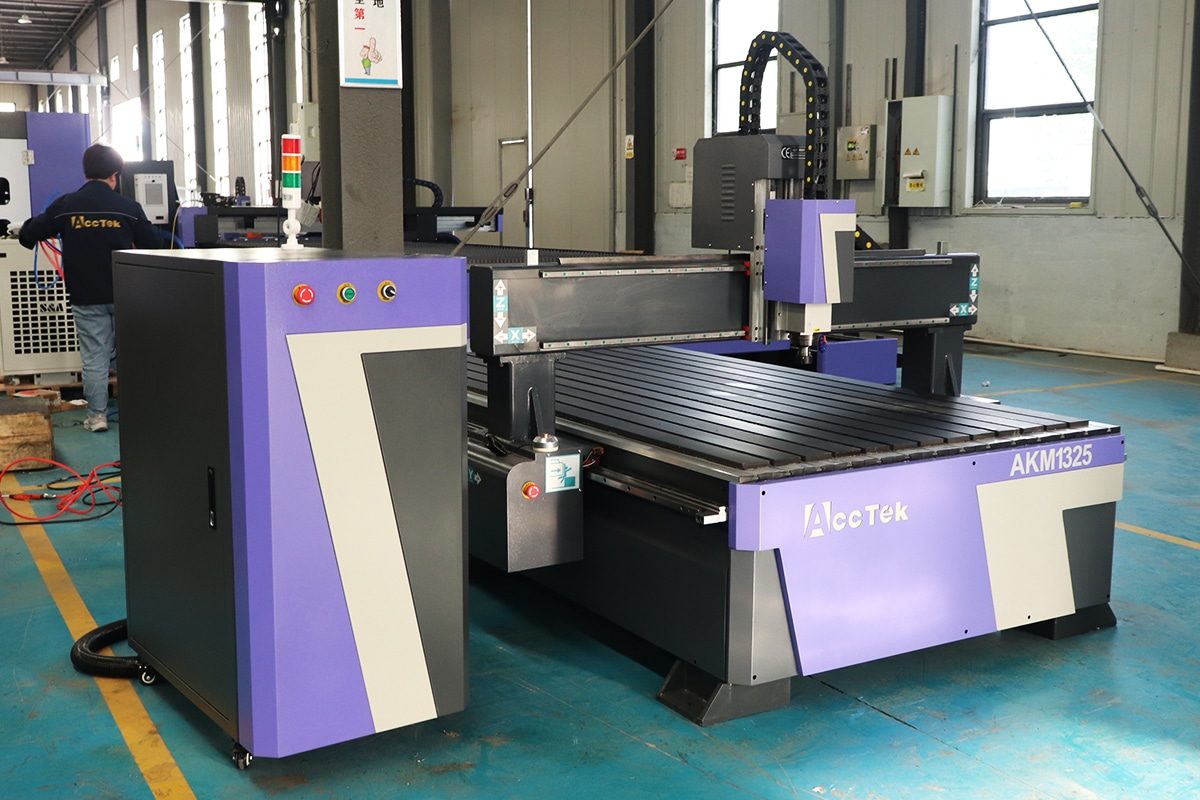
What Are CNC Routers
Computer Numerical Control (CNC) routers are automated cutting machines that use programmed instructions to shape, carve, and engrave a wide range of materials. Unlike traditional handheld routers, which rely on manual control, CNC routers operate through computer software that precisely guides the movement of the cutting tool. This allows for a level of accuracy, consistency, and repeatability that is difficult to achieve by hand.
At their core, CNC routers follow digital design files, typically created using CAD (Computer-Aided Design) software. These designs are then translated into machine instructions through CAM (Computer-Aided Manufacturing) software. Once the program is loaded, the router moves along multiple axes to cut or engrave materials such as wood, plastic, foam, aluminum, and even composites. The result is a highly efficient process capable of producing intricate designs, complex shapes, and detailed patterns.
CNC routers are widely used across industries. In woodworking, they are essential for cabinetry, furniture production, and decorative panels. In manufacturing, they support rapid prototyping and the production of precise components. Sign-making, aerospace, and even hobbyist communities also rely on CNC routers for their versatility and precision.
One of the key advantages of CNC routers is their ability to automate repetitive tasks while maintaining consistent quality. This reduces human error and increases productivity, especially in large-scale production. At the same time, modern CNC systems are becoming more accessible, making them useful not only for industrial applications but also for small businesses, makers, and DIY enthusiasts.
As technology continues to advance, CNC routers are becoming more powerful, user-friendly, and adaptable. Understanding how they work and what they can do is essential for anyone interested in modern manufacturing, digital fabrication, or precision craftsmanship.
Table of Contents
Definition of CNC Routers
CNC routers are a highly advanced, computer-operated cutting system used to shape, carve, mill, and engrave materials with exceptional precision. It functions by translating digital design data into coordinated mechanical movements, allowing a cutting tool to follow exact paths defined by software. In simple terms, CNC routers replace manual control with automated, code-driven instructions, making it possible to produce complex parts and detailed designs with consistent accuracy.
At a deeper level, CNC routers are best understood as an integrated manufacturing system rather than a standalone machine. It combines mechanical components such as a spindle, cutting tools, motors, and a rigid frame with sophisticated software that governs every movement. The workflow typically begins with a digital design created in CAD (Computer-Aided Design) software. This design is then converted into machine-readable instructions through CAM (Computer-Aided Manufacturing) software. These instructions, often written in G-code, specify critical parameters such as tool paths, cutting speeds, feed rates, and depth of cut. Once the program is executed, the machine moves along its axes—commonly X (left to right), Y (front to back), and Z (up and down)—to remove material with a high degree of control and repeatability.
One defining characteristic of CNC routers is their ability to automate complex and repetitive tasks without sacrificing precision. Unlike traditional routing methods that depend heavily on operator skill, CNC routers ensure that every cut follows the exact specifications of the digital model. This not only reduces the likelihood of human error but also allows identical parts to be produced in large quantities with minimal variation. As a result, CNC routers are widely used in both mass production and custom fabrication, offering a balance between efficiency and flexibility.
In addition to automation, CNC routers are distinguished by their versatility. They can process a broad spectrum of materials, including wood, plastics, foam, composites, and certain metals such as aluminum. With the appropriate tooling and configuration, they are capable of performing multiple operations within a single setup, including cutting, drilling, engraving, pocketing, and three-dimensional contouring. This multi-function capability reduces the need for multiple machines and streamlines the overall production process.
Another important aspect of CNC routers is their role in modern digital manufacturing environments. They act as a direct bridge between design and physical output, enabling rapid prototyping, design iteration, and efficient production workflows. Because designs can be easily modified in software, manufacturers and creators can quickly adapt to new requirements without extensive retooling. This adaptability is especially valuable in industries where customization and short production runs are increasingly common.
CNC routers are not merely a tool for cutting materials but a comprehensive, programmable fabrication system. It embodies the integration of digital technology with mechanical precision, enabling users to produce intricate, high-quality components efficiently and reliably. By combining accuracy, repeatability, versatility, and automation, CNC routers have become an essential part of contemporary manufacturing, woodworking, and creative production.
History and Evolution of CNC Routers
The history of CNC routers reflects a broader transformation in manufacturing, moving from manual craftsmanship to precise, automated, and digitally driven production. This evolution did not happen overnight. It developed through several key stages, each marked by advances in control systems, computing technology, and machine design. By understanding this progression, it becomes clear how CNC routers have grown into essential tools that combine accuracy, efficiency, and adaptability in modern fabrication.
Early Numerical Control Systems
The origins of CNC routers can be traced back to the emergence of Numerical Control (NC) systems in the 1940s and 1950s. These early systems were primarily developed to meet the demanding requirements of industries such as aerospace, where complex geometries and tight tolerances were critical. Traditional manual machining methods were no longer sufficient, prompting engineers to explore ways to automate machine tool movements.
NC machines operated using punched cards or paper tapes that contained encoded instructions. Each sequence of holes represented coordinates and movements, guiding the machine along a fixed path. This was a groundbreaking concept at the time, as it introduced programmable automation into machining processes. However, these systems were highly rigid. Any design change required creating a new tape, which was labor-intensive and prone to errors. Additionally, early NC machines lacked memory, real-time feedback, and flexibility, limiting their efficiency and ease of use.
Despite these challenges, NC technology established the fundamental principle that machines could be controlled through coded instructions rather than direct human manipulation. This idea became the cornerstone for all future developments in CNC technology.
Transition to Computer Numerical Control
The transition from NC to Computer Numerical Control (CNC) began in the 1960s and accelerated through the following decades as computers became more powerful, compact, and affordable. This shift replaced physical input media with digital programming, allowing machine instructions to be stored, edited, and executed directly within a computer system.
This advancement dramatically improved flexibility. Instead of recreating punched tapes for every modification, operators could simply edit digital programs, saving time and reducing errors. CNC systems also enabled more complex toolpaths, allowing machines to perform intricate operations with greater precision. The introduction of standardized programming languages, particularly G-code, further streamlined the process by creating a common framework for machine instructions.
Another significant improvement was the incorporation of feedback and control systems. Sensors and servo mechanisms allowed CNC machines to monitor their position and adjust movements in real time. This closed-loop control greatly enhanced accuracy, repeatability, and reliability. As a result, CNC technology quickly became the standard in industries that required high precision and consistent output.
Development of CNC Routers
As CNC systems matured, their application expanded beyond metalworking into industries that required the processing of softer materials. This led to the development of CNC routers, which were specifically designed for cutting materials such as wood, plastics, foam, and composites. Unlike CNC milling machines, which prioritize rigidity and cutting force, CNC routers were optimized for speed, larger work areas, and versatility.
The rise of CNC routers in the late 20th century coincided with increased demand in woodworking and related industries. Furniture manufacturers, cabinet makers, and sign producers quickly adopted the technology to improve productivity and design capability. CNC routers made it possible to produce detailed carvings, intricate patterns, and consistent components at a scale that manual methods could not match.
Technological improvements during this phase further enhanced performance. High-speed spindles allowed for smoother cuts and finer finishes. Stronger and more stable machine frames reduced vibration, improving accuracy. Advances in motion control systems enabled faster and more precise positioning. Additionally, the integration of user-friendly software made CNC routers more accessible to operators without extensive technical backgrounds.
Over time, CNC routers became not only industrial tools but also valuable assets for small workshops and custom fabrication businesses. Their ability to balance efficiency with creative flexibility made them especially appealing in markets where both mass production and customization were important.
Modern CNC Router Technology
Modern CNC routers represent a significant leap forward, combining advanced hardware, intelligent software, and integrated automation. Today’s machines are capable of operating across multiple axes, including 4-axis and 5-axis configurations, allowing for complex three-dimensional machining and sculptural work. This has expanded their use into areas such as architectural design, mold making, and advanced prototyping.
Automation has become a defining feature of modern CNC routers. Automatic tool changers allow machines to switch between different cutting tools without manual intervention, increasing efficiency and reducing downtime. Vacuum hold-down systems secure materials quickly and effectively, improving both safety and precision. High-speed spindles and optimized toolpaths enable faster production while maintaining high-quality results.
Software has also evolved significantly. Modern CNC systems often include simulation tools that allow users to preview machining processes before execution, reducing the risk of errors. Toolpath optimization algorithms improve cutting efficiency and extend tool life. Many machines now support integration with cloud-based platforms, enabling remote monitoring, data analysis, and production management.
Another important development is the growing accessibility of CNC routers. Entry-level machines are now widely available for hobbyists, educators, and small businesses. These systems feature intuitive interfaces, simplified setup processes, and strong community support, making CNC technology more approachable than ever before. At the same time, industrial-grade machines continue to push the boundaries of speed, precision, and automation.
The evolution of CNC routers illustrates a continuous progression from rigid, mechanically controlled systems to highly adaptable, digitally integrated manufacturing solutions. Early NC systems introduced the concept of programmable machining but were limited by their lack of flexibility and efficiency. The transition to CNC brought significant improvements in control, precision, and usability, laying the foundation for widespread adoption.
As the technology expanded into new materials and industries, CNC routers emerged as specialized machines designed for speed, versatility, and large-scale applications. Ongoing advancements in machine design, control systems, and software have transformed them into powerful, multi-functional tools capable of handling both high-volume production and intricate custom work.
Today, CNC routers play a central role in modern manufacturing and fabrication. They bridge the gap between digital design and physical creation, offering a combination of accuracy, efficiency, and flexibility that continues to drive innovation across industries.
Working Principle of CNC Routers
The working principle of CNC routers is based on a fully integrated digital-to-physical workflow in which computer-generated designs are translated into precise mechanical actions. Unlike manual routing, where the operator directly guides the cutting tool, CNC routers rely on pre-programmed instructions to control every aspect of the machining process. This approach ensures a high level of accuracy, repeatability, and efficiency. The process is systematic and consists of several interconnected stages, each contributing to the outcome. From design input to real-time control, every step is optimized to reduce error, improve consistency, and maximize productivity.
Digital Design Input
The process begins with the creation of a digital model using CAD (Computer-Aided Design) software. This model serves as the blueprint for the entire machining operation. Designers define the geometry, dimensions, tolerances, and features of the part, whether it is a simple 2D profile or a complex 3D structure with intricate contours.
This stage is more than just drawing a shape. It involves careful consideration of how the part will be manufactured, including material selection, structural integrity, and machining feasibility. Modern CAD systems often include validation tools that allow users to detect potential issues before production begins. Because the CNC router will replicate the design exactly, any detail specified at this stage directly impacts the final product.
Another advantage of digital design input is flexibility. Modifications can be made quickly without altering the physical setup of the machine. This enables rapid prototyping and iterative design, which are essential in both industrial and creative applications.
Toolpath Generation
After the design is finalized, it is imported into CAM (Computer-Aided Manufacturing) software, where toolpaths are generated. Toolpaths define the exact trajectory that the cutting tool will follow to remove material and shape the workpiece. This stage is critical because it determines how efficiently and accurately the machine will operate.
Toolpath generation involves selecting cutting strategies and parameters tailored to the material and desired outcome. For example, roughing operations focus on removing large volumes of material quickly, while finishing operations prioritize surface quality and precision. The CAM software calculates important variables such as feed rate, spindle speed, cutting depth, and step-over distance.
Advanced CAM systems also optimize toolpaths to minimize unnecessary movements, reduce machining time, and extend tool life. In complex projects, multiple toolpaths may be created for different tools and stages, requiring careful sequencing to ensure smooth and efficient execution. This stage essentially transforms the design into a practical machining plan.
G-Code Programming
Once toolpaths are defined, they are converted into G-code, the standardized programming language used by CNC machines. G-code acts as the instruction set that tells the CNC router exactly how to perform the machining process. It includes commands for movement, speed, tool changes, and operational control.
Each line of G-code corresponds to a specific action, such as moving the tool to a precise coordinate, adjusting feed rates, or activating the spindle. This code provides a highly detailed and unambiguous set of instructions, ensuring that the machine executes the design exactly as intended.
Before execution, operators often simulate the G-code using specialized software. This allows them to visualize the machining process, identify potential issues such as tool collisions or inefficient paths, and make necessary adjustments. This verification step is essential for maintaining safety, reducing material waste, and ensuring optimal performance.
Machine Execution
With the G-code loaded into the CNC router, the machine begins the execution phase. The controller interprets each command and converts it into electrical signals that drive motors and motion systems. These motors move the cutting tool along the X, Y, and Z axes with high precision and coordination.
The spindle rotates the cutting tool at high speeds, enabling it to cut, carve, or engrave the material as it moves along the programmed path. Depending on the application, the machine may perform a variety of operations, including profiling, drilling, pocketing, and three-dimensional contouring. The process is largely automated, allowing the machine to operate continuously with minimal supervision once properly set up.
Workholding systems, such as clamps or vacuum tables, ensure that the material remains stable during machining. Stability is essential for maintaining accuracy and preventing defects. In addition, modern machines often include automatic tool changers, enabling multiple operations to be completed in a single run without manual intervention.
Feedback and Precision Control
A key element that distinguishes CNC routers from simpler automated systems is their use of advanced feedback and precision control mechanisms. Modern CNC routers operate within a closed-loop control system, where sensors and encoders continuously monitor the machine’s position and performance.
These systems compare the actual position of the cutting tool with the programmed position in real time. If any deviation is detected, corrective adjustments are made instantly to maintain accuracy. This ensures that even during long or complex operations, the machine remains aligned with the intended toolpath.
Precision control also involves managing factors such as acceleration, deceleration, spindle speed, and cutting forces. Advanced systems can compensate for variables like tool wear, thermal expansion, and vibration, all of which can affect machining quality. Some CNC routers also include diagnostic and monitoring features that provide real-time data on machine performance, helping operators maintain optimal conditions.
The working principle of CNC routers is built on a highly coordinated sequence of digital and mechanical processes that transform design concepts into physical reality. Starting with a detailed digital model, the system generates optimized toolpaths and converts them into precise G-code instructions. These instructions are then executed by the machine with a high degree of automation and control.
Each stage plays a vital role in ensuring accuracy, efficiency, and consistency. The integration of software, programming, and mechanical systems allows CNC routers to perform complex operations with minimal human intervention while maintaining high-quality results. Feedback and control mechanisms further enhance precision by continuously monitoring and adjusting the machining process in real time.
CNC routers embody the principles of modern manufacturing by combining digital design, automation, and precision engineering. This integrated approach enables them to produce a wide range of components, from simple shapes to highly intricate structures, with reliability and efficiency that are difficult to achieve through traditional methods.
Main Components of CNC Routers
CNC routers are a carefully engineered system in which multiple mechanical and electronic components work together to deliver precise, automated machining. Each component has a specific function, but none operates in isolation. The overall performance of the machine depends on how well these parts are designed, integrated, and maintained. From structural stability to motion accuracy and control intelligence, every element contributes to the router’s ability to produce consistent, high-quality results across a wide range of applications.
Frame and Structure
The frame and structure form the physical foundation of the CNC router and play a critical role in determining its accuracy and durability. This component supports all moving and stationary parts, including the gantry, spindle assembly, and worktable. It is typically constructed from welded steel, cast iron, or high-strength aluminum alloys to ensure maximum rigidity.
A rigid frame minimizes vibration and deflection during operation, both of which can negatively affect cutting precision and surface finish. In high-performance machines, the frame is often stress-relieved during manufacturing to prevent deformation over time. The design of the gantry, which spans the width of the machine, is equally important. A well-balanced gantry ensures even weight distribution and stable movement, especially during high-speed operations. Ultimately, the strength and stability of the frame directly influence the machine’s ability to maintain tight tolerances.
Worktable
The worktable is the interface between the machine and the material being processed. Its primary function is to hold the workpiece securely in place throughout the machining process. Stability at this stage is essential, as even slight movement can lead to dimensional errors or damage to the material.
Worktables are designed to accommodate different workholding methods. T-slot tables allow for flexible clamping using fixtures and are suitable for a variety of shapes and sizes. Vacuum tables, on the other hand, use suction to hold flat materials firmly and evenly, making them ideal for sheet-based applications such as plywood or plastic panels. Some advanced systems combine both methods to increase versatility.
In addition to securing the material, the worktable must maintain a high degree of flatness and alignment with the machine’s coordinate system. This ensures consistent cutting depth and uniform results across the entire work surface, particularly in large-format CNC routers.
Spindle
The spindle is one of the most critical and performance-sensitive components of CNC routers. It is responsible for rotating the cutting tool at high speeds, enabling the machine to remove material efficiently. Spindles are typically powered by electric motors and can operate across a wide range of speeds, often exceeding tens of thousands of revolutions per minute.
Spindle performance affects several aspects of machining, including cutting accuracy, surface finish, and tool life. A high-quality spindle provides stable rotation with minimal runout, reducing vibration and ensuring smooth cuts. Variable speed control allows operators to match spindle performance to specific materials and cutting conditions, which is essential for achieving optimal results.
Cooling systems, such as air-cooled or water-cooled designs, are used to maintain consistent operating temperatures. Proper cooling not only protects the spindle from overheating but also contributes to long-term reliability and consistent performance.
Cutting Tools
Cutting tools are the active elements that directly engage with the material. They come in a wide variety of shapes, sizes, and materials, each designed for specific machining tasks. Common types include flat end mills for general cutting, ball nose tools for 3D contouring, V-bits for engraving, and drill bits for hole-making operations.
The effectiveness of CNC routers depends heavily on selecting the appropriate cutting tool for the job. Factors such as material hardness, desired surface finish, and cutting strategy all influence tool choice. For example, softer materials may require tools designed for high-speed cutting, while harder materials demand more durable tool materials and optimized cutting parameters.
Tool maintenance is equally important. Worn or damaged tools can lead to poor surface quality, increased cutting forces, and potential damage to both the machine and the workpiece. Regular inspection and timely replacement of tools are essential for maintaining consistent performance.
Motion System
The motion system controls how the spindle and cutting tool move along the machine’s axes. It consists of motors, drive mechanisms, and transmission components that work together to achieve precise positioning. The most common axes are X, Y, and Z, though some advanced machines include additional rotational axes.
Motors used in CNC routers are typically either stepper motors or servo motors. Stepper motors are cost-effective and suitable for many applications, while servo motors offer higher precision, faster response, and closed-loop control for demanding tasks. Drive mechanisms such as ball screws and rack-and-pinion systems convert motor rotation into linear motion. Ball screws are known for their accuracy and low backlash, while rack-and-pinion systems are preferred for larger machines requiring long travel distances.
A well-designed motion system ensures smooth, accurate movement with minimal vibration or deviation. This is essential for maintaining dimensional accuracy and achieving high-quality finishes.
CNC Controller
The CNC controller is the central processing unit of the machine, responsible for interpreting G-code instructions and coordinating all operations. It acts as the bridge between the digital program and the physical components, ensuring that every movement and action is executed correctly.
Modern CNC controllers are highly advanced, offering features such as real-time monitoring, error detection, and user-friendly interfaces. Operators can load programs, adjust parameters, and oversee the machining process through intuitive control panels or software interfaces. Some controllers also support network connectivity, enabling integration with design systems and remote monitoring.
The controller’s ability to process instructions quickly and accurately is crucial for maintaining synchronization between different components. A reliable controller enhances efficiency, reduces errors, and improves overall machine performance.
Linear Guides and Bearings
Linear guides and bearings are essential for ensuring smooth and precise movement of the machine’s moving parts. They support the motion system by guiding components along fixed paths while minimizing friction and wear.
High-quality linear guides maintain alignment and stability, preventing unwanted movement or play that could compromise accuracy. Bearings, both linear and rotational, reduce resistance and allow for consistent motion even under heavy loads. These components are designed to withstand continuous operation while maintaining precision over time.
Proper maintenance, including lubrication and cleaning, is vital for preserving the performance of guides and bearings. Any degradation in these components can lead to increased vibration, reduced accuracy, and potential mechanical failure.
The main components of CNC routers form a tightly integrated system in which each element contributes to the machine’s overall functionality and performance. The frame and structure provide the necessary rigidity to support precise operations, while the worktable ensures that materials are securely positioned. The spindle and cutting tools perform the actual machining, supported by a motion system that delivers accurate and controlled movement.
At the same time, the CNC controller coordinates all operations, translating digital instructions into synchronized mechanical actions. Linear guides and bearings ensure that movement remains smooth and precise, maintaining the integrity of the machining process over time. Together, these components enable CNC routers to achieve high levels of accuracy, efficiency, and repeatability.
Understanding these components highlights the complexity behind what may appear to be a straightforward machine. It also underscores the importance of quality design, proper setup, and regular maintenance in achieving optimal performance. As CNC technology continues to evolve, improvements in each of these components will further enhance the capabilities and applications of CNC routers in modern manufacturing.
Types of CNC Routers
CNC routers are not one-size-fits-all machines. They are designed in different configurations to meet varying levels of complexity, production volume, and material requirements. While all CNC routers operate using the same fundamental principle of computer-controlled motion, their capabilities differ significantly depending on the number of axes, machine size, structural design, and intended application. Understanding these differences is essential for selecting the right machine and fully utilizing its capabilities.
In general, CNC routers can be categorized in two main ways: by axis configuration, which determines the complexity of movements and machining possibilities, and by machine scale, which affects power, working area, and production capacity. Each type offers a unique balance between flexibility, precision, cost, and operational complexity.
3-Axis CNC Routers
3-axis CNC routers are the most basic and widely used type. They operate along three linear axes: X (horizontal left to right), Y (horizontal front to back), and Z (vertical up and down). This configuration allows the cutting tool to move across flat surfaces and perform a wide range of standard machining operations.
These machines are particularly well-suited for 2D cutting and basic 3D work, such as engraving, pocketing, drilling, and contouring. They are commonly used in woodworking, cabinetry, signage, and panel processing. One of their main advantages is simplicity. Both the machine design and programming process are relatively straightforward, making them accessible to beginners while still being effective for professional applications.
However, 3-axis CNC routers are limited when it comes to complex geometries. Since the tool approaches the material from a fixed vertical direction, machining multiple sides or intricate undercuts requires manual repositioning of the workpiece. This can increase setup time and introduce alignment challenges, especially in more demanding projects.
4-Axis CNC Routers
4-axis CNC routers extend the functionality of 3-axis CNC routers by adding a rotational axis, typically referred to as the A-axis. This axis allows either the workpiece or the cutting tool to rotate, enabling machining on multiple sides without removing or repositioning the material.
This capability is especially valuable for cylindrical or curved objects. For example, components such as table legs, columns, spindles, and artistic sculptures can be machined continuously as the workpiece rotates. This not only improves efficiency but also enhances precision by eliminating the need for repeated setups.
4-axis CNC routers strike a balance between capability and complexity. They offer significantly more flexibility than 3-axis CNC routers while remaining more accessible and cost-effective than 5-axis CNC routers. For many woodworking and decorative applications, they provide an ideal solution for producing detailed, multi-sided designs.
5-Axis CNC Routers
5-axis CNC routers represent the highest level of machining capability among standard CNC router configurations. In addition to the three linear axes, they include two rotational axes, allowing the cutting tool to approach the workpiece from virtually any direction.
This advanced movement enables the creation of highly complex shapes, including intricate 3D surfaces, deep cavities, and undercuts that would be impossible or inefficient to achieve with fewer axes. One of the key advantages of 5-axis machining is the ability to complete a part in a single setup. This reduces cumulative errors, improves accuracy, and significantly shortens production time.
These machines are widely used in industries that demand high precision and complexity, such as aerospace, automotive, mold making, and advanced product design. However, they require sophisticated programming, skilled operators, and a higher level of investment. Their complexity also means that proper training and experience are essential to fully utilize their capabilities.
Desktop CNC Routers
Desktop CNC routers are compact machines designed for small-scale applications. They are typically used by hobbyists, educators, designers, and small workshops for light-duty machining tasks. Despite their smaller size, many desktop routers are capable of producing highly detailed and precise work.
These machines are ideal for materials such as wood, plastics, foam, and soft metals. Common uses include engraving, model making, prototyping, and small component production. Their affordability and ease of use make them an attractive entry point for those new to CNC technology.
However, desktop CNC routers have limitations in terms of cutting power, working area, and structural rigidity. They are not suitable for heavy-duty machining or large production runs. Instead, they excel in environments where flexibility, accessibility, and precision on a smaller scale are the primary priorities.
Industrial CNC Routers
Industrial CNC routers are large, robust machines designed for high-volume and heavy-duty production. They are built with strong frames, powerful spindles, and advanced automation systems to handle demanding workloads over extended periods.
These machines are commonly used in industries such as furniture manufacturing, construction, aerospace, and large-format fabrication. They can process large sheets of material, perform multiple operations in a single cycle, and maintain consistent quality across mass production. Features such as automatic tool changers, multi-zone vacuum tables, and integrated production software significantly enhance efficiency.
Industrial CNC routers are designed for reliability and continuous operation. They can run for long hours with minimal downtime, making them essential for production environments where efficiency and consistency are critical. However, they require significant investment, dedicated space, and skilled personnel for operation and maintenance.
The different types of CNC routers reflect the wide range of needs in modern machining, from simple cutting tasks to highly complex, multi-axis operations. 3-axis CNC routers provide a reliable and accessible solution for general-purpose work, while 4-axis CNC routers introduce rotational capabilities that expand design possibilities. 5-axis CNC routers offer the highest level of flexibility and precision, enabling the production of intricate and complex components in a single setup.
At the same time, the distinction between desktop and industrial CNC routers highlights the importance of scale and application. Desktop machines make CNC technology accessible to individuals and small-scale users, while industrial systems deliver the power, durability, and automation required for large-scale production.
Choosing the right type of CNC router involves balancing factors such as complexity, cost, production volume, and material requirements. As technology continues to advance, these machines are becoming more capable and accessible, allowing a broader range of users to benefit from precision machining. Understanding the characteristics of each type is essential for making informed decisions and maximizing the effectiveness of CNC routing in any application.
Materials Processed by CNC Routers
One of the most significant advantages of CNC routers is their ability to process a broad spectrum of materials with a high degree of precision and repeatability. This flexibility allows a single machine to be used across multiple industries, from woodworking and signage to engineering and product development. However, each material category has its own physical and mechanical characteristics, which directly affect how it should be machined. Factors such as density, hardness, thermal sensitivity, and structural composition all influence cutting performance, tool selection, and machining strategy.
Successful CNC routing operations depend not only on the machine itself but also on understanding how different materials respond to cutting forces, heat, and tool interaction. Proper adjustment of spindle speed, feed rate, depth of cut, and tooling is essential to achieving clean results, extending tool life, and maintaining efficiency. The following material categories represent the most commonly processed groups in CNC routing applications.
Wood and Wood-Based Materials
Wood remains the most widely used material in CNC routing, particularly in industries such as furniture manufacturing, cabinetry, architectural design, and decorative fabrication. Solid woods like oak, maple, cherry, and pine vary significantly in hardness, grain structure, and moisture content, all of which affect machining behavior.
In addition to natural wood, engineered wood products such as plywood, MDF (medium-density fiberboard), particleboard, and laminated panels are extensively used. These materials offer greater uniformity and dimensional stability, which often makes them easier to machine with consistent results. MDF, for example, is ideal for detailed carving and painted finishes due to its smooth and homogeneous structure.
Despite its versatility, wood machining requires careful consideration. Grain direction can lead to tear-out if cutting parameters are not optimized. Moisture variations can cause expansion or contraction, affecting accuracy. Resin and dust buildup can also impact tool performance. Using sharp tools, proper feed rates, and dust extraction systems helps maintain clean cuts and prolong tool life.
Plastics
Plastics are widely processed using CNC routers in industries such as signage, electronics, packaging, and consumer products. Common materials include acrylic (PMMA), PVC, polycarbonate, ABS, and HDPE. Each type of plastic has unique machining characteristics, particularly in terms of heat sensitivity and chip formation.
Acrylic is known for its optical clarity and is often used for display panels and signage. It can produce excellent surface finishes but is prone to cracking or chipping if cutting conditions are not carefully controlled. Polycarbonate, on the other hand, offers higher impact resistance but may deform under excessive heat. Materials like HDPE and ABS are easier to machine, but can produce stringy chips that require proper chip evacuation.
Heat management is a critical factor when working with plastics. Excessive friction can lead to melting, warping, or poor edge quality. To avoid this, operators must balance spindle speed and feed rate, often using higher feed rates with sharp tools to reduce heat buildup. In some cases, air cooling or specialized tooling is used to improve results.
Composites
Composites are engineered materials composed of two or more constituents, designed to achieve enhanced strength, durability, or weight efficiency. Examples include fiberglass, carbon fiber, and various laminated panels. These materials are widely used in advanced industries such as aerospace, automotive, and marine engineering.
CNC routers are well-suited for cutting composites due to their ability to handle complex geometries and maintain consistent toolpaths. However, composites present several challenges. Their layered structure can lead to issues such as delamination, fraying, or uneven edges if not machined properly. Additionally, many composites are highly abrasive, which accelerates tool wear.
To address these challenges, specialized cutting tools, often made from carbide or diamond-coated materials, are used. Proper cutting strategies, including controlled feed rates and optimized toolpaths, help minimize damage to the material. Dust control is also essential, as composite particles can be hazardous. Effective extraction systems improve both safety and machining quality.
Soft Metals
CNC routers are capable of machining certain non-ferrous or soft metals, including aluminum, brass, and copper. These materials are commonly used in applications such as signage, decorative components, electronic housings, and lightweight structural parts.
Compared to wood and plastics, metals require more careful control of cutting conditions. They generate higher cutting forces and heat, which can affect both the tool and the machine. Lower spindle speeds combined with appropriate feed rates are typically used to maintain stable cutting conditions. Lubrication or cooling methods may also be applied to reduce friction and improve surface finish.
Machine rigidity plays an important role when cutting metals. A stable frame and precise motion system are necessary to prevent vibration and ensure accuracy. While CNC routers are not a replacement for heavy-duty milling machines, they provide an efficient solution for light metal machining, especially for thin sheets and non-structural components.
Foam and Rubber
Foam and rubber materials are among the easiest to process with CNC routers, yet they are highly valuable in many industries. Common foam materials include polyurethane, polystyrene, and EVA foam, while rubber materials range from soft elastomers to more durable synthetic compounds.
Foam is widely used for packaging, insulation, architectural modeling, and prototyping. Its low density allows for high-speed cutting with minimal resistance, making it ideal for producing large or complex shapes quickly. CNC routers can create detailed contours and smooth surfaces in foam with relatively simple tooling.
Rubber materials require slightly more care due to their flexibility and elasticity. Improper cutting conditions can lead to tearing or deformation. Sharp tools, controlled feed rates, and stable workholding are essential for achieving clean edges. These materials are often used in gasket production, seals, and mold-making applications.
CNC routers are distinguished by their ability to process a diverse range of materials, each with unique properties and machining requirements. From traditional wood and engineered boards to plastics, composites, soft metals, and flexible materials like foam and rubber, CNC routers offer a high degree of adaptability across industries.
This versatility, however, comes with the need for careful material-specific optimization. Factors such as tool selection, cutting parameters, heat control, and workholding must be tailored to each material to achieve the best results. Understanding these differences is essential for maintaining precision, improving efficiency, and extending the lifespan of both tools and equipment.
In practical terms, the ability to work with multiple materials allows CNC routers to serve as multifunctional production tools. Whether used for mass manufacturing, prototyping, or custom fabrication, they enable users to transition between applications with minimal reconfiguration. This flexibility is one of the key reasons CNC routers continue to play a central role in modern manufacturing and design.
Advantages and Limitations of CNC Routers
CNC routers have transformed the way materials are cut, shaped, and manufactured by combining digital control with mechanical precision. They are widely used across industries because they offer a reliable and scalable way to produce both simple and highly complex parts. However, while CNC routers provide clear advantages in terms of productivity and accuracy, they also introduce certain challenges related to cost, operation, and application limits. A complete understanding of both their strengths and constraints is essential for making informed decisions about their use.
Advantages
High Precision and Accuracy
CNC routers are known for their ability to achieve a high level of precision. Because the machine follows exact digital instructions, it can produce components with tight tolerances and fine details that would be difficult to replicate manually. This is especially important in applications such as intricate carvings, detailed engravings, and components that must fit together precisely.
Accuracy is not only about achieving the correct dimensions once, but also maintaining consistency across multiple operations. CNC routers minimize human error and variability, ensuring that each cut follows the same path every time. This leads to improved product quality and reduces the need for adjustments or corrections after machining.
Automation and Efficiency
Automation is a central advantage of CNC routers. Once a program is created and properly set up, the machine can perform operations with minimal manual input. This allows for continuous production and reduces reliance on constant operator supervision.
Efficiency gains come from several factors. CNC routers can execute complex toolpaths quickly, perform multiple operations in a single setup, and operate for extended periods without interruption. This significantly shortens production cycles compared to manual methods. In addition, automation frees up labor resources, allowing operators to focus on programming, quality control, or other tasks rather than manual cutting.
Versatility
CNC routers are highly adaptable machines capable of handling a wide variety of materials and applications. They can process wood, plastics, composites, foam, and certain non-ferrous metals, making them suitable for industries ranging from furniture manufacturing to prototyping and signage production.
Their versatility also extends to functionality. A single CNC router can perform multiple machining operations, including cutting, drilling, engraving, grooving, and three-dimensional carving. This eliminates the need for multiple specialized machines and allows for greater flexibility in production. As a result, CNC routers are particularly valuable in environments where both customization and efficiency are required.
Repeatability
Repeatability is one of the most important advantages in any production environment, and CNC routers excel in this area. Once a design and its corresponding program are finalized, the same instructions can be used repeatedly to produce identical parts.
This consistency is critical for maintaining quality standards, especially in large production runs. It also simplifies scaling, as increasing output does not compromise accuracy or uniformity. Repeatability ensures that each part meets the same specifications, which is essential for assembly processes and quality assurance.
Reduced Waste
CNC routers contribute to material efficiency by minimizing waste. Precise toolpaths ensure that material is removed only where necessary, reducing errors that could lead to discarded parts. In addition, software tools allow for optimized layout planning, often referred to as nesting, which maximizes the use of raw material.
Simulation capabilities further reduce waste by allowing operators to test programs before actual machining. This helps identify potential issues such as collisions or incorrect toolpaths, preventing costly mistakes. Over time, reduced waste not only lowers material costs but also supports more sustainable manufacturing practices.
Cost Efficiency
Although CNC routers involve an initial investment, they often lead to long-term cost savings. Increased productivity, reduced labor requirements, and improved material utilization all contribute to lower operational costs over time.
Additionally, the ability to produce consistent, high-quality parts reduces the need for rework and scrap, further improving efficiency. For businesses with ongoing production needs, CNC routers can provide a strong return on investment by streamlining workflows and increasing output capacity.
Limitations
Initial Investment
One of the most notable limitations of CNC routers is the upfront cost. Purchasing CNC routers, especially a high-quality or industrial-grade machine, requires a significant financial commitment. Beyond the machine itself, additional expenses include software licenses, cutting tools, installation, and operator training.
For small businesses or individual users, this initial investment can be a barrier. While more affordable entry-level machines are available, they may have limitations in terms of power, size, or precision, which can restrict their range of applications.
Maintenance Requirements
CNC routers require regular maintenance to ensure consistent performance and longevity. Mechanical components such as spindles, motors, linear guides, and bearings must be kept in good condition through cleaning, lubrication, and periodic inspection.
Cutting tools also wear out over time and must be replaced to maintain cutting quality. Failure to perform proper maintenance can lead to decreased accuracy, increased downtime, and potentially costly repairs. In addition, unexpected breakdowns can disrupt production schedules, affecting overall efficiency.
Material Limitations
While CNC routers are versatile, they are not suitable for all materials. They are primarily designed for softer materials and light metals. Harder materials, such as steel or other ferrous metals, typically require more robust machines like CNC milling centers.
Using CNC routers beyond their intended material range can result in poor surface quality, excessive tool wear, or damage to the machine. Therefore, understanding the limitations of the machine in relation to material properties is essential for safe and effective operation.
Skill Requirements
Operating CNC routers is not entirely straightforward and requires a certain level of technical knowledge. Users must understand how to create and modify designs in CAD software, generate toolpaths in CAM software, and set appropriate machining parameters.
In addition, operators must be familiar with machine setup, tool selection, and safety procedures. While modern CNC systems are becoming more intuitive, there is still a learning curve. Mistakes in programming or setup can lead to defective parts, wasted materials, or even machine damage. Skilled operation is key to achieving optimal results.
CNC routers offer a combination of precision, automation, versatility, and repeatability that makes them indispensable in modern manufacturing and fabrication. Their ability to produce consistent, high-quality parts efficiently while reducing material waste provides clear advantages across a wide range of industries. Over time, these benefits translate into improved productivity, better resource utilization, and overall cost efficiency.
However, these advantages must be weighed against certain limitations. The initial investment can be substantial, and ongoing maintenance is necessary to ensure reliable operation. Material compatibility also imposes constraints, and effective use of CNC routers requires a solid understanding of both software and machining principles.
In practice, the value of CNC routers depends on how well these factors are managed. When properly selected, maintained, and operated, CNC routers provide a powerful and flexible solution for both small-scale and large-scale production. By recognizing both their strengths and limitations, users can make informed decisions and fully leverage the capabilities of CNC routing technology.
Applications of CNC Routers
CNC routers are widely used across a broad range of industries because they offer a powerful combination of precision, automation, and flexibility. Their ability to translate digital designs into accurate physical outputs makes them essential in both production and creative environments. From high-volume manufacturing to one-off custom projects, CNC routers support a wide spectrum of applications by enabling consistent quality, efficient workflows, and complex design execution.
One of the defining characteristics of CNC routers is their adaptability. They can process various materials, perform multiple operations, and handle both simple and highly intricate designs. This makes them valuable not only in traditional industries like woodworking but also in advanced sectors such as aerospace and product development. The following sections explore the major application areas in detail.
Woodworking and Furniture Manufacturing
Woodworking is one of the earliest and most widespread uses of CNC routers. In furniture manufacturing, CNC routers are used to cut, shape, drill, and carve components such as cabinet panels, doors, shelves, frames, and decorative elements. They are particularly effective for producing complex joinery, including dovetail joints, mortise-and-tenon connections, and interlocking parts that require high precision.
One of the key advantages in this field is the ability to combine mass production with customization. Manufacturers can produce large quantities of identical parts while also easily modifying designs to meet specific customer preferences. This is especially important in modern furniture markets, where demand for personalized and modular products continues to grow.
CNC routers also improve workflow efficiency. By automating repetitive tasks, they reduce reliance on manual labor and minimize human error. This not only speeds up production but also ensures consistent quality across all components. Additionally, CNC routers enable intricate carvings and decorative details that would be time-consuming and difficult to achieve by hand.
Sign Making
The sign-making industry relies heavily on CNC routers for producing both functional and decorative signage. These machines are used to cut letters, logos, symbols, and shapes from materials such as acrylic, PVC, wood, and aluminum. They can create flat signs as well as three-dimensional lettering and layered designs that enhance visual impact.
Precision is critical in sign-making, especially for branding purposes. CNC routers ensure that each element is produced with clean edges, accurate dimensions, and consistent spacing. Engraving capabilities allow for fine details, including text, patterns, and textures, which are essential for professional-quality signage.
Another important advantage is flexibility. Designers can easily modify digital files to create variations of a design, making CNC routers ideal for custom signage projects. Whether producing a single sign or a large batch, CNC routers provide the speed and accuracy needed to meet tight deadlines and maintain high standards.
Advertising and Display Industry
In the advertising and display industry, CNC routers are used to create eye-catching structures and promotional materials. These include exhibition stands, retail displays, point-of-sale units, branded installations, and event props. Such applications often require complex shapes, precise assembly, and visually appealing finishes.
CNC routers allow designers to bring creative concepts to life by enabling the production of intricate geometries and layered designs. Materials such as foam, plastics, and composite panels are commonly used to create lightweight yet durable display elements. The ability to cut and shape these materials with precision ensures that components fit together seamlessly.
Rapid prototyping is another key benefit in this industry. Designers can quickly produce sample models to test ideas and make adjustments before final production. This shortens development cycles and allows for greater responsiveness to client needs and market trends.
Aerospace and Automotive
CNC routers play a supporting but important role in aerospace and automotive industries, particularly in the processing of lightweight materials such as composites, plastics, and aluminum. These industries require high precision, consistency, and adherence to strict design specifications.
In aerospace applications, CNC routers are used to cut composite panels, interior components, and structural elements that require accurate shaping and smooth finishes. In the automotive sector, they are commonly used for prototyping, interior trim production, and the creation of molds and templates.
One of the major advantages in these fields is the ability to accelerate product development. CNC routers enable rapid prototyping, allowing engineers to quickly produce and test components before finalizing designs. This reduces development time and supports innovation. While heavy-duty metal machining is handled by specialized equipment, CNC routers provide an efficient solution for non-ferrous and composite materials.
Mold Making
Mold making is a critical application of CNC routers, especially in industries that rely on casting, vacuum forming, or injection molding. CNC routers are used to create master patterns, molds, and tooling components from materials such as foam, wood, and certain plastics.
Accuracy is essential in mold making because any deviation in the mold will directly affect the final product. CNC routers provide the precision needed to produce detailed and consistent molds. They are particularly useful for creating prototypes and low-volume production molds, where flexibility and speed are important.
Another advantage is the ease of modification. Designers can quickly adjust digital models and produce updated molds without extensive retooling. This supports iterative development and helps manufacturers refine their designs efficiently.
Art and Sculpture
CNC routers have opened new possibilities in the fields of art and sculpture by combining traditional craftsmanship with digital technology. Artists and designers use CNC routers to create intricate carvings, reliefs, and three-dimensional forms from materials such as wood, foam, and composite materials.
These machines allow for a high level of detail and precision, enabling the creation of complex patterns and large-scale installations that would be difficult to achieve manually. Artists can start with a digital model, experiment with different forms, and then produce a physical piece with consistent accuracy.
CNC routers also support replication and scaling. A single design can be reproduced multiple times or resized without losing detail, making it possible to create a series of artworks or adapt designs for different spaces. Rather than replacing artistic skill, CNC technology enhances creative possibilities and expands the range of achievable designs.
CNC routers are used across a wide variety of industries because they offer a unique combination of precision, efficiency, and adaptability. In woodworking and furniture manufacturing, they enable both high-volume production and detailed customization. In sign making and advertising, they support the creation of visually compelling and consistent designs. In technical fields such as aerospace and automotive, they contribute to accurate component production and rapid prototyping.
Their role in mold making highlights their importance in manufacturing workflows, while their application in art and sculpture demonstrates their creative potential. Across all these areas, CNC routers provide a reliable way to transform digital designs into physical objects with a high degree of accuracy and repeatability.
The wide range of applications reflects the versatility and importance of CNC routers in modern production and design. As technology continues to advance, its capabilities are expanding, allowing it to play an even greater role in both industrial processes and creative industries.
CNC Router VS Other CNC Machines
CNC routers are one category within a broader group of computer-controlled machining technologies, each designed for specific materials, cutting methods, and production goals. While all CNC machines rely on programmed instructions to automate motion and machining, their differences lie in how they remove material, the types of materials they handle, and the level of precision or power they deliver.
CNC routers are generally optimized for versatility, speed, and large working areas. They are widely used for processing softer materials and for applications that require flexibility and multi-function capability. In contrast, other CNC machines, such as CNC mills, laser cutting machines, and plasma cutting machines, are often more specialized, focusing on either higher precision, non-contact cutting, or heavy-duty metal processing. Understanding these differences helps clarify where CNC routers are most effective and how they compare in practical use.
CNC Router VS CNC Mill
CNC routers and CNC mills share a common principle: both use rotating cutting tools to remove material in a subtractive manufacturing process. However, their design priorities and performance characteristics differ significantly.
CNC routers are typically built for high-speed operation and are optimized for softer materials such as wood, plastics, foam, and composites. They usually feature larger work envelopes, making them ideal for processing sheet materials and large panels. Their lighter construction allows for faster movement, which improves productivity in applications where cutting force is relatively low.
CNC mills, by contrast, are engineered for rigidity and power. They are designed to machine hard materials such as steel, titanium, and other metals that require high cutting forces. Mills operate at lower spindle speeds but generate greater torque, allowing for controlled, precise material removal. Their heavy and rigid frames reduce vibration, which is critical for achieving tight tolerances and fine surface finishes.
Another important distinction lies in precision and application scope. CNC mills are commonly used in industries that demand extreme accuracy, such as aerospace, automotive engineering, and toolmaking. CNC routers, while still precise, are generally used where speed, material versatility, and larger working areas are more important than ultra-tight tolerances.
In practical terms, CNC routers are best suited for high-speed, large-format machining of softer materials, while CNC mills are preferred for precision machining of hard metals and complex mechanical components.
CNC Router VS Laser Cutting Machine
CNC routers and laser cutting machines differ fundamentally in their cutting mechanisms. CNC routers use physical cutting tools that remove material through mechanical contact, while laser cutting machines use a focused beam of light to melt, burn, or vaporize material without touching it.
Laser cutting offers exceptional precision and edge quality. Because there is no physical contact, there is minimal mechanical stress, resulting in clean, smooth edges that often require little to no finishing. This makes laser cutting ideal for intricate patterns, fine details, and thin materials such as sheet metal, acrylic, paper, and textiles.
However, laser cutting has limitations. It is generally less effective for thicker materials and cannot perform operations such as deep carving, pocketing, or three-dimensional shaping. Additionally, certain materials may produce fumes when exposed to laser heat, requiring proper ventilation and safety measures.
CNC routers, on the other hand, provide greater flexibility in terms of machining depth and functionality. They can cut thicker materials, create three-dimensional forms, and perform multiple operations such as drilling, engraving, and contouring. While the edge finish may not be as smooth as laser cutting in some cases, CNC routers offer broader application capabilities.
Laser cutting is ideal for high-precision, fine-detail work on thin materials, while CNC routers are better suited for thicker materials and multi-dimensional machining tasks.
CNC Router VS Plasma Cutting Machine
Plasma cutting machines are designed specifically for cutting electrically conductive metals using a high-temperature plasma arc. This process allows them to cut through thick metal sheets quickly and efficiently, making them a common choice in heavy industrial environments.
Compared to CNC routers, plasma cutting machines excel in speed when working with metals such as steel, stainless steel, and aluminum. They are widely used in construction, shipbuilding, and metal fabrication, where rapid cutting of large metal components is required.
However, plasma cutting is limited to conductive materials and cannot be used for wood, plastics, or composites. In addition, the edges produced by plasma cutting are typically rougher and may require secondary finishing processes to achieve a smooth surface.
CNC routers offer a different set of advantages. They are capable of processing a wide range of non-metal materials and can perform detailed operations such as engraving and carving. While they are not suitable for cutting thick metals, they provide higher precision and better surface quality when working with softer materials and light metals.
Essentially, plasma cutting is a specialized solution for fast, heavy-duty metal cutting, whereas CNC routers are more versatile machines designed for multi-material applications and detailed fabrication.
CNC routers differ from other CNC machines in their balance of versatility, speed, and application range. Compared to CNC mills, they prioritize high-speed machining and larger working areas over heavy-duty cutting and extreme precision. When compared to laser cutting machines, CNC routers offer greater flexibility and depth of operation, although lasers provide superior detail and edge quality for thin materials. In contrast to plasma cutting machines, CNC routers are less suitable for thick metal cutting but excel in handling a wide variety of materials and performing complex, multi-step operations.
Each type of CNC machine is designed with specific strengths and limitations, and no single machine is ideal for all tasks. CNC routers stand out for their adaptability, making them suitable for a wide range of industries, from woodworking and signage to prototyping and creative design. By understanding how CNC routers compare with other CNC technologies, users can select the most appropriate equipment for their specific needs and achieve optimal results in both efficiency and quality.
Key Factors to Consider When Choosing CNC Routers
Selecting CNC routers is a strategic decision that goes beyond comparing basic specifications. The right machine should align with your production needs, material types, workflow efficiency, and long-term business goals. Well-matched CNC routers can significantly improve productivity, reduce operational costs, and expand your manufacturing capabilities. On the other hand, an unsuitable choice can create bottlenecks, increase maintenance demands, and limit future growth.
CNC routers vary widely in size, power, precision, and control features. Because these factors are closely interconnected, it is important to evaluate them as a complete system rather than in isolation. The following considerations provide a detailed framework to guide the selection process.
Machine Size and Work Area
The machine size and work area are among the most fundamental factors to consider. The working area defines the maximum dimensions of the material that can be processed in a single setup. This directly affects productivity, especially in industries that rely on large sheets or panels, such as furniture manufacturing, cabinetry, and signage production.
Choosing a machine with an insufficient work area can lead to inefficiencies. For example, larger parts may need to be repositioned multiple times, increasing setup complexity and the risk of alignment errors. This not only slows down production but can also compromise accuracy. Conversely, selecting a machine that is significantly larger than required may result in higher costs, increased energy consumption, and inefficient use of workspace.
It is also important to consider the physical footprint of the machine within your facility. Adequate space must be allocated for material handling, operator movement, maintenance access, and safety clearance. In addition, factors such as ceiling height, loading equipment, and workflow layout should be taken into account to ensure smooth and efficient operation.
Spindle Power
Spindle power is a key factor that determines the cutting capability and overall performance of CNC routers. It influences how effectively the machine can process different materials, how quickly it can remove material, and how stable it remains under load.
Lower-power spindles are generally sufficient for light-duty applications such as foam, plastics, and soft wood. However, for denser materials like hardwood, thick panels, or soft metals such as aluminum, a higher-power spindle is necessary. A more powerful spindle allows for deeper cuts, higher feed rates, and improved efficiency, reducing machining time and tool wear.
In addition to power, the spindle’s speed range is equally important. Different materials require different cutting speeds, and a variable-speed spindle provides the flexibility needed to optimize performance. Cooling systems, whether air-cooled or water-cooled, also play a critical role in maintaining stable operation and extending the lifespan of the spindle. Selecting the right spindle ensures consistent cutting quality and long-term reliability.
Control System
The control system is the operational core of the CNC router, responsible for interpreting G-code and coordinating all machine movements. Its quality and usability have a direct impact on productivity, accuracy, and ease of operation.
Modern control systems often feature intuitive interfaces, real-time monitoring, and compatibility with widely used CAD/CAM software. Advanced systems may include features such as toolpath simulation, automatic error detection, and network connectivity for remote monitoring and data management.
Ease of use is an important consideration, especially for operators who may not have extensive technical experience. A user-friendly control system reduces the learning curve and minimizes the risk of programming errors. At the same time, compatibility with your existing software and workflow ensures a seamless transition from design to production.
A reliable control system not only improves efficiency but also enhances safety by providing better control over machine operations and reducing the likelihood of errors.
Precision and Accuracy
Precision and accuracy are critical for ensuring that the CNC router can produce parts that meet design specifications. These factors determine how closely the machine can replicate the intended geometry and how consistently it can maintain that performance over time.
Accuracy is influenced by several elements, including the rigidity of the machine frame, the quality of the motion system, and the precision of components such as linear guides and bearings. A rigid structure reduces vibration and deflection, which are common sources of error during machining.
Repeatability is equally important, particularly in production environments. The machine must be able to produce identical parts consistently, even over long production runs. This is essential for maintaining quality standards and ensuring proper fit and assembly of components.
For applications involving intricate designs, fine details, or tight tolerances, investing in a machine with higher precision capabilities is crucial. Even small deviations can affect the final product, so precision should not be overlooked.
Budget
Budget is often a decisive factor, but it should be considered in terms of overall value rather than just initial cost. The total investment includes not only the machine itself but also additional expenses such as software, tooling, installation, training, and ongoing maintenance.
Lower-cost machines may offer short-term savings but can come with limitations in performance, durability, and support. These limitations can lead to higher long-term costs due to increased downtime, reduced efficiency, and frequent repairs. On the other hand, a higher-quality machine may require a larger upfront investment but can deliver better reliability, higher productivity, and longer service life.
It is also important to consider scalability. A machine that meets current needs but lacks the capacity for future growth may need to be replaced sooner than expected. Evaluating the return on investment, including productivity gains and cost savings, helps ensure a more informed and sustainable decision.
Choosing the right CNC router involves balancing multiple factors that together determine the machine’s performance and suitability for your specific applications. Machine size and work area affect production efficiency and workflow, while spindle power determines the ability to handle different materials and cutting conditions. The control system influences usability and integration, and precision ensures consistent, high-quality results.
At the same time, budget considerations must account for both initial investment and long-term value. Well-chosen CNC routers should not only meet current requirements but also support future growth and evolving production needs.
Ultimately, selecting CNC routers is about aligning technical capabilities with practical objectives. By carefully evaluating these key factors, users can make informed decisions, avoid unnecessary limitations, and maximize the benefits of CNC routing technology in both small-scale and industrial settings.
Safety Considerations
CNC routers are highly efficient and precise machines, but they also involve significant mechanical, electrical, and environmental risks. High-speed rotating tools, automated movement along multiple axes, and the continuous generation of dust and debris create conditions that require strict safety awareness. While modern CNC routers are equipped with built-in safety features, safe operation ultimately depends on proper procedures, operator discipline, and a well-organized workspace.
Safety should be treated as an integral part of the entire CNC workflow, from machine setup and programming to active operation and maintenance. A comprehensive safety approach not only protects operators from injury but also helps prevent machine damage, reduces downtime, and ensures consistent production quality. The following key areas represent the most important safety considerations when working with CNC routers.
Personal Protective Equipment (PPE)
Personal protective equipment is the most immediate and essential layer of protection for CNC router operators. Because machining involves cutting, material removal, and high-speed tool rotation, operators are exposed to hazards such as flying chips, sharp edges, noise, and airborne dust.
Eye protection is critical and should always be worn during operation. Safety glasses or face shields help prevent injury from particles that may be ejected at high speed. Hearing protection is equally important, as prolonged exposure to machine noise can lead to long-term hearing damage, especially in industrial environments with multiple machines running simultaneously.
Respiratory protection is necessary when machining materials that produce fine dust or potentially harmful particles, such as MDF, composites, or certain plastics. Dust masks or respirators help reduce the risk of inhalation and protect long-term health.
Clothing and personal appearance also play a role in safety. Loose clothing, gloves, jewelry, or long hair can become entangled in moving parts and must be secured or avoided. Operators should wear fitted clothing and sturdy, non-slip footwear to maintain stability and control while working around the machine.
Dust and Chip Management
Effective dust and chip management is essential for both safety and machine performance. CNC routers generate a large volume of chips and fine dust, particularly when processing wood, plastics, and composite materials. If not properly controlled, these byproducts can create multiple hazards.
From a health perspective, airborne dust can reduce air quality and pose respiratory risks. Prolonged exposure to fine particles can lead to irritation or more serious health issues over time. From a safety standpoint, accumulated dust can increase the risk of fire, especially when dealing with combustible materials.
Installing a dust extraction or collection system is one of the most effective ways to manage these risks. These systems capture dust at the source, preventing it from spreading throughout the workspace. In addition, regular cleaning of the machine and the surrounding area is necessary to prevent buildup.
Chip management also affects machining efficiency. Accumulated chips can interfere with the cutting process, reduce accuracy, and increase tool wear. Keeping the cutting area clear ensures smoother operation and helps maintain consistent results.
Machine Guards
Machine guards are a critical safety feature designed to protect operators from direct contact with hazardous components. These include rotating spindles, cutting tools, and moving mechanical parts. Guards also help contain debris and reduce the risk of injury from flying particles.
Modern CNC routers often include protective enclosures, spindle covers, and safety interlock systems. Interlocks are particularly important, as they automatically stop the machine if a guard is opened during operation. These features significantly reduce the likelihood of accidents when used correctly.
Machine guards must never be removed or bypassed. Doing so exposes operators to unnecessary risks and can lead to serious injuries. Regular inspection of guards and safety systems ensures they remain functional and effective.
Emergency stop buttons are another important safety component. They should be clearly visible, easily accessible, and tested regularly. Operators must know how to use them quickly in case of an emergency.
Training
Proper training is one of the most important factors in ensuring safe CNC router operation. Even the most advanced safety systems cannot compensate for a lack of knowledge or improper use. Operators must be trained not only in how to use the machine but also in how to recognize and manage potential risks.
Training should cover machine setup, tool selection, programming basics, and safe operating procedures. Operators should understand how to secure materials properly, choose appropriate cutting parameters, and monitor the machine during operation.
Equally important is the ability to identify warning signs of potential problems, such as unusual vibrations, abnormal noises, or inconsistent cutting performance. Early detection of these issues can prevent accidents and reduce equipment damage.
Emergency procedures must also be clearly understood. Operators should know how to stop the machine, handle tool breakage, and respond to unexpected situations. Ongoing training and refresher courses are valuable for maintaining safety standards, especially as equipment and processes evolve.
Safety considerations are a fundamental aspect of CNC router operation and should be integrated into every stage of the workflow. The use of appropriate personal protective equipment provides immediate protection against common hazards, while effective dust and chip management ensures a clean and healthy working environment. Machine guards and safety systems offer critical protection against mechanical risks, and proper training equips operators with the knowledge needed to use the equipment safely and confidently.
These elements are interconnected and must be applied together to create a comprehensive safety framework. Ignoring any one aspect can increase the risk of injury, reduce machine performance, and compromise overall efficiency. By prioritizing safety and maintaining consistent practices, operators can create a secure working environment that supports both productivity and long-term reliability.
Ultimately, a strong safety culture not only protects people but also enhances the overall effectiveness of CNC operations. When safety is properly managed, it contributes to better performance, fewer disruptions, and more sustainable manufacturing practices.
Maintenance Requirements
Maintenance is a critical aspect of CNC router operation that directly influences machine performance, accuracy, lifespan, and overall productivity. While CNC routers are engineered for durability and continuous use, they operate under demanding conditions that involve high-speed motion, mechanical stress, heat, and exposure to dust and debris. Over time, these factors can lead to wear, misalignment, and reduced efficiency if not properly managed.
A well-planned maintenance strategy helps prevent unexpected failures, ensures consistent machining quality, and reduces long-term operating costs. Rather than reacting to problems after they occur, effective maintenance focuses on prevention, early detection, and systematic care. This approach involves a combination of routine cleaning, proper lubrication, regular inspection, and ongoing software management. When these elements are consistently applied, the CNC router can maintain stable performance and deliver reliable results over an extended period.
Regular Cleaning
Regular cleaning is one of the most fundamental and impactful maintenance practices. During machining, CNC routers generate large amounts of chips, dust, and fine particles that accumulate on the worktable, spindle, motion components, and surrounding areas. If left unaddressed, this buildup can interfere with machine operation and lead to premature wear.
Dust and debris can obstruct linear guides, ball screws, and bearings, increasing friction and reducing movement accuracy. Accumulated material can also affect sensors, cooling systems, and electrical components, potentially causing overheating or system malfunctions. In addition, a dirty work environment reduces visibility and can make it more difficult to detect developing issues.
Cleaning should be performed regularly, ideally at the end of each work cycle or shift. This includes removing chips from the work surface, clearing debris from the cutting area, and wiping down exposed machine parts. Special attention should be given to areas where dust tends to accumulate, such as around the spindle and along motion tracks.
Dust extraction systems play a key role in maintaining cleanliness. These systems should be checked frequently to ensure proper airflow and efficiency. Filters and collection containers must be cleaned or replaced as needed to prevent clogging and maintain effective dust removal. A clean machine not only operates more efficiently but also provides a safer and more organized working environment.
Lubrication
Lubrication is essential for ensuring smooth and reliable movement of the CNC router’s mechanical components. Parts such as linear guides, bearings, ball screws, and drive systems rely on lubrication to reduce friction, minimize wear, and maintain precise motion.
Without proper lubrication, these components can experience increased resistance, leading to higher operating temperatures, reduced efficiency, and accelerated wear. Over time, this can result in decreased accuracy, noisy operation, and potential component failure. In severe cases, lack of lubrication can cause irreversible damage to critical parts.
The type and frequency of lubrication depend on the machine design and manufacturer specifications. Some CNC routers require manual lubrication at regular intervals, while others are equipped with automatic lubrication systems that distribute lubricant to key components.
It is important to use the correct lubricant recommended by the manufacturer, as different components may require specific types of oil or grease. Applying too little lubrication can lead to increased wear, while excessive lubrication can attract dust and create buildup. Maintaining a proper balance ensures optimal performance and longevity.
Regular monitoring of lubrication points and schedules helps ensure that all moving parts continue to operate smoothly and efficiently.
Inspection
Routine inspection is a proactive maintenance practice that helps identify potential issues before they become serious problems. By regularly examining the machine’s mechanical, electrical, and operational components, operators can detect early signs of wear, misalignment, or malfunction.
Mechanical inspections should include checking for loose bolts, worn belts, damaged components, and signs of vibration or unusual noise. Any irregularities in machine movement or cutting performance should be investigated promptly. Cutting tools should also be inspected frequently, as worn or damaged tools can affect surface quality and place additional stress on the machine.
Electrical systems require careful monitoring as well. Cables, connectors, and control units should be checked for signs of wear, overheating, or instability. Ensuring that all electrical components are functioning properly helps prevent unexpected shutdowns and safety risks.
Calibration is another important aspect of inspection. Over time, mechanical components may shift slightly, affecting positioning accuracy. Periodic calibration ensures that the machine continues to operate within specified tolerances and maintains consistent repeatability.
Keeping detailed maintenance records can also be beneficial. Tracking inspections and identifying issues allows operators to monitor trends and address recurring problems more effectively.
Software Updates
In addition to mechanical maintenance, software management is a crucial aspect of CNC router upkeep. The control software is responsible for interpreting G-code, managing motion, and coordinating all machine operations. Keeping this software up to date ensures optimal performance and system reliability.
Software updates often include bug fixes, performance improvements, and new features that enhance usability and efficiency. Running outdated software can lead to compatibility issues with CAD/CAM systems, reduced functionality, or unexpected errors during operation.
Operators should also maintain regular backups of machine programs, configuration settings, and important data. This ensures that information can be quickly restored in case of system failure or data loss. Backup practices are especially important in production environments where downtime can be costly.
Periodic review of software settings and parameters is also recommended. As production requirements change, adjusting these settings helps ensure that the machine continues to operate efficiently and meets current needs.
Maintenance requirements for CNC routers involve a comprehensive and ongoing process that combines cleaning, lubrication, inspection, and software management. Regular cleaning prevents the buildup of debris that can interfere with machine operation, while proper lubrication ensures smooth movement and reduces wear on critical components. Routine inspections allow for early detection of potential issues, helping to avoid costly repairs and unexpected downtime. Keeping software updated ensures reliable operation and compatibility with modern design and manufacturing systems.
These maintenance practices are interconnected and must be applied consistently to achieve the best results. Neglecting maintenance can lead to reduced accuracy, increased component wear, and a higher risk of machine failure, all of which negatively impact productivity and cost efficiency.
By integrating maintenance into daily operations and following a structured schedule, users can extend the lifespan of their CNC router, maintain high-quality output, and ensure safe and reliable performance. In the long term, a well-maintained machine not only operates more efficiently but also provides greater value, stability, and confidence in any manufacturing environment.
Summary
CNC routers are a cornerstone of modern manufacturing and digital fabrication, offering a powerful combination of precision, automation, and versatility. By using computer-controlled instructions to guide cutting tools, these machines can transform digital designs into physical products with a high degree of accuracy and consistency. From simple two-dimensional cutting to complex three-dimensional carving, CNC routers provide capabilities that far exceed traditional manual methods.
Throughout this article, we have explored the key aspects that define CNC routers. Their working principle is based on a seamless integration of design software, toolpath generation, and automated machine execution. Core components such as the frame, spindle, motion system, and controller work together to ensure stable and precise operation. Different types of CNC routers, including 3-axis, 4-axis, and 5-axis CNC routers, as well as desktop and industrial models, offer varying levels of capability to suit different applications.
One of the most notable strengths of CNC routers is their ability to process a wide range of materials, including wood, plastics, composites, soft metals, and foam. This versatility enables their use across numerous industries, such as woodworking, signage, advertising, aerospace, mold making, and artistic design. At the same time, CNC routers offer clear advantages in terms of repeatability, efficiency, and reduced material waste, making them highly valuable for both production and custom work.
However, CNC routers also come with certain limitations, including initial investment costs, maintenance requirements, and the need for technical knowledge. Proper machine selection, regular maintenance, and adherence to safety practices are essential for maximizing performance and ensuring long-term reliability.
In conclusion, CNC routers represent a critical link between digital design and physical production. Their ability to deliver accurate, efficient, and flexible machining solutions makes them indispensable in today’s manufacturing landscape. As technology continues to advance, CNC routers are becoming more accessible, powerful, and integrated, further expanding their role in both industrial and creative applications.
Get CNC Routing Solutions
Choosing the right CNC routing solution is not just about purchasing a machine. It involves selecting a reliable partner who understands your production needs, material requirements, and long-term business goals. AccTek Group is a professional manufacturer of intelligent equipment, offering tailored CNC routing solutions designed to meet a wide range of industrial and commercial applications.
AccTek Group provides a comprehensive lineup of CNC routers, from compact desktop models for small workshops to large-format industrial machines for high-volume production. Whether you are working with wood, plastics, composites, or light metals, their machines are engineered to deliver consistent precision, stable performance, and efficient operation. Each system is designed with attention to structural rigidity, advanced control systems, and user-friendly interfaces, ensuring both reliability and ease of use.
One of the key advantages of working with AccTek Group is its focus on customization. Different industries have different requirements, and a one-size-fits-all approach is rarely effective. AccTek Group offers customized configurations, including worktable size, spindle power, tool changers, and automation features, allowing users to match the machine precisely to their production workflow. This flexibility helps improve efficiency and reduces unnecessary investment in unused capabilities.
In addition to hardware, AccTek Group also provides technical support, installation guidance, and training services. This ensures that users can quickly become familiar with the machine and operate it safely and effectively. Ongoing support and maintenance assistance further help maximize machine lifespan and minimize downtime.
For businesses looking to improve productivity, expand capabilities, or transition into automated manufacturing, partnering with an experienced manufacturer is essential. With a strong focus on quality, innovation, and customer support, AccTek Group offers reliable CNC routing solutions that help turn design ideas into precise, high-quality products.