

Laser Welding Stainless Steel Guide
Laser welding has become one of the most precise and efficient methods for joining stainless steel in industries ranging from automotive to medical device manufacturing. Using a concentrated beam of high-energy light, laser welding creates deep, narrow welds with minimal distortion, making it especially suited for stainless steel’s unique properties. Unlike traditional welding techniques, laser welding offers exceptional control over heat input, which helps preserve the alloy’s corrosion resistance and mechanical strength.
Stainless steel, prized for its durability and clean finish, poses certain challenges when welded—such as controlling heat-affected zones, preventing discoloration, and avoiding cracking. Laser welding addresses many of these issues by delivering targeted energy, often without the need for filler material. The result is strong, aesthetically clean joints with high repeatability.
This guide will walk you through the essentials of laser welding stainless steel, including how the process works, equipment considerations, material preparation, and key parameters that influence weld quality. Whether you are a fabricator, engineer, or hobbyist, understanding these fundamentals will help you produce consistent, high-quality results while maximizing efficiency and minimizing post-weld processing.
Table of Contents
Why Laser-Weld Stainless Steel?
Laser welding offers several advantages that make it one of the most effective methods for joining stainless steel. Its unique combination of speed, precision, and minimal thermal impact delivers results that are difficult to achieve with conventional welding methods.
- Low distortion and minimal heat tint: Stainless steel is sensitive to heat, and excessive thermal input can cause warping, residual stresses, or unattractive discoloration. Laser welding’s concentrated heat source produces a narrow heat-affected zone (HAZ), which greatly reduces distortion. The controlled thermal profile also limits heat tint, preserving the metal’s corrosion resistance and reducing or eliminating post-weld cleaning.
- High speed and automation-friendliness: Laser welding can be performed at high travel speeds, making it ideal for high-volume manufacturing. The process is easily integrated into automated production lines, with robotic systems delivering consistent welds without operator fatigue. This improves throughput while maintaining quality.
- Excellent precision: The laser beam can be focused to a very small spot size, allowing precise weld placement. This is essential when working with thin stainless steel sections, intricate designs, or parts where tolerance for error is minimal.
- Access and single-sided welding: Unlike some traditional welding methods, laser welding often requires access from only one side of the joint. This makes it valuable for complex assemblies or areas with limited accessibility.
- Clean process: Laser welding is a non-contact process that produces minimal spatter, fumes, or contamination. This not only improves safety and cleanliness on the shop floor but also reduces the need for extensive post-weld finishing.
Laser welding stainless steel combines speed, precision, and minimal heat input, resulting in strong, visually clean welds with reduced rework. Its automation compatibility and single-sided access make it an ideal choice for both mass production and specialized applications, offering long-term quality and efficiency benefits.
Stainless Steel Families and What They Mean for Welding
Stainless steels are grouped into families based on their crystal structure and alloy composition. These differences directly affect their weldability, response to heat, and final mechanical properties. In laser welding, understanding these characteristics is critical to avoid defects such as cracking, distortion, loss of corrosion resistance, or phase imbalance.
Austenitic
- Structure & Composition: Face-centered cubic (FCC) structure, typically containing 16–26% chromium and 6–12% nickel. Grades include 304, 316, and 310.
- Weldability: Excellent weldability and ductility, but high thermal expansion can cause distortion. Low thermal conductivity can also lead to localized overheating if parameters aren’t controlled.
- Laser Welding Considerations: Keep heat input low to minimize warping. Use shielding gas mixtures (e.g., argon-helium) to improve penetration and reduce oxidation. Avoid sensitization by controlling interpass temperature and cooling rate.
- Applications: Food processing equipment, chemical tanks, architectural cladding.
Ferritic
- Structure & Composition: Body-centered cubic (BCC) structure with 10.5–30% chromium, very little or no nickel. Common grades: 409, 430.
- Weldability: Moderate weldability—prone to grain growth and embrittlement in the heat-affected zone (HAZ). Low thermal expansion means less distortion than austenitic grades.
- Laser Welding Considerations: Maintain low heat input and fast cooling to avoid coarse grains. Filler metals are often unnecessary but may be used to improve toughness in thick sections.
- Applications: Automotive exhaust systems, industrial appliances, decorative trim.
Martensitic
- Structure & Composition: BCC/tetragonal structure with 11.5–18% chromium and higher carbon content. Common grades: 410, 420, 440C.
- Weldability: More difficult to weld due to hardness and brittleness. High risk of cold cracking in the HAZ.
- Laser Welding Considerations: Preheat to 150–300℃ to reduce hardness gradients. Use post-weld tempering to restore toughness. Filler materials with lower carbon content can help minimize crack sensitivity.
- Applications: Turbine blades, knives, surgical instruments.
Precipitation-Hardening (PH)
- Structure & Composition: Martensitic or semi-austenitic structure with additional alloying elements (e.g., Cu, Al, Nb, Ti) that allow age-hardening. Example: 17-4PH.
- Weldability: Good weldability, but mechanical properties depend heavily on heat treatment.
- Laser Welding Considerations: Weld in the solution-treated condition, then perform post-weld aging to regain strength. Avoid excessive heat input to prevent overaging or distortion.
- Applications: Aerospace parts, high-strength shafts, petrochemical equipment.
Duplex and Super Duplex
- Structure & Composition: Approximately 50/50 austenitic and ferritic phases, with high chromium (19–32%), molybdenum, and nitrogen for enhanced corrosion resistance. Common grades: 2205, 2507.
- Weldability: Good weldability but sensitive to phase imbalance—too much heat can cause ferrite or sigma phase to dominate, reducing corrosion resistance and toughness.
- Laser Welding Considerations: Use controlled, moderate heat input and maintain interpass temperatures below ~150℃. Shielding gas purity is critical to avoid nitrogen loss.
- Applications: Offshore platforms, desalination plants, chemical processing equipment.
Every stainless steel family responds differently to the concentrated heat of laser welding. Austenitics are easy to weld but distort easily, ferritics are stable but risk grain coarsening, martensitics require preheat and tempering, PH grades need post-weld aging, and duplex types demand strict phase control. Selecting the correct laser parameters, filler metals, and post-weld treatments based on the specific family ensures welds that maintain both strength and corrosion resistance.
Laser Welding Fundamentals
Understanding the fundamentals of laser welding is essential to produce strong, consistent welds in stainless steel. The process relies on tightly controlled parameters that determine penetration depth, weld width, and heat-affected zone size. The following concepts define how a laser interacts with stainless steel and how different settings influence results.
Conduction VS. Keyhole Mode
- Conduction Mode: The laser energy melts the metal’s surface, and heat flows into the material mainly by thermal conduction. This produces shallow, wide welds with minimal vaporization—ideal for thin sections, low heat input, and cosmetic welds.
- Keyhole Mode: At higher power densities, the laser vaporizes metal at the beam’s focal point, creating a small cavity (keyhole). The beam penetrates deeply, enabling narrow, deep welds in thicker sections. This mode offers maximum penetration but requires precise control to avoid porosity and instability.
Continuous Wave (CW) VS. Pulsed
- Continuous Wave (CW): Delivers steady, uninterrupted power. Ideal for long, continuous seams where speed and penetration consistency are priorities—common in automated production lines.
- Pulsed: Delivers energy in controlled bursts. Useful for heat-sensitive parts, fine detail work, or spot welding. Pulsed welding reduces distortion and heat tint, making it suitable for precision assemblies and thin stainless components.
Beam Quality, Spot Size, and Energy per Unit Length
- Beam Quality: Higher beam quality (measured by M²) produces a smaller, more focused spot, enabling finer welds and deeper penetration at lower power.
- Spot Size: Smaller spots increase energy density, improving penetration. Larger spots spread heat, reducing the risk of burn-through in thin materials.
- Energy per Unit Length: The balance of laser power and travel speed determines total energy input. Too much energy causes distortion and excessive HAZ; too little results in weak or incomplete fusion.
Wobble and Scanning Optics
- Wobble Welding: Involves oscillating the laser beam in small patterns while moving along the seam. Improves gap bridging, reduces sensitivity to alignment, and can produce wider, more forgiving weld beads.
- Scanning Optics: Use mirrors or galvanometers to move the laser beam at high speed over the workpiece. Enable rapid pattern changes, multiple weld spots, and integration with automation. They’re particularly valuable in mass production and complex geometries.
Laser welding’s performance depends on how you control beam-material interaction. Conduction mode suits fine, shallow welds, while keyhole mode enables deep penetration. CW delivers speed and consistency, while pulsed mode controls heat in delicate parts. Beam quality and spot size determine energy density, and matching energy per unit length to the joint is critical for strength without distortion. Advanced techniques like wobble welding and scanning optics expand flexibility, making laser welding a versatile tool for stainless steel fabrication across industries.
Joint Design and Fit-Up Rules
In laser welding, joint design and fit-up accuracy have a direct impact on weld quality, penetration, and appearance. Unlike some arc welding processes, laser welding offers less tolerance for large gaps or misalignment because of its narrow beam and small molten pool. Choosing the right joint type, preparing edges correctly, and ensuring precise fit-up are essential for strong, defect-free stainless steel welds.
Butt Joints
- Description: Two pieces aligned in the same plane, joined along their edges.
- Laser Welding Considerations: Works best with minimal or no gap (<0.1 mm for thin sections). Requires precise edge preparation to avoid incomplete fusion. Keyhole mode is often used for thicker sections.
- Applications: Sheet metal panels, pressure vessels, tubing.
Lap Joints
- Description: One piece overlaps another, and the laser penetrates through the top layer into the lower.
- Laser Welding Considerations: Effective for joining dissimilar thicknesses. Overlap should be consistent, and surfaces must be clean to prevent trapped contaminants. Slight defocus can improve penetration consistency.
- Applications: Automotive body panels, enclosures, thin structural assemblies.
Fillet Joints
- Description: Pieces joined at an angle, typically 90°, with weld metal deposited in the corner.
- Laser Welding Considerations: Ideal for automation but requires precise joint alignment. Edge rounding can improve beam access in tight corners. Wobble welding can help fill the joint uniformly.
- Applications: Frames, brackets, box structures.
Edges and Corners
- Description: Includes corner joints and edge welds, where the beam fuses material at the boundary.
- Laser Welding Considerations: Particularly sensitive to alignment errors. Low heat input minimizes distortion, but careful clamping is needed to keep geometry intact. Often used for decorative stainless steel parts due to clean, visible seams.
Chamfers and Preps
- Description: Beveled or prepared edges to allow deeper penetration or accommodate filler.
- Laser Welding Considerations: Common for thicker stainless sections where single-pass penetration is required. Chamfer angle and root face must be consistent; excessive bevel can reduce joint efficiency.
Tack Welding
- Description: Small, temporary welds that hold parts in alignment before final welding.
- Laser Welding Considerations: Prevents part movement during welding and minimizes gap variation. Laser tack welds are fast, low-distortion, and easy to automate. Tack spacing should match material thickness and joint rigidity.
Laser welding demands tight fit-up and consistent joint preparation because the process produces a small molten pool with little tolerance for gaps or misalignment. Butt joints require near-perfect edge contact, lap joints need clean overlap surfaces, and fillet joints benefit from precise corner access. Edges, corners, and chamfers must be consistent for full penetration, and tack welding ensures parts stay aligned during high-speed welding. By following these joint design and fit-up rules, stainless steel welds will be strong, accurate, and visually clean.
Equipment and Setup
Laser welding stainless steel requires carefully matched equipment to ensure stable performance, high-quality welds, and consistent production. The right combination of laser source, beam delivery system, motion control, and shielding equipment determines how efficiently the process runs and how clean the welds appear.
Laser Source
- Types:
- Fiber lasers: High efficiency, excellent beam quality, minimal maintenance, suited for both fine and deep-penetration welding.
- Disk lasers: Stable beam quality over longer focal lengths, good for larger work envelopes.
- Nd:YAG lasers: Older solid-state technology, still used for specific applications where pulse control is needed.
- Key Considerations: Output power, beam quality (M²), and wavelength all affect penetration depth, weld speed, and joint type suitability. Fiber lasers are now dominant for stainless steel due to their efficiency and reliability.
Beam Delivery and Optics
- Fiber Optic Delivery: Allows flexible routing of the beam from the source to the welding head with minimal loss.
- Optics & Focusing Lenses: Determine spot size and focal position—critical for controlling penetration and minimizing distortion.
- Protective Windows: Shield optics from spatter and smoke contamination; must be kept clean for consistent results.
- Adjustable Focusing: Some systems allow dynamic focus changes for switching between deep penetration and surface welding.
Motion System
- Robotic Arms: Provide high precision, flexibility, and automation for complex weld paths.
- Gantry or Linear Systems: Offer stability and repeatability for large-scale or high-speed production lines.
- Accuracy Requirements: Laser welding demands positional accuracy within fractions of a millimeter, especially for narrow beads.
Wire Feed and Wobble
- Wire Feed: Used when filler material is required to bridge gaps, improve mechanical properties, or match corrosion resistance. Wire feeders must maintain precise speed to avoid over- or under-filling.
- Wobble Welding: Oscillates the beam to widen the weld bead, improve gap tolerance, and reduce porosity. Adjustable wobble patterns and frequencies help optimize fusion in varying joint geometries.
Shielding and Trailing Shields
- Primary Shielding: Inert gases like argon, helium, or mixtures protect the molten pool from oxidation. Helium improves penetration but increases cost; argon is more common for general stainless steel work.
- Trailing Shields: Deliver shielding gas over the cooling weld bead, preventing heat tint and oxidation in stainless steel. Essential for aesthetic or corrosion-critical applications.
- Gas Flow Control: Must be optimized to avoid turbulence that can cause contamination or porosity.
A successful stainless steel laser welding setup integrates a stable, high-quality laser source with precise beam delivery, accurate motion control, and effective shielding. Fiber lasers dominate due to their efficiency, while wobble welding and optional wire feed expand flexibility. Shielding and trailing shields are critical for protecting stainless steel’s corrosion resistance and appearance. By fine-tuning each element of the setup, fabricators can achieve clean, strong, and repeatable welds across a wide range of stainless steel applications.
Surface Preparation and Cleanliness
In laser welding stainless steel, preparation is not optional—it’s a performance-critical step. The laser’s narrow, high-energy beam interacts with a very small molten pool, which means that even microscopic contaminants can disrupt fusion, cause porosity, or damage the stainless steel’s corrosion resistance. The goal is to ensure a chemically clean, oxide-free, moisture-free joint with a tight mechanical fit before the first pulse of the laser.
Degrease First
- Why it matters: Oils, cutting fluids, and fingerprints decompose under laser heat, releasing carbon and hydrogen gases that can cause porosity, undercut, or irregular bead formation. Carbon contamination can also locally reduce corrosion resistance.
- Best practice:
- Use lint-free wipes soaked in acetone or 99% isopropyl alcohol.
- For heavily soiled surfaces, apply a dedicated vapor degreaser or alkaline cleaning bath before final solvent wiping.
- Always degrease before any mechanical cleaning to avoid grinding oils into the surface.
Oxide Removal
- Why it matters: While stainless steel’s passive chromium oxide layer is thin, thicker oxides from heat tint or laser cutting act as an insulating layer, disrupting beam absorption and causing incomplete fusion.
- Best practice:
- Mechanically: Use stainless-only brushes, fine abrasive pads, or precision blasting with non-contaminating media.
- Chemically: Apply nitric acid– or citric acid–based pickling paste to dissolve heat-tint oxides without altering base metal properties.
- For laser-cut parts, oxide removal is especially important along cut edges to ensure penetration.
Remove Films and Adhesives
- Why it matters: Protective films, labels, or adhesive residues char under the laser, releasing fumes that can damage optics and cause weld porosity. Even tiny adhesive traces can cause gas pockets in the solidified weld.
- Best practice:
- Remove films well outside the weld zone to avoid adhesive transfer when peeling.
- Use a solvent wipe to remove invisible residue.
- Avoid abrasive methods that can embed glue particles into the surface.
Fit and Contact
- Why it matters: Laser welding tolerates far smaller gaps than TIG or MIG welding—often less than 0.05–0.1 mm for sheet metal. Contaminants or burrs between surfaces prevent intimate contact, leading to incomplete fusion or keyhole instability.
- Best practice:
- Deburr edges after cutting or machining.
- Use precision fixtures or clamps to maintain alignment.
- Tack weld at strategic points to prevent separation during welding.
- For automated lines, integrate optical sensors to check the gap size before welding.
Dryness
- Why it matters: Water from cleaning agents or condensation introduces hydrogen into the weld pool, which can cause microcracks or porosity, especially in martensitic and PH stainless grades.
- Best practice:
- Air-dry cleaned parts fully, or use filtered, oil-free compressed air to speed up drying.
- Store cleaned parts in a low-humidity environment before welding.
- Avoid touching cleaned surfaces with bare hands to prevent recontamination.
Laser welding stainless steel leaves little margin for contamination. A rigorous preparation routine—starting with degreasing, followed by oxide removal, adhesive removal, ensuring tight fit-up, and guaranteeing dryness—protects the weld from porosity, fusion defects, and corrosion issues. These steps are standard practice in high-spec industries like aerospace, medical devices, and food processing, where the combination of strength, cleanliness, and corrosion resistance is non-negotiable.
Shielding Gas Strategy
In stainless steel laser welding, shielding gas is not just about keeping oxygen away from the molten pool—it directly influences weld penetration, bead shape, spatter levels, and final corrosion resistance. The concentrated nature of the laser beam means the molten pool solidifies quickly, so gas selection and delivery must be precise. Poor shielding leads to visible oxidation (heat tint), porosity, nitrogen embrittlement (in certain grades), and reduced service life in corrosion-critical applications.
Argon (Ar)
- Properties: Inert, density 1.38 g/L (heavier than air), low thermal conductivity (~1.4x lower than helium).
- Performance in Laser Welding:
- Excellent coverage of the weld pool due to its weight, forming a stable protective blanket even at moderate flow rates.
- Produces smooth, bright welds in austenitic and ferritic grades with minimal post-weld cleaning.
- Lower thermal conductivity can lead to slightly reduced penetration depth compared to helium, but this can be offset by increasing laser power or reducing travel speed.
- Common Uses: High-quality cosmetic welds, thin sheet applications, food-grade stainless products.
Helium (He)
- Properties: Inert, density 0.178 g/L (lighter than air), very high thermal conductivity (~6x that of argon).
- Performance in Laser Welding:
- Increases heat input into the weld pool by improving laser coupling efficiency, especially useful for thicker stainless sections and deep keyhole welding.
- Produces narrower but deeper welds at the same laser power compared to argon.
- Improves escape of trapped gases, reducing porosity in high-speed welds.
- Considerations: Because helium is light, shielding coverage is less stable, and higher flow rates (often 1.5–2× argon’s) are required. It is also significantly more expensive.
- Common Uses: Deep penetration welds, heavy-gauge stainless, high-speed automated production lines.
Nitrogen (N2)
- Properties: Technically inert in austenitic stainless welding, density 1.25 g/L, thermal conductivity between Ar and He.
- Performance in Laser Welding:
- In austenitic grades, nitrogen can stabilize the austenitic phase, improving pitting and crevice corrosion resistance (critical for marine and food processing applications).
- Cost-effective alternative to helium for certain penetration gains.
- In ferritic, martensitic, and duplex steels, excess nitrogen absorption can lead to nitrides, causing embrittlement and reduced corrosion resistance.
- Considerations: Must be matched to the stainless steel family to avoid negative effects.
Mixtures
- Ar–He: Commonly 75–90% Ar with 10–25% He for deeper penetration without losing argon’s coverage stability.
- Ar–N2: Often 98% Ar with 2% N2 for pitting resistance enhancement in 304L/316L stainless.
- Ar–He–N2: Used in specialized industries (e.g., offshore, desalination) where both deep penetration and corrosion resistance are critical.
- Laser-Specific Note: Gas mixing affects beam-plasma interaction in high-power keyhole mode welding—too much helium or nitrogen can destabilize the plume if flow is turbulent.
Flow and Coverage
- Flow Rates:
- Argon: Typically 10–20 L/min for handheld or robotic systems.
- Helium: Often 15–30 L/min to compensate for low density.
- Nitrogen or mixtures: Set according to dominant gas density—lighter gases require higher flow.
- Nozzle Design: Wide, conical nozzles for spot and fillet welds; coaxial gas delivery for consistent protection in robotic automation.
- Trailing Shields: Extend protection several centimeters beyond the weld pool, preventing oxidation during cooling—critical for stainless steels where even light oxidation can damage corrosion resistance.
- Gas Purity: Use ≥99.99% purity to avoid microscopic contamination. Even 0.1% oxygen can cause visible discoloration in high-spec stainless welds.
Shielding gas selection in laser welding stainless steel is a balance between penetration, protection, and cost. Argon gives stable coverage and a clean bead appearance, helium boosts penetration and speed, and nitrogen can enhance corrosion resistance in the right alloys. Mixtures allow fine-tuning, but purity, flow rate, and delivery method are just as important as gas type. Poor shielding compromises both weld quality and the stainless steel’s long-term performance—making gas strategy a critical part of every laser welding setup.
Filler Metal (When and Why)
Laser welding of stainless steel is often performed autogenously—without filler metal—because the process can produce narrow, deep fusion welds at high speed. However, there are many cases where adding filler wire is not just helpful, but essential for ensuring mechanical integrity, controlling microstructure, and compensating for production realities. The small molten pool in laser welding makes filler addition more sensitive than in arc welding, so its use must be deliberate and precisely controlled.
Crack Control
- Metallurgical Reason: Certain stainless steels solidify in ways that make them prone to hot cracking or solidification cracking, especially when weld metal ferrite content is too low. This is common in fully austenitic welds, which lack ferrite to absorb impurities like sulfur and phosphorus.
- Filler Metal Role:
- Introduces alloying elements (like chromium and molybdenum) to slightly increase ferrite content (often targeting 3–8% ferrite for austenitics).
- Softens the solidification path, reducing stress concentration at grain boundaries.
- Helps avoid brittle martensitic transformation in susceptible grades (e.g., martensitic or precipitation-hardening types).
- Example: Welding 316L with ER316L filler to maintain corrosion resistance but add ferrite for crack resistance.
Dissimilar Joints
- Challenge: Different metals or stainless steel grades may have incompatible thermal expansion rates, corrosion potentials, or metallurgical reactions. Direct fusion without a buffer layer can result in brittle intermetallic compounds.
- Filler Metal Role:
- Acts as a metallurgical “bridge” between incompatible base metals.
- Controls dilution, preventing excessive carbon pickup from carbon steels or nickel segregation in Ni-based alloys.
- Example: ER309L or ER309Mo filler when joining 304L stainless to mild steel, creating a graded chemistry that resists cracking and corrosion.
Gap Bridging and Profile Shaping
- Challenge: Laser welding tolerates extremely small gaps (<0.1 mm in sheet metal). In mass production, maintaining this precision consistently can be difficult.
- Filler Metal Role:
- Provides molten metal volume to fill gaps without undercut or incomplete fusion.
- Allows intentional shaping of bead profile for strength (e.g., slightly convex bead for fatigue resistance).
- Prevents collapse in thin edge joints where heat input alone would be insufficient.
- Example: In automotive exhaust fabrication, ER308L filler may be added to close fit-up gaps in thin tube-to-flange welds while maintaining smooth flow surfaces inside the tube.
Duplex Stainless Steels
- Metallurgical Challenge: Duplex grades (e.g., 2205) require a balance of ~50% ferrite and 50% austenite for optimal mechanical and corrosion properties. The rapid cooling of laser welding can leave excess ferrite.
- Filler Metal Role:
- Provides nickel-rich composition to promote austenite formation in the weld metal during solidification and cooling.
- Prevents reduced toughness and pitting corrosion that occur with high ferrite content.
- Example: ER2209 filler restores phase balance in 2205 duplex welds made under high-speed laser welding conditions.
Process-Specific Considerations
- Wire Feed Accuracy: In laser welding, the filler wire must be precisely aligned with the laser focal spot. Even slight misalignment can cause incomplete fusion or asymmetrical beads.
- Wire Diameter: Smaller diameters (0.6–1.2 mm) are preferred for thin sheet work; larger wires may be used in heavy sections with multi-kilowatt lasers.
- Feeding Orientation: Can be coaxial (in-line with beam) for symmetrical welds or side-fed for improved visibility and control in manual systems.
- Shielding Gas Matching: Shielding must protect both molten pool and filler wire tip—especially important when using nitrogen for austenitic stabilization or helium for penetration boost.
The right filler alloy—fed with precision and paired with the correct shielding strategy—ensures that welds meet both mechanical and corrosion resistance requirements, even in the most demanding applications.
Heat Input, Cooling Rate, and Metallurgical Control
Laser welding is inherently a low heat input, high cooling rate process, which is one reason it’s so effective for stainless steel. But “low heat” is not automatically “good” — the wrong heat input or cooling profile can lead to incomplete fusion, excessive ferrite, or microstructural defects that compromise both strength and corrosion resistance. By managing laser power, travel speed, beam focus, and filler selection, welders can control not just bead shape, but the metallurgy itself.
Keep Heat Input Low — But Not Too Low
- Why low heat is good:
- Reduces distortion and residual stress, especially important in thin austenitic sheets with high thermal expansion.
- Minimizes heat tint and oxide formation, reducing the need for post-weld cleaning.
- Why too low is bad:
- Insufficient penetration and lack of fusion defects.
- Excessively rapid solidification can trap gases and increase porosity.
- In some grades, ultra-fast cooling can push the microstructure toward brittle or unbalanced phases.
- Control levers:
- Power (W):higher power deepens penetration but risks overheating in thin sections.
- Travel speed (mm/s):faster travel reduces total heat input but can cause fusion issues.
- Spot size (mm):smaller spots concentrate energy; larger spots broaden the bead but reduce penetration depth.
- Rule of thumb: Monitor energy per unit length (J/mm) — aim for the minimum value that achieves full fusion without defects, typically 30–60 J/mm for thin sheets, higher for thicker duplex sections.
Ferrite in Austenitic Welds
- Metallurgical background:
- Fully austenitic solidification is prone to solidification cracking because it cannot absorb low-melting-point impurities at grain boundaries.
- Introducing 3–8% delta ferrite in the weld mitigates this by providing a “sink” for impurities.
- Laser-specific risks:
- High cooling rates can freeze in the solidification structure before ferrite has time to form, increasing crack risk in certain alloys.
- Control methods:
- Use slightly over-alloyed filler (ER308L, ER316L) to promote ferrite.
- Avoid excessively high travel speeds on sensitive grades.
- Verify ferrite content with a ferritscope in critical applications (especially food-grade and cryogenic service).
Interpass and Preheat
- Interpass temperature:
- For most austenitic grades: keep <150 ℃ to avoid chromium carbide precipitation (sensitization), which lowers corrosion resistance.
- For duplex grades: keep <150 ℃ to prevent secondary phase precipitation and to control ferrite–austenite balance.
- Preheat:
- Rarely required for austenitic or duplex grades.
- Essential for martensitic and precipitation-hardening stainless steels (100–300℃) to avoid quench cracking and hardness spikes in the HAZ.
- It should be applied uniformly to avoid differential expansion.
- Laser-specific note: Single-pass laser welds rarely exceed interpass temperature limits, but in multipass hybrid laser–arc welds, heat accumulation can become an issue.
Duplex Phase Balance
- Target: ~50% ferrite / ~50% austenite in the weld zone.
- Laser welding risk:
- High cooling rates tend to lock in excess ferrite (>65%), leading to reduced impact toughness and pitting corrosion resistance.
- Overheating can also cause austenite reformation to be incomplete.
- Control strategies:
- Use Ni-rich fillers (e.g., ER2209 for 2205 duplex) to drive austenite formation.
- Slightly increase heat input compared to austenitic welding — this slows cooling enough for phase transformation without risking grain growth.
- Keep interpass temperature low to prevent sigma phase formation.
- Verification: In high-spec industries (offshore, desalination), ferrite content is routinely checked after welding using portable ferrite measurement equipment.
In laser welding stainless steel, heat input is a metallurgical tool — too much causes distortion and sensitization, too little causes lack of fusion, excessive ferrite, or cracking. Austenitic welds require small amounts of ferrite to avoid hot cracking, martensitic and PH grades may need preheat, and duplex steels demand careful control of heat input to preserve phase balance. The fastest way to ruin stainless steel’s corrosion resistance is to ignore the relationship between laser parameters, cooling rate, and microstructure — the best way to preserve it is to control them deliberately.
Distortion, Residual Stress, and Fixturing
Laser welding’s concentrated heat input significantly reduces distortion compared to MIG or TIG welding, but stainless steel’s thermal expansion rate (~17 µm/m·℃) is still almost 1.5× that of carbon steel. This means even small temperature changes can cause measurable movement. Residual stresses form when the weld metal and surrounding base metal cool and contract at different rates, and without proper fixturing and sequence control, these stresses can bend, twist, or warp the workpiece.
Controlling distortion and residual stress is about managing how heat is introduced and restrained—using fixtures, clamps, tack welds, and optimized weld paths to balance shrinkage forces while still allowing controlled expansion.
Clamp Smartly
- Function: Hold components in exact alignment and ensure consistent joint fit-up during the welding cycle.
- Advanced Practices:
- Modular fixturing systems allow for quick reconfiguration for different parts, with integrated stops for repeatability.
- Use heat-sink materials (copper, aluminum) in contact areas to draw away excess heat—reduces localized distortion.
- Employ compliant clamping for long components, allowing slight longitudinal movement to prevent high locked-in stresses.
- Ensure clamping surfaces are smooth, non-contaminating, and corrosion-resistant to avoid stainless staining.
- Pro Tip: For thin sheet assemblies, apply clamps in a symmetrical pattern around the weld zone to distribute restraint evenly.
Sequence
- Why it matters: Welding shrinks the metal along the joint length; the more uneven the heat distribution, the more likely the part will pull or twist.
- Control Strategies:
- Backstep welding: start each short weld segment ahead of the previous stop and weld backward toward it, balancing heat flow.
- Opposite-side balancing: weld corresponding joints on opposite sides of a part to offset shrinkage forces.
- Skip welding: alternate between non-adjacent welds to allow cooling between heat inputs.
- For box or tubular frames, weld small sections on each side in rotation rather than completing one seam entirely before moving on.
Tacks
- Purpose: Temporary welds that prevent parts from shifting between clamping and final weld.
- Technical Guidance:
- Tack spacing for thin sheet (<2 mm): every 50–100 mm. For thicker sections (>5 mm): up to 250 mm, depending on rigidity.
- Use fusion tacks (no filler) for precision fit-up, or filler-assisted tacks when gap filling is required.
- Grind or smooth tacks if they will be outside the final weld bead to prevent stress risers.
- For automated production, laser tacking is ideal due to its high precision, low heat, and repeatability.
Path Planning
- Impact on stress distribution: The order and direction of weld passes determine how shrinkage accumulates.
- Best Practice Approaches:
- For flat sheet assemblies: weld from the center outward to let stresses dissipate toward the free edges.
- For ring-shaped or circular components: weld in opposing sectors to balance radial contraction.
- For multi-joint assemblies: sequence welds to avoid locking in distortion before all joints are complete.
- Use CAD-based thermal simulation in robotic welding to predict movement and optimize the sequence before production.
- Special Note for Laser Welding: Because the process is so fast, thermal gradients can be steep; strategic pauses or temporary heat-sink placement can help balance cooling rates in sensitive components.
Residual Stress Management After Welding
- Post-Weld Measures:
- For critical assemblies, low-temperature stress relief (typically <300 °C for stainless) can help reduce distortion potential without risking carbide precipitation.
- In high-precision applications (e.g., aerospace instrumentation), post-weld machining or straightening may be required after natural cooling.
Stainless steel’s high thermal expansion means even low-heat laser welding can cause distortion and residual stress if not managed. In production, distortion prevention is not just about holding the part still—it’s about controlling how heat moves through the assembly. With laser welding’s precision and speed, applying these methods results in dimensionally accurate, stress-controlled stainless steel components with minimal rework.
Defects: Causes and Fixes
Laser welding stainless steel offers unmatched precision, but defects can still occur when material preparation, process parameters, or shielding gas delivery are not fully optimized. Unlike arc welding, laser welding’s small molten pool solidifies extremely quickly, so even minor disruptions in energy delivery or shielding can produce visible or hidden flaws. Below is a detailed breakdown of common defect types, their root causes, and proven corrective actions.
Porosity
- Metallurgical Cause: Gas bubbles (hydrogen, oxygen, nitrogen) trapped in the molten pool during solidification. Hydrogen is the most common culprit—often from moisture or hydrocarbons on the joint surface.
- Laser-Specific Triggers:
- Inadequate degreasing (cutting fluids, oils, adhesive residue).
- Moisture absorption from humid environments.
- Shielding gas turbulence draws in ambient air.
- Fixes:
- Cleanliness: Solvent-clean and dry parts immediately before welding.
- Shielding: Maintain laminar gas flow; use larger nozzles or diffusers to prevent turbulence.
- Parameter Adjustment: Slightly reduce travel speed to allow gases to escape before solidification; avoid excessive keyhole depth that can trap gases.
Hot Cracking (Solidification Cracking)
- Metallurgical Cause: Low ferrite content in fully austenitic welds leaves impurities concentrated at grain boundaries during solidification. Tensile stresses from shrinkage trigger cracks before full solidification.
- Laser-Specific Triggers:
- Very high travel speeds produce narrow, fully austenitic solidification.
- Rigid fixturing that restricts contraction.
- Fixes:
- Metallurgical: Use filler with higher ferrite potential (e.g., ER308L, ER316L) to target 3–8% ferrite.
- Stress Management: Reduce restraint in fixturing; stagger welds to spread shrinkage forces.
- Parameter Tuning: Avoid ultra-high speeds in sensitive grades; adjust beam focus for slightly wider bead profile.
Lack of Fusion / Incomplete Penetration
- Metallurgical Cause: Incomplete melting of joint faces or root due to insufficient energy density or poor beam positioning.
- Laser-Specific Triggers:
- Defocused beam from incorrect focal position.
- Misalignment between the beam and the joint centerline.
- Excessive travel speed.
- Fixes:
- Optics: Verify focal length and position; check for lens contamination.
- Parameters: Increase power or reduce travel speed; reduce wobble amplitude if excessive.
- Fit-Up: Improve joint preparation and ensure gap <0.1 mm for autogenous welds.
Undercut / Underfill
- Metallurgical Cause: Base metal melting away at the weld toe without sufficient molten metal filling it.
- Laser-Specific Triggers:
- High energy density combined with fast travel, which washes away the toe metal.
- Off-center beam placement.
- Fixes:
- Reduce travel speed or beam offset to improve wetting.
- Add filler wire for gap bridging or bead shaping.
- Adjust the shielding gas to avoid an excessive plasma plume that destabilizes the molten pool.
Keyhole Instability / Spatter
- Metallurgical Cause: Fluctuations in the vapor cavity (keyhole) lead to collapse or ejection of molten metal.
- Laser-Specific Triggers:
- Excessive power density causes violent vaporization.
- Contamination creates uneven absorption.
- Poor shielding gas choice or flow causing unstable plume.
- Fixes:
- Lower peak power density slightly; adjust focal position for stability.
- Ensure surfaces are oxide-free and dry.
- Use helium blends to stabilize the keyhole in deep penetration mode.
Discoloration and Oxidation
- Metallurgical Cause: Chromium in stainless steel oxidizes when hot metal is exposed to oxygen, forming a heat tint that can reduce corrosion resistance.
- Laser-Specific Triggers:
- Insufficient shielding gas coverage during and after welding.
- Too high interpass or cooling temperatures without trailing protection.
- Fixes:
- Increase primary shielding and add trailing shields to cover the cooling bead for 2–5 seconds.
- Use high-purity gas (>99.99%).
- Minimize heat input while maintaining penetration.
Excessive Distortion
- Metallurgical Cause: Stainless steel’s high coefficient of thermal expansion magnifies even small temperature changes, producing shrinkage stresses.
- Laser-Specific Triggers:
- Overpowered beam for the joint thickness.
- Long, continuous welds without a balanced sequence.
- Fixes:
- Reduce heat input via speed or power adjustments.
- Sequence welds to balance stresses.
- Use fixtures with controlled clamping that allow limited expansion without losing alignment.
In stainless steel laser welding, most defects stem from one of four root causes: contamination, poor beam control, incorrect heat input, or inadequate shielding. Porosity comes from contamination or gas entrapment, hot cracking from poor ferrite control and high restraint, lack of fusion from insufficient penetration, undercut from poor beam alignment, keyhole instability from unstable vapor cavities, discoloration from oxygen exposure, and distortion from thermal imbalance. The fix is always targeted: remove the root cause, not just the symptom, by addressing preparation, parameters, and shielding gas delivery.
Summary
Laser welding has become a leading method for joining stainless steel thanks to its precision, low heat input, and suitability for automation. When set up correctly, it delivers deep penetration, minimal distortion, and clean welds that preserve stainless steel’s corrosion resistance. Successful results depend on more than just laser power—material preparation, joint design, shielding gas strategy, and parameter control are equally critical.
Understanding stainless steel families helps match welding techniques and filler metals to metallurgical needs, whether controlling ferrite in austenitics or balancing phases in duplex grades. Proper surface preparation eliminates contaminants that cause porosity or oxidation, while good fixturing, tack welding, and path planning keep parts in alignment. Controlling heat input and cooling rate ensures optimal microstructure, and choosing the right shielding gas prevents discoloration and preserves corrosion performance.
By recognizing common defects—such as hot cracking, lack of fusion, or keyhole instability—and applying targeted fixes, fabricators can maintain both weld quality and productivity.
Ultimately, laser welding stainless steel is about controlling every variable in the process. From preparation through final inspection, attention to detail ensures welds that meet structural demands, aesthetic expectations, and the long-term durability stainless steel is known for.
Get Laser Welding Solutions
Choosing the right equipment and process setup is critical to unlocking the full potential of stainless steel laser welding. From selecting the optimal laser source to fine-tuning beam delivery, shielding, and automation, every decision affects weld quality, productivity, and long-term reliability. That’s where working with an experienced technology partner makes the difference.
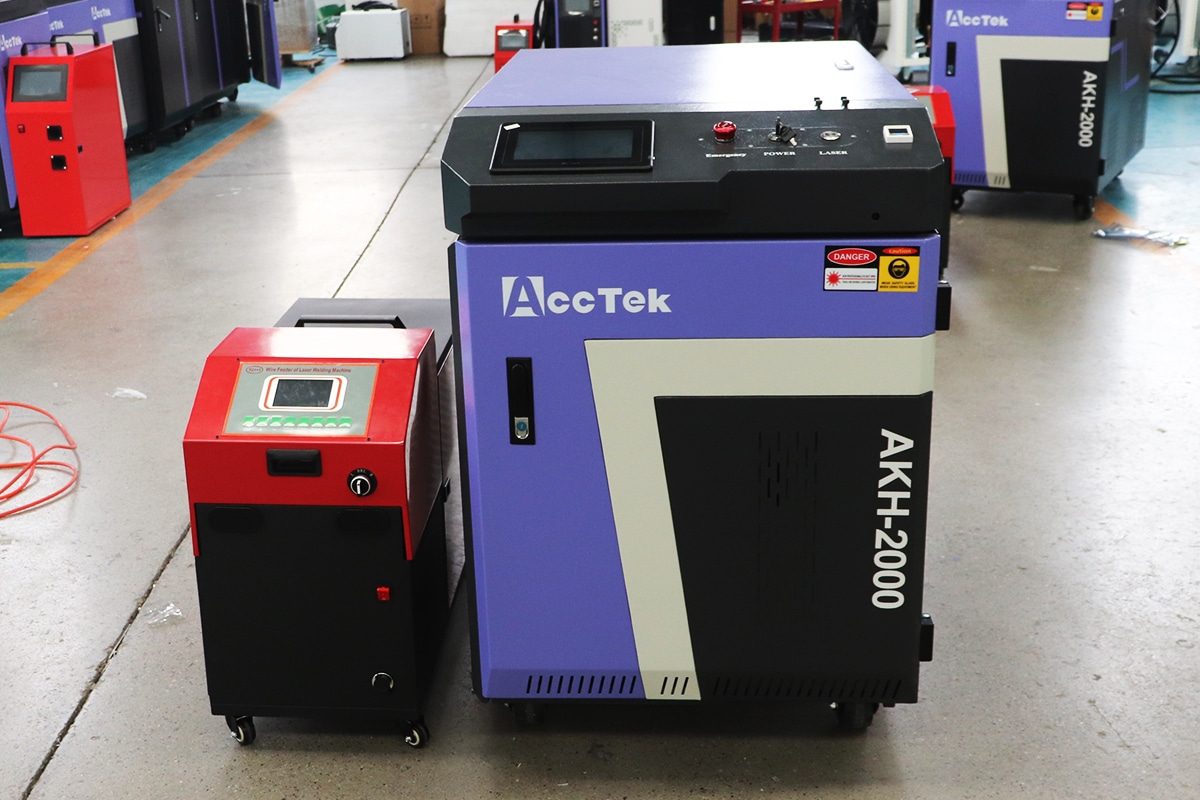
AccTek Group is a professional manufacturer of intelligent laser equipment, providing tailored solutions for stainless steel welding in industries ranging from precision fabrication to heavy manufacturing. Our portfolio includes high-efficiency laser welding machines, advanced wobble heads for improved gap tolerance, automated motion systems, and integrated shielding solutions to protect weld integrity.
Beyond equipment, we offer process support—helping you match parameters, joint designs, and shielding strategies to your specific stainless steel grade and application. Whether you need deep-penetration welds for structural components or cosmetic seams for food-grade products, our engineering team can configure a system that meets both technical requirements and production targets.
With AccTek Group, you don’t just buy a machine—you gain a partner committed to delivering consistent, high-quality welds and helping you stay ahead in a competitive market.