
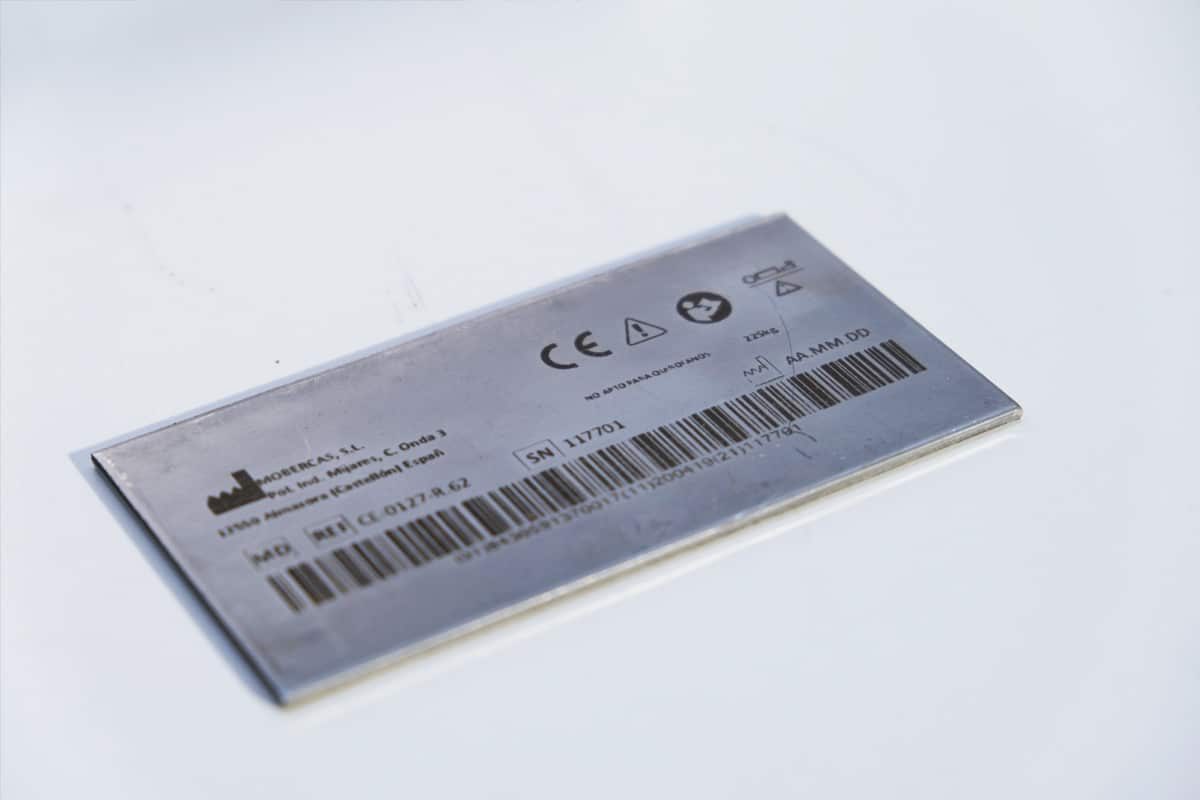
How To Choose Laser Marking Machines

A comprehensive guide to selecting the right laser marking machine—covering materials, mark quality, laser types, software, integration, compliance, and total cost of ownership.
Home » Blog » How To Choose Laser Marking Machines
How To Choose Laser Marking Machines
Choosing the right laser marking machine can make or break your production efficiency, product quality, and long-term costs. Whether you’re marking metals, plastics, or other materials, the right machine ensures sharp, durable markings that meet industrial standards and customer expectations. With so many options—fiber, CO2, UV, MOPA, and more—it’s easy to get lost in technical specs and marketing claims. Each laser type has its own strengths, ideal materials, and cost implications. Beyond the laser source, factors like marking speed, precision, maintenance, software compatibility, and after-sales support all play a key role in the decision.
The goal isn’t just to buy the most advanced machine—it’s to find one that fits your specific application, production scale, and budget. A poorly matched machine can lead to wasted time, inconsistent results, and unnecessary expenses. This guide breaks down the key factors you need to consider before making a purchase, helping you make a smart, informed choice. Whether you’re a manufacturer, small business owner, or engineer, understanding what really matters in a laser marking machine will save you money, reduce downtime, and improve your product output from day one.
Table of Contents

Quick Definitions

Before choosing a laser marking machine, it’s crucial to understand the key terms you’ll encounter. These concepts explain how lasers interact with materials, how marking quality is determined, and what factors influence precision, speed, and durability. A clear grasp of these fundamentals will help you compare machines intelligently and select the right configuration for your needs.

Marking VS. Engraving VS. Ablation VS. Annealing

  • Marking is the broad term for creating visible identification on a material’s surface using a laser beam. The process alters the surface visually—by changing color, reflectivity, or texture—but usually doesn’t remove much material. It’s ideal for serial numbers, barcodes, logos, and traceability marks where surface integrity matters.
  • Engraving goes deeper. The laser removes layers of material to create grooves or cavities. Engraved marks are physically etched and highly durable, capable of withstanding wear, abrasion, or chemical exposure. This is common in tools, jewelry, and industrial components.
  • Ablation involves removing thin coatings or surface layers—such as paint, anodized aluminum, or plating—to reveal the base material underneath. It’s used in the automotive and electronics industries to create high-contrast marks without damaging the substrate.
  • Annealing is a non-abrasive process mainly used on metals like stainless steel and titanium. Instead of vaporizing or removing material, the laser heats the surface to induce a controlled oxide layer. The resulting color (typically black, blue, or brown) is corrosion-resistant and perfectly smooth, which is crucial for medical and food-contact parts.

CW, Pulsed, ns/ps/fs Lasers

Lasers differ in how they deliver energy to the target surface:

  1. Continuous Wave (CW) lasers emit a constant, unbroken beam of light. They deliver high average power, making them ideal for deep engraving, cutting, or welding, but they generate more heat and can cause thermal damage to delicate materials.
  2. Pulsed lasers release energy in short bursts, giving precise control over heat input. The pulse duration—measured in seconds—determines how concentrated the energy is:
  • Nanosecond (ns) lasers are the workhorse for general marking, offering a good balance of speed, precision, and cost.
  • Picosecond (ps) lasers deliver much shorter pulses, minimizing heat-affected zones and allowing for crisp micro-texturing and marking on delicate materials like glass or silicon.
  • Femtosecond (fs) lasers operate at ultrafast speeds (10⁻¹⁵ seconds), essentially eliminating heat diffusion. This enables “cold marking,” where material is modified at the molecular level without melting or burning. They’re used for the highest precision and zero-damage applications, such as medical implants or microelectronics.

Wavelength (λ) and Absorption

A laser’s wavelength (λ)—the color of light it emits—determines how well a material absorbs that energy. If the wavelength doesn’t match the material’s absorption spectrum, marking efficiency drops, and quality suffers.

  • Fiber lasers (1064 nm, near-infrared) are best for metals, some plastics, and ceramics because these materials absorb IR light effectively.
  • CO2 lasers (10.6 µm, far-infrared) are absorbed well by organic materials like wood, leather, glass, paper, and most plastics, but poorly by metals.
  • UV lasers (355 nm, ultraviolet) have very short wavelengths, allowing them to mark almost any material—including heat-sensitive plastics, glass, and silicon wafers—through a process called “photochemical ablation.”
Matching wavelength to material ensures efficient energy transfer, clean edges, and consistent contrast.

Beam Quality (M²)

The beam quality factor (M²) measures how close a real laser beam is to an ideal Gaussian beam (M² = 1). A lower M² means a tighter, more focused spot with higher energy density.

  • Lasers with M² near 1 produce fine, detailed marks with minimal heat spread—ideal for micro-marking and high-precision engraving.
  • Higher M² values indicate a less focused beam, which may result in broader lines, less resolution, and reduced marking depth control.
Beam quality directly impacts marking clarity, speed, and achievable detail.

Galvo VS. Gantry Systems

Two main motion systems control how a laser moves across the work area:

  • Galvo systems (galvanometer scanners) use mirrors mounted on high-speed motors to steer the laser beam. The beam deflects rapidly across the marking field, enabling extremely fast marking speeds—often several meters per second—with excellent precision. This design is compact and ideal for high-throughput production lines or batch marking.
  • Gantry systems physically move the laser head (or the workpiece) along X and Y axes. They’re slower but allow for larger marking areas and consistent power delivery across the field. Gantry setups are common for engraving large parts or performing deep marks where speed is less critical.

F-Theta Lens and Working Field

An F-Theta lens ensures that the laser beam stays focused and evenly distributed across the marking area. Unlike ordinary lenses, it corrects for field curvature so that every point within the working field receives uniform focus and spot size.

  • A smaller focal length (e.g., 100 mm) yields a smaller marking area but higher resolution and finer detail.
  • A longer focal length (e.g., 300 mm) increases the marking field but slightly enlarges the spot size, reducing resolution.
Choosing the right F-Theta lens balances marking area, detail, and throughput depending on your product dimensions and precision needs.

Verification VS. Readability

  • Readability means a barcode, Data Matrix, or QR code can be read by a scanner—adequate for general identification or tracking.
  • Verification, on the other hand, evaluates the mark’s quality against formal standards (such as ISO/IEC 15415 or AIM DPM). It checks parameters like contrast, cell shape, reflectivity, and edge definition. High verification grades are mandatory in regulated industries such as aerospace, automotive, defense, and medical devices, where traceability and compliance are critical.
These terms form the foundation for understanding laser marking technology. Knowing them not only helps you interpret technical specifications but also ensures you make an informed choice—one that matches your material, application, and production requirements precisely.

The Main Laser Families and What They’re Best At

Laser marking machines come in several core “families,” each defined by its wavelength, pulse characteristics, and how it interacts with different materials. Understanding these families is the key to choosing the right system for your application. Each laser type has distinct advantages—and clear limitations—based on the physics of how light energy couples with the target surface.

Fiber Lasers (1064 NM; often Yb-doped)

Fiber lasers are the workhorse of modern industrial marking. They use a solid-state fiber optic cable doped with ytterbium (Yb) to generate a wavelength of 1064 nm in the near-infrared range. This wavelength couples extremely well with metals, making fiber lasers the go-to choice for steel, aluminum, copper, titanium, brass, and many alloys. They also work on certain plastics that contain color additives or fillers.
Fiber lasers deliver fast, high-contrast, and permanent marks—perfect for serial numbers, barcodes, and logos. They require minimal maintenance, have long lifespans (often exceeding 100,000 hours), and are energy-efficient. However, they’re not ideal for transparent materials like glass or organic materials such as wood and leather, as those surfaces don’t absorb IR light effectively.
Best for: Metal marking, deep engraving, part identification, industrial, and automotive components.

MOPA Fiber Lasers (Tunable Pulse Width)

MOPA (Master Oscillator Power Amplifier) fiber lasers are an advanced variant of standard fiber systems. Their main advantage lies in the tunable pulse width, which allows fine control over how the laser energy interacts with the material. This flexibility lets users adjust the pulse duration and frequency to optimize for either deep engraving or high-contrast surface marking.
MOPA lasers can create black, white, or colored markings on stainless steel and anodized aluminum—something traditional fiber lasers struggle to do. They also excel at marking delicate plastics without burning or melting them, making them a popular choice for electronics, consumer goods, and medical instruments where aesthetic quality matters.
Best for: High-contrast color marking on metals, fine marking on plastics, and applications needing precision control over heat input.

Green Lasers (≈532 NM, Frequency-Doubled)

Green lasers are generated by frequency-doubling the infrared output of a fiber or solid-state laser to produce light around 532 nm—in the visible green spectrum. This wavelength is absorbed well by materials that don’t interact strongly with infrared light, including plastics, semiconductors, printed circuit boards, and reflective metals like copper and gold.
Because of their moderate energy and high absorption, green lasers provide excellent control for delicate marking without excessive heat. They’re widely used for electronics manufacturing, fine engraving on sensitive materials, and marking coated surfaces. The downside is that they’re typically more expensive and offer lower output power compared to standard fiber lasers, making them slower for heavy-duty engraving.
Best for: Plastics, reflective metals, PCBs, semiconductor materials, and fine-detail marking.

UV Lasers (355 NM, Frequency-Tripled)

UV lasers are created by frequency-tripling a solid-state laser’s wavelength to 355 nm, entering the ultraviolet range. At this short wavelength, the laser’s photons carry high energy and can directly break molecular bonds—a process called photochemical ablation. This means the material is modified without significant heat, allowing for “cold marking” that prevents damage or deformation.
UV lasers excel at marking heat-sensitive and delicate materials like glass, ceramics, medical polymers, and microelectronics. The resulting marks are ultra-fine, precise, and permanent. However, UV systems are the most expensive in the visible and near-UV range, and their output power is generally lower, limiting their use to small-scale, precision applications rather than large-volume production.
Best for: Glass, plastics, ceramics, microchips, medical devices, and fine, heat-free marking.

CO2 Lasers (10.6 micrometer)

CO2 lasers emit light at 10.6 micrometers (far infrared), generated by exciting a gas mixture of carbon dioxide, nitrogen, and helium. This wavelength is strongly absorbed by organic and non-metallic materials—making CO2 laser marking systems the top choice for marking and engraving wood, paper, leather, rubber, plastics, and glass.
Unlike fiber lasers, CO2 beams can’t effectively mark bare metals without a coating or pretreatment, since metals reflect this wavelength. CO2 lasers are versatile, cost-effective, and capable of producing high-speed marks with good contrast, especially on organic materials. They’re widely used in packaging, signage, and consumer product industries.
Best for: Organics and non-metals—wood, paper, plastic, glass, textiles, and leather.

Ultrafast Lasers (Picosecond / Femtosecond)

Ultrafast lasers operate in the picosecond (10⁻¹² s) or femtosecond (10⁻¹⁵ s) range, producing incredibly short, high-intensity pulses. These pulses are so brief that they deposit energy faster than heat can diffuse, resulting in “athermal” or “cold” marking. This enables machining and marking with zero melting, charring, or microcracks—critical for applications where even microscopic damage is unacceptable.
Ultrafast lasers can process almost any material—metals, glass, polymers, ceramics, even diamond—with sub-micron precision. They’re used in semiconductor manufacturing, medical device production, microfluidics, and scientific research. Their main drawbacks are cost, complexity, and lower marking speed compared to industrial fiber systems, but the quality is unmatched.
Best for: Ultra-precise marking, micromachining, and sensitive materials requiring zero thermal damage.
Each laser family occupies its own niche. Fiber lasers dominate industrial marking thanks to their robustness and efficiency. MOPA fiber systems add flexibility and color control. Green and UV lasers handle delicate or non-metallic materials where heat must be minimized. CO2 lasers cover organic substrates, while ultrafast lasers push the boundaries of precision and surface integrity.
Selecting the right type isn’t just about power or speed—it’s about matching the wavelength, pulse behavior, and beam characteristics to the exact material and outcome you need. The better the match, the cleaner, faster, and more consistent your marking process will be.

Start With Your Parts

Before you even look at laser specifications or brand names, start with the most fundamental question: What are you marking?
The type of material, its surface finish, and how the part will be used determine nearly every other decision—from laser type and wavelength to lens configuration and marking parameters. Lasers interact with materials through absorption, reflection, and heat transfer. Different materials respond in very different ways, so matching your laser to your substrate is where smart selection begins.

Metals

Metals are among the most common materials marked by laser systems, and they’re highly responsive—especially to fiber lasers operating around 1064 nm. The laser’s infrared wavelength is well absorbed by metals, allowing for deep engraving, black marking, annealing, or ablation, depending on the power and pulse setup.

  • Ferrous metals (like stainless steel, tool steel, and iron) can be annealed to create high-contrast, corrosion-resistant marks without removing material—ideal for surgical tools and precision components.
  • Non-ferrous metals (like aluminum, brass, and copper) typically require higher pulse energy or specific wavelength control, such as a MOPA fiber system, to achieve bright, legible marks without heat discoloration.
  • Reflective metals (like gold, silver, and copper) can be tricky. Their high reflectivity can damage lower-quality lasers. In such cases, green (532 nm) or ultrafast (ps/fs) lasers offer more stable marking with minimal reflection loss.
The key with metals is balancing power and pulse control. Too much heat can cause burrs or oxidation; too little results in low-contrast or shallow marks.

Polymers

Plastics behave very differently from metals. They can melt, discolor, or distort under excess heat, so laser selection is critical. The right wavelength depends on the polymer’s chemical makeup and color additives.

  • Fiber lasers (1064 nm) can mark many engineered plastics (like ABS or polycarbonate), especially if they contain laser-sensitive pigments or fillers.
  • Green (532 nm) and UV (355 nm) lasers are better suited for heat-sensitive or transparent plastics, since they rely more on photochemical reactions than on heat. UV lasers, in particular, can create crisp, high-contrast, and damage-free markings—ideal for electronics, packaging, and medical plastics.
With polymers, the goal is controlled absorption: the laser should alter only the surface layer without warping or burning it. Always consider color, additives, and desired mark contrast when choosing the right setup.

Ceramics and Glass

Ceramics and glass are brittle, heat-sensitive materials that require careful laser control. Traditional fiber or CO₂ lasers can cause micro-cracks, but UV and ultrafast (ps/fs) lasers excel here due to their cold marking capability.

  • Glass marking often uses UV lasers to etch or “frost” the surface without causing fractures. For ultra-fine work—such as microfluidic channels or decorative etching—femtosecond lasers can modify the subsurface to create invisible marks readable only under specific lighting or sensors.
  • Ceramics respond well to both UV and green lasers, which can produce high-contrast marks by micro-ablation or color change without structural damage.
Applications include medical devices, labware, and optical components where structural integrity and precision are non-negotiable.

Coated and Painted Surfaces

Many modern parts—especially in automotive, aerospace, and electronics—come with coatings, paints, or anodized layers. In these cases, the laser’s job isn’t to mark the base material but to remove or modify the top layer to expose what’s underneath.

  • Fiber lasers work well for removing anodized coatings on aluminum or for marking painted metal surfaces.
  • CO2 lasers can remove organic coatings like paint or varnish on non-metals.
  • MOPA fiber systems shine in this area because their adjustable pulse width allows precise control over the removal process—important for creating multi-layer or color-contrast markings without burning edges or cutting too deep.
Laser ablation of coatings is widely used for control panels, backlit buttons, and decorative components, where precision and cleanliness are critical.
Your material is the foundation of your laser choice. Metals favor fiber and MOPA systems; plastics often need green or UV lasers; ceramics and glass demand cold marking from UV or ultrafast sources; and coated materials require precise ablation control.
The surface finish—polished, matte, anodized, painted, or plated—further affects how the laser interacts with the part. Reflective or glossy surfaces may scatter light, while rough textures can diffuse it.
Finally, consider the end-use environment. Marks on medical devices must be corrosion-resistant and biocompatible; industrial parts need durability against wear and chemicals; consumer goods may prioritize aesthetics.
Starting with your parts—understanding their composition, surface, and purpose—ensures the laser you choose not only marks effectively but does so reliably, consistently, and safely for the life of the product.

Define “Good” for Your Use Case

What makes a “good” laser mark? The answer depends entirely on your industry, material, and customer expectations. A good mark can mean deep, indelible identification on a steel part—or crisp, nearly invisible branding on medical plastic. The key is defining what “good” means for your use case before investing in a machine. Laser systems can all create marks, but not all marks are equal. Mark quality rests on eight core pillars: contrast, resolution, depth, damage control, consistency, durability, traceability compliance, and aesthetics.

Contrast

Contrast is the most immediate sign of a readable, effective mark. It’s the visual difference between the marked and unmarked areas—how well the mark stands out under normal lighting or to a scanner. High contrast doesn’t always mean deep engraving; sometimes it’s about how light interacts with the surface texture or oxide layer.

  • Metals can achieve contrast through annealing (color change) or ablation (surface removal).
  • Plastics rely on chemical or photochemical reactions that cause color change or foaming.
  • The right wavelength and pulse control ensure strong contrast without distorting or damaging the surface.
A mark with poor contrast might still be technically correct, but it can fail in real-world readability tests—especially under low light or when scanned automatically.

Resolution and Edge Quality

Resolution defines how finely the laser can render details—like text sharpness, barcode edges, or micro logos. Edge quality refers to the cleanliness and smoothness of those details. A high-quality mark has crisp, well-defined boundaries with no ragged or melted edges.

Beam quality (M²), lens precision, and pulse duration all affect this.

  • High-resolution marking is essential for microtext, 2D Data Matrix codes, and detailed branding.
  • Ultrafast and MOPA lasers excel in this area because of their short pulse widths and minimal heat diffusion.
Poor resolution leads to blurred marks and unreliable scanning, especially for compact or data-dense codes.

Depth and Permanence

Depth determines how long the mark lasts under mechanical or environmental stress. Deep engraving creates a tactile, physical mark that resists wear, corrosion, and cleaning processes. Surface-level marking, on the other hand, is faster and aesthetically cleaner but may fade over time.

  • Deep engraving suits tools, machinery, and components exposed to abrasion or chemicals.
  • Surface marking or annealing is ideal for medical and electronic parts where hygiene, smoothness, or conductivity are critical.
Depth and permanence often trade off against speed—so your production priorities will shape the balance.

Damage Control

A perfect mark means nothing if the process damages the part. Damage control refers to managing heat input, stress, and microstructural effects during marking.

  • On metals, excessive heat can cause warping, oxidation, or loss of corrosion resistance.
  • On plastics, it can lead to burns, warps, or discoloration.
  • On glass or ceramics, it risks cracks or fractures.
Choosing the correct laser type and settings (especially pulse duration and energy density) prevents such problems. Ultrafast or UV lasers are often preferred for delicate or high-value components where surface integrity is non-negotiable.

Consistency

Consistency ensures that every mark—on every batch, shift, or machine—looks and reads the same. For production environments, this is as important as the mark itself. Variability in mark quality leads to quality rejections and traceability errors.

Consistency depends on:

  • Stable beam quality and power output
  • Repeatable focus alignment
  • Reliable motion control and calibration
  • Controlled environment (temperature, vibration, dust)
Automated vision systems and feedback loops can verify marks in real-time to maintain uniformity across production runs.

Durability

Durability measures how a mark withstands real-world conditions—abrasion, cleaning, sterilization, UV exposure, and chemicals. In high-demand sectors like aerospace, automotive, and medical, durability is not optional.

  • Engraved marks are most durable because they physically displace material.
  • Annealed or color-change marks may fade under heat or sunlight if not optimized.
Testing for durability should simulate actual use—scrub resistance, salt spray, sterilization, or solvent exposure. The chosen laser process must create a mark that lasts as long as the part itself.

Traceability Compliance

In many industries, marks aren’t just for identification—they’re regulated. Traceability compliance ensures that marks meet specific readability and permanence standards defined by organizations such as ISO, AIM DPM, or UDI (Unique Device Identification).

  • Marks must remain legible and scannable throughout the part’s lifecycle.
  • 2D codes (like Data Matrix or QR codes) often require high contrast and precise geometry to achieve a verification grade (A–D).
Meeting compliance standards involves both the right laser setup and the right verification systems. For medical, defense, or aerospace parts, failing compliance can mean product recalls or certification loss.

Aesthetics

While functionality drives most marking decisions, aesthetics matter—especially for consumer-facing products or branding. A well-executed mark should enhance the product’s visual appeal, not detract from it.

  • Color uniformity, texture smoothness, and placement alignment define professional appearance.
  • MOPA fiber and UV lasers can create visually refined, high-contrast marks with smooth finishes and even coloration.
  • In luxury goods or electronics, the quality of the mark often reflects the perceived quality of the brand itself.
Defining “good” laser marking means more than getting a readable result—it’s about ensuring that every mark fulfills its purpose in function, durability, and appearance. The eight pillars of mark quality form a comprehensive checklist: Contrast ensures visibility; Resolution defines detail and accuracy; Depth ensures permanence; Damage control protects the part; Consistency maintains reliability; Durability guarantees longevity; Traceability compliance meets regulatory standards; Aesthetics completes the product presentation.
When evaluating machines, test each against these pillars using your actual parts and settings. The best laser isn’t just the most powerful—it’s the one that consistently produces the kind of “good” your operation demands.

Matching Laser Type and Optics to Your Parts

Even the most powerful laser will fail if it’s not matched correctly to your material, surface, and production setup. The secret to high-quality marking isn’t raw power—it’s precision alignment between laser type, optical configuration, and the characteristics of your parts. Every parameter—wavelength, pulse energy, beam size, and motion system—determines how effectively energy is absorbed, how the mark looks, and how fast you can produce it. Getting these factors right ensures you achieve the perfect balance of speed, clarity, and durability.

Wavelength and Absorption

Laser marking begins and ends with absorption—how well your material absorbs the laser’s light energy. Each material interacts differently with various wavelengths (λ), which is why selecting the right laser source is the first and most critical decision.

  • Metals absorb near-infrared light (around 1064 nm) efficiently, making fiber lasers the standard for industrial metal marking.
  • Organic materials like wood, paper, leather, and most plastics absorb CO2 laser light (10.6 μm) far better, producing clean, high-contrast marks without burning.
  • Transparent and reflective materials such as glass, ceramics, and some polymers require UV (355 nm) or green (532 nm) lasers, where the shorter wavelength triggers photochemical rather than thermal reactions.
  • MOPA and ultrafast lasers add flexibility, letting you fine-tune the energy delivery for sensitive or multi-material parts.
If the wavelength doesn’t match the material’s absorption spectrum, most of the light reflects off the surface instead of doing useful work. That means wasted power, poor mark quality, and potential system damage from back-reflection. Always choose the laser whose wavelength the target material naturally absorbs best.

Power, Pulse Energy, and Pulse Width

Raw laser power isn’t everything. What truly matters is how that power is delivered over time—through pulse energy (the energy per burst) and pulse width (the duration of each burst).

  • High pulse energy creates deeper or more aggressive marks, ideal for engraving or ablation of tough coatings.
  • Lower pulse energy with higher frequency produces smoother, finer marks for plastics, anodized metals, or delicate components.
  • Shorter pulse widths (in the nanosecond, picosecond, or femtosecond range) concentrate energy into extremely brief bursts, minimizing heat spread and surface damage. This is crucial for “cold marking” applications on glass, polymers, or high-value electronics.
Think of it this way: power defines the overall capability, but pulse energy and width define how that power feels to your material. Too much energy for too long leads to melting or warping; too little yields faint or uneven marks. The goal is to deliver just enough energy to induce the desired surface change—no more, no less.

Spot Size, Lenses, and Field Size

The optical setup determines how the laser beam interacts with your workpiece. The beam’s spot size—the diameter of the focused laser point—directly affects marking precision and power density. A smaller spot means more energy per unit area, which allows for finer detail and sharper edges.

The spot size and marking area are both controlled by the F-Theta lens, which focuses the beam across a flat working field.

  • Short focal length lenses (e.g., 100 mm) produce a small spot and a small marking field, perfect for high-resolution, intricate work.
  • Longer focal lengths (e.g., 300 mm) enlarge the working field, allowing you to mark larger parts or multiple components at once—but at the cost of slightly reduced resolution.
Beam quality (M²) also plays a role: the closer it is to 1, the more tightly you can focus the laser, which enhances marking sharpness.
When designing your setup, match your lens choice to both your part size and the level of detail required. A mismatch—like using a long-focus lens for microtext—will yield soft, blurred marks even if your laser power is perfect.

Galvo vs. Gantry vs. Hybrid Motion Systems

Once you have the right laser and optics, the next question is how to move the beam (or part). The motion system dictates marking speed, precision, and working area.

  • Galvo systems use rapidly oscillating mirrors to steer the laser beam across the marking field. They offer incredible speed (up to several meters per second) and are ideal for high-throughput production, serial marking, and barcodes. However, the working area is limited by the mirror angles and lens optics.
  • Gantry systems physically move either the laser head or the workpiece along X and Y axes. This allows for much larger marking areas—even across full panels or sheets—but at slower speeds. Gantry setups are preferred for engraving, cutting, or large-format marking, where accuracy and depth outweigh cycle time.
  • Hybrid systems combine both approaches: a galvo head for fast beam deflection mounted on a moving stage for positional control. This setup offers both speed and scalability, allowing for marking on larger parts or multiple zones with precise alignment.
Choosing between these systems depends on your production workflow. For example, a high-speed galvo fiber laser suits batch marking of metal nameplates, while a gantry UV laser is better for large glass panels or polymer sheets requiring uniform surface treatment.
Matching your laser and optics to your parts is about precision engineering, not guesswork. Start with wavelength and absorption to ensure your material interacts efficiently with the laser. Then, fine-tune power, pulse energy, and pulse width to control the heat input and surface effect. Next, balance spot size, lens focal length, and field size to achieve your desired mark resolution and coverage. Finally, select the right **motion system—galvo, gantry, or hybrid—**based on your part size, throughput needs, and precision requirements.
When all these elements align, the result is a laser marking system that feels almost custom-built for your operation—delivering consistent, high-quality marks that meet both your performance goals and your customers’ expectations.

Throughput, Takt Time, and How to Estimate Cycle Time

Selecting the right laser marking machine isn’t just about mark quality—it’s about how fast you can produce good marks, consistently. Throughput and takt time determine whether a machine will keep up with your production demands or become a bottleneck. In high-volume manufacturing, even fractions of a second per part add up. Understanding how to estimate and optimize cycle time—the total time needed to mark, verify, and prepare the next part—is essential for choosing a system that delivers not only precision but also productivity.

The Cycle Time Equation

Cycle time isn’t just how long the laser takes to fire. It’s the sum of all steps involved in producing one finished mark. A simplified equation looks like this:
Cycle Time = Marking Time + Handling Time + Setup Time + Verification Time + Idle or Transition Time

Let’s break this down:

  • Marking Time is the actual time the laser spends interacting with the material. It depends on several factors—beam power, marking speed, path length, fill density (the spacing between laser scan lines), and the mark’s complexity (e.g., simple text vs. a detailed logo or 2D code).
  • Handling Time includes any part movement, loading, and unloading—manual or robotic. Even with a fast laser, slow handling can cripple throughput.
  • Setup Time covers focus adjustment, alignment, and switching between part types or programs. Machines with auto-focus or part detection sensors can reduce this significantly.
  • Verification Time applies if the system includes in-line inspection, barcode verification, or vision confirmation. Depending on your compliance requirements, this may add milliseconds or full seconds.
  • Idle or Transition Time includes any delay between marking cycles—such as communication between machines or indexing between stations on an automated line.
By summing these values, you can estimate your effective takt time—the rhythm your production must maintain to meet demand. For example, if your takt time is 10 seconds per part and your laser’s cycle time is 9.5 seconds, the system can just keep up. But if the cycle time rises to 12 seconds, you’ll quickly fall behind schedule.

Practical Levers to Shorten Cycle Time

Reducing cycle time doesn’t always mean buying a faster laser—it means optimizing how the laser works within your process. There are multiple levers you can pull to make real-world cycle times shorter and more efficient:

  • Optimize Marking Strategy: Adjusting fill spacing, hatch angle, and scan path can drastically reduce laser travel time without compromising readability. For instance, tighter hatch patterns increase depth but slow speed; alternating angles or skipping unnecessary fills can balance speed and quality.
  • Increase Marking Speed—Intelligently: Higher scan speeds or more powerful lasers can shorten marking time, but only up to a point. Beyond a certain speed, quality may drop due to insufficient dwell time or poor heat coupling. The key is finding the sweet spot where you maximize speed while maintaining the required contrast and legibility.
  • Use Multi-Head or Parallel Systems: For high-volume production, two galvo heads working simultaneously (or two lasers in tandem) can double throughput. Some systems also support multi-marking zones, allowing one part to be marked while another is loaded—eliminating idle time between cycles.
  • Minimize Handling and Setup Time: Automation pays off here. Integrating robotic loaders, rotary indexers, or conveyor systems can keep the laser working continuously instead of waiting for an operator. Similarly, using auto-focus and auto-alignment features reduces manual intervention between batches.
  • Batch or Fixture Multiple Parts: If your parts are small, marking several at once within the laser’s field drastically improves cycle efficiency. A single scan job can engrave multiple components in parallel—effectively dividing the cycle time per part.
  • Integrate Inline Verification: If you must verify marks (for traceability or UDI compliance), choose a system that performs this step inline—immediately after marking, without moving the part. Built-in vision systems can confirm contrast, code quality, or serial accuracy in milliseconds, adding negligible time compared to offline checks.
  • Optimize Software and Communication: Even data transfer delays between PLCs or marking software can add seconds. Streamlined communication protocols, preloaded marking files, and efficient job queuing can eliminate unnecessary pauses between cycles.
  • Match Optics to Application Size: Using an F-Theta lens with the right field size helps avoid unnecessary scanning distance. A smaller marking field means the laser travels less per mark, shaving off fractions of a second per part, significant over thousands of cycles.
Throughput defines profitability, and cycle time defines throughput. To choose the right laser marking system, don’t just look at the specs—model your process. Estimate your full cycle time by including not just marking speed but handling, setup, and verification. Then identify where you can gain efficiency: optimize marking paths, automate loading, integrate vision systems, and balance lens size and laser speed.
In essence, the goal is to ensure your laser operates in sync with your takt time—the pace of your production line. A laser that marks beautifully but slowly is a liability; one that balances quality, speed, and consistency becomes a competitive advantage. The best machine is the one that keeps pace with your production rhythm, delivering precise marks every time, without ever becoming the reason the line slows down.

Fixturing, Alignment, and Vision

No matter how advanced your laser is, it can only produce consistent, high-quality marks if the part is positioned and aligned correctly every single time. Fixturing, alignment, and vision systems form the backbone of that consistency. They determine not only the precision of the mark but also your overall throughput and scrap rate. In short, a great laser with poor fixturing will still deliver poor results. Investing attention here often pays back more than upgrading your laser source.

Fixturing Basics

Fixturing refers to how a part is held in place during marking. The goal is stability, repeatability, and accessibility—ensuring the laser beam always interacts with the surface at the correct position, focus, and angle. Even small variations of a few tenths of a millimeter can lead to blurry or uneven marks.

Good fixturing design depends on your part geometry, size, and production method. Some key principles include:

  • Repeatable positioning: Fixtures should align each part in the same position and orientation relative to the laser’s focal point. Locating pins, mechanical stops, and custom nests are common tools for this.
  • Rigidity and vibration control: The fixture must prevent even minor movement during marking, especially for long or deep engravings. Rigid aluminum or steel fixtures work best in high-power setups.
  • Thermal and optical safety: Some materials heat up quickly under laser energy; fixtures should withstand incidental exposure without warping or reflecting light. Matte, non-reflective coatings are ideal to prevent beam bounce.
  • Ease of loading and unloading: In high-volume environments, quick clamps, pneumatic chucks, or magnetic mounts reduce handling time and operator fatigue.
In automated lines, fixturing may be combined with robotic positioning or rotary tables, allowing parts to move in and out of the laser field seamlessly. The goal is always the same: ensure the laser meets the part consistently and precisely, every single cycle.

Vision Options

Vision systems elevate laser marking from an open-loop to a closed-loop process. Instead of relying on fixed mechanical positioning alone, vision-guided systems use cameras to identify part location, orientation, and even mark quality.

There are several common levels of integration:

  • Pre-mark vision (alignment): Cameras identify fiducial marks, edges, or surface features to automatically align the marking pattern with the real-world position of the part. This compensates for small placement or rotation errors—especially useful for irregular or hand-fed parts.
  • Inline vision (verification): After marking, the same or a secondary camera verifies that the mark exists, is legible, and matches the intended data (for instance, confirming that a serial number or QR code was correctly applied).
  • Feedback vision (adaptive marking): In advanced systems, vision actively adjusts marking parameters (like focus or offset) in real time based on what it “sees.” This ensures uniform results even when surface height or reflectivity varies.
Vision integration is critical in traceability, medical, and electronics applications where misaligned or unreadable marks are unacceptable. It also streamlines setup—no manual focus checks or test burns needed between batches.

Working with Curved or Complex Surfaces

Not all parts are flat, and not all surfaces sit neatly at one focal distance. Marking curved, angled, or irregular surfaces introduces geometric challenges because the laser’s focal point can shift, reducing power density and distorting the mark.

Several strategies can handle these complexities:

  • Dynamic focus control: Some laser systems use 3-axis galvo heads with electronically controlled focusing lenses that adjust in real time, keeping the beam sharp across varying heights. This is ideal for cylinders, domes, or multi-level components.
  • Rotary axes: For round or tubular parts—like pipes, rings, or shafts—a rotary stage rotates the part under the laser beam to maintain proper focus and alignment along the circumference.
  • Custom contour fixturing: For irregular shapes, the fixture itself can be designed to present each marking surface at the correct angle or distance. This may involve tilting nests, adjustable mounts, or precision jigs.
  • Vision-assisted 3D mapping: High-end systems can scan the surface topography before marking and automatically adjust the laser’s path or focus depth to match. This ensures consistent results even on molded or uneven parts.
When marking complex geometries, the key is maintaining consistent focal distance and energy density across the surface. Even a few millimeters of defocus can turn a crisp, readable code into a faded or distorted one.
The success of a laser marking process depends as much on how you hold, align, and verify the part as on the laser itself. Reliable fixturing ensures each part sits perfectly under the beam. Integrated vision systems take precision further by automatically detecting, aligning, and verifying marks. And when dealing with curved or complex surfaces, advanced optics and motion control keep the laser in perfect focus throughout the mark.
In short, fixturing, alignment, and vision transform a laser system from a simple marking tool into a repeatable, production-ready solution. They eliminate variability, reduce setup time, and protect your process from human error—ensuring every mark lands exactly where it should, how it should, every single time.

Software

When people think about laser marking machines, they often focus on the hardware—the laser source, optics, and motion systems. But in reality, software is the quiet differentiator that separates a capable marking system from one that’s truly production-ready. The right software determines how easily you can design, automate, and control the entire marking process. It affects setup time, integration with factory systems, traceability compliance, and even operator error rates. A powerful laser with clumsy software is like a sports car with bad steering—it can perform, but not efficiently or reliably.
Laser marking software bridges the gap between your production goals and the laser’s technical capabilities. It controls how marks are drawn, how data is fed in, how the system responds to vision or sensors, and how it integrates with your line. Below are the core software capabilities that define a modern, future-proof marking platform.

Must-Have Features

  • Intuitive Design and Layout Tools: At its core, the software must allow users to create, import, and edit marking layouts—text, barcodes, logos, serials, and patterns—without extensive training. Compatibility with standard design formats (DXF, SVG, AI, BMP, etc.) is essential. A good interface offers WYSIWYG previews so you can visualize exactly how the mark will look before it’s burned into a part.
  • Variable Data and Database Connectivity: Production marking isn’t static. Each part often needs a unique serial number, lot code, or QR identifier. The software must handle variable data marking, pulling real-time information from external sources like ERP, MES, PLCs, or CSV files. It should also support auto-incrementing serials, timestamps, and operator input fields—making dynamic data management seamless and error-free.
  • Parameter Control and Optimization: Software should provide precise, programmable control over all marking parameters—power, frequency, pulse width, speed, hatch style, and focus offset. This enables fine-tuning for different materials and mark types and makes recipe-based production simple. Ideally, settings can be saved and recalled for repeat jobs, ensuring consistency across shifts or locations.
  • Vision Integration: If your system includes cameras, the software must support vision-assisted alignment and verification. This includes pattern recognition, fiducial detection, code grading, and automatic position correction. The best platforms merge vision and marking into a single interface, eliminating the need for separate software or manual offset adjustments.
  • Automation and I/O Compatibility: Modern production environments demand automation. The marking software should communicate with PLC systems, robots, conveyors, and barcode scanners through digital and analog I/O, Ethernet/IP, or Modbus protocols. Features like remote job loading, machine status monitoring, and error feedback ensure smooth integration into larger production cells.
  • User Access and Traceability Logging: For regulated industries (medical, aerospace, defense), audit trails matter. The software should log every operation—who ran it, when, and with what settings. Role-based access controls help prevent unauthorized changes. This supports ISO, UDI, and FDA compliance while maintaining traceability across production batches.

Nice-to-Have Features

  • 3D Marking and Surface Mapping: Advanced systems support 3D marking, where the software adjusts focus and power dynamically to follow complex contours. Integrated topography mapping (using 3D cameras or sensors) enables consistent marking even on irregular or curved parts.
  • Simulation and Preview Mode: A simulated marking preview—complete with estimated marking time and heat distribution—saves both time and scrap during setup. This feature helps optimize cycle time without physically running the laser.
  • Remote Access and Cloud Connectivity: In connected factories, remote control and monitoring are invaluable. Cloud-enabled software allows engineers to update job files, track performance, or diagnose issues from anywhere. For multi-site operations, centralized management ensures process consistency across facilities.
  • Scripting and Custom Automation: Some advanced users benefit from script-based control (e.g., Python or proprietary scripting languages). This allows automation of complex workflows—like conditional marking, inline inspections, or interaction with multiple systems.
  • Data Validation and Error Prevention: Smart software can automatically verify data before marking—checking for duplicates, missing serials, or incorrect formats. This minimizes rework and ensures compliance in data-critical sectors.
  • Adaptive Marking Optimization: High-end software can automatically adjust marking speed or power based on material reflectivity or temperature, maintaining uniform mark quality without operator intervention.
In laser marking, software is the true control center. It shapes how efficiently your laser performs, how easily it integrates into your workflow, and how reliably it maintains quality and traceability. The must-have features—robust design tools, variable data handling, precise parameter control, vision integration, automation support, and traceability logging—form the foundation of a professional-grade system.
Meanwhile, the nice-to-have features—3D marking, simulation tools, cloud access, scripting, validation, and adaptive optimization—transform that system into a flexible, future-ready solution that can evolve with your production needs.
When comparing machines, don’t overlook the software layer. It’s often the difference between a laser that simply marks—and one that drives a smart, scalable, and connected marking process that fits seamlessly into your factory’s digital ecosystem.

Compliance, Standards, and Industry Specifics

When selecting a laser marking machine, it’s not enough to focus on speed, precision, or material compatibility—compliance can make or break your investment. In many sectors, marking isn’t just a convenience; it’s a legal requirement tied to traceability, safety, and quality assurance. Every line of text, barcode, or logo must meet measurable standards for legibility, permanence, and data integrity. Understanding your industry’s regulatory environment is essential to choosing the right marking technology, optics, and software architecture to stay compliant and audit-ready.

Regulated Industries

Some industries treat marking as a regulated process, meaning both the mark and the method must conform to specific standards. Below are the sectors where compliance is not optional but mission-critical:

  1. Medical Devices and Life Sciences: The medical device industry is governed by the FDA’s Unique Device Identification (UDI) system in the United States and the EU MDR regulations in Europe. Each device must carry a permanent, machine-readable code that links it to its manufacturing record and supply chain history. Marks must survive sterilization, cleaning agents, and long-term handling without fading or corroding.
  • Laser requirements: Fiber and MOPA lasers are typically used for metals, producing smooth, oxide-free, annealed marks that preserve corrosion resistance. For plastics, UV lasers are preferred to achieve “cold” marks with no heat damage or residue.
  • System capabilities: To meet UDI compliance, the marking machine should include data management tools, vision-based verification, and traceability logging that ties every mark to its digital record.
  1. Aerospace and Defense: Aerospace and defense manufacturers operate under strict traceability rules such as MIL-STD-130 (U.S. Department of Defense) and AIM DPM (Direct Part Mark) Guidelines. Every part—from turbine blades to fasteners—must be permanently traceable back to its origin, even after years of service in extreme environments.
  • Laser requirements: Deep engraving or micro-ablation marks that resist abrasion, temperature cycling, and chemical exposure. MOPA and ultrafast lasers are often used for controlled, low-stress marking on critical alloys.
  • Compliance needs: Systems should support mark verification, automated serialization, and documented process validation, ensuring marks meet long-term readability and permanence standards.
  1. Automotive and Heavy Industry: Automotive manufacturers must meet ISO/TS 16949 and similar standards that emphasize traceability throughout the supply chain. Every component—from engine parts to safety-critical assemblies—requires a readable identifier that can survive years of heat, vibration, and fluids.
  • Laser requirements: High-power fiber lasers for deep or high-contrast marks on metals, CO2 lasers for non-metallics.
  • Production integration: Laser marking software must connect seamlessly to MES or ERP systems, supporting high-throughput serialization, lot control, and verification.
  1. Electronics and Semiconductor: Electronic components demand precise, small-scale markings that won’t damage delicate circuits or coatings. Compliance involves traceability, anti-counterfeiting, and labeling accuracy according to JEDEC and IPC standards.
  • Laser requirements: UV and green lasers excel here, producing micro-marks on fragile substrates like silicon, PCB coatings, and polymers with zero heat distortion.
  • System requirements: Clean-room compatible equipment with integrated barcode verification and vision-guided alignment to handle microscopic features.
  1. Consumer Goods and Packaging: Even in non-regulated sectors, product marking supports anti-counterfeit measures, warranty tracking, and branding consistency. While compliance isn’t mandated, major brands often follow internal standards to ensure consistent quality and traceability across global production sites.

Verification and Grading

Compliance doesn’t stop once the mark is applied. It must be proven. That’s where verification and grading come in—systems that evaluate whether each mark meets the readability and quality standards set by regulatory bodies or industry norms.
Verification involves capturing and analyzing the mark—usually with a vision system or dedicated scanner—to confirm it meets predefined optical and geometric criteria. Grading quantifies the result, typically on an A-to-D or numeric scale, indicating how easily the code can be read by automated scanners in real-world conditions.

The main verification standards include:

  • ISO/IEC 15415: Defines grading for 2D symbols like Data Matrix and QR codes.
  • ISO/IEC 15416: Applies to 1D linear barcodes.
  • AIM DPM-1-2006: The go-to standard for Direct Part Mark (DPM) verification, addressing rough, reflective, or curved surfaces common in industrial parts.

A compliant mark must meet both technical and visual thresholds:

  • Contrast: Adequate difference between marked and unmarked areas.
  • Cell geometry: Consistent shape and alignment of Data Matrix or barcode elements.
  • Quiet zone: Proper spacing around the code for reliable scanning.
  • Durability: The mark must remain scannable after environmental stress tests such as abrasion, cleaning, or corrosion exposure.
Modern laser marking systems increasingly include in-line verification cameras that grade marks immediately after they’re created. This enables closed-loop quality control—if a mark doesn’t meet the set grade (for example, below “B”), the system can auto-adjust laser parameters, flag the part, or halt the process. For regulated sectors, this data can also be logged automatically to maintain a digital audit trail for compliance reports.
Compliance transforms laser marking from a technical process into a controlled, auditable manufacturing operation. In regulated industries like medical devices, aerospace, and automotive, it’s not enough for a mark to be clear—it must be permanent, verifiable, and documented. Standards such as FDA UDI, MIL-STD-130, and AIM DPM define not only what a good mark looks like, but how it should be graded, validated, and recorded.
Choosing a laser marking system for these environments means selecting one that integrates seamlessly with vision verification, traceability logging, and data management tools. It must consistently produce marks that meet strict contrast, geometry, and durability benchmarks, and it should support in-line verification to catch issues before they reach inspection.
In short, compliance isn’t just about following rules—it’s about protecting quality, traceability, and trust. A truly compliant laser marking setup ensures that every mark tells a verifiable story—one that withstands audits, scrutiny, and time.

Facility, Utilities, and Safety

Laser marking systems are more than just a piece of precision equipment—it’s an integrated part of your facility’s ecosystem. Beyond performance specifications, you need to think about where and how the machine will run safely, efficiently, and reliably over years of continuous use. Facility planning is often overlooked during purchase decisions, but it determines whether your system performs at full potential—or struggles with downtime, overheating, or compliance issues.
Proper installation requires attention to four key areas: laser class and guarding, fume and particulate extraction, cooling and power management, and operator safety, including noise and ergonomics. These are not just “supporting” details—they’re critical to both productivity and workplace safety.

Laser Class and Guarding

Lasers are classified by their potential hazard level under international standards such as IEC 60825-1 or ANSI Z136.1. Understanding these classifications is essential for both equipment selection and facility design.

  • Class 1 systems are fully enclosed and safe under normal operation. They are the preferred choice for production floors because the enclosure prevents any beam exposure to operators. These are turnkey, compliant, and require minimal safety infrastructure beyond basic operator training.
  • Class 4 systems, by contrast, operate with open beams—commonly used in large or automated lines where enclosure isn’t practical. They pose hazards not only to the eyes but also to skin and surfaces. Class 4 lasers require strict interlock systems, laser-safe eyewear, designated controlled zones, and warning signage.

When planning your installation, assess how the laser will interact with your workspace:

  • Will it be manual-load or integrated with automation?
  • Does it need a fully enclosed workstation, or will it be mounted on a robotic cell?
  • Are there line-of-sight risks for operators or maintenance personnel?
If you’re introducing your first Class 4 system, it’s worth engaging a Laser Safety Officer (LSO) or safety consultant to certify your setup. Proper guarding and interlocking are not optional—they’re regulatory requirements that protect both staff and liability.

Fume and Particulate Extraction

Laser marking generates smoke, vaporized material, and microscopic particulates as the beam interacts with the substrate. These emissions can contain harmful compounds—metal oxides, plastic fumes, or organic volatiles—that pose health risks and can contaminate optics or sensors if not managed correctly.

An efficient fume extraction system is therefore essential. It serves three functions:

  • Protecting operators from inhaling hazardous airborne particles.
  • Maintaining optical performance by keeping the marking area free of debris that could scatter or absorb the laser beam.
  • Preserving part quality by preventing residue from redepositing on surfaces.
For metals, use extraction units with HEPA and activated carbon filters to capture fine particulates and chemical vapors. For plastics or coated materials, ensure filters are rated for volatile organic compounds (VOCs). Extraction ducts should be as short and straight as possible, with airflow rates tailored to the laser’s power and marking chamber volume.
Neglecting proper extraction is one of the most common—and costly—mistakes in laser installation. Accumulated fume not only degrades marks and optics but also creates long-term safety and maintenance issues.

Cooling, Power, and Environment

Every laser generates heat. Managing it properly ensures system stability, longevity, and marking consistency. Cooling requirements vary by laser type and power:

  • Fiber and MOPA lasers typically use air cooling, which is efficient and low-maintenance. However, they still require adequate ventilation to prevent local heat buildup.
  • CO2, UV, and ultrafast lasers often require closed-loop water cooling systems. These should be maintained at stable temperatures (typically 18–22℃) and monitored for leaks, pressure fluctuations, and coolant purity.
Power supply is another key consideration. Most industrial lasers need dedicated, clean electrical circuits with stable voltage and grounding to avoid interference or system faults. For high-end or multi-laser setups, consider uninterruptible power supplies (UPS) to prevent marking interruptions or file corruption during power fluctuations.

Environmental stability also plays a major role in beam performance:

  • Temperature: Avoid large swings, which can cause laser drift or focus shifts.
  • Humidity: Excess moisture can corrode optics or electronics; aim for moderate, stable humidity levels.
  • Cleanliness: Fine dust or oil mist can settle on lenses, scanners, or filters, degrading beam quality.
A clean, climate-controlled workspace will extend the lifespan of optics, electronics, and motion systems—and reduce downtime caused by environmental factors.

Noise and Ergonomics

While lasers themselves are silent, support systems—galvo motors, fume extractors, and cooling fans—can generate noise that affects operator comfort. For installations in open production areas, select extractors and chillers with low decibel ratings, or place them in insulated enclosures.

Ergonomics is equally critical, especially in manual or semi-automated marking setups. Poorly designed workstations can lead to operator fatigue, inconsistent part placement, or even repetitive strain injuries. Key ergonomic considerations include:

  • Adjustable work height for loading and unloading parts.
  • Proper lighting and visibility inside enclosed marking chambers.
  • Intuitive control interfaces positioned at a comfortable reach.
  • Safe access to optical and maintenance components without awkward positioning or lifting.
When multiple operators or shifts are involved, ergonomic design directly influences productivity and long-term health outcomes. A well-laid-out marking cell minimizes human error and reduces the risk of accidental exposure or mishandling.
When these elements are planned properly, your facility becomes a safe, efficient, and compliant environment that supports high-quality marking at scale. Overlooking them, on the other hand, can undermine even the best machine. In laser marking, safety and utility aren’t overhead—they’re the infrastructure of performance.

Cost of Ownership

When choosing a laser marking machine, it’s tempting to focus on the sticker price—but that’s only the beginning of the financial story. The true cost of ownership extends far beyond the initial purchase and includes maintenance, consumables, energy use, uptime, and long-term depreciation. A cheaper machine can easily become more expensive over its lifetime if it requires frequent servicing, wastes energy, or produces inconsistent marks that lead to scrap or rework.
To make a sound investment, think in terms of total cost of ownership (TCO)—the complete financial footprint of owning, operating, and maintaining the machine over its useful life. TCO breaks down into four key areas: CapEx, OpEx, lifetime and depreciation, and cost per mark. Understanding each will help you choose not just the cheapest machine, but the smartest one.

CapEx (Capital Expenditure)

CapEx is your up-front investment—the cost of purchasing and installing the laser marking system. It includes the machine itself, peripherals (fume extraction, chillers, vision systems, or automation interfaces), integration costs, and any facility modifications such as enclosures or electrical upgrades.
While price differences between laser types can be significant—fiber systems typically being more affordable and UV or ultrafast systems commanding a premium—CapEx should always be viewed in context. The cheapest machine might meet short-term needs but fail to scale or comply with future requirements. On the other hand, a slightly higher initial investment can pay off in lower operating costs, longer service life, and better flexibility over time.
It’s also important to consider the application match: buying a high-end MOPA or femtosecond laser for simple serial number engraving may be overkill, while an underpowered machine will bottleneck production or deliver substandard quality. The right CapEx decision is the one that balances capability, compliance, and long-term ROI—not just the purchase price.

OpEx (Operating Expenditure)

Once the system is running, OpEx becomes the dominant cost factor. Laser marking has a major advantage here: compared to mechanical or ink-based marking systems, lasers have minimal consumables and low maintenance requirements. However, “low” doesn’t mean “zero.”

Typical OpEx considerations include:

  • Energy consumption: Fiber lasers are highly efficient, converting electrical power to light with minimal loss. CO2 and UV lasers consume more energy, especially when paired with active cooling systems.
  • Consumables and spare parts: While there are no inks or solvents, you’ll eventually replace filters (for fume extractors), optics, or protective lenses. These are low-frequency costs but should be factored into your budget.
  • Maintenance and downtime: Quality machines require less calibration and have longer service intervals. Cheaper systems might save you money up front, but cost more in technician time, replacement modules, and lost productivity when they fail.
  • Labor: Even automated lines need operators, setup, and quality checks. User-friendly software and ergonomic design can directly reduce labor costs by cutting setup and inspection time.
Good OpEx planning also means investing in predictive maintenance and remote diagnostics, which prevent unplanned downtime—one of the most expensive forms of operational loss.

Lifetime and Depreciation

Every laser marking system has a finite operational lifespan. For most industrial lasers, that’s 50,000 to 100,000 hours of active use, depending on the laser source and cooling system. Fiber lasers typically last longest, while UV and CO2 laser sources have shorter lifetimes or require periodic tube or crystal replacement.
From a financial perspective, the machine’s value decreases over time due to depreciation—a natural factor in capital equipment accounting. Understanding depreciation is important not only for tax purposes but also for evaluating your payback period and long-term ROI.
Durability and manufacturer support play huge roles here. A well-built, serviceable system from a reputable brand may retain operational value for over a decade, while a lower-tier machine might degrade after only a few years. Extended warranty programs, modular upgrades, and backward-compatible software can stretch the effective lifetime and delay replacement costs.
When evaluating lifetime value, also consider how technology trends might shift your needs. A machine that supports multiple wavelengths, automation interfaces, or software updates is less likely to become obsolete—protecting your investment against depreciation through flexibility.

Cost per Mark

Ultimately, every business wants to know: How much does each mark cost me? This is where all the other factors—CapEx, OpEx, lifetime, and efficiency—come together.
Cost per mark combines all expenses (equipment depreciation, maintenance, energy, consumables, and labor) divided by the total number of marks produced over the system’s life. For high-volume manufacturers, even fractions of a cent matter when scaled across millions of parts.

Laser marking tends to have one of the lowest cost-per-mark figures among all marking technologies. With no consumables and rapid cycle times, fiber lasers can mark thousands of parts per day at near-zero variable cost. However, achieving that low cost depends on:

  • Optimized marking speed (balancing speed and legibility).
  • Minimal downtime through reliable operation and preventive maintenance.
  • Efficient part handling and fixturing to reduce non-marking cycle time.
  • Consistent mark quality that minimizes rejects or rework.
Tracking cost per mark over time also helps identify when your machine is losing efficiency—often a sign of worn optics, outdated software, or insufficient fume extraction.
When analyzed together, these factors reveal the real economics of laser marking. A well-chosen system may cost more upfront but deliver far lower total ownership costs and higher uptime over a decade of use. The right question isn’t “How much does this machine cost?” but rather “How much value does it deliver over its lifetime?” That’s the mindset that turns laser marking from a purchase into a long-term production asset.

De-Risking Your Purchase

Investing in a laser marking machine is a long-term decision—one that affects product quality, production throughput, and regulatory compliance for years to come. But even the most reputable supplier and the most advanced equipment can fail to meet expectations if not validated properly. The best way to avoid costly surprises is to de-risk your purchase through structured testing, ensuring the system performs exactly as required before it goes into production.
Three stages form the foundation of a well-managed evaluation and acceptance process: application trials, the Factory Acceptance Test (FAT), and the Site Acceptance Test (SAT). Each stage progressively verifies that the laser, optics, software, and integration deliver real-world results, not just brochure promises.

Application Trials

The de-risking journey begins with application trials—the proof-of-concept phase where theory meets reality. This is your chance to validate that the proposed laser technology truly suits your materials, surface finishes, and production goals before you commit to a purchase.

A professional supplier will offer to run sample marking tests using your actual parts, under representative conditions. These trials help determine:

  • Which laser type and wavelength achieves the best absorption and contrast.
  • The optimal marking parameters—power, pulse width, frequency, and scan speed.
  • The achievable mark quality, depth, and cycle time.
  • Whether the material experiences any unwanted effects such as melting, distortion, or color variation.
For high-spec industries like medical or aerospace, these trials should also evaluate compliance metrics: corrosion resistance, verification grades, and mark permanence after cleaning or sterilization.
Well-documented application trials are more than a demonstration—they form the technical foundation of your project. The results define your process “recipe,” which can later be codified in your FAT and SAT criteria. Skipping this phase is like buying a car without a test drive—you may end up with a capable machine that’s simply the wrong fit for your needs.

Factory Acceptance Test (FAT)

Once your system has been built and configured by the supplier, the next milestone is the Factory Acceptance Test (FAT). Conducted at the manufacturer’s facility, FAT confirms that the machine is fully operational and meets all contractual specifications before it leaves the factory floor.

The FAT typically includes:

  • Functional testing: Verifying that all subsystems—laser source, galvo scanners, vision, fume extraction, and safety interlocks—operate correctly.
  • Marking performance validation: Using either your sample parts or representative surrogates, the machine is tested against the agreed mark quality, contrast, and cycle time benchmarks defined during the application trial.
  • Software verification: Ensuring user interfaces, automation I/O, and database connectivity function as expected.
  • Documentation and safety compliance: Reviewing certifications (e.g., CE, ISO, FDA if applicable), laser class safety measures, and operator manuals.
A well-run FAT ends with a sign-off checklist, confirming that the machine meets contractual obligations. Any deviations or fine-tuning requirements are documented in a punch list for resolution before shipment.
Performing FAT protects both buyer and seller—it ensures the system performs to spec in a controlled environment before the logistical and integration complexities of your site come into play. For complex or automated setups, FAT can also be combined with operator training to accelerate ramp-up once the system is delivered.

Site Acceptance Test (SAT)

The final validation step happens after delivery and installation: the Site Acceptance Test (SAT). While FAT confirms the machine’s standalone functionality, SAT ensures it performs within your real production environment—with your parts, operators, and supporting equipment.

SAT typically includes:

  • Installation verification: Confirming the system was installed correctly—mechanically aligned, powered, and integrated with local utilities and automation lines.
  • Process validation: Running your approved mark recipes and verifying that quality, contrast, and cycle times match or exceed FAT results.
  • Integration testing: Checking that the laser communicates properly with your factory control systems (PLC, MES, or barcode scanners), and that any data exchange or traceability requirements function seamlessly.
  • Safety and compliance checks: Confirming that laser guarding, fume extraction, and interlocks meet local regulations and company safety standards.
SAT concludes with a performance qualification report. Once signed off, ownership of the system typically transfers from the supplier to your operations team. Passing the SAT means your marking machine isn’t just technically functional—it’s production-ready and proven under your actual conditions.
Together, these stages transform a purchase into a proven solution. They eliminate ambiguity, build trust with your supplier, and protect your investment from hidden risks. The result: when your laser system goes live, it’s not an experiment—it’s a validated, production-ready asset that you can depend on from day one.

Integration

A laser marking machine may be a precision tool, but in most operations, it doesn’t stand alone—it’s part of a larger manufacturing ecosystem. To get the full value from your investment, you need more than a capable laser; you need a system that fits seamlessly into your mechanical workflow, digital infrastructure, and operator routines. Poor integration can turn even the most advanced machine into a production bottleneck. Good integration, on the other hand, makes the laser marking station an invisible, efficient part of the line—working in sync with conveyors, robots, sensors, and software.
Integrating laser marking machines successfully means aligning three pillars: mechanical and material flow, digital connectivity, and human factors. Each one contributes to reliability, efficiency, and long-term scalability.

Mechanical and Material Flow

The first step in integration is ensuring the physical and material handling setup supports smooth, continuous operation. A laser marking station must fit into your existing workflow without disrupting upstream or downstream processes.

Start by analyzing how parts enter, move through, and exit the marking zone. Will they be presented manually, on pallets, via conveyor, or by robotic arm? The machine’s mechanical design—its work envelope, door configuration, and fixturing—should match this flow.

  • Manual loading: For low- to medium-volume operations, ergonomic access, quick-change fixtures, and automatic focus systems reduce cycle time and operator fatigue.
  • Automated feeding: In high-volume environments, integration with conveyors, pick-and-place systems, or rotary tables ensures constant throughput. The laser must synchronize with motion control signals, triggering marks precisely when each part reaches position.
  • Robotic integration: In advanced cells, robots may load, orient, or even mark parts while in motion. This requires precise coordination between the laser’s galvo system, robot path, and control logic.
Mechanical integration isn’t just about moving parts efficiently—it’s also about ensuring positional accuracy. Fixturing and alignment must hold each component within the laser’s focal tolerance (often ±0.1 mm) to guarantee mark consistency. Poor mechanical design can cause drift, defocus, or variable mark contrast, leading to rework or inspection failures.
Finally, don’t forget serviceability and footprint. The laser workstation should be accessible for maintenance, cleaning, and calibration without disrupting other operations. A compact, modular design makes future expansion or relocation much easier.

Digital Connectivity

Modern laser marking systems are more than physical tools—they’re digital nodes in a connected production ecosystem. The laser must communicate seamlessly with factory control systems to ensure traceability, efficiency, and real-time quality management.

Digital integration typically happens at three levels:

  • Control Integration: The laser needs to communicate with external devices—PLCs, sensors, or motion controllers—via industrial protocols such as EtherNet/IP, Modbus, PROFINET, or OPC UA. These connections handle triggers, start/stop signals, and status feedback, ensuring the marking cycle aligns with the rest of the process.
  • Data Integration: For traceability and serialization, the marking software should connect directly to databases, MES (Manufacturing Execution Systems), or ERP systems. This allows it to pull variable data (like serial numbers, batch codes, or timestamps) automatically, reducing manual input errors and ensuring every part’s identity is logged digitally.
  • Quality and Feedback Integration: Advanced lines incorporate vision verification and code grading directly into the digital workflow. If a mark fails verification, the system can automatically flag or reject the part, trigger re-marking, or notify operators. This closed-loop feedback ensures consistent mark quality without human intervention.
When evaluating machines, ensure the software architecture is open and scalable—capable of integrating into Industry 4.0 environments and communicating across multiple systems. Proprietary or closed systems may create headaches when you expand your line or add new automation components later.
Digital integration isn’t just a technical consideration; it’s a business enabler. A connected laser station can automatically document every mark, trace every part, and feed data to analytics dashboards—turning what used to be a manual marking step into a traceability engine within your smart factory.

Human Factors

Even the most automated systems still rely on people to set up jobs, inspect parts, maintain the equipment, and respond to alarms. The human interface is therefore a critical part of integration. A laser marking machine that’s difficult to operate or maintain can cause errors, downtime, and frustration, negating the efficiency gains of automation.

A well-integrated system considers:

  • Ergonomics: Operators should be able to load and unload parts comfortably and safely. Adjustable work heights, well-positioned controls, and clear sightlines into the marking area reduce fatigue and accidents.
  • User interface design: The software should be intuitive, with clear job selection menus, live process feedback, and visual cues. Touchscreens or HMI panels near the workstation simplify job setup and minimize mistakes.
  • Training and skill levels: Not every operator will be a laser specialist. Look for systems that offer guided workflows, pre-programmed recipes, and error-proofing logic to minimize dependency on expert users.
  • Maintenance accessibility: Components like filters, lenses, and alignment tools should be easy to reach without disassembling large sections of the machine. Predictive maintenance alerts can prompt service before failures occur.
  • Safety and oversight: Laser class, guarding, and interlocks must align with the skill level of the operators. Class 1 enclosed systems are generally preferred for shop-floor use because they eliminate the need for specialized protective gear.
When human factors are properly addressed, operators become confident users rather than potential sources of variability. A laser system that feels intuitive and safe to use not only performs better but also fosters ownership and accountability among the team.
When evaluating laser marking systems, don’t just look at what the laser can do in isolation—consider how it will fit, communicate, and operate within your production line. True success comes when the machine disappears into the process—running quietly, automatically, and reliably as if it’s always been part of the system.

Selecting the Right Vendor

Choosing the right laser marking machine is only half the battle. The other half—arguably the more important one—is choosing the right vendor. The best equipment in the world will underperform if the supplier lacks the technical depth, integration skills, or service infrastructure to support your operation. Conversely, a strong vendor with the right expertise can transform a good machine into a turnkey solution that runs flawlessly for years.
Laser marking isn’t a simple “buy-and-run” technology. It sits at the intersection of optics, materials science, automation, and software. Selecting a vendor, therefore, isn’t about comparing catalog specs; it’s about assessing competence, commitment, and capability—the ingredients that make long-term reliability and support possible.
When evaluating potential partners, look beyond the hardware and focus on six core areas: application depth, process documentation, integration competence, software maturity, service footprint, and reference installs.

Application Depth

A qualified vendor doesn’t just sell machines—they understand applications. True application depth means the supplier can analyze your specific materials, marking goals, and production environment to recommend the optimal laser type, wavelength, and optics configuration.

An experienced vendor will:

  • Run sample marking trials using your actual parts and materials, producing measurable results for contrast, depth, and speed.
  • Understand how laser parameters interact with metals, plastics, ceramics, coatings, and composites—not just in theory, but through hands-on testing.
  • Advise on process stability and compliance—for example, choosing annealing for medical stainless steel to avoid corrosion or color fading.
Vendors with deep application expertise often maintain in-house application labs and employ material scientists or laser engineers who specialize in tailoring processes. This is the single strongest indicator that they can deliver consistent, production-grade results—not just lab-grade demos.

Process Documentation

Reliable marking is repeatable marking—and that requires robust process documentation. A competent vendor should provide a full record of the parameters, conditions, and results used during testing and commissioning.

This includes:

  • Detailed marking recipes with power, frequency, scan speed, and focus offsets.
  • Validation reports confirming quality metrics like contrast, verification grade, and depth.
  • Documentation of machine settings and software configurations, ensuring you can replicate results even after service or relocation.
For regulated industries such as aerospace, medical, or defense, this documentation also supports traceability and audit compliance. It demonstrates that the process is controlled and reproducible. Vendors who treat documentation as a core deliverable—not an afterthought—show they understand industrial and compliance-driven manufacturing.

Integration Competence

Integration competence separates system builders from simple equipment resellers. A good laser supplier knows how to make the marking system fit seamlessly into your workflow—mechanically, digitally, and operationally.

They should have proven expertise in:

  • Mechanical integration: designing fixtures, conveyors, or robotic interfaces that align parts with micron-level accuracy.
  • Automation control: working with PLCs, sensors, and motion systems to synchronize marking with line operations.
  • Digital communication: integrating with MES, ERP, or serialization databases via standard protocols (EtherNet/IP, PROFINET, Modbus, OPC UA).
  • Vision and verification systems: aligning marks, reading Data Matrix codes, and validating compliance automatically.
A vendor with real integration experience will have dedicated automation engineers on staff—not just salespeople. They’ll also perform Factory Acceptance Tests (FAT) that simulate your workflow before delivery, ensuring a smooth installation and minimal downtime.

Software Maturity

In laser marking, software drives the process. It determines how patterns are generated, how variable data is managed, and how the system interacts with other machines. Immature or proprietary software can create bottlenecks, compatibility issues, or operator errors.

Assess a vendor’s software maturity by looking for:

  • A stable, industrial-grade interface with clear job setup, variable data fields, and parameter control.
  • Database and automation connectivity for dynamic serialization, part traceability, and barcode generation.
  • Vision system integration for automatic alignment and mark verification.
  • Version control and upgrade policies, ensuring long-term support and cybersecurity compliance.
Ask the vendor for a live software demonstration. The interface should be intuitive enough for operators to use confidently while offering advanced control for engineers. Mature software also means fewer bugs, smoother automation, and faster integration—a key differentiator in production environments.

Service Footprint

Even the most reliable laser systems require maintenance, calibration, or occasional troubleshooting. A vendor’s service footprint—their ability to provide quick, competent support—is crucial to minimizing downtime and protecting your ROI.

When assessing service capability, consider:

  • Geographic coverage: Do they have local technicians or only remote support?
  • Response time and SLAs: How fast can they provide on-site service if something fails?
  • Spare parts availability: Are parts stocked regionally or only shipped from overseas?
  • Training and documentation: Do they provide on-site training for operators and maintenance teams?
Global vendors with regional service centers and certified partners can offer faster response times and better uptime guarantees. Some suppliers also offer remote diagnostics, predictive maintenance alerts, or subscription-based service contracts—all of which enhance long-term reliability.

Reference Installs

Finally, ask for reference installations. Nothing validates a vendor’s claims better than seeing their systems running in environments similar to yours. Look for references in your industry or with comparable materials, production volumes, and compliance needs.

During reference checks, ask questions such as:

  • How long has the system been running, and what is its uptime performance?
  • How responsive has the vendor been to support requests?
  • Were the results—mark quality, speed, integration—consistent with what was promised?
  • How easy has it been to train operators and maintain the system?
A reputable vendor will be proud to connect you with satisfied customers. Multiple successful installations across industries show not just capability but consistency—a critical indicator of long-term trustworthiness.
Selecting laser marking machines is ultimately about selecting a partner, not just a product. The right vendor brings more than technology—they bring expertise, documentation, integration skills, and post-sale support that sustain your production for years.
A laser marking system is an investment in precision, reliability, and traceability. The right vendor ensures all three—and stands beside you long after installation, keeping your operation efficient, compliant, and future-ready.

Step-by-Step Selection Framework

Choosing laser marking machines isn’t just about comparing specifications—it’s a structured engineering decision. A successful selection process turns what could be a risky purchase into a repeatable, data-driven investment. Each choice—laser type, optics, software, or service—should trace back to a clear operational need.
The following step-by-step framework outlines a practical, systematic way to evaluate and select the right system for your application. It walks you from understanding your parts to validating performance, ensuring you make a confident, defensible decision grounded in real-world data.

List Parts and Substrates

Start with your parts inventory. Document every material and surface finish that will require marking—metals, plastics, ceramics, coatings, or composites. For each, note the finish type (polished, anodized, painted, matte) and any coatings or treatments that may affect laser absorption.
This list isn’t just for reference—it determines your wavelength selection, power requirements, and optics configuration. A vendor or application lab will use it to design marking trials and optimize process parameters. Be specific: different grades of aluminum or plastics can respond very differently to the same laser source.
If your product mix may evolve, include potential future materials. This foresight helps ensure your system remains flexible, avoiding costly upgrades later.

Define Mark Requirements

Next, clarify what kind of mark you need to create—and why. Define:

  • Type of mark: serial number, logo, barcode, QR/Data Matrix, text, or graphic.
  • Marking depth: surface (etching/annealing) or deep engraving.
  • Contrast and readability: does it need high visual contrast or just machine readability?
  • Durability: Should it survive abrasion, chemicals, sterilization, or outdoor exposure?
  • Compliance needs: UDI, AIM DPM, ISO verification grade, or internal quality standards.
These answers determine your laser power, pulse width, and process strategy. For example, annealed marks on stainless steel need a different pulse profile than ablated markings on anodized aluminum. Define success in measurable terms—contrast ratio, verification grade, or cycle time—so you can test it later in acceptance trials.

Quantify Throughput

Mark quality means little if you can’t hit your production rate. Define your throughput target in measurable units—parts per hour or seconds per mark. Don’t just estimate the laser’s marking time; include handling, alignment, verification, and loading/unloading.
Calculate your cycle time budget:
Cycle Time = Marking Time + Handling Time + Setup + Verification + Idle Gaps
Knowing your takt time helps determine whether a single laser head, dual-galvo, or multi-station configuration is necessary. If throughput is critical, plan for automation-friendly features like rotary tables, robotic loading, or inline verification.

Decide Wavelength(s)

Laser wavelength defines how energy interacts with your material. This is where your parts list meets physics.

  • Fiber lasers (1064 nm) work best for metals and some plastics.
  • MOPA fiber lasers offer tunable pulse width for color marking and delicate surfaces.
  • Green lasers (532 nm) are ideal for reflective metals and semiconductors.
  • UV lasers (355 nm) excel on plastics, glass, and sensitive materials through “cold marking.”
  • CO2lasers (10.6 µm) suit organic materials like wood, paper, and leather.
If you process multiple materials, you might need a dual-wavelength setup or modular platform. The correct wavelength ensures maximum efficiency, cleaner marks, and longer equipment life by avoiding wasted energy and heat buildup.

Choose Optics and Motion

Optics define your marking precision and field size. Select an F-Theta lens appropriate for your required marking area.

  • Short focal lengths produce smaller spot sizes (higher resolution, smaller fields).
  • Long focal lengths offer larger marking areas (lower resolution, wider coverage).

For motion, choose between:

  • Galvo-based systems for high-speed, small-field marking.
  • Gantry or XY stages for large or complex work areas.
  • Hybrid systems that combine galvo speed with gantry reach for flexible operations.
If your parts are curved, consider dynamic focusing (3D galvo) or rotary axes to maintain focus across contours. Poor optics or motion matching is one of the most common causes of inconsistent marks, so this step deserves careful review.

Specify Software and Integration

Your marking software ties everything together—it’s the control layer that defines usability, data management, and connectivity. Specify:

  • Design tools: Can it handle variable data, barcodes, logos, and direct database input?
  • Automation compatibility: Does it integrate with your PLC, MES, or ERP system for serial data and traceability?
  • Vision systems: Can they align marks and verify codes in line?
  • User access: Does it support operator permissions and audit logging for regulated industries?
Also consider digital standards—EtherNet/IP, PROFINET, OPC UA—to ensure smooth integration with your automation architecture. The right software prevents downtime, reduces human error, and enables traceability compliance from day one.

Engineer Fixturing and Extraction

Even the best laser system will fail without proper fixturing and fume extraction.

  • Fixturing: Secure and repeatable positioning ensures consistent focus and mark placement. Use materials that don’t reflect or absorb the beam, and design for ergonomic loading if manual. For automation, ensure quick part clamping and robot compatibility.
  • Fume extraction: Every marking process releases particulates or gases. Use properly rated extractors—HEPA for particulates, activated carbon for fumes—and position nozzles close to the marking area. Extraction protects both operators and optics.
Both elements are often afterthoughts, but are vital to long-term process stability and mark consistency.

Run Lab Trials

Once you’ve narrowed down configurations, run application trials with your shortlisted vendors. Provide real parts, not samples. These trials validate your mark quality, speed, and durability under realistic conditions.

Request detailed trial reports, including:

  • Marking parameters and process notes.
  • Photos and microscope images of mark quality.
  • Verification grades and contrast measurements.
  • Cycle time and energy usage data.
These results form your technical baseline for acceptance testing. A vendor unwilling to run proper trials is a red flag—they may not fully understand your material or process requirements.

Write Acceptance Tests

Formalize performance expectations through Factory Acceptance Tests (FAT) and Site Acceptance Tests (SAT).

  • FAT: Conducted at the vendor’s facility before shipment, verifying system functionality, mark quality, safety features, and documentation.
  • SAT: Performed after installation at your site, confirming performance within your production environment, using your parts and software connections.
Define clear pass/fail criteria for mark quality, speed, integration, and safety compliance. Acceptance testing ensures the machine isn’t just functional—it’s production-proven.

Plan Service and Spares

Finally, secure long-term support before you sign the purchase order. Confirm the vendor’s service footprint, spare parts availability, and maintenance schedule.

Plan for:

  • Preventive maintenance intervals and costs.
  • Critical spare parts on-site (lenses, filters, fuses, fans).
  • Remote diagnostics or predictive maintenance tools.
  • Training programs for operators and technicians.
A reliable support plan minimizes downtime and protects your ROI. Consider a service contract if your line operates continuously or under strict compliance requirements.
This framework transforms a complex decision into a stepwise, data-backed process. It helps you move from uncertainty to confidence—ensuring your chosen laser marking system fits not just your budget, but your process, people, and long-term production goals.

Summary

Choosing the right laser marking machine is not a one-dimensional decision—it’s an engineering process that balances technology, performance, and practicality. The ideal system depends on your materials, mark requirements, production goals, and compliance standards, not just price or power rating. Every factor—from wavelength and optics to software and integration—plays a role in determining long-term success.
A structured approach ensures confidence and clarity. Start by identifying your materials and mark types, then match them to the correct laser source and optics. Define throughput and quality targets early to size your system correctly. Don’t overlook software integration, fixturing, and fume extraction—these are just as critical as the laser itself. Validate your choices with application trials and formal acceptance tests before commissioning.
Equally important is selecting a competent vendor with proven application experience, robust documentation, integration capability, and reliable service coverage. A good partner ensures your laser system runs safely, compliantly, and efficiently for years.
Ultimately, the best laser marking machine is one that fits seamlessly into your production line, delivers consistent mark quality, meets every compliance requirement, and provides a low cost of ownership over its lifetime. When chosen wisely, it becomes not just a tool—but a long-term asset that strengthens your entire manufacturing process.

Get Laser Marking Solutions

Choosing the right laser marking machine starts with partnering with a manufacturer that understands your materials, processes, and production goals. AccTek Group, a professional manufacturer of intelligent laser equipment, offers complete, tailored laser marking solutions designed to meet the diverse needs of modern manufacturing.
AccTek Group’s expertise covers a full range of laser technologies—fiber, MOPA, UV, CO₂, and green lasers—ensuring precise matching between laser type and application. Whether you need high-speed serial marking for metals, delicate engraving on plastics, or permanent, corrosion-free identification for medical components, AccTek Group provides optimized systems built for reliability and long-term performance.
Beyond equipment, AccTek Group delivers end-to-end support: application testing, process optimization, software integration, and operator training. Each system is engineered with advanced automation compatibility, vision alignment, and user-friendly control software—ready to fit seamlessly into your production line.
Every solution is backed by strong technical expertise, detailed process documentation, and responsive after-sales service to ensure consistent results and maximum uptime.
If you’re exploring how laser marking can enhance your productivity, quality, and traceability, AccTek Group can help you evaluate your materials, test your applications, and design a laser system that perfectly fits your operation. Get a customized, data-backed marking solution that delivers precision today—and reliability for years to come.
AccTek Logo
Privacy Overview

This website uses cookies so that we can provide you with the best user experience possible. Cookie information is stored in your browser and performs functions such as recognising you when you return to our website and helping our team to understand which sections of the website you find most interesting and useful.