

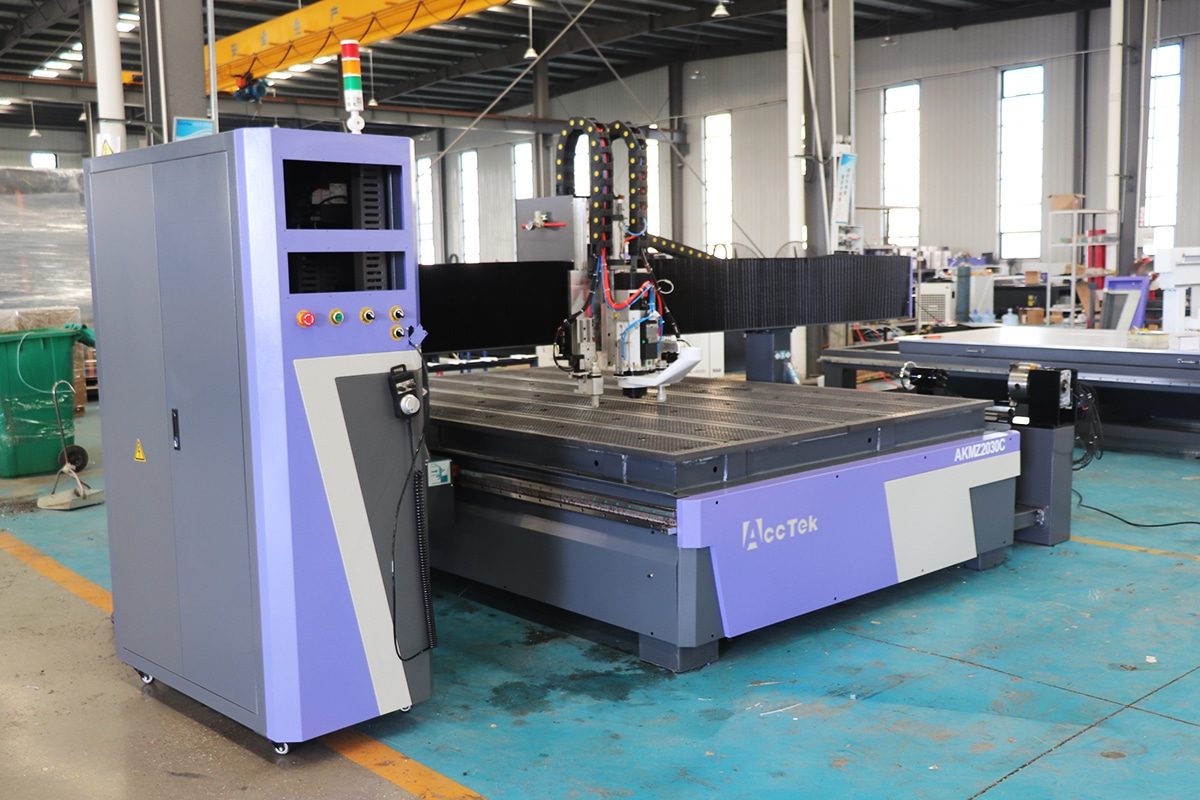
CNC Router Buying Guide
Choosing the right CNC router can be a major investment for any business, workshop, or serious hobbyist. With so many machine sizes, spindle options, control systems, and price ranges available today, buyers often struggle to determine which model truly fits their production needs. The CNC router that performs well for woodworking may not be ideal for aluminum cutting, sign making, cabinet production, or composite materials. That is why understanding the key buying factors before making a purchase is essential.
The CNC router is a computer-controlled cutting machine designed to carve, engrave, mill, and shape a wide variety of materials with high precision and repeatability. These machines are widely used in industries such as woodworking, furniture manufacturing, advertising, aerospace, plastics fabrication, and metalworking. Modern CNC routers can significantly improve productivity, reduce manual labor, minimize material waste, and deliver consistent results even for complex designs.
However, selecting the right machine involves much more than simply comparing prices. Buyers must evaluate factors such as working area, spindle power, frame construction, drive systems, cutting speed, software compatibility, automation features, and after-sales support. In addition, production volume, material type, accuracy requirements, and future expansion plans all play an important role in determining the most suitable machine configuration.
This CNC router buying guide is designed to help beginners and experienced buyers make informed decisions. Whether you are purchasing your first CNC router for a small workshop or upgrading to an industrial-grade machine for large-scale production, this guide will explain the most important specifications, features, and considerations to evaluate before investing. By understanding how different CNC routers operate and what features matter most for your applications, you can avoid costly mistakes and choose a machine that delivers long-term value, efficiency, and reliable performance.
Table of Contents
What Are CNC Routers?
CNC routers are computer-controlled cutting machines used to carve, engrave, drill, mill, and shape a wide range of materials with high precision and repeatability. The term “CNC” stands for Computer Numerical Control, which means the machine operates through programmed digital instructions rather than manual control. Instead of guiding the cutting tool by hand, operators use CAD (Computer-Aided Design) and CAM (Computer-Aided Manufacturing) software to create designs and convert them into machine-readable code. The CNC router then follows these instructions automatically to perform accurate and consistent cutting operations.
CNC routers are widely used in industries such as woodworking, furniture manufacturing, sign making, plastics fabrication, mold production, metalworking, aerospace, and custom manufacturing. They are capable of processing materials including wood, MDF, plywood, acrylic, PVC, foam, aluminum, brass, composites, and certain types of stone. Because of their versatility, CNC routers are commonly found in both small workshops and large industrial production facilities.
At the core of CNC routers is a moving gantry system that controls the cutting tool across multiple axes. Most standard CNC routers operate on three axes: X, Y, and Z. The X-axis controls left and right movement, the Y-axis controls forward and backward movement, and the Z-axis controls vertical movement. More advanced machines may include fourth-axis or fifth-axis capabilities for rotary carving and complex 3D machining.
The typical CNC router consists of several major components. The machine frame provides structural stability and affects cutting accuracy. The spindle is the main cutting motor responsible for rotating the cutting tools at high speed. Drive systems such as ball screws or rack-and-pinion mechanisms move the machine accurately along each axis. Servo motors or stepper motors control positioning, while the controller interprets the software commands and manages machine operation. Additional features may include vacuum tables, automatic tool changers, dust collection systems, and lubrication systems.
One of the biggest advantages of CNC routers is automation. Traditional manual cutting methods require significant operator skill and often produce inconsistent results. CNC routers eliminate much of this variability by performing repetitive tasks with high precision. This improves production efficiency, reduces material waste, minimizes human error, and allows businesses to produce complex designs that would be difficult or impossible to create manually.
CNC routers can also significantly increase productivity. Once a design is programmed, the machine can repeatedly manufacture identical parts with minimal supervision. This makes CNC routers especially valuable for mass production, cabinet manufacturing, custom furniture production, and industrial fabrication. In addition, modern CNC software allows users to quickly modify designs, optimize tool paths, and improve machining efficiency.
There are several different types of CNC routers available on the market. Hobby CNC routers are smaller and more affordable machines designed for light-duty work and personal projects. Commercial CNC routers are larger and more powerful, making them suitable for small and medium-sized businesses. Industrial CNC routers are built for heavy-duty continuous production and often include advanced automation features, larger working areas, and higher spindle power.
When choosing CNC routers, buyers should understand that machine quality can vary greatly. Factors such as frame rigidity, spindle quality, motor performance, software compatibility, and after-sales support all influence machine reliability and long-term performance. The low-cost machine may appear attractive initially, but insufficient rigidity, weak components, or poor technical support can lead to accuracy problems and costly downtime.
CNC routers are highly versatile automated machining systems that play a critical role in modern manufacturing and fabrication. They allow users to produce precise, repeatable, and complex parts efficiently across a wide range of industries and materials. Understanding how CNC routers work and what components and capabilities matter most is the first step toward selecting the right machine for your business or production needs.
How CNC Routers Work
CNC routers operate by combining computer software, digital design files, and automated machine motion to cut and shape materials with high precision. Unlike manual machining methods that rely heavily on operator skill, CNC routers follow programmed instructions that guide the machine through every stage of the cutting process. This automated workflow allows manufacturers to produce complex designs quickly, accurately, and repeatedly with minimal variation between parts.
The complete CNC routing process usually involves several key stages, including design creation, toolpath generation, material positioning, automated machining, and final finishing and inspection. Understanding how each stage works is essential when selecting a CNC router because machine performance, software compatibility, and automation features directly affect production quality and efficiency.
Design Creation
The CNC routing process begins with creating a digital design using CAD (Computer-Aided Design) software. This software allows users to draw 2D layouts or create detailed 3D models that define the dimensions, shapes, holes, contours, and engraving details of the final product.
Design software is commonly used in industries such as woodworking, furniture manufacturing, sign making, and industrial fabrication. Depending on the application, operators may design simple text engravings, cabinet components, decorative carvings, molds, or highly complex three-dimensional parts.
Accuracy during the design stage is critical because the CNC router follows the digital file exactly. Any design errors, incorrect dimensions, or poor geometry can directly affect the final product. Advanced CAD software also allows users to simulate assemblies, optimize dimensions, and prepare production-ready designs before machining begins.
Many CNC routers support widely used file formats such as DXF, DWG, STL, AI, and EPS, making it easier to transfer files between design software and machine control systems.
Toolpath Generation
After the design is completed, the next step is toolpath generation using CAM (Computer-Aided Manufacturing) software. Toolpaths are the programmed cutting routes the CNC router follows to machine the material.
During this stage, the operator selects cutting tools, spindle speeds, feed rates, cutting depths, and machining strategies based on the material and application. For example, wood cutting may require different tool settings than aluminum or acrylic machining.
The CAM software converts the design into G-code, which is the programming language used by CNC machines. G-code contains precise instructions that tell the machine where to move, how fast to cut, when to start or stop the spindle, and how deep the cutting tool should penetrate the material.
Efficient toolpath generation is extremely important because it directly affects machining speed, cutting quality, tool life, and material waste. Poorly optimized toolpaths can increase production time, create rough edges, overload the spindle, or even damage the machine.
Modern CAM software often includes simulation functions that allow operators to preview the machining process before production starts. This helps identify programming mistakes, tool collisions, or inefficient cutting movements in advance.
Material Positioning
Before machining begins, the material must be securely positioned on the CNC router table. Proper material setup is essential for maintaining cutting accuracy and preventing movement during operation.
CNC routers use several different workholding methods depending on the material type and machine configuration. Vacuum tables are commonly used for sheet materials such as plywood, MDF, acrylic, and plastics because they hold the material firmly across the entire surface. Mechanical clamps, T-slot fixtures, and custom jigs may also be used for smaller parts or irregularly shaped workpieces.
Once the material is secured, the operator sets the machine’s origin point, often called the work zero or home position. This reference point tells the CNC router exactly where machining operations should begin.
Accurate material positioning is especially important in high-precision applications. Even small alignment errors can cause dimensional inaccuracies, poor edge quality, or wasted materials. Industrial CNC routers may include automatic positioning systems, alignment sensors, or camera-assisted calibration to improve setup efficiency and precision.
Automated Machining
After setup is complete, the CNC router begins the automated machining process. The controller reads the G-code instructions and directs the machine’s motors and drive systems to move the spindle along the programmed paths.
As the spindle rotates at high speed, the cutting tool removes material layer by layer to create the desired shape. Depending on the machine configuration, the CNC router may perform operations such as cutting, drilling, engraving, grooving, pocketing, carving, contouring, or 3D sculpting.
Most CNC routers operate on three axes, but advanced models may include four-axis or five-axis machining capabilities for rotary work and complex multi-angle cutting.
Several factors influence machining quality during operation, including spindle power, machine rigidity, cutting speed, feed rate, tooling quality, and vibration control. High-quality CNC routers are designed to maintain stability during heavy cutting operations, resulting in smoother surfaces and more accurate dimensions.
Modern CNC routers may also include advanced automation features such as automatic tool changers, automatic lubrication systems, material loading systems, and dust collection systems. These features help improve productivity, reduce labor requirements, and support continuous industrial production.
Finishing and Inspection
Once machining is complete, the finished part is removed from the machine for final processing and quality inspection. Depending on the application, additional finishing steps may include sanding, polishing, edge cleaning, painting, coating, or assembly.
Inspection is an important stage because it ensures the finished product meets dimensional and surface quality requirements. Operators may use measuring tools such as calipers, gauges, or coordinate measuring machines to verify accuracy.
In industrial manufacturing environments, inspection procedures often include tolerance verification, surface finish evaluation, hole alignment checks, and structural testing. Consistent inspection helps maintain product quality and reduces the risk of defective parts reaching customers.
Tool wear is also commonly evaluated during this stage. Worn cutting tools can reduce machining quality, create rough edges, and affect dimensional precision. Regular maintenance and tooling replacement are essential for maintaining long-term CNC router performance.
CNC routers work through a highly organized digital manufacturing process that transforms computer-generated designs into precision-machined physical products. The workflow begins with creating a digital design, followed by generating optimized toolpaths, positioning materials accurately, performing automated machining operations, and completing final finishing and inspection procedures.
Each stage of the process plays a critical role in determining machining accuracy, production efficiency, surface quality, and overall manufacturing cost. Modern CNC routers combine advanced software, motion control systems, and automation technologies to deliver fast, repeatable, and highly precise production capabilities across a wide range of industries.
Understanding how CNC routers operate is essential when evaluating different machine models because software compatibility, spindle performance, automation features, machine rigidity, and control systems all directly affect real-world production results. Buyers who understand the complete CNC routing process are better prepared to choose machines that match their production requirements, material types, and long-term business goals.
Main Types of CNC Routers
CNC routers are available in several different configurations designed for specific industries, machining tasks, production volumes, and automation requirements. While all CNC routers operate using computer-controlled movement and cutting technology, the structure, axis configuration, spindle system, and automation level can vary significantly from one machine type to another.
Some CNC routers are designed for beginners and light-duty engraving work, while others are built for high-speed industrial production and advanced multi-axis machining. Understanding the main types of CNC routers is essential when selecting a machine because each category offers different advantages in terms of cutting capability, productivity, flexibility, precision, and cost.
The most suitable CNC router depends on factors such as material type, product complexity, production scale, workshop size, labor requirements, and future business expansion plans. Below are the main types of CNC routers commonly used across woodworking, furniture manufacturing, sign making, industrial fabrication, and custom production industries.
Desktop CNC Routers
Desktop CNC routers are compact machines designed for hobby users, educational institutions, prototype development, and small-scale commercial production. These machines are popular because they are affordable, relatively easy to operate, and require limited workspace.
Most desktop CNC routers are used for engraving, carving, drilling, and light cutting operations on materials such as wood, MDF, acrylic, plastic, foam, and soft metals like aluminum. Common applications include sign making, jewelry design, PCB production, artistic carving, model building, and DIY manufacturing projects.
Although desktop CNC routers are smaller than industrial machines, many modern models still provide excellent precision and repeatability. They are often equipped with user-friendly control systems and software that simplify operation for beginners.
However, desktop machines generally have lower spindle power, smaller working areas, and lighter machine frames. This limits their ability to process thick materials or handle heavy-duty industrial cutting tasks. Lower-cost desktop routers may also experience vibration issues if the machine structure lacks rigidity.
When purchasing desktop CNC routers, buyers should evaluate spindle quality, frame construction, motion systems, software compatibility, and upgrade potential. The well-built desktop router can provide reliable performance for small businesses and entry-level CNC users.
Standard 3-Axis CNC Routers
Standard 3-axis CNC routers are the most common type of CNC router used in commercial and industrial manufacturing. These machines operate along three linear axes: X, Y, and Z.
The X-axis controls horizontal movement from left to right, the Y-axis controls front-to-back movement, and the Z-axis controls vertical movement of the spindle. Together, these axes allow the machine to cut, engrave, drill, and carve flat or moderately contoured surfaces.
3-axis CNC routers are widely used in woodworking, cabinet manufacturing, furniture production, advertising, acrylic fabrication, and sign making. They are ideal for processing sheet materials such as plywood, MDF, PVC, acrylic, and composite panels.
One of the main advantages of 3-axis CNC routers is their balance between affordability and versatility. They can handle a wide range of production tasks while remaining easier to program and maintain than more advanced multi-axis systems.
Industrial-grade 3-axis CNC routers often feature large worktables, heavy-duty steel frames, high-power spindles, vacuum adsorption tables, and high-speed servo motor systems. These features improve machining stability, cutting precision, and production efficiency.
However, standard 3-axis machines may struggle with highly complex three-dimensional parts or multi-angle machining operations. Additional setups may be required when machining complicated geometries.
4-Axis CNC Routers
4-axis CNC routers include an additional rotational axis beyond the standard X, Y, and Z axes. This extra axis allows either the spindle or the workpiece to rotate during machining, making it possible to process more complex shapes and curved surfaces.
The fourth axis is commonly known as the A-axis and is frequently used for cylindrical carving, curved surface machining, and multi-sided processing. Applications include furniture legs, sculptures, decorative columns, stair components, and mold production.
Compared to standard 3-axis machines, 4-axis CNC routers offer greater flexibility and reduce the need for manual repositioning of the material. This improves accuracy and production efficiency, especially for complex parts.
Some 4-axis CNC routers operate with indexed rotation, where the material rotates to fixed positions between cutting operations. More advanced systems provide simultaneous 4-axis machining, allowing continuous rotational movement during cutting.
Because of their increased complexity, 4-axis CNC routers require more advanced CAM software and programming knowledge. Buyers should also ensure the machine controller fully supports true 4-axis machining functions.
5-Axis CNC Routers
5-axis CNC routers are advanced machining systems capable of moving the cutting tool or workpiece across five different axes simultaneously. In addition to the standard X, Y, and Z axes, these machines include two extra rotational axes that allow machining from multiple angles.
This capability enables 5-axis CNC routers to produce highly detailed and complex three-dimensional parts with exceptional precision. Industries such as aerospace, automotive manufacturing, mold making, marine engineering, and architectural modeling commonly use 5-axis technology.
One major advantage of 5-axis machining is the ability to complete complex parts in a single setup. This reduces repositioning errors, improves surface finish quality, and shortens production time.
5-axis machines also allow better access to difficult cutting areas and support shorter cutting tools, which helps reduce vibration and improve machining stability.
However, 5-axis CNC routers are significantly more expensive than standard machines. They also require advanced programming skills, sophisticated software, and experienced operators. Maintenance and training costs are generally higher as well.
For businesses involved in high-precision industrial production or complex 3D machining, a 5-axis CNC router can provide major productivity and quality advantages.
ATC CNC Routers
ATC CNC routers are equipped with an Automatic Tool Changer system that allows the machine to switch cutting tools automatically during operation. Instead of stopping production for manual tool changes, the machine selects and installs the required tool according to the programmed machining process.
ATC systems are especially useful in applications requiring multiple cutting operations, such as drilling, grooving, engraving, contouring, and edge finishing. Industries such as cabinet manufacturing, furniture production, and industrial woodworking commonly rely on ATC CNC routers for high-volume production.
Automatic tool changers improve productivity by reducing downtime and minimizing operator involvement. They also improve machining consistency because tool changes occur automatically with precise positioning.
There are different types of ATC systems, including linear tool changers and carousel tool changers. Carousel systems generally offer faster tool-changing speeds and support larger tool capacities.
ATC CNC routers are typically paired with high-speed servo systems, vacuum worktables, and advanced control systems to support continuous production environments.
Although ATC machines are more expensive than standard CNC routers, they can significantly improve efficiency and reduce labor costs for businesses with demanding production requirements.
Nesting CNC Routers
Nesting CNC routers are specialized machines designed for panel processing and material optimization. These machines are widely used in cabinet manufacturing, custom furniture production, wardrobe manufacturing, and modular furniture industries.
The primary purpose of nesting CNC routers is to maximize material utilization by automatically arranging parts on sheet materials in the most efficient layout possible. This process, known as nesting, reduces material waste and improves production efficiency.
Nesting CNC routers often combine multiple production functions into a single machine. In addition to cutting panels, they may also perform drilling, grooving, slotting, engraving, and labeling operations.
Most nesting CNC routers are equipped with vacuum adsorption tables that securely hold large sheets during high-speed machining. Many systems also include automatic loading and unloading devices to support fully automated production lines.
These machines are particularly valuable for customized furniture manufacturing because they allow flexible production of different part sizes and designs without requiring extensive manual setup.
Advanced nesting software plays a critical role in optimizing cutting layouts, reducing scrap material, and improving workflow efficiency. Some systems also integrate directly with furniture design software and factory management systems.
Because nesting CNC routers are designed for continuous industrial production, buyers should pay close attention to spindle quality, vacuum system performance, automation features, and software compatibility.
CNC routers are available in a wide range of configurations designed for different production environments and machining applications. Desktop CNC routers provide affordable entry-level solutions for hobby users and small workshops, while standard 3-axis CNC routers remain the most common choice for general manufacturing and woodworking operations.
More advanced systems, such as 4-axis and 5-axis CNC routers, offer greater flexibility for complex three-dimensional machining and multi-angle processing. ATC CNC routers improve production efficiency through automatic tool changing, while nesting CNC routers are specifically designed for high-efficiency panel processing and furniture manufacturing.
Each type of CNC router offers unique advantages, limitations, and investment costs. Buyers should carefully evaluate production requirements, machining complexity, automation needs, workspace limitations, and long-term business goals before selecting a machine. Understanding the strengths and applications of each CNC router category can help businesses make informed purchasing decisions and achieve better productivity, accuracy, and long-term operational value.
Industries That Use CNC Routers
CNC routers are widely used across modern manufacturing industries because of their ability to deliver fast, accurate, and repeatable machining results. These machines can cut, engrave, carve, drill, and shape a broad range of materials while maintaining high precision and production efficiency. As manufacturing demands continue to grow, CNC routers have become essential tools for businesses seeking to improve productivity, reduce labor costs, minimize material waste, and produce complex custom products.
One of the biggest advantages of CNC routers is their versatility. The single machine can often handle multiple production tasks and process different materials simply by changing tooling and machining parameters. This flexibility allows CNC routers to serve industries ranging from woodworking and advertising to aerospace and industrial fabrication.
Different industries require different machine configurations, spindle powers, axis systems, and automation levels. Understanding how CNC routers are used across various industries can help buyers choose machines that best match their production requirements and long-term business goals.
Woodworking Industry
The woodworking industry is one of the largest and most common users of CNC routers. These machines are extensively used in furniture manufacturing, cabinet production, interior decoration, door manufacturing, and custom woodworking applications.
CNC routers allow woodworking businesses to produce highly accurate and repeatable parts with much greater speed than traditional manual methods. Common woodworking operations include panel cutting, carving, engraving, drilling, grooving, slotting, and edge profiling.
In cabinet and furniture production, CNC routers are often used to process MDF, plywood, particle board, hardwood, softwood, and laminated panels. Modern nesting CNC routers can automatically optimize cutting layouts to reduce material waste and improve production efficiency.
Woodworking CNC routers are also widely used for decorative carving applications. Rotary axis systems and multi-axis machines can produce intricate patterns, curved furniture components, stair railings, columns, and artistic wood carvings.
Automation features such as automatic tool changers, vacuum adsorption tables, and automatic loading systems are especially valuable in high-volume furniture manufacturing environments. These features improve productivity while reducing labor requirements and setup time.
For woodworking businesses, machine rigidity, spindle power, dust collection systems, and cutting accuracy are critical factors when selecting CNC routers.
Advertising Industry
The advertising industry relies heavily on CNC routers for sign making, display production, branding materials, and promotional product manufacturing. CNC routers are capable of cutting and engraving materials with high precision, making them ideal for producing customized advertising products.
Common materials used in the advertising industry include acrylic, PVC, foam board, aluminum composite panels, wood, MDF, and plastics. CNC routers can process these materials efficiently while producing smooth edges and detailed designs.
Advertising companies frequently use CNC routers to manufacture illuminated signs, channel letters, exhibition displays, logos, decorative panels, and point-of-sale displays. Engraving functions are also commonly used for personalized signage and branding applications.
High-speed machining capabilities are particularly important in the advertising industry because businesses often handle custom orders with short production deadlines. CNC routers help improve turnaround times while maintaining consistent quality.
Many advertising manufacturers prefer CNC routers equipped with vacuum tables and high-speed spindles to improve cutting stability and efficiency. Precision motion systems are also important for producing clean edges and detailed lettering.
Metal Fabrication
Although CNC routers are traditionally associated with woodworking and plastics, they are also widely used in light metal fabrication industries. Specialized CNC routers can process materials such as aluminum, brass, copper, and other non-ferrous metals.
Metal fabrication CNC routers are commonly used for cutting aluminum panels, machine covers, automotive parts, aerospace components, electronic enclosures, and industrial signage.
Compared to standard woodworking routers, metal-processing CNC routers typically require stronger machine frames, higher rigidity, precision linear guide systems, and more powerful spindles to handle the increased cutting forces generated during metal machining.
Cooling and lubrication systems are also important when machining metals because they help reduce heat buildup, improve tool life, and maintain surface quality.
In some cases, CNC routers offer advantages over traditional metalworking equipment because they provide faster cutting speeds for thin metal sheets and allow more flexible machining of custom parts.
However, buyers should understand that not all CNC routers are suitable for metal fabrication. Machines designed for wood processing may lack the rigidity and spindle performance required for stable metal cutting operations.
Plastic Industry
The plastic industry uses CNC routers extensively for cutting, engraving, shaping, and machining plastic materials with high accuracy and efficiency. Common materials include acrylic, PVC, polycarbonate, ABS, HDPE, polyethylene, and engineering plastics.
CNC routers are widely used in the production of plastic displays, machine guards, industrial components, packaging molds, automotive parts, and custom-fabricated products.
One major advantage of CNC routers in plastic processing is their ability to produce smooth edges and detailed cuts without causing excessive material deformation. Proper spindle speeds, cutting tools, and feed rates are essential for achieving clean machining results.
Acrylic fabrication is especially common in industries such as advertising, interior decoration, and retail display manufacturing. CNC routers can engrave, cut, polish, and shape acrylic sheets into highly customized products.
Plastic-processing CNC routers often require effective chip extraction systems because plastic debris can accumulate during machining and affect cutting quality.
Buyers working in the plastic industry should pay attention to spindle speed control, cutting precision, vacuum table performance, and software compatibility when selecting CNC routers.
Mold Industry
The mold industry uses CNC routers for creating prototypes, molds, patterns, and tooling components used in manufacturing processes such as casting, thermoforming, and composite production.
CNC routers can machine materials such as wood, resin boards, plastics, aluminum, and foam to create highly accurate mold surfaces and complex three-dimensional shapes.
In mold manufacturing, machining precision and surface finish quality are extremely important because small dimensional errors can affect the quality of final molded products.
Advanced 4-axis and 5-axis CNC routers are often used in mold production because they allow complex contour machining and multi-angle cutting. These capabilities are essential for producing detailed cavities, curved surfaces, and intricate geometries.
CAM software plays a major role in mold manufacturing because efficient toolpath generation directly affects machining quality and production time.
Mold manufacturers typically require CNC routers with strong structural rigidity, high-speed spindles, precision motion systems, and advanced control capabilities to achieve accurate and repeatable machining results.
Composite Material Processing
Composite materials are increasingly used in industries such as aerospace, automotive manufacturing, marine engineering, sports equipment production, and industrial fabrication. CNC routers are commonly used to process these materials because they offer precise cutting and shaping capabilities.
Common composite materials include carbon fiber, fiberglass, honeycomb panels, phenolic boards, and reinforced plastic composites.
Machining composite materials can be challenging because different layers and material structures respond differently during cutting. CNC routers equipped with proper tooling and dust extraction systems can achieve clean cuts while minimizing material delamination and edge damage.
In aerospace and automotive industries, CNC routers are frequently used for trimming composite panels, cutting lightweight structural components, and producing prototype parts.
Composite material machining often requires high spindle speeds, specialized cutting tools, vacuum hold-down systems, and efficient dust collection systems due to the fine particles generated during cutting.
Machine rigidity and vibration control are especially important when processing composites because unstable cutting conditions can negatively affect edge quality and dimensional accuracy.
CNC routers are essential production tools across a wide variety of industries because they provide fast, precise, and highly repeatable machining capabilities. Industries such as woodworking, advertising, metal fabrication, plastics manufacturing, mold production, and composite material processing all rely on CNC routers to improve efficiency, reduce labor costs, and produce complex custom products.
Different industries require different machine configurations and performance levels. Woodworking applications often prioritize speed and nesting efficiency, while metal fabrication and mold manufacturing demand higher rigidity and precision. Advertising and plastic fabrication industries focus heavily on detail quality and flexibility, while composite processing requires specialized tooling and dust management systems.
Understanding how CNC routers are used in different industries helps buyers identify the machine features, spindle configurations, automation systems, and structural capabilities that best match their specific production needs. Selecting the right CNC router based on industry requirements can significantly improve manufacturing efficiency, product quality, and long-term operational success.
Choosing the Right Working Area
The working area of CNC routers is one of the most important factors to consider when purchasing a machine. The working area, sometimes called the cutting area or bed size, determines the maximum material dimensions the machine can process. Choosing the correct working area directly affects production efficiency, material handling, machining flexibility, workshop layout, and overall operating costs.
Many buyers focus heavily on spindle power, speed, or automation features while overlooking the importance of machine size. However, selecting CNC routers with the wrong working area can create serious production limitations or unnecessary expenses. The machine that is too small may not accommodate standard material sizes, while an oversized machine can waste valuable workshop space and increase operating costs without delivering real production benefits.
The ideal working area depends on several factors, including the types of materials being processed, product dimensions, production volume, available workspace, and future business growth plans. Understanding how these factors interact can help buyers choose a machine that balances efficiency, flexibility, and cost-effectiveness.
Match the Bed Size to Your Material
The first step in selecting the correct working area is understanding the size of the materials you plan to process regularly. CNC routers are commonly used with sheet materials such as plywood, MDF, acrylic, PVC, aluminum composite panels, and plastics, many of which come in standardized sheet sizes.
For example, woodworking and cabinet manufacturing businesses often work with full-size panels. In many regions, standard sheet sizes are approximately 4×8 feet, while some industrial applications may require larger formats such as 5×10 feet or even larger customized dimensions.
Choosing a machine with a working area that matches your material size allows full sheets to be processed directly without pre-cutting. This improves production efficiency, reduces labor requirements, and minimizes material waste.
If the machine bed is too small, operators may need to cut materials manually before machining, which increases preparation time and introduces additional opportunities for measurement errors and waste.
Buyers should also consider the size of their finished products. Some industries produce large signs, furniture panels, doors, countertops, or decorative wall panels that require extended machining areas. In these cases, a larger working area may be essential.
However, material size is not the only consideration. The thickness and weight of the materials should also be evaluated. Heavy sheets may require stronger vacuum systems and more rigid machine frames to maintain machining stability across large work areas.
Businesses that process a wide variety of product sizes may benefit from flexible machine configurations or customized table dimensions designed around their production workflow.
Consider Workshop Space
While larger CNC routers provide greater machining capacity, they also require significantly more installation space. Buyers must carefully evaluate their workshop layout before purchasing a machine.
The machine footprint itself is only part of the space requirement. Additional room is needed for material loading and unloading, operator movement, maintenance access, dust collection systems, electrical cabinets, air compressors, and vacuum pumps.
Large CNC routers often require clear space around the machine to safely handle full-size sheets and oversized workpieces. In busy production environments, poor workshop planning can create workflow bottlenecks, safety hazards, and inefficient material handling.
Ceiling height may also become an important factor for machines with elevated gantries, automatic loading systems, or material handling equipment.
Another important consideration is future expansion. Some businesses initially purchase smaller machines to reduce investment costs, only to later discover that limited workspace prevents equipment upgrades or additional production lines.
Electrical infrastructure and floor strength should also be evaluated before installation. Industrial CNC routers can be extremely heavy and may require reinforced flooring, specialized power connections, or dedicated ventilation systems.
For smaller workshops, compact CNC routers or space-saving machine designs may provide a better balance between functionality and available floor space. Buyers should always measure their workspace carefully and consider the entire production environment rather than focusing solely on machine specifications.
Larger Is Not Always Better
Many buyers assume that purchasing the largest possible CNC router is the safest long-term investment. While larger working areas can provide greater flexibility, oversized machines are not always the most practical or cost-effective choice.
Larger CNC routers generally come with higher purchase costs, increased power consumption, greater maintenance requirements, and larger space demands. If the machine capacity exceeds actual production needs, much of that investment may go unused.
Oversized machines can also create efficiency problems. Processing small parts on very large tables may result in slower material handling, increased vacuum system demands, and unnecessary energy consumption.
Machine rigidity is another important factor. In some cases, smaller CNC routers provide better stability and higher precision because shorter machine structures are easier to reinforce and control. Extremely large machines require stronger frames and advanced engineering to maintain accuracy across the entire working area.
For businesses producing primarily small components, signs, or customized products, the medium-sized CNC router may offer better efficiency and lower operating costs than a large industrial machine.
Production workflow should also influence machine size decisions. Some manufacturers achieve higher efficiency by using multiple smaller CNC routers instead of a single oversized machine. This approach can improve flexibility, reduce downtime risks, and allow simultaneous production of different product types.
Future production growth is important, but buyers should avoid selecting machines based entirely on unrealistic expansion expectations. The well-matched CNC router that fits current and near-future production requirements often delivers better long-term value than an oversized machine with underutilized capacity.
Choosing the right working area is a critical step in selecting CNC routers because machine size directly affects productivity, material handling, workshop efficiency, and overall operating costs. The ideal working area should match the size of the materials and products being processed while also fitting comfortably within the available workshop space.
Buyers should carefully evaluate standard material dimensions, production workflows, loading requirements, maintenance access, and future expansion plans before making a decision. Selecting a machine that is too small can limit production capabilities and increase labor costs, while an oversized machine may create unnecessary expenses and inefficient use of workspace.
The properly sized CNC router provides the best balance between machining flexibility, operational efficiency, investment cost, and long-term productivity. Understanding how the working area influences real-world manufacturing performance can help buyers choose equipment that supports both current production needs and future business growth.
Machine Frame and Structural Rigidity
The machine frame and overall structural rigidity of CNC routers play a critical role in determining machining accuracy, cutting stability, surface finish quality, and long-term reliability. While buyers often focus on spindle power, cutting speed, or software features, the structural strength of the machine is actually one of the most important factors affecting real-world machining performance.
The CNC router generates significant cutting forces during operation, especially when processing dense materials, cutting at high speeds, or performing heavy-duty machining tasks. If the machine structure lacks rigidity, these forces can cause vibration, frame deformation, positioning errors, and poor cutting quality. Even a powerful spindle and advanced control system cannot compensate for a weak or unstable machine frame.
Structural rigidity becomes even more important in industrial production environments where machines operate continuously for long periods. The well-designed frame helps maintain precision over time, reduces mechanical wear, improves tool life, and supports stable high-speed machining.
When evaluating CNC routers, buyers should carefully examine the machine frame construction, gantry design, and vibration control features rather than focusing only on external appearance or price.
Welded Steel Frame
The frame serves as the foundation of the entire CNC router. It supports all major machine components, including the gantry, spindle, motors, guide rails, and worktable. The strong and stable frame is essential for maintaining machining accuracy during operation.
Most industrial CNC routers use welded steel frames because steel provides excellent strength, rigidity, and durability. Heavy-duty welded steel structures are capable of handling large cutting loads while minimizing deformation and vibration.
After welding, high-quality machine frames are often subjected to stress-relief treatments such as heat treatment or vibration aging processes. These treatments help eliminate internal stress created during welding and reduce the risk of frame deformation over time.
Without proper stress relief, the frame may gradually warp or shift during long-term use, leading to positioning inaccuracies and reduced machining precision.
Frame thickness and structural reinforcement are also important considerations. Machines built with thick steel tubing and reinforced support structures generally provide better stability during heavy cutting operations.
Some lower-cost CNC routers use lightweight aluminum frames or thinner steel materials to reduce manufacturing costs. While these machines may perform adequately for light-duty applications, they often lack the rigidity needed for high-speed machining or dense material processing.
Machine weight can also indicate structural quality. Heavier CNC routers typically offer better vibration resistance and cutting stability because the increased mass helps absorb machining forces more effectively.
For industrial applications involving wood, aluminum, composites, or continuous production, a heavy welded steel frame is usually the preferred choice.
Gantry Design
The gantry is one of the most important moving structures in CNC routers. It supports the spindle assembly and moves along the machine axes during machining operations. The design and rigidity of the gantry directly affect cutting precision, movement stability, and machining speed.
A poorly designed gantry can flex or twist during operation, especially when machining at high speeds or processing hard materials. This movement can lead to inaccurate cuts, rough surface finishes, tool chatter, and premature component wear.
Industrial CNC routers commonly use either fixed gantry or moving gantry designs. Moving gantry systems are more common because they offer greater flexibility and efficient use of workshop space. However, they require strong structural engineering to maintain rigidity during movement.
High-quality gantries are typically constructed from thick steel tubing or cast-iron structures. These materials provide excellent stiffness while reducing vibration during machining.
The width and height of the gantry also influence machine performance. Taller gantries allow greater Z-axis clearance for thick materials, but excessive height can reduce rigidity and increase vibration. Buyers should choose a gantry height appropriate for their material thickness and application requirements.
Dual-drive gantry systems are commonly used on large CNC routers to improve movement stability and synchronization. In these systems, motors are installed on both sides of the gantry to maintain balanced movement across the machine table.
Linear guide rails and drive systems also contribute to gantry performance. Precision linear rails provide smoother motion and improved positioning accuracy, while high-quality rack-and-pinion or ball screw systems help maintain stable movement under heavy loads.
For buyers planning to process large sheets, heavy materials, or high-speed production jobs, gantry rigidity should be considered a major purchasing factor.
Vibration Control
Vibration is one of the biggest factors affecting CNC router performance and machining quality. Excessive vibration can reduce cutting precision, create rough surface finishes, increase tool wear, shorten machine lifespan, and generate excessive noise during operation.
Several factors contribute to vibration in CNC routers, including weak machine structures, unbalanced spindles, poor-quality bearings, unstable drive systems, aggressive cutting parameters, and insufficient machine weight.
Effective vibration control begins with strong machine construction. Heavy-welded steel frames and rigid gantries help absorb cutting forces and minimize structural movement during machining.
Spindle quality is also critical. High-quality spindles with precision bearings produce smoother rotation and reduce vibration at high speeds. Poor spindle balance can create significant instability, especially during high-speed engraving or aluminum cutting operations.
Drive systems and motion components also influence vibration levels. Precision linear guide rails, servo motors, and properly aligned transmission systems help ensure smooth and stable machine movement.
Cutting tool selection plays an important role as well. Dull or low-quality tools can increase cutting resistance and generate excessive vibration. Proper spindle speed, feed rate, and cutting depth settings are necessary to maintain stable machining conditions.
Many industrial CNC routers include vibration-reducing design features such as reinforced support structures, balanced moving components, and shock-absorbing machine feet.
Vibration control becomes especially important in applications requiring fine engraving, detailed carving, mold production, and precision metal processing. Stable cutting conditions improve dimensional accuracy and surface quality while reducing machine wear.
Buyers should also consider the workshop environment. Uneven flooring, poor machine installation, or nearby heavy equipment can contribute to vibration problems and negatively affect machining performance.
The machine frame and structural rigidity of CNC routers are fundamental factors that directly affect machining precision, cutting stability, production efficiency, and long-term reliability. The strong and stable machine structure allows the CNC router to maintain accurate movement under heavy cutting loads while minimizing vibration and mechanical deformation.
Welded steel frames provide the strength and durability required for industrial machining applications, while proper stress-relief treatment helps maintain long-term structural stability. Gantry design is equally important because it influences movement accuracy, machining speed, and cutting consistency across the entire working area.
Vibration control is essential for achieving smooth surface finishes, accurate dimensions, longer tool life, and stable high-speed machining performance. Factors such as frame weight, spindle quality, drive system precision, and machine installation all contribute to overall vibration resistance.
When evaluating CNC routers, buyers should look beyond appearance and advertised specifications. The well-built machine with strong structural rigidity will generally deliver better precision, higher productivity, lower maintenance costs, and longer service life compared to lightweight or poorly engineered alternatives. Understanding the importance of machine structure can help buyers make smarter long-term investments and avoid performance problems during production.
Spindle Selection
The spindle is one of the most important components of CNC routers because it directly affects cutting performance, machining precision, material compatibility, and production efficiency. As the main rotating unit that drives the cutting tool, the spindle determines how effectively the machine can process different materials and handle various machining tasks.
The CNC router spindle must provide stable rotation, sufficient power, and accurate speed control to achieve clean cuts and reliable machining performance. The wrong spindle configuration can lead to poor surface quality, overheating, reduced cutting efficiency, excessive tool wear, and shortened machine lifespan.
When selecting CNC routers, buyers should carefully evaluate spindle cooling methods, spindle power, operating speed range, bearing quality, and long-term reliability. The ideal spindle depends heavily on the materials being processed, production volume, cutting depth requirements, and operating environment.
Different industries and applications require different spindle configurations. For example, light engraving work may only require a low-power spindle, while industrial aluminum cutting or continuous furniture production may demand a much more powerful and durable system.
Air-Cooled Spindle
Air-cooled spindles use built-in cooling fans to dissipate heat generated during operation. As the spindle rotates, the cooling fan circulates air around the spindle housing to reduce operating temperatures.
One of the biggest advantages of air-cooled spindles is their simple structure. Since they do not require water pumps, coolant tanks, hoses, or circulation systems, installation and maintenance are generally easier. This simplicity makes air-cooled spindles popular among hobby users, small workshops, and entry-level CNC router applications.
Air-cooled spindles are also more portable and easier to install in environments where water cooling systems may be inconvenient. They are commonly used for woodworking, engraving, acrylic cutting, and light-duty machining operations.
Another advantage is reduced risk of coolant leakage. Water-cooled systems can occasionally experience leaks or circulation problems, while air-cooled spindles avoid these issues entirely.
However, air-cooled spindles tend to produce more noise because of the cooling fan operation. They may also be less effective in maintaining low temperatures during long periods of continuous high-load machining.
In hot workshop environments or heavy industrial production settings, air cooling may not provide sufficient heat dissipation for large spindle motors operating under constant load.
Air-cooled spindles are generally best suited for light to medium-duty applications, intermittent production schedules, and users seeking lower maintenance complexity.
Water-Cooled Spindle
Water-cooled spindles use circulating coolant to remove heat from the spindle during operation. The water pump continuously moves coolant through channels inside the spindle housing, helping maintain stable operating temperatures even during demanding machining tasks.
Water-cooled spindles are widely used in industrial CNC routers because they provide superior cooling efficiency and more stable long-term performance. They are especially beneficial for continuous production environments and high-speed machining applications.
One major advantage of water-cooled spindles is quieter operation. Since there is no large cooling fan mounted on the spindle body, noise levels are generally much lower compared to air-cooled systems.
Stable temperature control also improves spindle longevity and machining precision. Excessive heat can negatively affect bearing performance, spindle balance, and cutting accuracy. Water cooling helps minimize thermal expansion and maintains consistent spindle performance over long operating periods.
Water-cooled spindles are commonly used for aluminum cutting, mold manufacturing, furniture production, high-speed engraving, and precision machining applications.
However, water-cooled systems are more complex and require additional components such as pumps, coolant tanks, hoses, and sometimes chillers. Regular maintenance is necessary to ensure proper coolant circulation and prevent contamination or blockage.
In colder environments, coolant freezing may also become a concern if the machine is not properly maintained during winter conditions.
Despite the added complexity, water-cooled spindles are generally preferred for industrial applications because of their better cooling performance, lower operating noise, and improved long-term stability.
Spindle Power
Spindle power is one of the most critical specifications when selecting CNC routers. Spindle power determines the machine’s ability to cut different materials, maintain cutting speed under load, and perform heavy-duty machining operations.
Spindle power is usually measured in kilowatts (kW) or horsepower (HP). Lower-power spindles are suitable for light engraving, soft materials, and small tools, while higher-power spindles are required for thick materials, larger cutting tools, and industrial production tasks.
Small desktop CNC routers may use spindles ranging from 1.5 kW to 2.2 kW for engraving and light cutting work. Medium-sized commercial machines often use spindles between 3 kW and 6 kW for woodworking, acrylic processing, and sign making.
Industrial CNC routers designed for furniture production, aluminum machining, or continuous heavy-duty cutting may require spindles ranging from 7.5 kW to 12 kW or even higher.
Insufficient spindle power can cause slow cutting speeds, poor surface finish quality, excessive tool wear, and motor overheating. On the other hand, selecting an excessively large spindle for light-duty work may increase energy consumption and machine cost unnecessarily.
Material type is one of the biggest factors influencing spindle power requirements. Soft woods and foam materials generally require less power, while hardwoods, aluminum, composites, and dense plastics demand stronger spindle performance.
Buyers should also consider future production needs. Purchasing a spindle with slightly higher capacity than current requirements may provide better flexibility for future material expansion and increased production workloads.
Spindle Speed
Spindle speed refers to how fast the spindle rotates and is typically measured in revolutions per minute (RPM). Proper spindle speed selection is essential for achieving clean cuts, efficient material removal, good surface finish quality, and long tool life.
Different materials require different spindle speed ranges. Soft materials such as wood, acrylic, and plastics are often machined at high spindle speeds to achieve smooth cutting results. Harder materials, such as aluminum may require lower spindle speeds combined with controlled feed rates to prevent overheating and tool damage.
Most CNC router spindles operate within a speed range of approximately 6,000 to 24,000 RPM, although some specialized spindles may support even higher speeds.
High-speed spindles are particularly useful for engraving, fine detail carving, acrylic processing, and small cutting tools. However, extremely high spindle speeds without proper feed rate adjustment can generate excessive heat and reduce tool life.
Low spindle speeds may improve torque performance for certain heavy cutting operations, especially when machining dense materials or using larger cutting tools.
Variable frequency drives (VFDs) are commonly used to control spindle speed electronically. VFD systems allow operators to adjust spindle speed according to material type, tool diameter, and machining requirements.
Stable spindle speed control is important because speed fluctuations can affect cutting consistency and surface quality. High-quality spindles maintain smoother rotation and better speed stability during high-load machining conditions.
Buyers should ensure the spindle speed range matches their intended applications and tooling requirements.
The spindle is the core cutting component of CNC routers and plays a major role in determining machining capability, cutting quality, production efficiency, and long-term machine reliability. Selecting the right spindle requires careful evaluation of cooling methods, power output, speed range, and overall performance requirements.
Air-cooled spindles offer simple maintenance and lower system complexity, making them suitable for light-duty and entry-level applications. Water-cooled spindles provide superior cooling efficiency, quieter operation, and better long-term stability for industrial production environments.
Spindle power directly affects the machine’s ability to process different materials and perform heavy-duty cutting tasks, while spindle speed influences cutting quality, tool life, and machining efficiency. Proper matching of spindle specifications to material type and production requirements is essential for achieving stable and efficient machining performance.
When purchasing CNC routers, buyers should avoid focusing only on advertised spindle ratings. Factors such as spindle quality, bearing precision, cooling efficiency, speed stability, and compatibility with intended applications are equally important. The properly selected spindle can significantly improve productivity, machining accuracy, and long-term operational reliability.
Drive System and Transmission
The drive system and transmission components of CNC routers are responsible for converting motor power into precise machine movement. These systems control how accurately, smoothly, and efficiently the machine moves along each axis during machining operations. Even CNC routers equipped with a powerful spindle and rigid frame cannot achieve high-quality results if the drive system lacks precision or stability.
The drive system directly affects machining accuracy, positioning speed, repeatability, surface finish quality, and long-term reliability. Poor-quality transmission components can lead to backlash, vibration, positioning errors, uneven cutting, and increased maintenance problems.
When selecting CNC routers, buyers should carefully evaluate the type of motors, transmission mechanisms, and linear motion components used in the machine. Different drive systems are designed for different production requirements, machine sizes, and machining applications.
For example, small desktop CNC routers may use cost-effective motion systems suitable for light-duty engraving work, while industrial CNC routers require high-speed servo systems and precision transmission components capable of continuous heavy-duty production.
Understanding how drive systems and transmission technologies work can help buyers choose CNC routers that deliver the right balance of speed, precision, durability, and operating cost.
Stepper Motors
Stepper motors are one of the most commonly used motion control systems in entry-level and mid-range CNC routers. These motors move in precise step increments based on electrical control signals, allowing the machine to position itself accurately without requiring complex feedback systems.
One of the biggest advantages of stepper motors is their relatively low cost and simple control structure. Because of this, they are widely used in desktop CNC routers, hobby machines, small engraving systems, and light commercial applications.
Stepper motors can provide good positioning accuracy for moderate-speed machining operations. They are suitable for applications such as woodworking, sign making, acrylic engraving, foam cutting, and small custom projects.
Another advantage is their straightforward maintenance and installation requirements. Since stepper systems are generally less complex than servo systems, they are easier for beginners to operate and troubleshoot.
However, stepper motors also have several limitations. At higher speeds or under heavy cutting loads, stepper motors can lose steps without the controller detecting the error. This can lead to positioning inaccuracies and machining defects.
Stepper motors also tend to generate more heat and vibration compared to servo systems. Their torque output decreases at higher speeds, limiting their effectiveness for high-speed industrial production.
For light-duty applications and budget-conscious buyers, stepper motors may provide sufficient performance. However, for demanding industrial environments or high-speed machining, servo systems are generally preferred.
Servo Motors
Servo motors are advanced motion control systems widely used in industrial CNC routers and high-performance machining equipment. Unlike stepper motors, servo systems use closed-loop feedback control to continuously monitor and correct motor position, speed, and torque during operation.
This feedback system allows servo motors to maintain extremely accurate positioning even at high speeds and under heavy cutting loads. Servo systems are known for their smooth motion, fast acceleration, high torque output, and superior reliability.
One major advantage of servo motors is their ability to maintain consistent performance during continuous industrial production. They are highly effective for applications requiring high precision, rapid movement, and stable machining quality.
Servo motors also operate more efficiently and generate less heat than stepper systems. Their smoother movement reduces vibration and improves surface finish quality during machining.
Industrial CNC routers used in furniture production, aluminum machining, mold manufacturing, and high-speed panel processing commonly rely on servo motor systems.
Another important advantage is fault detection capability. Since servo systems constantly monitor position feedback, they can detect motion errors immediately and stop the machine before serious machining problems occur.
However, servo systems are more expensive than stepper systems and require more advanced controllers and tuning. Maintenance and repair costs may also be higher.
Despite the increased investment, servo motors are generally considered the better choice for industrial CNC routers because of their superior speed, precision, efficiency, and long-term reliability.
Rack and Pinion
Rack-and-pinion systems are one of the most common transmission methods used in large CNC routers. This system consists of a rotating gear called the pinion that engages with a straight gear track known as the rack.
As the motor rotates the pinion gear, the machine moves along the rack system. Rack-and-pinion transmission is widely used for long-axis movement because it provides excellent travel speed and efficient motion over large distances.
One major advantage of rack-and-pinion systems is their suitability for large-format CNC routers. Machines with long working areas often use rack-and-pinion drives because ball screw systems become less practical over extended lengths.
Rack-and-pinion systems can support high-speed machining and rapid acceleration, making them ideal for industries such as woodworking, furniture manufacturing, sign production, and panel processing.
Helical rack-and-pinion systems are especially popular because they provide smoother engagement, reduced noise, and improved positioning accuracy compared to straight rack designs.
However, rack-and-pinion systems may require proper maintenance and lubrication to maintain accuracy over time. Gear wear, alignment issues, or insufficient lubrication can lead to backlash and reduced machining precision.
High-quality rack-and-pinion systems with precision gears and proper installation can deliver excellent performance for large industrial CNC routers.
Ball Screw
Ball screw systems are highly precise transmission mechanisms commonly used in CNC routers that require superior positioning accuracy and smooth movement.
The ball screw consists of a threaded shaft and a ball nut containing recirculating ball bearings. As the screw rotates, the ball bearings reduce friction and convert rotational motion into highly accurate linear movement.
One of the biggest advantages of ball screw systems is their excellent precision and minimal backlash. This makes them ideal for applications such as mold manufacturing, engraving, metal machining, and fine-detail carving.
Ball screws also provide smooth motion and high positioning repeatability, which improves machining accuracy and surface finish quality.
Compared to rack-and-pinion systems, ball screws generally offer higher precision but lower maximum travel speed and shorter practical travel lengths. For this reason, they are commonly used on smaller CNC routers or on the Z-axis of larger machines.
Ball screw quality can vary significantly. Precision-ground ball screws provide higher accuracy and longer service life than lower-cost rolled ball screws.
Proper lubrication and maintenance are important because contamination or insufficient lubrication can damage the ball bearings and reduce system lifespan.
For buyers focused on high-precision machining rather than maximum cutting speed, ball screw systems are often the preferred choice.
Linear Guides
Linear guides are critical motion components that support and guide machine movement along each axis. These systems help ensure smooth, stable, and accurate movement during machining operations.
Most modern CNC routers use precision linear guide rails with bearing blocks that allow low-friction motion under heavy loads. High-quality linear guides improve positioning accuracy, reduce vibration, and increase machine stability.
Linear guide systems are especially important in high-speed machining because they maintain smooth motion while supporting the weight of the gantry and spindle assembly.
Poor-quality guide systems can create excessive friction, uneven movement, vibration, and positioning inaccuracies. Over time, worn or improperly aligned guides can significantly reduce machining quality.
Industrial CNC routers commonly use square linear guide rails because they provide better load capacity and rigidity compared to round rail systems.
Guide rail size also matters. Larger rails generally provide greater rigidity and stability, especially for heavy gantries and industrial cutting operations.
Proper maintenance is essential for linear guides. Dust, debris, and insufficient lubrication can damage bearing surfaces and shorten component lifespan. Many industrial machines include automatic lubrication systems to protect guide rails during continuous operation.
When evaluating CNC routers, buyers should pay attention not only to the type of linear guides used but also to the brand reputation, installation quality, and maintenance accessibility.
The drive system and transmission components of CNC routers play a major role in determining machining accuracy, speed, stability, and long-term machine reliability. These systems control how effectively motor power is converted into precise machine movement during production.
Stepper motors provide affordable and simple motion control for light-duty applications, while servo motors deliver superior speed, precision, and reliability for industrial machining environments. Rack-and-pinion systems are commonly used in large CNC routers because they support fast movement over long distances, while ball screw systems offer exceptional precision for detailed machining applications.
Linear guides ensure smooth and stable machine motion while supporting the mechanical loads generated during cutting operations. High-quality motion components help reduce vibration, improve surface finish quality, and extend machine lifespan.
When selecting CNC routers, buyers should evaluate the entire motion system rather than focusing on a single component. The combination of motors, transmission mechanisms, and guide systems directly affects overall machine performance. The well-designed drive system can significantly improve machining efficiency, positioning accuracy, production stability, and long-term operational value.
Control System
The control system is the operational center of CNC routers. It is responsible for interpreting machining instructions, coordinating machine movement, controlling spindle operation, and managing the overall machining process. No matter how strong the machine frame or how powerful the spindle may be, the CNC router cannot function effectively without a reliable and properly configured control system.
The CNC control system converts digital machining instructions, usually in the form of G-code, into precise machine movements. It controls the motors, spindle speed, toolpaths, acceleration, positioning accuracy, and automation functions throughout the machining process.
The quality of the control system directly affects machining precision, operating stability, production efficiency, and ease of use. The poorly designed controller can lead to unstable movement, programming limitations, communication errors, or inefficient production workflows.
Modern CNC routers use different types of control systems depending on machine size, production requirements, and budget. Entry-level machines may use simpler handheld or PC-based controllers, while industrial CNC routers often rely on advanced integrated control systems with high-speed processing and automation capabilities.
When selecting CNC routers, buyers should carefully evaluate controller performance, software compatibility, expandability, technical support, and user-friendliness.
Basic Controller
Basic CNC controllers are commonly used in entry-level CNC routers, desktop machines, and light commercial applications. These systems are designed to provide simple machine control at a lower cost, making them suitable for hobby users, small workshops, and beginners entering CNC machining.
Many basic controllers operate through handheld DSP controllers or PC-connected software systems. These controllers allow operators to load machining files, start and stop programs, adjust spindle speed, and manually control machine movement.
One major advantage of basic controllers is their affordability and simplicity. They are generally easier to learn and require less technical experience compared to advanced industrial systems.
Basic controllers are often suitable for applications such as woodworking, sign making, acrylic cutting, engraving, and small-scale production. For users performing relatively simple machining tasks, these systems can provide acceptable performance at a lower investment cost.
However, basic control systems may have limitations in processing speed, memory capacity, automation support, and advanced machining functions. They may struggle with highly detailed toolpaths, large files, or high-speed continuous production.
Some lower-cost controllers also provide limited compatibility with advanced CAM software, automatic tool changers, rotary axes, or servo feedback systems.
Another consideration is reliability. In industrial production environments, low-end controllers may experience stability issues during long operating periods or complex machining operations.
For buyers with limited production requirements and tighter budgets, a basic controller may be sufficient. However, businesses planning for industrial-scale production or advanced machining should consider more capable control systems.
Industrial CNC Controller
Industrial CNC controllers are advanced machine control systems designed for high-speed, high-precision, and continuous production environments. These systems are commonly used in industrial woodworking, furniture manufacturing, metal processing, mold production, aerospace applications, and automated production lines.
Unlike basic controllers, industrial CNC systems offer much greater processing power, motion control precision, automation integration, and operational stability.
Industrial controllers can process large and complex machining files efficiently while maintaining smooth machine movement at high speeds. They support advanced functions such as automatic tool changing, multi-axis machining, tool compensation, real-time monitoring, and intelligent production management.
One major advantage of industrial controllers is their ability to coordinate multiple machine systems simultaneously. This includes servo motors, spindle systems, vacuum tables, lubrication systems, sensors, and safety devices.
High-end CNC controllers also provide advanced interpolation algorithms that improve movement smoothness and surface finish quality during complex machining operations.
Industrial systems often include touchscreen interfaces, programmable logic controllers (PLCs), network connectivity, diagnostic functions, and production data management tools.
Another important feature is reliability. Industrial controllers are designed for continuous operation in demanding manufacturing environments and typically offer stronger anti-interference capabilities, better system stability, and higher long-term durability.
Many industrial CNC routers use well-known controller brands because of their proven reliability, software compatibility, and technical support availability.
However, industrial CNC control systems are significantly more expensive and may require more advanced operator training. The setup, programming, and maintenance processes can also be more complex.
For businesses requiring high production efficiency, automated manufacturing, or advanced machining capability, industrial CNC controllers are usually the preferred choice.
Ease of Operation
Ease of operation is an important factor that is often overlooked when purchasing CNC routers. Even a technically advanced machine may become inefficient if the control system is difficult to learn or inconvenient to operate.
The user-friendly control system can improve productivity, reduce operator errors, shorten training time, and simplify daily machine management. This is especially important for businesses with multiple operators or limited CNC experience.
Modern CNC controllers often feature graphical user interfaces, touchscreen displays, visual toolpath previews, and simplified menu systems that make machine operation more intuitive.
Good control systems should allow operators to perform tasks such as file loading, tool setting, spindle adjustment, workpiece positioning, and program editing efficiently.
Compatibility with common CAD and CAM software is also essential. Operators should be able to transfer machining files easily without complicated conversion procedures or software conflicts.
Machine setup functions such as automatic tool calibration, workpiece origin setting, and toolpath simulation can further simplify operation and reduce setup errors.
Remote diagnostics and online technical support have also become increasingly valuable in modern CNC systems. Some industrial controllers allow manufacturers to troubleshoot machine problems remotely, reducing downtime and maintenance costs.
Language support is another important consideration for international users. Clear operating manuals, multilingual interfaces, and accessible training resources can significantly improve the user experience.
Buyers should also evaluate the availability of local technical support, software updates, spare parts, and operator training services before selecting control systems.
The machine that is easy to operate and maintain can improve overall production efficiency and reduce the long-term learning curve for operators.
The control system is the operational core of CNC routers and directly influences machining precision, machine stability, automation capability, and overall production efficiency. It controls how accurately and smoothly the machine performs cutting operations while managing communication between software, motors, spindles, and other machine components.
Basic controllers offer affordable and simple solutions for entry-level applications, hobby users, and light commercial production. Industrial CNC controllers provide significantly higher performance, automation support, processing power, and reliability for demanding manufacturing environments.
Ease of operation is equally important because user-friendly systems can reduce training time, minimize operating errors, and improve daily production efficiency. Features such as intuitive interfaces, software compatibility, automatic calibration, and reliable technical support can greatly enhance the overall user experience.
When selecting CNC routers, buyers should evaluate the control system carefully rather than focusing only on mechanical specifications. The stable, efficient, and easy-to-use controller can significantly improve machining quality, production reliability, and long-term operational performance.
Software Compatibility
Software compatibility is one of the most important factors to consider when purchasing CNC routers because the machine relies heavily on software to create designs, generate machining instructions, and control cutting operations. Even high-quality CNC routers with excellent mechanical performance can become inefficient or difficult to use if the software system is incompatible, unstable, or limited in functionality.
The complete CNC routing workflow typically involves several stages of software interaction, including design creation, toolpath generation, file conversion, and machine control. These stages must work together smoothly to ensure accurate machining, efficient production, and reliable machine performance.
Poor software compatibility can lead to programming errors, file conversion issues, communication failures, incorrect toolpaths, and production downtime. In some cases, incompatible software may prevent users from accessing advanced machine functions such as automatic tool changing, rotary machining, or multi-axis operations.
When selecting CNC routers, buyers should carefully evaluate software support, file format compatibility, post-processor availability, and long-term upgrade potential. Choosing a machine with flexible and widely supported software systems can improve workflow efficiency and reduce operational problems over time.
Design Software
Design software is the starting point of the CNC machining process. This software is used to create two-dimensional drawings, three-dimensional models, engravings, patterns, and product layouts before machining begins.
Most CNC router users rely on CAD (Computer-Aided Design) software to prepare production designs. Depending on the industry and application, design software may be used for creating furniture components, signs, molds, decorative carvings, machine parts, or architectural elements.
Different industries often prefer different types of design software. Woodworking and sign-making businesses may use software focused on artistic design and engraving, while industrial manufacturers may require advanced engineering and 3D modeling capabilities.
The good CNC router should support widely used design file formats so users can work with various CAD programs without complicated file conversion processes. Common file formats include DXF, DWG, STL, AI, EPS, and SVG.
Software usability is also important. Beginners may prefer simpler design programs with intuitive interfaces, while experienced users may require advanced modeling and editing functions.
Another consideration is scalability. Businesses planning future production expansion should choose software systems that can support more advanced machining functions and larger production workflows over time.
Some CNC router manufacturers provide bundled design software with the machine, while others rely on third-party software platforms. Buyers should verify software licensing policies, update support, and compatibility with their existing workflow before purchasing.
CAM Software
After the design is completed, CAM (Computer-Aided Manufacturing) software is used to convert the design into machine instructions that the CNC router can follow.
CAM software generates toolpaths, which define how the cutting tool moves during machining. It also allows operators to set important machining parameters such as spindle speed, feed rate, cutting depth, tool selection, and machining sequence.
The quality of CAM software directly affects machining efficiency, surface finish quality, tool life, and production accuracy. Well-optimized toolpaths can reduce machining time, improve cutting smoothness, and minimize material waste.
Modern CAM software often includes simulation features that allow users to preview the machining process before production begins. These simulations help identify programming mistakes, tool collisions, or inefficient cutting movements in advance.
CAM software complexity can vary significantly. Entry-level systems may provide basic 2D cutting functions, while advanced industrial software supports 3D machining, multi-axis operations, automatic nesting, and automated production workflows.
For industries such as furniture manufacturing and panel processing, nesting optimization software is especially important because it improves material utilization and reduces production costs.
Buyers should also consider whether the CAM software supports the machine’s advanced features. Functions such as automatic tool changers, rotary axes, vacuum systems, and multi-head machining often require compatible CAM programming capabilities.
Training and learning requirements are another important consideration. Advanced CAM software can provide powerful machining functions, but it may also require significant operator experience and technical knowledge.
File Compatibility
File compatibility refers to the CNC router’s ability to read and process different design and machining file formats. Strong file compatibility is essential for maintaining efficient workflows and avoiding communication problems between software systems.
Many businesses work with files from customers, designers, engineers, or external production teams. If the CNC router software cannot properly import these files, additional conversion steps may be required, increasing production time and the risk of errors.
Commonly supported file formats include DXF, DWG, STL, G-code, AI, EPS, and NC files. However, compatibility quality can vary between systems. Some machines may technically support certain formats but still experience scaling issues, geometry errors, or missing design elements during import.
Three-dimensional machining applications often require strong STL compatibility because STL files are widely used for 3D modeling and mold manufacturing.
File compatibility also becomes important when integrating the CNC router into larger production systems. Industrial manufacturers may need compatibility with enterprise software, design databases, automated nesting systems, or production management platforms.
Software updates can also affect compatibility over time. Buyers should verify that the machine manufacturer provides ongoing software support and updates to maintain compatibility with newer file formats and operating systems.
Open software ecosystems generally provide more flexibility than highly restricted proprietary systems. Machines that support commonly used industry file formats allow businesses to adapt more easily to changing production needs.
Post-Processor
The post-processor is a critical but often overlooked part of CNC software compatibility. The post-processor converts CAM-generated toolpaths into machine-specific G-code instructions that match the CNC router’s control system.
Different CNC controllers use different command structures and machine logic. Without the correct post-processor, the generated G-code may not function properly, even if the design and CAM programming are correct.
The post-processor ensures that machine movements, spindle commands, tool changes, feed rates, and auxiliary functions are translated correctly for the specific CNC router model.
The properly configured post-processor improves machining accuracy, reduces programming errors, and ensures stable machine operation. Incorrect post-processors can cause positioning problems, improper tool movement, or even machine crashes.
Industrial CNC routers with advanced features such as automatic tool changers, rotary axes, multi-head systems, or vacuum zone control often require highly customized post-processors.
Some CNC router manufacturers provide dedicated post-processors for popular CAM software platforms, while others may require custom configuration.
Buyers should verify that compatible post-processors are available for their preferred CAM software before purchasing a machine. This is especially important for businesses using advanced machining strategies or specialized production workflows.
Technical support is another key factor. If post-processor modifications are needed in the future, reliable software support can save significant troubleshooting time and reduce production interruptions.
Software compatibility is a fundamental part of CNC router performance because the entire machining workflow depends on smooth communication between design software, CAM software, file systems, and machine controllers. The well-integrated software environment improves production efficiency, machining accuracy, and operational reliability.
Design software allows users to create digital models and layouts, while CAM software converts those designs into optimized machining instructions. Strong file compatibility ensures efficient data exchange between systems, and properly configured post-processors allow the CNC router to execute machining operations accurately.
Buyers should evaluate software support carefully when selecting CNC routers. Compatibility with industry-standard file formats, reliable post-processors, flexible software integration, and long-term update support are all important considerations. The CNC router with strong software compatibility can simplify workflows, reduce production errors, and provide greater flexibility for future manufacturing needs.
Vacuum Table and Material Hold-Down
Material hold-down systems are a critical part of CNC router operation because they secure the workpiece during machining. No matter how powerful or precise CNC routers may be, unstable material positioning can lead to cutting errors, poor surface finish quality, inaccurate dimensions, tool breakage, and even safety hazards.
During machining, the spindle generates cutting forces that can shift or vibrate the material if it is not properly secured. Effective hold-down systems ensure that the workpiece remains stable throughout the cutting process, especially during high-speed machining and complex tool movements.
Different CNC router applications require different material hold-down methods. Some systems are designed for fast sheet processing, while others are better suited for irregularly shaped workpieces or heavy materials. The most common hold-down solutions include vacuum tables, T-slot tables, combined vacuum and T-slot systems, and spoilboards.
Choosing the right table configuration is important because it directly affects production efficiency, machining accuracy, setup time, and material flexibility. Buyers should carefully evaluate the types of materials they process, production volume, and machining methods before selecting CNC router table systems.
Vacuum Table
Vacuum tables are one of the most widely used material hold-down systems in modern CNC routers, especially in woodworking, furniture manufacturing, sign making, and panel processing industries.
The vacuum table uses suction generated by a vacuum pump to hold sheet materials firmly against the machine surface. The table contains multiple vacuum channels or zones that distribute suction evenly across the material.
One of the biggest advantages of vacuum tables is fast material loading and unloading. Operators can quickly place full sheets onto the machine without using clamps or fixtures, which greatly improves production efficiency in high-volume manufacturing environments.
Vacuum tables are especially effective for processing flat sheet materials such as MDF, plywood, particle board, acrylic, PVC, composite panels, and plastics.
Many industrial CNC routers use zoned vacuum systems that allow operators to activate only the areas needed for specific material sizes. This improves suction efficiency and reduces vacuum loss.
Vacuum hold-down systems also provide unobstructed machining surfaces because there are no clamps interfering with the cutting path. This allows the CNC router to process large panels and nested parts more efficiently.
However, vacuum tables may be less effective for very small parts, narrow strips, warped materials, or porous materials that reduce suction performance. Thin or lightweight parts can sometimes shift if the vacuum pressure is insufficient.
Vacuum pumps are another important consideration. Larger machines and heavy-duty production environments often require high-capacity vacuum pumps to maintain a strong and stable material holding force.
Proper maintenance is also necessary because vacuum leaks, damaged seals, or clogged vacuum channels can reduce system performance over time.
T-Slot Table
T-slot tables are another common material hold-down solution used in CNC routers. These tables contain aluminum slots that allow operators to secure materials using clamps, bolts, fixtures, or custom jigs.
T-slot systems provide excellent flexibility for machining irregularly shaped workpieces, thick materials, small components, or non-standard parts that may be difficult to secure with vacuum suction alone.
One major advantage of T-slot tables is their strong mechanical clamping force. Properly clamped materials remain highly stable during heavy cutting operations, making T-slot systems suitable for woodworking, aluminum machining, mold making, and custom fabrication.
T-slot tables are especially useful when machining small parts because vacuum systems may not generate enough holding force on limited surface areas.
Custom fixtures and jigs can also be attached to T-slot tables for repeat production tasks. This improves positioning accuracy and reduces setup time for repeated machining operations.
However, T-slot systems generally require more manual setup time compared to vacuum tables. Operators must position and tighten clamps carefully before machining begins.
Clamp placement also requires attention because improperly positioned clamps can interfere with toolpaths or restrict machining access.
For businesses producing customized parts, prototypes, sculptures, or irregular components, T-slot tables often provide greater flexibility than vacuum-only systems.
Combined Vacuum and T-Slot Table
Combined vacuum and T-slot tables integrate both vacuum suction and mechanical clamping capabilities into a single machine table. This hybrid design provides greater versatility and allows operators to choose the most suitable hold-down method for different applications.
Combined systems are increasingly popular because they support a wider range of materials, product sizes, and machining tasks. Operators can use vacuum suction for flat sheet processing while relying on clamps or fixtures for smaller, thicker, or irregularly shaped workpieces.
This flexibility makes combined systems especially valuable for businesses handling diverse production requirements. Furniture manufacturers, sign makers, mold shops, and custom fabrication companies often benefit from the ability to switch between different hold-down methods.
Combined tables also improve production efficiency because operators are not limited to a single workholding approach.
In some machines, vacuum zones and T-slot sections are integrated directly into the same table surface. This allows simultaneous use of suction and mechanical clamping when additional holding force is required.
Although combined systems offer excellent versatility, they are generally more expensive and mechanically complex than single-function tables.
Buyers should also evaluate vacuum pump capacity, clamp accessibility, table durability, and maintenance requirements when selecting combined systems.
For businesses seeking maximum flexibility and long-term production adaptability, combined vacuum and T-slot tables are often one of the best solutions.
Spoilboard
The spoilboard is a sacrificial surface mounted on top of the CNC router table. It serves several important functions, including protecting the machine table, supporting the material evenly, and improving vacuum hold-down performance.
Spoilboards are typically made from MDF or other flat and machinable materials. During cutting operations, the CNC router may intentionally cut slightly into the spoilboard to ensure complete material penetration without damaging the machine table underneath.
One major advantage of spoilboards is improved material support. The flat and properly surfaced spoilboard helps maintain consistent contact between the workpiece and the table surface, improving cutting accuracy and vacuum performance.
Spoilboards also help distribute vacuum pressure more evenly across the material. In vacuum table systems, porous MDF spoilboards allow airflow to pass through while maintaining suction across the entire work area.
Over time, spoilboards become worn, grooved, or uneven due to repeated machining operations. Periodic resurfacing is necessary to restore flatness and maintain machining precision.
Eventually, the spoilboard must be replaced after excessive wear or material damage.
Proper spoilboard maintenance is important because uneven surfaces can lead to inconsistent cutting depths, poor vacuum performance, and reduced machining accuracy.
Different spoilboard thicknesses and materials may be used depending on the application and machine configuration.
Buyers should also understand that spoilboards are consumable components and should be considered part of regular CNC router maintenance and operating costs.
Vacuum tables and material hold-down systems play a major role in CNC router performance because stable material positioning is essential for accurate and efficient machining. Poor workpiece stability can negatively affect cutting quality, dimensional accuracy, tool life, and overall production safety.
Vacuum tables provide fast and efficient sheet material processing for high-volume manufacturing environments, while T-slot tables offer greater flexibility for irregular parts, heavy materials, and custom fixtures. Combined vacuum and T-slot systems deliver the advantages of both approaches and support a wider range of production requirements.
Spoilboards are also important because they protect the machine table, improve vacuum efficiency, and help maintain consistent cutting accuracy.
When selecting CNC routers, buyers should carefully evaluate their material types, product sizes, production volume, and machining methods before choosing hold-down systems. The right table configuration can significantly improve machining stability, workflow efficiency, production flexibility, and long-term operational performance.
Automatic Tool Changer
The automatic tool changer, commonly known as ATC, is one of the most valuable automation features available in modern CNC routers. ATC systems allow the machine to automatically switch between different cutting tools during machining operations without requiring manual intervention from the operator.
In many CNC machining applications, multiple tools are needed to complete a single product. For example, one job may require drilling tools, engraving bits, rough cutting tools, and finishing cutters. Without an automatic tool changer, the operator must stop the machine repeatedly to change tools manually, which increases production time and reduces efficiency.
ATC systems improve productivity by allowing continuous machining operations with automatic tool switching based on programmed instructions. This automation reduces labor requirements, improves machining consistency, and supports more complex production workflows.
Automatic tool changers are widely used in industries such as cabinet manufacturing, furniture production, sign making, mold processing, door manufacturing, and industrial panel processing. They are especially important in high-volume production environments where efficiency and repeatability are critical.
When selecting CNC routers with an ATC system, buyers should consider production requirements, tool capacity, tool changing speed, machine compatibility, maintenance requirements, and overall system reliability.
When You Need ATC
Not every CNC router application requires an automatic tool changer. For simple engraving work or small production runs using a single cutting tool, manual tool changes may be sufficient.
However, ATC systems become highly valuable when machining operations require multiple tools or frequent tool changes during production. Industries that produce cabinets, furniture, doors, molds, signs, and decorative products often rely on several different cutting tools within a single machining cycle.
For example, a cabinet manufacturing job may require one tool for cutting panels, another for drilling holes, and a third for grooving or edge finishing. Manually changing these tools repeatedly throughout the workday can significantly reduce productivity and increase operator fatigue.
ATC systems are also important for reducing downtime in large-scale industrial production. Automatic tool changes occur much faster than manual replacements, allowing the machine to continue machining with minimal interruption.
Another advantage of ATC systems is improved machining consistency. Automatic tool positioning helps reduce setup errors and improves repeatability across large production batches.
Businesses operating multiple shifts or continuous production schedules benefit greatly from ATC automation because it reduces labor dependency and allows more unattended machining operations.
Complex machining applications such as 3D carving, mold production, and multi-step panel processing also benefit from automatic tool changing because these operations often require multiple cutting strategies and specialized tooling.
Although ATC systems increase machine cost, they can significantly improve production efficiency and reduce labor costs over time, especially for businesses with high production volumes.
Linear Tool Changer
Linear tool changers are one of the most common and cost-effective ATC configurations used in CNC routers. In this system, the cutting tools are arranged in a straight-line rack mounted alongside or behind the machine.
During machining, the spindle moves to the tool rack position and automatically exchanges tools according to the programmed machining sequence.
One major advantage of linear tool changers is their relatively simple mechanical structure. Because of this simplicity, linear ATC systems are generally more affordable, easier to maintain, and highly reliable.
Linear tool changers are widely used in woodworking, cabinet manufacturing, sign production, and medium-volume production environments.
These systems are particularly suitable for CNC routers that require a moderate number of tools. Common linear ATC systems may hold between 6 and 12 tools, although larger configurations are also available.
Another benefit is reduced machine weight and structural complexity compared to more advanced carousel systems.
However, linear tool changers may have slightly slower tool-changing speeds because the spindle often needs to travel longer distances to reach the correct tool position.
Machine footprint can also increase because the tool rack occupies additional space along the machine structure.
Despite these limitations, linear ATC systems remain highly popular because they offer an excellent balance between automation performance, reliability, and cost.
Carousel Tool Changer
Carousel tool changers use a rotating circular magazine to store cutting tools. During tool changes, the carousel rotates automatically to position the required tool for spindle exchange.
Carousel ATC systems are commonly used in high-end industrial CNC routers because they provide faster tool-changing speeds and support larger tool capacities compared to linear systems.
One major advantage of carousel systems is compact tool storage. Since the tools are arranged in a circular magazine, the system occupies less machine space while allowing a larger number of tools to be stored.
Fast tool-changing speed is especially valuable in high-volume production environments where reducing machining downtime can significantly improve overall productivity.
Carousel systems are commonly used in industries such as industrial furniture manufacturing, aerospace component production, mold processing, and automated production lines.
Some advanced carousel systems can hold dozens of tools, allowing highly complex machining operations to be completed automatically without operator intervention.
However, carousel tool changers are mechanically more complex than linear systems. This complexity can increase machine cost, maintenance requirements, and repair expenses.
The additional moving components also require precise alignment and regular maintenance to ensure reliable operation.
For businesses performing complex multi-tool machining operations or continuous industrial production, carousel ATC systems often provide the highest level of automation efficiency.
Tool Length Calibration
Tool length calibration is a critical part of ATC system operation because each cutting tool may have a different length. Accurate tool length measurement ensures that the CNC router maintains correct cutting depth and machining precision after every tool change.
Without proper calibration, the machine may cut too deeply or too shallowly after switching tools, which can damage materials, break tools, or ruin finished parts.
Most modern ATC CNC routers use automatic tool length calibration systems. These systems typically include a tool sensor or touch-off device mounted on the machine table or frame.
During calibration, the spindle lowers the tool onto the sensor surface, allowing the controller to measure the exact tool length automatically. The machine then adjusts machining offsets accordingly.
Automatic calibration improves machining accuracy and reduces setup time because operators do not need to measure each tool manually.
Tool length calibration is especially important in applications requiring high precision, such as mold production, aluminum machining, fine engraving, and multi-step woodworking operations.
Proper calibration also improves consistency across repeated production runs and reduces the risk of human error during setup.
In addition to initial calibration, some industrial CNC routers perform periodic automatic tool checking during production to detect tool wear or broken tools.
Buyers should ensure that the CNC router’s control system fully supports automatic tool measurement and compensation functions when selecting an ATC machine.
Automatic tool changers are important automation systems that improve CNC router productivity, efficiency, and machining flexibility by allowing the machine to switch tools automatically during operation. ATC systems are especially valuable in applications requiring multiple cutting tools, complex machining processes, or continuous industrial production.
Linear tool changers provide reliable and cost-effective automation with simpler mechanical structures, while carousel tool changers offer faster tool-changing speeds and larger tool capacities for advanced production environments.
Tool length calibration is essential for maintaining machining accuracy after tool changes and ensuring stable cutting performance across different operations.
When selecting an ATC CNC router, buyers should evaluate production requirements, tool capacity needs, automation goals, maintenance considerations, and software compatibility carefully. The properly configured ATC system can significantly improve workflow efficiency, reduce labor costs, increase machining consistency, and support long-term manufacturing growth.
Dust Collection and Chip Removal
Dust collection and chip removal are essential parts of CNC router operation that directly affect machining quality, machine reliability, workplace safety, and production efficiency. During cutting and engraving operations, CNC routers generate large amounts of dust, chips, and debris, especially when processing wood, plastics, composites, and aluminum.
Without proper dust and chip management, debris can accumulate around the cutting area, interfere with machining accuracy, damage machine components, reduce tool life, and create serious health and safety risks for operators. Fine airborne dust can also contaminate the workshop environment and negatively affect nearby equipment.
An effective dust collection system helps maintain a clean working environment while improving cutting performance and reducing maintenance requirements. Different materials produce different types of waste, so the ideal dust collection and chip removal setup depends on the specific machining applications.
When purchasing CNC routers, buyers should evaluate dust shoe design, dust collector capacity, airflow efficiency, filtration systems, and material-specific chip removal requirements.
Why Dust Collection Matters
Dust collection is far more important than many first-time CNC router buyers realize. During machining operations, cutting tools generate high-speed debris that can quickly spread throughout the machine and workshop if not properly controlled.
Woodworking applications often produce extremely fine dust particles that can become airborne and create respiratory hazards for operators. MDF, particle board, and composite wood materials are especially problematic because they release large amounts of fine dust during cutting.
In addition to health concerns, accumulated dust can negatively affect machine performance. Dust buildup on guide rails, bearings, ball screws, sensors, and drive systems can increase wear and reduce component lifespan.
Dust and debris can also interfere with vacuum hold-down systems by clogging vacuum channels or reducing material contact with the spoilboard surface.
Poor chip removal may lead to recutting, where cutting debris remains in the toolpath and gets cut repeatedly by the tool. This increases heat generation, reduces cutting quality, and accelerates tool wear.
Electrical systems and control cabinets are also vulnerable to dust contamination. Fine particles entering electronic components can cause overheating, short circuits, or premature equipment failure.
The clean working environment improves not only safety but also production consistency and overall workshop efficiency. Effective dust collection reduces cleanup time, minimizes machine maintenance, and helps maintain stable machining performance during long production cycles.
For industrial CNC routers operating continuously, dust collection should be considered an essential production system rather than an optional accessory.
Dust Shoe
The dust shoe is one of the most important components of the CNC router’s dust collection system. It is mounted around the spindle and cutting tool area to capture dust and debris directly at the source during machining.
Most dust shoes consist of a housing connected to the dust collection hose and a brush skirt surrounding the cutting area. The brush skirt helps contain dust while allowing the spindle to move freely across the material surface.
One major advantage of dust shoes is improved dust capture efficiency. By collecting debris immediately during cutting, the system prevents chips and dust from spreading across the machine table and workshop.
The well-designed dust shoe also improves visibility and airflow around the cutting tool, helping maintain cleaner machining conditions.
Different dust shoe designs are available depending on spindle size, material type, and machining applications. Some systems use fixed mounting structures, while others include removable magnetic brush skirts for easier tool changes and maintenance.
Proper brush length is important because excessively long brushes can reduce visibility and interfere with material movement, while brushes that are too short may allow dust to escape.
Dust shoe positioning also affects collection performance. The shoe should remain close enough to the material surface to maintain effective airflow while still allowing sufficient clearance for cutting operations.
For applications involving thick materials or significant Z-axis movement, floating dust shoe systems may provide better performance because they automatically adjust to material height changes.
Buyers should ensure that the dust shoe design matches the spindle configuration and machining applications of the CNC router.
Dust Collector Power
The dust collector is the system responsible for generating airflow and suction to remove dust and chips from the machining area. Dust collector power directly affects collection efficiency and overall workshop cleanliness.
The weak dust collector may fail to remove debris effectively, especially during high-speed machining or when processing materials that generate heavy chip loads.
Dust collector performance is typically influenced by motor power, airflow volume, filtration quality, hose diameter, and system design.
Small desktop CNC routers may use compact dust collectors suitable for light-duty engraving and small workshops. Industrial CNC routers, however, often require high-power dust collection systems capable of handling large volumes of dust continuously.
Airflow volume is particularly important because sufficient airflow is needed to transport chips and dust through the hose system without blockage.
Filtration quality is another major consideration. Fine dust particles generated during wood and composite machining can remain airborne if the filtration system is inadequate. High-efficiency filtration systems help improve air quality and reduce operator exposure to harmful particles.
Some industrial dust collection systems include cyclone separators that remove larger particles before air reaches the main filter system. This improves filtration efficiency and reduces filter maintenance requirements.
Noise levels should also be considered because powerful dust collectors can generate significant sound during operation. Proper ducting and sound insulation may help reduce workshop noise.
Buyers should ensure the dust collector is properly sized for the CNC router and intended material applications. Undersized systems may lead to poor dust control and increased maintenance problems.
Chip Removal for Plastics and Aluminum
Chip removal becomes especially important when machining plastics and aluminum because these materials produce chips rather than fine dust. Improper chip evacuation can negatively affect cutting quality and tool performance.
Plastic materials such as acrylic, PVC, and polycarbonate can melt if chips are not removed efficiently. Excessive heat buildup caused by chip recutting may lead to poor edge quality, surface defects, or melted material sticking to the cutting tool.
Proper chip evacuation helps maintain cooler cutting conditions and improves machining quality when processing plastics.
Aluminum machining presents additional challenges because aluminum chips can accumulate quickly around the cutting tool. If chips are not cleared properly, they may weld to the cutting edge, reduce cutting efficiency, and damage the tool.
Chip buildup during aluminum machining can also create surface scratches, poor dimensional accuracy, and excessive heat generation.
Specialized chip removal systems are often used for plastics and aluminum. These may include high-pressure air blast systems, mist cooling systems, or advanced vacuum extraction setups designed specifically for chip evacuation.
Tool selection and cutting parameters also play an important role in chip management. Proper spindle speed, feed rate, and cutting depth help produce cleaner chips and improve evacuation efficiency.
For aluminum processing, machine rigidity and spindle stability are also important because unstable cutting conditions can worsen chip accumulation problems.
Buyers planning to process plastics or aluminum should carefully evaluate the CNC router’s dust and chip management capabilities rather than focusing only on wood dust collection performance.
Dust collection and chip removal are essential systems that directly influence CNC router performance, machining quality, machine lifespan, and workplace safety. Effective debris management helps maintain clean machining conditions while reducing wear on mechanical components and improving overall production efficiency.
Dust shoes capture debris directly at the cutting area, while properly sized dust collectors provide the airflow necessary to remove dust and chips efficiently. Strong filtration systems help improve air quality and reduce health risks associated with airborne particles.
Chip removal becomes especially important when machining plastics and aluminum because poor chip evacuation can lead to overheating, poor surface finishes, and tool damage.
When selecting CNC routers, buyers should carefully evaluate dust collection design, airflow capacity, filtration quality, and material-specific chip removal requirements. The well-designed dust management system can significantly improve machining stability, reduce maintenance costs, enhance operator safety, and support long-term production reliability.
Cooling and Lubrication
Cooling and lubrication are important aspects of CNC router operation because they directly affect cutting quality, tool life, machining efficiency, and machine reliability. During machining, the cutting tool generates friction and heat as it removes material from the workpiece. If heat and friction are not properly controlled, problems such as tool wear, material burning, melting, poor surface finish, and spindle overload can occur.
Different materials require different cooling and lubrication methods. Some materials can be machined dry with minimal cooling requirements, while others require active cooling systems or lubrication to maintain stable cutting conditions.
Proper cooling helps reduce cutting temperature, improve chip removal, and maintain consistent machining quality. Lubrication reduces friction between the cutting tool and material, helping extend tool life and improve cutting smoothness.
When purchasing CNC routers, buyers should consider the types of materials they plan to process and evaluate whether the machine supports suitable cooling and lubrication systems for those applications.
Wood Cutting
Wood is one of the most common materials processed by CNC routers, and in many cases, wood cutting can be performed without liquid cooling or lubrication. Most woodworking applications rely primarily on proper spindle speed, feed rate, sharp cutting tools, and efficient dust extraction to maintain stable machining conditions.
However, heat management still plays an important role during wood machining. Excessive heat buildup can cause burn marks, rough edges, resin buildup on tools, and shortened tool life.
Hardwoods such as oak, maple, walnut, and exotic woods often generate more cutting resistance than softwoods, increasing heat production during machining. Dense engineered materials such as MDF and plywood can also produce significant heat and fine dust during high-speed cutting.
Proper chip evacuation is essential because wood dust and chips left in the cutting path can create friction and increase cutting temperature. Effective dust collection systems help remove debris while improving airflow around the cutting tool.
Tool selection also affects heat generation. Sharp carbide tools designed specifically for woodworking provide cleaner cuts and reduce friction during machining.
For high-speed industrial woodworking production, spindle cooling systems become especially important. Water-cooled spindles are often preferred because they maintain stable operating temperatures during continuous machining.
Some woodworking applications may use compressed air systems to help clear chips and reduce localized heat around the cutting area, although liquid lubrication is generally unnecessary for standard wood processing.
Maintaining proper feed rates and spindle speeds is critical because overly slow feed rates can cause burning, while excessive cutting loads may overheat the spindle and cutting tools.
Acrylic and Plastic Cutting
Cooling becomes much more important when machining acrylic and plastic materials because these materials are highly sensitive to heat. Excessive heat can cause melting, edge deformation, material sticking, and poor surface finish quality.
Acrylic, PVC, polycarbonate, ABS, and other plastics require a careful balance between spindle speed, feed rate, and chip removal to maintain clean cutting conditions.
One of the biggest challenges in plastic machining is preventing chips from melting and reattaching to the cutting tool or material surface. Poor chip evacuation can quickly increase heat buildup and damage the workpiece.
Compressed air cooling is commonly used in acrylic and plastic cutting applications. Air blast systems help remove chips from the cutting area while reducing heat accumulation around the tool.
In some cases, mist cooling systems may also be used, although excessive liquid cooling is generally avoided because certain plastics can react negatively to some coolants.
Tool geometry is especially important for plastic machining. Specialized single-flute or polished cutting tools are often used to improve chip evacuation and reduce friction.
Stable spindle speed control is also essential because inconsistent spindle performance can create uneven heat generation and poor cutting quality.
Acrylic machining often requires high spindle speeds combined with proper feed rates to achieve smooth, transparent edges without melting or chipping.
Buyers planning to process plastics should ensure the CNC router supports effective chip evacuation systems, stable spindle operation, and precise feed rate control.
Aluminum Cutting
Aluminum cutting places much greater demands on CNC routers compared to wood or plastics because aluminum generates higher cutting forces and significant heat during machining.
Without proper cooling and lubrication, aluminum chips can stick to the cutting tool, causing tool wear, poor surface finish, dimensional inaccuracies, and spindle overload.
Cooling and lubrication systems are extremely important in aluminum machining because they help reduce cutting temperature, improve chip evacuation, and prevent chip welding on the cutting edge.
Mist cooling systems are commonly used in CNC router aluminum machining. These systems apply a fine spray of coolant or lubricant directly to the cutting area, reducing friction while helping remove chips efficiently.
Some CNC routers use compressed air systems in combination with mist lubrication to improve chip evacuation and maintain cleaner machining conditions.
Flood cooling systems are less common in standard CNC routers but may be used in specialized metal-processing machines designed for heavy-duty aluminum cutting.
Machine rigidity is also important because unstable cutting conditions increase friction and heat generation during aluminum machining. Industrial CNC routers used for aluminum processing typically feature stronger frames, servo systems, precision linear guides, and higher spindle stability.
Proper tool selection is critical as well. Aluminum machining often requires carbide tools specifically designed for non-ferrous metals, with polished flutes and optimized cutting geometry for efficient chip removal.
Spindle speed and feed rate settings must also be carefully controlled. Excessive spindle speed without proper feed rates can create heat buildup, while low cutting speeds may reduce machining efficiency.
Buyers planning to machine aluminum regularly should choose CNC routers specifically designed for metal processing rather than standard woodworking machines. Cooling system compatibility, spindle quality, and machine rigidity should all be evaluated carefully.
Cooling and lubrication systems are essential for maintaining stable CNC router performance, improving machining quality, and extending tool life. Different materials generate different levels of heat and friction during cutting, making proper cooling strategies an important part of machine selection and production planning.
Wood cutting generally relies on efficient dust extraction, proper tooling, and stable spindle cooling rather than liquid lubrication. Acrylic and plastic machining require careful heat management and effective chip removal to prevent melting and surface damage. Aluminum cutting places the highest demands on cooling and lubrication systems because of the increased cutting forces and heat generation involved in metal machining.
Compressed air systems, mist cooling, spindle cooling systems, and proper chip evacuation all contribute to better machining performance and longer equipment lifespan.
When selecting CNC routers, buyers should evaluate cooling and lubrication requirements based on the materials they intend to process. The machine equipped with appropriate cooling capabilities can improve production efficiency, reduce maintenance problems, enhance surface quality, and support more reliable long-term operation.
Understanding CNC Router Accuracy
Accuracy is one of the most important performance indicators of CNC routers because it directly affects product quality, machining consistency, assembly precision, and overall production reliability. Whether producing furniture components, molds, signs, aluminum parts, or decorative carvings, CNC routers must be able to cut materials precisely according to the programmed design.
Many buyers focus heavily on spindle power, machine size, or cutting speed while overlooking accuracy specifications. However, even a powerful machine can produce poor results if its positioning system is unstable or inaccurate.
CNC router accuracy involves several different factors, including positioning precision, repeatability, machine rigidity, drive system quality, software calibration, and machining conditions. Understanding these concepts is essential because advertised accuracy values alone do not always reflect real-world machining performance.
Different industries also require different levels of precision. Woodworking and sign making may tolerate small dimensional variations, while mold manufacturing, aluminum machining, and aerospace applications often require extremely tight tolerances.
When evaluating CNC routers, buyers should understand not only the machine’s accuracy specifications but also the mechanical and environmental factors that influence long-term machining precision.
Positioning Accuracy
Positioning accuracy refers to the CNC router’s ability to move the spindle or cutting tool to the exact programmed location within the machine’s working area. In simple terms, it measures how closely the machine can match the intended coordinates from the digital design.
For example, if the control system commands the machine to move to a specific point, positioning accuracy determines how precisely the machine reaches that location.
High positioning accuracy is essential for producing correctly sized parts, maintaining proper alignment, and achieving smooth machining results. Applications such as precision engraving, aluminum processing, mold making, and detailed carving rely heavily on accurate machine positioning.
Several machine components influence positioning accuracy, including servo motors, stepper motors, ball screws, rack-and-pinion systems, linear guides, encoder systems, and controller quality.
Machine rigidity also affects positioning performance. Structural flexing, vibration, or unstable gantry movement can reduce positioning precision during high-speed machining or heavy cutting operations.
Positioning accuracy is usually measured in millimeters or thousandths of an inch. Industrial CNC routers generally provide much higher positioning precision than entry-level or hobby machines because of their stronger mechanical structures and advanced motion systems.
However, buyers should understand that theoretical positioning accuracy may differ from actual production accuracy under real machining conditions. Factors such as cutting force, material stability, spindle vibration, and thermal expansion can all affect real-world machining precision.
Proper machine calibration and maintenance are also essential for preserving positioning accuracy over time.
Repeatability
Repeatability refers to the CNC router’s ability to return to the same position repeatedly with consistent accuracy. This is one of the most important factors in production environments because manufacturing often involves producing identical parts continuously.
The machine with good repeatability can reproduce the same component multiple times with minimal dimensional variation. Poor repeatability can lead to inconsistent product quality, assembly problems, material waste, and production inefficiency.
In many manufacturing applications, repeatability is actually more important than absolute positioning accuracy. For example, if CNC routers consistently produce identical parts within acceptable tolerances, the production process remains stable even if the machine has a slight overall positioning deviation.
Repeatability is especially critical in industries such as cabinet manufacturing, furniture production, industrial fabrication, mold making, and precision component machining.
Servo motor systems generally provide better repeatability than stepper motor systems because servo systems use continuous position feedback and automatic correction during operation.
Mechanical backlash is another major factor affecting repeatability. Backlash occurs when there is looseness or play within the transmission system, causing slight movement delays during direction changes.
High-quality ball screws, precision gears, rigid linear guides, and properly adjusted transmission systems help minimize backlash and improve repeatability performance.
Thermal stability also influences repeatability. Heat generated during long machining operations can cause slight expansion of machine components, affecting positioning consistency.
Industrial CNC routers designed for continuous production often include stronger frames, precision motion systems, and advanced calibration features to maintain stable repeatability during long operating periods.
Factors Affecting Accuracy
Many different factors influence CNC router accuracy, and understanding these factors is important when selecting a machine for specific applications.
One of the biggest factors is machine rigidity. The strong welded steel frame and stable gantry design help resist cutting forces and reduce vibration during machining. Weak or lightweight machine structures are more likely to flex, resulting in reduced cutting precision.
Drive systems also play a major role. Servo motors generally provide smoother and more accurate motion than stepper motors, while high-quality ball screws and precision rack-and-pinion systems improve positioning stability.
Linear guide quality is another critical factor. Precision guide rails provide smoother movement and better load support, helping maintain accurate machine positioning during operation.
Spindle quality affects both cutting stability and surface finish quality. Poor spindle balance or worn bearings can create vibration that negatively affects machining precision.
Cutting parameters are equally important. Incorrect spindle speed, feed rate, or cutting depth can generate excessive cutting forces and vibration, reducing machining accuracy.
Tool quality also matters. Dull or low-quality cutting tools increase cutting resistance and may produce inconsistent machining results.
Material stability is another consideration. Warped materials, improper clamping, or weak vacuum hold-down systems can cause workpiece movement during machining.
Environmental conditions can also affect accuracy. Temperature changes may cause thermal expansion of machine components, while uneven flooring or nearby vibration sources can influence machine stability.
Software and controller quality are important as well. Poor toolpath generation, incorrect post-processors, or unstable controllers can introduce machining errors even if the machine structure itself is highly accurate.
Regular maintenance is essential for maintaining long-term accuracy. Lubrication, alignment checks, calibration, and replacement of worn components help preserve machine performance over time.
Understanding CNC router accuracy is essential when selecting a machine because machining precision directly affects product quality, production consistency, and long-term manufacturing performance. Accuracy is influenced not only by the machine’s advertised specifications but also by its structural rigidity, motion systems, spindle quality, software configuration, and operating conditions.
Positioning accuracy determines how precisely the machine reaches programmed coordinates, while repeatability measures the machine’s ability to reproduce identical movements consistently during repeated production cycles. Both factors are critical for achieving stable and reliable machining results.
Numerous elements affect CNC router accuracy, including frame construction, drive systems, backlash control, spindle stability, tooling quality, material setup, and environmental conditions. High-quality components and proper machine maintenance play a major role in maintaining long-term precision.
When purchasing CNC routers, buyers should evaluate real-world machining performance rather than relying solely on advertised accuracy numbers. The machine with strong structural rigidity, stable motion control, and reliable repeatability will generally provide better long-term production quality and operational reliability across a wide range of applications.
Cutting Tools and Tooling Strategy
Cutting tools are one of the most important factors affecting CNC router performance, machining quality, production efficiency, and operating cost. Even the most advanced CNC router cannot achieve good machining results if the cutting tools are poorly selected or improperly managed.
The cutting tool is the component that directly contacts the material during machining. Its design, material, geometry, diameter, sharpness, and coating all influence cutting precision, surface finish quality, cutting speed, chip removal efficiency, and tool lifespan.
Different materials and machining applications require different tooling strategies. The cutting tool that performs well for wood carving may not be suitable for machining aluminum or engraving acrylic. Likewise, rough cutting operations often require different tools than fine-detail finishing work.
An effective tooling strategy involves more than simply selecting the correct cutter. It also includes proper tool management, maintenance, speed optimization, and replacement planning to maintain consistent production quality over time.
When purchasing CNC routers, buyers should evaluate not only the machine itself but also the tooling requirements associated with their intended applications. Understanding tooling strategy can help reduce production costs, improve machining quality, and extend machine lifespan.
Tool Type
Different CNC router applications require different types of cutting tools. Tool geometry and cutting edge design directly affect machining performance, chip evacuation, cutting smoothness, and material compatibility.
One of the most commonly used tool types is the flat end mill, which is widely used for general cutting, profiling, slotting, and pocketing operations. Flat end mills are suitable for processing wood, plastics, composites, and aluminum.
Ball nose tools are commonly used for 3D carving, mold machining, and curved surface finishing because their rounded tips allow smoother contour machining and finer surface detail.
V-bits are often used for engraving, sign making, lettering, chamfering, and decorative carving applications. Different V-bit angles produce different engraving depths and detail levels.
Compression bits are especially popular in woodworking and cabinet manufacturing because they help reduce edge chipping on laminated materials by compressing fibers from both directions during cutting.
Upcut and downcut spiral tools are also widely used in CNC routing. Upcut tools improve chip evacuation and cooling efficiency, while downcut tools produce cleaner top surfaces by pushing chips downward during cutting.
Single-flute tools are commonly used for acrylic and plastic machining because they improve chip removal and reduce heat buildup. Aluminum cutting tools often feature polished flutes and specialized geometries designed for non-ferrous metals.
Tool material is another important factor. Solid carbide tools are widely preferred because they provide excellent hardness, wear resistance, and long-term cutting performance.
Buyers should select tool types based on material characteristics, machining complexity, surface finish requirements, and production efficiency goals.
Tool Diameter
Tool diameter directly influences cutting speed, machining detail, material removal rate, and overall production efficiency. Choosing the correct tool diameter is essential for balancing precision and productivity.
Larger diameter tools are generally stronger and more stable during cutting. They can remove material more quickly and are commonly used for rough cutting, large pocketing operations, and high-speed material removal.
Because larger tools are more rigid, they also tend to produce smoother cutting performance with less vibration during heavy machining operations.
However, large-diameter tools are limited when machining small details, tight corners, or intricate patterns. Fine-detail engraving and complex carving applications often require much smaller tool diameters.
Small-diameter tools provide better precision and allow highly detailed machining, but they are also more fragile and sensitive to incorrect cutting parameters. Excessive feed rates or cutting depths can easily break small tools.
Tool diameter also affects spindle load and cutting force. Larger tools require more spindle power and stronger machine rigidity, especially when machining dense materials such as hardwoods or aluminum.
The relationship between tool diameter, spindle speed, and feed rate must also be balanced carefully. Improper parameter combinations can create excessive heat, vibration, or poor surface finishes.
Many machining operations use multiple tool sizes within the same program. Larger tools may perform rough material removal, while smaller tools handle detailed finishing operations.
ATC CNC routers are especially beneficial for multi-tool machining because they allow automatic switching between different tool diameters during production.
Tool Quality
Tool quality has a major impact on machining performance, surface finish quality, production consistency, and operating cost. High-quality cutting tools generally provide better precision, smoother cutting performance, longer lifespan, and more stable machining conditions.
Low-quality tools may initially appear less expensive, but they often wear out quickly, generate excessive heat, produce rough edges, and increase the risk of tool breakage.
Solid carbide tools are widely considered the standard for industrial CNC routing because of their excellent hardness and wear resistance. Carbide tools maintain sharp cutting edges much longer than lower-cost high-speed steel tools.
Coatings can also improve tool performance. Some coatings help reduce friction, improve heat resistance, and increase tool lifespan when machining difficult materials such as aluminum or composites.
Precision manufacturing quality is equally important. High-quality tools are balanced more accurately and maintain tighter dimensional tolerances, which improves cutting smoothness and reduces spindle vibration.
Tool quality becomes especially important in high-speed machining environments where unstable tools can negatively affect surface finish quality and machining accuracy.
For applications such as mold making, aluminum machining, fine engraving, and industrial furniture production, investing in higher-quality tooling often improves long-term production efficiency and reduces downtime caused by frequent tool replacement.
Buyers should also consider supplier reliability, tool availability, and technical support when selecting tooling systems.
Tool Life Management
Tool life management is an important part of CNC router operation because worn tools can reduce machining quality, increase production costs, and damage machine components.
As cutting tools wear down, cutting edges become dull and generate more friction during machining. This can lead to rough surface finishes, dimensional inaccuracies, material burning, increased spindle load, and excessive heat generation.
In severe cases, worn tools may break during operation, potentially damaging the workpiece, spindle, or machine structure.
Effective tool life management involves monitoring tool wear, replacing tools at appropriate intervals, and optimizing cutting parameters to maximize tool lifespan.
Several factors influence tool life, including material type, spindle speed, feed rate, cutting depth, chip evacuation efficiency, cooling conditions, and tool quality.
Proper chip removal is especially important because recutting chips increases heat and accelerates tool wear.
Many industrial CNC routers include tool life monitoring features within the control system. These systems track tool usage time and alert operators when replacement is recommended.
Automatic tool length measurement systems can also help detect worn or broken tools before machining errors occur.
Tool organization and storage are important as well. Proper handling prevents edge damage and helps maintain cutting precision.
Some businesses maintain tooling databases that record tool usage history, replacement schedules, and machining parameters to improve production consistency and reduce tooling costs.
The well-managed tooling strategy helps reduce machine downtime, improve product quality, and extend spindle life by minimizing unnecessary cutting loads.
Cutting tools and tooling strategy are fundamental parts of CNC router performance because they directly influence machining quality, cutting efficiency, production speed, and operating cost. Selecting the right tools for specific materials and applications is essential for achieving stable and efficient machining results.
Different tool types are designed for different cutting tasks, including rough cutting, fine engraving, 3D carving, aluminum machining, and acrylic processing. Tool diameter affects both precision and material removal efficiency, while tool quality plays a major role in cutting stability, surface finish quality, and tool lifespan.
Tool life management is equally important because worn or damaged tools can negatively affect machining accuracy, increase production costs, and shorten machine lifespan.
When purchasing CNC routers, buyers should consider tooling requirements as part of the overall investment rather than focusing only on the machine itself. The well-planned tooling strategy can improve machining consistency, reduce downtime, extend tool life, and significantly enhance long-term production efficiency.
Material Compatibility
Material compatibility is one of the most important considerations when selecting CNC routers because different materials place different demands on the machine, spindle, tooling, cooling systems, and motion components. CNC routers that perform well for woodworking may not be suitable for aluminum machining, while a machine optimized for acrylic cutting may struggle with dense composite materials.
Understanding material compatibility helps buyers choose the correct spindle power, frame rigidity, tooling strategy, cooling system, and table configuration for their intended applications. It also helps avoid common production problems such as poor surface finish, excessive tool wear, overheating, vibration, and inaccurate cutting results.
Modern CNC routers are capable of processing a wide range of materials, including wood, plastics, composites, foam, and certain metals. However, machining quality and efficiency depend heavily on selecting a machine designed for the specific materials being processed.
Buyers should carefully evaluate not only the materials they currently use but also any future production plans that may require expanded machining capabilities.
Wood and MDF
Wood and MDF are among the most commonly processed materials in the CNC router industry. Applications include furniture manufacturing, cabinet production, decorative carving, sign making, door processing, and architectural woodworking.
Natural wood materials vary significantly in hardness, density, and grain structure. Softwoods such as pine are relatively easy to machine, while hardwoods such as oak, walnut, and maple require greater cutting force and more durable tooling.
MDF, or medium-density fiberboard, is widely used because of its smooth surface, stable structure, and affordability. However, MDF generates large amounts of fine dust during machining, making effective dust collection systems extremely important.
Woodworking applications generally require high spindle speeds, efficient chip removal, and stable machine rigidity to achieve clean edges and smooth surface finishes.
Compression bits, downcut tools, and carbide end mills are commonly used for wood and MDF processing to minimize edge chipping and improve cutting quality.
Vacuum tables are especially useful for wood panel processing because they provide fast and stable material hold-down during large-scale production.
Although woodworking places lower demands on machine rigidity compared to metal machining, industrial furniture production still requires strong frames, accurate motion systems, and reliable spindle performance for continuous operation.
Acrylic
Acrylic is widely used in advertising, sign making, display manufacturing, interior decoration, and custom fabrication industries. CNC routers are commonly used to cut, engrave, polish, and shape acrylic sheets into highly customized products.
Acrylic machining requires careful heat management because excessive friction can cause melting, edge deformation, and poor surface finish quality.
High spindle speeds combined with proper feed rates are typically used to achieve clean cuts and transparent polished edges. Specialized single-flute or polished tools are often preferred because they improve chip evacuation and reduce heat buildup.
Chip removal is especially important during acrylic machining. If chips remain in the cutting area, they may melt and stick to the material or cutting tool.
Compressed air systems are frequently used to improve cooling and maintain cleaner cutting conditions.
Machine vibration also affects acrylic cutting quality. Stable machine structures and smooth spindle operation help produce cleaner edges and reduce cracking risks.
For businesses processing acrylic regularly, spindle stability, chip evacuation performance, and motion smoothness are critical machine selection factors.
PVC and Foam Board
PVC and foam board materials are commonly used in advertising, display production, packaging, and sign-making industries. These materials are lightweight, relatively easy to machine, and suitable for high-speed cutting operations.
PVC sheets can be cut, engraved, and shaped efficiently with CNC routers using appropriate tooling and spindle settings. However, excessive heat during machining may cause edge melting or material deformation.
Foam board materials are softer and generate lower cutting resistance, allowing faster machining speeds and lower spindle loads. They are commonly used for exhibition displays, decorative panels, prototypes, and packaging components.
Sharp cutting tools and proper chip evacuation are important because rough tooling or excessive friction can damage the material surface.
Dust and static electricity can also become issues when machining PVC and foam materials. Fine particles may cling to machine surfaces and affect cleanliness within the workshop.
Because these materials are relatively lightweight, vacuum hold-down systems are commonly used to secure them during machining.
Most standard CNC routers can process PVC and foam board effectively, making these materials suitable for both entry-level and industrial machine applications.
Aluminum Composite Panel
Aluminum composite panels, commonly known as ACP materials, are widely used in the advertising, architectural decoration, and signage industries. These panels typically consist of a plastic core bonded between thin aluminum layers.
CNC routers are commonly used to cut, groove, engrave, and shape aluminum composite panels for signs, building facades, decorative walls, and display systems.
Compared to solid aluminum, ACP materials are easier to process because the aluminum layers are relatively thin. However, clean cutting still requires stable spindle performance and proper tooling selection.
Specialized aluminum cutting tools are often used to reduce burr formation and improve edge quality.
High spindle speeds combined with controlled feed rates help achieve smooth cuts while minimizing heat buildup.
Vacuum tables are especially useful for aluminum composite panel processing because they provide stable support for large sheet materials.
Chip removal remains important because aluminum debris can accumulate during machining and affect surface quality.
Many standard industrial CNC routers used in advertising and panel processing industries are fully capable of machining ACP materials efficiently.
Solid Aluminum
Solid aluminum machining places significantly greater demands on CNC routers compared to wood, plastics, or composite panels. Aluminum generates higher cutting forces, increased heat, and greater spindle loads during machining.
Not all CNC routers are suitable for aluminum processing. Machines designed only for woodworking may lack the rigidity, spindle stability, and motion precision required for reliable metal machining.
Industrial CNC routers used for aluminum cutting typically feature heavy welded steel frames, servo motor systems, precision linear guides, and stronger spindle configurations.
Cooling and lubrication systems are especially important during aluminum machining because aluminum chips can weld to the cutting edge if heat is not controlled properly.
Mist cooling systems, compressed air systems, or specialized chip evacuation systems are commonly used to improve cutting performance and extend tool life.
Proper tooling is also critical. Carbide tools designed specifically for non-ferrous metals help improve chip evacuation and reduce cutting resistance.
Feed rates and spindle speeds must be optimized carefully because incorrect cutting parameters can cause vibration, poor surface finish, or excessive tool wear.
Buyers planning regular aluminum machining should choose CNC routers specifically designed for metal processing applications rather than general-purpose woodworking machines.
Foam and Soft Materials
Foam and other soft materials are commonly used in industries such as packaging, mold making, sculpture production, aerospace prototyping, and advertising.
These materials include polyurethane foam, EVA foam, EPS foam, insulation materials, and various lightweight composite products.
One major advantage of foam machining is low cutting resistance, which allows high machining speeds and reduced spindle loads.
Large-format CNC routers are often used for foam processing because foam materials are commonly used in large-scale prototypes, architectural models, and decorative structures.
Long cutting tools may be required for deep foam carving applications, making machine rigidity and spindle stability important even though the material itself is soft.
Chip and dust management remains important because foam particles can spread easily throughout the workshop and create cleanup challenges.
Foam machining is commonly used in 3D carving applications, where smooth machine movement and stable motion control are necessary to achieve high-quality surface finishes.
Most CNC routers can process foam materials effectively, but buyers should still consider working area size, spindle configuration, and dust management capabilities based on production requirements.
Material compatibility is a critical factor in CNC router selection because different materials require different machine capabilities, tooling systems, cooling methods, and structural performance levels. CNC routers must be properly matched to the intended materials to achieve efficient machining, stable cutting conditions, and high-quality production results.
Wood and MDF processing require strong dust collection and efficient panel handling systems, while acrylic and plastics demand careful heat management and smooth chip evacuation. PVC, foam board, and soft materials are relatively easy to machine but still require proper tooling and stable workholding systems.
Aluminum composite panels can be processed effectively on many industrial CNC routers, while solid aluminum machining requires stronger machine rigidity, specialized tooling, and cooling systems.
Understanding material compatibility helps buyers choose CNC routers with the appropriate spindle power, frame strength, motion systems, and cooling capabilities for both current production needs and future business expansion. The machine properly matched to the target materials will generally provide better machining quality, longer tool life, improved productivity, and more reliable long-term performance.
Production Volume and Efficiency
Production volume is one of the most important factors to consider when purchasing CNC routers because it directly influences machine configuration, automation requirements, spindle power, motion systems, and overall investment cost. The CNC router that performs well in small custom workshops may not be capable of handling continuous industrial production, while an oversized industrial machine may be unnecessarily expensive for low-volume applications.
Efficiency is not determined solely by cutting speed. True production efficiency includes setup time, material handling, automation capability, tool-changing speed, machine reliability, software workflow, and overall operational stability. Choosing a machine that matches actual production demands helps maximize productivity while controlling operating costs.
Different production environments require different levels of machine performance and automation. Small workshops often prioritize flexibility and affordability, medium-sized businesses focus on balancing productivity with investment cost, and industrial manufacturers require maximum efficiency, automation, and long-term reliability.
Understanding your production volume and workflow requirements is essential for selecting the right CNC router and avoiding underinvestment or unnecessary overspending.
Small Workshop Use
Small workshops and custom production businesses typically focus on flexibility, affordability, and ease of operation rather than maximum production speed. These environments often handle custom orders, short production runs, prototypes, artistic carving, sign making, or specialized fabrication work.
For small workshops, production efficiency is often more closely related to setup simplicity and workflow flexibility than continuous output speed. Machines used in these environments need to support frequent design changes and diverse material processing rather than repetitive mass production.
Desktop CNC routers and standard 3-axis CNC routers are commonly used in small workshops because they offer lower purchase costs, reduced space requirements, and easier maintenance.
Stepper motor systems are often sufficient for low-volume applications, especially when machining wood, acrylic, foam, or soft materials. Manual tool changes may also be acceptable if production runs are relatively small.
In small workshops, machine versatility is often more important than advanced automation. Operators may use the same machine for engraving, cutting, drilling, carving, and custom fabrication tasks throughout the day.
Software usability is especially important because small businesses may not have dedicated CNC programmers or engineering teams. User-friendly CAD/CAM software and intuitive controllers help reduce training requirements and improve workflow efficiency.
Although production speed may not be the primary concern, reliability still matters. Even occasional downtime can significantly affect delivery schedules and customer satisfaction for small businesses.
Buyers operating small workshops should focus on machine flexibility, ease of operation, affordable maintenance, and the ability to support future business growth without excessive upfront investment.
Medium Production
Medium-sized production environments require a balance between flexibility, efficiency, automation, and operating cost. Businesses at this level often handle regular customer orders, batch production, moderate production volumes, and semi-continuous manufacturing schedules.
Industries such as furniture manufacturing, cabinet production, advertising, plastic fabrication, and architectural woodworking commonly operate within this production category.
Compared to small workshops, medium-scale production requires greater machining speed, improved repeatability, and reduced setup time. Production efficiency becomes increasingly important because machine downtime and slow workflows can directly affect profitability.
CNC routers used in medium production environments often feature stronger machine frames, servo motor systems, vacuum tables, and higher spindle power to support longer operating hours and improved machining stability.
Automatic tool changers become much more valuable at this stage because they reduce manual intervention and improve production efficiency during multi-step machining operations.
Nesting CNC routers are also common in medium-sized furniture and panel-processing businesses because they optimize material utilization and improve workflow automation.
Software integration becomes more important as well. Efficient CAD/CAM workflows, nesting optimization, and production management systems help streamline operations and reduce programming time.
Machine durability is a key consideration because medium-volume production typically involves longer operating hours and more demanding workloads than small custom workshops.
Buyers in this category should focus on balancing machine capability with operating cost. Investing in moderate automation and higher-quality components often improves long-term productivity and reduces maintenance-related downtime.
Industrial Production
Industrial production environments require CNC routers capable of continuous high-speed operation, maximum automation, and extremely high reliability. These facilities often operate multiple shifts, process large production volumes, and rely heavily on automated workflows to maintain productivity.
Industries such as industrial furniture manufacturing, aerospace component production, aluminum fabrication, composite processing, and large-scale panel manufacturing commonly use industrial-grade CNC routers.
Production efficiency in industrial environments depends heavily on automation. Features such as automatic tool changers, automatic loading and unloading systems, vacuum hold-down systems, servo motor drives, and integrated production software are often essential.
Industrial CNC routers typically feature heavy welded steel frames, high-power spindles, precision motion systems, industrial controllers, and advanced safety systems designed for long-term continuous operation.
Servo motor systems are standard in industrial environments because they provide superior speed, acceleration, positioning accuracy, and repeatability.
Machine uptime becomes critically important because production interruptions can lead to significant financial losses. For this reason, industrial buyers often prioritize machine reliability, technical support availability, spare parts access, and preventative maintenance programs.
Industrial production also places greater demands on software integration. CNC routers may need to connect with factory automation systems, ERP software, production scheduling systems, and network-based manufacturing management platforms.
Dust collection, chip removal, cooling systems, and lubrication systems must also be designed for continuous heavy-duty operation.
Another important factor is scalability. Industrial businesses often plan for future expansion and may require CNC routers capable of integrating into larger automated production lines.
Although industrial CNC routers involve higher initial investment costs, they provide greater long-term productivity, lower labor costs, and improved production consistency when properly matched to high-volume manufacturing requirements.
Production volume and efficiency are critical considerations when selecting CNC routers because different manufacturing environments require different levels of machine capability, automation, and operational stability. The machine that works well for occasional custom projects may not be suitable for continuous industrial production, while highly automated industrial equipment may be unnecessary for small workshops.
Small workshops generally prioritize flexibility, affordability, and ease of use, while medium-sized businesses focus on balancing productivity with cost efficiency. Industrial production environments demand advanced automation, continuous operation capability, high-speed machining, and maximum reliability.
Machine features such as servo motors, automatic tool changers, nesting systems, industrial controllers, and automated material handling become increasingly important as production volume grows.
When purchasing CNC routers, buyers should carefully evaluate current production needs as well as future expansion plans. Choosing a machine that aligns with actual production requirements can improve workflow efficiency, reduce operating costs, increase manufacturing consistency, and provide a stronger long-term return on investment.
Power Supply and Workshop Requirements
Purchasing CNC routers involves more than selecting the machine itself. Buyers must also ensure that their workshop environment can properly support the machine’s electrical, pneumatic, structural, and ventilation requirements. Even high-quality CNC routers may experience performance problems, instability, or shortened lifespan if the workshop infrastructure is inadequate.
Many first-time buyers underestimate the importance of workshop preparation. Issues such as unstable electrical supply, insufficient air pressure, uneven flooring, or poor ventilation can lead to machine downtime, inaccurate machining, overheating, safety hazards, and increased maintenance costs.
Different CNC routers have different installation requirements depending on machine size, spindle power, automation level, and intended applications. Small desktop machines may operate in relatively simple workshop environments, while industrial CNC routers often require dedicated electrical systems, compressed air infrastructure, reinforced flooring, and advanced dust extraction systems.
Understanding workshop requirements before purchasing CNC routers can help avoid installation delays, unexpected costs, and operational problems after the machine arrives.
Electrical Requirements
Electrical supply is one of the most important workshop considerations for CNC router installation. CNC routers rely on stable and sufficient electrical power to operate spindles, motors, control systems, vacuum pumps, dust collectors, cooling systems, and automation equipment.
Different machines require different power configurations depending on spindle size and production capacity. Smaller desktop CNC routers may operate using standard single-phase power, while industrial CNC routers often require three-phase electrical systems to support higher spindle power and continuous operation.
Before purchasing a machine, buyers should verify voltage requirements, power consumption, frequency compatibility, and available electrical capacity within the workshop.
Unstable electrical supply can cause serious problems, including controller failures, spindle instability, communication errors, and unexpected machine shutdowns. Voltage fluctuations may also damage sensitive electronic components over time.
Industrial CNC routers often benefit from voltage stabilizers, surge protection systems, or dedicated electrical circuits to improve power stability and equipment protection.
Grounding is another critical factor. Proper grounding helps protect electronic systems from electrical interference and reduces the risk of static-related damage.
The electrical infrastructure should also account for additional equipment such as vacuum pumps, air compressors, dust collectors, cooling systems, and computer workstations.
Cable routing and electrical cabinet placement should be planned carefully to ensure safe operation and convenient maintenance access.
Buyers should consult qualified electricians when preparing workshop electrical systems for industrial CNC router installation.
Air Supply
Many CNC routers require compressed air systems to support various machine functions and automation features. Air supply is especially important for CNC routers equipped with automatic tool changers, pneumatic cylinders, air-assisted dust collection systems, mist cooling systems, or vacuum zone control.
Compressed air systems help operate tool release mechanisms, pneumatic clamps, spindle protection systems, and certain material handling devices.
The quality of compressed air is extremely important. Moisture, oil contamination, or unstable air pressure can damage pneumatic components and reduce machine reliability.
Industrial CNC routers typically require clean, dry, and stable compressed air supplied through properly sized air compressors and filtration systems.
Air pressure requirements vary depending on machine configuration and automation level. Buyers should verify compressor capacity requirements before installation.
Insufficient air pressure can lead to failed tool changes, unstable pneumatic operation, or machine alarms during production.
Noise is another consideration because air compressors can generate significant sound in workshop environments. Proper placement and sound insulation may improve operator comfort.
Compressed air piping should also be designed carefully to minimize pressure loss and ensure stable airflow throughout the system.
For workshops planning future automation upgrades, installing a larger air supply system initially may provide better long-term flexibility.
Floor and Installation
The physical installation environment plays a major role in CNC router performance and long-term reliability. CNC routers require stable and properly prepared flooring to maintain machining accuracy and structural stability.
Industrial CNC routers are often extremely heavy because of their welded steel frames, gantry systems, vacuum tables, and automation equipment. Weak or uneven floors can create vibration problems, alignment issues, and positioning inaccuracies.
Concrete floors are generally preferred for industrial CNC router installation because they provide sufficient strength and vibration resistance. In some cases, reinforced flooring may be necessary for very large machines.
Machine leveling is especially important because uneven installation can affect gantry movement, linear guide alignment, and machining precision.
Adequate installation space must also be considered. The machine footprint itself is only part of the requirement. Additional space is needed for material loading, unloading, maintenance access, operator movement, dust collection systems, vacuum pumps, and electrical cabinets.
Material handling workflow should also be planned carefully. Large sheet materials require sufficient clearance around the machine for safe and efficient loading operations.
Ceiling height may become important for machines equipped with automatic loading systems, elevated gantries, or overhead material handling equipment.
Proper workshop layout improves production efficiency and reduces the risk of accidents or workflow congestion.
Environmental stability is another factor. Excessive humidity, temperature fluctuations, or exposure to direct sunlight may affect machine components and electronic systems over time.
Ventilation
Ventilation is an essential workshop requirement because CNC routers generate dust, heat, fumes, and airborne particles during machining operations. Proper ventilation improves operator safety, machine reliability, and overall working conditions.
Woodworking applications often generate fine dust particles that can remain airborne and create respiratory hazards if not properly extracted. Materials such as MDF and composite boards may release particularly harmful dust during cutting.
Plastic machining may generate fumes or odors, especially when processing PVC or acrylic materials under high heat conditions.
Aluminum machining and mist cooling systems can also produce airborne particles that require effective ventilation management.
Good ventilation works together with dust collection systems to maintain clean air quality within the workshop. Dust collectors remove material debris at the cutting area, while ventilation systems help exchange contaminated air and regulate workshop temperature.
Temperature control is important because CNC routers, spindles, control cabinets, and vacuum systems generate heat during operation. Excessive workshop temperatures may reduce machine performance and shorten electronic component lifespan.
Proper airflow also helps reduce humidity buildup, which can negatively affect machine components, tooling, and material storage.
Industrial workshops may require dedicated exhaust systems, air filtration units, or climate control systems, depending on production volume and material types.
Noise management may also be connected to ventilation planning because large dust collection systems and compressors can significantly increase workshop sound levels.
Buyers should evaluate local safety regulations and workplace air quality requirements when planning CNC router workshop ventilation systems.
Power supply and workshop requirements are critical considerations when installing and operating CNC routers because machine performance depends heavily on a stable and properly prepared working environment. Even a high-quality machine can experience reliability issues, reduced accuracy, or premature wear if the workshop infrastructure is inadequate.
Electrical systems must provide stable and sufficient power for the CNC router and all supporting equipment. Compressed air systems are important for pneumatic functions and automation features, while stable flooring and proper machine installation help maintain machining precision and long-term structural stability.
Ventilation and dust management are equally important because CNC machining generates heat, dust, fumes, and airborne particles that can affect both operator safety and machine reliability.
Before purchasing CNC routers, buyers should evaluate workshop infrastructure carefully and prepare the installation environment according to the machine’s technical requirements. Proper workshop planning can improve production efficiency, reduce downtime, enhance workplace safety, and support long-term machine performance and reliability.
Safety Features
Safety is a critical consideration when purchasing and operating CNC routers because these machines combine high-speed spindle rotation, automated motion systems, sharp cutting tools, electrical components, and material debris within powerful industrial environments. Even small CNC routers can present serious risks if proper safety systems and operating procedures are not in place.
The CNC router may operate automatically, but it still requires careful supervision and responsible operation. High-speed machining generates dust, chips, heat, noise, and moving mechanical parts that can create hazards for operators and surrounding equipment.
Modern CNC routers are often equipped with multiple safety features designed to reduce accident risks, protect machine components, and improve operational stability. However, machine safety depends not only on built-in protection systems but also on proper maintenance, workshop management, and operator training.
When selecting CNC routers, buyers should carefully evaluate both the machine’s safety features and the overall safety requirements of the production environment.
Emergency Stop
The emergency stop system, often called the E-stop, is one of the most important safety features on any CNC router. Its purpose is to immediately stop machine operation during emergencies or dangerous situations.
Emergency stop buttons are typically installed in easily accessible positions on the machine and control panel. When activated, the system cuts power to machine movement and spindle operation to prevent injury or equipment damage.
Quick access to emergency stop controls is critical because CNC routers can move rapidly and generate dangerous cutting forces during operation. In situations involving tool breakage, material movement, unexpected machine behavior, or operator hazards, immediate shutdown capability is essential.
Industrial CNC routers may include multiple emergency stop buttons positioned around the machine to ensure accessibility from different working areas.
High-quality emergency stop systems are designed for reliability and rapid response. Buyers should verify that the E-stop system meets industrial safety standards and integrates properly with the machine controller and drive systems.
Some advanced machines also include automatic fault detection systems that trigger emergency shutdown procedures if abnormal conditions are detected, such as spindle overload, servo errors, or excessive vibration.
Emergency stop systems should be tested regularly as part of routine machine maintenance to ensure proper operation.
Limit Switches
Limit switches are important safety and positioning devices used to prevent CNC router components from moving beyond their intended travel range. These switches help protect the machine from collisions, overtravel damage, and positioning errors.
Each machine axis typically includes limit switches positioned at the ends of the travel path. If the machine reaches these limits unexpectedly, the switches signal the controller to stop movement immediately.
Limit switches also play a major role during machine homing procedures. When the CNC router starts up, the machine references these switches to establish accurate axis positioning before machining begins.
Without properly functioning limit switches, the machine could crash into the frame structure, damage drive systems, bend guide rails, or break cutting tools.
High-quality CNC routers often use precision sensors or non-contact proximity switches for improved reliability and positioning accuracy.
Limit switch reliability is especially important in high-speed industrial machines where uncontrolled movement could result in severe mechanical damage or safety hazards.
Proper installation and calibration are necessary because misaligned or damaged limit switches may produce inaccurate positioning or unexpected machine stoppages.
Routine inspection and cleaning are also important because dust, chips, and debris can interfere with switch operation over time.
Protective Guards
Protective guards are physical safety barriers designed to reduce operator exposure to moving machine components, flying debris, and cutting hazards during CNC router operation.
Many CNC routers include spindle covers, safety enclosures, transparent shields, or side barriers to help contain chips, dust, and broken tool fragments generated during machining.
Protective guards are especially important in high-speed machining environments where cutting tools rotate at extremely high RPM levels, and material debris can be ejected forcefully from the cutting area.
Transparent protective covers allow operators to monitor machining operations while maintaining safer working environments.
In industrial production facilities, full machine enclosures are sometimes used to improve safety, reduce noise levels, and contain dust and chips more effectively.
Safety interlock systems may also be integrated with protective guards. These systems automatically stop machine operation if access doors or safety covers are opened during machining.
Proper guarding becomes even more important when processing materials such as aluminum, composites, or plastics that can produce sharp or high-velocity chips.
Buyers should evaluate not only the presence of protective guards but also their accessibility, visibility, durability, and compatibility with maintenance and material handling procedures.
Dust and Fire Risk
Dust and fire prevention are major safety concerns in CNC router operations, especially in woodworking and composite material processing environments.
Wood dust, MDF particles, and certain composite materials can become highly combustible when allowed to accumulate around the machine, dust collection system, or workshop environment.
Fine airborne dust also presents respiratory hazards and may affect electrical systems or machine components if proper extraction systems are not used.
Effective dust collection systems are essential for maintaining safer working environments. Dust shoes, vacuum systems, filtration units, and proper workshop ventilation all help reduce airborne particles and dust accumulation.
Fire risk increases when excessive heat, friction, or sparks are generated during machining. Dull tools, incorrect cutting parameters, poor chip evacuation, or spindle overload can all contribute to overheating.
Aluminum machining may also generate heat and fine particles that require careful chip management and cooling control.
Regular cleaning is critical because accumulated dust inside control cabinets, electrical systems, or around motors can increase fire hazards.
Industrial workshops often install fire extinguishers, smoke detectors, and automatic fire suppression systems near CNC router production areas.
Operators should also avoid leaving CNC routers running unattended for long periods, especially during heavy machining operations or when processing combustible materials.
Proper grounding and electrical protection systems help reduce the risk of static discharge or electrical faults that could potentially ignite dust particles.
Operator Training
Operator training is one of the most important parts of CNC router safety because even advanced safety systems cannot fully prevent accidents caused by improper machine operation or poor decision-making.
Operators should understand machine startup procedures, emergency shutdown protocols, tool handling, material setup, software operation, and daily maintenance requirements before using the CNC router independently.
Proper training helps reduce the risk of tool crashes, material movement, incorrect programming, spindle overload, and unsafe operating behavior.
Operators should also understand the risks associated with high-speed rotating tools, moving gantries, electrical systems, and airborne dust exposure.
Training should include proper use of personal protective equipment such as safety glasses, hearing protection, dust masks, and protective clothing.
For industrial environments, operators may also require training on automated systems, pneumatic systems, ATC operation, cooling systems, and production workflow management.
Software training is equally important because programming mistakes or incorrect toolpath settings can lead to machine collisions or unsafe cutting conditions.
Routine safety inspections and maintenance procedures should also be included in operator training programs.
Well-trained operators not only improve workshop safety but also help maintain better machining quality, reduce machine downtime, and extend equipment lifespan.
Safety features are a fundamental part of CNC router selection and operation because these machines combine high-speed motion systems, powerful spindles, sharp cutting tools, and automated machining processes within demanding production environments.
Emergency stop systems, limit switches, protective guards, dust management systems, and fire prevention measures all play important roles in reducing accident risks and protecting both operators and equipment.
However, machine safety depends not only on hardware features but also on proper workshop preparation, regular maintenance, and comprehensive operator training. Even advanced CNC routers require responsible operation and continuous safety awareness.
When purchasing CNC routers, buyers should evaluate safety systems as carefully as they evaluate spindle power, accuracy, or automation features. The machine, equipped with strong safety protections and operated by properly trained personnel, can improve workplace safety, reduce downtime, protect equipment, and support more reliable long-term production performance.
Budget and Total Cost of Ownership
When purchasing CNC routers, many buyers focus primarily on the machine’s initial purchase price. However, the true cost of owning and operating CNC routers extends far beyond the base machine cost. The complete buying decision should consider the total cost of ownership, which includes installation expenses, tooling, software, maintenance, utilities, and long-term operating costs.
The lower-priced machine may appear attractive at first, but hidden costs such as poor reliability, limited support, low-quality components, or expensive downtime can make it far more costly over time. On the other hand, higher-quality CNC routers with better durability and automation features may provide lower operating costs and higher productivity in the long run.
Understanding the full financial picture helps buyers make more informed investment decisions and avoid unexpected expenses after installation. The right machine should not only fit the available budget but also provide long-term operational value and stable production performance.
Machine Price
The machine price is the most visible part of the CNC router investment, but pricing can vary significantly depending on machine size, spindle power, automation level, axis configuration, and component quality.
Entry-level desktop CNC routers are generally affordable and suitable for hobby users, educational purposes, and small workshops. Mid-range industrial routers with servo systems, vacuum tables, and automatic tool changers are more expensive but provide greater productivity and durability.
High-end industrial CNC routers designed for continuous production, aluminum machining, or 5-axis operations can require a substantial investment because of their advanced motion systems, automation features, and precision engineering.
Buyers should be cautious about choosing machines based only on low pricing. Extremely low-cost CNC routers may use lightweight frames, lower-quality spindles, weak drive systems, or unreliable controllers that reduce long-term reliability and machining accuracy.
The machine configuration also affects the price significantly. Features such as ATC systems, rotary axes, vacuum pumps, servo motors, automatic loading systems, and industrial controllers all increase overall machine cost.
It is important to compare machine specifications carefully and evaluate the quality of major components rather than focusing solely on the advertised price.
Shipping and Import Costs
Shipping and import expenses can add a significant amount to the total CNC router investment, especially for large industrial machines purchased internationally.
CNC routers are heavy and oversized machines that often require specialized freight transportation, container shipping, or custom packaging. Shipping costs vary depending on machine dimensions, weight, destination, and transportation method.
International buyers may also need to pay import duties, customs fees, taxes, port handling charges, inspection fees, and local delivery costs.
Large industrial CNC routers may require cranes, forklifts, or rigging equipment for unloading and installation, which can further increase costs.
Buyers should also verify whether the quoted machine price includes shipping, insurance, installation assistance, or customs documentation support.
In some cases, lower-priced imported machines may become less cost-effective after adding freight and import expenses.
Delivery time is another factor to consider because delayed shipping or customs clearance issues can disrupt production schedules and business planning.
Careful communication with suppliers and freight companies helps reduce unexpected logistics costs and installation delays.
Tooling Cost
Tooling is one of the most important ongoing operating expenses for CNC routers. Cutting tools wear over time and require regular replacement to maintain machining quality and production efficiency.
Different applications require different tool types, including end mills, engraving bits, ball nose cutters, compression tools, aluminum cutters, and specialty tooling for plastics or composites.
High -quality carbide tools generally cost more initially but often provide longer lifespan, smoother cutting performance, and better machining accuracy.
Tooling expenses can increase significantly in high-volume production environments where tools are replaced frequently due to continuous operation.
Complex machining applications may also require multiple tool sizes and specialized cutters, increasing the overall tooling inventory cost.
Improper cutting parameters, poor chip evacuation, or low-quality tools can accelerate wear and increase replacement frequency.
ATC CNC routers may require additional investment in tool holders, collets, balancing systems, and tool management accessories.
Buyers should budget not only for initial tooling purchases but also for ongoing replacement and maintenance costs throughout machine operation.
Dust Collector, Vacuum Pump, and Air Compressor
Supporting equipment is often overlooked during the purchasing process, but it represents a major part of the total CNC router investment.
Most industrial CNC routers require dust collection systems, vacuum pumps, and air compressors to operate efficiently and safely.
Dust collectors are essential for removing chips and airborne particles during machining, especially in woodworking and composite processing applications. Industrial dust collection systems can be expensive, depending on airflow capacity and filtration requirements.
Vacuum pumps are necessary for vacuum tables and nesting systems. Larger CNC routers processing full-size panels often require high-capacity vacuum pumps to maintain stable material hold-down performance.
Air compressors support pneumatic functions such as automatic tool changers, air-assisted cooling systems, pneumatic cylinders, and vacuum zone controls.
Supporting equipment also increases power consumption, installation complexity, and workshop space requirements.
Buyers should verify whether these systems are included in the machine package or sold separately because accessory costs can add significantly to the overall investment.
Software Cost
Software is another important part of CNC router ownership costs. CNC workflows typically require CAD software for design creation and CAM software for generating machining toolpaths.
Some entry-level CNC routers include basic software packages, while advanced industrial systems may require expensive software licenses or annual subscription fees.
Professional CAM software with features such as nesting optimization, 3D machining, multi-axis programming, or automatic toolpath generation can represent a major long-term expense.
Software upgrade fees, technical support subscriptions, cloud services, and training costs should also be considered.
Compatibility between the CNC router controller, post-processor, and software platform is extremely important because software limitations can reduce production efficiency or require additional customization costs.
Businesses with multiple operators may also require additional software licenses or workstation installations.
Although software costs are often less visible than machine costs, they play a major role in workflow efficiency, production capability, and long-term operational flexibility.
Maintenance Cost
All CNC routers require regular maintenance to maintain accuracy, reliability, and long-term performance. Maintenance costs vary depending on machine quality, operating environment, production volume, and component durability.
Routine maintenance tasks include lubrication, spindle inspection, guide rail cleaning, vacuum system maintenance, calibration, and replacement of worn components.
Consumable items such as bearings, belts, collets, filters, spoilboards, and lubrication supplies contribute to ongoing maintenance expenses.
Lower-quality machines may require more frequent repairs and replacement parts, increasing long-term operating costs.
Spindle repairs can be especially expensive because industrial spindles operate at high speeds and require precision bearings and balancing.
Preventive maintenance programs help reduce unexpected failures and improve machine lifespan, but they also require time and labor investment.
Access to spare parts and technical support is another important consideration. Machines with limited local support may experience longer downtime and higher repair costs if replacement components are difficult to obtain.
Buyers should evaluate not only the machine price but also the expected long-term maintenance requirements before making a purchasing decision.
Downtime Cost
Downtime is one of the most expensive and underestimated costs associated with CNC router ownership. When a machine stops operating because of mechanical failure, software problems, electrical issues, or maintenance delays, production may come to a complete halt.
For commercial and industrial businesses, downtime can lead to missed deadlines, delayed shipments, lost customer orders, wasted labor, and reduced profitability.
Low-cost machines with poor reliability may appear economical initially, but can create substantial hidden losses through frequent breakdowns and unstable operation.
Technical support availability plays a major role in minimizing downtime. Reliable manufacturers often provide remote diagnostics, spare parts support, troubleshooting assistance, and operator training to reduce production interruptions.
Machine simplicity and ease of maintenance also affect downtime. Systems that are difficult to repair or require specialized technicians may remain out of service for extended periods.
Businesses operating high-volume production environments should consider backup equipment strategies, spare parts inventory, and preventive maintenance planning to reduce downtime risk.
Investing in higher-quality components and reliable technical support often reduces long-term downtime costs significantly.
The true cost of owning CNC routers extends far beyond the initial machine purchase price. Buyers must evaluate the total cost of ownership, including shipping, tooling, software, supporting equipment, maintenance, utilities, and potential downtime expenses.
Machine price is only one part of the investment. Dust collection systems, vacuum pumps, air compressors, tooling, software licenses, and installation requirements can add substantial additional costs. Ongoing expenses such as maintenance, replacement parts, and tool wear also affect long-term operating budgets.
Downtime can become one of the most expensive hidden costs if the machine lacks reliability or technical support. For this reason, buyers should focus on overall value, productivity, and long-term operational stability rather than choosing equipment based only on the lowest price.
The well-built CNC router with reliable components, strong support, and efficient workflow integration often delivers better long-term return on investment, lower operating costs, and greater production reliability over time.
Supplier Evaluation
Choosing the right CNC router supplier is just as important as selecting the machine itself. Even well-designed CNC routers can become a poor investment if the supplier lacks technical knowledge, reliable support, quality control, or long-term service capability. Many buyers focus heavily on machine specifications and pricing while overlooking the importance of supplier reliability, communication, and after-sales support.
The CNC router is a long-term industrial investment that often requires installation guidance, software support, maintenance assistance, spare parts supply, and technical troubleshooting throughout its operating life. A strong supplier relationship can help reduce downtime, improve production efficiency, and solve technical problems quickly when issues arise.
Different suppliers vary greatly in manufacturing quality, engineering capability, support responsiveness, and industry experience. Some companies specialize in entry-level hobby machines, while others focus on industrial automation and large-scale manufacturing solutions.
Carefully evaluating the supplier before purchasing CNC routers helps reduce operational risks and improve the likelihood of long-term production success.
Experience and Specialization
Supplier experience is one of the first factors buyers should evaluate when selecting CNC router manufacturers or distributors. Companies with many years of experience in CNC machinery production generally have stronger engineering knowledge, better manufacturing processes, and more stable machine quality.
Experienced suppliers are often more capable of recommending suitable machine configurations based on customer applications and production requirements. They typically understand the practical challenges associated with different industries such as woodworking, aluminum machining, advertising, mold production, and furniture manufacturing.
Specialization is equally important. Some suppliers focus mainly on woodworking CNC routers, while others specialize in metal processing, stone engraving, foam cutting, or industrial automation systems.
The supplier with expertise in the buyer’s target industry is usually better equipped to provide appropriate machine recommendations, tooling advice, software support, and production solutions.
Buyers should also evaluate the supplier’s manufacturing capability and technical background. Companies that design and assemble their own machines generally provide better technical understanding and long-term support compared to resellers with limited engineering involvement.
Industry reputation is another useful indicator. Reviews, customer references, case studies, and production examples can help buyers evaluate supplier reliability and real-world machine performance.
Visiting the supplier’s factory or showroom, if possible, can also provide valuable insight into manufacturing quality, production standards, and technical professionalism.
Machine Testing
Machine testing is an important part of supplier evaluation because it helps verify actual machine performance before purchase. Reliable suppliers should be willing to demonstrate the machine operating under realistic machining conditions.
Testing allows buyers to evaluate cutting quality, machine stability, spindle performance, movement smoothness, vibration levels, and overall machining accuracy.
Whenever possible, buyers should request sample machining using the same materials and production applications they plan to process in their own workshop. This provides a more accurate understanding of how the machine will perform in real production environments.
For example, a woodworking business should evaluate cutting quality on wood panels, while an aluminum fabrication company should request metal machining demonstrations.
Machine testing also helps identify potential problems such as excessive vibration, poor surface finish, unstable motion systems, spindle overheating, or weak dust collection performance.
Some suppliers provide video demonstrations, live remote testing sessions, or sample part production for international customers who cannot visit the factory directly.
Buyers should also verify whether the demonstrated machine configuration matches the final machine specification being purchased. In some cases, suppliers may showcase upgraded machines that differ from standard production models.
Testing software compatibility, ATC operation, vacuum systems, and safety features during demonstrations can also help reduce future operational surprises.
The supplier willing to perform detailed testing and answer technical questions openly usually demonstrates stronger confidence in machine quality and customer support capability.
Technical Support
Technical support is one of the most critical factors in CNC router ownership because even high-quality machines occasionally require troubleshooting, maintenance assistance, or software guidance.
Reliable technical support can significantly reduce downtime, improve machine performance, and help operators resolve problems quickly.
Buyers should evaluate how the supplier provides support, including remote diagnostics, phone assistance, video support, online training, and on-site service availability.
Response time is especially important in production environments where machine downtime directly affects business operations and delivery schedules.
Suppliers with experienced technical teams can assist with machine setup, controller configuration, software integration, spindle troubleshooting, tooling recommendations, and maintenance procedures.
Language communication is another important consideration for international buyers. Clear communication helps reduce misunderstandings during installation and technical troubleshooting.
Some suppliers offer operator training programs, installation guidance, and preventative maintenance recommendations that improve long-term machine performance.
Buyers should also ask whether software updates, controller upgrades, and technical documentation support are included after purchase.
Strong technical support often becomes one of the biggest differences between low-cost suppliers and professional industrial equipment manufacturers.
Documentation
Good documentation is essential for proper machine operation, maintenance, troubleshooting, and long-term usability. Poor or incomplete documentation can make even simple machine tasks unnecessarily difficult.
The professional CNC router supplier should provide clear operating manuals, installation instructions, wiring diagrams, maintenance procedures, software guides, and safety instructions.
Well-written documentation helps operators understand machine functions, calibration procedures, lubrication schedules, tool setup, and emergency protocols.
Software documentation is especially important because CNC workflows often involve CAD/CAM systems, post-processors, controller configuration, and file transfer procedures.
Multilingual documentation may be necessary for international buyers to ensure operators can understand technical instructions accurately.
Video tutorials, online training materials, and troubleshooting guides are also valuable because they simplify learning and improve operational efficiency.
Buyers should verify whether documentation is regularly updated and whether digital copies are available for future reference.
Incomplete documentation often indicates weak technical organization and may lead to long-term support difficulties.
Warranty
Warranty coverage is an important indicator of supplier confidence and product reliability. The clear and well-defined warranty policy helps protect buyers from unexpected repair costs during the early stages of machine ownership.
Warranty terms can vary significantly between suppliers. Buyers should understand exactly which components are covered, how long coverage lasts, and what conditions may void the warranty.
Commonly covered components may include machine structure, motors, controllers, spindles, drive systems, and electrical components. However, consumable items such as cutting tools, spoilboards, and filters are usually excluded.
Buyers should also clarify whether warranty support includes replacement parts, remote diagnostics, labor costs, or on-site service.
International warranty support can sometimes be more complicated because shipping replacement parts or arranging technician visits may involve additional delays and costs.
The supplier offering unrealistically short warranty periods or vague warranty terms may indicate lower confidence in machine durability.
However, buyers should understand that warranty value depends not only on the written policy but also on how effectively the supplier actually responds to support requests.
Spare Parts Availability
Spare parts availability is critical for minimizing downtime and maintaining long-term machine operation. Even reliable CNC routers eventually require replacement components due to wear, accidents, or long-term usage.
Buyers should evaluate whether spare parts are readily available locally or internationally and how quickly the supplier can provide replacements when needed.
Components such as spindle bearings, servo motors, guide rails, sensors, tool holders, vacuum pumps, and controller parts may require periodic replacement during the machine’s lifespan.
Machines using common internationally recognized components often provide better long-term serviceability because replacement parts are easier to source.
Proprietary or uncommon components may create long delays and higher repair costs if parts are difficult to obtain.
Buyers should also ask whether the supplier maintains spare parts inventory and whether emergency replacement services are available.
For industrial production environments, some businesses maintain critical spare parts onsite to reduce downtime risk during unexpected failures.
Strong spare parts support is especially important for high-volume manufacturing operations where machine stoppages can result in significant production losses.
Evaluating the CNC router supplier is a critical part of the purchasing process because long-term machine performance depends heavily on technical support, product quality, spare parts access, and supplier reliability. A strong supplier relationship can help reduce downtime, improve production stability, and simplify machine maintenance throughout the equipment’s lifespan.
Experienced and specialized suppliers are generally better equipped to recommend suitable machine configurations and provide industry-specific solutions. Machine testing allows buyers to verify real-world performance before purchase, while responsive technical support helps resolve operational issues efficiently.
Clear documentation, reliable warranty coverage, and accessible spare parts supply are also essential for maintaining stable long-term machine operation.
When selecting CNC router suppliers, buyers should evaluate more than just price. The professional supplier with strong engineering knowledge, reliable support systems, and long-term service capability often provides far greater value than a low-cost supplier with limited technical resources.
Questions to Ask Before Buying
Buying CNC routers is a major investment that can significantly affect production efficiency, product quality, operating costs, and long-term business growth. Because CNC routers vary greatly in machine structure, automation level, software compatibility, and production capability, buyers should avoid making decisions based only on price or basic specifications.
Asking the right questions before purchasing helps identify whether a machine truly matches the intended production requirements. It also helps buyers avoid common mistakes such as purchasing machines with insufficient rigidity, incompatible software, weak technical support, or unnecessary features that increase costs without improving productivity.
The CNC router is not simply a standalone machine. It is part of a complete manufacturing system that includes tooling, software, dust collection, material handling, operator training, and long-term technical support. Buyers should carefully evaluate every aspect of the machine and supplier relationship before making a final decision.
The following are some of the most important questions buyers should ask before purchasing CNC routers.
What Materials Will the Machine Process?
The first and most important question is what materials the CNC router will be used to process. Different materials require different spindle power, machine rigidity, cooling systems, tooling configurations, and motion systems.
For example, woodworking applications generally require strong dust collection and high spindle speeds, while aluminum machining requires greater structural rigidity, cooling systems, and precision motion control.
Buyers should also consider future production expansion. The machine that only supports current materials may become limiting if the business later expands into new product categories or industries.
What Is the Required Working Area?
The machine’s working area should match the size of the materials and products being processed. Buyers should ask whether the machine can handle full-size sheets, oversized panels, or future production requirements.
It is also important to evaluate whether the workshop has enough space for machine installation, material loading, maintenance access, and supporting equipment such as dust collectors and vacuum pumps.
Choosing an oversized machine without considering actual production needs can increase operating costs and waste valuable workshop space.
What Type of Production Volume Is Expected?
Production volume directly affects machine selection. Buyers should determine whether the CNC router will be used for occasional custom work, medium-volume batch production, or continuous industrial manufacturing.
Low-volume workshops may prioritize flexibility and affordability, while industrial production environments often require automatic tool changers, servo systems, vacuum tables, and automated loading systems.
Understanding production requirements helps avoid both underinvestment and unnecessary overspending.
What Type of Spindle and Drive System Does the Machine Use?
The spindle and motion system are critical components that determine machining performance and long-term reliability.
Buyers should ask about spindle cooling type, spindle power, maximum spindle speed, bearing quality, and expected lifespan.
Questions should also cover whether the machine uses stepper motors or servo motors, along with the type of transmission system, such as rack-and-pinion or ball screws.
Understanding these components helps buyers evaluate machining precision, cutting capability, and maintenance requirements.
What Software Is Compatible With the Machine?
Software compatibility is essential because CNC workflows rely heavily on CAD design software, CAM programming, post-processors, and controller communication.
Buyers should ask which design and CAM software platforms are supported, what file formats are compatible, and whether post-processors are included.
It is also important to verify whether the machine supports future software upgrades, nesting systems, multi-axis programming, or automation integration if production needs expand later.
Does the Machine Support Future Upgrades?
Many businesses grow over time, and production requirements often change. Buyers should ask whether the CNC router can be upgraded with features such as automatic tool changers, rotary axes, vacuum systems, additional spindles, or advanced controllers.
Upgrade flexibility can improve long-term investment value and reduce the need for complete machine replacement in the future.
Machines with highly limited expansion capability may become outdated quickly as production demands increase.
What Safety Features Are Included?
Safety should always be part of the buying decision. Buyers should ask about emergency stop systems, limit switches, protective guards, dust collection compatibility, electrical protection systems, and fire prevention measures.
For industrial production environments, it may also be important to ask whether the machine complies with local safety regulations and industrial standards.
Operator safety, machine protection, and dust management systems all contribute to long-term production reliability and workplace safety.
What Testing and Quality Control Procedures Are Performed?
Reliable suppliers should be willing to demonstrate machine performance before shipment.
Buyers should ask whether the machine undergoes factory testing, calibration, and quality inspection before delivery.
Requesting sample machining using actual production materials can help verify cutting quality, vibration levels, positioning accuracy, and software performance under realistic operating conditions.
Questions about frame stress relief, spindle balancing, guide rail alignment, and controller testing can also provide insight into manufacturing quality.
What Technical Support Is Available?
Technical support becomes extremely important after installation because CNC routers may require software assistance, troubleshooting, maintenance guidance, or replacement parts during operation.
Buyers should ask how technical support is provided, including remote diagnostics, video support, online training, phone assistance, or on-site service availability.
Response time is especially important for production businesses where machine downtime directly affects profitability.
It is also useful to ask whether operator training and installation guidance are included with the purchase.
What Spare Parts Are Available?
Spare parts availability directly affects long-term machine usability and downtime risk.
Buyers should ask whether replacement components such as spindle parts, motors, bearings, guide rails, sensors, controllers, and tool holders are stocked locally or available internationally.
Machines using standard internationally recognized components often provide easier long-term maintenance than machines built with highly specialized or proprietary parts.
It may also be useful to ask about expected lead times for replacement parts and whether emergency support is available.
What Is Included in the Warranty?
Warranty coverage can vary greatly between suppliers, so buyers should ask exactly which components are covered and for how long.
Questions should include whether labor, shipping, technical support, and replacement parts are included under warranty terms.
Buyers should also clarify what conditions may void the warranty and how warranty claims are handled for international shipments.
The clear warranty policy often reflects the supplier’s confidence in machine quality and long-term reliability.
What Additional Equipment Is Required?
Many first-time buyers underestimate the cost of supporting equipment.
Buyers should ask whether the machine requires additional systems such as dust collectors, vacuum pumps, air compressors, cooling systems, voltage stabilizers, or software licenses.
Installation requirements such as electrical supply, floor preparation, and ventilation should also be discussed before purchase.
Understanding the complete system cost helps avoid unexpected expenses after delivery.
What Are the Long-Term Operating Costs?
The initial machine price is only part of the total investment. Buyers should ask about expected maintenance costs, tooling consumption, spindle lifespan, lubrication requirements, software subscriptions, and energy consumption.
Understanding long-term operating expenses helps buyers evaluate the true cost of ownership rather than focusing only on the purchase price.
The cheaper machine with poor reliability may ultimately cost more because of frequent downtime, repairs, and production interruptions.
Asking the right questions before purchasing CNC routers is essential for making an informed and financially sound investment decision. CNC routers vary greatly in machine quality, production capability, software compatibility, automation level, and long-term reliability, making careful evaluation extremely important.
Buyers should assess not only machine specifications but also material compatibility, production volume, software support, safety features, upgrade potential, technical support, spare parts availability, and total operating costs.
Questions related to testing procedures, warranty coverage, installation requirements, and long-term maintenance can help reveal the true value and reliability of both the machine and the supplier.
CNC routers are a long-term manufacturing investment, and careful questioning before purchase can help avoid costly mistakes, reduce operational risks, and ensure the machine supports future production growth efficiently and reliably.
Common Buying Mistakes
Buying CNC routers is a significant investment, and many first-time buyers make costly mistakes because they focus too heavily on price, machine appearance, or advertised specifications without fully understanding their actual production needs. Even experienced manufacturers can choose the wrong machine if they fail to evaluate long-term operating requirements, software compatibility, automation needs, or workshop infrastructure.
The CNC router is not simply a cutting machine. It is a complete production system involving software, tooling, workholding, dust management, operator skill, and ongoing maintenance. Choosing the wrong configuration can lead to poor machining quality, production inefficiency, high maintenance costs, and limited business growth.
Understanding the most common buying mistakes can help buyers avoid unnecessary expenses, reduce operational problems, and make better long-term investment decisions.
Choosing Only by Price
One of the most common mistakes buyers make is selecting CNC routers based primarily on the lowest price. While budget is always important, focusing only on machine cost often leads to poor long-term value.
Low-cost CNC routers may use weaker machine frames, lower-quality spindles, unreliable controllers, cheaper bearings, or low-grade motion components. These compromises can result in reduced machining accuracy, excessive vibration, shorter machine lifespan, and frequent breakdowns.
In many cases, inexpensive machines also come with weak technical support, poor documentation, limited spare parts availability, and inadequate quality control.
The lower purchase price may appear attractive initially, but repair costs, downtime, lost production, and poor machining quality can quickly make the machine far more expensive over time.
Buyers should focus on total value rather than only the upfront cost. The well-built machine with better reliability and support often delivers much lower long-term operating costs.
Buying the Wrong Size
Choosing the wrong machine size is another common mistake. Some buyers purchase machines that are too small for their materials and future production needs, while others buy oversized machines that waste space and increase operating costs unnecessarily.
The machine with an insufficient working area may require manual pre-cutting of materials, reducing efficiency and increasing labor costs. It may also limit the types of products the business can produce in the future.
On the other hand, an oversized CNC router may consume excessive workshop space, require larger vacuum systems, increase power consumption, and cost significantly more without providing real production benefits.
Buyers should carefully evaluate material dimensions, product sizes, workshop layout, and future expansion plans before selecting a machine size.
The goal is to choose a machine that matches realistic production requirements rather than selecting the smallest or largest option available.
Ignoring the Spindle
Some buyers focus heavily on machine size or motion systems while paying too little attention to spindle quality and spindle configuration.
The spindle is the core cutting component of the CNC router and directly affects machining quality, cutting speed, material compatibility, and long-term reliability.
An underpowered spindle may struggle with hardwoods, aluminum, or thick materials, leading to slow cutting speeds, overheating, poor surface finishes, and excessive tool wear.
Low-quality spindles may also generate vibration, unstable rotation, excessive noise, and shortened bearing lifespan.
Buyers should evaluate spindle power, cooling type, bearing quality, speed stability, and compatibility with intended materials.
The spindle should always be matched to the actual production requirements rather than selected solely based on advertised power ratings.
Ignoring Vacuum Strength
Vacuum systems are often underestimated during the buying process, especially by first-time CNC router users.
The weak vacuum table or insufficient vacuum pump capacity can allow materials to shift during machining, causing inaccurate cuts, poor surface finishes, broken tools, or ruined workpieces.
Vacuum strength becomes especially important when processing large sheets, thin materials, small nested parts, or lightweight panels.
Some buyers purchase large CNC routers without realizing that proper vacuum hold-down requires powerful pumps and well-designed vacuum zones.
Vacuum performance also depends on spoilboard condition, material porosity, sealing quality, and airflow management.
Insufficient vacuum systems can reduce production efficiency significantly, especially in furniture manufacturing, panel processing, and nesting applications.
Buyers should evaluate vacuum pump specifications and hold-down performance as carefully as they evaluate spindle power and machine rigidity.
Underestimating Software
Many buyers underestimate the importance of software compatibility and workflow integration when purchasing a CNC router.
A CNC router depends heavily on CAD software, CAM programming, post-processors, and machine controllers to function efficiently. Even a high-quality machine can become difficult to use if the software workflow is unstable or incompatible.
Some low-cost machines may use outdated controllers or poorly supported software systems that limit functionality and create programming difficulties.
Buyers should verify file compatibility, post-processor availability, software licensing requirements, and support for future upgrades.
Software usability is also important because overly complex systems can increase training time and reduce production efficiency.
Businesses planning advanced production should also consider future software needs, such as nesting optimization, automatic toolpath generation, or multi-axis programming.
Ignoring software compatibility can lead to workflow inefficiency, production delays, and unnecessary frustration after installation.
Not Planning Dust Collection
Dust collection is another area commonly overlooked during CNC router purchasing decisions.
CNC routers generate large amounts of dust, chips, and debris during machining, especially when processing wood, MDF, plastics, and composite materials.
Without effective dust collection, airborne particles can create health risks, contaminate machine components, reduce vacuum performance, and increase maintenance requirements.
Some buyers underestimate the size and power requirements of industrial dust collection systems, leading to poor chip evacuation and dirty workshop conditions.
Dust buildup can also affect guide rails, bearings, electrical systems, and spindle performance over time.
Proper dust collection improves not only workshop cleanliness but also machining quality, operator safety, and machine lifespan.
Buyers should plan dust extraction systems as part of the overall CNC router investment rather than treating them as optional accessories.
No Operator Training
Another major mistake is assuming that CNC routers are fully automatic systems that require little operator knowledge.
Even advanced CNC routers require proper training for safe operation, software setup, tooling management, maintenance, and troubleshooting.
Operators who lack training may create programming errors, damage tools, misuse cutting parameters, overload the spindle, or cause machine crashes.
Poor operating practices can reduce machining quality, shorten machine lifespan, and increase downtime significantly.
Training should include machine operation, CAD/CAM workflow, safety procedures, maintenance routines, tooling strategy, and troubleshooting basics.
Businesses should also provide ongoing training as production requirements evolve and new software or tooling systems are introduced.
Well-trained operators improve production efficiency, reduce waste, and help maintain stable machine performance over time.
Expecting One Machine to Do Everything Perfectly
Many buyers expect single CNC routers to perform every possible machining task equally well. In reality, CNC routers are often optimized for specific materials, industries, or production applications.
The machine designed primarily for woodworking may not perform efficiently in heavy aluminum machining, while CNC routers optimized for high-speed panel processing may not deliver the best results for detailed mold carving.
Attempting to use one machine for completely different applications can create compromises in speed, accuracy, tooling, and productivity.
For example, large industrial nesting routers may excel at furniture production but may not provide the fine-detail precision required for intricate jewelry engraving or mold finishing.
Buyers should clearly identify their primary production priorities and choose machines designed for those applications.
In some cases, businesses eventually require multiple specialized machines rather than relying on a single all-purpose system.
Understanding machine limitations helps buyers set realistic expectations and choose equipment more effectively.
Many CNC router buying mistakes occur because buyers focus too heavily on price, machine appearance, or basic specifications without fully evaluating long-term production requirements and operational needs. Common mistakes, such as choosing the cheapest machine, buying the wrong size, ignoring spindle quality, underestimating vacuum systems, and neglecting software compatibility, can create serious productivity and reliability problems later.
Dust collection, operator training, and realistic application planning are equally important because CNC routers operate as complete manufacturing systems rather than standalone machines.
Buyers should evaluate the entire production workflow carefully, including materials, software, tooling, workshop infrastructure, maintenance requirements, and future business growth plans.
Avoiding these common mistakes can help businesses select CNC routers that provide better machining quality, stronger long-term reliability, improved production efficiency, and greater return on investment over time.
Recommended Configurations for Different Buyers
Choosing the right CNC router configuration depends heavily on the buyer’s industry, production volume, material type, machining complexity, and long-term business goals. There is no single CNC router configuration that works perfectly for every application because different industries place different demands on spindle power, machine rigidity, automation level, software systems, and tooling strategies.
The machine optimized for sign making may prioritize flexibility and high-speed engraving, while a furniture factory may require automatic tool changers, nesting systems, and heavy-duty production capability. Likewise, aluminum machining demands much stronger machine rigidity and cooling systems than standard woodworking applications.
Understanding the recommended configurations for different types of buyers can help simplify the purchasing process and reduce the risk of selecting an unsuitable machine.
The following recommendations provide general guidelines for matching CNC router configurations to common production environments and industries.
For Small Sign Shops
Small sign shops typically process materials such as acrylic, PVC, foam board, MDF, aluminum composite panels, and thin plastics. These businesses often produce custom signs, logos, channel letters, display boards, and decorative advertising products.
For this type of work, standard 3-axis CNC routers with a moderate working area is usually sufficient. Machines designed around common sheet sizes provide good flexibility without occupying excessive workshop space.
The spindle in the medium power range is generally suitable for engraving, acrylic cutting, and light panel processing. High spindle speed stability is more important than extreme cutting power because sign production often involves detailed engraving and smooth edge finishing.
Servo motor systems are beneficial for improving motion smoothness and engraving precision, although stepper motor systems may still be acceptable for smaller workshops with lighter production demands.
Vacuum tables are highly recommended because sign materials are often lightweight sheet products that require a stable hold-down during cutting.
Dust collection systems should also be included because acrylic, PVC, and MDF generate chips and fine particles during machining.
For small sign shops, user-friendly software compatibility is extremely important because many projects involve custom artwork, design revisions, and rapid production turnaround.
An automatic tool changer can improve efficiency if the shop regularly switches between engraving, cutting, drilling, and polishing operations, although smaller shops may initially begin with manual tool changes to reduce costs.
For Cabinet and Furniture Factories
Cabinet and furniture manufacturing places heavy demands on CNC routers because these industries require high production efficiency, large panel processing capability, and repeatable machining accuracy.
Nesting CNC routers are often the preferred choice because they optimize sheet material utilization and improve workflow efficiency for panel cutting and drilling operations.
Large working areas capable of processing full-size wood panels are essential in furniture production environments. Vacuum adsorption tables with strong vacuum pumps are also critical for maintaining stable material hold-down during high-speed cutting.
Automatic tool changers are strongly recommended because furniture manufacturing frequently requires multiple tools for cutting, drilling, grooving, and edge processing operations.
Servo motor systems provide the speed, repeatability, and long-term stability needed for continuous industrial production.
Industrial-grade spindles with strong cooling systems are important because furniture factories often operate machines for long hours under heavy workloads.
Dust collection systems are especially critical in woodworking environments because MDF and particle board generate large amounts of fine dust.
Software integration also plays a major role. Nesting optimization software, production management systems, and CAD/CAM integration help improve production efficiency and reduce material waste.
For medium and large furniture factories, automatic loading and unloading systems may further improve production speed and reduce labor requirements.
For Wood Carving and Decorative Work
Wood carving and decorative machining applications require CNC routers capable of producing fine details, smooth contours, and complex three-dimensional surfaces.
Industries such as artistic woodworking, architectural decoration, sculpture production, and custom furniture often prioritize machining precision and carving quality over maximum cutting speed.
For these applications, machine rigidity and motion smoothness are extremely important because vibration can negatively affect carving detail and surface finish quality.
Ball screw systems or high-precision rack-and-pinion drives are commonly preferred for improved movement accuracy.
Water-cooled spindles are often recommended because they provide stable operation and reduced vibration during long engraving sessions.
Rotary axis systems are highly valuable for carving cylindrical objects such as furniture legs, columns, stair components, and sculptures.
For advanced 3D carving applications, 4-axis or even 5-axis CNC routers may be beneficial because they allow more flexible machining angles and complex contour production.
Smaller tool diameters are frequently used in decorative work, making stable spindle rotation and accurate motion control especially important.
CAM software quality also matters greatly because detailed carving applications require smooth and highly optimized toolpaths.
Buyers involved in decorative woodworking should prioritize precision, stability, and carving capability rather than focusing only on production speed.
For Acrylic and Plastic Processing
Acrylic and plastic machining requires CNC routers capable of maintaining stable spindle speeds, smooth cutting motion, and efficient chip evacuation.
These materials are sensitive to heat, so proper cutting parameter control is extremely important for preventing melting, edge deformation, and poor surface finishes.
Medium-sized 3-axis CNC routers are commonly used in acrylic fabrication, display manufacturing, sign production, and plastic component machining.
High spindle speed capability is important because acrylic often requires fast spindle rotation combined with optimized feed rates to achieve clean, polished edges.
Single-flute or specialized plastic cutting tools are commonly used to improve chip evacuation and reduce heat buildup.
Compressed air cooling systems are highly recommended because they help remove chips and maintain cooler cutting conditions.
Vacuum tables work well for acrylic sheet processing because they provide unobstructed workholding and support efficient panel cutting operations.
Machine vibration should be minimized because unstable cutting conditions can cause cracking or rough edge quality in acrylic materials.
For businesses processing thin plastic sheets or lightweight materials, smooth motion systems and stable vacuum performance are often more important than extremely high spindle power.
For Aluminum Processing
Aluminum machining requires some of the strongest and most rigid CNC router configurations because aluminum generates higher cutting forces and greater heat than wood or plastics.
Not all CNC routers are suitable for aluminum processing. Machines intended primarily for woodworking may lack the rigidity, spindle stability, and precision required for reliable metal machining.
Industrial-grade welded steel frames, servo motor systems, precision linear guides, and high-quality spindle assemblies are essential for stable aluminum cutting.
Ball screw systems are often preferred for improved precision and reduced backlash, although heavy-duty rack-and-pinion systems may also be suitable for larger machines.
Spindles used for aluminum processing should provide stable torque, precision bearings, and reliable cooling performance. Water-cooled spindles are commonly preferred because of their thermal stability during extended machining operations.
Cooling and lubrication systems are also extremely important. Mist cooling systems or compressed air-assisted chip evacuation help reduce heat buildup and improve tool life.
Tooling quality becomes especially critical in aluminum machining. Carbide tools designed specifically for non-ferrous metals help improve chip evacuation and cutting performance.
Machine vibration control is another major factor because unstable cutting conditions can damage surface finish quality and reduce dimensional accuracy.
Buyers planning serious aluminum production should prioritize machine rigidity, cooling capability, spindle quality, and motion precision over cutting speed alone.
Different industries and production environments require different CNC router configurations because machining requirements vary greatly depending on material type, production volume, automation needs, and desired machining quality.
Small sign shops often benefit from flexible 3-axis machines with vacuum tables and stable spindle performance, while cabinet and furniture factories require nesting systems, automatic tool changers, and industrial automation capabilities.
Wood carving and decorative applications prioritize motion precision, spindle stability, and rotary machining capability, while acrylic and plastic processing demand efficient chip evacuation and careful heat management. Aluminum machining places the highest demands on machine rigidity, cooling systems, and precision motion control.
Selecting the right CNC router configuration involves matching machine capability to actual production requirements rather than simply choosing the most powerful or most expensive option. Buyers who understand their industry-specific needs can make more effective investment decisions and achieve better long-term productivity, machining quality, and operational efficiency.
Installation and Training
Proper installation and operator training are essential parts of CNC router ownership because even a high-quality machine cannot perform reliably if it is installed incorrectly or operated without sufficient knowledge. Many machining problems that occur after purchase are not caused by machine defects, but by poor setup, incorrect electrical connections, software configuration errors, or inadequate operator training.
The CNC router is a complex manufacturing system that combines mechanical components, electrical systems, software, motion control, tooling, and safety systems. All of these elements must work together correctly to achieve stable machining performance and long-term reliability.
Installation is not simply a matter of placing the machine in the workshop and turning it on. Proper machine positioning, electrical preparation, software setup, calibration, and testing are all necessary before production can begin safely and efficiently.
Training is equally important because operators must understand not only how to run the machine but also how to manage tooling, software, maintenance, safety procedures, and troubleshooting.
Careful installation and professional training can significantly reduce downtime, improve machining quality, and extend machine lifespan.
Machine Placement
Machine placement is one of the first and most important steps during CNC router installation. The physical location of the machine directly affects production efficiency, operator safety, maintenance access, and machining stability.
The workshop floor must be strong, stable, and level enough to support the weight of the CNC router and any supporting equipment, such as vacuum pumps, dust collectors, and air compressors.
Industrial CNC routers are often extremely heavy because of their welded steel frames and large gantry systems. Uneven or unstable flooring can create vibration problems, alignment errors, and reduced machining accuracy.
Concrete flooring is generally preferred because it provides strong support and vibration resistance.
Adequate space around the machine is also essential. Operators need sufficient room for material loading, unloading, maintenance work, and safe machine access.
Large sheet-processing machines require additional clearance for handling full-size panels and long workpieces.
Supporting equipment placement should also be considered carefully. Dust collectors, vacuum pumps, compressors, and electrical cabinets should be positioned to allow efficient airflow, easy maintenance, and safe operation.
Good workshop layout planning improves workflow efficiency and reduces the risk of congestion or accidents during production.
Environmental conditions are another important factor. CNC routers should be installed in clean, dry, and temperature-stable environments whenever possible. Excessive humidity, dust accumulation, or direct sunlight can negatively affect machine components and electronics over time.
Electrical Connection
Electrical installation is a critical part of CNC router setup because an unstable or incorrect electrical supply can cause machine malfunction, controller failure, spindle damage, or safety hazards.
Before installation, buyers should verify that the workshop power supply matches the machine’s voltage, frequency, and phase requirements.
Small CNC routers may operate on standard single-phase power, while industrial machines often require three-phase electrical systems capable of supporting high spindle power and continuous operation.
Electrical wiring should be installed by qualified technicians to ensure safe and reliable operation.
Proper grounding is especially important because CNC routers use sensitive electronic systems that can be affected by electrical interference or static discharge.
Voltage fluctuations can damage controllers, servo systems, inverters, and spindle components. Many industrial workshops install voltage stabilizers or surge protection systems to improve power reliability.
Supporting equipment such as dust collectors, vacuum pumps, cooling systems, and air compressors should also be connected properly and integrated into the workshop electrical system.
Cable management is another important consideration. Power cables, signal cables, and communication lines should be routed carefully to reduce interference and simplify maintenance access.
After electrical installation, the machine should be tested thoroughly to verify stable spindle operation, proper axis movement, emergency stop functionality, and controller communication.
Software Setup
Software setup is a major part of CNC router installation because the machine depends on proper communication between CAD software, CAM software, post-processors, and the CNC controller.
The first step usually involves installing and configuring the machine control software and connecting the CNC router to the operating computer or control system.
CAM software and post-processors must be configured correctly to generate machine-compatible toolpaths and G-code instructions.
Improper software configuration can lead to positioning errors, incorrect cutting paths, spindle control problems, or machine crashes.
Operators should verify that the machine can properly import and process common file formats used within the production workflow.
Machine parameters such as spindle speed limits, acceleration settings, tool libraries, feed rates, work coordinates, and safety limits should also be configured carefully during setup.
For CNC routers equipped with automatic tool changers, vacuum systems, rotary axes, or nesting functions, additional software configuration may be required.
Software updates, controller firmware versions, and driver compatibility should also be checked before production begins.
A properly configured software environment improves machining stability, production efficiency, and long-term workflow reliability.
Test Cutting
Test cutting is one of the most important stages of CNC router installation because it verifies real-world machine performance before full production begins.
During test cutting, operators evaluate spindle stability, movement accuracy, vibration levels, cutting quality, chip evacuation, and software functionality using actual production materials.
Simple test files are often used initially to confirm correct axis direction, coordinate positioning, and spindle operation.
After basic verification, more complex test cuts may be performed to evaluate machining precision, edge quality, surface finish, and production speed under realistic cutting conditions.
Test cutting also helps identify setup problems such as loose components, incorrect tooling parameters, software configuration issues, or unstable material hold-down systems.
Vacuum table performance, dust collection efficiency, cooling systems, and ATC functionality should also be tested during this stage.
For businesses processing multiple materials, separate test cuts may be required for wood, acrylic, plastics, aluminum, or composite materials because each material requires different cutting conditions.
Careful testing before full production helps reduce the risk of costly machining errors, damaged materials, and unnecessary downtime later.
Operator Training
Operator training is essential for achieving safe, efficient, and reliable CNC router operation. Even highly automated machines require knowledgeable operators who understand machine setup, software workflows, tooling management, safety procedures, and maintenance routines.
Training should begin with basic machine operation, including startup procedures, emergency stop systems, axis movement, spindle control, and material setup.
Operators must also learn how to use CAD/CAM software, generate toolpaths, configure machining parameters, and transfer programs to the machine controller.
Tooling knowledge is equally important. Operators should understand tool selection, spindle speed adjustment, feed rate optimization, tool wear monitoring, and tool replacement procedures.
Safety training should include protective equipment usage, dust management, electrical safety, emergency response procedures, and fire prevention practices.
Maintenance training is also necessary because routine lubrication, cleaning, calibration, and inspection help maintain machine accuracy and reduce downtime.
For industrial environments, operators may additionally require training on automatic tool changers, vacuum systems, production optimization, and troubleshooting procedures.
Well-trained operators improve machining quality, reduce production errors, increase machine lifespan, and help maintain stable long-term production performance.
Installation and training are critical stages in CNC router ownership because proper setup and knowledgeable operation directly affect machining quality, machine reliability, and long-term production efficiency. Even high-quality CNC routers can experience serious performance problems if installation procedures are incomplete or operators lack sufficient training.
Machine placement, electrical preparation, software configuration, and test cutting all play important roles in ensuring stable machine operation before production begins. Proper workshop preparation helps improve machining accuracy, workflow efficiency, and equipment safety.
Operator training is equally important because CNC routers require an understanding of software, tooling, maintenance, safety procedures, and production workflows. Skilled operators can reduce downtime, improve machining consistency, and extend machine lifespan significantly.
Buyers should view installation and training as essential parts of the CNC router investment rather than optional services. Proper setup and education can greatly improve long-term productivity, operational stability, and return on investment.
Maintenance Requirements
Proper maintenance is essential for keeping CNC routers operating accurately, safely, and efficiently over the long term. Even the most advanced CNC router will gradually lose precision and reliability if regular maintenance is ignored. Dust accumulation, insufficient lubrication, worn components, loose connections, and neglected calibration can all lead to machining errors, excessive vibration, reduced cutting quality, and unexpected machine downtime.
The CNC router contains many moving mechanical parts, electrical systems, motion components, and high-speed spindle assemblies that operate continuously under demanding conditions. Regular maintenance helps reduce wear, extend machine lifespan, improve production stability, and lower long-term repair costs.
Maintenance requirements vary depending on machine size, production volume, material type, and operating environment. Industrial CNC routers operating continuously in high-dust environments require more frequent maintenance than lightly used hobby machines.
The well-planned maintenance routine should include daily cleaning and inspection, weekly lubrication and adjustment checks, monthly system inspections, and long-term preventive maintenance procedures.
Daily Maintenance
Daily maintenance is the foundation of CNC router reliability because routine cleaning and inspection help prevent small problems from becoming serious mechanical failures.
One of the most important daily tasks is cleaning dust, chips, and debris from the machine surface, guide rails, spindle area, vacuum table, and the surrounding workshop environment.
Woodworking applications generate large amounts of fine dust that can accumulate on bearings, linear guides, sensors, ball screws, and electrical components. Aluminum and plastic machining also produce chips that must be removed regularly to maintain smooth machine operation.
Operators should inspect the spindle area daily for unusual noise, vibration, overheating, or tool holder contamination. Dirty collets or improperly seated tools can reduce machining accuracy and damage spindle components.
Lubrication systems should also be checked to ensure proper oil flow or grease distribution to guide rails, bearings, and transmission systems.
Vacuum tables and spoilboards should be cleaned to maintain proper material hold-down performance. Dust buildup can reduce vacuum efficiency and affect machining stability.
Tool inspection is another important daily task. Worn or damaged cutting tools should be replaced promptly to avoid poor surface finish quality, spindle overload, and excessive cutting heat.
Operators should also visually inspect cables, hoses, pneumatic lines, and electrical connections for signs of wear or damage.
Daily machine startup checks may include homing verification, spindle warm-up procedures, emergency stop testing, and basic movement inspection before production begins.
Consistent daily maintenance significantly reduces long-term wear and improves machine reliability.
Weekly Maintenance
Weekly maintenance typically involves more detailed inspection and servicing procedures that go beyond basic cleaning.
Guide rails, ball screws, rack-and-pinion systems, and bearings should be inspected carefully for dust buildup, lubrication condition, and signs of abnormal wear.
Lubrication points should be replenished according to the manufacturer’s recommendations. Proper lubrication is critical because insufficient lubrication increases friction, accelerates wear, and reduces positioning accuracy.
Drive systems should also be checked for loose couplings, abnormal noise, or backlash development. Early detection of mechanical looseness helps prevent major transmission failures later.
Vacuum systems require regular inspection as well. Vacuum pumps, hoses, filters, and vacuum zones should be checked for leaks, reduced suction performance, or blockages.
Dust collection systems should be cleaned and inspected weekly to maintain proper airflow and filtration efficiency. Clogged filters reduce dust extraction performance and increase fire risk.
Air compressors and pneumatic systems should also be checked for moisture buildup, pressure stability, and air leaks.
Spindle cooling systems, whether air-cooled or water-cooled, should be inspected to ensure proper operation. Water-cooled systems may require coolant level checks and circulation inspection.
Machine fasteners, gantry structures, and support brackets should also be examined periodically for looseness caused by machine vibration during operation.
Weekly maintenance helps maintain machine stability and reduces the likelihood of unexpected production interruptions.
Monthly Maintenance
Monthly maintenance typically focuses on machine accuracy, calibration, electrical systems, and deeper component inspection.
Machine positioning accuracy and repeatability should be checked periodically to verify that the CNC router is maintaining proper dimensional performance.
Linear guide alignment, ball screw condition, and rack-and-pinion engagement should be inspected more thoroughly during monthly servicing.
Spindle runout and vibration levels may also be evaluated to identify early signs of bearing wear or imbalance.
Electrical cabinets should be cleaned carefully because dust accumulation inside electronic systems can cause overheating, electrical interference, or shortened component lifespan.
Cooling fans, filters, inverters, servo drives, and controller components should be inspected for proper airflow and stable operation.
Cable chains and moving electrical cables should also be checked for wear, cracking, or bending damage caused by continuous machine movement.
Software systems may require updates, backup procedures, parameter verification, or post-processor adjustments during monthly maintenance.
Vacuum tables and spoilboards should be resurfaced or replaced if excessive wear affects material hold-down or machining accuracy.
Tool holders, collets, and ATC systems should also be inspected for wear and cleaned thoroughly to maintain proper tool clamping precision.
For industrial CNC routers operating continuously, monthly maintenance may also include machine geometry inspection and controller diagnostics.
Preventive Maintenance
Preventive maintenance is a long-term strategy designed to reduce machine failures, minimize downtime, and extend equipment lifespan by replacing or servicing components before serious problems occur.
Unlike reactive maintenance, which only addresses failures after they happen, preventive maintenance focuses on scheduled inspection and replacement based on machine usage and operating hours.
Industrial CNC routers often use preventive maintenance schedules that include spindle servicing, bearing replacement, lubrication system inspection, motor testing, and calibration verification at regular intervals.
Spindle bearings are especially important because high-speed spindles experience significant wear over time. Preventive spindle maintenance helps avoid sudden failures that could damage tooling or interrupt production.
Servo systems, ball screws, guide rails, vacuum pumps, and cooling systems may also require periodic servicing or replacement based on manufacturer recommendations.
Machine calibration should be performed periodically to maintain positioning accuracy and repeatability, especially in high-precision machining applications.
Software backups, parameter storage, and controller maintenance are also part of preventive maintenance planning.
Many industrial facilities maintain detailed maintenance logs that track lubrication schedules, spindle hours, component replacement history, and machine performance trends.
Predictive maintenance technologies are becoming increasingly common in advanced CNC systems. Some industrial machines include sensors that monitor spindle vibration, temperature, motor load, and lubrication performance to detect problems before failures occur.
Preventive maintenance programs may require additional time and cost initially, but they significantly reduce long-term downtime and expensive emergency repairs.
Maintenance is a critical part of CNC router ownership because long-term machining accuracy, reliability, and production efficiency depend heavily on regular inspection, cleaning, lubrication, and calibration. Even high-quality CNC routers will gradually lose performance if maintenance routines are neglected.
Daily maintenance focuses on cleaning, tool inspection, and basic operational checks, while weekly maintenance involves lubrication, vacuum system inspection, and mechanical adjustment verification. Monthly maintenance addresses deeper system inspection, calibration, electrical system cleaning, and machine accuracy evaluation.
Preventive maintenance provides long-term protection by replacing worn components and identifying potential problems before major failures occur.
The well-organized maintenance program helps reduce downtime, extend machine lifespan, improve machining quality, and lower long-term operating costs. Buyers should consider maintenance requirements carefully when selecting CNC routers because machine reliability depends not only on initial build quality but also on proper long-term care and servicing.
How to Compare Quotations
Comparing CNC router quotations is one of the most important parts of the purchasing process, yet it is also one of the areas where buyers make the most mistakes. Many buyers compare quotations only by looking at the final price, without fully understanding the differences in machine configuration, component quality, technical support, included accessories, and long-term operating costs.
Two CNC routers may appear very similar on paper while having major differences in spindle quality, frame construction, controller systems, motion components, software compatibility, and production capability. In many cases, a lower quotation may exclude important accessories or use lower-grade components that reduce long-term reliability and machining performance.
The quotation should be viewed as a complete production solution rather than simply a machine price list. Buyers must evaluate not only what is included in the quotation but also what may be missing, unclear, or downgraded.
Careful quotation comparison helps buyers identify the true value of each machine and avoid hidden costs, unreliable configurations, and long-term operational problems.
Compare Machine Specifications Carefully
The first step in comparing quotations is to review the complete machine specifications in detail.
Many suppliers advertise similar machine sizes and spindle power ratings, but the actual component quality may differ significantly. Buyers should compare machine frame construction, spindle brand, spindle cooling method, motor type, transmission systems, guide rails, controller brand, and table configuration.
For example, two machines may both use a 6 kW spindle, but one may use a high-quality industrial spindle with precision bearings while the other uses a lower-grade spindle with reduced lifespan and weaker performance.
Servo motors should also be compared carefully because not all servo systems offer the same speed, torque, or positioning accuracy.
The type of transmission system matters as well. Precision ball screws generally provide better accuracy than lower-grade drive systems, while high-quality helical rack-and-pinion systems offer smoother operation and improved durability.
Guide rail size and brand are equally important because these components directly affect motion stability and long-term accuracy.
Buyers should request detailed component lists rather than relying on general descriptions such as “high-quality spindle” or “industrial servo system.”
Verify What Is Included
One of the most common quotation comparison mistakes is assuming that all suppliers include the same accessories and supporting equipment.
Some quotations may include vacuum pumps, dust collectors, air compressors, tool holders, software licenses, cooling systems, and spare parts, while others may list only the base machine.
The machine with a lower quoted price may become significantly more expensive after adding required accessories separately.
Buyers should verify whether the quotation includes:
- Vacuum pump
- Dust collection system
- Air compressor
- Tool holders and collets
- Cutting tools
- Software licenses
- Post-processors
- Cooling systems
- Electrical cabinets
- Voltage stabilizers
- Operator training
- Installation support
- Spare parts kits
- Shipping and packaging
It is also important to clarify whether taxes, customs duties, shipping insurance, and local delivery costs are included.
Comparing quotations fairly requires understanding the complete system cost rather than only the base machine price.
Evaluate Machine Build Quality
Machine appearance alone does not indicate actual build quality. Buyers should evaluate the structural design and manufacturing quality carefully when comparing quotations.
Important questions include:
- Is the frame made from welded steel or lightweight tubing?
- Has the frame undergone stress relief treatment?
- What is the gantry structure design?
- How thick are the machine sidewalls and support structures?
- What type of machining and assembly process is used?
The heavier and more rigid machine generally provides better vibration resistance and improved machining accuracy, especially during high-speed cutting or aluminum processing.
Poorly built machines may develop alignment issues, vibration problems, or frame deformation after long-term use.
If possible, buyers should request videos, factory tours, or machining demonstrations to evaluate real machine stability and cutting performance.
Compare Controller and Software Systems
The CNC controller and software environment play a major role in machine usability, automation capability, and long-term workflow efficiency.
Some lower-cost machines use basic controllers with limited functionality, weaker processing speed, or poor software compatibility.
Buyers should compare:
- Controller brand and model
- Supported file formats
- CAD/CAM compatibility
- Post-processor availability
- Automation support
- Multi-axis capability
- Network connectivity
- Remote diagnostics
- Software update support
The machine with a stronger controller and better software integration may significantly improve production efficiency and reduce programming difficulties.
Software licensing policies should also be reviewed carefully because some systems require expensive subscription renewals or paid upgrades.
Compare Automation Features
Automation capability can greatly affect production efficiency and labor cost over time.
Buyers should compare whether the quotation includes features such as:
- Automatic tool changer
- Rotary axis
- Automatic lubrication
- Vacuum zoning
- Tool length calibration
- Material positioning systems
- Automatic loading systems
- Dust collection integration
- Safety interlocks
Some suppliers may advertise ATC capability while quoting only a manual tool-change version as the standard configuration.
Understanding exactly which automation features are included prevents confusion and unexpected upgrade costs later.
Analyze Technical Support and Service
Technical support quality is often more important than small price differences between quotations.
The lower-priced machine may become extremely expensive if technical support is weak, spare parts are unavailable, or machine downtime lasts for weeks.
Buyers should compare:
- Remote technical support availability
- Installation assistance
- Training services
- Spare parts inventory
- Response time
- Local service capability
- Warranty coverage
- Troubleshooting support
Communication quality during the quotation process can also reveal a great deal about future support reliability.
Suppliers who respond clearly, answer technical questions thoroughly, and provide detailed documentation are often more reliable long-term partners.
Review Warranty Terms Carefully
Warranty terms should be compared carefully because coverage can vary significantly between suppliers.
Buyers should verify:
- Warranty duration
- Covered components
- Excluded items
- Labor coverage
- Shipping responsibility
- Technical support terms
- Replacement procedures
Some suppliers offer long warranties but provide limited actual support when problems occur.
The shorter but well-supported warranty may provide better practical value than a longer but poorly managed warranty policy.
Consider Long-Term Operating Costs
The cheapest quotation is not always the most economical option over the long term.
Buyers should evaluate expected operating costs, including:
- Tooling consumption
- Maintenance requirements
- Spare part availability
- Energy consumption
- Dust collection costs
- Software fees
- Downtime risk
- Machine lifespan
The higher-quality machine with stronger components and better support may reduce maintenance costs and improve production efficiency significantly over time.
Long-term return on investment should always be considered alongside the initial purchase price.
Comparing CNC router quotations requires much more than simply comparing prices. Buyers must evaluate machine specifications, component quality, software compatibility, automation features, support services, warranty terms, and long-term operating costs carefully to understand the true value of each quotation.
Two machines with similar specifications may perform very differently because of differences in frame construction, spindle quality, motion systems, controllers, and manufacturing standards. Hidden costs such as accessories, software, shipping, installation, and supporting equipment must also be considered.
Technical support, spare parts availability, and supplier reliability are equally important because they directly affect machine uptime and long-term production stability.
The careful and detailed quotation comparison helps buyers avoid low-quality machines, hidden expenses, and future operational problems. The best quotation is not necessarily the cheapest one, but the one that provides the strongest combination of performance, reliability, support, and long-term value for the intended production requirements.
Future Expansion
When purchasing CNC routers, many buyers focus only on their current production needs without considering how their business may grow in the future. While choosing a machine that fits present requirements is important, long-term flexibility is equally critical because production demands, customer expectations, and market opportunities often change over time.
The CNC router is usually a long-term investment expected to operate for many years. During that time, a business may expand into new products, larger production volumes, different materials, or more advanced machining processes. The machine that cannot adapt to future requirements may eventually limit production capacity and force the business to purchase additional equipment sooner than expected.
Future expansion planning helps buyers avoid costly machine replacement, workflow disruption, and unnecessary operational limitations. Choosing CNC routers with upgrade potential and flexible system design can provide greater long-term value and better return on investment.
Future expansion should be considered not only in terms of machine size but also in terms of automation capability, software compatibility, production efficiency, and workshop infrastructure.
Planning for Higher Production Volume
One of the most common reasons businesses outgrow their CNC routers is increased production demand. The machine that performs well for low-volume custom work may become inefficient once order volume increases.
When planning for future expansion, buyers should consider whether the machine can support longer operating hours, higher cutting speeds, and more continuous production schedules.
Industrial-grade frames, servo motor systems, high-quality spindles, and stronger motion systems generally provide better long-term scalability than entry-level machines designed only for light use.
Automatic tool changers become especially valuable as production volume grows because they reduce manual labor and improve machining efficiency during multi-step operations.
Businesses expecting future growth should also evaluate whether the machine can support automation upgrades, such as automatic loading systems, nesting software, or conveyor systems, later.
The machine with strong production scalability may cost more initially, but it often prevents expensive production bottlenecks in the future.
Expanding Into New Materials
Many businesses eventually expand beyond their original material applications. The woodworking shop may later begin processing acrylic or aluminum composite panels, while a sign-making company may move into aluminum fabrication or decorative woodworking.
Different materials place different demands on the CNC router’s spindle, frame rigidity, cooling system, tooling, and motion accuracy.
Buyers should evaluate whether the machine can support future material expansion without requiring major structural upgrades or replacement.
For example, CNC routers with stronger spindle power, servo systems, and rigid frame construction may provide greater flexibility for processing denser materials later.
Cooling systems and chip evacuation capability should also be considered because materials such as plastics and aluminum require more advanced heat management than standard woodworking applications.
Choosing a machine with broader material compatibility can create additional business opportunities and improve long-term production flexibility.
Upgradeable Automation Features
Automation requirements often increase as businesses grow. Manual processes that work well in small workshops may become inefficient in larger production environments.
When selecting CNC routers, buyers should ask whether the machine supports future upgrades, such as:
- Automatic tool changers
- Rotary axes
- Automatic lubrication systems
- Material positioning systems
- Vacuum zoning upgrades
- Automatic loading and unloading systems
- Multi-head spindle systems
- Advanced dust collection integration
- Camera alignment systems
Some CNC routers are designed with modular structures that allow easier future upgrades, while others have limited expansion capability.
The machine with upgrade flexibility allows businesses to improve productivity gradually without replacing the entire system.
Buyers should also verify whether the controller and software system can support additional automation functions later.
Software and Controller Scalability
Software capability becomes increasingly important as production workflows become more complex.
The basic controller may work adequately for simple engraving or cutting tasks, but expanding businesses often require more advanced features such as nesting optimization, multi-axis programming, production management integration, and network communication.
Buyers should consider whether the machine controller supports future software upgrades and advanced machining functions.
CAD/CAM software scalability is equally important. Some entry-level software systems may lack the ability to support complex toolpaths, automatic optimization, or industrial production workflows.
Businesses planning long-term growth should prioritize open and widely supported software ecosystems rather than highly restricted proprietary systems.
File compatibility, post-processor support, and network integration capability all contribute to future production flexibility.
Modern manufacturing environments increasingly rely on digital workflow integration, making software scalability a major long-term consideration.
Workshop Expansion Considerations
Future expansion is not limited to the CNC router itself. Workshop infrastructure must also support potential growth.
Buyers should evaluate whether the workshop has sufficient electrical capacity, floor space, ventilation, compressed air supply, and dust collection capability for future machine upgrades or additional equipment.
The small workshop may initially accommodate single CNC routers comfortably, but future expansion may require additional material storage, larger dust collectors, automated handling systems, or multiple machines.
Planning electrical infrastructure and compressed air systems with additional capacity can reduce future upgrade costs significantly.
Workflow layout should also be considered carefully. Efficient material movement, loading areas, maintenance access, and operator workspaces become increasingly important as production volume grows.
Businesses planning long-term expansion may benefit from selecting larger workshops or flexible layouts from the beginning.
Preparing for Advanced Machining
As businesses become more experienced with CNC production, they often expand into more advanced machining applications.
This may include:
- 3D carving
- Multi-sided machining
- Rotary carving
- Mold production
- Aluminum machining
- Composite processing
- Precision engraving
- Automated panel production
Advanced machining typically requires higher machine rigidity, improved motion accuracy, more powerful controllers, and specialized tooling systems.
Buyers should consider whether the machine structure and controller system can support these future applications if needed.
For example, a machine designed only for simple woodworking may not provide sufficient accuracy or spindle stability for precision mold work later.
Investing in stronger machine architecture initially may provide greater long-term versatility and reduce future upgrade limitations.
Considering Multiple-Machine Workflows
As production expands, many businesses eventually transition from using a single all-purpose CNC router to operating multiple specialized machines.
For example, a company may later use separate machines for:
- Panel cutting
- Decorative carving
- Aluminum machining
- Acrylic processing
- High-speed nesting
- Rotary carving
When planning future expansion, buyers should consider whether the chosen machine can integrate effectively into larger production workflow laters.
Software compatibility, file management systems, operator training consistency, and maintenance procedures all become more important in multi-machine environments.
Standardized controllers and software systems can simplify future production scaling and operator management.
Long-Term Return on Investment
Future expansion planning is ultimately connected to long-term return on investment.
The machine that appears inexpensive initially may become costly if it cannot support future production growth or requires early replacement.
Higher-quality CNC routers with stronger structures, upgrade flexibility, reliable software systems, and industrial-grade components often provide better long-term value even if the initial investment is higher.
Businesses should evaluate not only what the machine can do today but also how effectively it can support future business goals over the next five to ten years.
Thinking long-term helps reduce production limitations, improve operational flexibility, and support sustainable business growth.
Future expansion is an important consideration when purchasing CNC routers because production needs, materials, automation requirements, and business goals often evolve. The machine that fits current needs perfectly may eventually become limiting if it lacks scalability and upgrade potential.
Businesses should evaluate whether the CNC router can support higher production volume, additional materials, advanced machining applications, and future automation upgrades. Software scalability, controller capability, workshop infrastructure, and long-term workflow integration are equally important parts of expansion planning.
Choosing a machine with flexible configuration options, strong structural design, and reliable software support can help businesses adapt more easily to future growth opportunities.
Rather than focusing only on immediate production needs, buyers should consider the CNC router as a long-term manufacturing investment. Careful future expansion planning can improve operational flexibility, reduce upgrade costs, support business growth, and provide stronger long-term return on investment.
Summary
Buying CNC routers is a major investment that can significantly influence production capability, machining quality, operational efficiency, and long-term business growth. Because CNC routers are used across many industries, including woodworking, furniture manufacturing, advertising, plastics processing, mold making, and aluminum fabrication, selecting the right machine requires careful evaluation of both technical specifications and real production needs.
The successful CNC router purchase should begin with a clear understanding of the materials being processed, expected production volume, required machining accuracy, and future expansion plans. Factors such as machine frame rigidity, spindle quality, drive systems, controller performance, software compatibility, and tooling strategy all play critical roles in determining overall machine performance and reliability.
Buyers should also pay close attention to practical operating requirements, including vacuum hold-down systems, dust collection, cooling and lubrication, workshop preparation, electrical supply, and maintenance planning. Ignoring these supporting systems can lead to reduced efficiency, poor machining quality, and higher long-term operating costs.
Supplier evaluation is equally important. The reliable supplier should provide strong technical support, proper documentation, machine testing, warranty coverage, operator training, and spare parts availability. In many cases, long-term support quality becomes more important than small differences in purchase price.
It is also important to consider the total cost of ownership rather than focusing only on the initial machine price. Tooling, software, maintenance, energy consumption, downtime risk, and future upgrade capability all affect the true long-term value of the investment.
Most importantly, buyers should choose CNC routers based on actual production requirements rather than marketing claims or unnecessary specifications. The machine that is properly matched to the intended applications will generally provide better productivity, machining consistency, lower operating costs, and stronger return on investment.
With careful planning, proper training, and realistic expectations, CNC routers can become a highly valuable production tool that supports long-term business development, improved manufacturing efficiency, and expanded production opportunities.
Get CNC Routing Solutions
Choosing the right CNC router is not only about selecting a machine. It is about finding a complete production solution that matches your materials, production goals, budget, and long-term business plans. Whether you are starting a small workshop, upgrading an existing production line, or expanding into industrial manufacturing, working with an experienced equipment manufacturer can help you avoid costly mistakes and improve long-term production efficiency.
AccTek Group is a professional manufacturer of intelligent laser equipment and CNC machinery solutions, providing customers with a wide range of CNC routers designed for woodworking, advertising, furniture manufacturing, acrylic processing, aluminum fabrication, and industrial production applications. With experience in intelligent manufacturing systems and advanced machining technology, AccTek Group offers customized CNC routing solutions based on different production requirements and industries.
AccTek Group provides various CNC router configurations, including standard 3-axis machines, ATC CNC routers, nesting CNC routers, rotary axis systems, and high-precision industrial models. Customers can select machine sizes, spindle configurations, control systems, automation features, and supporting equipment according to their actual processing needs.
In addition to machine manufacturing, AccTek Group also provides technical consultation, machine testing, software support, installation guidance, and operator training to help customers improve production efficiency and reduce setup difficulties. Professional technical support and after-sales service help ensure stable machine operation and long-term reliability.
For customers with specialized applications, customized machine configurations can be developed for processing materials such as wood, MDF, acrylic, PVC, foam board, composite panels, and aluminum.
When selecting CNC routers, it is important to work with a supplier that understands both machine technology and real manufacturing requirements. The properly configured CNC routing solution can improve machining quality, reduce operating costs, increase production efficiency, and support future business growth.
If you are planning to invest in CNC machining equipment, consulting with an experienced manufacturer such as AccTek Group can help you choose the right solution for your production goals and long-term manufacturing needs.