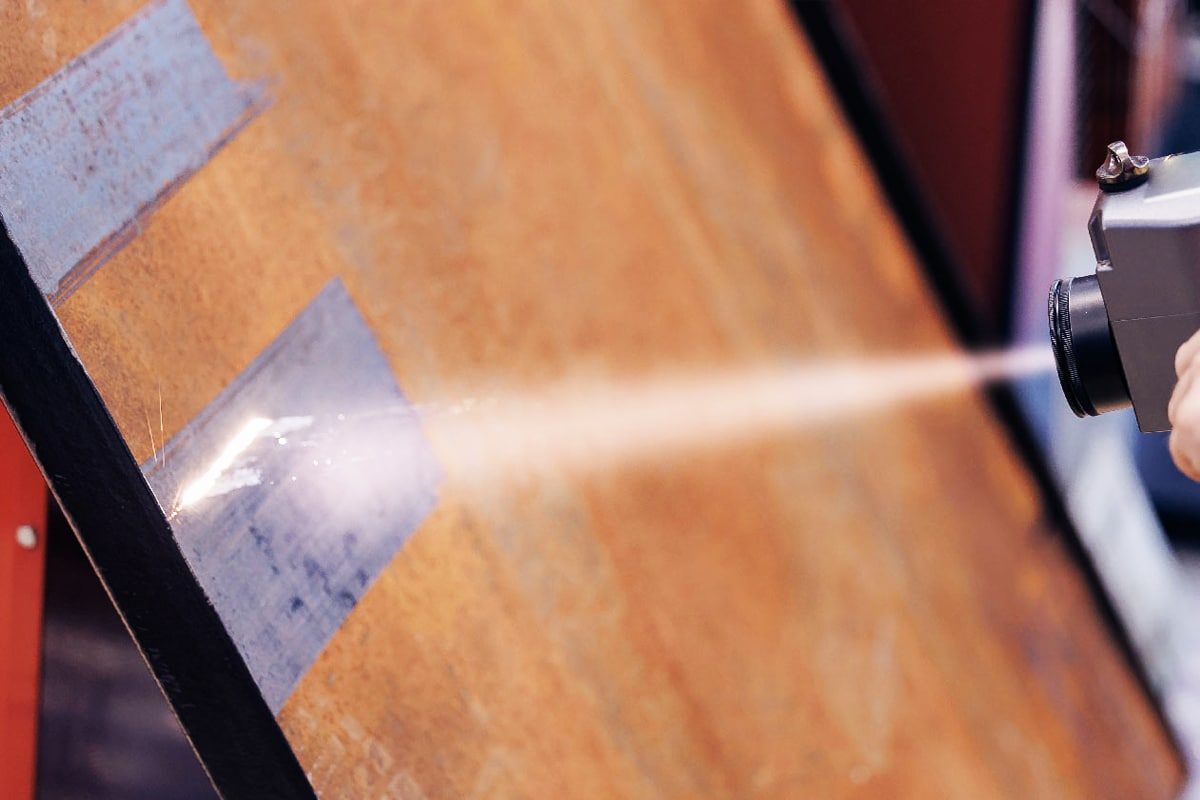
Before implementing safety measures, it’s important to understand how laser cleaning works, the types of laser cleaning systems used, and the key hazards involved. Knowing these fundamentals provides the foundation for safe and effective cleaning practices.
Laser cleaning is a surface preparation technology that uses a high-intensity laser beam to remove contaminants such as rust, paint, oil, oxides, or coatings from a substrate. The process is based on the principle of laser ablation—when the laser light interacts with the surface, it rapidly heats and vaporizes the unwanted layer without damaging the base material underneath.
This selective removal happens because contaminants and base materials absorb laser energy differently. Rust, paint, or organic residues tend to absorb laser light more efficiently, causing them to decompose or evaporate, while metals reflect much of the beam, minimizing damage. The result is a clean, restored surface achieved without physical contact, abrasives, or chemicals.
Lasers deliver the beam through a flexible optical fiber, which ensures consistent energy distribution and excellent beam quality. This makes the process not only precise but also adaptable to irregular surfaces, complex geometries, and hard-to-reach areas. In addition, the non-contact nature of the method eliminates tool wear and reduces maintenance costs, offering a long-term and environmentally friendly alternative to sandblasting or chemical stripping.
Selecting between CW and pulsed systems depends on the type of material, the thickness of the contaminant, and the level of precision required. In some industrial settings, both systems are used complementarily, depending on the cleaning stage and material sensitivity.
Understanding these core principles and potential hazards is the first step toward safe and efficient laser cleaning operations. With this knowledge, operators can apply the appropriate safety measures and work confidently with both CW and pulsed laser cleaning systems to achieve optimal cleaning results while maintaining a safe environment.
A safe and efficient laser cleaning operation begins with proper environmental control. Unlike traditional cleaning methods, fiber laser cleaning involves concentrated optical energy, which can cause harm or damage if not managed within a controlled space. Establishing a designated cleaning area and defining a clear laser safety zone are essential steps in ensuring operator protection, minimizing risks, and maintaining process stability.
A designated laser cleaning area is a clearly defined workspace where all laser operations are conducted under controlled conditions. This area should be physically separated from other production or maintenance zones to prevent unauthorized access and accidental exposure to laser radiation.
The cleaning area must be enclosed or shielded with materials that can effectively absorb or reflect the specific wavelength of the laser in use—typically around 1064 nm for fiber lasers. Metal barriers, laser-rated curtains, or enclosed cabinets are commonly used. The goal is to contain the laser beam and prevent reflections that could reach operators or bystanders.
Surfaces within the designated area should be non-reflective and non-flammable to minimize stray beam hazards and reduce the risk of fire. Walls, floors, and fixtures should be coated with matte finishes or absorbent materials rather than polished metals or glossy paints.
Proper lighting is also important. The area should be bright enough for operators to monitor the cleaning process but not so intense that it interferes with the visibility of the laser beam or safety indicators. Additionally, the space should include clearly marked entry and exit points, with visible warning signs displaying the laser class, hazard level, and access restrictions. These warnings must comply with local laser safety standards such as ISO 11553 or ANSI Z136.
To further enhance safety, only trained and authorized personnel should be allowed into the cleaning area. Access control systems—such as key locks, coded doors, or motion sensors—help enforce this restriction. Emergency stop buttons should be positioned within easy reach of operators, allowing the immediate shutdown of the laser in case of an incident.
Within the designated cleaning area, a laser safety zone must be established to define where exposure risks are highest and where protective measures are mandatory. This zone typically encompasses the space where the laser beam is emitted, reflected, or scattered during operation.
The layout of the safety zone should account for the Nominal Hazard Zone (NHZ)—the region where the laser beam’s irradiance exceeds safe exposure limits. The NHZ depends on factors such as laser power, beam divergence, and reflection potential. For fiber laser cleaning, the NHZ can extend several meters from the beam source, especially for high-power continuous wave systems.
To control this zone effectively, physical barriers or laser enclosures should be installed to contain both direct and reflected beams. When full enclosure is not feasible—such as when cleaning large components—temporary shielding screens made from laser-safe materials can be positioned around the work area. These barriers should be high enough to block any stray beams from escaping the operator’s field of control.
Operators working inside or near the laser safety zone must always wear appropriate personal protective equipment (PPE), including laser safety goggles rated for the specific wavelength and optical density of the fiber laser. Additionally, reflective or metallic objects—such as jewelry, watches, or tools—should be removed from the area to prevent unintended reflections.
The layout should also include clearly visible laser warning lights or indicators that signal when the system is active. These lights help prevent accidental entry into the safety zone during operation. Ventilation and fume extraction systems should be positioned within this zone to capture smoke, dust, and vaporized contaminants at the source, ensuring the air remains safe to breathe.
In multi-operator environments, a well-defined workflow layout minimizes unnecessary movement and ensures that only trained personnel handle active equipment. Power cables, cooling lines, and control units should be neatly arranged and protected from accidental disconnection or damage.
Creating a controlled laser cleaning environment involves more than just setting up equipment—it’s about designing a workspace that contains laser energy, controls access, and minimizes exposure risks. A well-structured, designated laser cleaning area prevents unauthorized entry and contains potential hazards, while a carefully planned laser safety zone layout defines safe operating distances and ensures protective measures are consistently applied.
Together, these elements form the backbone of a safe laser cleaning operation. By establishing and maintaining a controlled environment, operators not only protect themselves and others from harm but also ensure stable, repeatable, and high-quality cleaning performance from fiber laser systems.
Among all the risks associated with laser cleaning, optical and radiation hazards are the most critical. Fiber laser cleaning systems, whether continuous wave or pulsed, emit powerful beams of coherent light that can cause irreversible injury in a fraction of a second. Understanding the nature of these hazards, the significance of laser classifications, and the protective measures required is essential for ensuring operator safety and preventing accidental exposure.
The primary danger in laser cleaning comes from optical radiation—the highly concentrated light energy produced by the fiber laser. Unlike ordinary light, laser radiation is monochromatic, coherent, and directional, meaning it travels in a straight, concentrated beam with very little dispersion. This makes it capable of delivering immense power to a small area.
Direct exposure to a laser beam can instantly burn or destroy tissue. The eyes are particularly vulnerable, as the cornea and retina can focus laser light, amplifying its intensity thousands of times. Even brief exposure to a reflected or scattered beam can lead to permanent vision loss. Similarly, skin exposed to high-power laser light may suffer thermal burns or, in the case of ultraviolet and near-infrared lasers, photochemical damage that isn’t immediately visible.
It is also important to note that fiber lasers operate primarily in the near-infrared spectrum (around 1064 nm)—a wavelength invisible to the human eye. Because there is no visual warning before exposure, operators cannot rely on sight to avoid danger. This invisible nature of the beam makes strict protective measures non-negotiable.
Laser cleaning equipment is classified according to the level of radiation hazard it presents. Most industrial fiber laser cleaning systems fall under Class 4, the highest risk category. Class 4 lasers are powerful enough to cause serious eye and skin injuries, ignite materials, and produce hazardous reflections.
Understanding laser classification helps operators appreciate the inherent risks and the level of caution required when handling or maintaining the equipment.
Because the eyes are the most sensitive and vulnerable organs to laser radiation, proper eye protection is paramount. Operators must wear laser safety goggles specifically rated for the wavelength and optical density (OD) of the fiber laser in use. For example, goggles rated for 1064 nm fiber lasers are designed to block near-infrared light effectively while allowing visibility for safe operation.
Goggles must meet relevant international safety standards such as EN 207, EN 208, or ANSI Z136. Generic or improperly rated eyewear provides no real protection and can lead to a false sense of safety. Additionally, all personnel who might enter the laser area—even briefly—should wear appropriate goggles, as scattered or reflected beams can reach dangerous intensities several meters from the source.
Regular inspection of protective eyewear is also essential. Lenses should be free of scratches, cracks, or coating damage, as these defects can reduce protective efficiency or cause unwanted light focusing.
While the eyes are most at risk, skin exposure to laser radiation can also be hazardous. Direct contact with the beam can cause serious burns, while prolonged exposure to scattered radiation may lead to localized heating, blistering, or long-term tissue damage.
Operators should wear laser-rated protective clothing made from flame-resistant and non-reflective materials. Natural fibers such as cotton are preferred over synthetic fabrics, which can melt and adhere to the skin when exposed to high heat. Gloves should be worn when handling laser-cleaned parts, as residual heat may linger on the surface.
It’s also advisable to cover all exposed skin—especially hands, forearms, and the neck—to prevent incidental exposure to scattered radiation.
One of the most underestimated hazards in laser cleaning is uncontrolled reflections. Fiber lasers, particularly when used on metallic surfaces, can produce specular reflections—mirror-like reflections that retain much of the beam’s original intensity. These reflected beams can travel unpredictably and cause injury or damage outside the intended cleaning area.
In enclosed laser cleaning systems, internal shielding should be designed to absorb rather than reflect the beam. For open or manual systems, movable laser-safe panels or curtains can help control stray reflections.
Optical and radiation safety form the foundation of responsible laser cleaning operations. The invisible, high-energy nature of fiber laser beams demands unwavering respect and adherence to protective protocols. By understanding the physics of optical hazards, following the implications of laser classification, and consistently applying eye and skin protection, operators can minimize risks effectively.
Managing reflections and maintaining control over the laser beam’s path further ensures a safe working environment. In short, no precaution is excessive when dealing with laser radiation—awareness, training, and the right protective measures are the only safeguards between precision cleaning and potentially irreversible harm.
While laser cleaning eliminates the need for chemicals and abrasives, it is not entirely free of environmental or health hazards. The process of laser ablation—vaporizing or removing surface contaminants with high-intensity light—inevitably generates fumes, gases, and fine particulate matter. These airborne contaminants can pose serious health and safety risks if not properly controlled. A well-designed ventilation and air management system is, therefore, a fundamental part of a safe laser cleaning operation.
During laser cleaning, the laser beam interacts with the surface material, heating and vaporizing the contaminants. This reaction produces a plume composed of vaporized material, smoke, metallic oxides, and microscopic particles. Depending on what is being cleaned, this plume can contain toxic substances such as lead, chromium, cadmium, zinc oxide, or volatile organic compounds (VOCs).
The specific type and concentration of contaminants depend on the material composition and the laser parameters used. For example, removing paint or coatings can release organic vapors and carbonaceous particles, while cleaning oxidized metals can generate metal fumes that are hazardous when inhaled. These airborne byproducts can irritate the respiratory system, cause allergic reactions, or lead to long-term health issues such as lung disease or heavy metal poisoning if exposure persists.
The fine particles produced during ablation are especially concerning because many are ultrafine (below 0.1 microns) and can penetrate deep into the lungs. Without effective control, they may also settle on nearby surfaces, contaminating equipment and workspaces. For this reason, ventilation and filtration are not optional—they are essential components of any responsible laser cleaning setup.
The most effective method for managing airborne contaminants is the installation of a Local Exhaust Ventilation (LEV) system. LEV works by capturing and filtering fumes and particles directly at their source before they disperse into the surrounding air.
For enclosed laser cleaning systems, integrated extraction units are often built into the machine itself. For open or manual cleaning setups, external LEV systems with movable arms or fume hoods are more suitable. Regular maintenance—such as replacing filters, checking airflows, and inspecting duct integrity—is crucial to maintaining system effectiveness.
An improperly maintained or undersized ventilation system can quickly lose efficiency, leading to invisible but dangerous buildup of contaminants in the workspace. Operators should also ensure that the exhaust air does not re-enter the facility through ventilation inlets or recirculation systems.
Even with an effective LEV system in place, continuous air quality monitoring is necessary to verify that the working environment remains within safe exposure limits. Monitoring helps detect system failures, filter saturation, or unexpected increases in airborne pollutants during cleaning operations.
Air quality should be measured for particulate concentration, toxic gas levels, and overall ventilation effectiveness. Real-time particle counters and gas analyzers can alert operators to elevated contaminant levels before they become hazardous. For operations involving materials known to emit toxic compounds, such as coatings containing heavy metals, periodic sampling and laboratory analysis may also be required.
In high-volume or industrial-scale operations, data from air quality sensors can be integrated into a central safety control system, automatically adjusting ventilation rates or triggering alarms when pollutant levels approach unsafe thresholds. Consistent documentation of air quality readings not only supports compliance with occupational safety regulations but also provides valuable insight into the long-term effectiveness of the facility’s environmental controls.
Laser cleaning may eliminate abrasive dust and chemical residues, but it replaces them with a new challenge—airborne contamination. The laser ablation process inevitably generates fumes and fine particles that can compromise both human health and equipment integrity if not properly managed.
A robust Local Exhaust Ventilation (LEV) system remains the frontline defense, capturing contaminants at the source and filtering them before release. Coupled with continuous air quality monitoring, these measures ensure that the workspace remains safe, breathable, and compliant with environmental and occupational health standards.
In short, effective ventilation and contaminant control transform laser cleaning from a potentially hazardous process into a clean, efficient, and sustainable industrial practice—protecting not just operators, but the overall integrity of the working environment.
Laser cleaning machines are powerful and sophisticated systems that rely on high-voltage electrical components, precision optics, and advanced cooling and control mechanisms. While much of the focus on laser safety centers around optical and radiation hazards, electrical and equipment safety is equally critical. Poor handling, improper grounding, or neglected maintenance can result in electrical shock, equipment failure, or even fire. Maintaining proper control over the electrical infrastructure and ensuring the equipment is kept in optimal condition is essential for both operator safety and machine longevity.
Laser cleaning systems—especially industrial-grade fiber lasers—require significant electrical power to operate. The internal power supply converts and stabilizes electricity for laser generation, cooling, and control circuits. However, this also means that several components within the system operate under high voltage and current levels, which pose serious risks if mishandled.
Improper electrical connections or damaged cables can lead to electric shock, short circuits, or arc flashes. These incidents can cause severe injury or trigger fires if flammable materials are nearby. For this reason, all power connections should be installed and inspected by qualified technicians or electricians familiar with laser cleaning equipment. Operators should never open or attempt to service the internal electrical components unless properly trained and authorized.
It’s also crucial to ensure that the laser’s power source matches the voltage and current specifications provided by the manufacturer. Overloading circuits or using unstable power supplies can damage sensitive components, reduce system reliability, and void equipment warranties. To mitigate these risks, many facilities use voltage stabilizers, circuit breakers, and surge protectors to maintain steady electrical flow and prevent power spikes.
In environments prone to power fluctuations or lightning surges, an uninterruptible power supply (UPS) may also be used to provide short-term backup and allow for safe shutdown of the laser in case of an outage. This not only protects the machine’s electronics but also prevents incomplete cleaning operations that could damage materials or optics.
Routine equipment maintenance is critical for safe and reliable laser cleaning operations. Neglecting regular inspections can lead to degraded performance, overheating, or unexpected system failures that compromise both safety and cleaning quality.
All maintenance work should be logged and performed only when the machine is completely powered down and disconnected from its electrical source. Operators should follow lockout/tagout (LOTO) procedures to ensure the system cannot be accidentally energized during inspection or repair.
Preventive maintenance not only enhances safety but also improves productivity by reducing downtime and maintaining consistent cleaning performance.
Electrical and equipment safety form the backbone of reliable laser cleaning operations. The high power demands and sensitive components of fiber laser cleaning systems require disciplined handling, proper grounding, and consistent maintenance. Awareness of power supply hazards prevents shock and fire incidents; effective grounding and static control protect both operators and machinery from electrical faults; and regular equipment maintenance ensures long-term stability and performance.
In essence, safety with laser cleaning equipment begins long before the beam is activated—it starts with the integrity of the electrical system and the discipline to maintain it. By treating the laser cleaning setup as both a high-voltage and high-precision tool, operators can work confidently, knowing that every precaution has been taken to safeguard people, property, and productivity.
Laser cleaning, though precise and efficient, involves concentrated thermal energy that can reach extremely high temperatures in localized areas. The interaction between the laser beam and surface contaminants generates intense heat, which can pose serious thermal hazards if not properly managed. Understanding how heat is generated, identifying ignition risks, and implementing effective fire prevention and cooling measures are crucial to ensuring safe and reliable laser cleaning operations.
Fire prevention in laser cleaning relies on a combination of environmental control, procedural discipline, and emergency readiness. The workspace should be systematically organized to minimize fire risks, ensuring that only essential materials are present during cleaning operations.
All flammable or combustible materials—including rags, solvents, coatings, papers, and packaging—must be removed from the immediate cleaning area. The use of fire-resistant enclosures, shields, or curtains made from laser-safe materials can further reduce the spread of heat and protect nearby equipment. For open or manual laser cleaning setups, movable fire-rated barriers can contain sparks and debris within a controlled zone.
A Class D fire extinguisher (for metal fires) or a CO2/dry powder extinguisher (for general use) should be positioned within easy reach of the operator. Water-based extinguishers should generally be avoided, as they can react dangerously with hot metal or electrical equipment. Every operator should be trained in proper fire extinguisher use and know the location of the nearest emergency stop switch and power cutoff.
Implementing fire detection systems, such as infrared flame sensors or smoke detectors, provides early warning in case of an ignition event. For automated or robotic laser cleaning stations, integrating these detectors into the machine’s control system allows for immediate laser shutdown when heat or smoke is detected.
To prevent accidental overheating, operators should follow manufacturer-recommended laser parameters, such as pulse energy, scanning speed, and repetition rate. Excessive dwell time—the period during which the laser remains on a single spot—should be avoided, as it can lead to rapid surface heating and uncontrolled combustion.
Finally, a fire safety protocol should be established as part of the overall laser operation plan. This includes pre-job inspections, hot work permits (where required), and post-cleaning monitoring to ensure no smoldering materials remain after the laser is turned off.
Effective heat management plays a vital role in preventing thermal hazards during laser cleaning. Since fiber lasers operate at high power densities, continuous or repeated exposure on a small area can lead to overheating—not only of the workpiece but also of nearby components, optics, and housing structures.
Modern laser cleaning systems are typically equipped with integrated cooling systems, such as water chillers or air-cooled heat exchangers, to regulate the temperature of both the laser source and optical components. These systems must be regularly maintained to ensure stable operation. Inadequate cooling can result in power fluctuations, optical distortion, or even catastrophic damage to the laser head.
From an operational perspective, beam movement and scanning patterns are key to controlling heat accumulation. By keeping the laser beam in motion and avoiding prolonged exposure on one spot, operators can evenly distribute thermal energy and prevent localized overheating. Adjusting the pulse frequency, duration, and overlap allows finer control of the heat input, especially when cleaning heat-sensitive materials such as aluminum, composites, or coated surfaces.
For high-intensity applications, temperature monitoring sensors or infrared thermography can be used to track real-time heat buildup. Automated systems can then dynamically adjust laser power or trigger pauses if surface temperatures approach critical limits.
Additionally, maintaining good ambient ventilation and airflow around the cleaning zone helps dissipate heat and reduce the accumulation of hot gases or smoke. In enclosed laser cleaning stations, extraction fans and cooling ducts should operate continuously during and after cleaning to prevent heat buildup inside the chamber.
Thermal hazards are an inherent part of laser cleaning, but they can be effectively controlled through awareness, preparation, and engineering safeguards. Ignition risks stem from the intense localized heat generated during cleaning, especially when flammable materials or reflective surfaces are present. These risks are best mitigated through fire prevention measures such as workspace organization, protective enclosures, and trained response readiness. Complementing these precautions, robust heat control and cooling systems ensure that both the laser equipment and the workpiece remain within safe temperature limits.
Ultimately, maintaining thermal safety is about respect for the power of the laser. With disciplined control of heat, proper fire prevention planning, and continuous monitoring, operators can achieve high-quality cleaning results without compromising safety.
Even with advanced engineering controls and safety systems, personal protective equipment (PPE) remains a crucial last line of defense during laser cleaning operations. Fiber laser cleaning involves exposure to intense optical radiation, airborne contaminants, high temperatures, and electrical hazards—all of which pose risks to the operator if adequate protection is not worn. Proper PPE not only minimizes the chance of injury but also ensures that operators can work confidently and effectively in potentially hazardous conditions.
The foundation of laser cleaning safety lies in selecting and consistently using the correct PPE for the specific risks involved. The most critical item is laser safety eyewear. Fiber laser cleaning systems, typically operating around the 1064 nm wavelength, emit near-infrared light that is invisible yet powerful enough to cause permanent eye injury in milliseconds. Operators must wear laser safety goggles specifically rated for the laser’s wavelength and optical density (OD). The OD rating indicates how effectively the lens can block laser light—higher ratings provide greater protection. Goggles should comply with international safety standards such as EN 207/208 or ANSI Z136, ensuring they have been tested for industrial laser applications.
In addition to eye protection, protective clothing shields the skin from thermal radiation, sparks, and debris. Operators should wear non-reflective, flame-resistant garments made of natural fibers like cotton or specialized laser-safe materials. Synthetic fabrics should be avoided, as they can melt when exposed to heat. Long sleeves, high collars, and full-length pants prevent exposed skin from coming into contact with scattered radiation or hot particles.
Protective gloves are another key element, particularly when handling freshly cleaned parts that may retain residual heat. Gloves should be heat-resistant and provide a secure grip without impairing dexterity. For manual laser cleaning, gloves with anti-slip and cut-resistant features help maintain control of handheld components.
Foot protection is also essential. Operators should wear closed-toe, non-slip, and electrically insulated safety shoes to prevent electric shock, protect against falling objects, and maintain stability on potentially dusty or metallic floors.
Finally, hearing protection may be necessary in environments where laser cleaning is combined with mechanical or extraction equipment that produces high noise levels. Prolonged exposure to these sounds can cause hearing damage if unprotected.
One of the less obvious but equally critical aspects of PPE in laser cleaning is respiratory protection. The laser ablation process produces fine particles, metal oxides, and chemical fumes that can remain suspended in the air long after cleaning stops. Depending on the material being treated—such as paint, rust, or coatings—these emissions may contain toxic or carcinogenic substances, including lead, chromium, and volatile organic compounds (VOCs).
While local exhaust ventilation (LEV) systems capture most of these contaminants, operators may still be exposed to residual fumes and dust, especially in open or manual cleaning setups. Therefore, the use of respirators or masks certified to filter fine particulates and toxic gases is strongly recommended.
For general use, a P100 or FFP3 respirator provides effective protection against fine dust and metal fumes. When cleaning materials that emit hazardous vapors, a respirator equipped with activated carbon filters is necessary to absorb gaseous pollutants. In high-exposure environments or confined spaces, a powered air-purifying respirator (PAPR) system with a full face shield offers both respiratory and eye protection.
Proper fit is critical for respiratory PPE to be effective. Masks should form a tight seal around the face, with no gaps around the nose or chin. Operators should perform fit tests regularly and replace filters as recommended by the manufacturer or whenever breathing resistance increases.
Even the best PPE becomes ineffective if not properly maintained. Regular inspection, cleaning, and replacement of protective gear are essential to ensure continued safety performance.
Laser safety goggles should be inspected daily for scratches, cracks, or coating damage, as even minor imperfections can compromise protection by allowing stray laser light to pass through. Goggles should be cleaned only with materials approved by the manufacturer—harsh chemicals or rough cloths can degrade the lens coating. When not in use, they should be stored in a clean, dry, and protective case to prevent damage.
Protective clothing and gloves should be checked for burns, tears, or contamination after each use. Damaged clothing not only reduces protection but can also pose a secondary hazard if fibers or residues ignite. If the garments are reusable, they should be cleaned according to safety specifications, avoiding detergents that could affect flame resistance or conductivity properties.
Respirators and filters require consistent attention. Filters should be replaced according to the manufacturer’s schedule or sooner if airflow becomes restricted or odor breakthrough occurs. Reusable respirator components, including seals and facepieces, must be cleaned with mild disinfectants and stored in sealed containers to prevent contamination.
All PPE should be logged in a maintenance and inspection record, ensuring accountability and traceability. Operators should be trained not only in how to wear PPE correctly but also in recognizing signs of wear, contamination, or degradation.
Personal protective equipment is the operator’s most immediate and reliable safeguard in laser cleaning environments. Essential PPE components—from laser safety eyewear to flame-resistant clothing and gloves—form a barrier against optical, thermal, and physical hazards. Respiratory protection addresses the often-overlooked risks of airborne contaminants generated during cleaning. Finally, rigorous maintenance and inspection routines ensure that PPE remains functional, reliable, and compliant with safety standards.
In short, PPE is not a backup measure—it is an integral part of the laser cleaning process. Consistent use, correct selection, and diligent upkeep of personal protective equipment ensure that operators can harness the power of fiber laser cleaning safely and effectively, without compromising health or performance.
Laser cleaning is a precise and highly efficient technology, but it requires strict adherence to operational safety practices. Laser cleaning systems—whether continuous wave (CW) or pulsed—emit concentrated light and operate under high voltage, producing heat, fumes, and potential radiation hazards. Establishing and following safe operation procedures not only protects personnel but also ensures the longevity of the equipment and the quality of cleaning results. A disciplined approach to pre-operation checks, safe conduct during operation, and proper shutdown procedures after use is essential for maintaining a safe and controlled work environment.
Before activating laser cleaning machines, a thorough pre-operation inspection must be performed. This step ensures that all safety systems are functional, the equipment is properly configured, and the workspace is free from hazards.
Start by inspecting the laser cleaning system and power supply for any visible damage, loose connections, or wear. Check that all cables are intact, connectors are properly seated, and the grounding line is securely attached. Any signs of fraying, corrosion, or overheating should be addressed immediately before operation.
Verify that safety interlocks, warning lights, and emergency stop buttons are functioning correctly. Interlocks on doors, shields, or enclosures are critical—they automatically disable the laser when the system is accessed, preventing accidental exposure to the beam.
Ensure that the work area is properly set up as a designated laser cleaning zone. All flammable, reflective, or unnecessary materials should be removed. Laser warning signs must be clearly displayed, and only trained, authorized personnel should have access to the area.
Check the ventilation and fume extraction system to confirm it’s operational and correctly positioned near the cleaning area. Filters should be clean, and exhaust airflow should be sufficient to remove generated fumes and particulates.
Before starting, operators must also inspect their personal protective equipment (PPE). This includes laser safety goggles rated for the specific wavelength (typically 1064 nm for fiber lasers), flame-resistant clothing, gloves, and respiratory protection if required. Damaged or contaminated PPE should be replaced immediately.
Finally, verify the laser parameters (such as power, pulse frequency, and scanning speed) to ensure they match the requirements of the specific cleaning task. Using incorrect settings can result in excessive heat, material damage, or inefficient cleaning.
Once the pre-operation checks are complete and the system is activated, maintaining constant situational awareness is vital. Operators must remain alert to changes in system behavior, sound, or performance that may indicate a problem.
When beginning laser cleaning, always start at the lowest effective power setting and gradually increase as necessary. This approach minimizes thermal stress on the material and reduces the chance of ignition or surface damage. The laser head should be kept at the recommended focal distance and moved steadily across the surface to distribute heat evenly. Stationary exposure should be avoided, as it can cause localized overheating or warping.
During cleaning, operators should monitor the laser beam path closely and ensure that all reflective surfaces are properly shielded. Any metallic or glossy objects near the cleaning zone that could reflect the beam should be covered or removed.
Maintain continuous operation of the local exhaust ventilation (LEV) system throughout the process to capture airborne contaminants. Never clean in confined or poorly ventilated areas without adequate extraction—fume buildup can lead to respiratory hazards or even explosive conditions in extreme cases.
Operators should remain within the designated safety zone and never remove protective barriers or covers while the laser is active. Communication with nearby personnel should be clear and limited to prevent distractions. If the system includes an automated or robotic laser head, ensure that no one enters the robot’s movement area during operation.
If any irregularities occur—such as abnormal noises, smoke outside the extraction area, equipment malfunction, or loss of beam control—the operator must immediately press the emergency stop and power down the system. Restarting should only occur after the issue has been diagnosed and corrected by qualified personnel.
Regular monitoring of temperature and surface condition during cleaning is also important. Overheating, discoloration, or excessive smoke indicate that laser settings or scanning speed need adjustment.
Safe operation doesn’t end when cleaning stops. Post-operation procedures are just as critical to prevent delayed hazards, equipment damage, or contamination.
Once cleaning is complete, the operator should power down the laser system following the manufacturer’s recommended shutdown sequence. Never switch off the power abruptly unless in an emergency; doing so can damage internal components. After the shutdown, disconnect the main power source if the machine will not be used again soon.
Allow the system’s cooling cycle to finish before touching any components. Fiber lasers and optics can retain heat for several minutes after operation. Handling them too soon may cause burns or misalignment.
Inspect the cleaned surface and surrounding area for residual heat, sparks, or smoldering material. Fire risks can persist briefly after the laser is turned off, particularly if cleaning was performed on flammable or coated materials. Confirm that all potential ignition sources are neutralized before leaving the area.
The ventilation system should remain on for a short period after operation to clear lingering fumes and airborne particles. Filters should be checked and replaced if they show heavy buildup, as clogged filters reduce suction efficiency and can recirculate contaminated air.
Operators must also perform a visual inspection of the laser optics, nozzle, and fiber connections for signs of residue, debris, or misalignment. Cleaning these components regularly helps maintain beam quality and extends the machine’s lifespan.
Finally, record all operational data, inspection results, and any maintenance performed in the equipment logbook. This record provides traceability for safety audits and helps identify recurring issues before they become serious.
Safe laser cleaning is built on consistency and control. Pre-operation checks ensure the system, workspace, and operator are fully prepared before activation. During operation, vigilance and adherence to established safety practices prevent incidents caused by heat, radiation, or equipment failure. Post-operation procedures—cooling, inspection, and documentation—close the safety loop, keeping both personnel and machinery in optimal condition.
When these steps are followed systematically, laser cleaning becomes not only an effective surface treatment method but also a safe, sustainable, and professional industrial process. Every operator must treat safety as a deliberate routine—not an afterthought—to ensure that precision and protection go hand in hand.
Laser cleaning is a powerful and technically advanced process that requires more than just the right equipment—it demands competent, well-trained personnel and structured oversight. Even the most advanced safety systems cannot replace human judgment, awareness, and discipline. Proper training, formal certification, and active supervision are therefore critical components of a safe and compliant laser cleaning program. Together, they ensure that operators understand not only how to use the equipment effectively but also how to identify, assess, and mitigate potential risks before they cause harm.
No operator should perform laser cleaning without formal training and demonstrated competence. Fiber laser cleaning systems—whether continuous wave or pulsed—pose complex hazards that go beyond ordinary mechanical or electrical risks. Operators must understand both how the system functions and why certain precautions are necessary.
Training should combine theoretical instruction with hands-on practice under close supervision. Only after demonstrating competence should operators be authorized to work independently. Refresher training should be provided annually or whenever new equipment, materials, or procedures are introduced.
Many organizations also require operators to hold formal certification, confirming that they have completed recognized laser safety and operational courses in accordance with standards such as ANSI Z136.1, ISO 11553, or equivalent regional regulations.
Every facility that operates high-powered laser equipment should designate a qualified Laser Safety Officer (LSO). The LSO is the cornerstone of a safe laser operation program, responsible for developing, enforcing, and continuously improving the organization’s laser safety policies.
The LSO must have the technical expertise to understand laser physics, exposure limits, and risk control methods. They act as the bridge between management and operators, ensuring that safety is integrated into daily workflows rather than treated as a checklist.
Importantly, the LSO has the authority to suspend laser operations if unsafe conditions exist. This authority underscores the role’s importance—not as an administrative formality, but as a proactive safeguard against potentially life-threatening errors.
Laser cleaning areas should never be open-access environments. Effective access control and supervision ensure that only authorized, trained individuals are exposed to active laser operations. This minimizes the risk of accidental exposure for bystanders or maintenance staff who may not be familiar with the hazards.
Access control begins with the designation of controlled areas, typically enclosed or clearly marked with warning signage indicating the laser class, wavelength, and operating status. Entry points should be equipped with interlocked doors or barriers that automatically disable the laser if breached. These controls prevent accidental entry during active cleaning operations.
Only qualified operators and support personnel—those who have completed training and received authorization from the LSO—should be granted access. Visitors or untrained staff may enter the area only under supervision and with appropriate PPE.
Supervision plays a key role, especially during manual or experimental cleaning tasks, where changing conditions can introduce unforeseen hazards. Supervisors should monitor adherence to safe operating procedures, verify that ventilation systems are functioning, and ensure that operators maintain proper beam control and scanning techniques.
For facilities running automated or multi-operator cleaning systems, supervision can also involve remote monitoring through control panels, cameras, or integrated safety systems. This allows supervisors or the LSO to intervene promptly if irregularities arise.
Documentation is another part of access control. Logs should record who entered the laser area, when the equipment was activated, and what tasks were performed. This not only supports accountability but also provides traceability for audits and incident investigations.
Safe laser cleaning operations depend on more than just protective equipment and physical barriers—they rely on knowledge, discipline, and structured oversight. Comprehensive operator training ensures that personnel understand both the power and the risks of fiber laser systems. A dedicated Laser Safety Officer (LSO) provides expert guidance, enforces compliance, and maintains a culture of safety. Meanwhile, effective access control and supervision protect workers and visitors from accidental exposure while promoting consistent adherence to operational protocols.
Together, these elements create a strong safety framework where precision meets responsibility. With well-trained operators, active supervision, and a knowledgeable LSO at the helm, laser cleaning can be performed efficiently, confidently, and without compromising safety.
Laser cleaning is a powerful industrial process that demands precision, control, and discipline. To harness the benefits of fiber laser cleaning safely and effectively, operators must follow structured operational procedures and best practices. These practices ensure not only the protection of personnel and equipment but also the consistency and quality of cleaning results. Establishing a standardized workflow—covering every phase from pre-operation to shutdown—creates a reliable framework for safe and efficient operation.
Before activating laser cleaning machines, operators should perform a comprehensive pre-operation inspection. This step ensures that both the equipment and the environment are prepared for safe and effective use.
Begin by examining the laser cleaning system, power supply, and electrical connections for signs of damage or wear. All cables, connectors, and grounding lines should be intact, properly seated, and free from fraying or corrosion. Any irregularities must be reported and corrected before proceeding.
Check that safety interlocks, emergency stops, and key switches are functioning properly. These systems are vital to prevent unintended laser activation and protect users in emergencies. The warning lights and hazard indicators must be operational and visible from all relevant angles.
The workspace must be organized and clear of clutter. Remove all flammable materials, reflective objects, and unnecessary tools from the area. Ensure that fire extinguishers—ideally Class D or CO₂ types—are easily accessible and that the designated laser cleaning zone is marked with visible signage and barriers to restrict access to authorized personnel only.
Inspect and prepare the ventilation and fume extraction system. Confirm that the local exhaust ventilation (LEV) system is operational, filters are clean, and the suction nozzle or extraction arm is correctly positioned near the cleaning surface. Adequate airflow is crucial to capture fumes, dust, and particles generated during ablation.
Operators must also verify that they are wearing appropriate personal protective equipment (PPE), including laser safety goggles rated for the correct wavelength (typically 1064 nm for fiber lasers), flame-resistant clothing, gloves, and respiratory protection if required. Any damaged or missing PPE must be replaced immediately.
Finally, review and set the laser parameters according to the cleaning task—such as power, pulse frequency, scanning speed, and focus distance. Always begin with conservative settings and adjust gradually based on material response. Double-check that the correct cleaning head, lens, and focus optics are installed for the job.
Once all pre-operation checks are complete and the system is active, the operator’s focus shifts to maintaining safe and controlled operation.
Before initiating the laser, ensure that all personnel are clear of the beam path and within the designated safety zone. The operator should maintain a stable posture, keeping both hands securely on the cleaning head or control handle for precision and stability.
Start with a test pass on a small area to verify beam alignment, focus, and cleaning effect. Adjust the laser parameters as needed for optimal results—avoiding excessive power or slow scanning speeds that could overheat or damage the substrate.
During the cleaning process, maintain a consistent scanning motion across the surface. Avoid dwelling too long in one area, as this can lead to heat buildup, discoloration, or surface warping. The laser head should be kept at the recommended standoff distance from the surface, ensuring proper beam focus and cleaning efficiency.
Continuously monitor the laser cleaning system status indicators for any warnings, temperature fluctuations, or performance anomalies. Unusual noises, sparks, or smoke escaping outside the extraction zone are warning signs that something is wrong. In such cases, stop the operation immediately and investigate before resuming.
Ensure that the local exhaust ventilation system is running effectively throughout the process. Fumes and fine particulates should be visibly drawn into the extraction nozzle, not allowed to linger in the air. Inadequate fume control not only affects visibility but can also expose operators to harmful airborne contaminants.
Communication is essential. In multi-operator environments, maintain clear verbal or visual signals when the laser is active. Never allow untrained personnel or visitors to approach the operating area.
If a malfunction occurs—such as loss of laser power, software errors, or overheating—activate the emergency stop and shut down the system immediately. Do not attempt to repair or restart the machine until the issue has been diagnosed and resolved by qualified personnel.
After completing the cleaning process, operators must follow structured post-operation procedures to ensure safety, maintain equipment integrity, and prepare for the next use.
Begin by powering down the laser cleaning system in accordance with the manufacturer’s shutdown sequence. Allow the cooling system—whether air- or water-based—to complete its cycle before disconnecting power. Premature shutdown can trap residual heat, potentially damaging sensitive components.
Keep the ventilation system running for several minutes after the laser is turned off to remove residual fumes and airborne particles. Once air quality has stabilized, close or cover the extraction ports to prevent contamination buildup inside the ducts.
Carefully inspect the cleaned surface and surrounding area for signs of overheating, charring, or smoldering debris. Even small particles can retain heat and ignite later if left unchecked. Ensure that all potential ignition sources are extinguished before leaving the area.
Next, conduct a visual inspection of the laser optics, lenses, and protective windows. Dust, smoke residues, or fine particles can settle on optical surfaces and degrade beam quality over time. Clean these components using manufacturer-approved materials and methods. Do not use compressed air or unverified cleaning fluids, as these can scratch or damage optical coatings.
Check for any signs of mechanical wear or electrical faults, such as loose connections, damaged cables, or blocked cooling vents. Record any anomalies or maintenance actions in the equipment’s logbook. This documentation helps identify recurring issues and supports preventive maintenance scheduling.
Finally, store the equipment properly. Ensure the laser head, fiber cables, and power connections are neatly coiled or secured to prevent kinking and strain. The work area should be cleaned and cleared of debris, restoring the environment to a safe, ready state for the next operation.
Adhering to operational procedures and best practices is essential for maintaining safety, reliability, and efficiency in laser cleaning. Comprehensive pre-operation checks confirm that all systems, safety measures, and environmental controls are ready before activation. During operation, disciplined technique, vigilance, and continuous monitoring prevent accidents and ensure high-quality cleaning outcomes. Finally, structured post-operation routines—including proper shutdown, inspection, and documentation—protect both personnel and equipment for long-term performance.
By following these best practices consistently, laser cleaning can be performed with confidence, precision, and safety. Every phase of operation, from preparation to shutdown, reinforces the principle that safety is not a single step—it is an unbroken process woven into every action taken around the laser.
Maintaining laser cleaning systems in peak condition is essential not only for performance but also for safety and longevity. Over time, even minor wear, contamination, or misalignment can compromise the precision and stability of the laser beam, leading to poor cleaning results or serious hazards such as overheating, electrical faults, or uncontrolled reflections. A disciplined maintenance and inspection program safeguards system integrity, ensures compliance with safety standards, and prevents small issues from escalating into costly failures.
Regular inspections, careful optics maintenance, and timely software and firmware updates form the foundation of a reliable and secure laser cleaning operation.
Routine inspection is the backbone of safe and consistent laser performance. Laser cleaning systems operate under high voltage, generate substantial heat, and rely on delicate optics and electronics—all of which can degrade over time. Scheduled inspections help detect wear, damage, or system drift before they lead to operational failure or safety incidents.
Inspections should be conducted daily, weekly, and periodically depending on the system’s usage and environment. Before each shift, operators should visually check power cables, fiber optic lines, cooling hoses, and connectors for signs of fraying, corrosion, leaks, or mechanical stress. Any abnormal sounds, vibrations, or error messages during operation must be documented and reported immediately.
At least once a week, a more thorough inspection should be performed, focusing on mechanical alignment, interlock functionality, fume extraction systems, and protective enclosures. Confirm that all warning labels remain legible, that ventilation filters are clean, and that emergency stop buttons function correctly.
Quarterly or biannual inspections—typically carried out by qualified technicians—should include electrical testing, calibration verification, and laser output stability measurements. Over time, laser power output can decline or fluctuate due to component fatigue or optical contamination. Recording these parameters helps identify gradual degradation and schedule preventive maintenance before it affects performance or safety.
Documentation is a critical part of the inspection process. Maintaining a detailed maintenance logbook allows for traceability, ensuring all inspections, repairs, and component replacements are recorded and auditable. This record not only supports internal quality control but also provides evidence of compliance with industrial laser safety standards such as ISO 11553 or ANSI Z136.1.
The optical components of laser cleaning systems—such as lenses, protective windows, mirrors, and beam delivery fibers—are the most sensitive and critical elements of the entire setup. Even slight contamination on these surfaces can distort the laser beam, reduce power transmission, and lead to localized overheating or optical damage.
Dust, smoke, and metallic particles generated during laser ablation can accumulate on the optics, especially when fume extraction is insufficient or filters are clogged. This buildup not only affects cleaning precision but can also cause the optics to absorb excess laser energy, potentially cracking or melting the coating.
To prevent this, optics should be inspected and cleaned regularly following manufacturer-recommended intervals and methods. Cleaning should always be done in a clean, dust-free environment, using only approved cleaning materials such as optical-grade wipes, lens tissue, or isopropyl alcohol with proper purity levels. Unapproved solvents, compressed air, or rough materials should never be used, as they can scratch or chemically damage the optics.
When cleaning, always wear antistatic gloves to avoid introducing oils or fingerprints, and use gentle circular motions starting from the center of the lens outward. If contamination persists, the optic may need to be replaced rather than risk further damage through aggressive cleaning.
For laser cleaning systems equipped with protective windows or replaceable shields, these components should be inspected daily and replaced when discolored, scratched, or coated with residue. Maintaining clean and undamaged optics ensures consistent beam quality, optimal energy transfer, and safer operation.
Modern laser cleaning systems incorporate sophisticated software and control electronics to manage laser output, monitor system parameters, and maintain safety interlocks. Keeping these systems up to date is an essential but often overlooked part of maintenance.
Firmware and software updates issued by manufacturers typically include performance optimizations, bug fixes, and, most importantly, enhanced safety protocols. For example, updates may improve system diagnostics, adjust beam modulation controls, or strengthen safety interlock logic. Running outdated firmware can leave the system vulnerable to malfunctions or prevent it from meeting evolving safety compliance standards.
Before performing any update, operators should verify the source and authenticity of the firmware to ensure it comes directly from the manufacturer or authorized service provider. Unverified or third-party modifications can cause instability or void equipment warranties. Updates should be carried out by trained personnel, following the manufacturer’s installation procedures to prevent data corruption or control errors.
In addition to firmware, the safety control software—which monitors door interlocks, beam shutters, temperature sensors, and emergency stops—should be tested regularly to confirm that it performs as intended. Even a single faulty sensor or outdated control algorithm can undermine the entire system’s safety integrity.
Routine backups of configuration data and parameter settings are equally important. In the event of a system reset or software issue, these backups allow rapid restoration of operational settings, minimizing downtime and reducing the risk of improper calibration.
Effective maintenance, inspection, and system integrity management ensure that laser cleaning operations remain safe, efficient, and dependable. Regular inspections catch early signs of wear or malfunction, preventing costly downtime and safety risks. Proper optics cleaning maintains beam quality and protects critical components from damage, directly impacting cleaning performance. Meanwhile, firmware and safety updates keep the system aligned with the latest technological and safety standards, ensuring reliable operation and regulatory compliance.
Laser cleaning is a precision-driven process, and that precision must extend beyond the workpiece to include how the system itself is maintained. By combining disciplined inspection routines, meticulous optics care, and proactive system updates, operators can preserve both the safety and effectiveness of their laser cleaning equipment for years of consistent, trouble-free performance.
Laser cleaning is often promoted as an environmentally friendly alternative to traditional methods such as sandblasting, chemical stripping, or solvent cleaning. It eliminates the need for hazardous chemicals and minimizes secondary waste generation. However, “clean” does not mean “impact-free.” The laser cleaning process still produces byproducts—metallic dust, oxide residues, fumes, and sometimes noise and light emissions—that require careful management to protect both the environment and workplace safety. Implementing responsible environmental and waste management precautions ensures that laser cleaning remains a sustainable and compliant surface treatment method.
Although laser cleaning is a dry and non-contact process, it generates waste in the form of microscopic particles, vaporized contaminants, and solid residues. These byproducts are typically composed of removed rust, paint, oxides, or other surface coatings that have been ablated from the substrate. If not collected and contained properly, these particles can contaminate the surrounding environment and pose health or ecological risks—especially when working with materials that contain heavy metals, pigments, or synthetic compounds.
To manage these wastes effectively, the cleaning station should be equipped with a local exhaust ventilation (LEV) system combined with high-efficiency particulate air (HEPA) and activated carbon filters. The LEV system captures airborne particulates and fumes at the source, preventing their release into the workspace or atmosphere. The captured material accumulates in filter cartridges or dust collectors, which must be handled as industrial waste according to their composition.
For example, residues from cleaning painted or coated metals may contain lead, chromium, zinc, or other hazardous compounds. Such waste should be classified and disposed of as hazardous waste, not regular industrial dust. Operators should store collected waste in sealed, labeled containers, segregated by material type, and arrange for disposal through licensed waste management contractors.
Routine filter maintenance and replacement are critical to ensure that collection systems remain efficient. Spent filters and contaminated absorbent materials should be disposed of according to the manufacturer’s and environmental authorities’ recommendations. Under no circumstances should laser-generated dust be released outdoors or into general ventilation systems.
Additionally, all waste management activities should be documented. Keeping a waste tracking log—including waste type, quantity, disposal method, and authorized handler—ensures compliance with environmental audits and legal obligations.
While laser cleaning is quieter than many mechanical processes, it can still contribute to noise and light pollution if not properly managed. These environmental factors, though often overlooked, can affect both worker comfort and nearby surroundings.
Noise in laser cleaning primarily comes from fume extraction units, cooling systems, and auxiliary compressors, rather than the laser beam itself. Prolonged exposure to high noise levels can cause fatigue or hearing strain among operators. To mitigate this, workplaces should use low-noise extraction systems, vibration-damped mounts, and, where necessary, acoustic insulation panels around noisy machinery. Operators should also wear hearing protection when noise levels exceed occupational limits (typically around 80–85 dB).
Light pollution, on the other hand, results from scattered or reflected laser light during cleaning operations. Fiber lasers, typically operating at near-infrared wavelengths (around 1064 nm), are invisible to the naked eye but can still pose optical risks and create unwanted reflections on nearby surfaces. Bright visible light flashes may also occur when the laser interacts with metal surfaces, especially when removing coatings or oxides.
To minimize light exposure, all laser cleaning should take place within controlled and enclosed areas. Laser-rated curtains, shielding panels, or enclosures prevent stray light from escaping into the workspace. For outdoor or open-area cleaning, portable barriers and warning signage should be used to restrict visibility and prevent bystander exposure.
By controlling both noise and light emissions, facilities not only protect operators but also demonstrate environmental responsibility by reducing the process’s impact on nearby personnel, equipment, and ecosystems.
Compliance with environmental regulations is a critical aspect of any industrial laser cleaning operation. While laser cleaning produces less waste and fewer emissions than chemical or abrasive methods, the byproducts it generates still fall under environmental protection laws governing air quality, waste disposal, and worker exposure.
Operators and facility managers must familiarize themselves with local and national environmental standards, such as waste classification codes, permissible exposure limits for airborne particles, and emission control requirements. Depending on the country or region, waste from laser cleaning may need to be registered under hazardous waste regulations, and periodic emissions monitoring may be required.
For example, in the European Union, laser cleaning activities are subject to directives such as the Waste Framework Directive (2008/98/EC) and Industrial Emissions Directive (2010/75/EU), which mandate proper waste segregation, tracking, and disposal. In the United States, compliance with EPA hazardous waste management rules (40 CFR Part 261) and OSHA air quality standards is essential. Many jurisdictions also require periodic environmental audits to verify that waste and emissions are being properly managed.
Beyond compliance, adopting best environmental practices helps reinforce an organization’s commitment to sustainability. This includes selecting energy-efficient laser cleaning systems, maintaining ventilation systems to reduce emissions, and training staff on eco-safe handling of waste materials. Implementing an Environmental Management System (EMS), such as ISO 14001, can further integrate these responsibilities into routine operations.
Proactive compliance not only reduces legal risks but also enhances a company’s reputation for environmental stewardship—an increasingly important factor in industrial procurement and customer trust.
Environmental and waste management precautions are essential to making laser cleaning a truly sustainable technology. Effective waste collection and disposal prevent harmful particles and residues from entering the environment, while noise and light pollution control ensure a safer, more comfortable workplace with minimal external impact. Equally important, strict adherence to environmental regulations guarantees legal compliance and reinforces responsible operational practices.
Laser cleaning’s eco-friendly reputation depends not just on the absence of chemicals but on how well its byproducts are managed. By integrating environmental awareness into every stage of operation—from fume extraction to waste tracking—organizations can achieve both high cleaning performance and a reduced ecological footprint. Sustainable laser cleaning is not only about efficiency and precision—it’s about accountability to people, the environment, and the future.
Even in well-controlled environments, emergencies can arise unexpectedly during laser cleaning. High-intensity laser beams, electrical systems, fumes, and heat all pose potential hazards if equipment malfunctions or procedures are not followed correctly. For this reason, a clear and well-practiced emergency preparedness plan is an essential component of any laser cleaning operation.
Being prepared means more than reacting—it means anticipating what can go wrong and having predefined actions in place to minimize harm to personnel, protect property, and contain environmental impact. Effective emergency response depends on training, organization, and clarity. Every operator should know how to execute an emergency shutdown, respond to injuries, and handle incidents such as fires or fume releases swiftly and safely.
An emergency shutdown is the first line of defense against uncontrolled laser or equipment hazards. All laser cleaning systems must have a clearly marked and easily accessible emergency stop (E-stop) that instantly cuts power to the laser source. This control should be located near the operator’s position, as well as at other accessible points around the workspace.
In some setups, emergency shutdowns may also trigger automated interlocks that close the beam shutter or disable the power circuit. Operators should regularly test these systems during routine maintenance to ensure functionality.
If a malfunction occurs—such as a sudden increase in beam intensity, failure of interlocks, or uncontrolled laser emission—the operator must immediately hit the E-stop and alert all personnel to evacuate the area if necessary. No one should attempt to restart or troubleshoot the system until it has been inspected by a qualified technician.
A lockout/tagout (LOTO) procedure should also be in place to prevent accidental reactivation during maintenance or inspection. Proper signage and documentation help confirm that the system remains de-energized until repairs are complete.
Despite the layers of protection in place, accidents involving laser exposure, burns, or inhalation of fumes can occur if safety procedures are breached. Every facility conducting laser cleaning should have a clear and immediate plan for medical emergencies.
For eye injuries, even minimal or suspected exposure to laser radiation must be treated as a medical emergency. Operators should not attempt self-diagnosis, as damage to the retina or cornea can be painless and progressive. The injured person must be taken immediately to an ophthalmologist or emergency medical facility familiar with laser-related injuries. Prompt medical evaluation can prevent long-term vision loss.
For skin burns, the first step is to cool the affected area with clean, cool water (not ice) and cover it with a sterile, non-adhesive dressing. Do not apply creams, ointments, or bandages that stick to the burn. Severe burns require urgent medical attention, particularly those caused by prolonged or direct laser exposure.
In cases of fume inhalation, operators should move to fresh air immediately and avoid re-entering the contaminated area until proper ventilation is restored. If symptoms such as coughing, dizziness, shortness of breath, or nausea occur, medical evaluation should be sought without delay. Chronic exposure to vaporized materials, especially when cleaning painted or coated surfaces, may lead to heavy metal or chemical toxicity if not properly controlled.
Every laser cleaning site should maintain a first aid station equipped with sterile dressings, burn kits, eyewash stations, and oxygen masks (if required by local safety regulations). Emergency contact numbers, including on-site medical personnel and local emergency services, should be clearly displayed in the work area.
Finally, all staff should receive basic first aid and emergency response training, including how to handle laser-related injuries. Regular drills reinforce quick and confident action in high-stress situations.
After any fire or fume incident, a post-incident investigation should be carried out by the Laser Safety Officer (LSO) or designated safety personnel. This review should determine the cause, assess equipment damage, and implement preventive actions to avoid recurrence—such as adjusting laser parameters, improving shielding, or enhancing ventilation capacity.
A strong emergency preparedness program transforms a potentially chaotic event into a controlled, well-managed response. Understanding emergency shutdown procedures ensures that the laser system can be safely deactivated in seconds, preventing escalation. Well-defined plans for medical emergencies guarantee immediate and effective care for injuries, while structured responses to fire and fume incidents protect personnel, equipment, and the environment.
Preparedness is not achieved through equipment alone—it comes from training, awareness, and repetition. Regular emergency drills, clear signage, and documented response procedures reinforce a culture of readiness and responsibility. In laser cleaning, where precision and power coexist, safety depends not only on prevention but on the ability to respond swiftly and intelligently when the unexpected occurs.
Laser cleaning is a powerful, precise, and environmentally friendly technology—but it must be approached with respect and responsibility. The precautions taken before, during, and after the operation determine not only the quality of the cleaning results but also the safety of everyone involved. Key safeguards include establishing a controlled workspace, implementing strict optical and radiation protection, and ensuring effective ventilation to control fumes and airborne contaminants. Proper electrical grounding, equipment maintenance, and fire prevention measures are equally critical to prevent accidents and system damage.
Operators must wear appropriate personal protective equipment (PPE), follow safe operational procedures, and undergo thorough training and certification under the supervision of a qualified Laser Safety Officer (LSO). Routine inspections, maintenance, and recordkeeping keep systems performing safely, while adherence to industry standards—such as ISO 11553, IEC 60825, and ANSI Z136.1—ensures regulatory compliance and professional credibility.
Finally, effective emergency preparedness—covering shutdown procedures, medical response, and fire control—completes a comprehensive safety framework. When these precautions are consistently applied, laser cleaning delivers its full advantages: precision, efficiency, and sustainability, without compromising safety. The goal is simple yet critical—to harness the power of the laser while maintaining complete control over its risks.