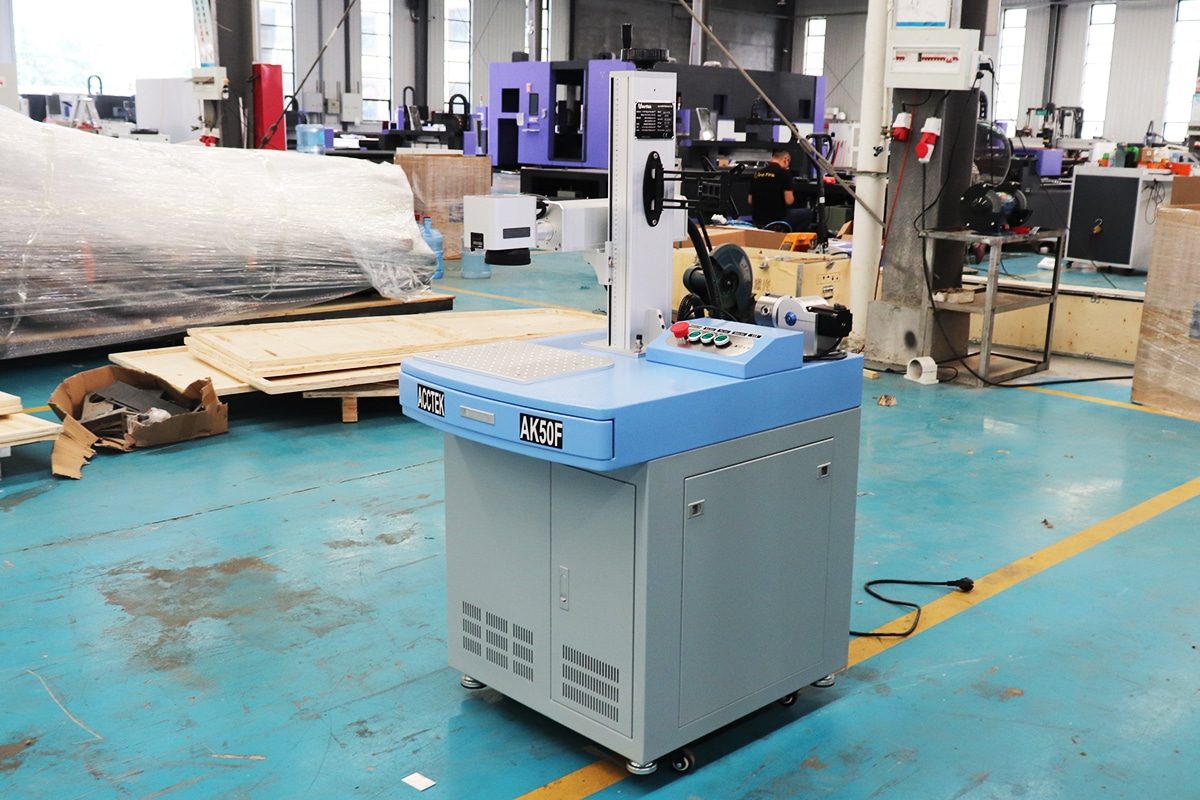
When evaluating the cost of laser marking machines, it is easy to focus only on the sticker price. After all, the purchase price is the first number you see in a quotation. However, experienced manufacturers understand that true cost goes far beyond the initial payment. Laser marking machines are not just a product—it is a long-term production asset. Therefore, its real financial impact must be assessed through the lens of total cost of ownership (TCO).
Total cost of ownership includes every expense incurred from acquisition to daily operation, maintenance, productivity performance, and potential risk exposure. A machine that appears affordable at first may end up costing significantly more over five to ten years if hidden factors are ignored. On the other hand, a higher upfront investment may reduce long-term expenses and increase profitability. To truly understand what “cost” means in this context, we must break it down into four major categories: upfront capital cost, operating cost, productivity cost, and risk cost.
Higher power systems generally cost more but offer faster marking speeds and deeper engraving capacity. UV lasers, known for their precision and low heat impact, are often priced higher due to advanced technology and specialized components.
For businesses integrating the machine into an automated production line, engineering support and system integration may also add to the upfront investment.
It is important to recognize that this cost represents the foundation of your production capability. Cutting corners at this stage may reduce immediate spending but increase long-term financial pressure.
Operating cost refers to the ongoing expenses required to keep the machine running effectively throughout its service life. Although laser marking machines are widely regarded as low-maintenance systems compared to mechanical engraving or inkjet printing technologies, they still require proper upkeep.
Electricity consumption is generally moderate, especially for fiber lasers, which are energy efficient. However, facilities operating multiple shifts per day must consider cumulative energy use over time.
Maintenance is another key factor. Protective lenses, laser windows, dust filters, and cooling components require periodic inspection and replacement. Fiber laser sources often have lifespans exceeding 50,000 working hours, which reduces replacement frequency. In contrast, certain CO2 or UV components may require more frequent servicing.
Technical support and service agreements can also add to operating expenses. Some companies opt for extended warranties or annual maintenance contracts to ensure minimal downtime and fast response times.
Over the lifespan of the machine—often five to ten years or more—operating costs can accumulate significantly. A machine with lower maintenance requirements and stable performance can greatly reduce long-term expenses.
Productivity cost is less obvious but extremely influential. It measures how efficiently the machine contributes to production output and revenue generation.
Consider marking speed. A machine that completes each marking cycle in three seconds instead of five seconds may seem only slightly faster. However, across thousands of products per day, this time difference becomes substantial. Higher throughput directly lowers cost per unit and increases profit margins.
Marking quality also affects productivity. Inconsistent or low-contrast markings may lead to product rejection, rework, or customer complaints. These issues consume labor time, materials, and administrative resources.
Ease of use plays a role as well. User-friendly software reduces operator training time and minimizes human error. Quick job changeovers are especially important in industries with frequent product variations.
Downtime is another critical factor. Machines that require frequent calibration or repairs reduce production capacity. Even short interruptions can disrupt tightly scheduled manufacturing operations.
In short, productivity cost reflects the opportunity cost of inefficiency. A lower-priced machine that performs slowly or unreliably may cost far more in lost output than it saves in initial purchase price.
Risk cost accounts for potential financial losses caused by uncertainty, equipment failure, supplier limitations, or regulatory non-compliance.
Machine breakdowns are one of the most immediate risks. Unexpected failures can halt production lines, leading to delayed shipments and contractual penalties. In industries with strict traceability requirements—such as automotive or medical manufacturing—poor marking quality can result in serious compliance issues.
Unreadable barcodes or incorrect serial numbers may trigger product recalls or regulatory investigations. The financial and reputational consequences of such events can be severe.
Supplier reliability is another important consideration. Low-cost machines from unverified manufacturers may lack strong after-sales service, spare parts availability, or technical documentation. Long wait times for repairs can significantly increase downtime costs.
Technological risk should also be considered. As manufacturing evolves toward digitalization and smart factory integration, machines that lack upgradeability or connectivity may become outdated more quickly. This can shorten the effective lifespan of the investment.
Risk cost, while harder to quantify, can be the most financially damaging if ignored.
When analyzing what is the cost of laser marking machines, it becomes clear that focusing solely on the purchase price provides an incomplete picture. The true cost is a combination of upfront capital investment, operating expenses, productivity performance, and risk exposure.
Upfront capital cost determines the immediate financial outlay and infrastructure requirements. Operating cost reflects long-term maintenance and energy consumption. Productivity cost directly influences output efficiency and revenue generation. Risk cost captures potential financial losses resulting from breakdowns, compliance failures, or supplier instability.
A machine with a lower sticker price may appear attractive initially, but higher maintenance frequency, slower marking speeds, or unreliable support can significantly increase total ownership cost over time. Conversely, a well-built, stable, and efficient system may require a higher initial investment yet deliver greater reliability, faster throughput, and reduced long-term risk.
In practical terms, businesses should evaluate laser marking machines over their entire service life rather than comparing quotations alone. By considering all four cost dimensions together, decision-makers can choose a solution that not only fits their budget but also supports operational stability, production efficiency, and sustainable profitability for years to come.
When businesses research laser marking machine costs, they often hope for a straightforward answer. However, real-world pricing depends on several practical factors, including machine configuration, production scale, automation level, brand reputation, and application complexity. In today’s global market, laser marking systems can range from as low as $3,000 to well over $200,000. The wide gap in pricing reflects differences in performance, durability, integration capability, and technological sophistication.
Understanding typical price ranges is essential for setting realistic expectations. Rather than comparing machines purely by price, buyers should evaluate what each tier offers in terms of speed, lifespan, precision, and long-term production value. Below is a detailed breakdown of the most common pricing categories you are likely to encounter in the real marketplace.
Entry-level laser marking machines are typically compact, manually operated systems designed for small-scale production, custom engraving businesses, and light industrial use. These machines generally fall within the $3,000 to $10,000 price range.
Most entry-level models use 20W or 30W fiber laser sources, which are well-suited for marking metals such as stainless steel, aluminum, brass, and coated materials. CO2 desktop systems in this range are commonly used for marking wood, leather, acrylic, rubber, and certain plastics.
These machines are popular among startups, small manufacturers, jewelry makers, promotional product companies, and repair shops. They provide an affordable entry point into laser marking technology.
However, lower pricing often comes with trade-offs. Entry-level systems may have slower marking speeds, limited duty cycles, and fewer automation options. They are generally not built for continuous multi-shift operation. Additionally, build quality and after-sales service can vary significantly among suppliers in this segment. Buyers must carefully assess component reliability and warranty support to avoid unexpected downtime.
In short, this category offers cost-effective access to laser marking, but it is best suited for modest production volumes.
Mid-range industrial laser marking machines represent the most widely purchased category in manufacturing environments. These systems typically range from $10,000 to $40,000, depending on configuration and performance level.
These systems are frequently used in industries such as automotive components, electronics manufacturing, machinery parts production, hardware tools, and consumer goods fabrication.
For manufacturers operating one or two production shifts per day, this category often provides the best balance between investment and output efficiency. Although the upfront cost is higher, the improved reliability and productivity typically reduce the cost per unit over time.
This segment is often considered the “sweet spot” for small-to-medium-sized enterprises aiming for scalable growth.
High-end industrial laser marking systems and automated marking cells occupy the premium end of the pricing spectrum. These solutions typically range from $40,000 to $150,000 or more, depending on the level of automation, customization, and integration complexity.
These systems are common in aerospace, automotive assembly, medical device manufacturing, and heavy industrial production environments where traceability, compliance, and throughput are critical.
Automation dramatically reduces labor costs and human error. In high-volume manufacturing, shaving even one second off each marking cycle can translate into thousands of additional units produced per month. Over time, this efficiency significantly improves return on investment.
Although the capital cost is high, these systems are designed for durability, minimal downtime, and long operational lifespans. For companies producing large volumes, the productivity gains often justify the higher price.
Specialized laser marking systems represent a technologically advanced category with pricing that reflects their precision and performance capabilities.
UV laser marking systems typically range from $20,000 to $80,000 or more. They are widely used for heat-sensitive materials such as plastics, medical packaging, glass, and microelectronics. Their “cold marking” process minimizes thermal impact and prevents material deformation.
Green laser systems are particularly effective for marking reflective metals like copper and gold. Pricing is similar to UV systems, depending on power and build quality.
MOPA fiber lasers, generally priced between $15,000 and $50,000, provide adjustable pulse width and frequency. This flexibility enables color marking on stainless steel and improved precision for delicate engraving tasks.
Ultrafast lasers (picosecond and femtosecond systems) are the most advanced and expensive options, often exceeding $100,000 and sometimes reaching several hundred thousand dollars. These systems are used for semiconductor manufacturing, micro-machining, and high-precision medical components where extreme accuracy is required.
Specialized systems are chosen not for general applications but for industries requiring advanced control, minimal heat input, and strict regulatory compliance.
When analyzing what is the cost of laser marking machines in practical market terms, the wide price range reflects differences in scale, complexity, and capability. Entry-level desktop systems offer affordable solutions for small businesses and limited production volumes. Mid-range industrial machines provide enhanced reliability and productivity for mainstream manufacturing needs. High-end automated cells deliver maximum throughput and integration for large-scale industrial operations. Specialized systems serve niche applications requiring advanced precision and material compatibility.
Ultimately, the appropriate price range depends on production goals, expected output volume, material type, regulatory requirements, and long-term growth plans. A lower-cost system may meet current needs but limit scalability, while a higher-end investment may deliver greater efficiency and future-proofing.
By understanding these realistic price brackets, businesses can approach purchasing decisions with clarity, align their budget with operational demands, and select laser marking systems that offer both financial practicality and long-term value.
When manufacturers evaluate laser marking machine costs, many factors come into play—power level, brand, automation, and build quality. However, the single most influential cost driver is the laser source type. The laser source determines how energy is delivered to the material, how efficiently the material absorbs that energy, and how precisely the marking process can be controlled. In practical terms, it defines both performance capability and price range.
Each laser type operates at a different wavelength and interacts differently with materials. Some lasers are optimized for metals, others for plastics, glass, or organic materials. Some generate more heat, while others are designed for minimal thermal impact. Because of these technical differences, laser type affects not only the purchase price but also maintenance cost, lifespan, marking quality, and production efficiency.
Below is a comprehensive breakdown of the major laser technologies and how each influences the overall cost structure.
Fiber laser marking machines are the most commonly used systems in industrial environments. Operating at a wavelength of approximately 1064 nm, fiber lasers are particularly effective for marking metals and certain high-performance plastics.
In the market, fiber laser marking systems generally range from $5,000 to $40,000, depending on power (20W to 100W+), enclosure design, automation level, and manufacturer reputation.
Because fiber lasers use solid-state technology, they do not rely on gas tubes. This reduces wear components and lowers long-term maintenance costs. For many industries—automotive, tools, machinery parts, and electronics housings—fiber systems represent the most cost-effective solution.
From a financial perspective, fiber lasers often provide the strongest balance between affordability and durability. That is why they dominate the industrial segment when people ask what the cost of laser marking machines is.
CO2 laser marking machines operate at a wavelength of 10.6 micrometers, which is highly absorbed by organic and non-metal materials. These systems are particularly effective for processing materials that fiber lasers cannot efficiently mark.
CO2 laser marking systems typically range from $4,000 to $20,000, depending on tube type, cooling configuration, and system design.
Industries such as packaging, food processing, textile production, and promotional products frequently rely on CO2 laser marking systems.
One key cost factor is the laser tube. Glass CO2 tubes are less expensive upfront but require replacement after several thousand hours. Metal RF CO2 tubes offer longer lifespans and better stability, but significantly increase the purchase price.
While CO2 lasers are highly effective for non-metals, they are generally not suitable for direct metal marking without coatings. Therefore, their cost-effectiveness depends entirely on the intended material application.
UV laser marking machines operate at a shorter wavelength of around 355 nm. This shorter wavelength allows for “cold marking,” meaning the laser causes minimal thermal damage to the material.
UV laser marking systems usually cost between $5,000 and $20,000 or more, reflecting their advanced optics and precision components.
Because UV lasers generate very small heat-affected zones, they prevent melting, charring, and deformation. This makes them ideal for delicate plastics and small electronic components.
Although UV laser marking systems carry a higher upfront cost, they reduce material damage and product rejection in sensitive industries. For businesses operating under strict regulatory standards, the added expense can prevent costly compliance issues.
Green lasers operate at a wavelength of approximately 532 nm and are especially effective for reflective and heat-sensitive materials.
These systems typically range from $15,000 to $60,000, depending on power output and integration level.
Reflective metals can be challenging for standard fiber lasers because infrared light may reflect off the surface, reducing efficiency and potentially damaging equipment. Green lasers improve energy absorption and reduce thermal stress.
Although not as common as fiber or CO2 laser marking systems, green lasers serve critical roles in electronics and renewable energy industries. Their specialized capability explains their higher price range.
MOPA (Master Oscillator Power Amplifier) fiber lasers are an advanced variation of traditional fiber lasers. They operate at the same 1064 nm wavelength but allow adjustable pulse width and frequency.
Pricing generally ranges from $15,000 to $50,000, depending on output power and system design.
Pulse shaping provides greater flexibility in material processing. For example, manufacturers can adjust settings to produce black, blue, or gold color effects on metal surfaces.
Although more expensive than standard fiber lasers, MOPA laser marking systems offer enhanced versatility. For branding, decorative applications, and precision industrial marking, this additional capability can justify the investment.
Ultrafast lasers represent the highest tier of laser marking technology. These systems use pulse durations measured in picoseconds or femtoseconds, allowing extremely precise material removal with almost no heat diffusion.
Pricing typically starts above $100,000 and can exceed several hundred thousand dollars.
Their extremely short pulse durations minimize thermal damage and produce exceptionally clean edges. However, due to their high cost and complex maintenance requirements, ultrafast lasers are generally reserved for specialized, high-tech industries.
For most general industrial applications, they are not necessary. But in precision-driven sectors, they are unmatched.
When assessing what is the cost of laser marking machines, laser type is undeniably the largest determining factor. Standard fiber lasers offer durability and strong value for metal marking. CO2 lasers provide cost-effective solutions for non-metal materials. UV and green lasers deliver specialized performance for delicate or reflective materials at a higher price point. MOPA fiber lasers add flexibility and aesthetic capability, while ultrafast lasers deliver exceptional precision for advanced industries.
The correct laser type should be selected based on material compatibility, production volume, regulatory requirements, and long-term operational goals. Choosing an overly advanced system may lead to unnecessary expenses, while selecting an underpowered laser may limit productivity and quality.
Ultimately, laser marking technology defines not just the purchase price, but the efficiency, reliability, and scalability of your marking solution. Understanding these distinctions allows businesses to align technical needs with financial planning and make strategic investments that support sustainable growth.
When businesses explore laser marking machine costs, power rating quickly becomes one of the most important technical and financial considerations. Laser power, measured in watts (W), determines how much energy is delivered to a material per second. This directly affects marking speed, engraving depth, processing efficiency, and overall productivity. As power increases, the machine typically becomes more capable—but also more expensive.
However, choosing the correct power rating is not simply about selecting the highest wattage available. More power means higher upfront investment, potentially greater energy consumption, stronger cooling requirements, and increased system complexity. On the other hand, insufficient power may result in slow marking speeds, shallow engraving, and limited scalability.
Laser marking systems are generally divided into three main categories based on output power: low power (5W–50W), medium power (60W–100W), and high power (100W+). Each category serves different production needs and carries distinct cost implications.
Low-power laser marking systems, typically ranging from 5W to 50W, are the most commonly purchased machines for small businesses and light industrial applications. Within this category, 20W and 30W fiber lasers are especially popular due to their affordability and versatility.
From a pricing standpoint, low-power systems typically range between $3,000 and $15,000, depending on build quality, enclosure type, and automation features.
Low-power machines are energy-efficient and produce moderate heat, which reduces the risk of material damage in basic applications. They are especially effective for surface marking rather than deep engraving.
However, their lower wattage limits speed and depth. For example, engraving a deep mark on stainless steel may require multiple passes, increasing cycle time. In high-volume production environments, this slower processing can become a bottleneck.
For businesses operating at moderate volumes or focusing on identification rather than deep engraving, low-power systems offer excellent cost-effectiveness. But for heavy-duty industrial use, they may lack sufficient output capacity.
Medium-power laser marking machines, typically rated between 60W and 100W, are widely used in industrial production settings. These systems offer a strong balance between speed, engraving depth, and cost.
The typical price range for medium-power systems falls between $15,000 and $40,000, though integrated industrial models may cost more.
Compared to low-power systems, medium-power lasers can complete tasks significantly faster. For instance, a marking process that requires three passes on a 30W machine may be completed in a single pass with a 60W or 80W system. This efficiency reduces cycle time and improves overall throughput.
In addition, deeper engraving ensures durability in harsh environments. Industrial components exposed to friction, chemicals, or extreme temperatures require permanent marks that do not fade over time.
While medium-power systems involve higher upfront costs, they often reduce long-term production expenses by increasing speed and minimizing downtime. For many manufacturers, this power range provides the best balance between capital investment and productivity gains.
High-power laser marking machines exceed 100W and are designed for intensive industrial applications. These systems are engineered for maximum speed, deep engraving, and large-scale production.
Pricing for high-power machines typically starts around $30,000 and can exceed $80,000 or more, especially when integrated into automated production cells.
The primary advantage of high-power systems is speed. In mass production environments, reducing marking time by even one second per part can result in significant annual productivity gains.
High-power lasers also allow for deeper and more pronounced engraving with fewer passes. This is essential for components that require permanent traceability markings.
However, increased power also means higher heat output. Effective cooling systems, stable power supply infrastructure, and proper parameter control are critical to avoid material distortion or thermal damage.
For small businesses or low-volume operations, high-power machines may not provide proportional financial returns. But for large-scale manufacturing facilities, the productivity boost can significantly improve profitability.
Therefore, power rating must be evaluated within the broader context of operational goals and total cost of ownership.
Power rating is a critical variable when determining what is the cost of laser marking machines. Low-power systems (5W–50W) are affordable and suitable for surface marking and light-duty applications. Medium-power systems (60W–100W) provide improved speed and deeper engraving for industrial use. High-power systems (100W+) deliver maximum productivity and are designed for demanding, high-volume operations.
Selecting the appropriate wattage requires careful analysis of production volume, material hardness, marking depth requirements, and future growth plans. Insufficient power may limit efficiency, while excessive power may increase costs unnecessarily.
Ultimately, the most cost-effective solution is not defined by the highest wattage but by the best alignment between power capability and operational needs. By understanding how power rating influences pricing, productivity, and long-term value, businesses can make informed investment decisions that optimize both performance and financial return.
When manufacturers evaluate What Is The Cost Of Laser Marking Machines, attention usually goes straight to laser type and power rating. However, one of the most underestimated factors affecting both price and performance is the marking area and optical configuration. This element acts as a “hidden price lever” because it quietly influences equipment cost, marking precision, system flexibility, and long-term productivity.
The marking area—sometimes called the scan field or working field—defines the maximum surface size that can be marked in a single cycle without moving the part. The optical system, including the F-theta lens and galvo scanner, determines how accurately and consistently the laser beam is delivered across that area. Together, these components directly affect machine cost, marking resolution, and operational efficiency.
Understanding how the marking area impacts price and quality helps prevent overinvestment and ensures optimal performance for your application.
Laser marking systems are typically available in multiple field sizes, such as 110mm × 110mm, 150mm × 150mm, 200mm × 200mm, 300mm × 300mm, and even larger for specialized applications. At first glance, increasing the marking area may seem like a minor specification upgrade. In reality, it significantly changes the machine’s optical and mechanical design.
The primary cost driver is the F-theta lens. A larger marking area requires a longer focal length lens. These lenses must maintain beam accuracy and focus consistency across a wider scanning angle. As the field expands, optical distortion becomes more difficult to control. High-quality, large-field lenses require precision manufacturing and advanced coatings, which increase production costs.
Additionally, larger marking areas require higher-performance galvo scanners. The galvo mirrors must deflect the laser beam over a wider angle while maintaining speed and positional accuracy. Lower-grade scanners may introduce edge distortion or uneven marking at the outer limits of the field. Upgraded galvo systems, therefore, add to the overall equipment price.
Mechanical stability also becomes more critical. Longer focal lengths mean greater sensitivity to vibration and alignment issues. As a result, manufacturers may use more robust structural components, further increasing cost.
In some applications, larger marking fields may require higher laser power to maintain sufficient energy density across the entire area. This indirectly raises the cost by requiring a more powerful laser source.
In short, expanding the marking area is not simply a software setting—it involves real optical engineering, hardware upgrades, and structural reinforcement. These factors collectively drive up equipment cost.
While larger marking fields offer flexibility, they introduce trade-offs in marking resolution. As the focal length increases to achieve a wider field, the laser spot size typically becomes larger. A larger spot size reduces energy concentration, which affects fine-detail precision.
For industries requiring extremely fine detail—such as electronics, medical devices, semiconductor components, and micro-mechanical parts—a smaller marking field often provides superior results.
For example, a 110mm lens typically produces a smaller and more concentrated laser spot compared to a 300mm lens. This allows for sharper text and finer engraving lines. In contrast, a large-field lens spreads the energy over a wider area, which can slightly reduce detail quality if not carefully optimized.
Furthermore, marking consistency across the entire field depends heavily on lens quality. High-end optics can minimize distortion, but lower-cost large-field lenses may exhibit slight variations in focus near the edges.
Therefore, while larger marking areas increase versatility, they may compromise precision if detail is the top priority.
Selecting the correct marking area requires balancing cost, precision, and workflow efficiency.
If your parts are larger—such as automotive housings, machine panels, or industrial plates—a larger marking field may improve efficiency by eliminating the need to reposition parts. This reduces handling time and may shorten overall cycle time.
However, selecting the largest available marking area “just in case” often leads to unnecessary expense and potential reduction in marking sharpness. Oversizing the field may not deliver proportional productivity benefits if most parts are small.
In many cases, a mid-range field size such as 150mm × 150mm or 200mm × 200mm provides a balanced compromise between flexibility and precision.
Some systems allow interchangeable lenses for different field sizes. While this increases flexibility, additional lenses add cost and require recalibration, which may complicate operations.
The marking area affects not only the initial purchase price but also long-term efficiency. A properly sized field reduces unnecessary equipment cost while maintaining marking quality. A mismatched field may lead to slower production, excessive repositioning, or compromised detail.
Therefore, when analyzing what is the cost of laser marking machines, the marking area should be evaluated as part of a broader cost-performance strategy rather than as a simple specification.
Marking area and optics represent a hidden but significant cost factor in laser marking systems. Larger marking fields increase price due to more complex lenses, upgraded galvo scanners, and stronger structural requirements. At the same time, expanding the field size can slightly reduce fine-detail resolution because of a larger spot size and lower energy density.
Smaller marking areas generally offer sharper detail and lower cost, making them ideal for precision applications. Larger fields provide greater flexibility and improved efficiency for marking bigger parts, but require higher investment.
The most cost-effective choice depends on part size, precision requirements, and production workflow. Rather than automatically selecting the largest marking area, businesses should align field size with actual operational needs. By doing so, they can control equipment costs while maintaining optimal marking quality and long-term productivity.
When manufacturers carefully evaluate laser marking machine costs, they often compare laser sources, power ratings, and marking areas. Yet one of the most decisive—and technically complex—factors lies deeper inside the machine: the galvanometer scanner and its control electronics. These components determine how fast, how accurately, and how consistently the laser beam moves across the workpiece.
In simple terms, the laser source generates energy, but the galvanometer scanner decides where that energy goes. The control electronics decide when and how it is delivered. Together, they form the motion-control core of the system. Their quality directly affects marking precision, throughput speed, operational stability, and long-term reliability. Because of this, they are a significant cost driver—often separating entry-level systems from high-performance industrial solutions.
Understanding how these components influence pricing is essential when analyzing what is the cost of laser marking machines from a performance-driven perspective.
The galvanometer scanner, commonly called the “galvo,” consists of two small, high-speed mirrors mounted on precision motor shafts. One mirror controls movement along the X-axis, and the other controls movement along the Y-axis. By rapidly adjusting the angle of these mirrors, the system directs the laser beam to specific points on the material surface.
This movement happens extremely fast—often thousands of times per second. The galvo must accelerate, decelerate, and change direction instantly while maintaining perfect alignment. Even tiny inaccuracies can affect marking quality.
Lower-cost galvo units may operate adequately for basic marking tasks, but under high-speed or high-precision conditions, limitations become visible. These may include slight distortions at corners, uneven line thickness, or reduced clarity in fine graphics.
In industrial environments where thousands of parts are marked daily, even minor inconsistencies can result in rejected components or failed barcode scans.
Speed is one of the most noticeable differences between low-cost and premium galvo systems. High-end scanners can achieve marking speeds exceeding 5,000 to 7,000 millimeters per second while maintaining tight positional accuracy.
However, speed alone does not guarantee quality. What truly matters is controlled speed. When the galvo changes direction—such as at the corner of a square or the curve of a letter—it must stop and reverse movement instantly. If control is poor, the mirror may overshoot slightly, causing blurred edges or rounded corners.
Premium galvo systems use advanced motor designs and feedback sensors to minimize overshoot and vibration. This allows them to maintain sharp corners and crisp edges even at high speeds.
In high-volume production lines, faster marking directly increases output. For example, reducing cycle time by just one second per part can translate into thousands of additional units per month. Over time, this productivity gain can significantly outweigh the higher upfront cost of a premium motion system.
Therefore, part of what you pay for in a more expensive laser marking machine is stable, high-speed performance.
The galvanometer scanner depends on sophisticated control electronics to function correctly. The control board processes digital artwork files and converts them into precise motion commands. It also synchronizes mirror movement with laser pulse firing.
Accurate synchronization is critical. If the laser fires too early or too late relative to the mirror position, the marking becomes distorted or uneven.
Advanced control boards also manage complex marking tasks such as dynamic data serialization, high-density QR code generation, and batch processing.
Lower-grade control boards may have limited processing capacity. Under demanding conditions, this can result in slower marking speeds or inconsistent results. In some cases, electronic instability may cause system crashes or require frequent recalibration.
From a cost perspective, premium control electronics increase initial investment but reduce the risk of downtime and quality defects.
In industrial production settings, machines often operate continuously across multiple shifts. Environmental factors such as vibration, dust, and temperature variation can affect performance.
High-end galvo scanners are built with precision bearings, robust motor assemblies, and advanced feedback mechanisms. These features help maintain alignment and reduce positional drift over time.
Control electronics also influence system stability. High-quality boards use better thermal management and electrical shielding to prevent interference and overheating.
While entry-level systems may be sufficient for light-duty applications, industrial operations often benefit from investing in motion systems designed for durability and continuous operation.
Premium control platforms support high-speed data exchange and real-time monitoring, which is essential for Industry 4.0 environments.
Lower-end systems may lack compatibility with advanced automation, limiting future scalability. Choosing a more capable control system can therefore protect your investment as production needs evolve.
Although high-performance galvo scanners and control electronics raise the purchase price, they often reduce long-term operational costs.
Conversely, saving money on motion control components may result in slower output, more maintenance, and higher indirect costs over time.
When evaluating what is the cost of laser marking machines, it is important to consider not only the price of the laser source but also the precision and reliability of the motion system driving it.
The galvanometer scanner and control electronics form the speed and stability foundation of laser marking machines. They determine how accurately and efficiently the laser beam is positioned, directly influencing marking quality and production capacity.
Higher-quality galvo systems offer controlled high-speed movement, precise positioning, and long-term stability—but at a higher upfront cost. Advanced control electronics ensure accurate synchronization, smooth motion, and compatibility with automation systems.
While lower-cost systems may be suitable for simple marking tasks, industrial environments often require the reliability and performance of premium motion control technology. Over time, the productivity gains and reduced downtime typically justify the investment.
Ultimately, when analyzing the cost of laser marking machines, the galvanometer scanner and control electronics should be viewed as central performance components—not secondary accessories. Their quality can determine whether the machine merely functions or truly delivers long-term industrial value.
When businesses seriously evaluate laser marking machine costs, it is easy to focus on visible specifications such as laser source type, power rating, and scanning speed. However, beneath those performance indicators lies a fundamental cost driver that directly affects quality and long-term reliability: the mechanical structure and workstation design.
Laser marking machines are not just an optical device—it is a precision mechanical system. The frame, base, column, mounting interfaces, motion components, enclosure, and worktable collectively determine whether the machine can maintain accurate alignment, stable focus, and repeatable positioning over thousands or even millions of marking cycles. In industrial environments, rigidity and repeatability are not optional—they are essential. And achieving them requires engineering investment, which directly impacts price.
Simply put, when you pay more for a well-built machine, you are paying for structural integrity that protects marking quality over time.
Laser marking depends on maintaining a precise focal distance between the lens and the workpiece. Even small variations in this distance can affect energy density, engraving depth, and mark clarity.
These materials and design choices increase manufacturing costs but significantly reduce structural flexing.
In high-volume or high-precision applications, these inconsistencies can lead to increased rejection rates and rework costs.
Structural rigidity is therefore not just about durability—it directly influences marking accuracy.
Repeatability refers to a machine’s ability to produce identical results repeatedly over long production runs. In manufacturing environments, especially automated lines, repeatability ensures that each part is marked in the same location and to the same depth.
These components ensure smooth vertical movement and precise positioning of the laser head. Motorized Z-axis systems allow consistent and repeatable focus adjustments.
In contrast, lower-end machines may use manual height adjustments with less precise mechanisms. Over time, mechanical wear can introduce looseness or slight misalignment. This results in positional drift and the need for frequent recalibration.
In industries such as automotive, aerospace, and medical device manufacturing—where traceability codes must meet strict regulatory standards—repeatability is critical. Even slight positional inconsistencies can lead to inspection failures.
Investing in a rigid and precisely engineered mechanical platform protects against these risks.
Industrial facilities often expose equipment to vibration from nearby machinery, forklifts, and production lines. Without proper structural design, these vibrations can transfer to the laser marking head and affect beam positioning.
Premium laser marking systems use heavy base plates and reinforced frames to absorb external vibration. The added mass increases stability and reduces resonance.
Thermal stability is another important factor. Continuous operation generates heat from the laser source and electronics. High-quality machines are designed to minimize thermal expansion effects that could alter alignment.
Lower-cost machines may experience gradual alignment shifts due to temperature fluctuations or prolonged use. This can require recalibration and interrupt production schedules.
A stable mechanical structure minimizes environmental influence, ensuring consistent marking performance.
Workstation design significantly influences cost as well. Entry-level systems often feature open-frame configurations. While affordable, they may require additional external safety measures depending on workplace regulations.
Safety enclosures increase manufacturing cost due to additional materials, interlock systems, and certification requirements. However, they provide operator protection and regulatory compliance, especially in industrial settings.
Ergonomics also contributes to cost. Adjustable-height worktables, motorized focusing systems, and user-friendly layouts improve operator efficiency and reduce fatigue. These design elements may appear secondary, but they improve daily productivity.
Modern manufacturing increasingly relies on automation. Mechanical structure determines whether the machine can integrate with conveyors, robotic arms, rotary devices, and fixture systems.
Entry-level machines may lack the structural strength or mounting flexibility required for automation upgrades.
Choosing a machine with a scalable mechanical design may increase initial investment, but it protects long-term expansion plans.
Mechanical quality affects not only immediate performance but also long-term durability. High-grade materials resist wear and maintain alignment over years of operation.
Lower-cost machines may develop looseness in joints, wear in motion components, or structural fatigue. These issues increase maintenance frequency and potential downtime.
Although cheaper machines reduce initial spending, maintenance-related interruptions and recalibration costs can increase total ownership cost.
A robust mechanical design reduces hidden expenses and extends service life.
Conversely, saving money on mechanical construction may introduce instability, increased maintenance, and reduced repeatability.
When analyzing what is the cost of laser marking machines, it is important to recognize that structural engineering quality contributes directly to long-term performance and reliability.
Mechanical structure and workstation design are foundational cost drivers in laser marking systems. Rigidity ensures consistent focal distance and stable beam positioning. Repeatability guarantees precise marking across extended production cycles. Workstation design influences safety, ergonomics, and integration potential.
Higher-end systems invest in reinforced frames, precision linear motion components, and enclosed safety cabinets. These features increase purchase price but significantly enhance durability and operational reliability. Lower-cost machines may reduce initial expense but risk compromising structural stability and long-term consistency.
Ultimately, when evaluating what is the cost of laser marking machines, it is essential to look beyond the laser source. You are also paying for a stable mechanical foundation that ensures the machine performs accurately and reliably for years to come. Rigidity and repeatability are not optional luxuries—they are core contributors to industrial-quality results and sustainable return on investment.
When companies conduct a serious evaluation of laser marking machine costs, safety, and compliance often emerge as one of the most significant price differentiators. At first glance, two machines may appear similar in power and performance, yet one may cost substantially more. In many cases, that difference is driven by safety engineering, regulatory certification, and compliance infrastructure.
Laser marking systems are not ordinary industrial tools. They generate highly concentrated light energy capable of causing severe eye injury, skin burns, fire hazards, and even indirect risks through reflected beams or fumes. Because of this, governments and regulatory bodies enforce strict safety standards. Manufacturers must design machines that contain laser radiation, prevent accidental exposure, and meet international compliance requirements.
As a result, a significant portion of the purchase price reflects protection systems rather than marking performance alone. Understanding these safety-related cost drivers is essential when analyzing what is the cost of laser marking machines in real-world industrial applications.
Laser marking systems are classified according to international safety standards based on their potential hazard level. Most industrial laser marking sources—whether fiber, CO2, UV, or green—are inherently Class 4 at the emission point. Class 4 lasers represent the highest hazard level, capable of causing serious injury from direct or reflected exposure.
However, many commercially sold industrial systems are engineered to meet Class 1 certification at the system level. A Class 1 laser product is considered safe under normal operating conditions because the hazardous radiation is fully enclosed and inaccessible to users.
This transformation from a raw Class 4 source to a certified Class 1 system significantly increases engineering complexity and manufacturing cost. However, it allows the machine to operate safely in standard industrial environments without requiring dedicated laser-controlled rooms.
In contrast, open-frame systems are often sold as Class 4 devices. While these machines are less expensive, they require strict administrative controls such as restricted access areas, mandatory laser safety eyewear, warning signage, and operator training programs. The cost savings on equipment may be offset by additional facility safety infrastructure.
Thus, laser classification directly influences both equipment pricing and operational responsibility.
A compliant laser enclosure is not merely a cosmetic outer shell. It is a precision-engineered radiation containment system designed to prevent any hazardous beam escape.
Laser safety windows alone are a major cost component. These specialized materials are designed to block harmful wavelengths while maintaining visibility. Manufacturing such windows requires certified optical materials and testing, increasing cost significantly.
Furthermore, enclosure integrity must withstand potential internal reflections. When laser energy reflects off metallic surfaces inside the chamber, the enclosure must prevent any radiation leakage. This requires careful structural engineering and strict assembly tolerances.
Although enclosed systems cost more, they dramatically simplify compliance and reduce workplace risk.
Interlock systems are essential safety mechanisms that automatically disable laser emission when access doors or panels are opened. Without interlocks, a Class 4 laser system would pose unacceptable risk in most industrial settings.
Redundancy increases cost but enhances reliability. In higher-tier machines, if one interlock component fails, a secondary system ensures the laser shuts down safely.
Engineering and validating these systems require additional electronic components, safety-certified wiring, and compliance testing. This raises production costs but ensures dependable operator protection.
Lower-cost machines may include basic interlocks or none at all, shifting responsibility to the user.
Laser marking can produce smoke and airborne contaminants, particularly when processing plastics, coated metals, rubber, or organic materials. Some materials release potentially hazardous vapors when exposed to high-energy beams.
Although extraction units are typically separate purchases, machines engineered for seamless integration require additional structural design and airflow planning.
Workplace air quality regulations vary by region, but non-compliance can lead to fines and employee health risks. Investing in properly designed extraction-compatible systems reduces environmental liability.
Certified laser marking machines must comply with regional safety standards such as CE marking (Europe), FDA regulations (United States), and other national frameworks.
These procedures add development time and cost. However, certified systems simplify purchasing approval and protect companies from regulatory scrutiny.
Non-certified machines may appear cheaper, but they may complicate audits or fail to meet internal corporate compliance standards.
Safety compliance affects not only equipment price but also insurance and liability exposure. Insurers often assess workplace risk based on machinery classification and safety features.
Operating non-compliant equipment can increase insurance premiums or complicate claims in the event of an accident.
These indirect financial considerations are often overlooked during initial cost comparisons.
In high-value manufacturing sectors, avoiding even a single compliance-related shutdown can justify the additional investment.
Therefore, when evaluating what is the cost of laser marking machines, safety engineering should be considered a strategic investment rather than an optional upgrade.
Safety and compliance are major cost drivers in laser marking systems. Laser classification, protective enclosures, interlock systems, environmental controls, and regulatory certification all contribute to equipment pricing. Fully enclosed Class 1 systems cost more due to engineering complexity and compliance validation, while open Class 4 systems may cost less but require stricter facility controls and higher operational responsibility.
Investing in compliant safety infrastructure protects operators, reduces liability, and ensures regulatory adherence. Although these features increase the initial purchase price, they provide long-term operational security and financial stability.
Ultimately, when determining what is the cost of laser marking machines, safety should be viewed as a core component of responsible manufacturing. Compliance is not merely a regulatory requirement—it is an investment in sustainable, secure, and legally sound industrial operations.
When companies conduct a serious evaluation of laser marking machine costs, automation and system integration often become the most significant cost escalators. A basic, standalone laser marking workstation may fall within a predictable and manageable price range. However, once automation elements are introduced—such as conveyors, robotics, vision systems, PLC integration, and factory data connectivity—the project rapidly evolves from equipment purchasing into full-scale production engineering.
Automation is powerful because it enhances efficiency, increases consistency, reduces labor dependency, and supports traceability. Yet it is also the fastest way to increase budget because it requires additional hardware, advanced control systems, custom engineering, safety modifications, software development, and ongoing technical support.
Understanding how automation impacts both initial investment and long-term return is essential when determining what is the cost of laser marking machines in industrial applications.
Standalone laser marking systems typically include the laser source, galvanometer scanner, mechanical workstation, and control software. In this configuration, an operator manually loads parts, initiates the marking cycle, and removes finished components.
This setup works well for low-to-medium production volumes. However, once production demand increases, manual processes may become inefficient or inconsistent. To address this, manufacturers begin adding automation components.
Automation transforms the machine into a coordinated production cell. Instead of focusing only on marking performance, the system must now synchronize with material flow, part handling, and factory control systems. This shift significantly increases both hardware and engineering requirements.
One of the most common automation upgrades is conveyor-based inline integration. In this configuration, parts move continuously along a production line and pass through the laser marking station without stopping for manual intervention.
The laser must fire at precisely the right moment while the part is moving. This requires advanced real-time control programming. Even minor timing errors can result in misaligned marks or rejected products.
Additionally, inline systems must integrate seamlessly with upstream and downstream processes. This demands coordination with existing machinery and factory control networks.
Because of the additional sensors, programming, and system testing involved, inline automation significantly increases project cost. However, it also dramatically improves throughput and reduces manual handling.
In higher-level automation environments, robotic systems are often integrated to handle part loading, unloading, and repositioning.
Industrial robots themselves may cost tens of thousands of dollars. Integration and programming can add substantial additional expense.
However, robotic systems enable continuous multi-shift operation with minimal human supervision. They ensure consistent part placement and reduce operator fatigue. In facilities with high labor costs or workforce shortages, robotic automation may provide strong long-term financial benefits.
Automation often requires precision alignment to ensure marks are placed correctly, especially when part orientation varies.
Implementing vision systems requires industrial cameras, specialized lighting, image processing software, calibration procedures, and data communication interfaces.
Advanced systems may also perform verification after marking, ensuring barcodes are readable and rejecting defective parts automatically.
Although vision integration increases system complexity and cost, it reduces rejection rates and supports strict traceability requirements in industries such as automotive, electronics, and medical devices.
Modern manufacturing facilities rely on centralized control systems such as PLCs (Programmable Logic Controllers), MES (Manufacturing Execution Systems), and ERP platforms.
Achieving this level of integration requires advanced communication protocols such as Ethernet/IP, Profinet, or Modbus.
Software customization and data exchange configuration significantly increase engineering time. However, integration enhances traceability, improves data accuracy, and supports Industry 4.0 initiatives.
Without integration, standalone systems may limit visibility into production metrics.
Automation projects are rarely standard installations. Each production facility has unique layout constraints, cycle time targets, part geometries, and regulatory requirements.
Engineering design and commissioning services represent a major portion of automation cost. Unlike plug-and-play standalone systems, automated solutions often require weeks of planning and testing.
This engineering complexity is a primary reason automation significantly increases the budget.
Automated systems include additional motors, sensors, robots, and electronic control modules. While they improve productivity, they also increase system complexity.
Facilities must either develop internal technical expertise or rely on external service providers. This adds to long-term operating costs.
However, automation can reduce labor costs and improve consistency, potentially offsetting these maintenance expenses over time.
Automation involves higher capital expenditure but can significantly reduce the cost per unit in high-volume operations.
For large-scale manufacturers, the return on investment can be substantial. For smaller operations with limited output, simpler systems may offer better financial balance.
Therefore, automation decisions should align with production scale, growth projections, and workforce strategy.
Automation is the fastest way to increase upfront investment, but it can also deliver the most dramatic productivity improvements.
In high-volume environments, faster throughput and reduced labor dependency can justify the higher initial cost within a few years.
In low-volume settings, however, the additional complexity may not provide proportional returns.
When evaluating what is the cost of laser marking machines, businesses must clearly distinguish between standalone workstation pricing and fully integrated automated production system pricing.
Automation and integration are among the most influential cost drivers in laser marking projects. Adding conveyors, robotics, vision alignment systems, PLC communication, and factory data integration significantly increases both hardware expenses and engineering labor requirements.
While automation raises initial investment quickly, it enhances productivity, consistency, and traceability in high-volume manufacturing environments. For smaller-scale operations, simpler manual systems may offer more cost-effective solutions.
Ultimately, when determining the cost of laser marking machines, the key question is not simply how much the equipment costs, but how deeply it must integrate into your production process. Automation can rapidly increase budget—but when properly aligned with operational goals, it can also become the strongest driver of long-term efficiency and return on investment.
When businesses calculate laser marking machine costs, the initial quotation often reflects only the base configuration. However, real-world production rarely relies on a “bare” machine. As application requirements become clearer, optional accessories are added—sometimes gradually, sometimes all at once. Each addition improves capability, precision, safety, or compliance. Yet together, they can significantly raise the final investment.
Optional accessories are not unnecessary upgrades. In many industries, they are essential for meeting technical requirements, regulatory standards, or production efficiency goals. The key issue is that these items are frequently discussed after the base machine price is presented. As a result, buyers may underestimate their cumulative financial impact.
Below is a detailed breakdown of the most common accessories that quietly increase total project cost.
A rotary axis is one of the most common optional add-ons. It allows the laser to mark cylindrical or curved surfaces by rotating the part during the marking process.
Without a rotary axis, marking curved objects can lead to distortion because standard laser marking systems are optimized for flat surfaces. The rotary attachment synchronizes rotation with laser pulses, maintaining consistent focus and engraving depth around the circumference.
Lower-cost rotary units may suffer from runout or vibration, affecting engraving consistency. High-quality rotary axes are engineered for repeatability and durability, which increases their price.
Although the rotary axis may appear to be a simple accessory, it requires integration with the machine’s motion control system. This adds both hardware and configuration cost. For businesses frequently marking cylindrical parts, this accessory becomes essential rather than optional.
Laser marking produces smoke and fine particulate matter, particularly when processing plastics, coated metals, leather, or organic materials. Some materials release potentially hazardous vapors when exposed to concentrated laser energy.
Basic machines may include ventilation ports, but dedicated filtration units are usually separate purchases. High-quality extraction systems can cost several thousand dollars, depending on airflow capacity and filter configuration.
Additionally, filters require periodic replacement. These ongoing maintenance costs contribute to the total cost of ownership.
In many regions, workplace safety regulations mandate proper fume management. Therefore, fume extraction often transitions from an optional accessory to a regulatory requirement, increasing overall project budget.
Vision positioning systems enhance accuracy by detecting part location and orientation before marking begins. Industrial cameras capture images of the workpiece and calculate positional offsets.
Vision alignment reduces setup time and compensates for small variations in part placement. In automated environments, this ensures consistent marking even when parts are slightly misaligned on conveyors.
Autofocus systems further enhance precision. Instead of manually adjusting focal height for different part thicknesses, motorized autofocus modules automatically position the laser head at the correct focal distance.
Autofocus is particularly valuable in environments with frequent product changeovers. It reduces human error and improves efficiency.
Both vision positioning and autofocus systems add electronic components, software licenses, and configuration time. While they improve productivity and accuracy, they also increase overall system cost.
Standard laser marking heads operate within a fixed focal plane, making them suitable for flat surfaces. However, when marking curved, stepped, or irregular surfaces, a 3D marking head may be required.
A 3D marking head—also called a dynamic focus system—adjusts focal distance in real time during marking. It allows the laser to maintain consistent energy density across varying surface heights.
3D systems incorporate additional optical elements and motorized focusing mechanisms. The control software dynamically adjusts focal length based on programmed surface data.
Because of the advanced optics and electronics involved, 3D marking heads are significantly more expensive than standard 2D heads. For complex geometry applications, however, they are indispensable.
Fixtures and tooling are frequently underestimated during budgeting. These components secure parts during marking and ensure repeatable positioning.Automation is the fastest way to increase upfront investment, but it can also deliver the most dramatic productivity improvements.
In high-volume environments, faster throughput and reduced labor dependency can justify the higher initial cost within a few years.
In low-volume settings, however, the additional complexity may not provide proportional returns.
When evaluating what is the cost of laser marking machines, businesses must clearly distinguish between standalone workstation pricing and fully integrated automated production system pricing.
For high-volume production, fixtures must withstand repeated cycles without shifting or wearing out. Precision-machined tooling improves repeatability and reduces operator setup time.
Although individual fixtures may not appear expensive, customized tooling for multiple product variants can add up quickly. Additionally, fixture design and manufacturing require engineering time.
Proper tooling is critical for maintaining marking consistency and minimizing operator error.
In industries with strict traceability requirements, marking a barcode is only the first step. The code must also meet quality standards defined by ISO or industry-specific guidelines.
These systems use specialized scanners and grading software to ensure compliance.
While barcode verifiers add cost, they reduce the risk of unreadable codes entering the supply chain. In automotive, aerospace, and medical industries, verification is often mandatory.
Failure to verify barcode quality can lead to rejected shipments, recalls, or regulatory penalties. Therefore, barcode grading systems serve as risk-mitigation tools.
Individually, each accessory may represent a modest percentage of the base machine cost. However, when combined—rotary axis, fume extraction, vision alignment, autofocus, 3D marking capability, custom fixtures, and barcode verification—the total investment can increase significantly.
These factors contribute to both initial capital expenditure and long-term operational cost.
Optional accessories often shift the project from a basic marking setup to a specialized production solution.
Optional accessories are among the most underestimated contributors when calculating what is the cost of laser marking machines. Rotary axes enable cylindrical marking, fume extraction ensures environmental safety, vision positioning and autofocus improve precision, 3D marking heads handle complex geometries, fixtures enhance repeatability, and barcode verifiers protect compliance.
While each accessory enhances functionality, they collectively increase system complexity and total investment. Careful planning is essential to avoid unexpected budget growth.
Ultimately, the base machine price is only the starting point. Real-world applications often require additional components that quietly add up. By carefully selecting accessories based on genuine operational needs—rather than adding features by default—businesses can control costs while ensuring their laser marking system delivers optimal performance, compliance, and long-term reliability.
When companies attempt to calculate laser marking machine costs, they often begin with the supplier’s quoted equipment price. However, the number printed on a quotation rarely represents the full financial commitment required to bring laser marking systems into production. In reality, several hidden costs can significantly increase the total investment—sometimes by a surprising margin.
These hidden costs are not necessarily concealed, but they are frequently underestimated during early-stage budgeting. Shipping expenses, taxes, installation services, facility preparation, maintenance requirements, downtime risks, and quality-related losses can all accumulate over time. In many cases, these additional expenses may add 20% to 50% or more to the base machine cost, depending on location and application complexity.
Understanding these factors is essential for making accurate financial projections and avoiding unexpected budget overruns.
For companies purchasing laser marking machines internationally, logistics costs can represent a significant portion of total expenditure.
Industrial laser marking machines are often heavy and require protective crating to prevent vibration damage during transit. Sea freight is generally more cost-effective for large systems but involves longer lead times. Air freight provides faster delivery but can dramatically increase shipping costs.
These charges are often calculated as a percentage of the machine’s declared value, sometimes including freight costs. In certain countries, combined taxes and duties can add a significant percentage to the equipment’s price.
Delays in customs clearance can also disrupt production schedules, potentially causing indirect financial losses.
When budgeting for an international purchase, it is critical to calculate total landed cost rather than focusing solely on the supplier’s quote.
After delivery, the machine must be properly installed and prepared for operation. Installation and commissioning services are often separate from the base price.
Some suppliers provide remote guidance, while others send technicians onsite. On-site service involves travel expenses, accommodation, and labor fees.
Insufficient training increases the risk of marking errors and equipment misuse.
Commissioning ensures the machine performs correctly under actual production conditions. This step is essential but may incur additional fees, particularly for customized or automated systems.
Laser marking systems require appropriate infrastructure. If the existing facility is not prepared, upgrades may be necessary.
Electrical upgrades, such as installing new breakers or wiring, can add unexpected cost. Climate control may also be necessary in environments with extreme temperatures to ensure consistent performance.
Fume extraction systems may require ductwork installation or air filtration units. These infrastructure improvements can significantly increase overall project expenditure.
Facility preparation costs are often overlooked during initial budgeting.
Although laser marking machines are designed for durability, ongoing maintenance is unavoidable.
Spare parts such as lenses, filters, electronic boards, galvo components, and protective glass must eventually be replaced.
Additionally, unplanned breakdowns may occur. The cost of downtime often exceeds the price of replacement parts. Lost production hours can delay deliveries and reduce revenue.
Some suppliers offer service contracts or extended warranties. While these programs add upfront cost, they may reduce financial risk over time.
Maintenance should be considered part of the total cost of ownership rather than a minor operational detail.
Quality-related losses are among the most underestimated hidden costs.
In traceability-driven industries, unreadable codes may cause shipment rejection or compliance violations.
Scrapped parts represent direct material loss. Rework consumes additional labor and production time. In high-volume manufacturing, even a small defect rate can lead to significant cumulative financial loss.
Lower-quality equipment or insufficient quality control increases the likelihood of scrap.
Investing in proper training, preventive maintenance, and barcode verification systems reduces this risk—but also adds to initial cost.
Hidden costs also include productivity loss due to equipment downtime.
Each hour of downtime reduces production output and may disrupt supply chain commitments.
Reliable equipment and responsive technical support can minimize downtime, but they often come with higher initial purchase prices.
Choosing lower-cost equipment without a strong service infrastructure may increase long-term operational risk.
Although laser marking machines are relatively energy-efficient compared to other industrial processes, they still consume electricity and sometimes compressed air.
Higher-power systems and integrated automation solutions may require increased energy consumption.
Over time, energy costs contribute to operating expenses, particularly in high-volume production environments.
While energy may not be the highest hidden cost, it should still be factored into long-term budgeting.
Individually, each hidden cost may appear manageable. However, when combined—shipping, duties, taxes, installation, facility upgrades, maintenance, scrap, downtime, and utilities—they can significantly increase the total investment.
A machine initially quoted at a competitive price may ultimately require a much larger financial commitment once all related expenses are included.
Failing to anticipate these costs can result in inaccurate ROI calculations and unexpected financial pressure.
Hidden costs are a crucial factor in understanding the cost of laser marking machines in practical terms. Shipping, import duties, VAT or GST, and customs clearance can significantly increase the landed price. Installation, training, and commissioning add service expenses that ensure proper operation. Facility upgrades may be necessary to meet electrical and ventilation requirements. Maintenance and spare parts contribute to ongoing operating costs. Quality failures, scrap, downtime, and energy consumption represent indirect but financially meaningful risks.
While these costs may not be visible in the initial quotation, they are integral to the total cost of ownership. Careful planning and comprehensive budgeting help prevent surprises and ensure realistic investment expectations.
Ultimately, determining the cost of laser marking machines requires looking beyond the purchase price. By accounting for both visible and hidden expenses, businesses can make informed decisions that align with operational goals, financial strategy, and long-term sustainability.
When buyers compare quotations to understand laser marking machine costs, they are often surprised by how widely prices can vary. Two suppliers may offer machines with the same listed power rating, similar marking area, and comparable specifications—yet one quote may be significantly higher than the other.
At first glance, this price difference can seem unjustified. However, in most cases, it reflects meaningful differences in component quality, engineering depth, manufacturing standards, quality control processes, after-sales support, and application expertise. The higher price is rarely arbitrary. Instead, it often represents investment in reliability, stability, risk reduction, and long-term service capability.
To make an informed purchasing decision, buyers must look beyond surface-level specifications and understand what truly drives supplier pricing.
One of the most significant reasons one supplier may charge more than another lies in the quality and origin of core components.
Similarly, premium galvanometer scanners provide faster response times, better positional accuracy, and reduced tracking error. High-end F-theta lenses maintain sharper focus across the entire marking field and minimize distortion.
Lower-cost suppliers may use generic or entry-level components to reduce manufacturing expense. While these parts may perform adequately in light-duty environments, they may have shorter service life, greater performance variation, or increased failure risk.
Component quality directly influences maintenance frequency, reliability, and downtime risk. Suppliers investing in premium components naturally incur higher production costs, which are reflected in their pricing.
Laser marking machines are not simply an assembly of parts. It is a precision system requiring careful engineering integration.
These engineering refinements improve long-term performance stability.
For example, proper thermal management prevents overheating of electronics and reduces performance drift during continuous operation. Effective electrical shielding minimizes signal interference, improving marking precision.
Lower-cost suppliers may prioritize rapid assembly and cost efficiency over design optimization. The machine may operate correctly under basic conditions, but may be more sensitive to environmental changes or extended use.
Engineering depth often determines how well a system performs after thousands of operating hours—not just during initial testing.
Manufacturing discipline varies significantly between suppliers, and it directly impacts cost.
Burn-in testing involves running machines for extended periods before shipment to detect early-stage failures. This reduces the likelihood of breakdown shortly after installation.
Lower-cost suppliers may conduct limited testing to shorten production time and reduce costs.
Comprehensive quality control increases labor and production time but improves reliability and reduces warranty claims.
From a buyer’s perspective, stricter quality standards often justify higher upfront pricing by reducing long-term operational risk.
After-sales service is another key reason why suppliers differ in price.
Maintaining a professional support network requires significant operational investment. Technicians must be trained, spare parts stocked, and communication systems maintained.
Lower-cost suppliers may provide limited warranty coverage or slower response times. Replacement parts may need to be shipped internationally, increasing downtime.
In production environments where downtime directly affects revenue, strong technical support has measurable financial value.
Warranty length and coverage scope often reflect the supplier’s confidence in product reliability.
Laser marking performance depends heavily on correct parameter optimization. Different materials and surface finishes require specific power levels, pulse frequencies, and scanning speeds.
This level of support reduces startup time and minimizes scrap.
Lower-cost suppliers may provide basic documentation but limited hands-on assistance.
In industries with strict quality requirements—such as automotive, aerospace, electronics, and medical device manufacturing—application expertise is critical. Improper marking parameters can lead to unreadable codes or compliance failures.
Strong application support reduces trial-and-error costs and accelerates productivity.
R&D investment increases operating expenses for suppliers, which is reflected in product pricing.
However, this investment often results in improved performance, greater scalability, and long-term upgrade potential.
Lower-priced suppliers may rely on mature designs without significant ongoing innovation.
Brand reputation and company stability also influence pricing.
Newer or less-established suppliers may offer lower prices to gain market share but may not have demonstrated long-term stability.
For buyers investing in equipment expected to operate for many years, supplier stability reduces risk.
Ultimately, price differences often reflect differing levels of risk.
Higher-priced systems aim to reduce these risks through better components, stronger engineering, and comprehensive support.
In industrial environments where downtime and quality failures carry financial consequences, risk reduction has real economic value.
Paying more upfront may result in a lower total cost of ownership over the life of the equipment.
The reason one laser marking machine supplier is more expensive than another lies in more than just brand positioning. Component quality and brand selection affect durability and performance stability. System engineering determines reliability under real-world conditions. Quality control processes reduce early failures. Strong support infrastructure minimizes downtime. Application expertise ensures optimal marking performance and faster implementation.
Higher-priced suppliers typically invest in premium components, advanced engineering, rigorous testing, strong warranty coverage, and professional application support. These investments increase upfront cost but reduce long-term operational risk.
When evaluating what is the cost of laser marking machines, buyers should consider not only the initial price but also supplier capability, service commitment, and risk management. The true difference between suppliers often reflects long-term reliability and stability rather than short-term savings.
In the end, choosing a supplier is not merely about purchasing equipment—it is about selecting a long-term partner whose engineering standards and service structure align with your operational goals and risk tolerance.
When businesses try to determine laser marking machine costs, the most reliable way to arrive at a realistic budget is to begin with the application itself. Laser marking systems are not one-size-fits-all solutions. The correct configuration depends heavily on material type, required marking depth, production speed, traceability standards, and the level of automation involved.
A common mistake is focusing on technical specifications before clearly defining operational needs. This often leads to either over-investment in unnecessary features or under-investment in capabilities that are critical for production. Both scenarios increase total cost—either through wasted capital or through inefficiencies, scrap, and downtime.
The smarter approach is to align cost with real-world usage. Below are detailed buying scenarios that illustrate how different applications justify different investment levels.
The materials are often aluminum, stainless steel, or mild steel, and the marks are usually shallow surface engravings rather than deep cuts.
For this type of application, a standard fiber laser in the 20W to 30W range is typically sufficient. A compact workstation with manual loading and a standard marking field (110mm–150mm) is often adequate.
There is generally no need for advanced automation, vision alignment systems, or high-power configurations.
In this scenario, cost control is achieved by avoiding unnecessary upgrades. Over-specifying the system—such as choosing 100W power or full automation—would increase capital expenditure without delivering meaningful performance improvement.
This represents the most cost-efficient entry point for laser marking technology.
Production lines may operate continuously, marking thousands of parts per shift. Speed and consistency are critical.
Here, cost increases because the system must maintain both speed and precision under continuous operation. A slower or less accurate machine may create production bottlenecks or result in unreadable codes.
Although more expensive than basic branding setups, this configuration ensures compliance with traceability standards and supports high-throughput production.
Using a standard fiber laser may cause heat-related damage to sensitive materials.
Green lasers may also be appropriate depending on material properties.
UV and green laser marking systems are typically more expensive than fiber lasers due to specialized optics and shorter-wavelength technology. However, they significantly reduce scrap rates and improve marking quality on heat-sensitive materials.
In this scenario, cost must reflect material requirements. Attempting to reduce upfront investment by choosing an inappropriate laser type may increase long-term scrap and quality failures.
Selecting the correct technology protects product integrity and ensures consistent results.
Deep engraving demands higher power and greater energy density. Fiber lasers in the 60W to 100W range—or higher—are commonly used for these tasks.
Deep engraving generates more heat and extends cycle times. Insufficient power results in slow material removal and inefficient production.
Higher-power systems cost more but significantly improve engraving speed and durability of marks.
For industrial components exposed to abrasion or extreme conditions, investing in higher power ensures permanent and legible identification.
At the most advanced level, laser marking becomes fully integrated into an automated production cell.
In this scenario, the laser marking machine is part of a coordinated manufacturing ecosystem.
However, automation improves throughput, reduces labor costs, and enhances traceability accuracy.
For high-volume manufacturing environments, the higher upfront cost may be justified by long-term efficiency gains and labor savings.
Another important consideration when matching cost to application is future scalability.
Purchasing a slightly more capable system today may reduce upgrade costs tomorrow. However, overestimating growth can lead to unnecessary spending.
Balanced planning ensures the system supports both current needs and realistic expansion goals.
Matching cost to application is one of the most practical ways to determine what is the cost of laser marking machines for a specific business. Simple metal branding requires modest investment in a standard fiber system. High-speed traceability marking demands better motion control, integration capability, and verification systems. Sensitive plastics require UV or green lasers, increasing cost but protecting product quality. Deep engraving applications justify higher power levels and robust construction. Fully automated marking cells represent the highest investment but deliver maximum productivity and long-term efficiency.
The core principle is alignment. Overspecifying equipment increases unnecessary capital expenditure, while underspecifying creates operational inefficiencies and quality risks. By carefully defining material properties, marking depth, speed requirements, and automation level, businesses can select a system that balances performance with financial responsibility.
Ultimately, the cost of laser marking machines should reflect operational reality—not technical ambition. A thoughtful application-driven approach ensures that investment supports productivity, reliability, scalability, and sustainable return on investment.
When companies try to determine laser marking machine costs, they often focus on comparing model numbers and price lists. However, the real key to controlling cost is configuring the system correctly from the beginning. A cost-effective configuration is not the cheapest option—it is the one that fully meets application requirements without unnecessary upgrades or future modifications.
Buying too little capability can result in production bottlenecks, quality failures, and early replacement. Buying too much capability can tie up capital in features that are rarely used. The goal is balance.
The following expanded checklist provides a structured, practical framework to ensure that technical needs and financial decisions are aligned.
Everything begins with the material. Laser interaction varies dramatically depending on whether you are marking stainless steel, aluminum, coated metal, plastic, glass, ceramic, or composite materials.
For example, basic metal branding often requires only a 20W–30W fiber laser. Deep engraving on hardened steel tools may require 60W–100W or more. Heat-sensitive plastics may require UV lasers, which are more expensive but prevent melting or discoloration.
Failure to define the marking objective clearly leads to misaligned purchasing decisions. A higher-power system costs more upfront and consumes more energy. A lower-power system may increase cycle time and labor cost.
Matching laser type and power precisely to material behavior and marking depth is the most important cost-control step.
The content of the mark directly affects system requirements.
Large marking fields require larger F-theta lenses, which increase cost. However, if the actual mark occupies only a small area, choosing an oversized marking field adds unnecessary expense.
High-density codes require excellent beam stability and precise galvo control. Fine graphics demand sharp optical focus and minimal distortion.
The cost-effective approach is to define the smallest realistic marking field that still accommodates your largest product.
Choosing optics based on measured requirements—not assumptions—prevents overinvestment.
Production speed is often underestimated during budgeting.
If marking occurs on a high-speed production line, slower systems may create downstream delays.
For low-volume workshops, a manual workstation may be fully adequate and significantly more affordable.
Cost-effectiveness comes from accurately calculating required cycle time rather than assuming “faster is always better.”
Quality standards can significantly influence configuration.
Industries such as automotive, aerospace, and medical devices often require strict documentation and barcode grading.
These features increase system cost but reduce the risk of rejected shipments and compliance penalties.
If quality requirements are minimal, advanced verification systems may not be necessary.
A clear understanding of compliance standards ensures appropriate investment.
Even the most advanced laser system cannot compensate for poor part positioning.
Custom fixtures improve repeatability and reduce operator error. Rotary axes are essential for cylindrical components. Pneumatic clamps improve efficiency in high-volume operations.
Although fixtures add cost, they reduce scrap, rework, and misalignment.
For multi-product environments, quick-change tooling reduces downtime.
Investing in proper workholding often delivers significant long-term savings.
Safety features impact both compliance and cost.
Enclosures, interlocks, and certified safety components increase initial cost but reduce liability and regulatory risk.
Fume extraction systems may be legally required when marking plastics or coated materials.
Ignoring safety considerations to reduce upfront cost can result in fines, insurance complications, or operational shutdowns.
Safety configuration must align with both legal requirements and corporate policy.
The final checklist item concerns system integration.
Standalone machines are more affordable and easier to install.
Integration increases upfront cost but improves workflow and traceability.
If automation expansion is planned within a few years, selecting a system designed for scalability may prevent costly retrofits.
Cost-effective configuration also requires strategic thinking about future growth.
Buying slightly above minimum requirements may provide flexibility without major overspending. However, speculative overinvestment should be avoided.
The balance between present needs and future expansion is crucial.
Choosing a cost-effective configuration requires disciplined analysis rather than price comparison alone. Materials and marking goals determine laser type and power. Mark content and size influence optical selection and scanner requirements. Throughput planning guides decisions about speed and automation. Quality and compliance standards may necessitate verification systems. Workholding ensures repeatability and reduces scrap. Safety and environmental requirements protect operators and ensure regulatory compliance. Integration needs determine whether the system operates independently or within a larger production ecosystem.
Each of these factors directly influences the cost of laser marking machines. Overspecifying features increases capital expenditure unnecessarily. Underspecifying creates inefficiencies, quality risks, and potential upgrade costs.
By following a structured checklist approach, businesses can align technical requirements with financial discipline. Cost-effectiveness is not about minimizing spending—it is about optimizing investment to achieve reliable performance, regulatory compliance, scalability, and long-term return on investment.
When businesses analyze laser marking machine costs, one of the most practical and financially impactful decisions is whether to purchase a new system or invest in a used one. At first glance, the comparison seems straightforward: used machines cost less upfront, while new machines require higher capital investment. However, the true evaluation is far more complex.
The real question is not simply about purchase price—it is about risk, reliability, performance stability, technology relevance, warranty coverage, and long-term cost of ownership. A used machine may reduce immediate spending but increase uncertainty. A new machine may demand more capital initially, but provide operational predictability and support security.
To make a sound decision, companies must carefully weigh short-term savings against long-term operational risk.
The most obvious advantage of used laser marking machines is the lower purchase price. Depending on age, condition, and brand, a used unit may cost significantly less than a new equivalent.
Lower upfront cost improves cash flow and may accelerate approval processes within budget-constrained organizations.
However, focusing only on initial savings can be misleading. The true financial comparison must consider remaining service life, repair risk, downtime exposure, and future upgrade needs.
A used machine may appear inexpensive initially, but become costly if major components fail shortly after purchase.
Fiber laser sources are known for long service life, often rated for tens of thousands of hours. However, the actual condition of a used source depends on prior operating conditions, maintenance practices, and workload intensity.
Without detailed usage records, it is difficult to estimate how much lifespan remains. Even if the laser source is still functional, performance stability may decline over time.
Galvo scanners can experience reduced positional accuracy. Optical lenses may suffer from contamination or thermal stress. Cooling systems may become less efficient.
In contrast, new machines start with zero operating hours and full lifecycle potential. Predictability is significantly higher.
When evaluating used equipment, buyers must account for uncertainty in component wear.
Warranty coverage is a major differentiator between new and used equipment.
Warranty protection reduces financial risk and ensures faster resolution of early issues.
Used machines often lack warranty coverage or offer limited third-party guarantees. Some manufacturers may not provide service for second-hand equipment purchased outside official distribution channels.
Without warranty protection, repair expenses fall entirely on the buyer. If spare parts are discontinued or difficult to source, downtime may increase.
For production-critical operations, a lack of support can pose a significant risk.
Laser marking technology continues to evolve. Improvements in pulse shaping, beam control, software interfaces, and automation integration occur regularly.
In standalone manual operations, older technology may be sufficient. However, in automated or traceability-driven environments, outdated systems may create integration difficulties.
Investing in outdated equipment may limit scalability and future expansion.
Technology relevance should be considered alongside price.
Reliability is a key factor in cost evaluation.
Downtime directly affects production output and customer delivery schedules.
Even if repair costs are manageable, lost production time may carry a higher financial impact than the machine itself.
New machines, supported by warranty and manufacturer infrastructure, typically offer faster resolution of issues.
For high-volume operations, reliability often outweighs initial cost savings.
Purchasing used equipment requires a thorough inspection.
Technical expertise is necessary to assess beam quality, scanner performance, and optical alignment.
Unlike new systems, which undergo factory quality control testing before shipment, used machines may have variable performance histories.
Due diligence reduces risk but increases complexity and time investment in the purchasing process.
New machines are often easier to finance. Leasing companies and banks typically offer better terms for new equipment due to predictable value and warranty coverage.
Used machines may require higher down payments or carry higher interest rates.
Insurance providers may also assess higher premiums for older equipment.
While upfront savings may be attractive, the financing structure can influence total cost.
In these situations, the reduced purchase price may justify potential risks.
However, careful technical evaluation is essential before committing to used equipment.
Although the initial cost is higher, the operational risk is lower.
For mission-critical environments, stability and support often outweigh initial savings.
The decision between new and used laser marking machines involves balancing immediate cost savings against long-term operational risk. Used machines offer lower upfront prices and may be suitable for low-volume or non-critical applications. However, they carry uncertainty regarding component lifespan, warranty coverage, technological relevance, and downtime exposure.
New machines require higher capital investment but provide warranty protection, updated technology, stronger service support, and predictable performance. In high-volume or compliance-driven environments, the reduced risk and improved reliability often justify the higher purchase price.
When determining what is the cost of laser marking machines, buyers must look beyond the sticker price. The true cost includes reliability, support availability, scalability, financing terms, and operational stability.
Ultimately, the right choice depends on business priorities, production demands, and risk tolerance. While used machines may offer short-term savings, new machines often deliver greater long-term value through reliability, support, and technological relevance.
When companies try to determine laser marking machine costs, the biggest financial risks often do not come from the machine itself—but from purchasing mistakes. Many buyers unintentionally create higher long-term costs by focusing too narrowly on price or by overlooking critical operational factors.
Cost traps are especially dangerous because they often look like smart decisions at first. Choosing the cheapest option seems financially responsible. Adding extra power seems like future-proofing. Skipping testing may appear to save time. But over months and years of operation, these decisions can result in downtime, scrap, compliance issues, inefficient workflows, and costly retrofits.
Avoiding these traps requires disciplined evaluation and a long-term mindset. Below are the most common cost pitfalls—and how to avoid them.
One of the most frequent mistakes is selecting the lowest-priced machine simply because it lists the same technical specifications as a more expensive competitor.
On paper, they look identical. However, specification sheets rarely tell the full story.
A lower-cost machine may technically deliver the advertised wattage but experience greater power fluctuation. A scanner may reach high speed but lose positional accuracy at maximum performance.
These subtle differences affect long-term marking consistency, maintenance frequency, and reliability.
What appears to be a cost saving at purchase may translate into higher downtime, recalibration needs, and repair expenses.
To avoid this trap, buyers should evaluate component brands, engineering quality, warranty coverage, and supplier support—not just matching numbers on a specification sheet.
The opposite trap is overbuying.
Some companies assume that choosing the most powerful or feature-rich system automatically guarantees better performance. However, excessive capability often results in unnecessary capital expenditure.
Higher power increases cost without necessarily improving output for basic applications. In some cases, excessive power can even complicate parameter optimization.
Advanced features also increase system complexity, training requirements, and maintenance considerations.
Over-specifying equipment locks valuable capital into unused capability.
Cost-effectiveness requires honest evaluation of actual production needs rather than selecting the most advanced option available.
Safety and environmental compliance are frequently underestimated during budgeting.
Laser marking, especially on plastics and coated materials, generates fumes, smoke, and particulates. Without proper extraction systems, workplace air quality can deteriorate quickly.
Some buyers attempt to reduce upfront cost by purchasing open Class 4 systems instead of fully enclosed Class 1 units. However, this shifts responsibility to facility-level safety controls and increases regulatory burden.
Proper enclosures, interlocks, and extraction systems increase upfront investment but reduce long-term liability and compliance risk.
Safety should be treated as a core investment—not an optional add-on.
Hardware often receives most of the attention during purchasing decisions, while the software workflow is overlooked.
If the software interface is unintuitive or inefficient, operators may spend excessive time adjusting parameters or entering data manually.
Over time, inefficient workflow increases labor costs and reduces productivity.
Advanced software features such as automated serialization, database linking, and preset parameter libraries improve consistency and efficiency.
While enhanced software may increase initial cost, it often delivers measurable operational savings.
Ignoring workflow considerations is a hidden but costly mistake.
One of the most expensive traps is purchasing equipment without proper material testing.
Assuming compatibility without testing can result in poor contrast, excessive burn marks, slow cycle times, or inconsistent results.
Professional suppliers often offer sample marking tests using actual production materials.
Skipping this step increases the risk of purchasing equipment that requires costly adjustments or even replacement.
Testing is a small upfront investment that protects against major long-term expenses.
Another cost trap is focusing solely on current production needs without considering realistic growth.
If production volume is expected to increase, purchasing the minimum-capability system may result in early replacement.
However, overestimating growth and purchasing excessive capability also ties up capital unnecessarily.
Balanced forecasting is essential. Buyers should assess realistic expansion plans and choose systems that allow moderate scalability without overengineering.
Perhaps the most significant trap is concentrating exclusively on the purchase price.
A slightly more expensive machine with better reliability and support may cost less over its operational life.
Evaluating total lifecycle cost prevents short-term savings from becoming long-term liabilities.
Avoiding common cost traps is essential when evaluating what is the cost of laser marking machines. Buying the cheapest machine based solely on matching specifications can lead to reliability and performance issues. Overbuying power and advanced features wastes capital without delivering proportional benefit. Underestimating fume extraction and safety increases regulatory and liability risk. Ignoring software workflow reduces productivity and increases labor costs. Skipping application testing raises the risk of mismatched equipment and quality failures.
Each of these mistakes may seem financially sensible in the short term, but often results in higher long-term expenses.
A disciplined purchasing strategy emphasizes realistic application requirements, component quality, safety compliance, workflow efficiency, and lifecycle cost evaluation. By focusing on total value rather than initial price, businesses can avoid hidden financial pitfalls and ensure that their laser marking investment supports long-term productivity, compliance, and profitability.
Ultimately, avoiding cost traps is not about spending less—it is about spending intelligently.
After examining every major factor, it becomes clear that answering the question of the laser marking machine costs is not as simple as quoting a single number. The true cost depends on multiple variables, including laser type, power rating, marking area, scanner quality, mechanical design, automation level, safety requirements, optional accessories, supplier capability, and long-term operational considerations.
At the most basic level, entry-level systems for simple metal branding may require a modest investment. However, as application complexity increases—such as high-speed traceability, plastic marking with UV lasers, deep engraving, or full production-line automation—the cost rises accordingly. Each added capability, whether it is a rotary axis, vision positioning system, barcode verifier, or robotic integration, increases both functionality and budget.
Beyond the purchase price, the total cost of ownership must also be considered. Shipping, taxes, installation, training, facility upgrades, maintenance, spare parts, downtime risk, and quality failures all contribute to the real financial commitment. Choosing the cheapest machine based solely on matching specifications can lead to hidden costs later. Conversely, overbuying unnecessary power or features ties up capital without proportional benefit.
The most cost-effective approach is application-driven decision-making. Clearly defining materials, marking depth, throughput, compliance requirements, and future scalability ensures the system is neither underpowered nor overengineered. Careful supplier evaluation, thorough application testing, and realistic budgeting for safety and workflow integration help prevent costly mistakes.
Ultimately, the cost of laser marking machines should reflect operational needs, production goals, and long-term reliability expectations. A well-matched system is not simply an expense—it is a strategic investment that supports efficiency, compliance, and sustainable growth over many years of operation.