

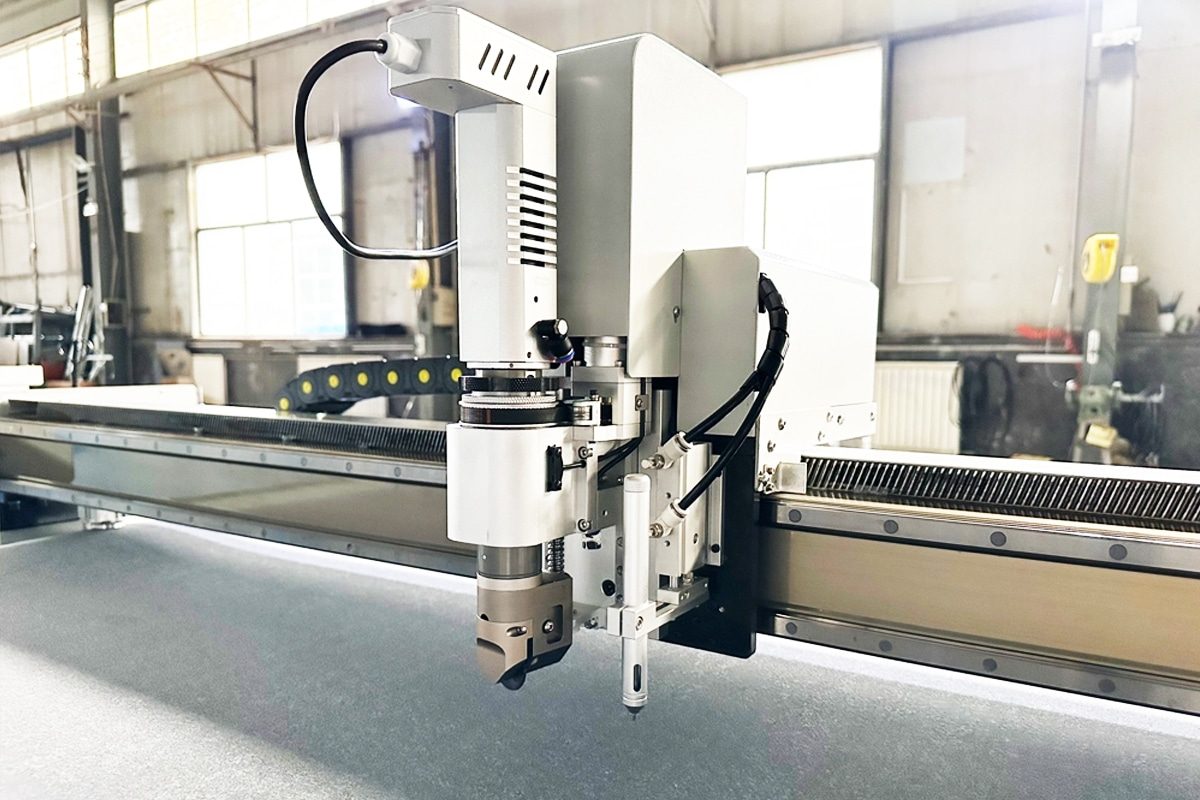
What Are The Applications of Oscillating Knife Cutting Machines
Oscillating knife cutting machines are precision tools used to cut a wide range of materials with speed, accuracy, and minimal material distortion. Unlike rotary blades or laser cutting machines, these machines use a rapidly vibrating blade—oscillating thousands of times per minute—to slice through materials cleanly without excessive heat or fraying. This makes them especially valuable for industries working with soft, flexible, or multi-layered substrates such as foam, textiles, rubber, cardboard, composites, and certain plastics.
In recent years, advancements in automation, CNC control, and digital design integration have made oscillating knife cutting machines indispensable in manufacturing and prototyping environments. They offer not only versatility in handling diverse material types but also the ability to execute intricate shapes and fine details with consistent repeatability. The absence of a high-friction cutting edge reduces wear on the blade and preserves the quality of the cut, even in demanding production cycles.
From packaging and signage production to automotive interior manufacturing and aerospace insulation cutting, oscillating knife technology is being adopted across multiple sectors. Its balance of precision, adaptability, and efficiency has made it a preferred solution for businesses seeking to improve throughput while maintaining tight tolerances—bridging the gap between high-volume output and uncompromising quality.
Table of Contents
Understanding Oscillating Knife Cutting Technology
Oscillating knife cutting is a CNC-controlled process that uses a rapidly reciprocating blade to slice materials mechanically rather than with heat or abrasive media. It excels on soft to semi-rigid, fibrous, or layered substrates—think foams, gaskets, textiles, leather, rubber, cardboard, cork, and many composites and laminates. Because the blade cuts “cold,” edges stay clean, fibers don’t melt or fuse, and dimensional accuracy remains high across intricate geometries and tight radii.
How It Works
A cutting head drives a blade in short, high-frequency strokes (often in the 3,000–20,000 strokes-per-minute range) while the gantry moves along programmed X-Y paths; Z controls penetration depth. Stroke length is small (typically 1–8 mm), which reduces drag and lets the edge “saw” through dense or elastic materials with minimal distortion.
Two drive styles are common: electric oscillating tools (EOT) for precision and quieter operation, and pneumatic oscillating tools (POT) for higher force on tougher substrates. Many heads add tangential control, actively rotating the blade to align with the toolpath, which sharpens corners and improves small-radius cuts versus passive drag knives.
Depth can be set for kiss-cutting (through the top layer, leaving the liner intact) or through-cutting. CAM parameters—feed, oscillation frequency, stroke, downforce, overcut, corner deceleration—are tuned to material thickness, density, and fiber direction for repeatable results.
Key Components
- Oscillating Cutting Head: Electric or pneumatic actuator, stroke adjustment, and tangential (C-axis) rotation on advanced models.
- Blades & Holders: Straight, serrated, hooked, pointed, and specialty geometries; quick-change holders and depth stops speed setup.
- Pressure Foot/Knife Guide: Stabilizes fibers, reduces flutter, and improves edge quality on textiles and foams.
- Z-axis & Depth Control: Mechanical stops or servo-controlled depth for precise kiss-cuts and stack cutting.
- Work Surface & Hold-Down: Perforated vacuum beds (often with sacrificial mats) or clamps; optional conveyor tables for roll-fed goods.
- Vision System: Cameras for print-to-cut registration, fiducial detection, and distortion compensation on stretched fabrics or printed boards.
- Tool Changer & Accessory Stations: Automatic swap to crease wheels, perforators, V-cutters, or drag knives in mixed workflows.
- CNC/CAM Software: Imports CAD/CAM files (DXF, AI, PDF), nests parts, optimizes toolpaths, and manages material libraries.
Advantages Over Other Cutting Methods
- Versus Laser: No heat-affected zone, scorch, or off-gassing; safe on PVC, PE foams, and heat-sensitive laminates.
- Versus Waterjet: Dry process (no wetting, grit disposal, or risk of delamination in porous cores); lower operating cost.
- Versus Rotary/Drag Knives: Less material stretch and edge fray on flexible media; better tight corners with tangential control.
- Versus Routers/Milling: Cleaner edges on soft goods with far less dust, fiber pull-out, or tool chatter; quieter operation.
- Versus Steel-Rule Die: No tooling lead time or wear; rapid changeovers, economical for short runs and frequent design updates.
- General: Fine detail, small kerf, stack cutting of thin layers, predictable consumable cost (inexpensive blades), and easy digital workflow.
Oscillating knife technology delivers precise, cold cutting tailored to flexible and semi-rigid materials. With tunable stroke, depth, and tangential control—plus strong hold-down and vision alignment—it produces clean edges and accurate geometry without the heat, moisture, or tooling overhead of alternative methods. It’s often the most efficient, versatile choice for prototyping through production in packaging, apparel, signage, automotive interiors, composites, and gasket manufacturing—especially when designs change frequently or edge quality on delicate substrates is paramount.
General Application Categories
Oscillating knife cutting machines are used across industries that need precision cutting without heat damage, minimal material distortion, and the flexibility to handle rapid design changes. The machines rely on a high-frequency reciprocating blade, controlled by CNC software, to deliver repeatable, clean cuts through soft, semi-rigid, layered, and some rigid materials.
Because they require no fixed tooling, they can switch instantly between jobs, making them equally suitable for mass production, small batch runs, prototyping, and custom one-offs. This adaptability has made them a critical asset in textiles, automotive, aerospace, marine, packaging, signage, medical products, and more.
Below is a deep dive into each primary application category, including the types of materials processed, specific end uses, cutting process considerations, and advantages unique to each industry.
Textile and Apparel Industry
- Materials: Woven fabrics (cotton, polyester, blends), nonwovens, knits, laminated fabrics, technical textiles (Kevlar, Nomex), felt.
- Applications: Cutting garment panels, uniforms, sportswear, outdoor gear, safety apparel, advertising banners, flags, and stage backdrops.
- Cutting Considerations:
- Use fabric hold-down systems (vacuum or clamping) to prevent movement during cutting.
- Adjust oscillation speed for fine weaves to avoid pulled threads.
- Advantages:
- Stack cutting for bulk runs.
- Precise pattern matching for patterned fabrics.
- Fray-free edges without heat sealing.
Upholstery and Furniture Manufacturing
- Materials: Genuine leather, PU/PVC synthetic leather, vinyl, upholstery fabrics, foam padding.
- Applications: Sofa covers, mattress quilting, chair padding, decorative cushions.
- Cutting Considerations:
- Leather requires nesting software to maximize hide usage.
- Use serrated blades for dense foams.
- Advantages:
- Consistency in curved shapes.
- Reduced waste in high-cost materials.
- Quick changeover for custom orders.
Automotive Industry
- Materials: Laminated seat fabrics, headliner textiles, carpeting, acoustic foams, thermal insulation, and rubber gaskets.
- Applications: Door panel inserts, dashboard padding, trunk liners, NVH (noise, vibration, harshness) insulation, engine seals.
- Cutting Considerations:
- Tangential control for tight interior curves.
- Blade changes for switching between textiles and rubber.
- Advantages:
- Maintains fit accuracy in pre-sewn or laminated parts.
- Cuts without delamination.
- Enables rapid model changeovers.
Packaging Industry
- Materials: Corrugated cardboard, chipboard, polyethylene foam, laminated carton stock, and flexible packaging films.
- Applications: Protective inserts, product trays, folding cartons, point-of-sale packaging.
- Cutting Considerations:
- Kiss-cutting for fold lines.
- Scoring with creasing wheels in multi-tool setups.
- Advantages:
- No steel-rule dies needed for short runs.
- Fast prototyping for seasonal designs.
- Accurate fitting of protective inserts.
Signage and Display Production
- Materials: PVC foam board, Coroplast, honeycomb board, thin acrylic, banner textiles.
- Applications: Retail displays, exhibition panels, promotional signage.
- Cutting Considerations:
- Use vision systems for contour cutting around printed images.
- Adjust feed rate for rigid vs. flexible substrates.
- Advantages:
- Sharp, smooth edges.
- Handles rigid and roll-fed materials in one system.
- Maintains brand color integrity by avoiding heat discoloration.
Construction and Architecture
- Materials: Acoustic panels, rigid insulation (EPS, XPS, PIR), rubber membranes, and wall laminates.
- Applications: Custom-fit insulation, shaped acoustic tiles, façade cladding.
- Cutting Considerations:
- Vacuum hold-down for large-format boards.
- Serrated blades for thicker insulation.
- Advantages:
- No dust release from abrasive methods.
- Exact fitting for irregular spaces.
- Cuts moisture-sensitive materials without damage.
Aerospace Industry
- Materials: High-performance foams, aramid fiber sheets, thermal/acoustic blankets, honeycomb panels.
- Applications: Cabin insulation, seat cushions, interior panels.
- Cutting Considerations:
- CNC templates for consistency across identical components.
- Special blades to avoid fraying aramid fibers.
- Advantages:
- Maintains weight-critical tolerances.
- Clean cuts in sensitive composites.
- Meets aerospace cleanliness standards.
Marine Industry
- Materials: Non-slip deck materials, waterproof membranes, marine-grade fabrics, and insulation foams.
- Applications: Deck coverings, cabin cushions, hull lining panels.
- Cutting Considerations:
- Anti-corrosion components in the cutting head.
- Custom nesting for irregular boat interior shapes.
- Advantages:
- Resistant to material swelling from moisture.
- Fast fit-out for bespoke yacht interiors.
- Maintains precision in curved, 3D layouts.
Footwear Manufacturing
- Materials: Leather, EVA foam, synthetic fabrics, rubber sheets.
- Applications: Uppers, midsoles, outsoles, insoles, cushioning inserts.
- Cutting Considerations:
- Use multi-layer stacks for matched shoe sets.
- Adjust stroke amplitude for dense rubber vs. foam.
- Advantages:
- Consistent left/right pair shapes.
- Allows intricate decorative cuts.
- Reduces material waste in premium leathers.
Sports Equipment and Goods
- Materials: Protective foams, composite laminates, performance textiles.
- Applications: Helmet liners, shin guards, gloves, yoga mats.
- Cutting Considerations:
- Custom shapes for ergonomic fit.
- Vision systems for logo alignment.
- Advantages:
- High accuracy for safety-critical padding.
- Adapts to seasonal design changes.
- Works with multi-material assemblies.
Gasket and Seal Production
- Materials: Rubber sheets, cork, felt, PTFE, silicone.
- Applications: Engine gaskets, industrial seals, washer sets.
- Cutting Considerations:
- Use sharp, straight blades for clean gasket edges.
- Kiss-cut sheets for easy peeling in assembly.
- Advantages:
- Eliminates steel-rule die setup time.
- Precision cuts to tight tolerances.
- Flexible batch sizes from one-off to mass runs.
Printing and Graphics Industry
- Materials: Vinyl, laminated films, cardstock, foam board.
- Applications: Labels, decals, stickers, cut-to-shape posters.
- Cutting Considerations:
- Vision registration for print alignment.
- Low oscillation speeds for thin films.
- Advantages:
- Kiss-cutting without damaging backing liners.
- Maintains printed image quality.
- Supports mixed-material campaigns.
Medical and Healthcare Products
- Materials: Medical foams, nonwoven fabrics, breathable laminates, and filtration materials.
- Applications: Braces, orthotics, wound dressings, PPE parts.
- Cutting Considerations:
- Hygienic, dust-free cutting.
- Special cleanroom-compatible systems.
- Advantages:
- No heat degradation to medical-grade fabrics.
- Exact patient-specific shaping.
- Reliable repeatability for regulatory compliance.
Fashion Accessories and Luxury Goods
- Materials: Leather, suede, exotic hides, coated textiles.
- Applications: Handbags, belts, wallets, watch straps.
- Cutting Considerations:
- High nesting efficiency for expensive hides.
- Decorative kiss-cutting for embellishments.
- Advantages:
- Premium edge finish.
- Supports unique designer shapes.
- Minimizes waste in high-value materials.
Arts, Crafts, and Prototyping
- Materials: Cardboard, EVA foam, thin plastics, specialty papers.
- Applications: Scale models, cosplay costumes, signage prototypes, custom décor.
- Cutting Considerations:
- Quick file changes for rapid iteration.
- Compatible with both rigid and flexible media.
- Advantages:
- Ideal for one-off designs.
- Low operating cost.
- Enables complex shapes without manual cutting skills.
Oscillating knife cutting machines are not tied to one sector—they are multi-industry enablers. From aerospace insulation panels to luxury leather handbags, from marine deck coverings to high-volume packaging runs, oscillating knife cutting machines remain the go-to solution for manufacturers who need clean edges, consistent results, and the flexibility to pivot quickly as designs and markets change.
Choosing the Right Machine for Each Application
Oscillating knife cutting machines are highly versatile, but not all are created equal. Selecting the right one means understanding exactly what you need it to do, how you’ll use it, and how it will fit into your production environment. The wrong match can lead to wasted materials, slower turnaround times, and costly maintenance. The right match can transform efficiency and quality.
Understanding the Role of Material Type
The first and most critical step is assessing the materials you’ll cut most often.
If you work primarily with soft, flexible materials like foam, rubber, leather, felt, or textiles, you need a machine with a high oscillation frequency so the blade slices cleanly without pulling or stretching the fibers. These materials benefit from precise pressure control and, in some cases, the option to use a rotary blade to reduce drag and fraying—especially important for woven fabrics.
If you deal with semi-rigid materials like corrugated cardboard, EVA foam, or thin plastics, you need a balance between oscillation speed and tangential knife control. This ensures you can cut both straight lines and intricate curves without crushing or distorting the material. For packaging and display work, adjustable cutting depth is also valuable for scoring or partial cuts.
For rigid, dense materials such as composites, MDF, PVC board, or gasket sheets, cutting speed takes a back seat to torque and stability. These materials demand a slower, more powerful cut to maintain edge quality. You’ll also want reinforced blade mounts, heavy-duty drives, and—if dust is an issue—an integrated extraction system to keep the work area clean and the cutting line visible.
When working with multi-layer or laminated materials, precision depth control becomes the priority. You may need a machine with sensors that detect and adjust for the thickness of the material stack, ensuring you cut through the top layers without damaging the backing. This is critical in industries like automotive interiors, technical textiles, or layered flooring products.
Precision and Tolerance Requirements
If your end products require highly accurate cuts—think luxury packaging prototypes, signage lettering, fashion patterns, or intricate architectural models—you need more than just a sharp blade. Look for machines with tangential knife control to prevent overcutting at corners, high-resolution servo motors to achieve precise positioning, and advanced control software that can handle complex curves smoothly.
For printed materials or graphics, a vision system is invaluable. It uses cameras to detect registration marks, ensuring perfect alignment between printed designs and cut lines. This reduces waste and rework, particularly in short-run, high-value jobs.
Matching the Machine to Production Volume
Your production volume dictates the level of automation and build quality you should invest in.
If you’re running low-to-medium-volume operations, such as custom fabrication, small-batch manufacturing, or prototyping, you’ll benefit from a compact, versatile machine that’s quick to set up and easy to reconfigure between jobs. A smaller footprint can also save valuable floor space in a workshop or design studio.
If you’re producing at high volume, speed and automation become critical. Look for conveyor feeding systems for continuous material processing, dual-tool or multi-head setups to perform multiple operations in a single pass, and a rigid, industrial-grade frame to maintain accuracy over long production runs. Compatibility with your CAD/CAM software and the ability to integrate with automation systems can significantly reduce setup time and streamline workflows.
Tooling Flexibility and Upgrade Potential
Not all jobs can be done with a single oscillating blade. A machine that supports multiple tool heads or quick-change cartridges allows you to adapt to different materials and job requirements without buying multiple machines.
For example, if you frequently work with thicker boards or stiffer materials, a tangential knife module can help maintain clean corners. If you make folding carton prototypes or 3D displays, a V-cut or bevel tool is essential. For tear-off applications like tickets or labels, perforation wheels are more efficient than traditional blades. Having the option to upgrade your tooling later on gives your machine a longer, more adaptable service life.
Service, Maintenance, and Long-Term Value
Beyond cutting capabilities, consider the practical aspects of machine ownership. A reliable service network is essential—extended downtime for repairs can cost far more than the machine’s purchase price over its lifetime. Check whether the manufacturer offers regular firmware and software updates to keep pace with evolving file formats and new materials. And don’t overlook parts availability; waiting weeks for a replacement blade holder or motor can cripple production.
Choosing the right oscillating knife cutting machine is about finding the point where your material requirements, precision needs, and production goals meet.
If you work with flexible materials and need speed, focus on high oscillation frequency and fine control. For rigid, dense materials, look for torque, stability, and heavy-duty construction. If your work spans multiple materials, modular tooling and depth control will maximize flexibility. And if your business relies on throughput, prioritize automation, multi-head cutting, and industrial durability.
In the end, the right machine doesn’t just cut—it supports your workflow, grows with your needs, and helps you deliver consistent quality, job after job.
Challenges and Limitations
Oscillating knife cutting machines are valued for their precision, versatility, and ability to handle a wide range of materials. However, like any technology, they come with their own set of challenges and limitations. Understanding these issues is important for setting realistic expectations and ensuring the machine is used to its full potential without overextending its capabilities.
Material Restrictions
While oscillating knife cutting machines handle many substrates well, certain materials pose problems.
- Extremely hard or brittle materials—such as thick metal sheets, ceramic, or tempered glass—are beyond the machine’s intended range and can damage blades or the drive mechanism.
- Highly abrasive composites—like fiberglass or certain reinforced plastics—can cause rapid blade wear, increasing tooling costs and downtime.
- Sticky or gummy materials—such as certain foams or adhesive-backed sheets—can cling to the blade, leading to ragged edges and reduced cut quality.
Impact: Operators must carefully test materials before committing to production, and in some cases, may need specialized blade coatings or alternative cutting methods.
Speed Limitations with Complex Cuts
Although these machines can operate quickly on simple shapes, speed often drops significantly for intricate designs or tight curves.
- High oscillation rates help with detail work, but the machine may need to slow down to maintain precision.
- Dense or multi-layer materials require slower feed rates to avoid tearing, fraying, or delamination.
Impact: For high-volume operations with complex geometries, throughput may be lower than expected, which could affect delivery timelines.
Blade Wear and Maintenance
Oscillating blades are consumable parts, and wear is inevitable—especially when working with abrasive or dense materials.
- Frequent blade changes increase consumable costs.
- Improper maintenance or delayed replacement can result in poor cut quality and material waste.
- Some specialized blades have longer lead times for replacement, which can disrupt production if not planned for in advance.
Impact: A consistent maintenance schedule and a stocked inventory of spare blades are essential to minimize downtime.
Noise and Vibration
The oscillating motion generates noise and vibration, especially at high frequencies.
- In quiet or shared work environments, this can be a source of operator fatigue.
- Excessive vibration can impact cut accuracy, particularly on lightweight or loosely secured materials.
Impact: Proper machine setup, vibration-damping measures, and operator hearing protection are necessary for safe and comfortable use.
Learning Curve and Setup Complexity
Even though many modern oscillating knife machines feature intuitive software, achieving optimal results still requires skill.
- Incorrect blade selection, oscillation speed, or pressure settings can ruin materials.
- Multi-layer or specialty materials often need fine-tuning of depth settings to avoid cutting too deep or too shallow.
- Integrating the machine into an existing workflow (with CAD/CAM or automated feeding systems) may require operator training.
Impact: Initial productivity can be lower until operators gain experience and understand the nuances of different materials.
Initial Investment and Operational Costs
While there are entry-level models, high-performance oscillating knife cutting machines—especially large-format or multi-tool systems—are a significant investment.
- Additional costs include software licenses, maintenance contracts, tooling, and consumables.
- Over time, operational costs can be higher than expected if material waste, blade wear, or downtime are not managed.
Impact: Businesses must factor in not just purchase price but also total cost of ownership (TCO) when evaluating ROI.
Oscillating knife cutting machines excel in precision, versatility, and clean cutting for a wide range of materials. However, they are not a universal cutting solution. Limitations include material compatibility, slower speeds for complex jobs, blade wear, operational noise, and the need for skilled setup.
By understanding these constraints upfront, businesses can choose the right machine configuration, plan for maintenance, and train operators to avoid common pitfalls. With proper planning, these challenges become manageable, and the machine’s strengths can be fully leveraged for reliable, high-quality production.
Summary
Oscillating knife cutting machines have become a vital tool across industries ranging from packaging and signage to automotive, textiles, and composites. Their defining advantage lies in their ability to cut a wide variety of materials—both flexible and rigid—with exceptional precision and clean edges, without relying on heat or causing material distortion. This makes them ideal for applications such as producing prototypes, fabricating custom components, creating intricate designs, and processing specialty materials that other cutting methods struggle with.
However, their effectiveness depends on proper machine selection, matching blade types, oscillation speeds, and depth control to the specific material and production requirements. While they offer significant versatility, users must also be aware of challenges such as blade wear, speed limitations for complex cuts, material restrictions, and the need for skilled operation.
When applied thoughtfully, oscillating knife cutting machines can improve production efficiency, reduce waste, and open up new creative and technical possibilities. Businesses that understand both the capabilities and the limitations of the technology can integrate it as a powerful, long-term asset—supporting high-quality output, flexibility in operations, and a competitive edge in markets where precision and adaptability matter most.
Get Oscillating Knife Cutting Solutions
At AccTek Group, we understand that every cutting requirement is unique. As a professional manufacturer of intelligent laser and cutting equipment, we offer advanced oscillating knife cutting solutions designed to deliver precision, efficiency, and versatility across multiple industries. Whether you work with soft textiles, dense composites, layered packaging materials, or intricate signage substrates, our machines are engineered to handle diverse materials with clean, accurate results.
Our oscillating knife cutting machines feature high-frequency blade motion, precision depth control, and modular tooling options, enabling you to adapt quickly to different projects without compromising speed or quality. We provide machines in various configurations—from compact models ideal for small workshops and prototyping, to large-format, fully automated systems for high-volume production.
Beyond the hardware, AccTek Group offers complete support, including installation, operator training, software integration, and after-sales service. We help you select the right machine for your application, optimize your workflow, and ensure long-term reliability.
By partnering with AccTek Group, you gain more than a cutting machine—you gain a customized solution that meets your production goals, reduces waste, and gives you a competitive edge in precision manufacturing.