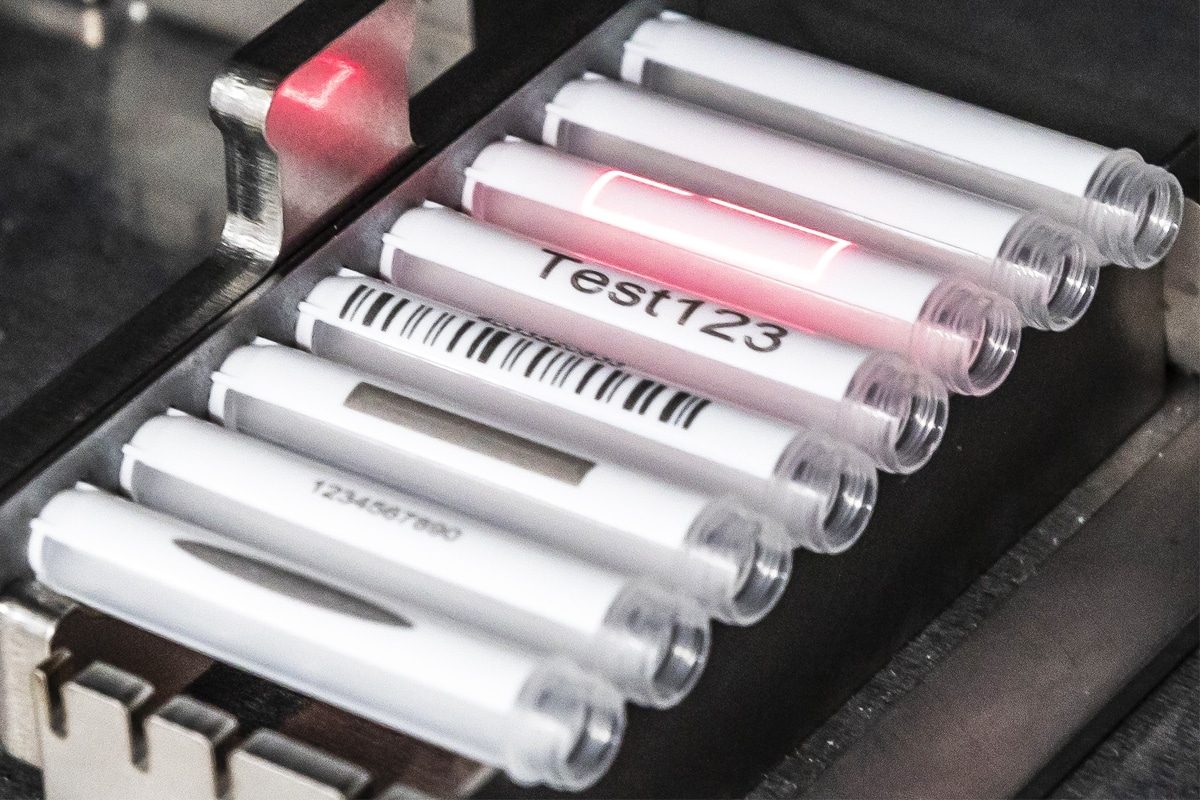
Each of these techniques offers specific benefits depending on the material, desired mark appearance, and functional requirements. Understanding how they work is essential for choosing the right approach for any given application.
Laser marking is increasingly used across industries for its unmatched combination of accuracy, speed, and permanence. Unlike traditional marking methods such as ink printing, dot peening, or mechanical engraving, laser marking uses a focused beam of light to create high-precision marks without physical contact. The process is controlled digitally, which allows for intricate designs, variable data marking, and seamless integration into automated production lines. As manufacturers demand greater efficiency, cleaner operations, and full traceability, laser marking offers a future-ready solution with clear operational and strategic benefits.
Laser marking delivers exceptional detail and repeatability. The beam can be focused down to microns, allowing it to produce incredibly fine lines, high-resolution logos, intricate serial numbers, and tiny barcodes—even on small or sensitive components. There’s virtually no distortion or smudging, making it ideal for sectors such as medical devices, microelectronics, and aerospace, where even the smallest variation in mark placement can be unacceptable. The digital nature of the process ensures exact reproduction of each mark, batch after batch, with no degradation in quality.
Once applied, laser marks are resistant to wear, chemicals, heat, humidity, and UV radiation. Whether it’s a surgical instrument sterilized repeatedly, a component exposed to high engine temperatures, or a product stored outdoors, the markings will remain intact and readable over time. This level of durability is essential for parts that must retain traceability over their full service life, especially in regulated industries where long-term identification is required by law.
Laser marking is a non-contact process. The laser never physically touches the part, which eliminates tool wear and reduces the risk of damaging delicate materials. There are also no consumables involved—no ink cartridges, no etching acids, no printing plates. This reduces recurring costs, simplifies procurement, and eliminates the need to store, handle, and dispose of chemical waste. Over time, these savings in materials and maintenance make laser marking more cost-efficient than traditional methods, especially in high-volume operations.
Laser marking is remarkably flexible when it comes to compatible materials. Metals like stainless steel, aluminum, and titanium; plastics such as ABS, polycarbonate, and polypropylene; ceramics, glass, wood, rubber, composites, and coated surfaces—all can be marked with the right laser configuration. Different techniques, such as annealing, foaming, carbon migration, or etching, can be applied based on material type and the desired effect. This versatility makes it easy to mark everything from industrial machine parts to consumer electronics without switching systems.
Modern laser systems can operate at extremely high speeds, making them suitable for demanding production environments. Items can be marked in milliseconds, and because the process is digitally driven, switching between designs, batches, or data sets requires no manual changeover. With no waiting for ink to dry or tools to reset, laser marking dramatically reduces cycle times. This leads to increased throughput, faster turnaround, and less downtime, directly boosting production efficiency.
Laser marking is a clean technology. It doesn’t rely on inks, solvents, or corrosive chemicals, so there are no harmful emissions or hazardous waste byproducts. The process also generates minimal material waste since it only modifies the surface of the material, not cutting into it (except in engraving applications). Many laser systems—especially fiber lasers—are also energy-efficient, with long lifespans and low power consumption. This makes laser marking an ideal solution for companies committed to sustainable manufacturing practices.
Laser marking systems are designed to integrate seamlessly with modern manufacturing setups. They can be connected to robotic arms, conveyors, machine vision systems, and ERP platforms. Real-time data input allows for dynamic marking—such as serializing each item on the fly—without interrupting the production line. Advanced software allows for remote control, monitoring, and quality assurance, supporting Industry 4.0 workflows with traceability and connectivity built in.
Traceability is no longer optional in many sectors—it’s mandatory. Laser marking enables permanent, scannable marks like serial numbers, QR codes, and data matrix codes that remain readable over time. These identifiers support complete lifecycle tracking, from manufacturing and logistics to customer support and recalls. In pharmaceuticals, aerospace, automotive, and defense, this level of traceability is essential for meeting regulatory requirements and ensuring accountability across the supply chain.
Unlike inkjet printers or mechanical engravers, laser systems—especially fiber lasers—have few moving parts and long operating lifespans (often 100,000+ hours). There’s no need for frequent part replacement, cartridge changes, or cleanup. Maintenance typically involves periodic cleaning of lenses and basic system checks. This simplicity reduces unplanned downtime, lowers service costs, and frees up personnel to focus on more valuable tasks.
Laser marking creates marks that are sharp, high-contrast, and visually consistent. Whether it’s a brand logo, a decorative pattern, or fine product labeling, laser-marked graphics have a crisp, professional finish that adds to the overall perceived value of the product. Unlike labels or ink, these marks don’t fade, peel, or degrade, ensuring a clean, durable appearance that reinforces brand identity and product quality in consumer-facing goods.
Laser marking delivers more than just identification—it brings efficiency, reliability, and long-term value to the entire production process. It produces precise, permanent, and clean marks on nearly any material without contact or consumables. It scales with automation, supports regulatory traceability, and aligns with modern sustainability standards. For manufacturers aiming to improve quality, reduce operating costs, and stay competitive in demanding markets, laser marking isn’t just an advantage—it’s a strategic asset.
Laser marking has revolutionized how companies identify, code, and trace their products. However, despite its growing adoption, this technology is not a universal solution and is not without challenges. Like any advanced industrial system, laser marking comes with technical, operational, financial, and safety-related limitations that must be seriously considered before implementation. It’s not enough to focus on precision or durability—factors such as material compatibility, regulatory compliance, training requirements, or hidden operational costs can negatively impact its performance and feasibility. Below is a comprehensive breakdown of the main disadvantages of laser marking, based on real-world production, safety, financial, and efficiency criteria.
One of the main barriers to adopting laser marking is the high entry cost. An industrial-grade system (e.g., fiber lasers for metal or UV lasers for sensitive plastics) can easily range from $10,000 to $50,000 or more, not including accessories such as fume extractors, automation modules, or specialized software. This cost may be justified over time, but it represents a significant barrier for small businesses or operations with low production volume. Moreover, the return on investment isn’t immediate—it depends on how well the system reduces long-term costs and increases throughput.
Using industrial lasers—especially Class 3B or 4—presents significant health and safety risks. Accidental exposure to the beam can cause permanent eye injuries, skin burns, or even fires if used in poorly controlled environments. Additionally, when marking certain materials (like PVC or ABS), toxic fumes can be released, requiring professional-grade extraction and filtration systems. Companies must invest in safety protocols, protective gear (laser goggles, optical barriers, presence sensors), and operator training in standards such as ANSI Z136.1 or CE EN 60825.
Not all materials respond well to laser marking. Highly reflective metals (like copper, gold, or polished brass) can reflect the laser energy, decreasing marking efficiency and potentially damaging the optical system. Plastics with unknown additives or inconsistent compositions can lead to unpredictable results, discoloration, or surface deformation. Additionally, transparent materials like glass or acrylics require specific wavelengths (UV or femtosecond lasers), increasing the cost and complexity of the equipment.
Although laser marking is generally fast, marking certain materials—such as hardened steel, thin plastics, or heat-sensitive components—may require slower speeds to avoid damage or ensure legibility. Deep engraving also demands multiple passes, which increases cycle time per piece and can impact overall production efficiency.
Standard laser marking is designed primarily to alter the surface of the material. While sufficient for barcodes, logos, or tracking codes, it may not be ideal in situations where parts are subject to heavy wear and require deep, rugged marks. To achieve deeper engravings, more powerful lasers and longer marking times are needed, which can reduce production speed and raise energy costs.
Laser marking works by concentrating heat. On sensitive materials, this can lead to warping, melting, or degradation. Plastics may release toxic gases or deform, and thin metal parts can become structurally compromised. Electronics and circuit boards are especially vulnerable to heat damage if not properly shielded or processed with precise parameters. Effective thermal control and accurate tuning of power, frequency, and speed are essential to avoid material failure.
Laser marking isn’t plug-and-play. Operators must understand how to control laser parameters such as power, frequency, speed, and focal distance. The marking software can be complex, especially when paired with vision systems or automation platforms. This means extended implementation times, a need for technical training, and potential for costly trial-and-error if operators are not well-prepared.
Industrial laser systems must meet strict local and international safety and operational regulations. This includes laser safety (OSHA, FDA, CE), ventilation requirements, electromagnetic compatibility, warning signage, and full technical documentation. In regulated industries such as aerospace, pharmaceuticals, or defense, markings must also be traceable, verifiable, and audit-ready. All this adds administrative workload, compliance costs, and potential delays in deployment.
While many modern laser systems—especially fiber lasers—are energy-efficient, certain high-demand applications (such as deep engraving, continuous operation, or reflective material processing) require high power levels, cooling systems, and specialized electrical protections. In facilities running multiple high-power lasers simultaneously, total energy consumption can significantly impact operating costs and infrastructure requirements.
The quality of a laser mark depends heavily on the condition of the material’s surface. Dirty, oily, rusty, or uneven surfaces can reduce contrast, blur lines, or create inconsistent marks. In many cases, surface cleaning or preparation is needed beforehand, adding time, complexity, and potentially requiring additional equipment (e.g., laser cleaners or abrasive systems).
Laser marking is a powerful, precise, and flexible technology—but it’s not without its challenges. High upfront costs, required technical expertise, potential for thermal damage, safety protocols, and limitations with certain materials or depths can be real obstacles if not addressed properly. Successful implementation requires more than just buying a machine—it involves planning, training, compliance, and infrastructure readiness. When these elements are aligned, laser marking becomes a strategic advantage. When overlooked, it can become an expensive bottleneck.
Laser marking is widely adopted across a diverse range of industries due to its precision, permanence, and adaptability. As the demand for traceability, product authenticity, and regulatory compliance grows, so does the relevance of laser technology in modern manufacturing. Whether it’s marking a surgical instrument with a serial number or branding a luxury watch with a micro-engraved logo, laser marking provides clean, durable, and accurate results that traditional methods often cannot match.
In the automotive industry, traceability and durability are essential. Laser marking is used extensively for marking engine parts, gear components, brake systems, and VIN (Vehicle Identification Number) plates. These marks must withstand extreme heat, vibration, and chemical exposure. Data matrix codes, barcodes, and serial numbers are laser-engraved directly onto metal and plastic parts for quality tracking, inventory management, and recall control. Since automotive production is highly automated, laser systems are often integrated directly into robotic lines for real-time, high-speed marking.
Aerospace components require exacting standards of identification due to strict safety, compliance, and traceability regulations. Laser marking is used to permanently label turbine blades, engine parts, control systems, fasteners, and even structural composites with part numbers, lot codes, and quality certifications. Because aerospace parts often operate in extreme conditions, the permanence and legibility of laser marks are critical. Additionally, the non-contact nature of laser marking minimizes structural stress, making it ideal for lightweight and high-performance materials like titanium or carbon fiber composites.
The medical industry relies on laser marking for both regulatory compliance and patient safety. Tools, surgical instruments, implants, and medical devices must be permanently marked with UDI (Unique Device Identification) codes. These marks must be biocompatible and resistant to sterilization processes such as autoclaving, chemical baths, and high temperatures. Laser annealing is often used for stainless steel instruments because it creates dark, high-contrast marks without removing material, essential for preventing corrosion and maintaining hygiene.
Electronics manufacturers use laser marking to add precise identifiers to microchips, circuit boards, connectors, and housings. Due to the miniature scale of many components, laser marking is favored for its accuracy and ability to mark without physical contact or damage. QR codes, barcodes, and alphanumeric codes are marked directly on silicon wafers, plastic casings, and PCBs (Printed Circuit Boards) for part tracking, anti-counterfeiting, and process control. Laser marking is also used in smartphone and laptop manufacturing for branding and decorative purposes.
In the luxury goods sector, laser marking provides a non-invasive, elegant solution for branding, serialization, and anti-counterfeiting. High-end watches, rings, bracelets, and other fine jewelry often bear laser-engraved logos, hallmarks, or serial numbers. Laser technology allows for micro-engraving that doesn’t compromise material integrity or finish, even on precious metals like gold, platinum, or silver. In fashion, laser marking is used on leather goods, designer sunglasses, and accessories for precise detailing and added aesthetic value.
Laser marking is increasingly used in packaging to print batch numbers, expiration dates, barcodes, and tracking information directly onto product packaging. It works well on cardboard, plastics, foils, and coated papers without the need for inks or labels. This reduces waste and consumables while delivering permanent marks that are resistant to smudging or fading. In industries such as food, beverages, cosmetics, and pharmaceuticals, laser marking ensures regulatory compliance and supply chain traceability.
Heavy machinery and industrial equipment manufacturers use laser marking for permanent labeling of machine parts, tools, housings, and control panels. These marks often include serial numbers, safety warnings, and operational instructions. Laser marking ensures that this information remains legible over time, even in tough environments involving heat, friction, moisture, and chemical exposure. The marks can be applied to steel, aluminum, cast iron, plastics, and coated materials, making laser systems highly versatile for industrial-grade applications.
Laser marking is a cross-industry solution that meets modern demands for accuracy, traceability, and durability. From surgical tools and jet engine parts to luxury watches and packaging labels, it offers a flexible, non-contact method for permanent identification. Its ability to adapt to different materials and production environments makes it a core technology in sectors where quality, safety, and brand integrity are non-negotiable. As industries continue to automate and digitize, laser marking is set to remain a critical tool in high-performance manufacturing.
Different materials react differently to laser energy. Fiber lasers are ideal for marking metals such as stainless steel, aluminum, titanium, and copper, while CO2 lasers are better suited for organic materials like wood, leather, cardboard, and certain plastics. UV lasers are excellent for marking heat-sensitive plastics, glass, and reflective surfaces.
Choosing the wrong type of laser for your material can result in poor mark quality, product damage, or inefficiency.
Define the functional and visual requirements of your mark before selecting a system.
In automated lines, downtime or slow cycle times can cause major production bottlenecks. Choose a system that meets your current speed needs and can grow with your operations.
Ease of integration ensures faster deployment and less friction across your production ecosystem.
While upfront cost is a critical factor, focus on total cost of ownership (TCO) and return on investment (ROI). A lower-cost system may require more maintenance, deliver slower throughput, or fail to meet regulatory standards, costing more in the long run.
Don’t just buy the cheapest system—buy the one that provides the best value over time.
Laser systems must comply with local and international safety standards (e.g., ANSI, FDA, CE). Class 3B and 4 lasers require enclosures, safety interlocks, and operator training. In some cases, marking specific materials (like plastics) produces fumes or particulates that require fume extraction and filtering.
Neglecting these elements can lead to fines, accidents, or costly downtime.
Selecting the right laser marking system is a multi-faceted decision. It requires aligning material compatibility, mark specifications, production goals, software needs, financial considerations, and compliance requirements. The right system will not only produce high-quality, permanent marks—it will support efficient, scalable, and safe manufacturing. Evaluate your operation holistically. Don’t just look for a machine that marks—choose a solution that fits your workflow, grows with your business, and adds long-term value.
Laser marking has become an essential tool across industries that demand high precision, traceability, and durability. Its key advantages include the ability to produce permanent, high-quality marks on a wide range of materials without physical contact or consumables. It supports automation, speeds up production, and offers excellent flexibility, making it ideal for sectors like automotive, aerospace, medical, electronics, and more. Laser marking also aligns with modern manufacturing trends by being environmentally friendly and low-maintenance.
However, it’s not without its challenges. The initial investment can be substantial, and not all materials respond well to laser treatment. Safety precautions, regulatory compliance, and technical training are necessary to ensure safe and effective operation. Additionally, certain applications—such as deep engraving or marking reflective surfaces—may require specialized equipment or longer cycle times.
Choosing the right laser marking system depends on factors like material type, desired mark characteristics, production volume, integration needs, budget, and compliance standards. When carefully selected and properly implemented, laser marking offers a powerful, long-term solution for permanent part identification and product tracking.
In conclusion, laser marking is a high-performance technology with significant benefits, but realizing its full potential requires careful planning, investment, and alignment with production goals.