
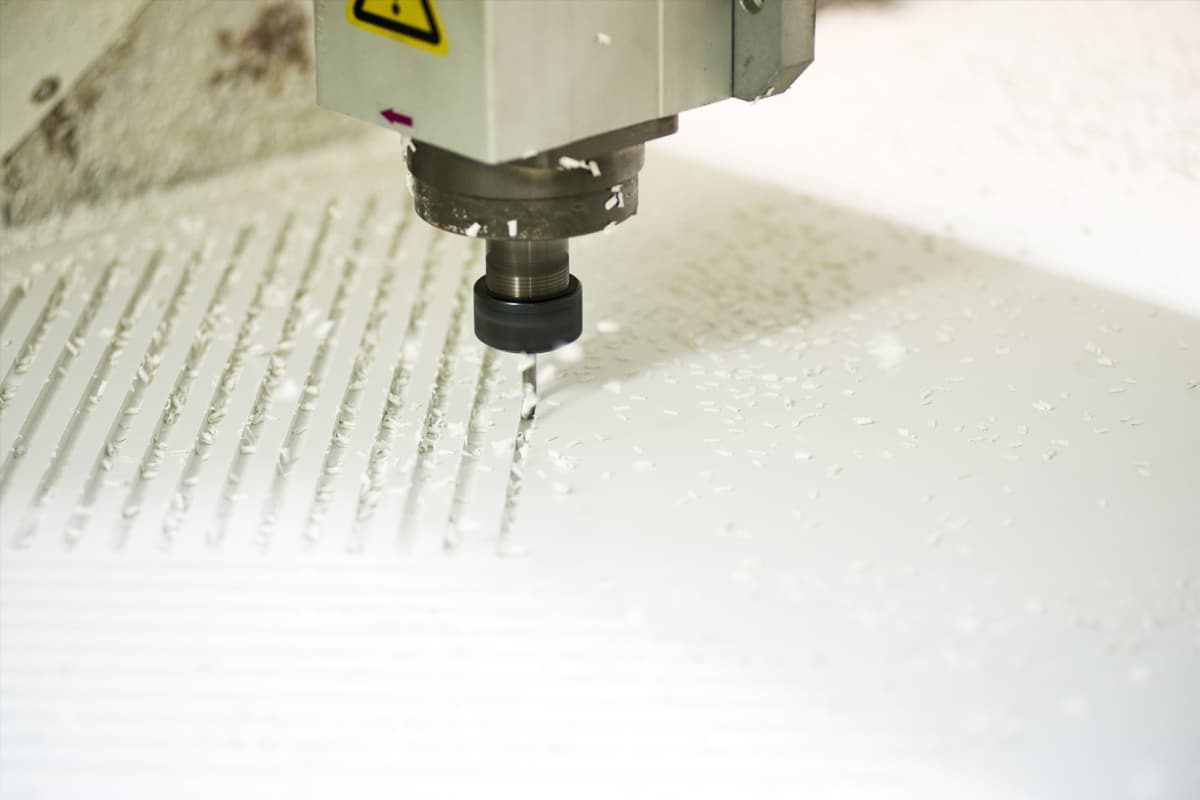
What Are ATC CNC Routers

This article explains what ATC CNC routers are, how they work, their core components, key benefits, applications, and how to choose the right model for your needs.
Home » Blog » What Are ATC CNC Routers
What Are ATC CNC Routers
In today’s fast-paced manufacturing world, precision and efficiency are everything, and that’s where ATC CNC routers come in. Standing for Automatic Tool Change CNC routers, these machines represent an advanced evolution of traditional CNC routers, designed to streamline complex cutting, shaping, and carving operations across various materials, including wood, plastic, metal, and composites. What sets ATC CNC routers apart is their ability to automatically switch between different tool bits during a job, without manual intervention. This single feature drastically reduces downtime and boosts productivity, making it a go-to solution for businesses in cabinetry, furniture, sign-making, aerospace, and beyond.
Unlike standard CNC routers that require manual tool changes, ATC CNC routers use a tool magazine or carousel system that holds multiple tools, allowing the machine to switch tools on the fly. The result is a smoother workflow, more consistent results, and lower labor costs. As industries demand more customized, high-volume production with tight tolerances, ATC CNC routers are becoming an essential investment, not just a luxury. In this article, we’ll break down how these machines work, their core features, benefits, and what to consider before buying one.
Table of Contents

A Brief History of Tool-Changing Automation

The idea of automated tool-changing didn’t emerge overnight—it evolved alongside the broader development of CNC (Computer Numerical Control) machining. In the early days of CNC technology during the 1950s and 1960s, machines were highly specialized and limited to single-tool operations. If a job required multiple tools, operators had to stop the machine and manually swap tools, a process that was slow, labor-intensive, and error-prone.
As manufacturers pushed for greater productivity and precision, the demand for automation grew. By the late 1970s and early 1980s, tool-changing automation began gaining traction in metalworking industries, especially in CNC milling and turning centers. These early Automatic Tool Changers (ATCs) used simple rotary or linear tool magazines to hold a set of preloaded tools. This allowed machines to automatically swap tools during a job, dramatically reducing idle time.
The technology has steadily advanced over the decades. As CNC control systems became more powerful and affordable, ATC features started making their way into other types of machines, including CNC routers. By the 1990s and early 2000s, ATC CNC routers were becoming increasingly popular in woodworking and composite fabrication, especially for high-volume shops and complex production runs.
Today, ATC systems are more reliable, faster, and smarter than ever. Some modern ATC CNC routers feature sophisticated tool sensors, automatic length calibration, and integrated software that optimizes toolpaths based on tool availability. What began as a solution for increasing efficiency in machining has now become a cornerstone of automated production across industries.

What Are ATC CNC Routers?

ATC CNC routers are a type of Computer Numerical Control (CNC) machine equipped with an Automatic Tool Changer (ATC)—a system that allows the router to switch between different tools (bits or cutting machines) automatically during a machining process. Unlike standard CNC routers, which require manual tool changes between operations, ATC CNC routers carry multiple tools in a built-in magazine or carousel, enabling the machine to handle complex, multi-step jobs with minimal interruption.

Definition

At its core, an ATC CNC router is designed to perform cutting, carving, drilling, engraving, and shaping tasks on a variety of materials—typically wood, plastic, composites, aluminum, and other non-ferrous metals. The “ATC” component integrates a mechanism (often linear or rotary) that holds multiple tools and swaps them in and out of the spindle automatically based on the job’s programmed toolpath. This makes the machine especially suited for high-volume production or projects that require multiple tools for different operations.

Advantages

  • Increased Efficiency: Eliminates manual tool changes, significantly reducing downtime and increasing throughput.
  • Higher Precision: Automated tool changes reduce human error and ensure consistent alignment and tool depth.
  • Multi-Process Capability: Easily handles jobs requiring multiple cutting or shaping steps with different tools.
  • Labor Savings: Reduces the need for constant operator supervision and manual intervention.
  • Ideal for Complex Projects: Perfect for tasks like cabinetmaking, 3D carving, or sign-making, where multiple tools are used in one workflow.

Disadvantages

  • Higher Cost: ATC CNC routers are more expensive than standard models, both in terms of initial purchase and maintenance.
  • Increased Complexity: The machinery is more complex and requires trained operators and technicians to set up and troubleshoot.
  • Space Requirements: The tool changer mechanism adds to the physical footprint of the machine.
  • Maintenance: Moving parts in the ATC system (such as the tool magazine, sensors, and pneumatic systems) require regular maintenance to ensure reliability.
ATC CNC routers are advanced, automated machines designed to optimize precision manufacturing. They’re a smart investment for businesses focused on speed, accuracy, and scalability, particularly where a variety of tools are needed in a single job. However, they come with trade-offs in cost and complexity that must be carefully weighed depending on your shop’s production needs and capabilities.

Core Components and Their Roles

ATC CNC routers are complex machines made up of several interdependent components, each playing a critical role in ensuring precision, efficiency, and automation. Understanding these parts helps you grasp not only how these machines function but also why they outperform manual and standard CNC setups in demanding production environments.

Frame and Gantry Structure

The frame is the structural backbone of the machine. It holds everything together and absorbs vibration during cutting operations. A rigid, welded steel frame minimizes flex and ensures dimensional accuracy. The gantry, which spans across the frame, supports the Z-axis and the spindle. A stable gantry is essential for high-speed movement without losing accuracy or causing chatter during cuts.

High-Speed Spindle

The spindle is the heart of the cutting process. It rotates the tool at high speeds—often between 6,000 and 24,000 RPM—depending on the material and bit used. High-quality spindles offer variable speed control, precision bearings, and automated tool clamping. They must be powerful enough to maintain torque under heavy loads.

Tool Magazine

The tool magazine stores multiple cutting tools, usually ranging from 6 to 20 or more. It can be a carousel (rotary type) or linear (rail-mounted). During a job, the system retrieves tools from this magazine and automatically loads them into the spindle as needed. This allows for uninterrupted multi-step machining.

Gripper or Swing Arm

This mechanism handles the physical exchange of tools between the spindle and the magazine. A gripper arm (often pneumatically driven) grabs the tool from the spindle and places it into the magazine, then picks the next required tool and loads it into the spindle. Precision and timing are crucial here to avoid tool collision or misalignment.

Sensors

Sensors monitor critical operations such as tool presence, tool length, spindle load, and position accuracy. Tool length sensors ensure that the machine compensates for differences between tools, maintaining consistent cutting depths. Proximity and position sensors are essential for safety and repeatability.

Axis Drives

These are responsible for moving the router along the X, Y, and Z axes. They typically include servo motors or stepper motors, along with ball screws or rack-and-pinion mechanisms. The drives ensure smooth, accurate motion, allowing for intricate designs and sharp detail even at high speeds.

Controller

The controller is the brain of the CNC router. It interprets G-code (the programming language of CNC machines) and coordinates all movement, tool changes, and cutting operations. Advanced controllers offer touchscreen interfaces, remote connectivity, toolpath optimization, and real-time diagnostics.

Pneumatics

Many ATC operations, such as tool clamping/unclamping and arm movements, rely on compressed air systems. Pneumatics are also used to activate pop-up pins for material alignment and to control vacuum zones. Proper pressure and timing are critical to ensure smooth automation.

Vacuum Workholding

Instead of clamps or vises, most ATC CNC routers use a vacuum table to hold materials flat during cutting. A vacuum pump pulls air through a grid beneath the workpiece, securing it in place. This enables full-surface access and faster setup, especially for sheet materials like MDF, plywood, or plastic panels.

Dust Extraction and Chip Management

CNC routers generate significant debris. Integrated dust hoods and external dust collectors remove sawdust, chips, and particles from the cutting area. Good dust management improves air quality, protects sensitive components, and prevents material buildup that could affect cut quality.
Each component in an ATC CNC router is engineered to support high-speed, automated production with minimal downtime. From the sturdy frame that provides a vibration-free foundation to the controller that synchronizes every movement and tool change, these machines are built for precision and efficiency. Knowing how each part contributes helps users maintain performance, diagnose issues, and get the most out of their equipment.

How an Automatic Tool Change Sequence Works

One of the defining features of an ATC CNC router is its ability to switch tools mid-operation without manual input. This seamless automation is made possible through a carefully coordinated sequence controlled by G-code, sensors, motors, pneumatics, and software logic. Understanding how this sequence works reveals the engineering precision behind every tool change.

  • G-Code Call: The process begins when the CNC controller reads a G-code command (usually T followed by a tool number, like T03 M06). This instructs the machine to switch from the current tool to the specified one. The control software pauses the cutting operation and initiates the tool change sequence.
  • Spindle Deceleration: Before any mechanical action takes place, the spindle decelerates and comes to a complete stop. This is essential to ensure safety and prevent damage to the spindle, gripper, or tool. The spindle also moves to a predefined tool change position to allow clearance for the swap.
  • Travel to Magazine: Once the spindle is stopped and retracted, the machine moves—usually along the X or Y axis—to align with the tool magazine or carousel. This position is programmed in the machine’s setup and depends on the type of ATC system (linear or rotary).
  • Tool Release: The spindle uses a pneumatic mechanism to release the current tool, which drops into its designated holder in the magazine. In most systems, the tool is locked in place by spring-loaded grippers or a drawbar system that disengages during this step.
  • Magazine or Carousel Action: Next, the magazine or carousel rotates or slides to present the new tool in the correct position. This action is synchronized with the machine’s movement and confirmed by sensors to ensure the right tool is selected.
  • Tool Pick-Up: The spindle then lowers to engage the new tool. Pneumatic or hydraulic force clamps the tool securely in place. This step must be perfectly aligned to avoid misloading, which could cause tool runout or damage.
  • Height Verification: Once the new tool is secured, the machine often performs automatic tool length measurement. A tool length sensor (typically located on the machine bed) detects the Z-height of the tool. The controller updates offsets to maintain consistent cutting depths, even when tool lengths differ.
  • Return to Part: After verification, the machine travels back to the last known cutting position. Cutting resumes precisely where it left off, using the new tool for the next operation, such as engraving, drilling, or finishing passes.
The automatic tool change sequence is a carefully orchestrated process that enhances both speed and accuracy in CNC operations. By eliminating manual intervention, it minimizes human error and significantly boosts efficiency, especially in jobs requiring multiple tool types. Each step—from G-code initiation to height verification—is crucial to ensure safe, precise, and uninterrupted machining. This is what makes ATC CNC routers a powerful asset in any production environment where consistency and output matter.

Types of ATC Mechanisms

Automatic Tool Changer (ATC) systems come in several configurations, each suited to different machine layouts, budgets, and production requirements. The core function—automatically swapping tools during a job—is the same, but the way each mechanism accomplishes it varies in terms of speed, space, and complexity. Understanding the main types of ATC mechanisms helps buyers choose the right system for their shop’s needs.

Fixed Linear Tool Changer

This is the most straightforward ATC system. The tool holders are mounted in a fixed, horizontal row (or “rack”) usually located at one end of the machine bed. During a tool change, the CNC router spindle travels to this fixed location, releases the current tool, and picks up the new one.

Pros:

  • Simpler design with fewer moving parts.
  • Cost-effective compared to other types.
  • Easier to maintain and troubleshoot.

Cons:

  • Slower tool change times, as the spindle must travel to and from the rack.
  • Takes up usable bed space, limiting material size in some layouts.
Best For: Small to mid-sized shops with moderate tool change frequency.

Follow-Up Linear Tool Changer

This system improves on the fixed linear design by mounting the tool rack directly to the gantry or moving parts of the machine. The key advantage is that the tool changer moves with the spindle, meaning the CNC router doesn’t have to travel far for a swap.

Pros:

  • Faster tool changes with less travel distance.
  • More efficient for jobs with frequent tool changes.
  • Doesn’t reduce cutting bed space.

Cons:

  • Adds weight to the gantry, which can impact acceleration or require a more powerful motor system.
  • Slightly more complex mechanically than fixed systems.
Best For: High-mix, low-volume operations where tool changes happen often.

Disc Tool Changer (Rotary Carousel)

This is the most advanced and high-capacity ATC system. Tools are arranged in a circular disc or carousel that rotates to position the selected tool under the spindle. It usually works in tandem with a swing-arm or gripper that handles the actual exchange.

Pros:

  • Extremely fast tool change times.
  • Holds more tools (often 8, 12, or more).
  • Ideal for complex, multi-step jobs.

Cons:

  • Higher cost and a more complex system.
  • Requires more space, often mounted beside or behind the machine.
Best For: High-production environments, such as industrial woodworking, aerospace, or multi-shift manufacturing lines.
The type of ATC mechanism you choose has a direct impact on your workflow efficiency, machine footprint, and overall investment. Fixed linear changers are simple and affordable, great for basic needs. Follow-up linear changers strike a balance between speed and flexibility. Disc tool changers offer the highest performance and capacity for demanding production lines. Matching the right ATC mechanism to your specific application ensures optimal results and maximum ROI.

Performance Metrics That Matter

When evaluating or investing in an ATC CNC router, it’s not just about whether it can change tools—it’s about how well it performs in real-world conditions. Several performance metrics determine the actual productivity, accuracy, and return on investment of a machine. These measurements help manufacturers assess whether a system can meet their throughput demands and quality standards.

Tool-Change Time (TCT)

Tool-Change Time (TCT) refers to how long it takes for the machine to switch from one tool to another, measured from the start of the command to the moment the new tool is ready to cut. This metric directly impacts production speed, especially in jobs requiring frequent tool changes.

  • Typical TCT Range: 2 to 15 seconds, depending on the ATC type.
  • Impact: A machine with a faster TCT can complete complex multi-tool operations more quickly, reducing cycle time and increasing overall output.
Key Tip: Don’t just compare raw speed—consider consistency, reliability, and how the machine handles tool change under load.

Pocket Repeatability

Pocket Repeatability measures how accurately the machine repositions a tool into the same spindle pocket or magazine slot over repeated cycles. This precision is critical for maintaining alignment, tool life, and cut quality.

  • Measured In: Thousandths of an inch or hundredths of a millimeter.
  • Good Benchmark: ±0.01 mm or better for high-precision CNC routers.
  • Impact: Poor repeatability leads to runout, inconsistent depths, and greater wear on tools and materials. High repeatability ensures better part consistency and fewer production errors.

Magazine Capacity

Magazine Capacity defines how many tools the machine can hold at once. This determines how complex your automated jobs can be without manual tool reloads.

  • Typical Capacities:
  1. Entry-level systems: 6–8 tools
  2. Mid-range systems: 10–12 tools
  3. Industrial systems: 16–32+ tools
  • Impact: A larger tool magazine allows more variation in cutting, drilling, and finishing tools, enabling longer unattended runs and more complex workflows. However, higher capacity also adds cost and machine complexity.
Key Consideration: Balance tool capacity with actual production needs. More tools are useful only if your jobs consistently require them.

Spindle Utilization

Spindle Utilization is the percentage of time the spindle is actively cutting, versus idle or changing tools. High spindle utilization means more productive time per shift and better return on investment.

  • Industry Goal: 70–85% utilization is considered efficient.
  • Low Utilization Causes: Long tool change times, frequent manual interventions, poor job planning, or excessive non-cutting movement.
  • Impact: Maximizing spindle uptime is essential for profitability. ATC CNC routers with fast, reliable tool changes and intelligent job sequencing software help improve this metric.
Performance metrics like Tool-Change Time, Pocket Repeatability, Magazine Capacity, and Spindle Utilization aren’t just technical specs—they’re direct indicators of how well an ATC CNC router will perform in your production environment. Fast, precise, and reliable machines translate into lower cycle times, higher part quality, and better cost efficiency. When choosing or configuring a system, focus on the metrics that align with your workflow goals, not just the sticker price.

Materials and Tooling Compatibility

One of the key strengths of ATC CNC routers is their versatility. These machines aren’t limited to a single material or industry—they’re used across a wide range of applications because they can be equipped with tooling optimized for different substrates. However, getting the best results depends on pairing the right spindle speeds, feed rates, and tooling geometry with the material being cut.

Wood & Wood Composites

ATC CNC routers are widely used in woodworking, handling everything from softwoods and hardwoods to MDF, plywood, and particleboard. High-speed spindles combined with multi-flute carbide bits make quick, clean cuts. For cabinetmaking, furniture, and millwork, CNC routers can switch between straight bits, V-bits, ballnose cutting machines, and drills seamlessly.

  • Tooling: Solid carbide end mills, compression bits, up/down-cut spirals.
  • Challenges: Dust extraction is crucial, especially with MDF and particleboard.

Plastics (Acrylic, Polycarbonate, UHMW)

Cutting plastics requires sharp tools and precise chip evacuation to avoid melting or edge chipping. ATC CNC routers allow quick swapping between tools suited for different plastic types or finishing operations like edge beveling or polishing.

  • Tooling: O-flute and single-flute cutting machines for clean shearing and chip control.
  • Challenges: Heat buildup—requires proper feed/speed tuning and chip evacuation.

Aluminum & Non-Ferrous Metals

Though not typically used for heavy-duty metalwork, many high-quality ATC CNC routers can cut aluminum, brass, and copper with the right setup. Tool rigidity, coolant delivery, and slow feed rates are key for success.

  • Tooling: Coated carbide single- or two-flute tools, often with coolant grooves.
  • Challenges: Chip welding and tool wear—chip evacuation and lubrication are essential.

Composites (CFRP, GFRP, Honeycomb Panels)

Composite materials are used in aerospace, marine, and automotive industries. They demand specialized tooling due to their abrasive nature and layered structure.

  • Tooling: Diamond-coated or polycrystalline diamond (PCD) tools for long life.
  • Challenges: Delamination, fraying, and dust toxicity—requires precise toolpath control and effective extraction.

Foam & Model Board

ATC CNC routers are also used in prototyping and mold-making industries to cut polyurethane foam, EPS, or modeling board. These materials are lightweight and easy to cut at high speeds, often using large-diameter tools.

  • Tooling: Large-diameter ballnose or straight tools, often with low flute count.
  • Challenges: Fine dust generation—proper vacuum hold-down and dust collection are important.
ATC CNC routers are compatible with a broad range of materials thanks to their high-speed spindles and tool-changing versatility. Whether you’re processing hardwoods, plastics, metals, or composite panels, success depends on using the right tooling, spindle settings, and dust/chip management strategies. With the ability to automatically switch tools mid-job, ATC CNC routers are ideal for workflows that demand precision across multiple material types in one setup.

Application Domains

ATC CNC routers are not confined to a single industry—they’re used anywhere precision cutting, multi-tool workflows, and material versatility are required. The automatic tool-changing capability allows for seamless transitions between rough cuts, fine details, drilling, and finishing operations, all in one automated cycle. Below are the key industries where ATC CNC routers are making a major impact.

Cabinet & Furniture Manufacturing

ATC CNC routers are widely adopted in cabinet shops and furniture production for handling sheet goods like plywood, MDF, particleboard, and hardwood panels. A single job may require rough cutting, pocketing, hinge boring, and edge profiling—all easily automated with multiple tools.

  • Use Cases: Nest-based manufacturing, custom cabinetry, joinery, drawer production.
  • Advantages: Faster production cycles, better accuracy, reduced labor.

Signage & Graphics

In the signage industry, ATC CNC routers are used to cut a variety of materials—acrylic, PVC, aluminum composite panels (ACM), and wood. Switching between engraving bits, V-groove tools, and end mills lets shops produce complex signage with clean finishes and layered depth effects.

  • Use Cases: Dimensional letters, routed signs, illuminated sign components.
  • Advantages: Sharp detailing, quick prototyping, mixed-material support.

Aerospace Composites

ATC CNC routers are a key tool in aerospace manufacturing, where lightweight composite materials like carbon fiber (CFRP) and fiberglass (GFRP) are common. Precision and repeatability are vital for creating airworthy parts, and CNC routers must adapt to various layups and contours.

  • Use Cases: Trimming panels, drilling fastener holes, cutting honeycomb cores.
  • Advantages: Tool longevity with diamond-coated bits, consistent tolerance control, and clean edge quality.

Automotive Trimming

In automotive manufacturing and prototyping, ATC CNC routers handle plastic panels, ABS, and interior components with speed and accuracy. They’re also used for R&D or low-volume custom parts.

  • Use Cases: Dashboards, door panels, trim, and foam insulation pieces.
  • Advantages: High-speed trimming, multi-station operations, precise fit and finish.

Boat Building & Marine Foam

Boat manufacturers use ATC CNC routers to shape foam cores, composite panels, and wood for hulls, decks, and interiors. These machines can quickly alternate between rough cutting foam and fine finishing of fiberglass layers.

  • Use Cases: Hull cores, bulkheads, cabinetry, deck panels.
  • Advantages: High-speed profiling, less manual labor, ability to work with large sheets.

Significant Metal Machining

While not a replacement for a dedicated CNC mill, ATC CNC routers can handle non-ferrous metals like aluminum when properly configured. This is valuable in industries that require metal detailing but don’t need full mill-scale power.

  • Use Cases: Signage components, aircraft brackets, decorative metalwork.
  • Advantages: One machine for mixed-material projects, acceptable accuracy with the right tooling.
From woodworking shops to aerospace hangars, ATC CNC routers power a wide range of industries by combining flexibility, speed, and automation. The ability to handle diverse materials and automatically switch tools makes them indispensable in any workflow that demands precision and efficiency across multiple cutting processes. Whether you’re shaping cabinet doors or aerospace panels, ATC CNC routers help manufacturers scale production without sacrificing quality.

How to Choose the Right ATC CNC Router

Investing in an ATC CNC router isn’t just about picking the most expensive or feature-packed model—it’s about choosing a machine that aligns with your production goals, material needs, and long-term business growth. From shop size to job complexity, multiple factors come into play. A smart buying decision starts with asking the right questions.

Define Job Mix

Before anything else, understand the type of work your machine will handle on a regular basis.

  • High-mix/low-volume? You’ll benefit from faster tool changes and higher tool capacity.
  • Standardized/high-volume? Speed and reliability may matter more than flexibility.
  • Multi-process jobs? Look for ATC systems that support a wide variety of tool types.
Knowing your job mix helps narrow down spindle size, magazine type, and machine configuration.

Assess Material Demands

Different materials place different demands on the machine.

  • Wood and plastics require high-speed spindles and precise dust extraction.
  • Aluminum and composites demand more rigid frames, advanced cooling systems, and tougher tooling.
Match the CNC router’s build, torque, and rigidity to your core material set to avoid tool wear, poor edge quality, or machine stress.

Spindle Horsepower

The spindle is your cutting muscle—choose it carefully.

  • Light-duty (3–6 HP): Good for signs, plastic, softwood.
  • Mid-range (6–9 HP): Suitable for cabinets, MDF, and composites.
  • Heavy-duty (10–15+ HP): Needed for dense hardwoods, aluminum, and thick composites.
Higher horsepower provides deeper cuts and faster feeds, but increases power consumption and cost.

Magazine Position

The location and type of the tool changer affect both speed and machine layout.

  • Fixed linear magazines: Simple, reliable, and low-cost, but slower.
  • Moving (follow-up) magazines: Save travel time but add gantry weight.
  • Disc or carousel changers: Fastest and highest capacity—ideal for complex or time-sensitive work.
Choose based on how frequently you change tools and how much space you have.

Controller Ecosystem

The CNC controller dictates how easy (or hard) it is to run jobs, diagnose issues, and integrate into your workflow.

  • Look for intuitive interfaces, post-processor compatibility, and real-time monitoring.
  • Systems from FANUC, Siemens, Syntec, and OSAI offer varying degrees of sophistication and support.
Your software stack and team skill level should influence this choice as much as the hardware.

Service Infrastructure

No machine runs flawlessly forever. Choose a brand or vendor with strong support.

  • Ask about warranty, local technicians, spare parts availability, and response times.
  • A technically solid machine with poor service will still cost you in downtime.
Consider the long-term cost of ownership, not just the machine price.

Budget and ROI

Balance the initial cost with the expected return.

  • Will faster tool changes reduce cycle time enough to justify a higher-end machine?
  • Will better accuracy reduce scrap and rework?
  • Will automation reduce labor costs or allow lights-out production?
Build a rough ROI model: cost of the machine vs. gains in speed, efficiency, and labor reduction. The best machine is the one that pays for itself and scales with your business.
Choosing the right ATC CNC router is about fit, not flash. Understand your workload, materials, and production goals first, then match those needs with the right mix of horsepower, tool changer design, control system, and support structure. Whether you’re a growing shop or a high-output factory, the right machine will multiply your productivity and pay dividends over time.

Summary

ATC CNC routers are a powerful evolution in automated machining, combining precision cutting with tool-changing efficiency. Unlike standard CNC routers, these machines can automatically switch between multiple tools mid-job, allowing for complex workflows to be executed without interruption. This capability streamlines production, reduces labor, and improves consistency, making ATC CNC routers ideal for industries ranging from woodworking and signage to aerospace, automotive, and marine manufacturing.
Core components like the high-speed spindle, tool magazine, gripper arm, controller, and vacuum workholding system work together to deliver speed and accuracy across diverse materials, including wood, plastics, aluminum, composites, and foam. Whether you’re trimming dashboards, cutting cabinet panels, or machining carbon fiber, the flexibility of an ATC system ensures high performance and reliability.
Choosing the right ATC CNC router requires careful consideration of job mix, material requirements, spindle power, magazine type, software ecosystem, and long-term ROI. When matched properly to your production needs, an ATC CNC router can dramatically improve throughput and quality while reducing downtime and manual handling.
ATC CNC routers are not just about automation—they’re about smarter, faster, and more scalable manufacturing. For any shop looking to boost efficiency and versatility, they represent a smart, future-proof investment.

Get CNC Routing Solutions

When it comes to high-performance CNC solutions, choosing the right technology partner is just as important as choosing the right machine. AccTek Group is a professional manufacturer of intelligent laser and CNC equipment, offering advanced solutions tailored to modern manufacturing needs. Whether you’re in furniture production, signage, aerospace, or composite processing, AccTek Group’s ATC CNC routers are engineered for precision, speed, and long-term reliability.
AccTek Group’s CNC routers are built with robust frames, high-speed spindles, automatic tool changers, and intuitive control systems—designed to handle everything from heavy-duty hardwood cutting to intricate multi-material fabrication. With flexible configurations, expert support, and integration-ready platforms, AccTek Group helps manufacturers scale up, reduce waste, and improve part quality.
In addition to machine performance, AccTek Group provides comprehensive service infrastructure, including technical training, remote diagnostics, fast spare part delivery, and responsive after-sales support. Their goal is not just to sell machines but to build long-term partnerships that help clients succeed in competitive markets.
If you’re looking to upgrade your shop’s capabilities or streamline your production workflow, AccTek Group offers the ATC CNC routing solutions that deliver real results. Get in touch today to explore customizable systems built around your exact needs.
AccTek Logo
Privacy Overview

This website uses cookies so that we can provide you with the best user experience possible. Cookie information is stored in your browser and performs functions such as recognising you when you return to our website and helping our team to understand which sections of the website you find most interesting and useful.