

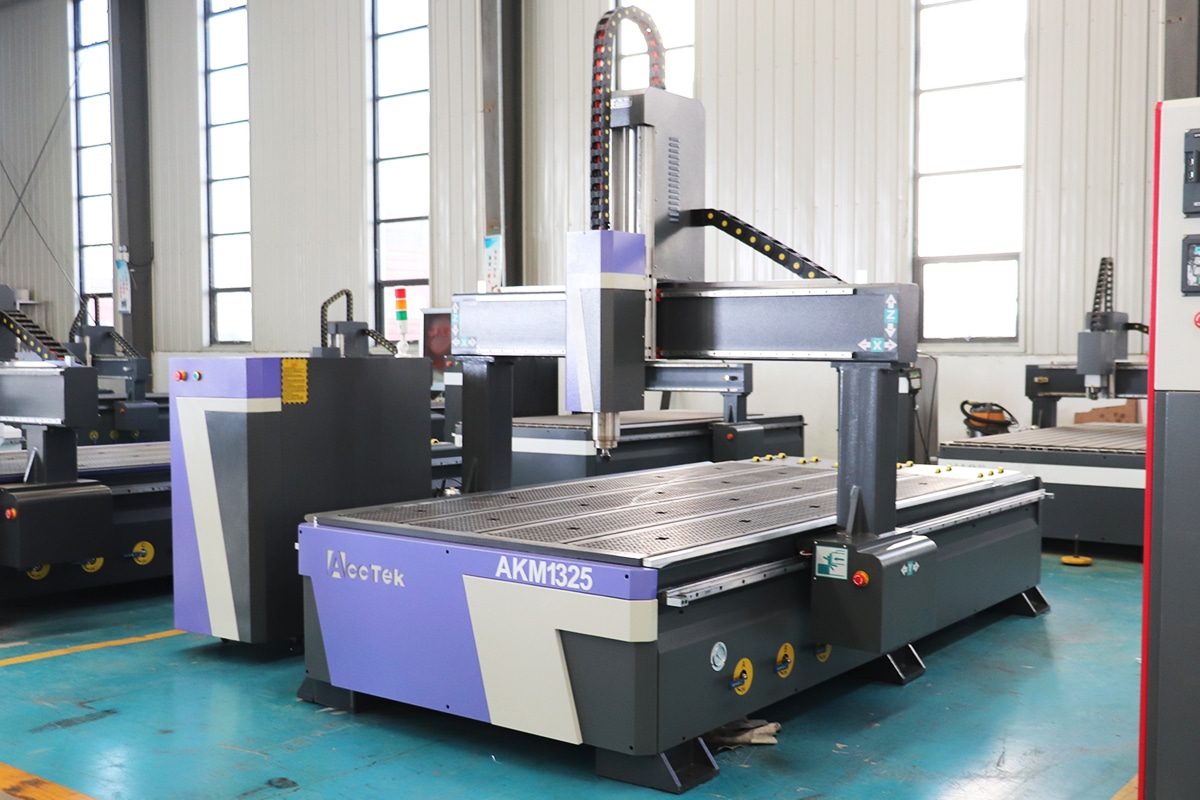
Water-Cooled Spindle VS Air-Cooled Spindle
In CNC routing, the spindle is the heart of the machine. It drives the cutting tool, determines machining accuracy, and directly affects efficiency and surface finish. Among the different spindle types available, water-cooled and air-cooled designs are the two most widely used. Each has its own strengths, limitations, and ideal working conditions; choosing between them is more than just a technical detail—it’s a decision that impacts cost, productivity, and long-term reliability.
Water-cooled spindles use a closed-loop system with circulating coolant to keep temperatures stable, while air-cooled spindles rely on built-in fans and airflow. This fundamental difference in cooling method translates into variations in noise level, durability, maintenance, and suitability for different materials and production environments. For example, water-cooled spindles are often praised for their quiet operation and temperature control during long machining sessions, while air-cooled spindles are valued for their simpler design and lower maintenance requirements.
For CNC router users—from hobbyists running small workshops to manufacturers operating high-volume facilities—understanding these distinctions is essential. This article will break down the advantages and disadvantages of each spindle type, helping you decide which one aligns best with your projects, budget, and production goals.
Table of Contents
Function of the Spindle
The spindle is the central power unit of CNC routers. Its primary role is to drive the cutting tool by rotating it at high speeds, enabling precise cutting, drilling, milling, engraving, or carving of different materials. Without a spindle, the CNC router would essentially be a motion system without the ability to perform any actual machining.
At its core, the spindle consists of a motor, a shaft, and bearings. The motor generates the rotational force, which is transferred to the cutting tool mounted in the spindle’s collet. This rotation speed, measured in revolutions per minute (RPM), can range from a few thousand RPMs for heavy-duty material removal to upwards of 24,000 RPMs for fine, detailed cutting. The bearings support the shaft and maintain stability, ensuring smooth operation and minimizing vibration, which is critical for maintaining surface quality and accuracy.
Beyond simply spinning the tool, the spindle also determines how effectively the CNC router handles different materials. Hardwoods, metals, plastics, and composites each demand different torque and speed ranges. A high-performance spindle ensures that the tool can cut cleanly without burning, chipping, or leaving rough edges.
In summary, the spindle is the workhorse of CNC routers, directly influencing cutting speed, precision, tool life, and overall efficiency. Whether water-cooled or air-cooled, the cooling method enhances the spindle’s ability to sustain performance over long jobs, reduce wear, and maintain consistent results. Understanding how the spindle functions makes it easier to see why cooling design plays such a critical role in CNC machining.
How Air-Cooled Spindles Work
Air-cooled spindles rely on fans and airflow to regulate temperature during operation. Inside the spindle housing, a high-speed electric motor drives the cutting tool, while integrated fans—mounted on top or built into the motor shaft—circulate air through the housing. This airflow pulls heat away from the bearings and motor windings, preventing overheating during extended use. Unlike water-cooled systems, there is no external pump, tubing, or coolant reservoir; cooling is self-contained and automatic as soon as the spindle powers on.
Upsides in Practice
Air-cooled spindles are simple, rugged, and easy to maintain. With no water lines or coolant to manage, installation is straightforward—just mount, wire, and run. This makes them especially popular among hobbyists, small shops, and production settings where operators value minimal upkeep. They also avoid the risk of leaks or pump failures that can occur with water-cooled systems. In addition, they perform reliably in environments where clean water circulation is impractical. Their durability and “plug-and-play” nature mean less downtime and lower initial costs.
Trade-offs You Feel at the Machine
The biggest compromise is noise. Because air-cooled spindles rely on constant airflow, their fans generate a steady hum that grows louder at higher RPMs. Heat dissipation is also less efficient compared to water-cooled designs, which means air-cooled spindles may run hotter during long or heavy machining sessions. Prolonged heat buildup can shorten bearing life and slightly reduce precision over time, particularly in high-demand industrial use. For lighter projects or intermittent operation, this trade-off is manageable, but for long, continuous runs, users often notice higher tool wear and reduced surface finish quality compared to water-cooled spindles.
Air-cooled spindles deliver dependable performance with minimal setup and maintenance. They shine in workshops that value simplicity, cost efficiency, and reliability without the hassle of coolant management. However, users must accept more noise and slightly less thermal stability, especially under heavy-duty or long-duration workloads.
How Water-Cooled Spindles Work
Water-cooled spindles use a closed-loop liquid circulation system to manage heat. Inside the spindle body, coolant (usually water or a water-glycol mix) is pumped through channels surrounding the motor and bearings. As the spindle runs, the liquid absorbs heat and carries it away to a radiator or reservoir, where it cools before recirculating. This continuous process keeps operating temperatures low and stable, even during long, demanding machining sessions. Unlike air-cooled spindles, the cooling is independent of airflow, which makes the operation quieter and more thermally consistent.
Upsides in Practice
The most obvious benefit is excellent temperature control. Water removes heat more effectively than air, so water-cooled spindles can maintain stable operating conditions over extended periods. This reduces thermal expansion, preserves bearing life, and ensures cutting accuracy. Another practical advantage is noise reduction: without fans, water-cooled spindles operate much more quietly, which improves the workshop environment and reduces operator fatigue. For shops that run continuous, high-speed jobs or require fine surface finishes, water-cooled systems deliver smoother results, longer tool life, and greater consistency.
Trade-Offs You Must Manage
The added complexity is the main drawback. A water-cooled system requires external components: a pump, tubing, and a reservoir. That means more setup, more space, and more parts that could fail. Coolant must be monitored and occasionally replaced to avoid algae growth or contamination. Leaks, though not common with a well-maintained system, can cause costly downtime or even machine damage. In cold climates, the coolant mix needs antifreeze additives to prevent freezing. All of this adds to maintenance responsibility compared to a self-contained air-cooled spindle.
Water-cooled spindles excel in high-precision, long-duration machining where temperature stability and quiet operation matter most. They deliver superior cut quality, tool longevity, and reduced noise, but require extra investment in setup and ongoing maintenance. For professional shops and industrial users, the trade-offs are usually worth it; for casual or light users, the complexity may feel excessive.
Thermal Engineering: Why Cooling Quality Changes Your Results
Cooling is not just about preventing overheating—it directly shapes the precision, durability, and performance of a CNC spindle. How effectively a spindle manages heat influences everything from tool life to the smoothness of your final cut. To understand why water-cooled and air-cooled designs behave differently at the machine, it helps to look at three core aspects of spindle thermal engineering.
Heat Load and Removal
Every spindle generates heat from motor windings, bearings, and friction at high RPMs. If that heat is not removed quickly, temperatures climb and performance suffers. Air-cooled spindles rely on airflow to carry heat away, which works but has limits when loads are heavy or sessions run long. Water-cooled systems, by contrast, have a far higher capacity for heat transfer. They can absorb and move away large amounts of thermal energy efficiently, keeping the spindle body stable even under continuous duty.
Thermal Growth and Accuracy
As metal components inside the spindle heat up, they expand microscopically—a phenomenon known as thermal growth. This tiny expansion can shift tool position and affect cutting accuracy. A hot spindle may leave parts slightly out of tolerance or cause surface finish inconsistencies. Because water-cooled spindles maintain lower and more stable temperatures, they reduce thermal growth, leading to better dimensional accuracy and smoother cuts during long runs. Air-cooled spindles, while effective for lighter workloads, are more likely to show performance drift if heat builds up.
Duty Cycle and Power Density
A spindle’s cooling system also determines how long it can sustain its rated power output. Air-cooled designs are typically best for intermittent or medium-duty use, where heat can dissipate naturally between jobs. In contrast, water-cooled spindles can sustain higher duty cycles and greater power density because their cooling loop actively manages thermal loads. This allows manufacturers to push spindles harder, run them longer, and rely on consistent output shift after shift.
Thermal engineering is a hidden but decisive factor in CNC performance. Better cooling means less heat stress, reduced wear, greater accuracy, and longer tool and spindle life. Air-cooled spindles perform well for lighter or moderate workloads with simpler demands, but water-cooled spindles excel when precision, long duty cycles, and consistent quality are required. Ultimately, how your spindle handles heat directly determines the results you see at the machine.
Performance Characteristics You’ll Notice
When comparing air-cooled and water-cooled spindles, the differences go beyond engineering theory. At the machine, you’ll feel and see distinct performance characteristics that affect productivity, finish quality, and even operator comfort. These traits often become the deciding factors when choosing a spindle type.
Torque and Speed Behavior
Spindles convert electrical power into cutting force, and cooling quality directly affects how consistently they deliver torque across the RPM range. Air-cooled spindles perform reliably at medium speeds and lighter loads, but heat buildup can limit sustained torque during long or heavy cuts. Water-cooled spindles, by keeping temperatures stable, maintain their rated torque and speed over extended sessions. This makes them better suited for cutting dense materials like hardwoods, composites, or metals where continuous torque matters.
Surface Finish and Edge Quality
Heat and vibration are the enemies of precision. As air-cooled spindles warm up, thermal expansion and fan-induced vibrations can subtly affect cut quality, sometimes leaving edges rougher or requiring extra sanding. Water-cooled spindles, operating at cooler and steadier conditions, deliver cleaner cuts and smoother edges. The difference becomes especially noticeable in fine engraving, 3D contouring, or high-speed machining, where every micron of accuracy counts.
Noise and Comfort
Operator comfort is often overlooked until you’ve stood next to a running CNC router for hours. Air-cooled spindles, with their built-in fans, produce a steady whine that grows louder at high RPMs. In smaller workshops, this can add to fatigue or require additional noise control measures. Water-cooled spindles, by eliminating fan noise, run significantly quieter. For shops with multiple machines or long operating hours, this lower noise level improves the working environment and reduces strain on operators.
In practice, water-cooled spindles hold their performance under demanding workloads, produce superior surface quality, and run quietly—making them the choice for precision and professional environments. Air-cooled spindles are rugged, straightforward, and effective for lighter-duty jobs, but you may notice more noise, slightly rougher finishes, and torque limitations on longer runs. These real-world characteristics often matter more than specs on paper, shaping the everyday experience of CNC machining.
Reliability, Service Life, and What Fails First
No spindle lasts forever. Even with careful use, components wear down under the stress of high speeds, heat, and vibration. Understanding what typically fails first—and why—helps operators plan maintenance, extend service life, and choose the right spindle for their workload.
Bearings
Bearings are almost always the first point of failure in any spindle, whether air or water-cooled. They carry the load of the rotating shaft at thousands of RPMs, and heat, dust, and vibration gradually degrade them. In air-cooled spindles, bearings often run hotter because airflow alone may not fully stabilize temperatures, especially in long duty cycles. This can shorten bearing life and lead to chatter or reduced accuracy. Water-cooled spindles give bearings a better environment by controlling heat more effectively, often extending their lifespan. However, if coolant flow is interrupted, overheating can still accelerate wear quickly.
Fans, Pumps, and Chillers
Air-cooled spindles rely on fans—simple components that generally last, but can wear out or break at high RPMs. A failing fan reduces cooling efficiency and raises operating temperatures. Water-cooled spindles, on the other hand, depend on external systems: pumps, hoses, and sometimes chillers. These add complexity and extra failure points. A weak pump or clogged chiller can compromise cooling, leading to overheating and premature bearing wear. In this way, air-cooled systems are simpler with fewer things to go wrong, while water-cooled setups trade simplicity for better thermal control but more parts to maintain.
Leaks and Contamination
Leaks are unique to water-cooled spindles and represent their biggest reliability risk. Poorly sealed fittings, degraded hoses, or careless maintenance can allow coolant to escape, potentially damaging electronics or the machine bed. Contaminated coolant—whether from dust, algae, or improper additives—can clog flow channels and reduce heat transfer efficiency. Air-cooled spindles avoid these issues, but they are more exposed to dust buildup inside the housing. Without proper cleaning, that dust can restrict airflow and contribute to overheating.
Reliability in CNC spindles comes down to managing heat and maintaining critical components. Bearings will eventually wear out in both designs, but their life depends heavily on cooling quality. Air-cooled spindles win in simplicity, with fewer parts to fail, while water-cooled spindles deliver longer service life when properly maintained—but demand vigilance against leaks and coolant issues. Knowing what tends to fail first helps operators take preventative steps, reducing downtime and protecting their investment.
Installation Considerations
Choosing between a water-cooled and an air-cooled spindle is only half the story—getting it installed correctly determines how well it will perform and how long it will last. Both types have their own requirements, and overlooking details during installation can lead to noise issues, overheating, or premature wear.
Mechanical Mounting and Plumbing
Both spindle types require secure mechanical mounting to the CNC router’s Z-axis, ensuring proper alignment with the machine bed. With air-cooled spindles, this is usually straightforward—mount the spindle, connect the collet, and it’s ready to run. Water-cooled spindles add another layer: coolant plumbing. Tubing must be routed carefully to avoid kinks, pinches, or interference with machine motion. Hose fittings need to be well sealed to prevent leaks, and routing should allow easy access for future maintenance.
Electrical and EMC
Electrically, spindles are driven by variable frequency drives (VFDs), which must be wired correctly to deliver stable power. Both air- and water-cooled spindles require attention to grounding and shielding, since VFDs can introduce electromagnetic interference (EMI) that disrupts nearby electronics. Proper cable shielding, routing away from signal wires, and grounding the spindle housing reduce the risk of control glitches or noise in sensitive equipment.
Sizing the Cooling Loop
For water-cooled spindles, the cooling loop must be correctly sized to handle the spindle’s heat load. This involves matching the pump capacity, reservoir size, and radiator (or chiller) to the spindle’s power rating. Undersized systems may work initially but struggle under continuous duty, leading to creeping heat buildup. Larger systems add stability but require more space. Positioning the reservoir at a convenient height and minimizing hose length also improves efficiency.
Coolant Choices
Water is the most common coolant, but it’s not always the best choice. In clean shop environments, distilled water with an anti-corrosion additive works well. In colder climates, a glycol mix prevents freezing and provides lubrication. Some users prefer specialized coolant formulations that resist algae growth and extend service intervals. Whatever the choice, coolant should be monitored and changed periodically, since contamination reduces heat transfer and risks clogging the spindle channels.
Air-cooled spindles keep installation simple—mount, wire, and run. Water-cooled spindles demand more planning: proper plumbing, cooling system sizing, and coolant management. Done right, they deliver better thermal performance and quieter operation. Done poorly, they introduce leaks, EMI issues, and overheating. Careful installation ensures the spindle’s performance lives up to its design, whether you value simplicity or precision.
Cost of Ownership
The real cost of a spindle extends well beyond its purchase price. Operators need to consider not only what it costs to buy, but also what it consumes in energy, how often it requires maintenance, and how it affects tool wear and scrap rates. Evaluating the cost of ownership gives a clearer picture of which spindle type makes the most sense for a given shop.
Initial Hardware
Air-cooled spindles are generally cheaper upfront. They require no external cooling equipment—just the spindle and a VFD—so installation costs are lower as well. Water-cooled spindles, while sometimes priced similarly at the spindle unit level, require pumps, hoses, reservoirs, and possibly chillers. That means a higher initial outlay and more time to set up.
Energy
Both spindle types consume similar amounts of power during cutting, since energy demand is tied to load and speed. However, water-cooled systems add the draw of pumps or chillers, increasing operating costs slightly. For high-volume shops, this extra energy use is usually small compared to the benefits of stable cutting and reduced scrap.
Maintenance
Air-cooled spindles win on simplicity—fans are low-maintenance, and there are fewer components to fail. Maintenance mostly involves keeping dust out and replacing bearings when they wear out. Water-cooled spindles require more attention: monitoring coolant levels, replacing fluid periodically, checking hoses for leaks, and servicing pumps. Neglect in any of these areas can cause downtime and costly repairs.
Bearings
Bearings are the weak point in any spindle, and replacement is one of the highest ongoing costs. Because water-cooled spindles keep bearings at a lower, more consistent temperature, they often last longer, delaying the expense of replacement. Air-cooled spindle bearings may wear faster under continuous or high-load conditions, shortening service intervals.
Tool Life and Scrap
Cooling quality doesn’t just affect the spindle—it directly impacts cutting tools and material yield. Hotter spindles (more common with air cooling) can increase tool wear, dulling edges faster, and leading to higher tool replacement costs. They can also cause thermal drift, which means parts may go out of tolerance, increasing scrap. Water-cooled spindles, by maintaining stable cutting conditions, tend to improve tool longevity and reduce waste—hidden savings that often outweigh their higher setup cost in professional environments.
Air-cooled spindles carry a lower initial price and minimal maintenance needs, making them cost-effective for hobbyists and small shops with lighter workloads. Water-cooled spindles cost more upfront and demand ongoing care, but they can pay back over time with longer bearing life, improved tool performance, and reduced scrap. For high-duty or precision-focused shops, the long-term economics often favor water cooling; for lighter-duty users, the simplicity of air cooling keeps ownership costs lower.
Material-Specific Guidance
The right spindle for your CNC router depends heavily on what you cut most often. Different materials place unique demands on torque, speed, cooling stability, and surface quality. Choosing between air-cooled and water-cooled spindles becomes clearer when you look at how each performs across common categories.
Hardwoods, MDF, and Plywood
Wood machining generates friction and fine dust. Air-cooled spindles handle light to moderate wood routing well, especially for small shops or furniture prototyping. However, long runs in hardwoods or engineered woods (like MDF and plywood) can heat air-cooled spindles, shortening tool life and leaving rougher edges. Water-cooled spindles keep temperatures steady, producing smoother edges on hardwoods and reducing burn marks on dense plywood. For cabinetry, flooring, or precision joinery, water cooling pays off.
Plastics (Acrylic, Polycarbonate, ABS, HDPE)
Plastics are extremely sensitive to heat—too much and you’ll see melting, gumming, or chipped edges. Air-cooled spindles can manage short jobs on softer plastics, but the fan noise and fluctuating spindle temps may affect consistency. Water-cooled spindles excel here: their stable cooling prevents tool heating and material melting, leaving crisp edges on acrylic and polycarbonate. They also extend tool life in abrasive plastics like ABS and HDPE.
Aluminum and Non-Ferrous Metals
Machining aluminum requires steady torque and tight temperature control. Air-cooled spindles tend to struggle under long-duration aluminum cutting because heat buildup reduces precision and accelerates bearing wear. Water-cooled spindles shine, providing the thermal stability needed to prevent warping, chatter, and premature tool dulling. The consistent spindle temperature is critical for accurate tolerances in metal parts.
Composites (CFRP/GFRP)
Carbon fiber and glass fiber composites are abrasive, generating heat and fine particulate that can eat through tools and bearings. Air-cooled spindles are simpler and less prone to coolant contamination, making them a practical choice for occasional composite cutting. But for continuous or industrial composite work, water-cooled spindles maintain better thermal stability, extending both tool and spindle life. Proper dust collection is essential either way.
Foam
Foam machining is light-duty, with minimal heat generation. Air-cooled spindles are more than adequate here—they’re cost-effective, simple, and won’t suffer under the low loads of foam routing. Water cooling is generally unnecessary unless the same spindle is also cutting more demanding materials.
Stone and Solid Surface (Granite, Marble, Quartz, Corian)
Stone and solid-surface machining is one of the harshest applications for CNC routers. These materials require sustained torque, water-assisted dust suppression, and vibration control. Air-cooled spindles are rarely recommended, as they struggle with heat and produce excessive noise under load. Water-cooled spindles are almost always the standard here, offering the temperature control and quiet operation needed to handle long, demanding stone jobs.
Air-cooled spindles are practical for foam, light woods, and occasional jobs across plastics or composites—especially where simplicity and low cost are priorities. Water-cooled spindles prove their worth in hardwoods, plastics, aluminum, composites, and stone, where thermal stability, surface finish, and tool longevity make a measurable difference. Matching spindle type to material ensures both efficiency and quality in CNC machining.
Safety and Environmental Notes
CNC spindle choice is not only about performance and cost—it also affects shop safety and environmental impact. Both air-cooled and water-cooled spindles have unique considerations operators should keep in mind to maintain a safe, efficient, and compliant workspace.
Electrical Safety
All CNC spindles run on high-voltage power supplied through a variable frequency drive (VFD). Proper grounding, shielding, and wiring are critical to avoid electrical hazards and reduce electromagnetic interference (EMI) with other equipment. Air-cooled spindles are straightforward but still require careful attention to insulation and strain relief at cable connections. Water-cooled spindles add another risk factor: water near high-voltage wiring. Any leak around electrical components can be dangerous, so installation must include proper sealing, cable routing, and residual-current device (RCD/GFCI) protection.
Spill Containment
Water-cooled systems introduce the possibility of leaks from hoses, fittings, or reservoirs. Even a small spill can damage sensitive electronics, warp wooden machine bases, or create slip hazards in the shop. Good practice includes securing hoses with clamps, using drip trays under reservoirs, and checking connections regularly. Shops should also have absorbent materials or spill kits nearby to address leaks quickly.
Coolant Handling
While air-cooled spindles eliminate liquid coolant concerns, water-cooled systems require ongoing fluid management. Coolant must be monitored for clarity, topped off when levels drop, and replaced periodically to prevent algae, scale, or corrosion. If additives or antifreeze are used, disposal should follow local environmental regulations—never pour spent coolant directly down drains. Using distilled water and biocide additives helps minimize contamination risks and reduces environmental impact.
Noise Exposure
Noise is a workplace safety factor often overlooked until it becomes an issue. Air-cooled spindles generate continuous fan noise that grows louder at high RPMs, potentially contributing to hearing fatigue or long-term hearing damage if ear protection isn’t used. Water-cooled spindles, by comparison, operate much more quietly, reducing ambient shop noise. For shared workspaces or long production shifts, this difference can significantly improve comfort and reduce the need for hearing protection.
Safety and environmental considerations tip the balance differently depending on spindle type. Air-cooled spindles avoid liquid management but produce higher noise levels that can affect operator health. Water-cooled spindles run quietly and preserve accuracy but require careful attention to spill prevention and coolant disposal. Whichever spindle you choose, prioritizing safe installation, proper fluid handling, and noise management ensures a cleaner, safer, and more sustainable CNC operation.
Commissioning and Best Practices
Installing a spindle is only the first step—commissioning it correctly and running it with consistent best practices is what ensures long life and reliable results. Whether using air or water cooling, disciplined setup and operation habits prevent costly downtime and help operators get the most out of their CNC equipment.
Bench Test the Loop
For water-cooled spindles, the cooling loop should be bench tested before connecting it to the spindle. Run the pump, check for leaks at fittings, and confirm flow rate and pressure are within spec. This avoids surprises once the spindle is mounted. For air-cooled spindles, a quick airflow and fan inspection is equally important to confirm that nothing obstructs cooling.
Warm-Up Routine
Spindles benefit from a controlled warm-up sequence, especially with new bearings. Running the spindle at low RPM for a few minutes before moving to full speed allows grease to distribute evenly and bearings to reach operating clearance. This simple step reduces premature wear and improves surface finish consistency, no matter the spindle type.
Temperature Targets
Monitoring temperature is key to long service life. Air-cooled spindles will run warmer and are acceptable up to manufacturer limits, but consistent overheating shortens bearing life. Water-cooled spindles should maintain coolant return temperatures within the recommended band, typically 25–35 ℃. Installing inline thermometers or digital sensors helps track these values and spot problems early.
Log and Learn
Keeping a spindle logbook builds a history of performance. Record duty cycles, temperatures, coolant changes, and any unusual noises or vibrations. Over time, patterns emerge that make it easier to predict bearing replacements, schedule maintenance, and adjust operating practices. Even a simple spreadsheet can help spot early warning signs before they become failures.
Maintenance Cadence
Best practices include scheduling proactive maintenance rather than waiting for breakdowns. Air-cooled spindles should have fans and housings cleaned of dust buildup monthly, with bearings checked or replaced at recommended intervals. Water-cooled systems need coolant flushed and replaced every few months, hose clamps inspected, and pumps serviced as needed. Establishing a maintenance cadence suited to your shop’s workload keeps the spindle running smoothly and avoids unexpected downtime.
Commissioning and best practices make the difference between a spindle that fails early and one that runs reliably for years. Bench testing, controlled warm-ups, temperature monitoring, disciplined logging, and scheduled maintenance form a cycle of care that protects both air- and water-cooled spindles. Treating these steps as routine rather than optional ensures stable performance, better cut quality, and maximum return on investment.
Decision Framework
Choosing between a water-cooled and an air-cooled spindle is not about which one is “better” in general—it’s about which one is better for your specific shop, workload, and expectations. The decision comes down to weighing performance needs against cost, complexity, and the realities of your operating environment.
Duty Cycle & Power
If your CNC router runs light jobs for a few hours at a time, an air-cooled spindle’s simpler design will be sufficient. For long production runs, high-RPM work, or demanding materials, water-cooled spindles handle heat better, sustaining torque and reducing wear.
Tolerance & Finish
For furniture or signmaking where minor imperfections can be sanded out, either spindle can work. But if you need tight tolerances, fine engraving, or premium surface finishes, water-cooled spindles provide more consistent accuracy by minimizing thermal growth.
Noise Constraints
Air-cooled spindles are louder, which may not matter in an industrial setting but can be disruptive in small shops or shared spaces. Water-cooled models are quieter, improving comfort and reducing the need for hearing protection during long jobs.
Simplicity & Portability
Air-cooled spindles win here—they have fewer parts, install easily, and move from one machine to another without plumbing or coolant to manage. Water-cooled spindles require pumps, reservoirs, and extra setup, making them less portable.
Budget & Maintenance Culture
If your budget is tight and you prefer low-maintenance equipment, air-cooled spindles are the cost-effective option. If you’re willing to invest more upfront and follow a proactive maintenance routine (coolant checks, pump care, bearing monitoring), water-cooled spindles can save money in the long run through tool longevity and reduced scrap.
Environment
Workshops with clean, climate-controlled conditions favor water cooling since coolant systems stay stable and easy to maintain. Harsh or dusty environments can make coolant loops harder to manage, tipping the balance toward air-cooled spindles, which are more rugged in dirty shops.
ATC Integration
Automatic Tool Changers (ATC) work with both spindle types, but water-cooled spindles are often preferred in professional setups because of their stability during long, multi-tool machining cycles. In smaller machines without ATC, the simplicity of air cooling may be more attractive.
The right spindle depends on how you balance performance demands with shop realities. Air-cooled spindles are simple, affordable, and durable enough for light to medium workloads. Water-cooled spindles bring superior precision, quieter operation, and longer tool life—but at the cost of more setup and ongoing care. By considering duty cycle, tolerance requirements, noise, portability, budget, environment, and ATC integration, you can choose the spindle that best matches your CNC router’s role in your workflow.
Summary
The choice between a water-cooled and an air-cooled spindle comes down to matching machine capability with shop needs. Both designs share the same purpose—driving the cutting tool with speed, stability, and precision—but their differences in cooling method shape performance, reliability, and long-term cost in meaningful ways.
Air-cooled spindles are simple, rugged, and budget-friendly. They install easily, require minimal maintenance, and perform well for light to medium-duty work such as woodworking, foam cutting, or occasional plastics and composites. Their main drawbacks are higher noise levels and less effective heat management, which can shorten bearing and tool life under heavy or continuous use.
Water-cooled spindles excel where precision, quiet operation, and long duty cycles are critical. By keeping temperatures low and stable, they extend bearing and tool life, improve surface finish, and sustain torque even in demanding materials like hardwood, aluminum, and stone. The trade-offs are higher upfront costs, added complexity, and the need for regular coolant management and leak prevention.
In the end, the decision is not about which spindle is universally better, but about which aligns with your workload, budget, and operating environment. A thoughtful match ensures consistent performance, longer service life, and the best return on investment for your CNC router.
Get CNC Routing Solutions
Choosing between a water-cooled and an air-cooled spindle is only one part of building the right CNC router system. The best results come from a solution that balances spindle performance with machine design, control systems, and application-specific needs. At AccTek Group, we specialize in delivering complete CNC routing solutions that are engineered for reliability, precision, and long-term value.
Our team helps customers evaluate workloads, materials, and production goals to recommend the spindle and machine combination that makes the most sense. Whether you need the simplicity and durability of an air-cooled spindle for woodworking and light manufacturing, or the precision and stability of a water-cooled spindle for metals, composites, and continuous production, AccTek Group offers equipment that matches your requirements.
Beyond hardware, we provide guidance on installation, commissioning, and best practices—ensuring your CNC router is not only configured correctly but also maintained for long service life. With advanced manufacturing, strict quality control, and a commitment to innovation, AccTek Group is trusted by businesses worldwide to deliver intelligent laser and CNC solutions.
If you are looking for a reliable partner in CNC routing, AccTek Group can help you choose the right spindle, optimize your workflow, and unlock the full potential of your CNC equipment.