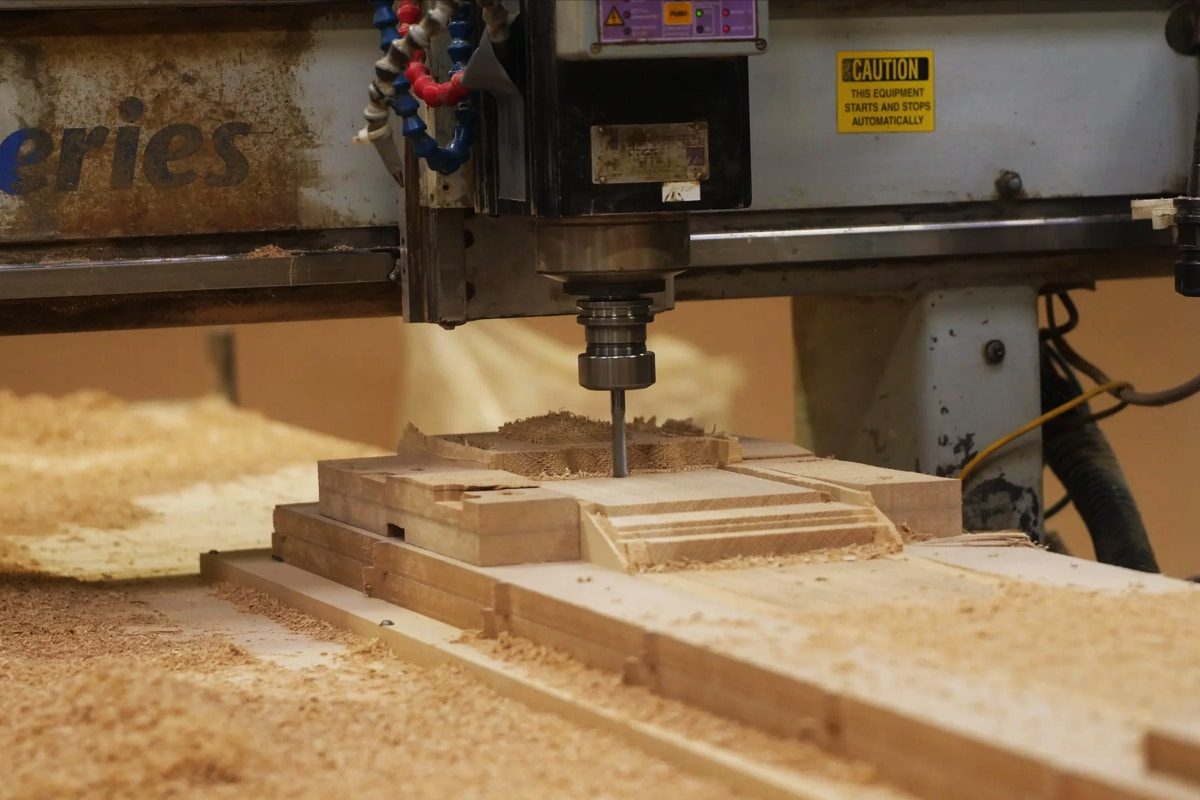
In the world of motion control and automation, stepper motors and servo motors stand out as two of the most widely used technologies for converting electrical signals into precise mechanical movement. Both play a vital role in everything from 3D printers and CNC machines to robotics and industrial automation. Yet, despite serving a similar purpose, they operate on distinct principles and offer very different performance characteristics.
Stepper motors divide a full rotation into a set number of equal steps, moving incrementally with each pulse of electricity. This makes it inherently precise and easy to control without requiring feedback sensors. Stepper motors are favored for their simplicity, reliability, and cost-effectiveness, especially in applications where loads are predictable and high accuracy over short distances is sufficient.
Servo motors, in contrast, use a closed-loop control system that constantly monitors their position through feedback devices such as encoders. This enables it to deliver high torque, rapid acceleration, and exceptional accuracy, even under varying loads. Servo systems are ideal for demanding, high-performance environments that require speed, efficiency, and dynamic response.
In this article, we’ll explore how these two motor types differ, their advantages and limitations, and how to choose the right one for your project.
Electric motors are the heart of modern motion control systems. They convert electrical energy into mechanical energy, enabling machines to perform controlled and repeatable movements. From industrial robots to household appliances, almost every automated system relies on electric motors to generate rotation or linear motion. To understand the difference between stepper and servo motors, it’s essential to first grasp the fundamental principles that all electric motors share.
At their core, electric motors operate based on electromagnetic induction — the principle that a current-carrying conductor placed in a magnetic field experiences a force. This force creates torque, which causes the motor’s shaft to rotate. The amount of torque and speed depend on how the electrical current interacts with the magnetic field, as well as the design of the motor.
The control method determines how the motor behaves. In a basic DC motor, voltage directly controls speed and torque. In AC motors, alternating current creates a rotating magnetic field to drive motion. Stepper and servo motors build upon these basic concepts with more advanced control techniques.
Stepper motors divide rotation into fixed angular steps, allowing for precise, incremental motion without requiring position feedback. Servo motors, by contrast, incorporate feedback devices such as encoders to constantly adjust and maintain accurate position, speed, and torque.
In summary, while both stepper and servo motors are specialized types of electric motors, they share the same electromagnetic foundation. The difference lies in their control strategy, feedback mechanism, and performance characteristics — aspects that determine how effectively they can meet the demands of specific motion control applications.
A stepper motor is a type of brushless, synchronous electric motor designed to convert a train of electrical input pulses into discrete angular movements of the shaft. Each input pulse advances the rotor by a fixed mechanical angle, known as a step, allowing for precise control of position and rotation without requiring feedback sensors.
Unlike traditional DC motors that rotate continuously when power is applied, stepper motors rotate in fixed increments, making them inherently digitally controlled devices. This means that the number of input pulses directly determines the motor’s angular displacement, and the frequency of those pulses defines its rotational speed. As a result, stepper motors can achieve extremely accurate positioning and repeatable movement, which is essential for applications such as 3D printing, CNC machining, and camera control systems.
In practice, stepper motors serve as open-loop positioning systems. They do not measure or correct their position during operation, relying instead on precise electrical control to ensure movement accuracy. This simplicity eliminates the need for encoders or feedback sensors, reducing cost and complexity, though it also introduces some limitations in dynamic performance and torque control.
The motor housing often includes bearings for smooth rotation and a shaft that transfers motion to external mechanical systems. The toothed structure of both rotor and stator enhances step resolution and torque. In hybrid stepper motors—the most advanced type—the teeth on the rotor and stator are carefully aligned to achieve step angles as small as 0.9°, allowing for extremely fine control.
Because there are no brushes or mechanical commutators, stepper motors exhibit high reliability, minimal wear, and low maintenance requirements.
The control of a stepper motor is based on the sequential energization of its stator windings. This is handled by an electronic driver, which receives pulse commands from a microcontroller, PLC, or computer. Each pulse causes the motor to move one incremental step.
The motor’s speed is proportional to the frequency of these pulses, and the total displacement is determined by the number of pulses sent. For example, a motor with 200 steps per revolution (1.8° per step) will complete one full rotation after receiving 200 pulses.
Modern digital drivers also include current regulation, acceleration profiles, and anti-resonance compensation, which improve torque utilization and enable high-speed operation while minimizing step loss.
Overall, stepper motors are characterized by high static precision, excellent repeatability, and predictable torque behavior, though they trade off speed and dynamic responsiveness for simplicity and accuracy.
In short, stepper motors excel in precision and control simplicity but are not ideal when high speed, variable torque, or feedback-based adaptability are required.
Overall, stepper motors thrive in applications where predictable motion, low to moderate speed, and high positional accuracy are required. They strike the perfect balance between simplicity, precision, and affordability—qualities that have made them a cornerstone of modern motion control systems.
Stepper motors are fundamental components in modern motion control due to their accuracy, reliability, and simplicity. Their open-loop design makes them easy to control and cost-effective, while their ability to deliver precise incremental movement ensures consistent performance across a wide range of applications.
However, they are best suited for low- to medium-speed, moderate-load systems where position accuracy is more critical than torque efficiency or speed. For high-speed, dynamic applications requiring feedback and adaptive control, servo motors provide superior performance.
Ultimately, stepper motors remain indispensable wherever precision, predictability, and affordability converge—serving as a cornerstone technology in automation, robotics, and mechatronics.
A servo motor is a high-performance rotary or linear actuator that provides precise control of position, speed, and torque through a closed-loop feedback system. Unlike stepper motors, which move in fixed steps without feedback, servo motors continuously measure their output and automatically adjust to match the desired input.
In a servo system, sensors such as encoders or resolvers provide real-time feedback on the motor’s actual position and speed. This information is compared to the commanded value, and any difference—known as error—is immediately corrected by adjusting the input current or voltage. This feedback mechanism ensures smooth motion, high accuracy, and stable operation, even under changing loads or rapid acceleration.
Servo motors are widely used in applications demanding high speed, responsiveness, and precision, such as industrial automation, robotics, aerospace systems, and medical equipment. They are capable of achieving not just movement, but controlled and intelligent motion—a crucial distinction that sets them apart from open-loop systems like stepper motors.
This synergy of electromechanical design and feedback electronics allows servo motors to deliver precise, efficient, and adaptive motion, even in complex, high-speed operations.
Servo control systems operate on the principle of error correction within a closed feedback loop. The controller compares the target command (position, velocity, or torque) to the feedback data from the encoder or resolver. The difference between the two signals generates an error, which is used to adjust the motor’s input current and voltage through a PID (Proportional–Integral–Derivative) control algorithm.
Advanced servo drives employ field-oriented control (FOC) or vector control to optimize current flow, achieving maximum torque with minimal losses. This enables the motor to deliver high torque density, fast acceleration, and precise motion control under dynamic operating conditions.
In essence, servo motors combine accuracy, torque stability, and rapid adaptability, making them the benchmark for performance in precision automation.
Overall, servo motors combine intelligence, power, and precision, making them ideal for modern automation environments where performance and reliability are paramount.
In short, while servo motors deliver unmatched performance, they demand greater investment in both hardware and system expertise—best suited for applications where speed, precision, and adaptability justify the added cost.
In all these applications, servo motors are chosen for their speed, adaptability, and precision—qualities that define high-end motion control.
Servo motors represent the pinnacle of precision motion technology, combining real-time feedback, intelligent control, and mechanical efficiency. Their closed-loop feedback system allows unmatched performance in terms of accuracy, torque stability, and dynamic response.
While they are more costly and complex than stepper motors, their ability to adapt, self-correct, and deliver consistent torque across all speeds makes them indispensable in robotics, manufacturing, aerospace, and automation.
Simply put: when a system demands speed, accuracy, efficiency, and intelligence, a servo motor is the superior choice.
Both stepper motors and servo motors are crucial in motion control, but they are fundamentally different in design philosophy and performance behavior. While stepper motors emphasize simplicity, reliability, and cost-effectiveness for precise open-loop motion, servo motors excel in closed-loop systems where high performance, speed, and dynamic adaptability are required. Understanding the distinctions between these two motor types helps engineers and designers choose the right one for each specific application. Below are the key factors that set them apart:
The most fundamental difference between stepper and servo motors lies in how they are controlled.
A stepper motor operates on an open-loop control system, meaning the controller sends a fixed number of electrical pulses to the driver, each corresponding to a defined angular step. The motor then moves one step for each pulse. There’s no position or speed feedback—the system assumes the commanded steps are executed correctly. While this makes stepper systems simple and inexpensive, they can lose synchronization (miss steps) if overloaded or driven too fast.
A servo motor, by contrast, uses a closed-loop feedback system. It continuously monitors its actual position, velocity, and torque via encoders or resolvers. The servo controller compares this real-time data to the commanded target and automatically corrects any deviation. This feedback-driven operation ensures high accuracy, smooth motion, and self-correction under variable load conditions.
In essence, steppers follow commands blindly, while servos listen, respond, and adapt to achieve precise motion.
Torque behavior is another major point of distinction between the two.
Stepper motors produce high torque at low speeds, making them excellent for applications such as positioning systems, where holding force and precise incremental movement are important. However, their torque rapidly decreases as speed increases. This is because inductance limits the rate at which current can rise in the windings at high stepping frequencies, reducing effective torque output.
Servo motors, on the other hand, maintain consistent torque over a wide speed range. Their torque curve remains strong at both low and high speeds, and they can temporarily deliver overload torque—often 200–300% of their rated value—to handle sudden load changes or acceleration demands. This makes them ideal for dynamic, high-speed operations like robotics, conveyors, and CNC spindles.
In summary, steppers provide holding torque at low speed, while servos deliver sustained torque and power at high speed.
When it comes to speed, servo motors clearly outperform steppers.
A typical stepper motor operates best at low to moderate speeds, usually below 1000 RPM. Beyond this range, torque drops sharply, and vibration or resonance may occur. This limits steppers to applications where controlled, slow movement is acceptable, such as 3D printing or light CNC positioning.
Servo motors are designed for high-speed performance. They can easily reach 3000 to 5000 RPM, and some high-end servos exceed 10,000 RPM. Because of their continuous feedback and optimized control algorithms, they accelerate and decelerate rapidly without losing torque or stability. This high-speed capability makes servos suitable for demanding tasks that require both precision and fast motion, such as pick-and-place robotics, machine tools, and automated production lines.
Simply put, steppers are precise but slow, while servos are fast and powerful.
Both motors are capable of precise control, but the source of their accuracy differs fundamentally.
Stepper motors achieve precision through their fixed step angle—commonly 1.8° or 0.9° per step. Each pulse corresponds to a predictable angular movement, making position control straightforward. However, since steppers lack feedback, missed steps or overloading can lead to cumulative position errors that the system cannot correct on its own. For light, predictable loads, they can still achieve excellent repeatability and reliability.
Servo motors, however, rely on feedback sensors to maintain continuous positional awareness. The encoder constantly measures the shaft’s actual position and corrects any error instantly, ensuring precise alignment with the commanded position. Servo systems can achieve sub-degree or even sub-arcminute accuracy, far surpassing open-loop systems. Their repeatability is also superior, as the controller ensures that each commanded movement ends exactly where it should, regardless of load or acceleration.
In summary, stepper accuracy is open-loop mechanical precision, while servo accuracy is closed-loop electronic precision—actively maintained and verified in real time.
Efficiency and thermal performance differ significantly between stepper and servo systems due to their control principles.
Stepper motors consume current continuously, even when stationary, to maintain holding torque. This constant power draw generates significant heat, especially under load or during long hold periods. Their efficiency tends to drop at higher speeds as the current lags behind the voltage due to inductance. Consequently, steppers often require heat sinks or active cooling for continuous-duty applications.
Servo motors, by contrast, are inherently more energy-efficient. Because current is supplied only as needed, they draw minimal power when idle or under light loads. The closed-loop controller adjusts energy delivery dynamically to maintain optimal torque without unnecessary heating. As a result, servo motors run cooler, waste less power, and can handle continuous operation more effectively than steppers.
In short, steppers are simpler but less efficient, while servos optimize energy use and thermal stability for superior long-term performance.
One of the most practical considerations in selecting between a stepper and a servo motor is the balance between system complexity, performance, and cost.
Stepper motors are simpler, cheaper, and easier to implement. They don’t require feedback devices or advanced tuning—just a pulse generator and driver. This makes them highly attractive for low- to mid-performance systems where cost control is crucial and where motion loads are predictable. Maintenance is minimal, and setup is straightforward.
Servo motors, on the other hand, involve greater system complexity. They require specialized servo drives, feedback encoders, and careful tuning of control parameters such as PID gains. While this increases initial cost and setup time, it results in dramatically improved performance, efficiency, and reliability in complex or high-speed applications.
In terms of total cost of ownership, servo systems are more expensive upfront but offer better performance, energy savings, and precision in the long run—especially in high-demand environments.
In conclusion, stepper motors and servo motors differ not just in how they move, but in how they think. Stepper motors are open-loop, cost-effective, and reliable for simple, low-speed, predictable applications. They excel in environments where holding torque and repeatable positioning matter more than dynamic performance.
Servo motors, on the other hand, are closed-loop, intelligent, and adaptive. They maintain torque and precision at any speed, respond instantly to load changes, and operate efficiently with minimal heat generation. These capabilities make them indispensable for high-speed, high-accuracy, and high-duty-cycle automation systems.
Together, they form the foundation of modern motion control—each excelling in its own domain, and each essential to today’s automated world.
The performance of a motor system is determined by how effectively it delivers speed, torque, precision, and smooth motion under varying conditions. Both stepper motors and servo motors excel in their own domains, but their behavior differs significantly in real-world operation. Factors such as speed, acceleration, load response, smoothness, efficiency, and noise directly influence which motor type is best suited for a given application.
Below is a detailed breakdown of how the two motor types compare across key performance parameters.
Speed and acceleration are two of the most defining performance differences between stepper and servo motors.
Stepper motors are inherently designed for low- to medium-speed operation. They deliver strong torque at low speeds, which makes them perfect for applications such as positioning and incremental movement. However, as speed increases, torque decreases sharply due to inductive limitations in the motor windings. At higher pulse rates, the current can’t rise quickly enough to produce full torque, resulting in diminished performance and potential step loss. Most steppers operate efficiently below 1000 RPM, though some optimized designs can reach up to 1500–2000 RPM with reduced torque.
Servo motors, on the other hand, are built for high-speed and high-acceleration performance. They maintain torque across a wide speed range and can reach 3000 to 5000 RPM or more without sacrificing torque output. Because servo systems continuously monitor and adjust their position and speed through feedback, they can accelerate and decelerate rapidly without overshooting or stalling. This makes them ideal for fast, dynamic applications such as industrial robots, CNC spindles, and automated production lines.
In essence, steppers offer steady, controlled motion at low speed, while servos provide rapid, fluid performance at any speed—especially where fast response and acceleration are required.
The ability of a motor to handle changes in load determines its stability and reliability in dynamic environments.
Stepper motors are open-loop systems, which means they do not sense or compensate for changes in load. When the load increases beyond their rated torque, the motor can lose steps or stall entirely, as it has no feedback to detect or correct the error. This makes steppers best suited for applications with predictable, consistent loads, where the mechanical resistance remains relatively constant.
Servo motors, by contrast, thrive under variable load conditions. Their feedback control continuously monitors torque and position, automatically adjusting current to match the load in real time. This closed-loop adaptability allows servos to maintain performance even when loads fluctuate significantly—such as when robotic arms pick up objects of different weights or when machine tools cut materials of varying density.
In short, stepper motors must be sized conservatively to handle peak loads, while servo motors intelligently adapt to load variations, maintaining accuracy, torque, and speed under any condition.
Smoothness of motion is another crucial factor, especially in precision manufacturing, robotics, and optical applications, where vibration or resonance can degrade performance.
Because stepper motors move in discrete increments, their rotation is inherently segmented. At certain speeds—especially in the mid-frequency range—this stepping action can produce noticeable vibration and resonance, resulting in uneven motion or audible “buzzing.” Modern techniques such as microstepping (dividing each full step into smaller sub-steps) greatly reduce these effects, producing much smoother motion. However, even with microstepping, the inherent stepping nature of the motor can’t match the fluidity of a servo system.
Servo motors, in contrast, provide continuous, ripple-free motion. Their sinusoidal commutation and real-time feedback allow for smooth acceleration and deceleration with minimal vibration. This is particularly beneficial in applications requiring fine positioning, surface finishing, or image stabilization, where mechanical resonance can’t be tolerated.
Thus, while stepper motion can be controlled and steady, servo motion is naturally smooth and adaptive, ensuring superior performance in precision and high-speed tasks.
Efficiency is a key measure of how effectively a motor converts electrical energy into mechanical output, directly impacting power consumption, heat generation, and overall system lifespan.
Stepper motors are generally less efficient, primarily due to their constant current draw. Even when stationary, they consume full current to maintain holding torque, converting unused energy into heat. Their efficiency further declines at higher speeds, as inductance limits current flow and reduces torque production. Continuous operation at full current can also require additional cooling measures to prevent overheating, which increases system cost and complexity.
Servo motors, by contrast, are highly efficient—often exceeding 90% energy conversion efficiency. Their feedback control ensures that current is supplied only as needed, based on load demand. When the motor is idle or under low load, current consumption drops significantly, conserving energy. Additionally, servo systems use advanced control algorithms such as field-oriented control (FOC) to optimize torque production and minimize losses, resulting in cooler operation and longer service life.
In short, steppers trade simplicity for energy waste, while servos balance intelligence with efficiency, making them more suitable for continuous or power-sensitive applications.
Noise—both acoustic and mechanical—is a critical performance factor in applications where precision and quiet operation are essential.
Stepper motors are known for producing audible noise due to their stepping motion and the resonance created when electromagnetic fields engage and release in discrete intervals. This is particularly noticeable at mid-range speeds, where vibration peaks. Although microstepping and damping techniques can minimize noise, complete silence is rarely achievable, especially in larger stepper systems.
Servo motors, on the other hand, operate almost silently. Their smooth current control and feedback-driven commutation produce virtually vibration-free motion. The absence of discrete steps means less mechanical shock, minimal resonance, and very low acoustic output. This quiet operation is particularly advantageous in laboratories, medical devices, high-end manufacturing, and consumer technologies like camera gimbals or automated stages.
In terms of acoustic and mechanical noise, servo motors provide superior smoothness and near-silent operation, whereas steppers produce moderate mechanical noise that can limit their use in noise-sensitive environments.
In performance terms, servo motors clearly outshine stepper motors in speed, adaptability, smoothness, and efficiency—but that superiority comes at a cost. Stepper motors deliver simplicity, reliability, and strong low-speed torque, making them ideal for straightforward motion tasks where cost and predictability outweigh the need for dynamic performance.
Servo motors, by contrast, represent the high-performance end of motion control—offering faster acceleration, stable torque under varying loads, smoother operation, greater efficiency, and quieter performance. These attributes make them the preferred choice for industrial automation, robotics, and high-precision manufacturing, where responsiveness and energy optimization are critical.
The right choice depends not just on performance goals, but on how much intelligence, flexibility, and refinement your motion control system truly requires.
When designing a motion control system, the choice between a stepper motor and a servo motor extends far beyond performance specifications. Successful implementation depends heavily on how each motor integrates into the overall system—how it interacts with control electronics, how it is tuned and optimized, and how it performs over time in terms of reliability and maintenance.
Although both technologies can deliver precise, controlled motion, their integration requirements differ significantly. Understanding these differences is critical for engineers to ensure stable, efficient, and long-lasting system performance.
The control electronics form the foundation of any motion control system, governing how power and signals are managed between the controller and the motor.
Stepper motor systems are typically more straightforward to implement. They operate using open-loop control, which means the controller sends a series of step and direction pulses to the driver, and the motor moves accordingly. The driver’s main job is to regulate current to the motor windings and sequence the energization of coils to achieve rotation. Because steppers don’t require feedback sensors, the control architecture is cost-effective, compact, and easy to configure. Integration with microcontrollers, PLCs, or motion controllers is generally simple, with minimal signal wiring and programming complexity.
However, open-loop control also means that the system cannot verify whether the motor actually reached the commanded position. This limitation becomes more critical in applications involving heavy or variable loads, where missed steps or stalls can lead to cumulative errors.
Servo motor systems, in contrast, require closed-loop control electronics. A servo drive communicates continuously with the motor’s feedback device—typically an encoder or resolver—to monitor position, velocity, and torque. The drive uses this feedback to adjust the motor’s input current and voltage in real time, maintaining perfect synchronization with the commanded motion profile.
Servo drives are significantly more complex than stepper drivers. They incorporate advanced control algorithms such as PID control, field-oriented control (FOC), and vector modulation to achieve precise torque and speed regulation. Integration also requires careful attention to communication interfaces (e.g., EtherCAT, CANopen, or Modbus), wiring, and signal integrity.
In summary, stepper control electronics prioritize simplicity and cost-efficiency, while servo control systems emphasize precision, adaptability, and closed-loop intelligence.
System tuning is another area where stepper and servo motors differ dramatically.
Stepper motors require minimal tuning. Their open-loop operation means that once the driver is configured with the correct current limits, microstepping resolution, and acceleration profiles, the system is generally ready to run. The motor’s performance—speed, torque, and resolution—is largely defined by its mechanical and electrical properties rather than control parameters. This makes stepper integration quick and predictable, especially in systems with fixed loads and simple motion profiles.
Servo motors, however, depend heavily on proper tuning to achieve optimal performance. Since they rely on continuous feedback and closed-loop control, parameters such as PID gains, velocity loop constants, and acceleration limits must be adjusted carefully to balance responsiveness and stability.
If the servo loop is under-tuned, the motor may respond sluggishly, reducing precision and throughput. If it is over-tuned, it can become unstable, leading to oscillation or “hunting,” where the motor continuously overshoots the target position. Achieving the right balance requires experience, an understanding of the system’s mechanical characteristics (load inertia, stiffness, damping), and often trial-and-error or auto-tuning software.
Modern servo drives include automatic tuning features that analyze load dynamics and apply optimal control settings automatically. While this simplifies setup, fine-tuning is still required in high-precision or high-speed systems.
Ultimately, steppers offer plug-and-play simplicity, while servos demand careful tuning to unlock their full potential. The difference lies in the trade-off between setup ease and performance flexibility.
Reliability is a critical consideration in motion control systems, as downtime can be costly in industrial and automation environments. Both stepper and servo motors are reliable technologies, but their longevity and failure modes differ due to their control and mechanical design.
Stepper motors are inherently robust and durable. They have no brushes or mechanical commutators, resulting in minimal wear and long service life. Because they operate without feedback sensors, fewer electronic components could fail. This simplicity makes steppers particularly well-suited for harsh or demanding environments where maintenance access is limited or where long operational life is required with minimal oversight.
However, because steppers operate open-loop, they can lose synchronization if overloaded or accelerated too quickly. Repeated missed steps can introduce position errors, which, over time, can affect system reliability in precision applications. Thermal buildup is another concern—continuous operation at high current can lead to overheating, which shortens insulation life and affects long-term stability.
Servo motors offer excellent reliability, especially in brushless configurations, but their performance depends on a larger and more complex ecosystem of components. Feedback sensors, drives, and control electronics must all function harmoniously. If any component fails—such as an encoder losing signal or a drive experiencing noise interference—the entire system can be compromised.
That said, servo systems provide an inherent advantage: self-monitoring capability. Their closed-loop feedback allows them to detect abnormal behavior, such as torque overloads or positional drift, and take corrective action before a failure occurs. Advanced servo drives can even log diagnostic data and predict maintenance needs.
In short, stepper systems deliver reliability through simplicity, while servo systems achieve reliability through intelligence and self-diagnosis. The best choice depends on whether the environment favors minimal complexity or proactive system monitoring.
Integrating a motor system into an automated environment involves much more than selecting the right speed or torque—it’s about designing a control infrastructure that ensures long-term stability, performance, and maintainability.
Stepper motors offer simple integration, minimal tuning, and robust operation. Their open-loop control design and mechanical simplicity make them ideal for low-cost, low-maintenance systems with predictable loads. They are easy to install, configure, and maintain, making them well-suited for straightforward positioning or incremental motion tasks.
Servo motors, meanwhile, require more sophisticated integration but deliver higher precision, adaptability, and efficiency. Proper tuning and setup are essential, but the result is a system capable of self-correction, high responsiveness, and dynamic adaptability under changing conditions. Their feedback-driven intelligence and advanced diagnostics also make them a strong choice for mission-critical automation systems.
Ultimately, successful system integration depends on balancing performance requirements with system complexity. If simplicity, cost, and reliability under fixed conditions are priorities, a stepper system is often the better choice. If dynamic performance, adaptability, and long-term precision matter most, a servo system provides the control and confidence needed to achieve superior automation results.
When comparing stepper motors and servo motors, two of the most important factors to consider are power utilization and energy efficiency. These aspects directly affect system performance, heat generation, power supply design, and overall operating cost.
While both motor types convert electrical energy into mechanical motion, they do so in fundamentally different ways. Stepper motors operate using a simple, open-loop current control system that prioritizes consistent torque output, whereas servo motors use a sophisticated, closed-loop feedback mechanism that optimizes power delivery dynamically based on load demand.
As a result, the efficiency gap between the two technologies is often significant—particularly under varying loads or during continuous-duty operation.
Stepper motors are known for their constant power draw, regardless of load or motion state. Their drivers continuously energize the stator windings to maintain magnetic alignment, even when the motor is stationary. This constant current ensures that the motor can hold position with full torque, but it also means energy is consumed continuously—translating into wasted power and excess heat.
At low speeds, steppers operate relatively efficiently because most of the input power is converted into useful torque. However, as speed increases, inductance in the motor coils limits current rise time, reducing torque production while the driver still supplies the same current. This causes efficiency to drop sharply, especially at higher pulse frequencies.
Servo motors, on the other hand, employ intelligent power management through closed-loop control. They only draw the amount of current required to meet the instantaneous load demand. When no motion or holding torque is required, the current drops to nearly zero, conserving energy. During acceleration or load increases, the servo automatically supplies more current, maintaining performance without unnecessary energy expenditure.
Because the controller constantly adjusts voltage and current based on real-time feedback, servo motors deliver power only when and where it’s needed, making them substantially more efficient than steppers, especially in dynamic applications.
Efficiency in electric motors is measured by how effectively electrical input power is converted into mechanical output.
Stepper motors typically operate with an efficiency ranging from 60% to 75%, depending on design and load. However, in holding or idle conditions, their efficiency can drop drastically because energy continues to be consumed without corresponding mechanical output. Moreover, heat losses from winding resistance and magnetic hysteresis increase with continuous operation, reducing long-term efficiency further.
Servo motors, by comparison, commonly achieve efficiencies of 85% to 95%. Their closed-loop control allows precise management of current and voltage, minimizing power losses. High-efficiency permanent magnets and optimized electromagnetic design further enhance energy conversion. Additionally, because servos deliver higher torque per unit of power, they can use smaller frames and lighter components to achieve the same or greater performance, reducing both electrical and mechanical losses.
In practical terms, servo systems can deliver more torque and speed for less power, while running cooler and consuming less energy over time—especially in applications requiring variable speed or continuous operation.
Heat generation is a key byproduct of inefficiency and a major factor in motor longevity and performance stability.
Stepper motors tend to run hot, particularly in continuous or holding applications. Since current is constantly applied to the windings, even when no movement occurs, a large portion of the electrical energy is dissipated as heat. Prolonged high temperatures can degrade insulation, reduce torque due to demagnetization, and shorten bearing life. To mitigate this, stepper systems often require heat sinks, active cooling fans, or current reduction circuits when the motor is idle.
Servo motors, however, are significantly more thermally efficient. Their feedback system ensures that current is applied only when torque or motion is needed. At rest or under light load, the drive automatically reduces current, minimizing power loss and heat buildup. Furthermore, servo systems use temperature sensors and drive-level thermal protection to monitor heat levels and prevent damage. Because of these features, servos maintain cooler operating temperatures even in high-duty-cycle or high-load environments, contributing to longer life and stable performance.
In short, stepper motors sacrifice efficiency for simplicity, while servo motors achieve efficiency through intelligent thermal and power management.
Power density—the amount of torque or power output relative to motor size—is another critical aspect of efficiency.
Stepper motors generate high torque at low speeds but require relatively large frames to produce moderate power output. As speed increases, torque drops sharply, limiting usable power. The torque-to-size ratio of a stepper is adequate for low- to mid-performance systems but not competitive with high-end servo designs.
Servo motors, on the other hand, offer exceptionally high torque density. Thanks to advanced magnetic materials, optimized coil winding, and active feedback control, servos can produce greater torque and power from a smaller physical package. This allows compact machines to achieve higher acceleration, faster response, and more efficient use of space. The ability to temporarily exceed rated torque (often 200–300%) further enhances servo performance without requiring larger hardware.
This high torque efficiency means servo systems not only consume less energy but also achieve better mechanical output from the same power input—crucial for energy-conscious industrial designs and battery-powered automation systems.
Energy efficiency is not just about performance—it also influences operational costs and system sustainability.
A stepper-driven system may appear less expensive initially due to its simple driver and control architecture, but its continuous current draw results in higher energy consumption and greater heat management costs over time. In high-duty or continuous-use applications, this can translate into noticeable energy waste and shorter component lifespan.
Servo systems, while more expensive upfront, typically offer lower total cost of ownership. Their ability to modulate power dynamically minimizes wasted energy and extends component life by reducing thermal stress. Over extended use, the energy savings, reduced maintenance, and improved uptime often offset the higher initial investment.
For manufacturers focused on energy efficiency, sustainability, or operating cost reduction, servo systems provide a more economical solution in the long run—particularly in high-performance or continuous-duty scenarios.
In terms of power and efficiency, servo motors clearly outperform stepper motors. Servo systems draw current intelligently, delivering only the power required for the task at hand, resulting in higher efficiency, less heat, and greater reliability. Their advanced feedback-driven control ensures optimal power usage across all operating conditions, leading to superior performance and lower energy costs.
Stepper motors, while simpler and more cost-effective initially, are inherently less efficient due to constant current draw and heat generation—even when stationary. They are best suited for short-duration, intermittent, or low-speed applications where power efficiency is not a primary concern.
The choice ultimately depends on the system’s priorities—cost and simplicity versus efficiency and performance—but in modern automation, the long-term advantages of servo efficiency often make it the clear winner for demanding, continuous-duty environments.
In any motion control system, maintenance and reliability are as important as performance and efficiency. While both stepper motors and servo motors are robust and capable technologies, they differ significantly in their mechanical design, control systems, and long-term maintenance needs.
A motor’s reliability determines how consistently it can perform under continuous duty, environmental stress, or unexpected load conditions. Maintenance, meanwhile, affects downtime, operational cost, and the system’s overall lifecycle. Understanding how each motor type behaves over time helps engineers choose the right balance between simplicity, durability, and system sophistication.
Stepper motors are known for their mechanical simplicity and ruggedness, which translates directly into long-term reliability. They contain no brushes or commutators, and because they rely on electromagnetic stepping rather than continuous rotation feedback, they have fewer components subject to wear. This minimal mechanical complexity allows them to operate for years with little to no degradation in performance, provided they are used within their rated load and temperature limits.
Their open-loop design also reduces system dependency on external sensors or control electronics, which further improves reliability in basic applications. In environments where precision is important but conditions are stable—such as 3D printers, small CNC machines, or automated feeders—steppers deliver repeatable performance over extended periods with almost no maintenance.
Despite these potential issues, stepper motors are considered extremely reliable for light- to medium-duty systems where loads and environmental conditions are predictable. Their simplicity makes them a preferred choice for applications that prioritize low maintenance and robust operation over long-term precision correction.
Servo motors, especially modern brushless servo systems, are engineered for high reliability and long-term precision in demanding applications. The integration of closed-loop feedback, smart electronics, and adaptive control allows them to maintain consistent performance even as mechanical and electrical conditions change.
Because servo motors adjust continuously to load and torque variations, they experience less mechanical strain compared to open-loop systems. The controller constantly ensures optimal current and torque delivery, reducing wear and extending the lifespan of internal components.
In return, servo systems offer predictive reliability—they can detect anomalies like rising torque demand, temperature fluctuations, or feedback inconsistencies long before a failure occurs. Many modern servo drives include diagnostic and fault-monitoring functions, allowing maintenance teams to identify and correct problems proactively.
In summary, servo motors achieve reliability not just through durability, but through intelligence. Their ability to self-monitor, compensate for wear, and maintain performance over time makes them the most dependable option for high-value or mission-critical applications.
The maintenance profile of each motor type reflects its design philosophy: stepper motors favor simplicity, while servo motors favor precision and monitoring.
Because steppers have no feedback devices or advanced electronics, there’s less that can go wrong. This simplicity makes them ideal for systems that must operate continuously without extensive supervision or scheduled maintenance downtime.
Although servo systems demand more attention, their built-in monitoring tools make this process easier. Many modern servo drives provide predictive maintenance data, enabling users to plan servicing before issues impact production.
The operational environment plays a major role in motor reliability.
Stepper motors perform best in stable, moderate environments where dust, moisture, and temperature extremes are controlled. Their relatively simple construction tolerates vibration and shock well, but they can be vulnerable to sustained overheating or humidity, which may degrade insulation or corrode bearings.
Servo motors, particularly industrial-grade models, are built for tougher environments. They often come with sealed housings, IP-rated enclosures, and temperature sensors for protection against contaminants and thermal overload. Some models are equipped with reinforced bearings and corrosion-resistant coatings, allowing reliable operation in manufacturing plants, cleanrooms, or outdoor installations.
When properly installed and maintained, both motor types can provide years of reliable service. The difference lies in how they handle operational stress: steppers tolerate simplicity and predictability, while servos endure variability and intensity with active protection and adaptation.
When it comes to maintenance and reliability, both stepper and servo motors are dependable, but they achieve this dependability in very different ways.
Stepper motors are mechanically simple and robust, requiring minimal maintenance. Their lack of feedback components and straightforward control architecture makes them easy to install and operate, with few failure points. However, they can lose accuracy under overload and are more susceptible to thermal wear in continuous operation.
Servo motors deliver advanced reliability through active control and monitoring. Their ability to self-correct, detect faults, and adapt to changing loads ensures consistent long-term performance—even in demanding industrial environments. While they require more maintenance and expertise, their predictive diagnostics and closed-loop protection systems reduce unplanned downtime and extend service life.
Ultimately, both motor types can provide years of dependable service when correctly matched to their operational demands—but servos win in reliability under complexity, while steppers win in reliability through simplicity.
When comparing stepper motors and servo motors, cost is often the decisive factor that influences system design and component selection. Both technologies offer reliable motion control, but they differ widely in initial investment, system complexity, and long-term operating costs.
A stepper motor system is generally more affordable upfront due to its simple design, open-loop control, and minimal electronics, making it attractive for low to mid-range automation tasks. A servo system, on the other hand, demands a higher initial investment but delivers greater performance, efficiency, and longevity — benefits that often translate into cost savings over the long term.
Understanding where the real costs occur — not only in purchase price, but also in operation, integration, and maintenance — is essential to making an informed, economically sound choice.
The initial cost of a motion control system includes the motor, driver or amplifier, control electronics, feedback devices (if applicable), and supporting hardware such as cables and connectors.
Stepper motors have a clear advantage in this category. They are simple, self-contained, and inexpensive to manufacture, with no need for encoders, sensors, or tuning. Their drivers are also less complex — typically designed to supply fixed current pulses to the windings. The total cost of a stepper system can be as low as one-third to one-half that of a comparable servo system.
For example, a mid-range hybrid stepper and driver package suitable for a CNC axis or 3D printer may cost only a few hundred dollars. This affordability makes steppers ideal for cost-sensitive applications like consumer devices, desktop machines, or educational tools, where high precision and speed are less critical.
Servo motors, by contrast, require a more sophisticated ecosystem. The motor itself is usually more expensive due to its higher-quality materials, tighter tolerances, and built-in feedback devices such as encoders or resolvers. The accompanying servo drive is also more advanced, featuring complex electronics for closed-loop control, communication interfaces, and tuning algorithms.
In addition, servo systems may require more robust power supplies, shielded cabling, and control hardware capable of handling high-frequency feedback signals. As a result, the upfront cost of a servo system can be two to four times higher than an equivalent stepper system.
However, the higher initial expense often pays off through improved performance, lower energy usage, and reduced downtime — all of which contribute to long-term savings.
Cost considerations extend beyond the components themselves to include the time and labor required for integration and setup.
Stepper motor systems are straightforward to integrate. With open-loop control, there are fewer parameters to configure and no feedback devices to calibrate. This simplicity translates into lower engineering and setup costs, especially for small-scale or prototype systems. For many applications, integration can be completed with standard controllers or microcontrollers, reducing development effort and time-to-market.
Servo systems, on the other hand, involve greater setup complexity. Because they rely on feedback, they must be properly tuned to achieve stable performance. This process can require technical expertise, specialized software, and fine adjustments to parameters such as PID gains, velocity loops, and current limits. Integration with PLCs or industrial networks (e.g., EtherCAT, CANopen, or Modbus) can also add to configuration time and cost.
Although modern servo drives often feature auto-tuning capabilities that simplify installation, the setup process still tends to be longer and more expensive than for stepper systems. For high-performance industrial automation, however, this additional cost is justified by the precision and reliability gained.
Operating cost includes power consumption, heat management, and maintenance requirements — all of which differ substantially between steppers and servos.
Stepper motors continuously draw current, even when stationary, to maintain holding torque. This constant power draw leads to higher energy consumption and heat generation. In applications that run continuously or involve multiple motors, these inefficiencies can accumulate into significant electricity costs over time. Additionally, excess heat may require cooling systems such as fans or heat sinks, further adding to energy and maintenance expenses.
Servo motors are inherently more energy-efficient due to their closed-loop design. They draw only the current needed to produce the required torque, automatically reducing power when the load decreases or when stationary. This intelligent power management results in lower electricity costs, cooler operation, and extended component life. In high-duty-cycle environments, the energy savings from servos can offset their higher purchase price within a few years.
In short, steppers are cheap to buy but expensive to run, while servos are costly to buy but efficient to operate.
Maintenance has a direct impact on the total cost of ownership.
Stepper motors are mechanically simple and require virtually no regular maintenance. There are no brushes to replace or feedback components to calibrate, and their operation is generally reliable if loads are consistent. However, because steppers operate without feedback, undetected missed steps or thermal stress can cause cumulative positioning errors or premature wear. Over time, these may require recalibration or replacement of components, leading to unplanned downtime in precision systems.
Servo motors, while more complex, often deliver higher reliability and longer service life under continuous operation. Their built-in feedback systems allow them to detect issues early — such as overloading, overheating, or bearing wear — and take corrective action before failure occurs. Many servo drives also log diagnostic data, supporting predictive maintenance that prevents costly downtime.
The trade-off is that servo systems may require periodic inspection of encoders, cables, and connections, as well as occasional re-tuning if system loads change. These maintenance activities are typically planned and manageable, minimizing production interruptions.
From a cost perspective, servo systems have higher maintenance sophistication but lower long-term risk, while steppers minimize maintenance needs but risk performance drift if not monitored closely.
The total cost of ownership (TCO) combines all costs — purchase, integration, operation, and maintenance — over the lifespan of the system.
For low-duty applications or projects with limited budgets, stepper motors often provide the best value-to-cost ratio. Their simple architecture, low price, and ease of use make them the economical choice for tasks that do not demand continuous high-speed motion or dynamic torque control. Examples include 3D printers, small CNC routers, laboratory instruments, and automated feeders.
For high-duty, high-precision, or mission-critical operations, servo motors provide a lower total cost of ownership despite the higher initial expense. Their efficiency reduces energy consumption, their feedback systems prevent costly errors, and their durability minimizes unplanned downtime. Over time, these savings can outweigh the upfront investment, especially in production lines, robotics, or heavy-duty automation systems.
In short, stepper systems minimize initial expense, while servo systems minimize lifetime expense. The right choice depends on whether the goal is cost containment now or performance optimization later.
In cost terms, stepper motors and servo motors represent two ends of a strategic trade-off.
Stepper motors offer low upfront costs, simple setup, and minimal maintenance — making them ideal for low-to-medium performance applications with predictable loads and moderate operating hours. However, their constant power draw and limited efficiency can increase long-term operational costs in energy and cooling.
Servo motors, though more expensive initially, deliver better energy efficiency, reduced downtime, and extended system life. Their adaptive feedback control and high reliability make them a more cost-effective choice for continuous-duty, high-performance, or precision-critical environments.
Ultimately, the true cost difference between steppers and servos isn’t just about purchase price — it’s about value over time. For budget-conscious, light-duty applications, stepper motors remain the practical choice. But for companies seeking long-term performance, lower energy consumption, and operational stability, servo systems often deliver a stronger return on investment.
Selecting between a stepper motor and a servo motor is more than a question of performance — it’s a matter of matching the right technology to the application’s mechanical load, precision requirements, speed, duty cycle, and budget. Each motor type brings its own strengths and trade-offs. Stepper motors offer simplicity, precision, and cost-efficiency for predictable systems, while servo motors provide adaptive, high-performance control for demanding, variable environments.
The right choice depends on understanding how the motor will be used — not only in terms of motion but also in terms of system integration, cost structure, and long-term operational goals. Below are the key considerations to guide that decision.
The first and most critical factor in motor selection is the type of motion required — whether it’s slow and controlled, or fast and dynamic.
Stepper motors are best suited for low- to moderate-speed applications with well-defined, consistent loads. Their ability to move in precise, discrete steps makes them ideal for tasks like positioning, indexing, and incremental motion. If the system load is predictable and the motor is properly sized to prevent missed steps, steppers can deliver excellent repeatability and stable operation.
Servo motors, by contrast, excel in high-speed, high-dynamic applications or systems where the load varies over time. Because servos constantly monitor and adjust torque output based on feedback, they maintain accuracy even when load conditions change. This makes them ideal for robotic arms, conveyor systems, machine tools, and automation equipment requiring smooth, continuous motion.
If the application involves frequent acceleration, rapid direction changes, or variable torque demand, a servo motor is almost always the superior choice.
Both motor types can provide precise motion, but they achieve it differently — and that difference matters.
Stepper motors rely on open-loop control, where precision is determined by the fixed step angle (typically 1.8° or 0.9°). This is ideal for systems where position can be derived from step counts alone and external disturbances are minimal. However, if steps are missed due to overload or mechanical slip, the system cannot self-correct without additional sensors or homing routines.
Servo motors, on the other hand, use closed-loop feedback to monitor actual position and velocity. The encoder or resolver continuously feeds data to the controller, which instantly corrects any deviation from the commanded path. This enables sub-degree or even sub-arcminute accuracy, with consistent repeatability over time.
For systems requiring real-time correction, continuous motion, or complex trajectories, servos provide significantly higher accuracy and control stability.
The speed and torque profile of the application determines which motor performs more efficiently.
Stepper motors produce high torque at low speeds, making them ideal for static or slow-moving applications where holding force is required. However, their torque decreases rapidly as speed increases due to electrical inductance and step limitations. Steppers typically operate below 1000–1500 RPM for best results.
Servo motors maintain flat torque curves across a wide speed range and can sustain high RPMs (typically 3000–5000 RPM, and beyond in some designs). Their ability to deliver short bursts of torque (up to 3× rated torque) also makes them ideal for rapid acceleration, deceleration, and load changes.
The duty cycle (how long the motor runs versus rests) and the environmental conditions play a major role in determining suitability.
Stepper motors are reliable for intermittent or light-duty operation. However, continuous operation at full current generates significant heat, which can shorten lifespan or cause torque loss if not properly cooled. They are best used in controlled environments with moderate ambient temperatures and limited load fluctuations.
Servo motors are designed for continuous-duty cycles and can operate efficiently under constant load or high-speed conditions without overheating. Industrial-grade servos often include temperature sensors, sealed housings, and built-in thermal protection, making them suitable for heavy-duty or harsh environments such as factory floors, robotics cells, and production lines.
If the system runs continuously or must withstand vibration, heat, or contaminants, a servo motor provides better long-term reliability.
Ease of integration is another major deciding factor — particularly for small teams or low-cost projects.
Stepper systems are easier to integrate. They require only a driver and a simple pulse generator, such as a microcontroller or PLC output. There are no feedback loops or tuning parameters to configure, which reduces setup time and design complexity.
Servo systems, however, require more sophisticated integration. The controller must handle encoder feedback, torque loops, and potentially networked communication protocols (e.g., EtherCAT, CANopen, Modbus). Additionally, servo systems must be tuned to match the mechanical characteristics of the load.
That said, once configured, a servo system can be networked, monitored, and adjusted remotely — capabilities increasingly valuable in Industry 4.0 and smart manufacturing environments.
Budget constraints are often the deciding factor in motion system design.
Stepper motors are less expensive both in components and setup. Their drivers are cheaper, they don’t require encoders or tuning, and maintenance is minimal. For small machines or cost-sensitive applications, steppers provide the best upfront value.
Servo motors, while more costly upfront, often offer a better long-term return on investment. Their higher energy efficiency, lower heat generation, and predictive diagnostics translate into lower operational costs and less downtime. In production or mission-critical systems, the performance benefits and reduced energy usage can offset the higher initial expense.
The key question is: Do you need the performance of a servo motor enough to justify its cost? If high speed, precision, and uptime drive productivity, then the investment in servos is well worth it.
Choosing between a stepper motor and a servo motor is not about which is “better,” but which is better suited for your specific application.
Stepper motors excel in simplicity, reliability, and affordability. They provide precise open-loop motion for predictable, moderate-speed systems where holding torque and repeatability are key. They are the best choice when cost constraints are strict and performance requirements are moderate.
Servo motors dominate in performance, adaptability, and efficiency. Their closed-loop feedback, high torque, and real-time control make them ideal for dynamic, high-speed, and precision-critical environments. While more expensive and complex to integrate, they deliver superior results in demanding, continuous-duty applications.
The right motor is the one that aligns with your system’s mechanical demands, operational goals, and financial constraints — achieving not just motion, but motion done smartly, efficiently, and reliably.
Stepper motors and servo motors each play vital roles in modern motion control, but they are designed for different priorities. Stepper motors excel in simplicity, precision, and affordability. Their open-loop control makes them easy to implement and reliable for predictable, low- to medium-speed applications such as 3D printers, CNC machines, and automated feeders. They provide accurate positioning without feedback, but their efficiency and torque decrease at high speeds, and they can lose steps under heavy loads.
Servo motors, by contrast, are built for speed, adaptability, and dynamic performance. Using closed-loop feedback, they maintain consistent torque, high efficiency, and superior accuracy across a wide speed range. Servos are more complex and expensive to integrate, but their responsiveness, smoothness, and energy efficiency make them indispensable in robotics, manufacturing, aerospace, and other high-demand systems.
Ultimately, the choice depends on application requirements and priorities. Stepper motors are ideal for cost-sensitive, stable operations where precision is needed without complexity. Servo motors are the better choice for systems demanding high speed, continuous motion, and adaptive control. Both technologies remain essential — each dominating its own corner of the automation world.