

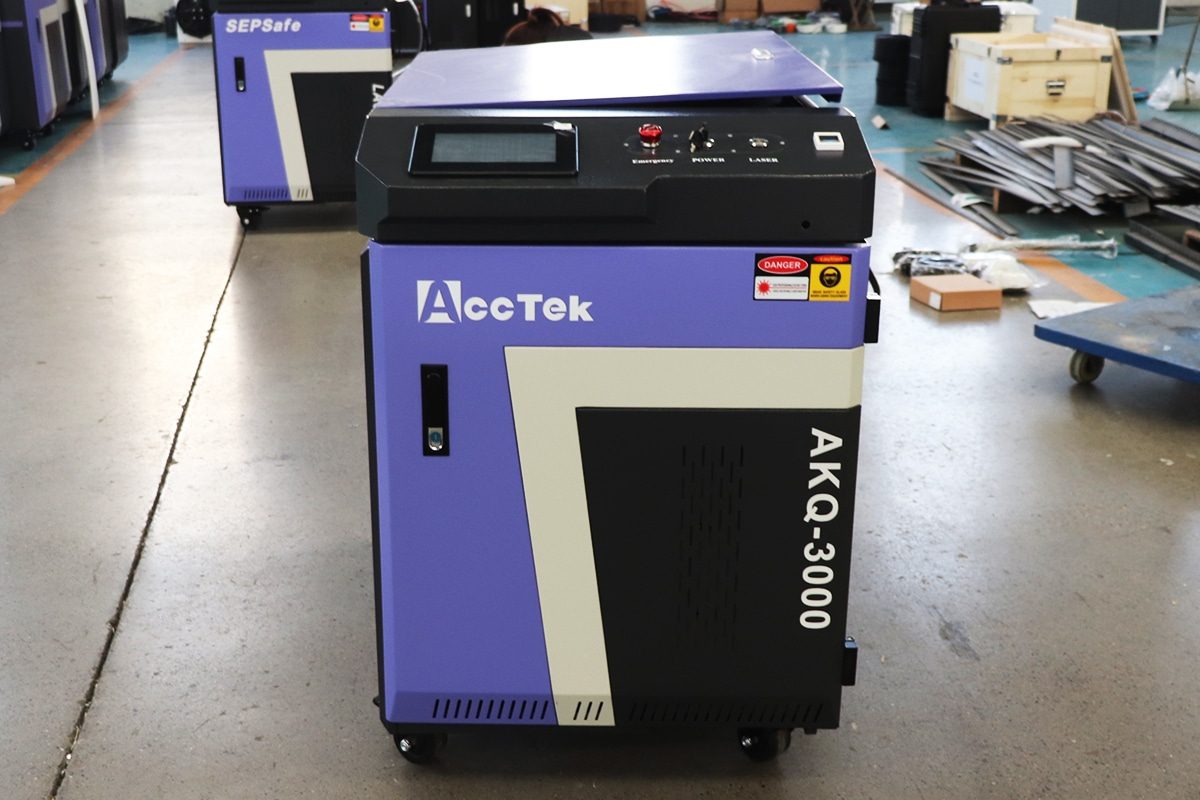
Understanding Laser Cleaning Technology
What is Laser Cleaning?
Why Use Laser Cleaning?
Laser cleaning offers significant advantages over conventional cleaning methods like sandblasting, chemical stripping, grinding, or ultrasonic cleaning:
- Environmentally Friendly: It eliminates the need for harmful solvents and reduces secondary waste, supporting green manufacturing practices.
- Highly Precise: It targets specific areas without affecting surrounding surfaces, making it ideal for precision parts and delicate equipment.
- Safe for Substrates: The underlying material remains untouched, with minimal risk of surface degradation, warping, or contamination.
- Low Maintenance: Laser systems have long service lives, minimal consumables, and require little upkeep compared to abrasive or chemical equipment.
- Automatable and Scalable: Easily integrated into robotic arms or production lines, laser cleaning supports high-speed, high-volume operations with consistent quality.
Key Performance Parameters
Power Output
Beam Quality
Cleaning Precision
Cleaning Speed
Material Compatibility
What Are Pulse Laser Cleaning Machines?
Working Principle
Key Features
- High Peak Power with Short Pulse Duration: Delivers energy in rapid, high-intensity bursts, allowing for material removal with minimal heat diffusion.
- Adjustable Parameters: Pulse frequency, energy, and beam size can be precisely controlled for different materials and contaminants.
- Localized Cleaning: Ideal for selective cleaning of specific areas, small components, or detailed surfaces.
- Low Heat-Affected Zone (HAZ): Reduces the risk of thermal distortion, melting, or surface damage on sensitive materials.
- No Contact or Consumables: The process does not involve mechanical abrasion or chemicals, making it clean and sustainable.
Typical Applications
Pulse laser cleaning is used in sectors where surface integrity and detailed precision are essential:
- Aerospace: removal of oxide films and coatings on sensitive alloy components
- Electronics Manufacturing: cleaning of precision parts, connectors, and microelectronics
- Cultural Heritage Preservation: safe restoration of stone, bronze, and antique surfaces
- Medical and Dental Equipment: sterilizing and preparing surgical tools without surface damage
- Tooling and Mold Maintenance: cleaning of complex molds without altering shape or texture
Advantages
- Exceptional Cleaning Precision: Enables detailed cleaning even on complex or fragile components.
- Substrate Safety: Minimal risk of warping, cracking, or surface degradation due to controlled heat exposure.
- Broad Material Compatibility: Suitable for both hard and soft substrates, including aluminum, plastics, composites, and coated metals.
- Clean, Dry Process: No chemicals, no abrasives, and virtually no secondary waste—ideal for cleanrooms and environmentally sensitive sites.
- Repeatable and Automatable: Compatible with robotic arms and CNC systems for high-precision, repeatable processes in industrial workflows.
Limitations
- Lower Throughput for Large-Area Cleaning: Slower than continuous lasers when removing thick layers or treating large surfaces.
- Higher Initial Investment: Pulse lasers often cost more due to the advanced technology and precision optics involved.
- Learning Curve: Requires skilled operators to fine-tune parameters for different materials and contaminants.
- Not Ideal for Aggressive Decontamination: Less effective for thick rust, multi-layer coatings, or industrial-grade corrosion unless power is sufficiently high.
Maintenance and Longevity
Cost Considerations
What Are Continuous Laser Cleaning Machines?
Working Principle
Key Features
- High Average Power Output: Typically ranges from 1,000W to 3,000W or more, allowing for aggressive material removal.
- Stable and Continuous Beam: Delivers constant energy without interruptions, maximizing speed over surface area.
- Simpler Beam Delivery System: Fewer components than pulsed lasers, which can mean lower technical complexity.
- Designed for High-Volume Cleaning: Perfect for industrial workflows with minimal downtime.
- Broad Beam Coverage: Can be configured for wide-area scanning, reducing pass counts per job.
Typical Applications
Continuous laser cleaning machines are widely used in heavy industries where productivity and surface throughput are prioritized:
- Shipbuilding and Marine: Removal of thick rust and paint from steel hulls.
- Automotive Manufacturing: Weld preparation, frame cleaning, and de-coating.
- Steel and Metal Fabrication: Surface prep before welding or bonding.
- Heavy Equipment Maintenance: Cleaning of large industrial machinery and tooling.
- Pipeline and Infrastructure Cleaning: Removing corrosion and buildup from large surfaces.
Advantages
- Fast Cleaning Speed: High power output and constant beam allow rapid treatment of large or thickly contaminated areas.
- Cost-Effective for Industrial Jobs: Ideal for operations that require high throughput and don’t demand micron-level precision.
- Efficient for Thick Layers: Particularly effective at removing heavy rust, paint, or slag from robust materials.
- Simple Integration: Easier to integrate into automated lines or robotic systems for repetitive cleaning tasks.
Limitations
- Lower Precision: Continuous lasers offer less control over energy delivery, making them unsuitable for fine-detail work.
- Heat Risk to Substrate: Constant energy exposure can cause heat buildup, warping, or discoloration on thinner or sensitive materials.
- Limited Material Compatibility: Not recommended for soft, coated, reflective, or heat-sensitive materials like plastics or polished metals.
- Surface Roughness: The aggressive cleaning action can sometimes leave the surface slightly roughened, which may not be acceptable for precision parts.
Maintenance and Longevity
Cost Considerations
Core Differences Between Pulse and Continuous Laser Cleaning Machines
Energy Delivery Mode
- Pulse lasers emit energy in short, high-intensity bursts lasting microseconds or nanoseconds. Each pulse delivers a concentrated dose of energy, creating micro-ablation without sustained heat transfer. This makes them ideal for precision cleaning where controlled energy application is crucial.
- Continuous lasers produce a steady, uninterrupted beam. This constant energy delivery leads to faster heat accumulation, which is excellent for aggressive cleaning but less forgiving on sensitive surfaces.
Cleaning Precision
- Pulse laser cleaning offers superior precision. The short pulses allow selective removal of contaminants while preserving the underlying substrate, even on intricate or delicate parts. It’s commonly used in electronics, aerospace, and heritage restoration.
- Continuous laser cleaning prioritizes speed over precision. It’s better suited for broader, less detailed tasks like stripping rust or paint from large steel surfaces, where some surface roughness or heat spread is acceptable.
Heat Impact
- Pulse lasers minimize thermal load. The rapid pulse allows heat to dissipate between bursts, dramatically reducing the heat-affected zone (HAZ). This protects heat-sensitive materials like aluminum alloys, plastics, or coatings.
- Continuous lasers generate sustained heat, increasing the risk of thermal distortion, discoloration, or substrate damage, especially on thinner or low-melting-point materials.
Cleaning Speed
- Pulselasers are slower due to their controlled, intermittent energy bursts. While cleaning speed can still be efficient, the process is more methodical and suited for smaller areas or high-value parts.
- Continuous lasers are much faster. Their uninterrupted energy flow enables rapid removal of thick coatings, rust, and industrial-scale contaminants. Ideal for high-throughput production environments.
Power Consumption
- Pulse lasers are typically more energy-efficient on a per-job basis. Although they have high peak power during pulses, their overall average energy usage is lower, especially for light to medium cleaning tasks.
- Continuous lasers consume more power due to constant output, especially at high wattages (1,000W+). This can lead to increased energy costs over time in continuous-use scenarios.
Equipment Cost
- Pulse laser cleaning machines generally have a higher initial cost because of their more complex laser source, control systems, and cooling requirements. However, this is often offset by lower operating costs and better precision.
- Continuous laser cleaning machines tend to be less expensive upfront, making them attractive for bulk industrial cleaning where ultra-fine control is unnecessary.
Maintenance and Longevity
- Pulse lasers usually require less frequent maintenance, as they experience less thermal stress during operation. They have longer service intervals and lower wear on internal components.
- Continuous lasers experience more heat buildup, which can lead to higher wear on optics and cooling systems. Regular maintenance of fans, filters, and water chillers is essential to ensure performance and lifespan.
Which One Should You Choose?
Consider Your Cleaning Goals
Your cleaning objective should be the primary factor guiding your decision. Ask yourself: What kind of materials are you working with? How thick or stubborn are the contaminants? Do you need fine control or brute speed?
- Choose a pulse laser cleaning machine if your goal is precision. These systems are ideal when you need to clean without damaging the substrate, such as delicate components, painted or coated surfaces, or materials prone to thermal deformation. They’re best for removing thin rust layers, oxides, or residues in a targeted and careful manner.
- Opt for a continuous laser cleaning machine if your focus is speed and surface throughput. For large steel parts, ship hulls, thick rust, or paint stripping jobs, CW lasers deliver raw power and faster results. They’re designed to cover more area in less time, making them ideal for high-volume, industrial-scale cleaning.
Consider Your Industry
Different industries have different cleaning standards and tolerances for surface damage or precision.
- Aerospace, electronics, medical, and cultural preservation sectors demand accuracy and surface protection. In these industries, pulse lasers are the go-to solution thanks to their minimal heat impact and high controllability.
- Automotive, shipbuilding, metal fabrication, and heavy machinery industries typically prioritize production speed, surface prep efficiency, and large-scale cleaning. Continuous lasers excel in these environments where rougher cleaning is acceptable and high throughput is essential.
Budget Constraints
Your available budget can also influence the decision, but it’s important to look beyond just the upfront cost.
- Pulse laser cleaning machines generally cost more at the outset due to advanced components and control systems. However, their long lifespan, low power usage, and minimal maintenance can offer better return on investment for high-precision or low-volume jobs.
- Continuous laser machines are more affordable initially, especially in higher power classes. They’re a strong option if you need cost-effective, high-speed cleaning for large areas and can manage higher operational energy costs and more frequent maintenance.
Safety and Regulatory Considerations
Laser Safety Classification
All laser cleaning machines are classified under the IEC 60825-1 standard, which governs laser safety worldwide. Most pulse and continuous laser cleaning systems used in industrial applications fall under Class 4, which indicates:
- A high-powered laser capable of causing serious eye or skin injuries
- Risks of fire or material ignition
- The need for stringent safety measures such as protective barriers, access control, and training
Shielding and Containment
Noise and Secondary Hazards
Pulse lasers can produce sharp acoustic noise during micro-ablation, while both types may generate secondary emissions like ultraviolet light, infrared radiation, or ozone, depending on the materials being cleaned. Safety protocols should account for:
- Acoustic protection in loud environments
- Monitoring air quality for harmful byproducts
- Proper signage and restricted zones around laser operation areas
Regulatory Compliance
Depending on your location and application, additional regulations may apply:
- OSHA (U.S.) or EU CE Directives may require laser safety audits, risk assessments, and documented training
- Environmental protection agencies may regulate emissions from laser cleaning processes
- Industry-specific guidelines—such as those in aerospace or medical device manufacturing—often impose even stricter cleanliness and safety standards