

Introduction
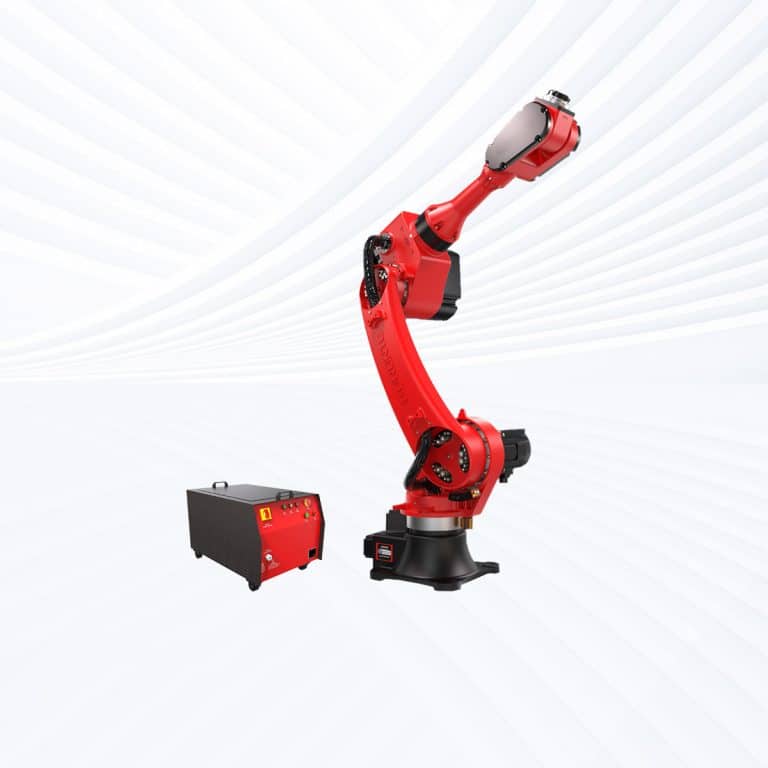
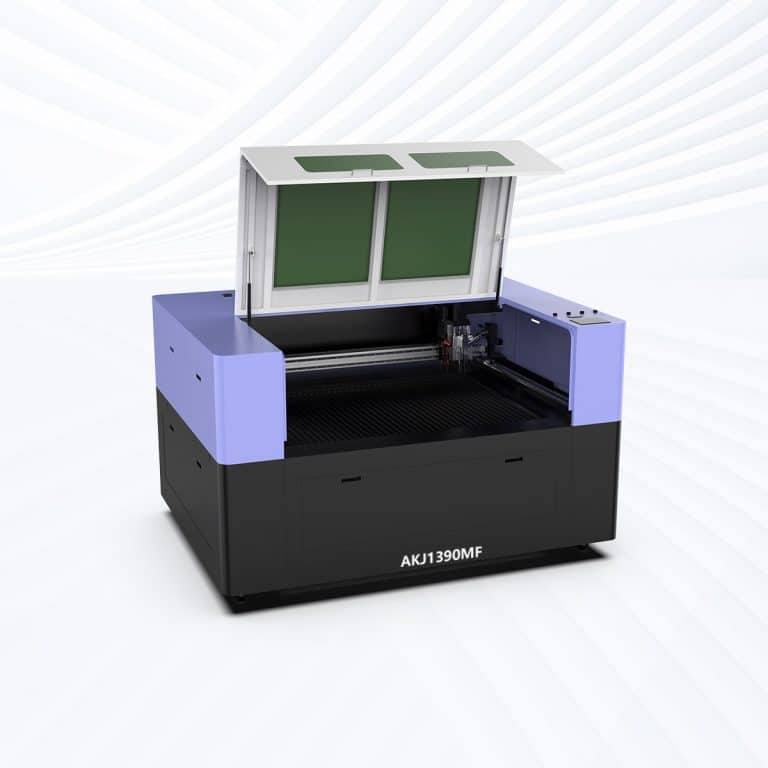
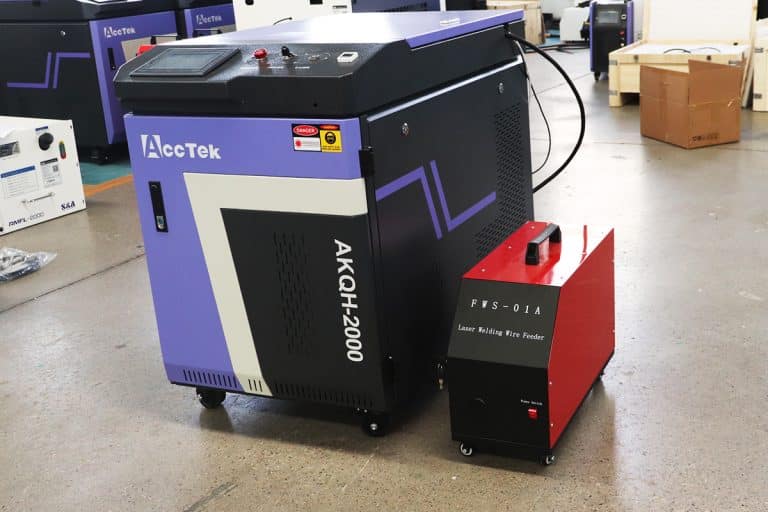
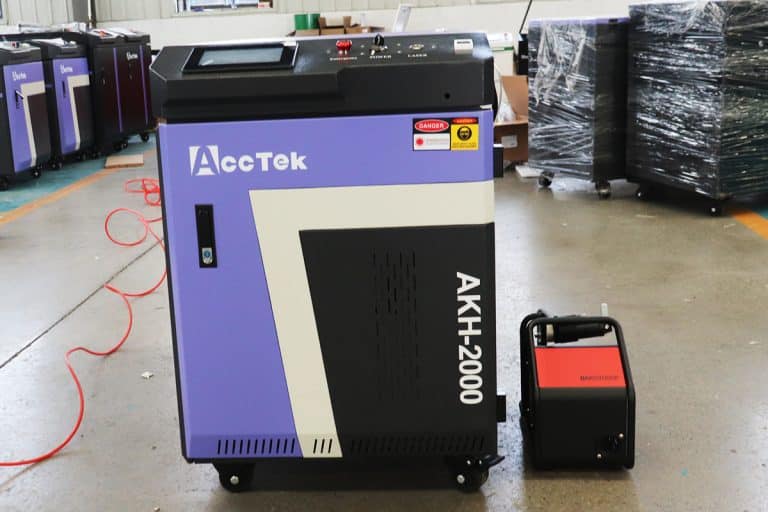
Laser Welding Machines Suitable For Brass
Advantages of Laser Welding Brass
Precise Heat Control
Laser welding brass provides highly concentrated and controllable heat input. This precision helps reduce excessive zinc evaporation, limits spatter, and produces stable welds, making it ideal for brass alloys that are sensitive to overheating during traditional welding processes.
Minimal Heat-Affected Zone
The focused laser beam creates a very small heat-affected zone when welding brass. This minimizes thermal distortion, preserves surrounding material properties, and maintains dimensional accuracy, which is critical for precision components and tight-tolerance assemblies.
Clean and High-Quality Weld Appearance
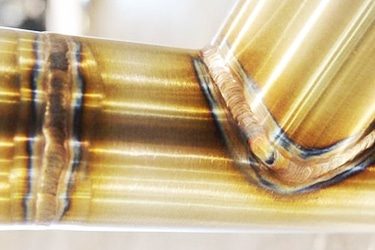
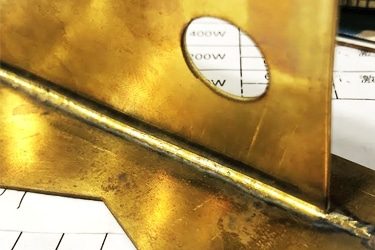
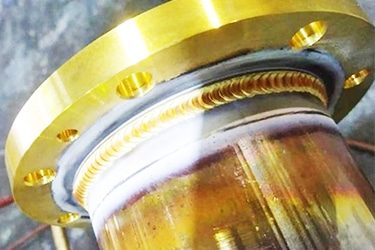
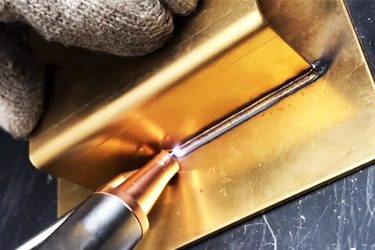
Laser welding brass produces smooth, narrow weld seams with minimal surface discoloration. The clean weld appearance often eliminates the need for extensive post-weld finishing, making it suitable for decorative, visible, or consumer-facing brass products.
Reduced Porosity and Defects
With optimized parameters and shielding gas, laser welding brass significantly reduces porosity and cracking caused by zinc vaporization. The fast melting and solidification process improves weld integrity and ensures consistent joint strength across production batches.
High Welding Speed and Efficiency
Laser welding brass operates at high speeds, greatly improving production efficiency. Faster welding cycles reduce overall manufacturing time and make the process well-suited for automated, high-volume industrial applications requiring repeatable quality.
Excellent Automation Compatibility
Laser welding brass integrates easily with robotic systems and automated production lines. This enables consistent weld quality, high repeatability, reduced dependence on skilled manual labor, and improved process stability in modern manufacturing environments.
Compatible Materials
- C26000
- C26130
- C26800
- C27000
- C27200
- C27400
- C28000
- C35300
- C36000
- C36500
- C37700
- C38500
- C40800
- C41400
- C42200
- C44300
- C44500
- C46400
- C46500
- C48200
- C48500
- C68700
- C68800
- C69000
- C69300
- C69400
- C69500
- C70600
- C71000
- C71500
- C74500
- C75200
- C75400
- C77000
- C77200
- C77400
- C83600
- C83800
- C84400
- C85700
Laser Welding VS Other Welding Methods
| Comparison Item | Laser Welding | TIG Welding | MIG Welding | Arc Welding (Stick) |
|---|---|---|---|---|
| Heat Input Control | Extremely precise | Moderate, operator-dependent | Higher heat input | High and difficult to control |
| Heat-Affected Zone (HAZ) | Very small | Medium | Large | Very large |
| Zinc Evaporation Control | Excellent with proper settings | Moderate | Poor | Very poor |
| Welding Speed | Very high | Slow | Moderate | Slow |
| Weld Precision | Excellent | High | Moderate | Low |
| Distortion Risk | Minimal | Moderate | Higher | Very high |
| Weld Appearance | Clean, narrow, smooth | Clean but wider | Wider with spatter | Rough, uneven |
| Automation Capability | Excellent | Limited | Good | Very limited |
| Repeatability | Extremely high | Operator-dependent | Moderate | Low |
| Thin Material Welding | Excellent | Good | Fair | Poor |
| Porosity Risk | Low | Moderate | Higher | High |
| Post-Weld Finishing | Minimal | Moderate | Moderate to high | High |
| Skill Requirement | Low after setup | Very high | Moderate | High |
| Production Efficiency | Very high | Low | Moderate | Low |
| Suitability for Precision Parts | Excellent | Good | Fair | Poor |
Laser Welding Capacity
| Laser Power | Welding Form | Thickness | Welding Speed | Defocus Amount | Protective Gas | Blowing Method | Flow | Welding Effect |
|---|---|---|---|---|---|---|---|---|
| 1000W | Butt Welding | 0.5mm | 55~65 mm/s | -1~1 | Ar | Coaxial/Paraaxial | 5~10 L/min | Welded Completely |
| Butt Welding | 1mm | 40~55 mm/s | -1~1 | Ar | Coaxial/Paraaxial | 5~10 L/min | Welded Completely | |
| Butt Welding | 1.5mm | 20~30 mm/s | -1~1 | Ar | Coaxial/Paraaxial | 5~10 L/min | Welded Completely | |
| 1500W | Butt Welding | 0.5mm | 70~80 mm/s | -1~1 | Ar | Coaxial/Paraaxial | 5~10 L/min | Welded Completely |
| Butt Welding | 1mm | 50~60 mm/s | -1~1 | Ar | Coaxial/Paraaxial | 5~10 L/min | Welded Completely | |
| Butt Welding | 1.5mm | 40~50 mm/s | -1~1 | Ar | Coaxial/Paraaxial | 5~10 L/min | Welded Completely | |
| Butt Welding | 2mm | 20~30 mm/s | -1~1 | Ar | Coaxial/Paraaxial | 5~10 L/min | Welded Completely | |
| 2000W | Butt Welding | 0.5mm | 80~90 mm/s | -1~1 | Ar | Coaxial/Paraaxial | 5~10 L/min | Welded Completely |
| Butt Welding | 1mm | 60~70 mm/s | -1~1 | Ar | Coaxial/Paraaxial | 5~10 L/min | Welded Completely | |
| Butt Welding | 1.5mm | 40~50 mm/s | -1~1 | Ar | Coaxial/Paraaxial | 5~10 L/min | Welded Completely | |
| Butt Welding | 2mm | 30~40 mm/s | -1~1 | Ar | Coaxial/Paraaxial | 5~10 L/min | Welded Completely | |
| Butt Welding | 3mm | 20~30 mm/s | -1~1 | Ar | Coaxial/Paraaxial | 5~10 L/min | Welded Completely | |
| 3000W | Butt Welding | 0.5mm | 90~100 mm/s | -1~1 | Ar | Coaxial/Paraaxial | 5~10 L/min | Welded Completely |
| Butt Welding | 1mm | 80~90 mm/s | -1~1 | Ar | Coaxial/Paraaxial | 5~10 L/min | Welded Completely | |
| Butt Welding | 1.5mm | 70~80 mm/s | -1~1 | Ar | Coaxial/Paraaxial | 5~10 L/min | Welded Completely | |
| Butt Welding | 2mm | 60~70 mm/s | -1~1 | Ar | Coaxial/Paraaxial | 5~10 L/min | Welded Completely | |
| Butt Welding | 3mm | 50~60 mm/s | -1~1 | Ar | Coaxial/Paraaxial | 5~10 L/min | Welded Completely | |
| Butt Welding | 4mm | 30~40 mm/s | -1~1 | Ar | Coaxial/Paraaxial | 5~10 L/min | Welded Completely | |
| Butt Welding | 5mm | 20~30 mm/s | -1~1 | Ar | Coaxial/Paraaxial | 5~10 L/min | Welded Completely | |
| 6000W | Butt Welding | 0.5mm | 100~110 mm/s | -1~1 | Ar | Coaxial/Paraaxial | 5~10 L/min | Welded Completely |
| Butt Welding | 1mm | 90~100 mm/s | -1~1 | Ar | Coaxial/Paraaxial | 5~10 L/min | Welded Completely | |
| Butt Welding | 1.5mm | 80~90 mm/s | -1~1 | Ar | Coaxial/Paraaxial | 5~10 L/min | Welded Completely | |
| Butt Welding | 2mm | 70~80 mm/s | -1~1 | Ar | Coaxial/Paraaxial | 5~10 L/min | Welded Completely | |
| Butt Welding | 3mm | 60~70 mm/s | -1~1 | Ar | Coaxial/Paraaxial | 5~10 L/min | Welded Completely | |
| Butt Welding | 4mm | 50~60 mm/s | -1~1 | Ar | Coaxial/Paraaxial | 5~10 L/min | Welded Completely | |
| Butt Welding | 5mm | 30~40 mm/s | -1~1 | Ar | Coaxial/Paraaxial | 5~10 L/min | Welded Completely | |
| Butt Welding | 6mm | 20~30 mm/s | -1~1 | Ar | Coaxial/Paraaxial | 5~10 L/min | Welded Completely |
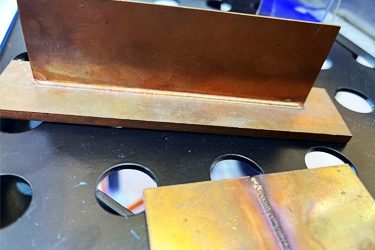
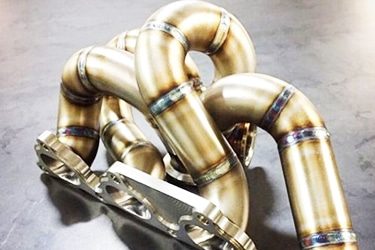
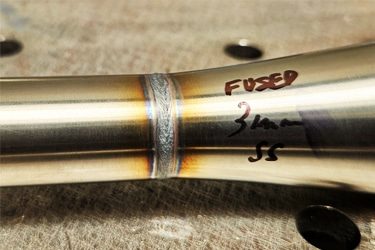
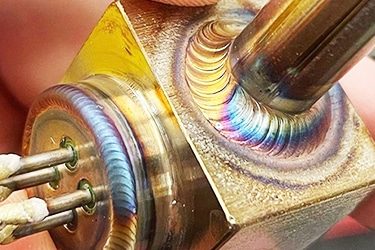
Applications of Laser Welding Brass
Customer Testimonials
Related Resources
What Is The Lifespan Of Laser Welding Machines
This article explores the lifespan of laser welding machines, including key components, influencing factors, industry applications, maintenance practices, and strategies to optimize performance and durability.
Comprehensive Guide to Choosing the Right Laser Welding Machines
Comprehensive guide to choosing the right laser welding machines, covering technology, key features, cost factors, safety requirements, maintenance practices, and supplier selection.
Are Welding Masks Required For Laser Welding
This article explains laser welding safety, including laser hazards, standards, PPE requirements, and practical scenarios that determine when welding masks and laser-rated eye protection are needed.
How To Select Laser Welding Power
This article teaches you how to select laser welding power and provides clear guidance on materials, thickness, welding modes, beam settings, defects, testing methods, and process optimization to achieve stable, high-quality welds.
Frequently Asked Questions
How Does The Zinc Content In Brass Affect Laser Welding Behavior?
- Low Boiling Point and Zinc Evaporation: Zinc has a much lower boiling point than copper. During laser welding, zinc vaporizes very quickly once the weld pool forms. This rapid evaporation can create high vapor pressure inside the molten pool, leading to violent metal ejection, spatter, and unstable keyhole behavior. The higher the zinc content, the more pronounced these effects become.
- Porosity Formation: As zinc vapor escapes from the molten brass, it can become trapped if solidification occurs too quickly. This results in porosity within the weld. Alloys with higher zinc percentages are therefore more prone to internal pores, which reduce mechanical strength and leak-tightness in welded joints.
- Keyhole Instability and Penetration Issues: Zinc vapor interferes with the stability of the laser-induced keyhole. Sudden bursts of vapor can collapse the keyhole or cause fluctuations in penetration depth. This makes it difficult to achieve consistent weld geometry, especially at higher welding speeds or power levels.
- Changes in Weld Chemistry: During welding, selective evaporation of zinc alters the chemical composition of the weld metal. The weld zone may become copper-rich compared to the base material, which can change mechanical properties, corrosion resistance, and color. In decorative or precision components, this compositional shift can be undesirable.
- Increased Fume and Safety Concerns: High zinc content significantly increases fume generation. Zinc fumes are hazardous to health and can cause metal fume fever if inhaled. Effective fume extraction and ventilation are essential, particularly when welding high-zinc brasses.
- Influence on Laser Absorption: Compared to pure copper, brass generally absorbs laser energy more readily, which can make initial melting easier. However, as zinc content rises, the benefits of improved absorption are often offset by instability caused by zinc evaporation. This creates a narrow process window for high-zinc alloys.
- Mitigation Strategies: To manage zinc-related issues, manufacturers often use lower zinc brasses for laser welding or adjust parameters such as lower power density, higher travel speed, or beam oscillation to allow zinc vapor to escape more smoothly. In some cases, filler materials with modified composition are used to stabilize the weld pool.
What Surface Preparation Is Required Before Laser Welding Brass?
- Removal of Oils, Grease, and Contaminants: Brass components often carry machining oils, lubricants, or fingerprints that can contaminate the weld pool. These substances vaporize rapidly under laser heat, increasing the risk of porosity and spatter. Before welding, surfaces should be thoroughly degreased using suitable solvents such as alcohol or industrial cleaners, followed by complete drying.
- Oxide and Tarnish Cleaning: Brass surfaces naturally oxidize and may develop tarnish over time. Oxide layers interfere with laser energy absorption and disrupt wetting of the molten pool. Light mechanical cleaning, such as fine brushing or gentle abrasion, is commonly used to remove surface oxides. Chemical cleaning methods may also be applied, provided residues are fully removed afterward.
- Control of Zinc-Rich Surface Layers: In some brass grades, surface enrichment of zinc can occur due to prior thermal or manufacturing processes. Since zinc vaporizes easily during laser welding, excess zinc at the surface can worsen spatter, porosity, and keyhole instability. Consistent surface cleaning helps reduce localized zinc concentration effects at the weld interface.
- Surface Roughness Considerations: Moderate and uniform surface roughness can be beneficial for laser welding brass. Slight roughness improves laser energy absorption compared to highly polished surfaces, which reflect more energy. However, excessive roughness can trap contaminants and shielding gas, increasing defect risk. The goal is a clean, uniform surface rather than a mirror finish.
- Joint Fit-Up and Edge Preparation: Accurate joint preparation is as important as surface cleanliness. Laser welding requires a tight fit-up because of its small molten pool. Burrs, gaps, or uneven edges can cause a lack of fusion or unstable vapor release. Edges should be deburred and aligned to ensure consistent penetration and zinc vapor escape during welding.
- Drying and Moisture Control: Moisture on the surface or within cleaning residues can introduce hydrogen into the weld pool, increasing porosity. After cleaning, parts should be kept dry and welded promptly. In humid environments, preheating or controlled storage may be necessary to prevent moisture adsorption.
- Optional Pre-Coating or Laser Pre-Treatment: In some applications, thin absorptive coatings or laser pre-cleaning passes are used to improve energy coupling and stabilize weld initiation. These methods are especially helpful when welding reflective or high-zinc brass grades.
What Shielding Gases Are Commonly Used In Laser Welding Brass?
- Argon (Ar): Argon is the most commonly used shielding gas for laser welding brass. It is inert, widely available, and cost-effective. Argon provides adequate protection against oxidation and helps maintain a stable weld pool for thin to medium brass sections. For many standard applications, argon offers a good balance between weld quality and operating cost.
- Helium (He): Helium is frequently used when welding brass with higher laser power or when deeper penetration is required. Its higher ionization potential reduces plasma formation above the weld pool, allowing more laser energy to reach the material. This is especially useful for brass alloys with higher zinc content, where vapor generation can otherwise disturb the laser beam. Helium also improves heat transfer and can help stabilize keyhole behavior. The downside is higher cost and increased gas consumption due to helium’s low density.
- Argon–Helium Mixtures: Blends of argon and helium are widely used in industrial laser welding of brass. These mixtures combine argon’s affordability and coverage with helium’s ability to suppress plasma and improve penetration. By adjusting the helium percentage, manufacturers can fine-tune weld stability and zinc vapor control while managing gas costs.
- Nitrogen (Limited and Cautious Use): Nitrogen is generally not preferred for laser welding brass, as it can react with molten copper or zinc under certain conditions, potentially forming brittle compounds. However, in some low-power or specialized applications, nitrogen may be used as a backing or auxiliary gas when metallurgical effects are acceptable and properly controlled.
- Shielding Gas Role in Zinc Vapor Management: One of the key functions of shielding gas in brass welding is to help remove zinc vapor from the weld zone. Proper gas flow and composition assist in carrying vapor away from the keyhole, reducing porosity, spatter, and penetration instability. Gas choice alone is not enough; flow direction and nozzle design are equally important.
- Trailing and Backside Shielding: For high-quality or full-penetration welds, trailing or backside shielding may be used to protect the solidifying weld metal from oxidation and discoloration. This is particularly relevant for visible or decorative brass components.
What Joint Designs Are Best Suited For Laser Welding Brass?
- Butt Joints (Square Butt): Square butt joints are the most commonly used and best-suited joint design for laser welding brass, especially for thin to medium thickness materials. They allow direct laser access to the joint line and promote efficient keyhole formation. Tight fit-up is essential, as excessive gaps can lead to a lack of fusion or unstable zinc vapor release. When properly aligned, square butt joints produce narrow, clean welds with minimal distortion.
- Lap Joints: Lap joints are well-suited for thin brass sheets and applications where joint accessibility from one side is required. The overlapping geometry helps contain zinc vapor and stabilize the molten pool. However, lap joints can trap vapor between layers if not properly vented, increasing the risk of porosity. Careful control of overlap length and welding parameters is necessary.
- Edge Joints: Edge joints can be used for thin brass components, such as enclosures or decorative parts. Laser welding works well here due to precise energy control, but the joint offers limited tolerance for gaps and misalignment. Edge joints are generally not recommended for load-bearing applications, as strength is lower compared to butt or lap joints.
- T-Joints: T-joints are more challenging for laser welding brass because of the complex heat flow and zinc vapor escape paths. They can be welded successfully with precise beam positioning, often targeting the intersection line to ensure adequate fusion. T-joints may require filler material or beam oscillation to improve wetting and reduce defects.
- Joint Designs with Small Gaps or Venting Features: For brass alloys with higher zinc content, joint designs that allow controlled vapor escape are beneficial. Slightly open butt joints or micro-venting features can help zinc vapor escape without disturbing the molten pool. This approach must be carefully controlled, as excessive gaps reduce energy coupling and weld quality.
- Avoidance of Wide Gaps and Complex Grooves: Wide-gap joints, V-grooves, or complex bevels are generally unsuitable for laser welding brass. The small laser weld pool struggles to bridge large gaps, and zinc vaporization becomes harder to manage. Such joints often require hybrid or arc-based welding methods instead.
- Importance of Precision and Fixturing: Regardless of joint type, accurate fixturing and consistent alignment are critical. Laser welding’s low heat input leaves little room for error, especially in brass, where vapor pressure can amplify instability.
What Are The Most Common Defects In Laser-Welded Brass Joints?
- Porosity: Porosity is the most common defect in laser-welded brass joints. Zinc has a low boiling point and vaporizes rapidly under laser heating. If zinc vapor cannot escape before the molten pool solidifies, gas bubbles become trapped in the weld metal. Porosity reduces joint strength, leak-tightness, and fatigue resistance, particularly in pressure or fluid-handling components.
- Spatter and Surface Ejection: Rapid zinc evaporation can create high internal pressure within the molten pool, causing molten metal to eject violently. This results in spatter around the weld bead and an uneven surface appearance. Spatter can also contaminate nearby components and optics if shielding and extraction are inadequate.
- Keyhole Instability and Inconsistent Penetration: Zinc vapor interferes with the stability of the laser-induced keyhole. Sudden bursts of vapor can partially collapse the keyhole or push molten metal upward, leading to fluctuating penetration depth along the weld. This defect is especially common in higher-zinc brasses or at excessive power densities.
- Lack of Fusion: Lack of fusion occurs when the laser energy fails to fully melt and bond the joint interface. In brass, this can result from excessive zinc vapor blocking the laser beam, poor joint fit-up, or improper focus position. Lack of fusion significantly weakens the joint and may not always be visible on the surface.
- Undercut and Irregular Bead Geometry: Improper balance between laser power and travel speed can cause undercut along the weld edges or excessive reinforcement on the bead surface. Zinc vapor pressure can worsen this effect by disturbing the molten pool, leading to inconsistent bead width and profile.
- Compositional Changes in the Weld Zone: Selective evaporation of zinc during welding can alter the chemical composition of the weld metal, making it more copper-rich than the base material. This may affect mechanical properties, corrosion resistance, and color matching, particularly in decorative or precision components.
- Oxidation and Surface Discoloration: Inadequate shielding gas coverage can allow oxidation of the molten brass, leading to surface discoloration and oxide inclusions. While often cosmetic, these defects can indicate deeper quality issues.
Can Filler Wire Be Used In Laser Welding Brass?
- When Filler Wire Is Used: Filler wire is commonly introduced when joint gaps are difficult to control, material thickness increases, or when improved metallurgical properties are required. In brass laser welding, filler wire helps bridge gaps that a narrow laser weld pool cannot tolerate. It also supports better bead shape and more consistent penetration, particularly in butt and T-joint configurations.
- Control of Zinc Vapor Effects: One of the main challenges in welding brass is zinc vaporization. Using filler wire can dilute the zinc content in the weld pool, especially if a copper-rich or low-zinc filler is selected. This dilution reduces vapor pressure, lowering the risk of spatter, porosity, and keyhole instability. As a result, the welding process becomes more stable and predictable.
- Improved Weld Chemistry and Properties: Filler wire allows control over the final weld metal composition. Copper-based or specially formulated brass filler wires can improve crack resistance, mechanical strength, and corrosion behavior. This is particularly important in applications where appearance, conductivity, or long-term durability are critical.
- Enhanced Laser Energy Absorption: The presence of filler wire in the laser interaction zone can improve energy coupling. The wire absorbs part of the laser energy, helping initiate and maintain a stable molten pool. This is beneficial for brass, which can be highly reflective, especially at the start of welding.
- Equipment and Process Considerations: Using filler wire requires precise control of wire feed speed, angle, and position relative to the laser beam. Improper synchronization can cause spatter, incomplete melting of the wire, or inconsistent bead formation. While this adds complexity to the system, modern laser welding setups are well equipped to manage these variables.
- Autogenous Welding Still Common: Despite these advantages, many thin brass components are still laser welded without filler wire when joint fit-up is excellent, and zinc content is low. Autogenous welding offers maximum speed and simplicity when conditions are ideal.
How Does Laser Welding Affect The Microstructure Of Brass?
- Fusion Zone Microstructure: In the fusion zone, the brass fully melts and rapidly solidifies. The extremely high cooling rates typical of laser welding promote fine, refined grain structures compared to arc welding. Grains are often columnar near the fusion boundary, growing in the direction of heat flow, and may transition to finer equiaxed grains toward the center of the weld. This grain refinement can improve strength locally but may reduce ductility depending on alloy composition.
- Zinc Evaporation and Composition Gradients: One of the most important microstructural effects in laser-welded brass is selective zinc evaporation. Zinc has a much lower boiling point than copper, and during laser welding, it vaporizes preferentially from the molten pool. As a result, the fusion zone can become copper-rich relative to the base metal. This compositional shift alters phase balance and can change hardness, electrical conductivity, and corrosion behavior in the weld metal.
- Phase Transformation Effects: Brass microstructure depends strongly on zinc content. In lower-zinc brasses, the microstructure is primarily alpha phase, while higher-zinc brasses may contain both alpha and beta phases. Laser welding can locally reduce zinc content enough to suppress beta phase formation in the fusion zone, leading to a more alpha-dominant structure. This can improve corrosion resistance but may change mechanical performance compared to the base material.
- Heat-Affected Zone (HAZ) Characteristics: The heat-affected zone in laser-welded brass is typically very narrow. Grain growth in the HAZ is limited due to short thermal exposure times. However, some recrystallization or slight grain coarsening may occur near the fusion boundary, especially in cold-worked brass. The small HAZ helps preserve the original properties of the surrounding material.
- Segregation and Solidification Patterns: Rapid solidification can lead to microsegregation of alloying elements within the weld metal. Zinc-rich or copper-rich regions may form on a microscopic scale, contributing to local variations in hardness and corrosion behavior. These effects are usually less severe than in slower welding processes but can still influence performance in critical applications.
- Residual Stresses and Defects: The steep thermal gradients associated with laser welding introduce residual stresses at the microstructural level. While distortion is minimal, these stresses can interact with porosity or microcracks if present, affecting fatigue life.
What PPE Is Required For Laser Welding Brass?
- Laser Eye Protection: Laser-rated eye protection is mandatory when performing or working near laser welding. Brass surfaces are highly reflective, increasing the risk of direct or indirect laser reflections. Safety glasses or goggles must be rated for the specific laser wavelength and power level being used, whether fiber or CO2. Standard welding helmets or tinted glasses are not sufficient unless they are certified for laser protection.
- Protective Clothing: Operators should wear flame-resistant clothing to protect against molten metal spatter and radiant heat. Long-sleeved garments made from non-flammable materials help prevent burns. Synthetic fabrics should be avoided, as they can melt when exposed to hot metal particles. Protective aprons or jackets are commonly used in open or semi-enclosed laser welding setups.
- Gloves and Hand Protection: Heat-resistant gloves are required to protect hands from hot workpieces, spatter, and sharp edges. Gloves should allow sufficient dexterity for handling parts without compromising thermal protection. Since laser-welded brass components can remain hot for an extended period, gloves are also important during post-weld handling.
- Respiratory Protection: Laser welding brass generates zinc fumes, which are hazardous if inhaled and can cause metal fume fever. Local exhaust ventilation and fume extraction are the primary controls, but respiratory PPE may still be required in certain environments. When ventilation is insufficient or during maintenance tasks, approved respirators with suitable particulate or metal fume filters should be worn.
- Face and Skin Protection: In addition to laser eye protection, full face shields may be used to protect against spatter and hot debris. Skin exposure should be minimized, as reflected laser energy and radiant heat can cause burns even without direct beam contact.
- Foot Protection: Safety footwear with heat-resistant soles and protective toe caps is recommended. Molten metal droplets or hot brass fragments can fall during welding, posing a risk to feet and lower legs.
- Hearing Protection (When Applicable): While laser welding itself is relatively quiet, auxiliary equipment such as fume extractors, chillers, or motion systems can generate significant noise. Hearing protection may be required depending on the overall sound level in the work area.
- System-Level Safety Measures: Although not PPE, enclosed laser cells, interlocks, and warning systems are essential complements to personal protection. PPE should never be relied upon as the sole safety measure.