

Introduction
Laser Welding Machines Suitable For Aluminum
Advantages of Laser Welding Aluminum
High Precision and Accuracy
Laser welding aluminum delivers extremely precise energy control, enabling narrow weld seams and accurate joint placement. This precision is ideal for thin materials, complex geometries, and components requiring tight tolerances with minimal post-weld machining.
Minimal Heat-Affected Zone
Because the laser concentrates heat into a small area, laser welding aluminum produces a very small heat-affected zone. This reduces thermal distortion, preserves material properties, and helps maintain the mechanical strength of surrounding aluminum areas.
High Welding Speed and Productivity
Laser welding of aluminum operates at very high speeds compared to conventional welding methods. Faster processing increases production efficiency, shortens cycle times, and makes the process highly suitable for automated and high-volume manufacturing environments.
Strong and High-Quality Welds
The focused laser beam allows deep penetration and stable weld formation, resulting in strong, uniform joints. Laser welding aluminum produces clean welds with excellent mechanical performance and reduced risk of porosity or cracking when properly controlled.
Excellent Automation Compatibility
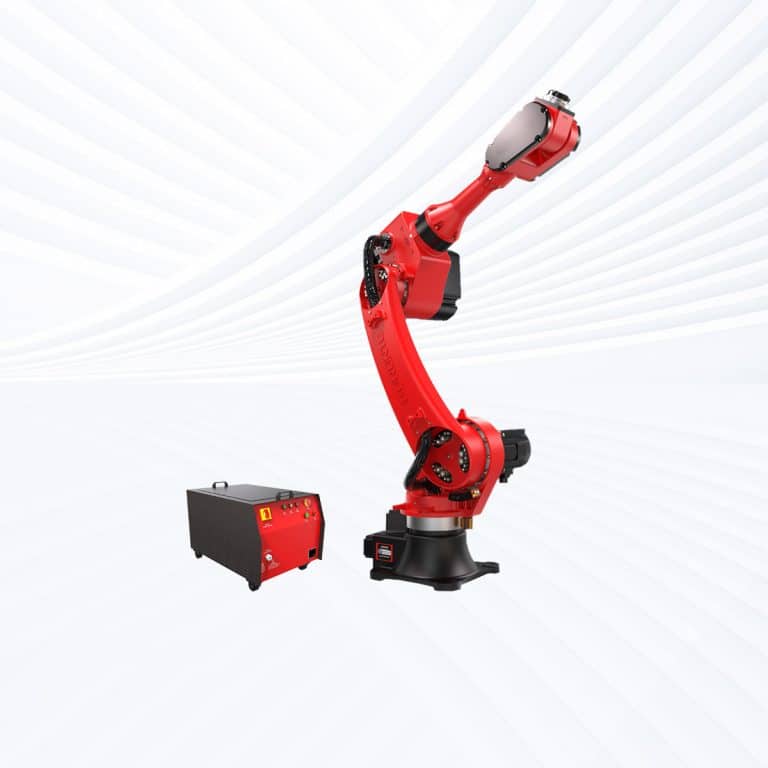
Laser welding aluminum integrates easily with robotic systems and automated production lines. This ensures consistent weld quality, high repeatability, reduced labor dependency, and improved quality control in industrial manufacturing applications.
Reduced Post-Weld Finishing
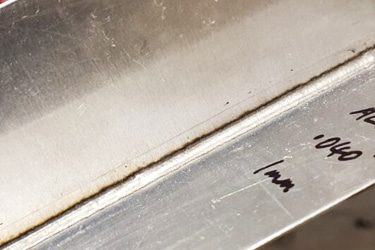
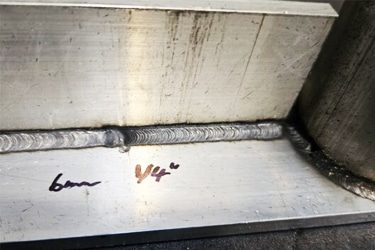
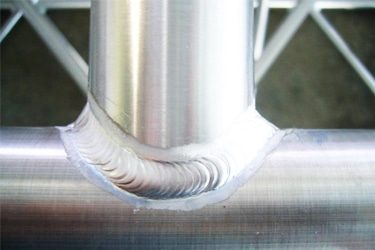
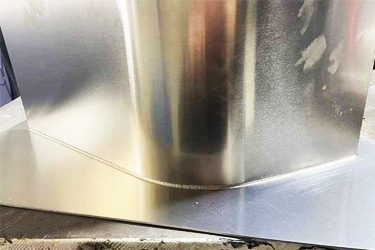
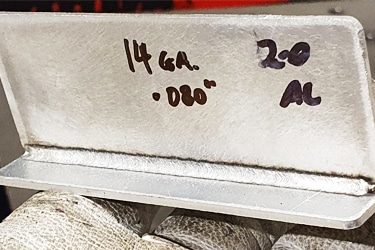
Laser welding aluminum creates smooth, narrow weld beads with minimal spatter. This significantly reduces the need for grinding, polishing, or rework, lowering overall production costs and improving surface appearance for visible or precision components.
Compatible Materials
- Aluminum 1050
- Aluminum 1060
- Aluminum 1070
- Aluminum 1100
- Aluminum 1200
- Aluminum 1350
- Aluminum 2011
- Aluminum 2014
- Aluminum 2024
- Aluminum 2219
- Aluminum 3003
- Aluminum 3004
- Aluminum 3005
- Aluminum 3105
- Aluminum 4043
- Aluminum 4047
- Aluminum 5005
- Aluminum 5052
- Aluminum 5083
- Aluminum 5086
- Aluminum 5182
- Aluminum 5454
- Aluminum 5754
- Aluminum 6005
- Aluminum 6060
- Aluminum 6061
- Aluminum 6063
- Aluminum 6082
- Aluminum 6101
- Aluminum 6201
- Aluminum 7003
- Aluminum 7020
- Aluminum 7050
- Aluminum 7075
- Aluminum AlSi10Mg
- Aluminum AlSi12
- Cast Aluminum A356
- Cast Aluminum A380
- Cast Aluminum ADC12
- Aluminum-Lithium Alloy
Laser Welding VS Other Welding Methods
| Comparison Item | Laser Welding | TIG Welding | MIG Welding | Arc Welding (Stick) |
|---|---|---|---|---|
| Heat Input Control | Extremely precise and concentrated | Moderate, operator-dependent | Higher heat input | High and difficult to control |
| Heat-Affected Zone (HAZ) | Very small | Medium | Large | Very large |
| Welding Speed | Very high | Slow | Moderate to high | Slow |
| Weld Precision | Excellent, micron-level control | High | Moderate | Low |
| Distortion Risk | Minimal | Moderate | Higher | Very high |
| Weld Appearance | Clean, narrow, smooth | Clean but wider | Wider with spatter | Rough, uneven |
| Automation Capability | Excellent, fully automatable | Limited | Good | Very limited |
| Repeatability | Extremely high | Operator-dependent | Moderate | Low |
| Thin Material Welding | Excellent | Good | Fair | Poor |
| Thick Material Capability | Good with high-power lasers | Very good | Very good | Very good |
| Post-Weld Finishing | Minimal | Moderate | Moderate to high | High |
| Porosity Control | Excellent with proper settings | Good | Moderate | Poor |
| Skill Requirement | Low after setup | Very high | Moderate | High |
| Production Efficiency | Very high | Low | Moderate | Low |
| Initial Equipment Cost | High | Low | Moderate | Low |
Laser Welding Capacity
| Laser Power | Welding Form | Thickness | Welding Speed | Defocus Amount | Protective Gas | Blowing Method | Flow | Welding Effect |
|---|---|---|---|---|---|---|---|---|
| 1000W | Butt Welding | 0.5mm | 70~80 mm/s | -1~1 | Ar | Coaxial/Paraaxial | 5~10 L/min | Welded Completely |
| Butt Welding | 1mm | 50~60 mm/s | -1~1 | Ar | Coaxial/Paraaxial | 5~10 L/min | Welded Completely | |
| Butt Welding | 1.5mm | 30~40 mm/s | -1~1 | Ar | Coaxial/Paraaxial | 5~10 L/min | Welded Completely | |
| Butt Welding | 2mm | 20~30 mm/s | -1~1 | Ar | Coaxial/Paraaxial | 5~10 L/min | Welded Completely | |
| 1500W | Butt Welding | 0.5mm | 80~90 mm/s | -1~1 | Ar | Coaxial/Paraaxial | 5~10 L/min | Welded Completely |
| Butt Welding | 1mm | 70~80 mm/s | -1~1 | Ar | Coaxial/Paraaxial | 5~10 L/min | Welded Completely | |
| Butt Welding | 1.5mm | 50~60 mm/s | -1~1 | Ar | Coaxial/Paraaxial | 5~10 L/min | Welded Completely | |
| Butt Welding | 2mm | 30~40 mm/s | -1~1 | Ar | Coaxial/Paraaxial | 5~10 L/min | Welded Completely | |
| Butt Welding | 3mm | 10~20 mm/s | -1~1 | Ar | Coaxial/Paraaxial | 5~10 L/min | Welded Completely | |
| 2000W | Butt Welding | 0.5mm | 90~100 mm/s | -1~1 | Ar | Coaxial/Paraaxial | 5~10 L/min | Welded Completely |
| Butt Welding | 1mm | 80~90 mm/s | -1~1 | Ar | Coaxial/Paraaxial | 5~10 L/min | Welded Completely | |
| Butt Welding | 1.5mm | 70~80 mm/s | -1~1 | Ar | Coaxial/Paraaxial | 5~10 L/min | Welded Completely | |
| Butt Welding | 2mm | 40~50 mm/s | -1~1 | Ar | Coaxial/Paraaxial | 5~10 L/min | Welded Completely | |
| Butt Welding | 3mm | 20~30 mm/s | -1~1 | Ar | Coaxial/Paraaxial | 5~10 L/min | Welded Completely | |
| 3000W | Butt Welding | 0.5mm | 100~110 mm/s | -1~1 | Ar | Coaxial/Paraaxial | 5~10 L/min | Welded Completely |
| Butt Welding | 1mm | 90~100 mm/s | -1~1 | Ar | Coaxial/Paraaxial | 5~10 L/min | Welded Completely | |
| Butt Welding | 1.5mm | 80~90 mm/s | -1~1 | Ar | Coaxial/Paraaxial | 5~10 L/min | Welded Completely | |
| Butt Welding | 2mm | 70~80 mm/s | -1~1 | Ar | Coaxial/Paraaxial | 5~10 L/min | Welded Completely | |
| Butt Welding | 3mm | 40~50 mm/s | -1~1 | Ar | Coaxial/Paraaxial | 5~10 L/min | Welded Completely | |
| Butt Welding | 4mm | 20~30 mm/s | -1~1 | Ar | Coaxial/Paraaxial | 5~10 L/min | Welded Completely | |
| 6000W | Butt Welding | 1mm | 110~120 mm/s | -1~1 | Ar | Coaxial/Paraaxial | 5~10 L/min | Welded Completely |
| Butt Welding | 1.5mm | 100~110 mm/s | -1~1 | Ar | Coaxial/Paraaxial | 5~10 L/min | Welded Completely | |
| Butt Welding | 2mm | 90~100 mm/s | -1~1 | Ar | Coaxial/Paraaxial | 5~10 L/min | Welded Completely | |
| Butt Welding | 3mm | 80~90 mm/s | -1~1 | Ar | Coaxial/Paraaxial | 5~10 L/min | Welded Completely | |
| Butt Welding | 4mm | 70~80 mm/s | -1~1 | Ar | Coaxial/Paraaxial | 5~10 L/min | Welded Completely | |
| Butt Welding | 5mm | 40~50 mm/s | -1~1 | Ar | Coaxial/Paraaxial | 5~10 L/min | Welded Completely | |
| Butt Welding | 6mm | 20~30 mm/s | -1~1 | Ar | Coaxial/Paraaxial | 5~10 L/min | Welded Completely |
Applications of Laser Welding Aluminum



Customer Testimonials
Related Resources
What Is The Lifespan Of Laser Welding Machines
This article explores the lifespan of laser welding machines, including key components, influencing factors, industry applications, maintenance practices, and strategies to optimize performance and durability.
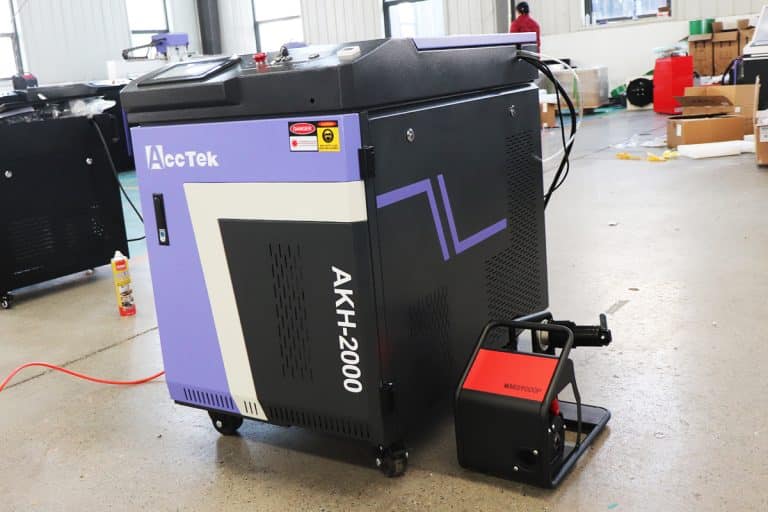
Comprehensive Guide to Choosing the Right Laser Welding Machines
Comprehensive guide to choosing the right laser welding machines, covering technology, key features, cost factors, safety requirements, maintenance practices, and supplier selection.
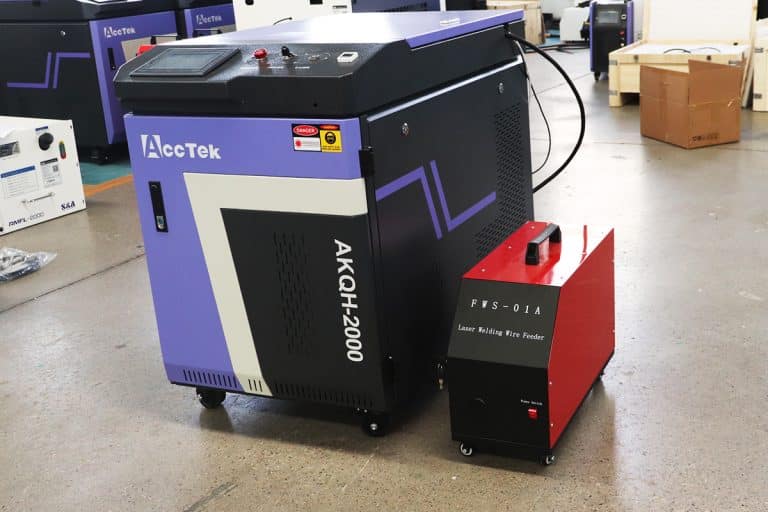
Are Welding Masks Required For Laser Welding
This article explains laser welding safety, including laser hazards, standards, PPE requirements, and practical scenarios that determine when welding masks and laser-rated eye protection are needed.
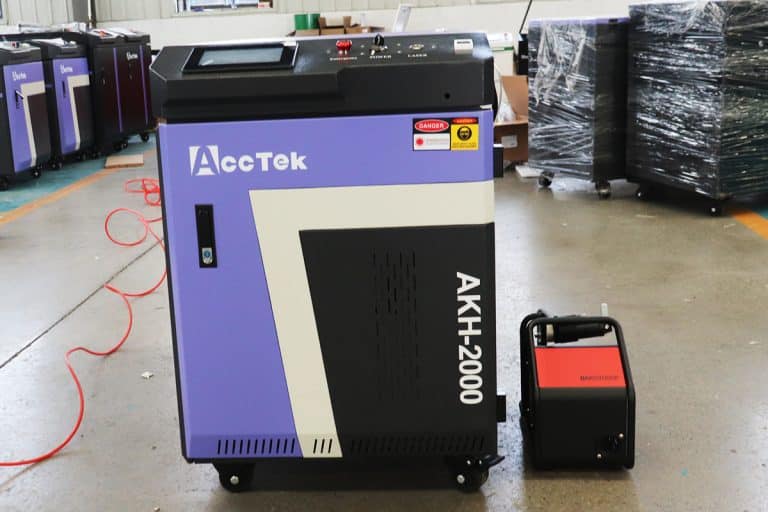
How To Select Laser Welding Power
This article teaches you how to select laser welding power and provides clear guidance on materials, thickness, welding modes, beam settings, defects, testing methods, and process optimization to achieve stable, high-quality welds.
Frequently Asked Questions
Does The Reflectivity Of Aluminum Affect Laser Welding Efficiency?
The reflectivity of aluminum has a significant impact on laser welding efficiency, and it is one of the main technical challenges when welding aluminum with lasers. This effect is closely tied to how aluminum interacts with laser energy and how the welding process must be optimized to compensate.
- High Initial Reflectivity: Aluminum reflects a large portion of incident laser energy, especially at room temperature. For common industrial laser wavelengths, bare aluminum can reflect more than 85–90% of the incoming beam at the start of welding. This means only a small fraction of the laser power is absorbed by the material, reducing heating efficiency and making it harder to initiate melting or keyhole formation.
- Wavelength Dependence: Reflectivity varies with laser type. CO2 lasers (10.6 μm wavelength) are reflected more strongly by aluminum than fiber or disk lasers (around 1 μm wavelength). As a result, fiber lasers are far more efficient for aluminum welding because aluminum absorbs a higher percentage of their energy. This is one reason modern aluminum welding applications overwhelmingly favor fiber laser welding systems.
- Dynamic Absorption During Welding: Once aluminum begins to heat and melt, its reflectivity drops and absorption increases. After a molten pool or keyhole forms, laser energy couples into the material much more efficiently. However, reaching this stable state requires sufficient initial power density, precise focusing, and often controlled ramp-up strategies to overcome the reflective barrier at the start.
- Process Stability and Spatter Risk: High reflectivity can cause unstable energy coupling during the early stages of welding. Sudden changes in absorption may lead to spatter, porosity, or inconsistent penetration. In addition, reflected laser energy can travel back toward the optics, potentially damaging collimators or fiber ends if back-reflection protection is inadequate.
- Surface Condition Matters: Surface treatments significantly influence reflectivity. Oxide layers, surface roughness, or coatings (such as anodizing or temporary absorptive coatings) can reduce reflectivity and improve laser energy absorption. Even minor differences in surface finish can affect weld consistency, especially in thin aluminum parts.
- Mitigation Strategies: To counter aluminum’s reflectivity, manufacturers use higher peak power, smaller spot sizes, beam oscillation, preheating, or dual-beam techniques. Advanced systems also integrate back-reflection isolators and real-time monitoring to protect equipment and stabilize the process.
Aluminum’s high reflectivity directly reduces laser welding efficiency, particularly during weld initiation. However, with the right laser source, process parameters, and surface control, this challenge can be effectively managed to produce high-quality, reliable welds.
What Are The Safety Hazards Of Laser Welding Aluminum?
- Laser Radiation and Eye Injury: High-power lasers used for aluminum welding can cause severe eye and skin injuries. Aluminum’s reflective surface increases the risk of stray or reflected laser beams, which may exit the weld zone unpredictably. Even indirect reflections can permanently damage eyesight, making proper laser-rated protective eyewear, enclosed workcells, and interlock systems essential.
- Back-Reflection and Equipment Damage: Aluminum reflects a significant portion of laser energy, especially during weld initiation. This reflected energy can travel back into the laser source or optics, potentially damaging fiber ends, lenses, or collimators. Equipment damage not only leads to costly repairs but can also create unsafe operating conditions if optical components fail unexpectedly.
- Metal Fumes and Particulates: Laser welding aluminum generates fine metal fumes and oxide particles. Inhaling aluminum oxide fumes can irritate the respiratory system and, with prolonged exposure, pose health risks. Proper fume extraction, filtration systems, and adequate ventilation are critical to maintaining safe air quality in the workspace.
- Spatter and Molten Metal Ejection: Rapid heating and unstable keyhole formation can cause molten aluminum to eject from the weld pool. Spatter can burn skin, ignite nearby combustible materials, or damage machine components. Protective clothing, fire-resistant barriers, and careful process tuning help reduce this hazard.
- Porosity and Trapped Gas Reactions: Aluminum often contains hydrogen or surface contaminants that vaporize during welding. Sudden gas release can cause small explosions within the molten pool, increasing spatter and instability. These reactions may surprise operators and raise the risk of injury if shielding and parameters are not well controlled.
- Fire and Heat Hazards: Although aluminum itself does not burn easily in solid form, fine aluminum particles and nearby materials can ignite due to high localized temperatures. Hot workpieces remain a burn hazard long after welding is complete, requiring safe handling procedures and cooling time.
- Electrical and System Safety Risks: Laser welding systems rely on high-voltage power supplies, cooling systems, and motion controls. Poor grounding, coolant leaks, or improper maintenance can introduce electrical hazards alongside the welding process.
Is Welding Wire Used In Laser Welding Aluminum?
- Autogenous Laser Welding (No Filler Wire): In many laser welding applications, aluminum is welded without welding wire. This is known as autogenous welding, where the laser melts only the base material to form the joint. This approach works well for thin sheets, tight joint fit-up, and applications requiring high speed and minimal heat input. Autogenous laser welding produces narrow welds with low distortion, but it is sensitive to joint gaps and material composition variations.
- Laser Welding with Filler Wire: Welding wire is frequently used when joint gaps are larger, material thickness increases, or metallurgical control is needed. Aluminum filler wire helps bridge gaps, stabilize the molten pool, and improve weld shape. It is also used to reduce hot cracking, which can be a concern in certain aluminum alloys, especially those with high silicon or magnesium content.
- Control of Weld Chemistry: Using filler wire allows precise control over weld metal composition. Common aluminum filler wires, such as AlSi (4xxx series) or AlMg (5xxx series), are selected based on the base material and required mechanical properties. The right filler can improve crack resistance, corrosion behavior, and overall weld integrity compared to autogenous welding.
- Process Stability and Absorption Benefits: Introducing welding wire into the laser weld pool can improve process stability. The wire absorbs some laser energy, reducing reflectivity issues associated with aluminum and helping initiate a stable molten pool more quickly. This can be particularly helpful at the start of the weld, where aluminum’s high reflectivity makes energy coupling more difficult.
- Equipment and Process Considerations: Laser welding with wire requires additional hardware, such as a wire feeder and precise wire positioning relative to the laser beam. Feed angle, speed, and synchronization with laser power must be carefully controlled to avoid spatter, lack of fusion, or inconsistent bead shape. While this adds complexity, it significantly expands process flexibility.
- Hybrid and Advanced Applications: In some cases, laser welding is combined with arc welding (laser-arc hybrid welding), where filler wire plays a major role in gap bridging and penetration control. This approach is common in thicker aluminum structures, such as automotive and shipbuilding components.
What Are The Common Defects In Laser-Welded Aluminum?
- Porosity: Porosity is one of the most common defects in laser-welded aluminum. It occurs when gases, primarily hydrogen, become trapped in the molten pool during rapid solidification. Moisture, surface contamination, oxide layers, or improper shielding gas flow can all contribute. Porosity reduces mechanical strength and fatigue resistance, especially in structural components.
- Hot Cracking (Solidification Cracking): Aluminum alloys with a wide solidification temperature range are susceptible to hot cracking. As the weld metal solidifies, tensile stresses develop while the material is still weak, leading to cracks along the centerline or grain boundaries. In laser welding, the high cooling rate and narrow weld pool can intensify this issue if filler composition or process parameters are not optimized.
- Lack of Fusion: Lack of fusion occurs when the laser energy is insufficient to fully melt the joint interface or filler material. This defect is often caused by incorrect focus position, excessive welding speed, or poor joint fit-up. In aluminum, high reflectivity during weld initiation can further reduce energy absorption, increasing the risk of incomplete fusion.
- Incomplete Penetration: Incomplete penetration is common in thicker aluminum sections or when parameters are not well matched to material thickness. It results in a weld that does not fully join the joint through its depth, compromising load-bearing capability. High thermal conductivity in aluminum rapidly draws heat away from the weld zone, making penetration control challenging.
- Spatter and Surface Irregularities: Rapid vaporization and unstable keyhole behavior can eject molten aluminum from the weld pool. This causes spatter, rough bead appearance, and surface undercut. These defects may not always affect strength but can reduce aesthetic quality and require post-weld cleanup.
- Undercut and Excessive Reinforcement: Improper balance between laser power and travel speed can create undercut along the weld edges or excessive reinforcement on the bead surface. Both conditions can act as stress concentrators and reduce fatigue performance.
- Oxide-Related Defects: Aluminum’s stable oxide layer has a much higher melting point than the base metal. If not adequately disrupted, oxides can remain trapped in the weld, leading to inclusions or weak bonding. Poor surface preparation is a common root cause.
- Keyhole Instability: Unstable keyhole formation can lead to fluctuating penetration depth, porosity, and inconsistent bead geometry. This is often linked to incorrect power density, shielding gas disturbances, or material reflectivity changes during welding.
Does The Oxide Layer Affect Laser Welding Of Aluminum?
- High Melting Point Barrier: Aluminum oxide has a melting point above 2,000℃, far higher than pure aluminum, which melts at around 660℃. During laser welding, the base metal melts quickly, but the oxide layer may remain solid or only partially disrupted. This creates a physical barrier that interferes with proper wetting, fusion, and keyhole formation, especially during weld initiation.
- Reduced Energy Coupling: The oxide layer affects how laser energy is absorbed at the surface. While clean aluminum already reflects a large portion of laser energy, the oxide layer can cause uneven absorption across the weld zone. This leads to unstable melting behavior, fluctuating penetration depth, and difficulty forming a consistent weld pool.
- Porosity Formation: Oxide layers often trap moisture and contaminants. When exposed to the intense heat of the laser, these contaminants release hydrogen and other gases into the molten aluminum. Due to rapid solidification, gas bubbles may become trapped, resulting in porosity—one of the most common defects in laser-welded aluminum.
- Lack of Fusion and Inclusions: If the oxide layer is not fully broken up or displaced, fragments of oxide can remain embedded in the weld metal. These inclusions weaken the joint and can lead to a lack of fusion at the weld interface. Even small amounts of oxide contamination can significantly reduce mechanical strength and fatigue life.
- Process Stability Challenges: The presence of oxide contributes to unstable keyhole behavior. As the oxide intermittently breaks and reforms during welding, it can cause sudden changes in absorption and molten pool dynamics. This instability may result in spatter, inconsistent bead shape, or variable penetration.
- Influence on Filler Wire Performance: When filler wire is used, oxide on either the base material or the wire itself can further complicate the process. Oxidized wire feeds poorly into the molten pool, increasing the risk of inclusions and porosity unless it is properly cleaned or stored.
- Mitigation and Control Measures: To minimize oxide-related issues, surface preparation is critical. Mechanical cleaning, chemical cleaning, or laser pre-cleaning can significantly improve weld consistency. Proper shielding gas coverage (often argon or helium) helps prevent additional oxidation during welding. Some processes also benefit from beam oscillation or higher power density to break up the oxide layer more effectively.
Why Is The Heat-Affected Zone Small In Laser-Welded Aluminum?
- Highly Concentrated Energy Input: Laser welding focuses a large amount of energy into a very small spot size. This high power density allows the metal to reach melting temperature almost instantly at the joint, without heating a wide surrounding area. Because the energy is so localized, adjacent material remains relatively cool, limiting the extent of the heat-affected zone.
- Short Interaction Time: Laser welding is a high-speed process. The laser beam interacts with any given point on the aluminum surface for only a fraction of a second. This short dwell time does not allow heat to spread far from the weld line. In contrast, arc welding applies heat over a longer period, giving thermal energy more time to conduct into the base material.
- Keyhole Welding Mechanism: In many aluminum laser welding applications, a keyhole forms as the laser vaporizes metal and creates a deep, narrow cavity. Energy is delivered directly into the material thickness rather than across the surface. This efficient coupling enables deep penetration with minimal overall heat input, further reducing the size of the HAZ.
- Lower Total Heat Input: Although peak temperatures are extremely high at the weld center, the total heat introduced into the part is relatively low. Laser welding achieves fusion with less overall energy compared to traditional processes that rely on broader heat sources. Less total heat means less thermal influence on the surrounding material.
- Rapid Heat Dissipation in Aluminum: Aluminum has high thermal conductivity, which might seem counterintuitive, but in laser welding, it helps draw heat away quickly from the molten pool. Because the molten zone is small and the heating time is brief, heat dissipates rapidly without accumulating in the surrounding material, keeping the HAZ narrow.
- Minimal Distortion and Microstructural Change: The small HAZ limits grain growth, softening, and residual stress in aluminum alloys. This is particularly important for heat-treatable aluminum, where excessive heat can degrade mechanical properties. Laser welding preserves more of the base metal’s original strength compared to wider-HAZ processes.
- Process Control and Precision: Modern laser welding systems offer precise control over power, focus, and travel speed. This allows operators to tailor energy input exactly to the joint requirements, avoiding unnecessary overheating and further minimizing the HAZ.
What Are The Commonly Used Shielding Gases For Laser Welding Aluminum?
- Argon (Ar): Argon is the most commonly used shielding gas for laser welding aluminum. It is inert, readily available, and cost-effective. Argon provides good protection against atmospheric contamination and helps maintain a stable weld pool. For thin aluminum sheets and standard welding speeds, argon offers sufficient shielding and produces clean, consistent welds. However, argon’s relatively low ionization potential can sometimes contribute to plasma formation, especially at higher laser powers.
- Helium (He): Helium is frequently used for higher-power or deeper-penetration aluminum laser welding. It has a higher ionization potential than argon, which reduces plasma formation above the weld pool and allows more laser energy to reach the workpiece. This results in deeper penetration and improved process stability, particularly in keyhole welding. Helium also enhances heat transfer away from the molten pool, helping stabilize weld geometry. The main drawbacks are higher cost and increased gas flow requirements due to its low density.
- Argon–Helium Gas Mixtures: Mixtures of argon and helium combine the advantages of both gases. By adjusting the helium content, manufacturers can fine-tune penetration depth, weld pool stability, and plasma suppression while controlling gas cost. Argon–helium blends are widely used in industrial aluminum welding, where consistent quality and higher productivity are required.
- Nitrogen (Limited Use): Nitrogen is generally not preferred for aluminum laser welding, as it can react with molten aluminum to form aluminum nitride inclusions. However, in some specialized applications or in controlled low concentrations, nitrogen may be used as a secondary shielding or backing gas when metallurgical effects are acceptable.
- Shielding Gas Delivery Considerations: Beyond gas type, proper gas flow rate and nozzle design are essential. Inadequate shielding allows oxygen and moisture to reach the molten aluminum, leading to oxide formation and porosity. Excessive flow, on the other hand, can disturb the weld pool and cause surface defects. Consistent coverage before, during, and immediately after welding is critical due to aluminum’s rapid oxidation.
- Backside and Trailing Shielding: For high-quality or thick-section welds, backside or trailing gas shielding is sometimes used to protect the solidifying weld metal and root area from oxidation. This is especially important in full-penetration welds.
Does The Shielding Gas Flow Rate Affect Laser Welding Of Aluminum?
- Protection Against Oxidation: The primary role of shielding gas is to isolate the molten aluminum from oxygen, nitrogen, and moisture in the air. If the flow rate is too low, atmospheric gases can enter the weld zone, leading to excessive oxide formation and increased porosity. Aluminum’s oxide layer forms almost instantly at high temperatures, so insufficient shielding quickly degrades weld quality.
- Stabilization of the Weld Pool and Keyhole: Correct gas flow helps stabilize the molten pool and keyhole during laser welding. A consistent, well-directed flow removes metal vapor and plasma from the interaction zone, allowing more laser energy to reach the workpiece. If the flow rate is too low, metal vapor can accumulate above the weld, causing beam attenuation and unstable penetration.
- Negative Effects of Excessive Flow: While insufficient flow is harmful, excessive shielding gas flow can also create problems. High flow rates may disturb the molten pool, leading to spatter, undercut, or irregular bead shape. Turbulent gas flow can draw surrounding air into the shielding zone, paradoxically increasing oxidation instead of preventing it.
- Influence on Porosity and Surface Quality: Gas flow rate affects how efficiently metal vapor and hydrogen escape from the molten pool. Proper flow helps reduce trapped gases and porosity. Poorly controlled flow—either too weak or too aggressive—can increase pore formation and surface defects, especially in aluminum alloys sensitive to hydrogen pickup.
- Heat Transfer and Cooling Effects: Shielding gas flow contributes slightly to the cooling of the weld area. Excessive flow, especially with helium-rich mixtures, can accelerate cooling and potentially influence solidification behavior. While this usually has a minor effect compared to laser parameters, it can still impact bead appearance and microstructure.
- Nozzle Design and Flow Direction: The effectiveness of a given flow rate depends heavily on nozzle geometry, stand-off distance, and flow direction. Laminar flow directed precisely at the weld pool provides better shielding than high-volume turbulent flow. Side shielding, trailing shields, or coaxial nozzles may require different optimal flow rates.
- Process Optimization: There is no universal shielding gas flow rate for aluminum laser welding. Optimal values depend on material thickness, joint design, laser power, welding speed, and gas composition. Flow rates are typically established through testing and fine-tuning rather than fixed rules.