

Product Introduction
Types of Carbon Steel Laser Welding Machines
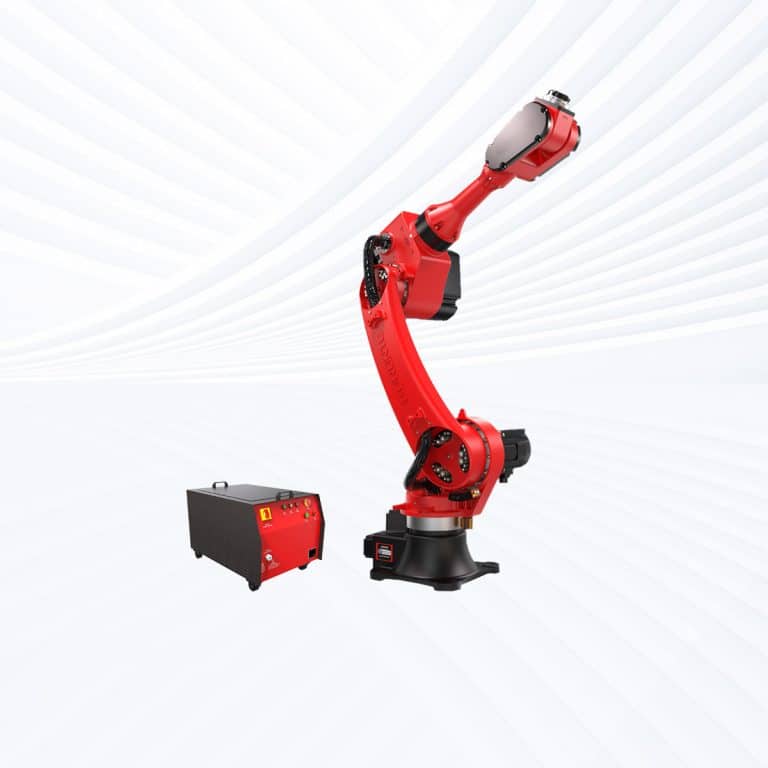
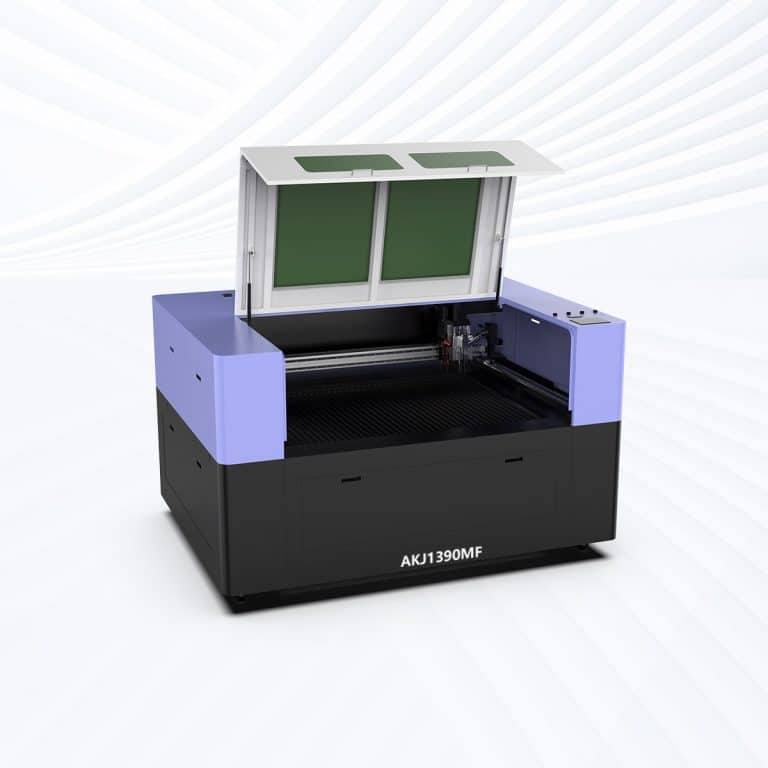
Welding Thickness Reference
| Laser Power | Welding Form | Thickness | Welding Speed | Defocus Amount | Protective Gas | Blowing Method | Flow | Welding Effect |
|---|---|---|---|---|---|---|---|---|
| 1000W | Butt Welding | 0.5mm | 70~80 mm/s | -1~1 | Ar | Coaxial/Paraaxial | 5~10 L/min | Welded Completely |
| Butt Welding | 1mm | 50~60 mm/s | -1~1 | Ar | Coaxial/Paraaxial | 5~10 L/min | Welded Completely | |
| Butt Welding | 1.5mm | 30~40 mm/s | -1~1 | Ar | Coaxial/Paraaxial | 5~10 L/min | Welded Completely | |
| Butt Welding | 2mm | 20~30 mm/s | -1~1 | Ar | Coaxial/Paraaxial | 5~10 L/min | Welded Completely | |
| 1500W | Butt Welding | 0.5mm | 80~90 mm/s | -1~1 | Ar | Coaxial/Paraaxial | 5~10 L/min | Welded Completely |
| Butt Welding | 1mm | 70~80 mm/s | -1~1 | Ar | Coaxial/Paraaxial | 5~10 L/min | Welded Completely | |
| Butt Welding | 1.5mm | 50~60 mm/s | -1~1 | Ar | Coaxial/Paraaxial | 5~10 L/min | Welded Completely | |
| Butt Welding | 2mm | 30~40 mm/s | -1~1 | Ar | Coaxial/Paraaxial | 5~10 L/min | Welded Completely | |
| Butt Welding | 3mm | 20~30 mm/s | -1~1 | Ar | Coaxial/Paraaxial | 5~10 L/min | Welded Completely | |
| Butt Welding | 4mm | 15~20 mm/s | -1~1 | Ar | Coaxial/Paraaxial | 5~10 L/min | Welded Completely | |
| 2000W | Butt Welding | 0.5mm | 80~90 mm/s | -1~1 | Ar | Coaxial/Paraaxial | 5~10 L/min | Welded Completely |
| Butt Welding | 1mm | 70~80 mm/s | -1~1 | Ar | Coaxial/Paraaxial | 5~10 L/min | Welded Completely | |
| Butt Welding | 1.5mm | 50~60 mm/s | -1~1 | Ar | Coaxial/Paraaxial | 5~10 L/min | Welded Completely | |
| Butt Welding | 2mm | 30~40 mm/s | -1~1 | Ar | Coaxial/Paraaxial | 5~10 L/min | Welded Completely | |
| Butt Welding | 3mm | 20~30 mm/s | -1~1 | Ar | Coaxial/Paraaxial | 5~10 L/min | Welded Completely | |
| Butt Welding | 4mm | 15~20 mm/s | -1~1 | Ar | Coaxial/Paraaxial | 5~10 L/min | Welded Completely | |
| 3000W | Butt Welding | 0.5mm | 100~110 mm/s | -1~1 | Ar | Coaxial/Paraaxial | 5~10 L/min | Welded Completely |
| Butt Welding | 1mm | 90~100 mm/s | -1~1 | Ar | Coaxial/Paraaxial | 5~10 L/min | Welded Completely | |
| Butt Welding | 1.5mm | 70~80 mm/s | -1~1 | Ar | Coaxial/Paraaxial | 5~10 L/min | Welded Completely | |
| Butt Welding | 2mm | 60~70 mm/s | -1~1 | Ar | Coaxial/Paraaxial | 5~10 L/min | Welded Completely | |
| Butt Welding | 3mm | 50~60 mm/s | -1~1 | Ar | Coaxial/Paraaxial | 5~10 L/min | Welded Completely | |
| Butt Welding | 4mm | 40~50 mm/s | -1~1 | Ar | Coaxial/Paraaxial | 5~10 L/min | Welded Completely | |
| Butt Welding | 5mm | 30~40 mm/s | -1~1 | Ar | Coaxial/Paraaxial | 5~10 L/min | Welded Completely | |
| Butt Welding | 6mm | 20~30 mm/s | -1~1 | Ar | Coaxial/Paraaxial | 5~10 L/min | Welded Completely | |
| 6000W | Butt Welding | 0.5mm | 100~110 mm/s | -1~1 | Ar | Coaxial/Paraaxial | 5~10 L/min | Welded Completely |
| Butt Welding | 1mm | 90~100 mm/s | -1~1 | Ar | Coaxial/Paraaxial | 5~10 L/min | Welded Completely | |
| Butt Welding | 1.5mm | 80~90 mm/s | -1~1 | Ar | Coaxial/Paraaxial | 5~10 L/min | Welded Completely | |
| Butt Welding | 2mm | 70~80 mm/s | -1~1 | Ar | Coaxial/Paraaxial | 5~10 L/min | Welded Completely | |
| Butt Welding | 3mm | 60~70 mm/s | -1~1 | Ar | Coaxial/Paraaxial | 5~10 L/min | Welded Completely | |
| Butt Welding | 4mm | 50~60 mm/s | -1~1 | Ar | Coaxial/Paraaxial | 5~10 L/min | Welded Completely | |
| Butt Welding | 5mm | 40~50 mm/s | -1~1 | Ar | Coaxial/Paraaxial | 5~10 L/min | Welded Completely | |
| Butt Welding | 6mm | 30~40 mm/s | -1~1 | Ar | Coaxial/Paraaxial | 5~10 L/min | Welded Completely | |
| Butt Welding | 7mm | 20~30 mm/s | -1~1 | Ar | Coaxial/Paraaxial | 5~10 L/min | Welded Completely |
Compatible Carbon Steel Grades
- A36
- 1010
- 1015
- 1018
- 1020
- 1022
- 1035
- 1035
- 1035
- 1040
- 1045
- 1050
- 1055
- 1060
- 1065
- 1070
- 1075
- 1080
- 1085
- 1090
- 1095
- 1141
- 11L14
- 12L14
- AISI 1330
- AISI 1340
- AISI 1541
- ASTM A500 Grade B
- ASTM A500 Grade C
- 1090
- ASTM A516 Grade 60
- ASTM A516 Grade 70
- ASTM A516 Grade 70
- ASTM A572 Grade 42
- ASTM A572 Grade 50
- ASTM A656 Grade 80
- ASTM A709 Grade 50
- ASTM A715
- ASTM A830-1045
- ASTM AISI 1117
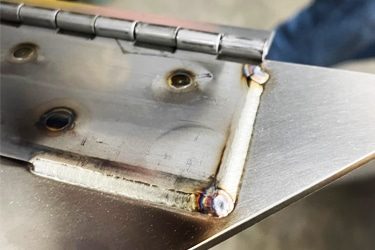
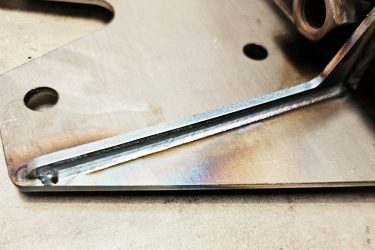
Application of Carbon Steel Laser Welding Machines
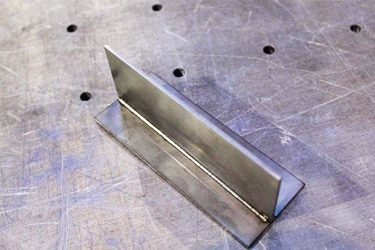
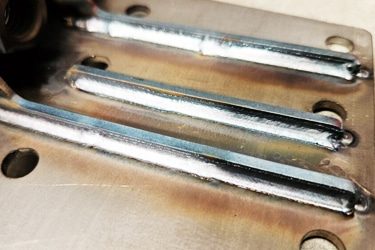
Customer Testimonials
Comparison VS Other Welding Technologies
| Comparison Item | Laser Welding | MIG Welding | TIG Welding | Stick Welding |
|---|---|---|---|---|
| Heat Input | Low (minimal distortion) | Moderate | Low | High |
| Weld Speed | Very High | High | Slow | Moderate |
| Weld Precision | Extremely High | Moderate | High | Low |
| Material Thickness Range | Thin to Medium | Medium to Thick | Very Thin to Medium | Medium to Thick |
| Automation Compatibility | Excellent (CNC/robotic integration) | Good | Moderate | Poor |
| Post-Weld Cleanup | Minimal (low spatter) | Moderate (some spatter) | Low | High |
| Operator Skill Requirement | Moderate (automated control available) | Moderate | High | Moderate |
| Initial Equipment Cost | High | Moderate | Moderate to High | Low |
| Operating Cost | Low (efficient, low consumables) | Moderate | High (slow and gas-intensive) | Low |
| Consistency & Repeatability | Excellent | Moderate | Good | Low |
| Weld Appearance | Clean, narrow, aesthetic | Acceptable | Very Clean | Rough |
| Welding Speed on Thin Sections | Excellent | Poor (can burn through) | Excellent | Poor |
| Suitability for Mass Production | Ideal | Good | Poor | Not Suitable |
| Versatility of Weld Types | High (but best for butt and lap joints) | High | Moderate | Low |
| Fume and Smoke Generation | Minimal | Moderate | Low | High |
Why Choose Us
High Precision
Our machines deliver accurate, clean welds with minimal heat input, reducing distortion and ensuring strong, consistent joints across a wide range of materials and thicknesses.
Easy Operation
Designed with intuitive controls and user-friendly interfaces, our systems allow both experienced operators and new users to achieve professional results with minimal training.
Durable & Reliable
Built with high-quality components and strict quality standards, our welding machines provide stable performance, long service life, and low maintenance requirements.
Custom Options
We offer a variety of models and customizable features to match specific production needs, helping businesses improve workflow and adapt to changing manufacturing demands.
Related Resources
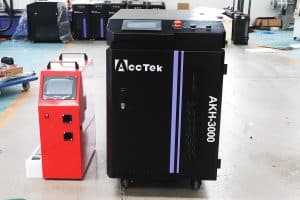
What Is The Lifespan Of Laser Welding Machines
This article explores the lifespan of laser welding machines, including key components, influencing factors, industry applications, maintenance practices, and strategies to optimize performance and durability.
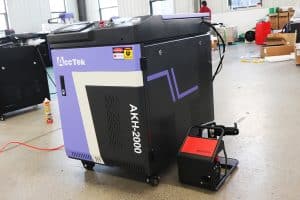
Comprehensive Guide to Choosing the Right Laser Welding Machines
Comprehensive guide to choosing the right laser welding machines, covering technology, key features, cost factors, safety requirements, maintenance practices, and supplier selection.
Are Welding Masks Required For Laser Welding
This article explains laser welding safety, including laser hazards, standards, PPE requirements, and practical scenarios that determine when welding masks and laser-rated eye protection are needed.
How To Select Laser Welding Power
This article teaches you how to select laser welding power and provides clear guidance on materials, thickness, welding modes, beam settings, defects, testing methods, and process optimization to achieve stable, high-quality welds.
Frequently Asked Questions
Can Lasers Weld Carbon Steel?
What Are The Disadvantages Of Laser Welding Carbon Steel?
- Cracking Risk in High-Carbon Steels: Carbon steel with a higher carbon content becomes harder and more brittle when rapidly heated and cooled. This increases the risk of hot cracking or cold cracking in the heat-affected zone (HAZ), especially without preheating or post-weld heat treatment. Welding parameters must be tightly controlled to avoid defects.
- Tight Fit-Up Requirements: Laser beams are highly focused, which means gaps between parts must be minimal. Poor joint preparation or inconsistent fit-up can lead to incomplete fusion, porosity, or weld failure. Precision fixturing is often required, especially in automated production.
- High Equipment Costs: Laser welding systems—especially fiber lasers—are expensive to purchase and maintain. This makes them more suitable for high-volume manufacturing or precision-critical applications where their advantages can be fully leveraged. For small-scale or low-budget operations, traditional welding methods are often more economical.
- Reflectivity and Surface Prep Issues: Carbon steel, especially if polished or coated, can reflect laser energy. This is more of a concern with CO2 lasers, which have lower absorption in metals. Surface preparation or the use of absorbent coatings may be needed to improve energy coupling.
- Thickness Limitations Without Modifications: Laser welding is ideal for thin to medium-thickness materials (typically up to 6 mm). Welding thicker carbon steel sections often requires multiple passes, beam oscillation, or hybrid techniques that combine laser with arc welding, adding complexity and cost.
- Safety Concerns: The high intensity of laser beams presents eye and skin hazards, along with risks of fume generation and fire. Carbon steel welding can produce metal oxides and other airborne particles that require proper ventilation and personal protective equipment.
How Much Are Carbon Steel Laser Welding Machines?
- Handheld Laser Welding Machines: Handheld fiber laser welders are compact, user-friendly, and suitable for small to mid-scale operations. These machines are ideal for welding thin to medium-gauge carbon steel with good precision and flexibility.
- Low-end models ($3,500–$8,000): Basic 1000W–1500W units with limited automation. Suitable for light-duty jobs, repairs, and small shops.
- Mid-range models ($8,000–$13,000): Offer more stable power, better cooling, and improved beam control.
- High-end models ($13,000–$18,000): 3000W+ units with touchscreen controls, multiple safety features, and longer duty cycles for industrial use.
- Automatic Laser Welding Machines: Automated systems are built for high-volume production and integration into robotic lines or CNC systems. These machines deliver consistent welds on carbon steel and often include fixtures, automation software, and closed-loop control systems.
- Entry-level automatic welders ($10,000–$16,000): Semi-automated tables or basic gantry systems, ideal for repeated welds on smaller parts.
- Mid-tier systems ($16,000–$24,000): Include programmable motion control, dual-axis positioning, and higher precision for complex geometries.
- Advanced systems ($24,000–$30,000): Designed for factory integration, with full robotics, custom fixturing, and multi-mode welding capability (e.g., seam tracking, hybrid welding).
What Gases Are Used For Carbon Steel Laser Welding?
- Argon: Argon is widely used due to its excellent shielding properties, low reactivity, and availability.
- Provides clean welds with minimal oxidation
- Ideal for both fiber and CO2 laser welding
- Works well on thin to medium-thickness carbon steel
- Often used alone or as a base in gas mixtures
- Helium: Helium improves energy transfer and weld penetration due to its high thermal conductivity, but it’s more expensive than argon.
- Produces a hotter, deeper weld pool
- Often mixed with argon (e.g., 25% He / 75% Ar)
- Useful for thick sections or high-speed welding
- Enhances weld quality but increases gas cost
- Nitrogen: Nitrogen can be used as a shielding gas for carbon steel, but it must be applied carefully.
- Cost-effective alternative to argon
- Can cause nitriding (nitrogen pickup) in the weld, which may affect mechanical properties
- More common in applications where weld appearance is less critical
- Oxygen (in Trace Amounts): Though not typically used for shielding during welding, small additions of oxygen (0.5–5%) to argon can enhance laser cutting or improve arc stability in hybrid welding processes.
- Helps in laser-assisted cutting, not ideal for clean welds
- May increase spatter or porosity in welding
- Not suitable for high-purity welds
How Thick Can Carbon Steel Be Laser-Welded?
- Fiber lasers rated at 1000 watts are suitable for welding carbon steel up to 2 mm thick. These are typically used for sheet metal fabrication, thin enclosures, or precision welds where tight control and minimal heat input are essential.
- At 1500 watts, the weldable thickness increases to around 4 mm. This range works well for small structural components, automotive parts, and manufacturing lines requiring stronger joints with deeper fusion.
- Laser welding machines with 2000 watts of power also handle carbon steel up to 4 mm thick, but they allow for faster travel speeds and improved weld consistency, especially useful in automated or continuous production environments.
- With 3000 watts of output, laser welding systems can handle carbon steel up to 6 mm thick. This is ideal for more demanding industrial uses such as machinery frames or load-bearing assemblies, where deeper welds and higher throughput are required.
- For the thickest carbon steel applications, 6000-watt laser welding systems can weld up to 7 mm thick in a single pass. These machines are typically found in high-volume manufacturing, construction, and heavy equipment industries where robust joints and full penetration are critical.
What Are The Differences In Laser Welding Performance of Carbon Steel of Different Strengths?
- Low-Strength Carbon Steel (Mild Steel, ≤ 300 MPa): Low-strength carbon steels are the easiest to laser weld due to their simple microstructure and low carbon content.
- Offers excellent weldability with minimal risk of cracking
- Wide process window and high tolerance for variation in joint fit-up
- Produces soft heat-affected zones (HAZ) with good ductility
- Ideal for automotive panels, furniture frames, and general fabrication
- Medium-Strength Carbon Steel (300–600 MPa): As strength increases, so does the sensitivity to heat and the risk of HAZ softening or hardening.
- Requires more precise control of heat input to avoid distortion
- May need shielding gas optimization to prevent oxidation and porosity
- Still welds well with proper parameters, especially with 1500W–3000W lasers
- Common in construction components and structural tubing
- High-Strength Carbon Steel (600–1000 MPa): High-strength steels have more alloying elements and tighter microstructural control, which affects their welding response.
- More prone to hardening and brittleness in the HAZ
- The risk of cracking increases, especially without preheat or post-weld heat treatment
- Slower welding speeds or multi-pass strategies may be needed
- Often used in truck frames, crash-resistant parts, and heavy machinery
- Ultra-High-Strength Carbon Steel (>1000 MPa): These steels are engineered for performance but pose serious challenges during laser welding.
- Highly susceptible to cold cracking and HAZ embrittlement
- Tight heat control, proper shielding gas (often with helium), and low-hydrogen procedures are essential
- Weld quality depends heavily on joint design, preheating, and cooling control
- Common in aerospace components, ballistic armor, and high-load structural parts
How To Reduce The Risk of Cold Cracking Of Laser Welding Carbon Steel?
- Preheating the Base Metal: Preheating reduces the temperature gradient between the weld and the surrounding material, slowing the cooling rate. This helps relieve thermal stress and minimizes the formation of hard, brittle microstructures that are prone to cracking.
- Recommended for medium to high-strength carbon steels
- Typical preheat temperatures range from 100℃ to 300℃, depending on material thickness and carbon equivalent (CE)
- Controlling Heat Input and Cooling Rate: Laser welding provides high-intensity heat with a narrow beam, but overly fast cooling can cause hardening in the HAZ.
- Use optimized laser parameters to avoid excessive energy concentration
- Avoid over-welding or multiple passes that rapidly cool between cycles
- In thicker materials, allow controlled cooldown or use post-weld heat treatment
- Use of Low-Hydrogen Procedures: Hydrogen is a major cause of cold cracking. It’s introduced through moisture, dirty surfaces, or improper gas shielding.
- Keep the workpiece, filler wire (if used), and surroundings dry and clean
- Avoid welding in high humidity or on rusted/contaminated steel
- Use high-purity argon or argon-helium mixtures as shielding gases to prevent moisture absorption
- Proper Joint Design and Fit-Up: Stress concentration due to poor joint alignment or tight root gaps increases the likelihood of cracking.
- Design joints that distribute stress evenly
- Ensure accurate fit-up with minimal gaps
- Avoid sharp corners or abrupt geometry changes near weld zones
- Post-Weld Heat Treatment (PWHT): PWHT relieves residual stress and tempers brittle microstructures formed during rapid cooling.
- Typically applied to thick or high-strength carbon steels
- Involves slow, controlled heating followed by gradual cooling
How To Control The Heat Input Of Laser Welding Carbon Steel?
- Laser Power Output: Laser power is the primary driver of energy input into the weld zone. Higher power increases penetration but also raises the risk of excessive heat-affected zones (HAZ) and distortion.
- Use the lowest power setting that still achieves full fusion
- For thin carbon steel (<2 mm), 1000–1500W is often sufficient
- For thicker materials, increase power gradually while monitoring bead shape
- Welding Speed (Travel Rate): Travel speed determines how long the heat remains in one area. Slower speeds increase total heat input, which can cause wider HAZ and greater distortion.
- Increase speed to reduce heat input and minimize thermal buildup
- Balance speed to avoid incomplete penetration or undercutting
- Monitor for consistent bead shape and penetration along the joint
- Focal Position and Beam Diameter: Adjusting the focal point changes the concentration of energy. A tightly focused beam penetrates deeper, while a defocused beam spreads the heat over a wider area.
- Keep the focus point slightly below the surface for deep keyhole welding
- Use beam defocus or a larger spot size for shallow, low-distortion welds
- Avoid over-concentration, which can cause burn-through or vaporization
- Pulse Control (For Pulsed Lasers): In pulsed laser systems, heat input is managed by adjusting pulse energy, duration, and frequency.
- Short, high-frequency pulses can limit thermal input while maintaining depth
- Ideal for precision welds on thin carbon steel
- Allows fine-tuning of heat input in applications sensitive to distortion
- Joint Design and Fit-Up: Loose joints or gaps increase the need for additional heat or filler material, raising overall energy input.
- Ensure a tight, consistent fit-up to allow clean, efficient welds
- Use lap or butt joints with minimal gap to avoid heat loss and spatter
- Shielding Gas Flow and Type: Gas choice and flow rate influence heat transfer and arc stability.
- Argon or helium can help maintain a stable weld pool and protect against oxidation
- Excessive gas flow can cool the weld zone too quickly, affecting penetration and bead shape