
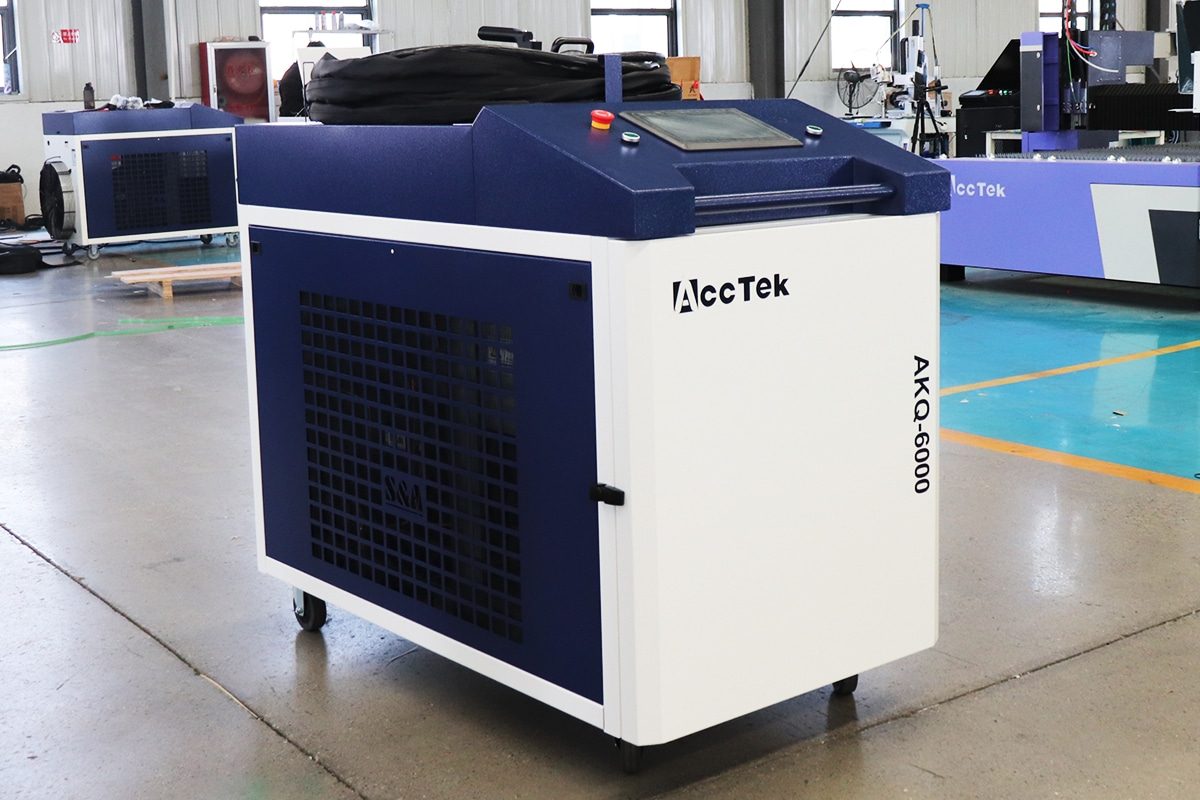
Laser Cleaning Machine Buying Guide

This comprehensive guide to laser cleaning machines covers technology, applications, specifications, cost factors, safety, and the step-by-step buying process.
Home » Blog » Laser Cleaning Machine Buying Guide
Laser Cleaning Machine Buying Guide
Laser cleaning has rapidly moved from a niche technology into a mainstream solution for industries ranging from manufacturing and automotive to aerospace and cultural heritage restoration. Unlike traditional methods such as sandblasting, chemical solvents, or manual abrasion, laser cleaning uses concentrated light beams to remove rust, paint, grease, or other contaminants without damaging the underlying material. The result is a faster, safer, and more environmentally friendly cleaning process.
However, not all laser cleaning machines are created equal. Power output, beam quality, portability, cooling systems, and control interfaces vary widely between models—and so do their prices. Choosing the right machine requires balancing performance needs, budget constraints, and long-term operational goals. Buy too little power, and you’ll face slow results. Overspend on unnecessary features, and you’ll hurt your ROI.
This guide is designed to help you navigate the buying process with confidence. We’ll break down the key factors—such as laser type, wattage, safety requirements, maintenance demands, and supplier reputation—so you can identify the best fit for your specific application. Whether you’re a small workshop upgrading from manual cleaning or a large facility seeking high-throughput industrial solutions, understanding these essentials will help you make a smart, future-proof investment.
Table of Contents

Understanding Laser Cleaning Technology

Laser cleaning is an advanced surface treatment technology that uses high-powered laser beams to remove contaminants such as rust, paint, grease, oxides, or residues from a material’s surface. Unlike traditional methods—such as sandblasting, grinding, or chemical stripping—laser cleaning is non-contact, precise, and environmentally friendly. The process can be fine-tuned to clean everything from delicate heritage artifacts to heavy industrial machinery, making it a versatile choice across industries like manufacturing, aerospace, automotive, shipbuilding, and electronics.

At its core, the technology offers three main advantages:

  • Selectivity: Targets and removes contaminants without damaging the base material.
  • Eco-Friendliness: Eliminates the need for chemical solvents or abrasive media.
  • Efficiency: Reduces cleaning time, labor, and maintenance compared to traditional methods.

How Laser Cleaning Works

Laser cleaning operates through a process known as laser ablation. The laser beam delivers concentrated energy to the contaminant layer, causing it to rapidly heat, vaporize, or break apart. Depending on the parameters, this can occur through thermal effects, micro-explosions, or photochemical reactions. The loosened particles are either vaporized into gas or ejected from the surface, leaving the substrate intact.

Key factors influencing the cleaning result include:

  • Wavelength: Determines how well the contaminant absorbs the laser energy.
  • Pulse Duration: Shorter pulses reduce heat transfer to the substrate.
  • Power Output: Affects the cleaning speed and depth.
  • Beam Focus and Scanning Speed: Control the precision and coverage.

Types of Laser Cleaning Machines

  • Emit a constant beam for high-speed removal of thick or stubborn layers.
  • Ideal for large, flat surfaces where heat buildup is acceptable.
  • Common in ship hull maintenance, steel fabrication, and heavy rust removal.
  • Fire short, high-intensity pulses for precision cleaning with minimal heat impact.
  • Best for delicate materials, intricate parts, and high-value components.
  • Often used in mold cleaning, electronics, and historical artifact restoration.

Handheld Laser Cleaning Machines

  • Portable, flexible units designed for on-site or hard-to-reach areas.
  • Available in both CW and pulsed models.
  • Popular in field maintenance, construction, and localized rust or paint removal.

Automated and Robotic Laser Cleaning Systems

  • Fully integrated into production lines with robotic arms or CNC control.
  • Deliver consistent, repeatable cleaning for mass production environments.
  • Common in automotive, aerospace, and large-scale industrial manufacturing.
Laser cleaning is a modern, adaptable, and eco-conscious alternative to conventional surface cleaning methods. By choosing the right type—CW for speed, pulsed for precision, handheld for flexibility, or automated for high-volume production—you can match the technology to your specific application and achieve optimal results. Understanding the underlying process and available machine types is the first step toward making a smart, cost-effective investment.

Advantages of Laser Cleaning Machines

Laser cleaning technology has gained widespread adoption because it solves many of the limitations found in traditional surface cleaning methods, such as sandblasting, grinding, or chemical stripping. By using concentrated laser energy, these machines offer a cleaner, safer, and more precise approach to removing rust, paint, grease, oxides, and other surface contaminants.
The benefits extend beyond performance—they also improve workplace safety, reduce operating costs, and support sustainable manufacturing practices. Whether used in small workshops or fully automated production lines, laser cleaning provides clear advantages that justify its investment for many industries.

Non-Contact Process

Laser cleaning is a contactless method, meaning there’s no physical friction between the tool and the surface. This eliminates the risk of mechanical wear, minimizes surface damage, and reduces the need for replacement tools or abrasives. It’s particularly valuable for cleaning delicate or high-value components where preserving the base material is critical.

Environmentally Friendly

Unlike chemical stripping, laser cleaning generates no hazardous solvents or wastewater. The removed material is often vaporized or collected as dry dust, making disposal easier and safer. This not only reduces environmental impact but also helps companies comply with stricter environmental regulations.

High Precision

The laser beam can be focused to millimeter or even micrometer-scale spots, enabling selective cleaning of intricate details, fine edges, and sensitive surfaces. This level of precision is ideal for electronics, mold maintenance, and heritage artifact restoration, where accuracy is crucial.

Reduced Maintenance

Since there’s no abrasive media or consumable chemicals, maintenance costs are significantly lower. Laser systems have fewer wear-and-tear parts, and cleaning heads typically last for years with minimal servicing. This leads to a lower total cost of ownership over the machine’s lifespan.

Versatility

Laser cleaning works on a wide range of materials—including metals, plastics, composites, ceramics, and stone—making it suitable for multiple industries. The same machine can switch between applications like rust removal, paint stripping, and oxide layer cleaning with minimal adjustment.

Automation Potential

Laser cleaning machines can be integrated into robotic arms or CNC systems for automated cleaning in high-volume production environments. Automation ensures consistent results, reduces operator fatigue, and boosts throughput, making it ideal for large-scale industrial use.
Laser cleaning machines combine precision, safety, and sustainability in a way few traditional methods can match. As a non-contact, eco-friendly, and highly versatile technology, they deliver cleaner results while lowering maintenance and operational costs. With the ability to operate manually or integrate into automated systems, they offer solutions for both small-scale and industrial cleaning challenges. For businesses aiming to improve efficiency, reduce environmental impact, and protect sensitive components, laser cleaning represents a future-ready investment.

Key Applications of Laser Cleaning

Laser cleaning technology has evolved into a versatile tool used across multiple industries, thanks to its ability to selectively remove unwanted surface layers without harming the underlying material. Its precision, speed, and eco-friendly nature make it suitable for both heavy-duty industrial work and delicate conservation tasks. The same machine, with proper settings, can strip thick rust from steel, clean delicate historical artifacts, or degrease precision-engineered components. Below are the most common and impactful applications.

Rust and Corrosion Removal

Lasers effectively strip rust and corrosion from metals by breaking the oxide bonds and vaporizing the contaminants. Unlike grinding or blasting, the base metal remains untouched, preserving part tolerances and surface finish. This is widely used in automotive restoration, ship maintenance, and metal fabrication.

Paint and Coating Removal

Laser cleaning can remove paint, powder coating, and other surface finishes without damaging the substrate—ideal for maintenance, repainting, or re-coating processes. It’s frequently used in aerospace, automotive manufacturing, and heavy equipment refurbishment.

Oil and Grease Removal

Oils, lubricants, and grease are vaporized by the laser’s energy, leaving a clean, dry surface ready for welding, coating, or assembly. This is especially valuable in production lines where parts must be contamination-free for adhesion or bonding.

Oxide Removal

Before welding or coating, oxide layers can interfere with adhesion and cause defects. Laser cleaning quickly removes oxides like aluminum oxide or stainless steel scale, improving weld quality and reducing rework rates.

Cultural Heritage Restoration

Laser cleaning is gentle enough to remove dirt, soot, and biological growth from stone, metal, wood, or painted surfaces without damaging the original material. Museums and restoration specialists use it to preserve sculptures, monuments, and historical artifacts.

Electronics Industry

Circuit boards, connectors, and semiconductor components benefit from laser cleaning’s precision. It can remove micro-contaminants without applying mechanical force or introducing static electricity, reducing the risk of damage to sensitive parts.

Food and Pharmaceutical Equipment

In hygiene-critical environments, laser cleaning removes residue, biofilms, and contaminants from stainless steel and other equipment surfaces without chemicals, preventing cross-contamination and meeting strict regulatory requirements.
Laser cleaning’s adaptability allows it to serve industries as varied as heavy manufacturing, cultural conservation, electronics, and food production. Whether the goal is to restore corroded metal, strip paint, remove oils, or prepare surfaces for welding, laser cleaning delivers precision, safety, and efficiency. Its ability to handle both rugged and delicate jobs makes it a true multi-industry solution and a smart investment for businesses seeking to improve quality, extend equipment life, and meet environmental and safety standards.

Key Factors to Consider Before Buying

Investing in a laser cleaning machine is a strategic decision that can transform your cleaning operations, but only if the system is matched precisely to your needs. The market offers models ranging from compact handheld devices to fully automated industrial systems, each with unique specifications, advantages, and limitations. Before making a purchase, it’s essential to assess your cleaning goals, material properties, production environment, and long-term cost implications. Overlooking these factors can lead to inefficiency, poor cleaning results, or unnecessary expenses.

Application Requirements

Define exactly what contaminants you need to remove (rust, paint, oxides, grease, biological growth, etc.) and how frequently you’ll be cleaning.

  • Light-duty precision work: Such as electronics or heritage restoration, often requires pulsed lasers under 200W with fine beam control.
  • Medium-duty tasks: Such as mold cleaning or paint stripping – benefit from 200–1000W units with adjustable pulse width.
  • Heavy-duty industrial cleaning: Such as large rusted surfaces or ship hulls, may require CW systems above 1500W for maximum speed.
Also consider the surface condition. Coatings bonded to metal may need higher energy density than loosely attached rust.

Material Compatibility

Different materials absorb laser energy differently.

  • Highly reflective metals (aluminum, copper) require specific wavelengths or higher peak power to avoid inefficient cleaning.
  • Heat-sensitive substrates (plastics, composites, stone artifacts) need short pulse durations to prevent damage.
  • Multi-layer coatings may require fine-tuned settings to remove only the top layer without touching underlying layers.
Confirm that the machine’s wavelength (often 1064 nm for fiber lasers) and adjustable parameters suit your material portfolio.

Power Output

Power determines both cleaning speed and depth.

  • Low power (100–300W): Ideal for delicate, high-precision cleaning; slower but safer for sensitive materials.
  • Mid-range power (300–1000W): Balanced choice for general industrial use; faster cleaning without excessive heat.
  • High power (1000–6000W): Designed for maximum throughput and tough coatings; requires robust cooling and higher energy supply.
Be wary of overbuying—higher power comes with increased cost, weight, and energy consumption.

Portability

Ask yourself: Will the cleaning be stationary or on-site?

  • Handheld units: Portable, lightweight, ideal for field repairs and irregularly shaped objects.
  • Trolley-mounted units: Mobile but heavier, better for moving around a workshop or factory floor.
  • Fixed/Integrated systems: Ideal for high-volume, consistent production environments, but lack flexibility for mobile work.

Ease of Use

A technically powerful machine is useless if it’s too complex for your team. Look for:

  • Intuitive interfaces: Touchscreen controls, simple parameter adjustment, and visual status indicators.
  • Preset cleaning modes: Allow non-experts to operate without deep laser programming knowledge.
  • Built-in safety features: Emergency stop, automatic shutdown on overheating, and laser interlocks.
This reduces operator training time and minimizes errors.

Cooling System

Laser cleaning generates significant heat, and cooling impacts performance stability.

  • Air cooling: Compact, minimal maintenance, best for lower power (<1000W) or intermittent use.
  • Water cooling: Handles higher outputs and continuous operation, but requires regular water replacement, filter changes, and pump maintenance.
In high-output industrial environments, water cooling is almost always required for reliability.

Maintenance Requirements

Although laser systems have fewer consumables than abrasive or chemical cleaning setups, they still require:

  • Optical component care: Regular cleaning of lenses and protective glass to maintain beam quality.
  • Filter replacements: In dust extraction systems to handle vaporized material.
  • Periodic calibration: To ensure consistent performance.
Check that spare parts are readily available and that the supplier offers strong technical support and training.
A well-chosen laser cleaning machine should match your application type, material characteristics, operational environment, and power needs. Portability, ease of operation, cooling capacity, and maintenance demands will determine how effectively the system integrates into your workflow. High precision and speed are valuable, but reliability, operator safety, and long-term cost-effectiveness matter just as much. By carefully evaluating each factor before purchasing, you’ll not only protect your investment but also ensure the machine delivers consistent, high-quality cleaning for years to come.

Technical Specifications to Evaluate

Beyond application needs and budget, the real performance of a laser cleaning machine comes down to its technical specifications. These parameters dictate how efficiently the laser removes contaminants, how precise it can be, and how well it suits different materials. Understanding what each specification means—and how it impacts cleaning results—will help you choose a machine that delivers consistent performance and fits your operational requirements.

Laser Wavelength

The wavelength determines how effectively a material absorbs laser energy.

  • Most fiber lasers used for cleaning operate at around 1064 nm (near-infrared), which is well-absorbed by metals and many coatings.
  • Shorter wavelengths (e.g., 532 nm green lasers) may be better for some plastics or organic contaminants.
  • Matching wavelength to material ensures high cleaning efficiency while minimizing energy waste and substrate damage.

Pulse Duration and Frequency

These parameters control how the laser energy is delivered over time.

  • Pulse Duration: Measured in nanoseconds or picoseconds. Shorter pulses reduce heat transfer, protecting sensitive surfaces, while longer pulses may be more effective for removing thick or stubborn contaminants.
  • Pulse Frequency: Measured in kHz (thousands of pulses per second). Higher frequencies allow faster scanning but may lower energy per pulse; lower frequencies deliver more energy per shot for tougher deposits.
Balancing these settings is crucial for optimizing both speed and precision.

Spot Size and Focus

The spot size is the diameter of the laser beam where it meets the surface, and it directly impacts cleaning precision.

  • Small spot sizes: Provide high energy density for detailed cleaning and fine surface preparation.
  • Larger spot sizes: Cover more area per pass, improving speed for large surfaces but with less concentrated energy.
Adjustable focusing systems let you adapt the beam to different surface geometries and cleaning requirements.

Beam Delivery

Beam delivery refers to how the laser is directed from the source to the workpiece.

  • Handheld delivery heads: Offer mobility for irregular or large objects, suitable for maintenance and field work.
  • Robotic or CNC-guided delivery: Ensures consistent, repeatable cleaning in automated production environments.
  • Fiber-optic delivery cables: Provide flexibility, allowing the laser source to be located away from the cleaning area for safety and space efficiency.

Energy Consumption

Laser cleaning machines vary widely in power efficiency.

  • Lower-power systems consume less electricity but may be slower for heavy-duty cleaning.
  • High-power units clean faster but require more energy and robust cooling systems.
Energy efficiency impacts both operating cost and environmental footprint, so evaluating energy usage alongside cleaning performance is key for long-term ROI.
Technical specifications are more than just numbers—they define how well a laser cleaning machine will perform in your specific applications. Wavelength determines compatibility with materials, pulse duration and frequency influence precision and heat control, spot size and focus affect cleaning speed and detail, beam delivery dictates handling and automation potential, and energy consumption impacts operating costs. Understanding these parameters ensures you choose a machine that balances performance, efficiency, and adaptability to your unique operational demands.

Cost Factors

The cost of a laser cleaning machine is not just the figure on the price tag—it’s the sum of initial purchase price, ongoing operational expenses, and the value it returns to your business over time. A well-chosen machine can significantly lower labor costs, eliminate consumables, reduce downtime, and improve quality, resulting in a faster payback period. However, overspending on features you don’t need or underspending on a machine that cannot handle your workload can hurt your return on investment (ROI).

Initial Investment

The largest upfront cost depends on machine type, power rating, build quality, and automation level.

Continuous Wave (CW) Laser Cleaning Machines

  • Power range: 1000W – 6000W
  • Price range: $4,000 – $18,000
  • Use case: Large-scale, heavy-duty cleaning such as rust removal from steel plates, ship hull maintenance, or thick coating stripping.
  • Cost drivers:
  1. Higher wattage = faster cleaning, but higher energy use and larger cooling systems.
  2. Brand and component quality (fiber laser source stability, optical quality) affect lifespan and consistency.

Pulsed Laser Cleaning Machines

  • Power range: 100W – 2000W
  • Price range: $7,000 – $70,000
  • Use case: Precision cleaning, oxide removal before welding, mold cleaning, electronics, and cultural heritage restoration.
  • Cost drivers:
  1. Pulse width control capability for fine-tuning on sensitive materials.
  2. Higher energy per pulse improves contaminant removal without overheating.
  3. Advanced control software and automation options.
Why pulsed models are more expensive: They use more complex laser sources and control systems, enabling precise energy delivery without damaging the substrate.

Operating Costs

Laser cleaning machines have a lower ongoing cost profile compared to sandblasting or chemical stripping, but they are not cost-free. Main operating expenses include:

  • Electricity Consumption:
  1. CW 1000–6000W units typically draw 3–10 kW per hour of operation.
  2. Pulsed 100–2000W units usually consume less, but peak energy spikes can be high.
  • Cooling Systems:
  1. Air-cooled (lower power models) require minimal maintenance.
  2. Water-cooled (high-power models) need periodic water changes, filter replacements, pump servicing, and antifreeze additives in cold climates.
  • Optical Component Maintenance: Protective lenses and beam windows need regular cleaning and occasional replacement due to dust or residue buildup.
  • Dust and Fume Extraction Filters: Filters in extraction systems must be replaced regularly to maintain safe air quality.
  • Labor and Training Costs: Operators need initial training; advanced units may require specialized technicians for setup and parameter tuning.
While these costs are small compared to the consumables and waste management of traditional methods, neglecting maintenance can lead to costly downtime or repairs.

Return on Investment (ROI)

The ROI of a laser cleaning machine comes from reducing costs and increasing output:

  • Key ROI contributors:
  1. Labor savings: Laser cleaning often requires one operator and eliminates time-intensive manual scrubbing.
  2. Consumable elimination: No recurring costs for abrasive media, solvents, or blasting grit.
  3. Process efficiency: Faster cleaning speeds reduce production downtime and increase throughput.
  4. Extended asset life: Non-contact cleaning prevents surface wear, reducing replacement costs.
  5. Regulatory compliance savings: No hazardous waste disposal fees or penalties for chemical use.
  • ROI timelines:
  1. High-volume industrial use: Payback in as little as 6–12 months.
  2. Moderate use: Payback in 1–2 years.
  3. Low-frequency/specialized use: Payback in 2–4 years, often justified by quality improvements or reduced material loss.
When evaluated holistically, the right machine not only delivers superior cleaning performance but also pays for itself through cost savings, productivity gains, and extended equipment life.

Safety and Compliance

Laser cleaning machines deliver concentrated light energy powerful enough to vaporize rust, paint, grease, and oxides. While this makes them highly effective, it also introduces safety risks that must be carefully managed. Operators face potential hazards from direct or reflected laser beams, airborne particles, and vaporized materials. In addition, facilities using laser cleaning equipment must comply with occupational health and environmental regulations. Understanding safety classifications, personal protection needs, ventilation requirements, and compliance standards is essential for safe, legal, and efficient operation.

Laser Safety Classification

Laser cleaning systems typically fall under Class 4 in international laser safety standards (IEC 60825, ANSI Z136).

  • Class 4 lasers are the highest risk category, capable of causing eye and skin injury from direct or diffuse reflections and presenting potential fire hazards.
  • Operators and anyone in the vicinity must follow strict safety procedures, including controlled access to the work area, warning signage, and interlock systems that disable the beam when protective housings are opened.
  • Training on laser safety protocols is not optional—it is a regulatory requirement in most jurisdictions.

Protective Gear

Personal protective equipment (PPE) is a critical safeguard:

  • Laser safety glasses: Must be rated for the specific wavelength (e.g., 1064 nm for fiber lasers) and optical density (OD) needed to block harmful radiation.
  • Protective clothing: Flame-resistant garments protect against sparks or hot particles.
  • Gloves: Shield against incidental burns from heated surfaces or debris.
  • Hearing protection: May be required for high-powered systems that generate loud operational noise.

Ventilation and Dust Extraction

Laser ablation produces fine dust, metal fumes, and potentially hazardous vapors depending on the material being cleaned. Without proper ventilation, these can pose serious respiratory hazards.

  • Local exhaust ventilation (LEV): Captures contaminants at the source, minimizing worker exposure.
  • High-efficiency particulate air (HEPA) filtration: Removes microscopic particles from the air before recirculation.
  • Activated carbon filters: Trap volatile organic compounds (VOCs) and harmful gases released during cleaning.
  • Regular maintenance of filtration systems is essential to ensure performance and compliance with air quality standards.

Regulatory Compliance

Compliance ensures safe operation and protects your business from legal penalties. Requirements may include:

  • Laser safety regulations: Such as IEC 60825 or ANSI Z136, dictate classification, labeling, and safety measures.
  • Workplace health and safety laws: OSHA (in the U.S.) or equivalent agencies elsewhere set standards for exposure limits and PPE use.
  • Environmental regulations: Governing airborne emissions, waste disposal, and chemical handling (even though laser cleaning is largely chemical-free, residues may still require proper disposal).
  • Electrical and equipment certification: Ensuring machines meet standards such as CE marking in Europe or UL certification in the U.S.
Laser cleaning machines offer exceptional performance but demand equally rigorous safety measures. As Class 4 devices, they require controlled environments, laser-rated PPE, effective dust and fume extraction, and strict adherence to occupational and environmental regulations. Proper training, engineering controls, and compliance with recognized safety standards not only protect operators but also safeguard your business from downtime, fines, and liability. Investing in safety is not just about meeting regulations—it’s about ensuring that laser cleaning remains a reliable, sustainable part of your operations.

Buying from the Right Supplier

Selecting the right laser cleaning machine is only half the decision—the other half is choosing a reliable supplier. A reputable supplier can ensure that the equipment you receive meets quality standards, comes with full technical support, and remains operational for years. In contrast, a poorly chosen supplier can leave you with delayed deliveries, unresponsive support, and costly downtime. The best suppliers offer proven industry experience, dependable after-sales service, and strong warranty coverage that protects your investment.

Reputation and Experience

A supplier’s track record is the best indicator of their reliability.

  • Industry experience: Look for suppliers with several years in the laser cleaning market, ideally with documented success in your specific industry.
  • Client portfolio: Established suppliers often work with well-known companies, showing they can meet demanding standards.
  • Certifications and quality assurance: ISO certifications or compliance with CE/UL standards demonstrate commitment to quality and safety.
  • Customer feedback: Check online reviews, case studies, and testimonials to gauge satisfaction levels.
A supplier with a solid reputation is more likely to deliver on promises, from product performance to delivery schedules.

After-Sales Support

Even the best machines require maintenance, troubleshooting, and operator training.

  • Technical assistance: Suppliers should offer prompt, knowledgeable support via phone, email, or on-site visits.
  • Training programs: Comprehensive training ensures operators can use the machine efficiently and safely from day one.
  • Spare parts availability: Delays in sourcing replacement parts can lead to costly downtime; a good supplier maintains a robust parts inventory.
  • Software and firmware updates: Regular updates improve performance, add features, and maintain compatibility with evolving safety standards.

Warranty

A strong warranty is both a financial safeguard and a sign of confidence in product quality.

  • Coverage period: Laser cleaning machines typically come with warranties ranging from 1 to 3 years, depending on the supplier and model.
  • What’s included: Check if the warranty covers major components like the laser source, optical system, control electronics, and cooling system.
  • Conditions and exclusions: Understand what voids the warranty, such as improper maintenance or unauthorized modifications.
  • Extended warranty options: May be worth considering for high-value machines, especially in industrial settings with heavy usage.
The right supplier can make the difference between a laser cleaning machine that delivers consistent results for years and one that becomes a costly headache. Look for a proven track record, strong after-sales support, and a comprehensive warranty that protects your investment. A trustworthy supplier is not just a seller—they are a long-term partner who ensures your machine operates at peak performance and remains compliant with industry standards.

Step-by-Step Buying Process

Purchasing a laser cleaning machine is a strategic capital investment that affects productivity, operating costs, and long-term competitiveness. A rushed or poorly planned purchase can result in a machine that is underpowered, overcomplicated, or incompatible with your operational environment. Following a structured, step-by-step buying process ensures you match machine capabilities to your real cleaning requirements, stay within budget, meet safety and compliance regulations, and guarantee a smooth rollout from day one.

Assess Your Cleaning Needs

The foundation of the buying process is an accurate needs assessment.

  • Contaminant Type: Are you removing rust, oxides, paint, coatings, grease, scale, or biological residues? Different contaminants require different power levels and laser pulse types.
  • Substrate Material: Metals (steel, aluminum, copper), stone, composites, and plastics all respond differently to laser wavelengths.
  • Precision vs. Throughput: Restoration of a delicate artifact demands a low-power pulsed laser, whereas ship hull maintenance may require a 3000W+ CW machine.
  • Frequency & Scale: Determine whether cleaning is occasional, daily, or continuous—this affects ROI calculations and machine durability requirements.

Determine Your Budget

Budget planning must go beyond the sticker price.

  • Initial Investment:
  1. Continuous Wave (CW): 1000W–6000W = $4,000–$18,000
  2. Pulsed: 100W–2000W = $7,000–$70,000
  • Operational Costs: Electricity, filter replacements, cooling system servicing, and PPE for operators.
  • Hidden Costs: Installation, training, electrical upgrades, and dust extraction systems.
  • Contingency: Set aside ~10–15% for unexpected setup or customization costs.

Research Models and Suppliers

This step determines long-term reliability and support.

  • Compare Specs: Wavelength, pulse duration, frequency range, spot size adjustability, cooling system type, and portability.
  • Supplier Track Record: Years in business, industry specializations, certifications (ISO, CE, UL).
  • Customer Proof: Case studies, testimonials, and references from companies in your industry.
  • Parts & Service Availability: Confirm they can deliver replacement optics, filters, and electronics quickly.

Determine Your Budget

Budget planning must go beyond the sticker price.

  • Initial Investment:
  1. Continuous Wave (CW): 1000W–6000W = $4,000–$18,000
  2. Pulsed: 100W–2000W = $7,000–$70,000
  • Operational Costs: Electricity, filter replacements, cooling system servicing, and PPE for operators.
  • Hidden Costs: Installation, training, electrical upgrades, and dust extraction systems.
  • Contingency: Set aside ~10–15% for unexpected setup or customization costs.

Research Models and Suppliers

This step determines long-term reliability and support.

  • Compare Specs: Wavelength, pulse duration, frequency range, spot size adjustability, cooling system type, and portability.
  • Supplier Track Record: Years in business, industry specializations, certifications (ISO, CE, UL).
  • Customer Proof: Case studies, testimonials, and references from companies in your industry.
  • Parts & Service Availability: Confirm they can deliver replacement optics, filters, and electronics quickly.

Request Demonstrations

Never buy without seeing real-world performance.

  • On-Site Demos: The best option—using your materials under your operational conditions.
  • Virtual Demos: Useful for overseas suppliers, but request multiple material examples.
  • Key Observations:
  1. Speed of cleaning per square meter.
  2. Surface finish quality after cleaning.
  3. Adjustability for different contaminants and materials.
  4. Ergonomics and weight of handheld models.

Check Compliance and Safety

A laser cleaning machine must meet both laser safety regulations and workplace safety laws.

  • Laser Classification: Typically Class 4 (IEC 60825, ANSI Z136) requiring restricted access and trained operators.
  • Built-In Safety Features: Emergency stop, key switch, beam shutters, and interlocks.
  • Ventilation & Extraction: Systems with HEPA and activated carbon filters for dust and vapor control.
  • Environmental Compliance: Check local emission standards and waste disposal rules.

Negotiate Terms

Negotiation is about more than price.

  • Payment Terms: Upfront, staged payments, or leasing options.
  • Warranty Scope: Coverage for the laser source, optics, cooling system, electronics—minimum 12 months, ideally 24–36.
  • Service Agreements: Include training sessions, remote diagnostics, and priority service for breakdowns.
  • Delivery & Installation Commitments: Penalties for delays should be written into the contract.

Plan for Installation and Training

Proper planning ensures smooth integration.

  • Site Prep: Confirm power supply capacity, floor space, cooling water supply (if applicable), and dust extraction ducting.
  • Training: Hands-on operator training for safety, parameter adjustment, and preventive maintenance.
  • Documentation: Ensure the supplier provides a full operation manual, safety guidelines, and maintenance schedule.

Evaluate Performance

Post-installation evaluation protects your investment.

  • Benchmark Tests: Compare cleaning speed, quality, and consistency against supplier claims.
  • Operator Feedback: Gather user input on ease of use, ergonomics, and control interface.
  • Maintenance Tracking: Monitor downtime, service calls, and consumable usage.
  • ROI Review: Check actual productivity gains and cost savings against your initial projections.
By following this structured process, you minimize risk, maximize ROI, and ensure that your machine integrates seamlessly into your workflow—delivering safe, efficient, and long-lasting cleaning performance.

Summary

Laser cleaning technology offers a precise, eco-friendly, and highly efficient alternative to traditional cleaning methods, making it a valuable investment for industries ranging from manufacturing and automotive to aerospace and cultural heritage restoration. The right machine can deliver superior results while reducing labor costs, eliminating consumables, and improving workplace safety.
Choosing the best laser cleaning machine requires a clear understanding of your application needs, material compatibility, required power output, portability, ease of use, cooling requirements, and maintenance demands. Technical specifications such as laser wavelength, pulse duration, spot size, beam delivery, and energy consumption directly influence performance and efficiency. Cost considerations must go beyond the purchase price to include operating expenses and potential return on investment.
Safety is paramount, as most systems fall under Class 4 laser classification, requiring protective gear, proper ventilation, and regulatory compliance. Equally important is buying from a reputable supplier who offers strong after-sales support and warranty coverage. Following a structured buying process—from assessing needs and researching suppliers to requesting demos and evaluating performance—ensures a smart, future-proof investment.
With the right approach, a laser cleaning machine can become a long-term asset that boosts productivity, reduces environmental impact, and delivers consistent, high-quality results for years to come.

Get Laser Cleaning Solutions

Choosing the right laser cleaning machine is only the first step—partnering with a trusted manufacturer ensures you get the performance, reliability, and support your business needs. AccTek Group, a professional manufacturer of intelligent laser equipment, specializes in delivering complete laser cleaning solutions tailored to diverse industries and applications.
With extensive experience in laser technology, AccTek Group offers a wide range of machines, including continuous wave systems for heavy-duty cleaning, pulsed models for high-precision work, and automated solutions for large-scale industrial production. Each system is engineered with advanced optics, user-friendly controls, and robust safety features to meet international standards.
Beyond equipment, AccTek Group provides comprehensive service—from needs assessment and machine selection to installation, operator training, and after-sales support. Their team works closely with clients to configure the right solution for specific materials, contaminants, and production environments. Strong warranty coverage, ready spare parts supply, and responsive technical assistance ensure long-term performance and minimal downtime.
Whether you need portable field units, high-power factory systems, or integrated robotic cleaning solutions, AccTek Group delivers equipment and expertise that help you clean faster, safer, and more sustainably—maximizing your investment and keeping your operations at peak efficiency.
AccTek Logo
Privacy Overview

This website uses cookies so that we can provide you with the best user experience possible. Cookie information is stored in your browser and performs functions such as recognising you when you return to our website and helping our team to understand which sections of the website you find most interesting and useful.