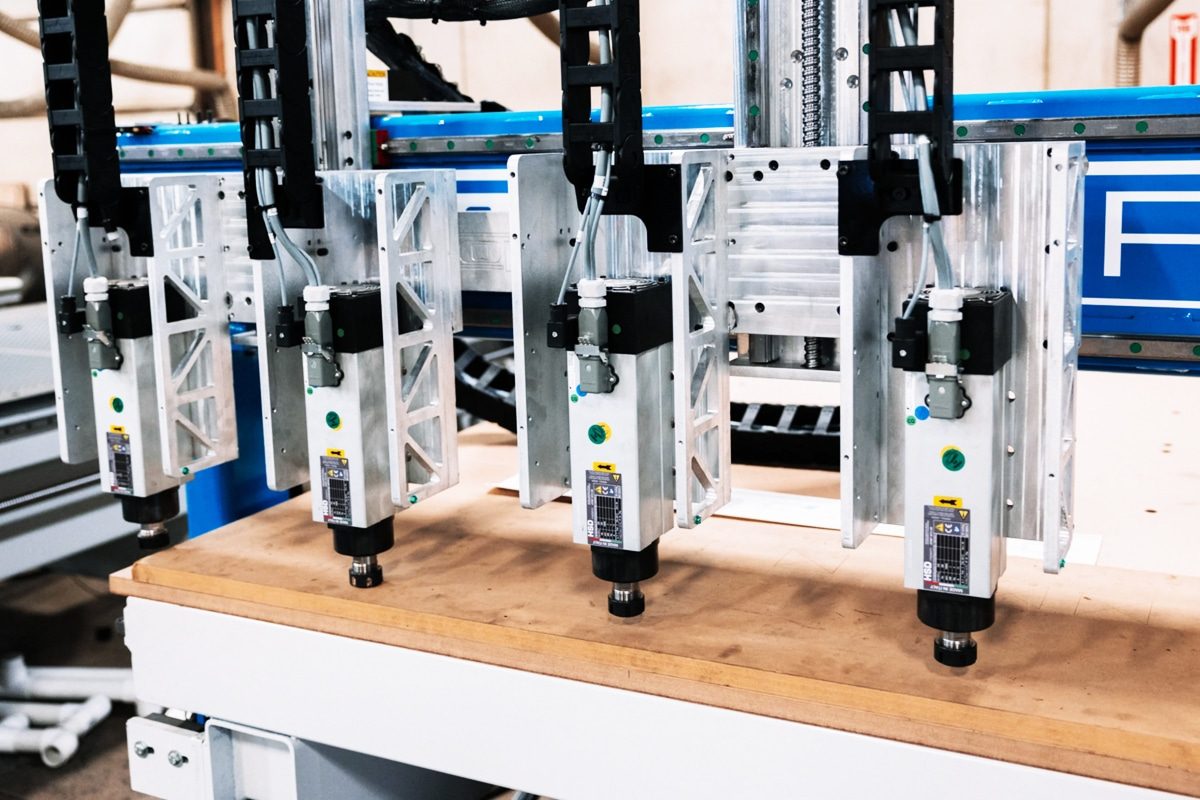
Before choosing the right CNC router spindle, it’s important to understand what the spindle actually is, how it works, and why it’s so vital to your machine’s overall performance. The spindle is often described as the heart of a CNC router, and for good reason — it’s the component responsible for powering the cutting tool, controlling speed and torque, and ultimately determining the precision, efficiency, and finish quality of every cut. A CNC router without the right spindle is like a car without the right engine — it might move, but it won’t perform as intended.
At its core, the spindle is the rotating mechanism that drives the cutting tool. Its main function is to deliver controlled rotational power (speed and torque) to the tool bit, allowing it to cut, carve, engrave, or mill a wide range of materials such as wood, plastics, aluminum, and composites.
A well-matched spindle provides the right balance between speed and torque for the type of work being done. For example, engraving delicate designs in acrylic requires high-speed, low-torque spindles, while heavy cutting of hardwood or aluminum benefits from slower, high-torque spindles.
In short, the spindle determines how efficiently energy is converted into precision cutting motion, and it’s what transforms a CNC router from a mechanical structure into a high-performance manufacturing tool.
The CNC router spindle is a complex, precision-engineered assembly that does far more than simply spin a cutting bit. It’s the key component that converts electrical energy into controlled, high-speed mechanical motion. By delivering the right combination of torque, stability, and cooling, the spindle ensures every cut is clean, accurate, and efficient.
Understanding how the spindle works — and what each part contributes — helps you make smarter decisions when selecting one. A good spindle not only improves the quality of your machining but also enhances tool life, reduces downtime, and ensures consistent results across all types of materials and applications. In short, mastering spindle fundamentals is the first step to mastering CNC machining itself.
When it comes to CNC routing, the spindle’s cooling method plays a major role in performance, reliability, and longevity. The two main types of spindles — air-cooled and water-cooled — differ in how they manage heat generated during operation. Both designs have their place in CNC machining, but understanding how each system functions and what trade-offs they present will help you choose the best option for your work.
Air-cooled spindles rely on airflow to dissipate heat from the motor and bearings. Inside the spindle housing, a fan (either mounted externally or integrated into the rotor) pulls or pushes air across heat sinks or fins. As the spindle spins, this airflow continuously removes heat produced by friction and electrical resistance. Because the cooling mechanism is built directly into the spindle, there’s no need for external components like pumps or hoses.
Air-cooled spindles are valued for their simplicity and low maintenance. Installation is straightforward — you simply connect the power and control lines, and the spindle is ready for use. There’s no external cooling system to set up, monitor, or clean, which reduces maintenance time and cost.
These spindles are also robust in dirty or humid environments, where coolant lines or reservoirs might be vulnerable to dust contamination or leaks. Their compact, self-contained design makes them ideal for smaller CNC machines, mobile setups, or hobby-grade routers that don’t require extended heavy-duty operation.
Air-cooled spindles also tend to cost less upfront, both in terms of equipment and accessories. They can handle a wide variety of light-to-medium-duty cutting jobs such as woodworking, plastic milling, engraving, and soft aluminum machining, making them versatile for general-purpose CNC work.
Despite their convenience, air-cooled spindles have limitations that can affect performance during prolonged or demanding tasks. Because air has low thermal conductivity, heat removal is less efficient than in water-cooled systems. Over time, excessive heat can build up in the bearings and motor, leading to reduced lifespan and potential thermal drift, where the spindle’s accuracy decreases as it warms.
Another consideration is noise. The cooling fan produces a noticeable whirring sound during operation, which can be fatiguing in small workshops or enclosed spaces. Air-cooled spindles may also struggle in high-speed or continuous operation, as the fan’s airflow alone may not be sufficient to maintain optimal temperature under heavy load. In these situations, users might notice a drop in torque consistency or surface finish quality due to minor vibrations and thermal expansion.
Water-cooled spindles use circulating coolant to control temperature more efficiently. Coolant — usually water or a water-glycol mixture — flows through channels inside the spindle housing, absorbing heat from the motor and bearings. The heated liquid then returns to an external reservoir, where it’s cooled again before being recirculated. This closed-loop cooling system maintains consistent spindle temperatures, even during long machining cycles or high-speed operations.
The most significant advantage of water-cooled spindles is superior thermal control. Water has much higher heat transfer capacity than air, allowing it to remove heat faster and more effectively. This keeps the spindle’s temperature stable, which in turn protects sensitive components such as bearings, windings, and seals from heat-related wear. A stable operating temperature means better dimensional accuracy, longer tool life, and improved surface finish — critical benefits for precision manufacturing.
Another major benefit is quiet operation. Since water-cooled spindles lack internal fans, they run far more quietly than air-cooled models. This makes them ideal for laboratories, classrooms, or professional workshops where noise reduction is important.
Water cooling also enables continuous operation at higher speeds without overheating, making these spindles a preferred choice for production environments or for machining hard materials like aluminum, carbon fiber, or dense hardwoods. The reduced vibration and consistent cooling result in cleaner cuts and smoother finishes.
The main drawback of water-cooled spindles is system complexity. In addition to the spindle itself, you need external components such as a pump, coolant lines, and a reservoir. Setting up this system requires more space, additional power, and regular maintenance. Users must monitor coolant levels, clean the system periodically, and replace the coolant to prevent algae growth, corrosion, or clogging.
If the cooling system malfunctions — for instance, if the pump fails or a leak develops — the spindle can overheat rapidly, potentially leading to motor or bearing damage. This adds an element of risk that air-cooled systems don’t have.
Water-cooled setups also tend to be more expensive overall, not only because of the spindle itself but also due to the extra components required for the cooling loop. In addition, they are less suitable for dusty or outdoor environments, where coolant lines can become contaminated or damaged.
Both air-cooled and water-cooled CNC router spindles can deliver excellent performance when used correctly, but each is optimized for different needs. Air-cooled spindles are simpler, cheaper, and more rugged for short-duration or light-to-medium-duty work — perfect for beginners, hobbyists, and small shops. Water-cooled spindles, on the other hand, provide precise temperature control, quieter operation, and superior longevity, making them ideal for professionals who run their machines continuously or demand top-quality surface finishes.
Ultimately, the best spindle for your CNC router depends on how intensively you use your machine, what materials you cut, and how much precision and reliability you require from your setup.
When choosing a CNC router spindle, it’s not enough to look at brand names or prices — the real difference lies in the technical specifications. Each spindle has a set of core parameters that define how it performs under different cutting conditions. These specs determine everything from how smoothly the spindle cuts to how long it will last. Understanding them will help you match the spindle’s capabilities with your specific materials, workload, and accuracy requirements.
Torque measures the spindle’s rotational force, expressed in Newton-meters (N·m). While RPM determines how fast the spindle spins, torque determines how much resistance it can handle without slowing down.
High-torque spindles maintain cutting force during deep cuts or when working with dense materials like aluminum, hardwood, or carbon composites. Low-torque spindles, on the other hand, are better suited for high-speed finishing or engraving tasks that require precision over power.
The relationship between torque and speed is inverse — as RPM increases, torque typically decreases. Therefore, when choosing a spindle, focus on the torque curve rather than just the peak rating. A spindle with consistent torque across a wide speed range will perform more reliably, especially in production environments that require diverse cutting conditions.
Bearings are the internal components that support the spindle shaft, allowing it to rotate smoothly and precisely. They play a major role in spindle performance, vibration control, and service life.
High-quality spindles use angular contact bearings or hybrid ceramic bearings, which can handle high speeds and axial loads while minimizing friction and heat. Ceramic bearings, in particular, offer better heat resistance, reduced wear, and longer life compared to traditional steel bearings.
The bearing arrangement — usually in pairs or sets — also affects rigidity and accuracy. Poor-quality or worn bearings can cause vibration, noise, and increased runout, all of which degrade surface finish and tool life. When evaluating a spindle, prioritize those from reputable manufacturers that specify bearing type, precision grade, and expected lifespan.
Runout refers to the small amount of deviation or “wobble” in the spindle’s rotation — essentially, how much the tool tip moves off its true center line. It’s typically measured in micrometers (µm).
A spindle with low runout ensures cleaner cuts, better dimensional accuracy, and longer tool life. Even minor runout — say, 0.01 mm — can cause uneven tool wear or chatter during high-speed operations. Professional-grade spindles usually have a runout tolerance below 0.005 mm, while hobby or entry-level models might have up to 0.02 mm.
Runout becomes especially critical when performing fine engraving, precision milling, or machining small parts where every micron matters. For heavy cutting of large parts, slightly higher runout may be acceptable, but precision users should always invest in a spindle with minimal deviation.
The collet system is what holds the cutting tool in place, transferring power from the spindle to the tool bit. It’s a small but crucial component — a poorly designed or mismatched collet can cause tool slippage, vibration, or even breakage.
The most common system used in CNC router spindles is the ER collet series, available in sizes such as ER11, ER16, ER20, and ER32. Each size supports different shank diameters; for instance, ER11 typically fits up to 7 mm tools, while ER32 can handle up to 20 mm.
A precise, well-balanced collet system improves tool stability, reduces vibration, and maintains concentricity between the spindle and tool. When evaluating spindles, look for models that support high-quality ER collet systems, and make sure replacements or upgrades are readily available.
Regular maintenance of collets — cleaning and replacing them after extended use — also helps maintain spindle precision and safety.
Every CNC router spindle may look similar on the outside, but its performance is defined by its technical specifications — power, speed, torque, bearings, runout, and collet system. Together, these factors determine how efficiently the spindle transfers energy, how accurately it cuts, and how long it will operate without failure.
In essence, a good spindle strikes the right balance between power, speed, and precision. The goal is not just to buy the most powerful spindle, but to choose one that matches your cutting materials, workload, and accuracy needs. By understanding these specifications in detail, you’ll be able to select a spindle that delivers both reliability and performance — the foundation of every successful CNC machining operation.
Cooling is one of the most important aspects of CNC router spindle performance — yet it’s often misunderstood or overlooked. Every spindle generates heat due to friction in the bearings and electrical resistance in the motor windings. If that heat isn’t properly managed, it can lead to reduced accuracy, premature bearing failure, or even spindle burnout. This is where cooling systems come into play.
There are two main types of spindle cooling methods: air-cooled and water-cooled. Both are designed to remove excess heat and keep the spindle operating within safe temperature limits, but they do so in different ways and come with unique benefits and trade-offs. Understanding how these systems differ — and what each one requires — is essential to choosing the right spindle for your CNC machine and working conditions.
Thermal performance is where air-cooled and water-cooled systems differ the most.
Air-cooled spindles rely on built-in fans or fins that move air across the spindle body to dissipate heat. The faster the spindle runs, the more air is circulated. This method works well for short to medium-duty operations or lighter materials like MDF, plastic, and soft wood. However, because air has relatively low heat transfer efficiency, air-cooled spindles can struggle to maintain optimal temperature during extended, high-load cutting sessions. Excess heat can build up inside the bearings or motor, leading to thermal expansion and reduced precision.
Water-cooled spindles, on the other hand, use a closed-loop cooling system that circulates coolant (usually water or a water-glycol mix) through internal channels in the spindle housing. This coolant absorbs heat and transfers it away much more efficiently than air. The result is superior temperature stability, even during long, high-speed, or high-torque operations. This makes water-cooled spindles the preferred choice for precision machining, metalwork, and continuous production environments. The even cooling also minimizes thermal distortion, which means better dimensional accuracy and surface finish quality.
In short, water cooling delivers higher and more consistent thermal performance, while air cooling offers simpler, lower-cost heat management for less demanding applications.
When it comes to maintenance and installation, air-cooled systems are simpler but less sophisticated, while water-cooled systems are more effective but require more attention.
Air-cooled spindles are plug-and-play in most setups. Since they have no external pumps, hoses, or reservoirs, they are straightforward to install and easy to maintain. Routine care usually involves cleaning air vents and ensuring dust buildup doesn’t block airflow. For shops that prioritize low maintenance and fast setup, air cooling is highly practical.
Water-cooled spindles, by contrast, require a dedicated cooling circuit. This includes a pump, coolant reservoir, and tubing to circulate the liquid. Setup takes more effort, and periodic maintenance is essential to keep the system reliable. The coolant must be checked regularly for contamination, leaks, or algae growth, and replaced periodically to prevent corrosion. Some users add a chiller or radiator for additional temperature control in high-demand setups.
That said, when properly maintained, water-cooled systems can significantly extend spindle life because the consistent cooling reduces wear on bearings and electrical components. The trade-off is that they demand more diligence from the operator.
Your shop environment also plays a major role in deciding between air and water cooling.
Air-cooled spindles perform well in dusty or humid environments, where introducing water or coolant systems could pose risks. They’re also more rugged in outdoor or mobile CNC setups, where simplicity and durability matter more than precision temperature control. However, because they blow air across the spindle body, they can also blow dust around the workspace — something to consider if you work in a clean or enclosed environment.
Water-cooled spindles are better suited to controlled indoor environments where coolant systems can be safely maintained. They’re often found in production shops, labs, or precision manufacturing facilities where heat control and acoustic comfort are priorities. Because they don’t rely on airflow, they don’t stir up dust and can even operate in cleaner conditions. However, in dusty or unfiltered spaces, the risk of coolant contamination increases, so filtration and maintenance become more critical.
In essence, air-cooled systems thrive in rugged, low-maintenance environments, while water-cooled systems excel in clean, precision-driven workshops.
Noise is another key difference that affects both comfort and the work environment.
Air-cooled spindles generate more noise because of the constant fan operation. The airflow and mechanical vibration combine to create a high-pitched whirring sound, especially noticeable at higher RPMs. In small shops or home workshops, this can become tiring over time. The noise level may not affect machining performance, but it does influence comfort and can interfere with communication or measurement tasks in close quarters.
Water-cooled spindles, by contrast, are significantly quieter. Since they don’t rely on fans, they operate with a smooth, almost silent hum — the only sound usually comes from the cutting tool itself. This quiet operation makes them ideal for educational environments, laboratories, or production facilities where noise control is important. For operators working long hours or running multiple machines in proximity, the reduced noise level is a major advantage.
If your workspace is noise-sensitive or shared, a water-cooled spindle offers a much more comfortable experience.
In short, air cooling is about convenience and simplicity, while water cooling is about control and performance. Understanding the trade-offs between the two will help you choose a spindle cooling system that matches your production demands, operating conditions, and expectations for reliability and comfort.
Electrical performance is the backbone of CNC router spindle operation. While mechanical specifications like power and torque determine what a spindle can do, its electrical characteristics and control system determine how effectively it does it. The way a spindle draws power, converts it to motion, and maintains stable speed under varying loads directly affects cutting precision, efficiency, and reliability.
Understanding how voltage, frequency, and spindle control systems work together will help you select a spindle that integrates smoothly with your CNC setup and delivers consistent performance.
Every spindle is designed to operate within specific voltage and frequency parameters. These define how the spindle motor receives and uses electrical power.
Most CNC router spindles operate on AC power, commonly in either single-phase or three-phase configurations. Smaller or hobby-grade spindles often use 110V or 220V single-phase power, which makes them compatible with standard workshop outlets. However, industrial spindles typically require 380V or higher three-phase power, which provides more stable current delivery and supports higher torque and power output.
Voltage is directly tied to the spindle’s size and power rating — higher-voltage systems can deliver more power with lower current draw, which means less heat and energy loss. When selecting a spindle, it’s critical to match its rated voltage to your available power supply. Running a spindle on the wrong voltage can lead to underperformance, overheating, or even permanent damage to the motor and bearings.
The frequency, measured in hertz (Hz), determines the spindle’s rotational speed. Most spindles are designed to run at 50 or 60 Hz base frequency, depending on the regional power grid. However, the spindle’s actual speed range can be expanded or controlled dynamically using a Variable Frequency Drive (VFD), which adjusts the electrical frequency supplied to the motor.
In short, choosing the correct voltage and frequency setup ensures your spindle operates safely, efficiently, and within its designed performance range.
The Variable Frequency Drive (VFD) is the heart of modern spindle control systems. It converts standard AC input power into a variable-frequency output that allows precise control of the spindle’s speed and torque. In simple terms, the VFD acts as an intelligent intermediary between your power source and spindle motor.
When you adjust spindle speed through your CNC software or control panel, the VFD modifies the frequency and voltage supplied to the spindle to match the desired RPM. For example, increasing the frequency from 200 Hz to 400 Hz effectively doubles the spindle speed.
It’s important to match the VFD’s specifications — voltage, current capacity, and frequency range — to the spindle’s requirements. An undersized or mismatched VFD can cause erratic operation or damage the spindle. In industrial environments, investing in a high-quality, properly rated VFD is essential for reliable, long-term spindle performance.
The ability to control spindle speed precisely is crucial in CNC machining because different materials and tools perform best at specific RPMs. Proper speed control ensures optimal chip load, cutting temperature, and surface finish.
Effective spindle control allows the machine to adapt dynamically to different materials, tooling conditions, and machining strategies. It also contributes to tool longevity and surface quality, especially when working at high speeds or under variable cutting loads.
The electrical characteristics and control system of a CNC router spindle are as vital as its mechanical design. Voltage and frequency determine compatibility and power stability, while the VFD acts as the intelligent controller that translates electrical input into precise mechanical motion. Combined with modern speed control methods, these systems give you the ability to fine-tune spindle performance for every material and application.
Choosing a spindle with the right electrical setup — and pairing it with a properly matched VFD — ensures not only reliable power delivery but also smoother operation, consistent torque, and greater precision. In essence, understanding your spindle’s electrical behavior isn’t just about wiring or setup — it’s about unlocking the full performance potential of your CNC router.
Selecting the right CNC router spindle isn’t just about power or speed — it’s about matching the spindle’s characteristics to the specific material and task at hand. Every material behaves differently under cutting forces, generating unique heat, vibration, and chip patterns. The spindle’s torque curve, RPM range, cooling system, and precision tolerance must all align with these behaviors to ensure smooth, efficient machining and a high-quality finish.
Whether you’re cutting hardwood furniture parts, engraving fine lettering, or machining composite molds, the right spindle can make all the difference between frustration and flawless results. Below is a detailed look at how spindle choice varies across major material categories and machining applications.
Woodworking covers a wide range of materials, from softwoods like pine to dense hardwoods like oak and walnut. Each requires different spindle characteristics for optimal results.
For general woodworking, a medium-power spindle (2.2–4.5 kW) with a speed range of 12,000–24,000 RPM is ideal. Higher speeds produce smoother finishes when cutting or engraving softer woods, while dense hardwoods benefit from lower speeds with higher torque to avoid burning or tool chatter.
Air-cooled spindles are often preferred in woodworking environments due to their simplicity and resistance to sawdust contamination. However, for heavy production or fine detail work where temperature stability matters — such as cabinetry or musical instruments — a water-cooled spindle can provide better consistency and finish quality.
Precision also depends on the collet system and runout tolerance. A high-quality ER collet system ensures the bit remains perfectly centered, which is especially important for intricate joinery, 3D carving, or fine lettering on wood surfaces.
In short, woodworking spindles should balance high speed with adequate torque, offering versatility across both roughing and finishing operations.
Plastics and acrylics demand high spindle speeds and excellent surface control to avoid melting, chipping, or rough edges. Because these materials soften under heat, the spindle must maintain a clean, steady RPM without excessive friction or vibration.
A high-speed spindle (18,000–30,000 RPM) with moderate power (1.5–3 kW) is typically best for cutting plastics, PVC, or acrylic sheets. Speed consistency is crucial here — even minor fluctuations can cause uneven cuts or melted edges.
Water-cooled spindles are often favored for plastics because they keep operating temperatures low and prevent heat buildup near the cutting zone. Combined with sharp, single-flute or O-flute bits, this cooling advantage helps maintain clarity in acrylic and a smooth finish in thermoplastics.
Precision also plays a major role in plastic machining, as small vibrations can mar transparent materials. Therefore, low runout and balanced tooling are essential for producing clean, professional-quality edges.
If you’re doing sign-making, acrylic lettering, or cutting clear panels, a quiet, stable, water-cooled high-RPM spindle will deliver the best clarity and finish.
Machining metals such as aluminum, brass, and copper requires a completely different spindle profile than woodworking or plastic cutting. These materials are dense, generate significant cutting forces, and conduct heat poorly, so the spindle must prioritize torque, rigidity, and thermal stability over high RPM.
For aluminum and other non-ferrous metals, choose a high-torque spindle in the 3–7.5 kW range, capable of operating between 6,000 and 18,000 RPM. This lower speed range allows for steady, powerful cuts without tool chatter or overheating.
A water-cooled spindle is strongly recommended for metal applications because it effectively manages heat buildup from both the spindle motor and the cutting zone. Excessive heat can cause thermal expansion, altering tolerances and surface finishes.
Equally important is spindle runout — even minor deviations can break small-diameter end mills or produce poor surface finishes. For metal cutting, look for spindles with runout under 0.005 mm and high-precision ceramic bearings designed for sustained loads.
In metal machining, the right spindle doesn’t just prevent overheating — it ensures dimensional accuracy, surface smoothness, and extended tool life.
Composites like fiberglass, carbon fiber, and phenolic laminates are extremely abrasive, which means spindle durability is a top priority. These materials can wear down tools and spindle bearings quickly, so a high-quality, well-sealed spindle is essential.
For composite machining, use a powerful spindle (4–6 kW) capable of speeds between 12,000 and 24,000 RPM, depending on the material’s density and resin content. The spindle should deliver consistent torque across this range to handle both roughing and finishing passes without speed drops.
Water-cooled spindles are preferred here because they maintain stable temperatures, reducing the risk of resin melting and prolonging bearing life. The cooling system also helps keep internal components clean and free from fine composite dust, which can otherwise damage seals or bearings.
In addition, spindles with high-quality ceramic bearings are recommended due to their resistance to abrasion and heat. Combining these with balanced cutting tools and vacuum dust extraction ensures clean edges and longer spindle longevity.
For aerospace or automotive composite applications, stability, cooling, and precision matter far more than maximum speed.
Engraving and printed circuit board (PCB) milling represent the most delicate end of CNC routing, requiring extreme precision, very low runout, and ultra-high speeds. The tools used here are typically small — often less than 1 mm in diameter — so even microscopic vibrations can ruin a job.
For this kind of fine work, use a high-speed spindle (24,000–60,000 RPM) with low-to-medium power (0.8–2.2 kW). These spindles should have exceptionally low runout (below 0.003 mm) and support high-precision collet systems like ER11 or smaller.
Because precision is more important than torque, water-cooled spindles are preferred — they run cooler and quieter, reducing vibration and allowing longer continuous operation. For detailed engraving, micro-drilling, or PCB patterning, temperature stability is crucial to prevent expansion or tool drift at high RPM.
In PCB work or jewelry engraving, the goal is micron-level accuracy — meaning the spindle must hold speed precisely and rotate perfectly true. A well-tuned high-speed, water-cooled spindle provides exactly that balance of speed, stability, and finesse.
Every material places unique demands on a CNC router spindle. Soft materials like wood and plastic rely on speed and smoothness, while metals and composites require torque, rigidity, and cooling efficiency. Meanwhile, precision applications like engraving or PCB milling depend on ultra-low runout and high RPM stability.
In the end, there is no universal “best” spindle — only the one that fits your materials, workload, and precision goals. Matching spindle type to application ensures cleaner cuts, longer tool life, and a smoother, more efficient CNC machining process.
Even the most powerful and precise CNC router spindle won’t perform properly if it’s not physically compatible with your machine. Spindle selection isn’t just about electrical and mechanical performance — it’s also about how well the spindle fits and integrates with the router’s frame, gantry, and motion system. Proper spindle mounting ensures stability, minimizes vibration, and preserves machining accuracy. Conversely, an ill-fitting or unbalanced spindle can cause chatter, premature wear, or even damage to the machine’s structure.
When evaluating compatibility, three key factors stand out: mounting size, weight and balance, and collet/tool holder compatibility. Understanding these aspects will help you choose a spindle that integrates seamlessly with your CNC router for safe, reliable, and precise operation.
The first step in ensuring compatibility is verifying that the spindle physically fits your CNC machine’s mounting system. Every spindle has a specific body diameter, usually expressed in millimeters (e.g., 65 mm, 80 mm, 100 mm, or 125 mm). The router’s spindle mount — typically a circular clamp or bracket — must match this diameter exactly to hold the spindle securely and maintain alignment during high-speed operation.
A mismatch, even by a few millimeters, can lead to vibration, misalignment, or the need for custom adapters. While adapters can work, they introduce an additional layer of complexity and can reduce rigidity. It’s always best to choose a spindle that fits directly into your machine’s existing mount or use a manufacturer-recommended adapter that maintains concentricity.
Additionally, consider spindle length and clearance. Some larger spindles extend deeper below the gantry, which may affect cutting depth or require Z-axis adjustments. Always ensure that the spindle’s length, along with the cutting tool, fits within your machine’s travel range without overextending the linear bearings or stepper motors.
If you plan to upgrade from a smaller air-cooled spindle to a larger water-cooled unit, check that your CNC frame and Z-axis plate can handle the increased body diameter and mounting footprint.
Spindle weight is another critical compatibility factor — it directly affects your CNC router’s gantry balance, acceleration, and structural rigidity.
Lightweight spindles (typically 3–5 kg) are suitable for desktop and hobby CNC machines, which often use smaller stepper motors and less rigid frames. Heavier industrial spindles can weigh 8–15 kg or more, offering greater stability and torque but requiring stronger Z-axis motors and reinforced gantry systems to support the load without flexing.
If your spindle is too heavy for the machine’s motion system, you may experience slower acceleration, lost steps, or excessive wear on lead screws and bearings. Conversely, a spindle that’s too light for a heavy-duty frame can introduce vibration or resonance issues at high RPMs.
For optimal results, the spindle’s weight should be balanced with your machine’s rigidity and motion capacity. Check your CNC router’s maximum spindle weight rating, often provided by the manufacturer. In general, a balanced system delivers smoother motion, more consistent cutting pressure, and higher accuracy.
Also, consider the center of gravity. Mounting a spindle too far from the Z-axis plate or at an incorrect angle can amplify vibration and stress on mechanical components. A properly mounted spindle should be centered, secure, and evenly distributed along the router’s axis to ensure smooth, vibration-free performance.
Spindle mounting and machine compatibility are foundational to achieving stable, precise CNC performance. A powerful spindle means little if it’s improperly mounted or too heavy for your machine’s structure.
In essence, the spindle should not only match your cutting requirements but also integrate seamlessly with your machine’s mechanical design. Choosing a spindle that fits properly, balances weight evenly, and supports the right tooling system guarantees better results, longer component life, and smoother operation across all your CNC projects.
When choosing a CNC router spindle, most people focus on power, torque, and speed — but noise, vibration, and balancing are equally important factors that directly affect machining quality, tool life, and overall user comfort. Even the most powerful spindle will produce poor results if it vibrates excessively or generates excessive noise during operation. These issues can lead to tool chatter, poor surface finish, premature bearing wear, and operator fatigue.
A high-quality spindle runs smoothly, quietly, and with minimal vibration, ensuring consistent precision and a more comfortable working environment. Two key factors — dynamic balancing and noise level — determine how well a spindle performs in these areas.
Dynamic balancing is the process of fine-tuning a spindle’s rotating components (such as the rotor, shaft, and tool holder) so that they spin evenly around their central axis without wobbling or vibration. Even microscopic imbalances in mass distribution can cause oscillations when the spindle rotates at high speeds — sometimes exceeding 20,000 or even 30,000 RPM.
To counter these effects, high-quality spindles undergo precision dynamic balancing during manufacturing. Each rotating component is balanced to a strict tolerance, often measured in units such as G1 or G2.5 (indicating the balance grade). A spindle with proper balancing can maintain stable rotation at high speeds with virtually no measurable vibration.
In practice, this means smoother cutting performance, quieter operation, and longer component lifespan. Dynamic balancing becomes especially critical in applications involving small tools, fine engraving, or high-speed machining — where even tiny imbalances can cause visible defects.
Additionally, users should understand that spindle balancing is not a one-time factor. Tooling balance also matters. Even if the spindle is perfectly balanced, using unbalanced tool holders or poorly seated collets can introduce vibration. For best results, always use high-quality, balanced tool holders and inspect them for damage or debris before installation.
A spindle that’s dynamically balanced and correctly assembled delivers greater stability, reduced noise, and precision cutting accuracy, making it a key quality indicator for any serious CNC setup.
Noise is an often underestimated aspect of spindle performance — yet it directly affects both operator comfort and the working environment. The noise level of a spindle depends on several factors: bearing quality, cooling system type, spindle speed, and the precision of dynamic balancing.
Air-cooled spindles are generally louder because they rely on fans to dissipate heat. The fan produces a constant, high-frequency hum, which becomes more pronounced at higher RPMs. In a small workshop or shared workspace, this noise can quickly become distracting or fatiguing, especially during long machining sessions.
Water-cooled spindles, on the other hand, are significantly quieter because they use circulating coolant instead of fans to manage temperature. The result is smooth, nearly silent operation — often the only audible sound is the cutting noise from the tool itself. This makes water-cooled spindles particularly attractive for professional workshops, classrooms, and precision labs where maintaining a quiet environment is beneficial.
However, the cooling type isn’t the only factor influencing spindle noise. Poorly balanced spindles or worn bearings can create mechanical vibrations that manifest as humming, grinding, or rattling sounds. Over time, this not only increases the noise level but also signals impending mechanical failure. Consistent noise increases or pitch changes during operation are early warning signs that the spindle may be out of balance or the bearings are wearing out.
Manufacturers typically measure noise levels in decibels (dB), though these values are rarely published for hobby-grade spindles. For reference, high-quality industrial spindles can operate between 55–70 dB, while lower-quality or air-cooled models may exceed 80 dB. The quieter the spindle, the less fatigue for the operator and the better the perception of quality and stability during operation.
It’s also worth noting that reduced noise often correlates with improved precision and smoother cutting performance. Quieter spindles usually indicate tighter tolerances, better bearing quality, and superior balancing — all of which contribute to enhanced machining results.
Noise, vibration, and balancing may seem secondary compared to power or torque, but in practice, they are essential for precision, comfort, and durability.
Dynamic balancing ensures the spindle rotates smoothly and evenly, minimizing vibration, extending bearing life, and improving surface finish quality. It’s the foundation of precision machining, especially at high speeds. Noise level reflects the spindle’s mechanical quality and operating comfort. Water-cooled and well-balanced spindles run much quieter, reducing operator fatigue and ensuring smoother, more stable cuts.
A quiet, vibration-free spindle isn’t just pleasant to work with — it’s a sign of engineering excellence. When evaluating a spindle, look beyond the specifications sheet: listen to it, feel how it runs, and observe its cutting behavior. A spindle that operates smoothly and silently is not only easier to live with but also capable of producing consistently precise, professional-quality results for years to come.
A CNC router spindle is one of the most valuable and hardworking components of your machine — and like any precision instrument, it requires consistent care to perform at its best. Proper maintenance directly affects accuracy, reliability, and lifespan. Even the most expensive, high-performance spindle will degrade quickly without regular inspection, cleaning, and correct handling.
Understanding how to maintain your spindle not only prevents costly downtime but also extends its service life by thousands of hours. Spindle care involves three essential practices: daily inspection, periodic maintenance, and proper storage and handling. Each plays a crucial role in keeping your spindle running smoothly and preventing premature wear or failure.
Daily inspection is the first line of defense in spindle maintenance. Before each machining session, you should perform a quick but thorough check to ensure the spindle is in good working condition.
Start with a visual inspection. Look for any signs of oil or coolant leakage around the spindle nose, housing, or electrical connections. Leaks may indicate worn seals or loose fittings that need attention. Next, inspect the collet and tool holder area. Dust, chips, and debris are common culprits behind poor tool alignment, excessive runout, or vibration. Clean these areas carefully with compressed air or a soft brush before inserting a new tool.
Check for unusual sounds or vibrations when the spindle is running at low speed. Grinding, humming, or rattling noises often indicate bearing wear or imbalance. Catching these early prevents more serious failures. Likewise, monitor temperature during operation — a spindle that consistently runs hotter than usual may have a cooling issue or overloaded bearings.
For air-cooled spindles, confirm that the air vents and fans are unobstructed and clean. For water-cooled models, verify that the coolant is circulating properly and that the hoses are free of leaks, kinks, or air bubbles.
Though it takes only a few minutes, a consistent daily check greatly reduces the risk of spindle damage and ensures your machine performs consistently day after day.
Beyond daily checks, spindles require scheduled maintenance to preserve performance and reliability over the long term. The frequency of maintenance depends on usage intensity, material type, and environmental conditions, but most spindles benefit from a thorough inspection every few hundred operating hours.
The first step in periodic maintenance is cleaning. Remove accumulated dust, resin, and metal particles from the spindle housing, collet nut, and cooling system. A dirty spindle not only runs hotter but can also compromise bearing seals and collet alignment.
Next, check the bearings and lubrication system. Most modern spindles use sealed bearings that require no external lubrication, but over time, even sealed units can degrade. If your spindle design allows bearing replacement or greasing, follow the manufacturer’s specifications precisely — incorrect lubrication can cause overheating or bearing seizure.
For water-cooled spindles, periodically flush and replace the coolant. Old coolant can develop algae or corrosion, reducing flow efficiency and increasing operating temperatures. Clean the reservoir and tubing with mild detergent or a corrosion inhibitor, and refill with fresh coolant. For air-cooled spindles, clean the fan blades and housing regularly to maintain airflow.
Additionally, inspect electrical connections and VFD settings to ensure proper voltage and grounding. Loose wiring or improper frequency settings can cause performance instability or motor wear.
Finally, test the runout accuracy of the spindle using a dial indicator. Even slight increases in runout can signal bearing wear or misalignment. Addressing these issues early helps prevent costly repairs or production errors later on.
Periodic maintenance might seem tedious, but it significantly extends spindle lifespan — turning what could be a 5,000-hour spindle into one that easily exceeds 10,000 or more hours of service.
Proper storage and handling are often overlooked aspects of spindle care, yet they are essential for maintaining precision when the spindle is not in use or during machine upgrades.
When storing a spindle, always keep it in a dry, dust-free, and temperature-stable environment. Humidity and temperature fluctuations can lead to condensation, which promotes corrosion on the spindle shaft and bearings. For long-term storage, wrap the spindle in an anti-corrosion bag or film and keep it in its original packaging with vibration-damping support. Avoid placing it horizontally without support, as prolonged side pressure can deform internal bearing races.
If you’re removing the spindle from a machine for maintenance or transport, handle it with care. Never drop or rest the spindle on its nose — this is the most precision-sensitive part of the assembly. Even minor impacts can cause misalignment or micro-damage to the bearings. Use proper lifting straps or cradles when handling heavier industrial spindles to prevent mechanical stress or accidental damage.
Before reinstalling a stored spindle, rotate it gently by hand to ensure smooth movement and to distribute lubricant evenly through the bearings. Run it at a low speed for a few minutes to let it reach operating temperature gradually before full-speed operation.
Attention to handling and storage details ensures that the spindle maintains its factory precision, preventing runout and extending overall service life.
A CNC router spindle’s performance and lifespan depend as much on maintenance as on its original build quality. Consistent care keeps the spindle running smoothly, protects internal components, and prevents costly breakdowns.
Regular maintenance transforms a spindle from a consumable part into a long-term investment. By developing good habits — cleaning daily, monitoring performance, and maintaining balance and cooling — you can maximize both productivity and spindle longevity. In the long run, a well-maintained spindle is not only quieter and smoother but also delivers years of reliable, high-precision cutting performance.
Choosing a CNC router spindle is not just a technical decision — it’s a financial one. The right spindle should not only meet your machining needs but also make long-term economic sense. Many users focus solely on the initial price, overlooking the ongoing expenses that determine the total cost of ownership (TCO) — a more accurate measure of what a spindle truly costs over its lifespan.
The total cost of ownership includes more than the upfront purchase. It accounts for operating costs, maintenance expenses, and potential downtime, all of which impact productivity and profitability. Understanding how each of these cost factors plays into the bigger picture helps you make a well-balanced decision — one that minimizes long-term expenses while maximizing performance and reliability.
The initial cost is the most visible and straightforward part of the spindle investment. It includes the price of the spindle itself, the Variable Frequency Drive (VFD), mounting hardware, and any accessories such as cooling systems or collet sets.
Spindle prices vary widely depending on power, precision, and build quality. Entry-level spindles (0.8–2.2 kW) designed for hobby CNC machines can cost a few hundred dollars, while industrial-grade spindles (5–10 kW, high-torque, water-cooled, precision-balanced units) can run into several thousand. However, the cheapest spindle isn’t always the most economical choice.
Low-cost spindles often use lower-grade bearings, have poor runout control, and wear out faster. They may also lack essential features like proper dynamic balancing or stable cooling systems. This means that while the initial expense is low, you might end up replacing or repairing the spindle much sooner — driving up long-term costs.
When budgeting for a spindle, factor in not just the purchase price but also installation and integration costs, such as wiring, VFD setup, and software configuration. A reliable spindle that lasts years longer and performs consistently will almost always offer a better return on investment than a cheaper, short-lived alternative.
Once the spindle is installed, the next consideration is operating cost — the expenses associated with running it day-to-day. These costs include electricity consumption, cooling requirements, and tool wear.
Spindle efficiency plays a major role here. High-quality spindles are more energy-efficient because they run cooler, maintain consistent speed under load, and waste less power as heat. Over time, this translates into significant savings, especially in high-duty or production environments.
Cooling systems also affect operating costs. Water-cooled spindles, while more efficient thermally, require pumps, coolant, and periodic fluid replacement, adding a small recurring expense. Air-cooled spindles, by contrast, consume no coolant but rely on fans that can draw slightly more power and produce additional noise.
Tool life is another hidden component of operating cost. A poorly balanced spindle or one with excessive vibration wears down tools faster, increasing replacement frequency. Conversely, a stable, precision-balanced spindle extends tool lifespan, improving overall cost efficiency.
In essence, a smooth-running, well-balanced spindle pays for itself through lower energy use and reduced tooling costs over time.
Every spindle requires regular maintenance to stay in top condition, and these costs should be factored into the total cost of ownership. Maintenance includes bearing replacements, coolant changes, cleaning, balancing, and occasional repairs.
Lower-quality spindles may require maintenance or bearing replacement every 1,000–2,000 hours of operation. In contrast, premium spindles with high-grade ceramic bearings and superior sealing can exceed 10,000 hours before major servicing is needed. Though the parts for higher-end spindles may cost more, their service intervals are much longer, making them more cost-effective in the long run.
For water-cooled systems, the coolant and pump require occasional servicing. Coolant needs to be changed periodically to prevent algae or corrosion buildup. Air-cooled systems are simpler but can accumulate dust in vents, requiring cleaning to maintain performance.
If a spindle fails due to poor maintenance — for example, running with clogged cooling passages or dirty collets — repairs can be costly, sometimes rivaling the price of a new unit. Investing time and small maintenance costs regularly helps avoid major, unexpected expenses later.
A good rule of thumb is to treat spindle maintenance like car maintenance: consistent, scheduled care is far cheaper than emergency repairs.
Perhaps the most underestimated component of spindle ownership is downtime cost — the expense of lost productivity when the spindle fails or needs repair. Every hour your CNC machine sits idle represents missed production, delayed orders, and potential revenue loss.
Downtime costs can escalate quickly in commercial settings. Even a single day of lost machining can outweigh months of minor savings from choosing a cheaper spindle. When evaluating spindle options, consider not just their expected lifespan but also the reliability and availability of replacement parts or service.
Premium spindles from reputable manufacturers often come with faster repair turnaround, standardized parts, and better support. Generic, low-cost spindles may save money upfront, but can take weeks to replace or repair if something goes wrong — a delay that could cost far more than the initial price difference.
Ultimately, the cost of downtime often defines whether a spindle is a “cheap bargain” or a true long-term investment.
When evaluating CNC router spindles, it’s essential to look beyond the sticker price. The total cost of ownership — encompassing initial purchase, operation, maintenance, and downtime — provides a much clearer picture of the real financial impact.
In short, the best spindle is not necessarily the cheapest, but the one that offers long-term reliability, consistent performance, and minimal unexpected expenses. By considering the total cost of ownership rather than just the upfront price, you make an investment that pays off through stability, precision, and productivity for years to come.
Picking a spindle is easier when you move through a clear checklist. Use the steps below in order—each decision narrows your options and prevents costly mismatches.
List every material you’ll cut in the next year (primary and occasional) and the maximum thickness. Note grain or fiber direction (wood/composites), melting risk (plastics), and chip load targets (aluminum/brass). Thicker, harder stock pushes you toward higher torque, stiffer bearings, and better cooling. If you regularly pocket 12–20 mm hardwood or 6–10 mm aluminum, you’re not in the same category as someone engraving veneer or acrylic letters.
Decide the outputs that matter: parts/hour, finish pass time, and allowable cycle time. Higher productivity requires deeper cuts and faster feed rates—both demand more continuous power and a torque curve that doesn’t collapse at working RPM. If uptime is critical, favor industrial spindles with known service intervals and fast parts support.
Confirm the mount diameter, available Z travel, and the maximum spindle mass your Z can lift without losing steps or acceleration. A heavier spindle (8–15 kg) needs a rigid Z plate, stout linear guides, and more motor current; desktop machines often cap out near 3–5 kg. Ensure the nose length won’t eat into Z clearance with your longest tool and dust shoe. Rigidity limits should cap your tool diameter and depth-of-cut assumptions.
Match cooling to duty cycle and environment (dusty garage vs. clean lab).
Pick continuous power for your “worst normal” cut, not a once-a-year job. As a rule: light wood/plastic work: 1.5–2.2 kW; mixed hardwood/composite: 3–4.5 kW; routine aluminum or heavy hardwood: 4–7.5 kW.
Torque matters more than peak RPM for metals and deep cuts. Use the relationship:
Power (kW) ≈ Torque (N·m) × RPM ÷ 9550.
Check the torque curve, not just the peak number—ensure usable torque at your planned cutting speeds (e.g., 8–14k RPM for aluminum, 14–22k RPM for hardwood).
Look for tight speed regulation under load (via VFD) so commanded RPM stays stable during entry and full-width cuts.
If you engrave, mill PCBs, or use ≤3 mm tools, prioritize ultra-low runout and high-grade bearings. Target ≤0.005 mm TIR at the collet; for micro-tools, ≤0.003 mm. Demand documented balancing (e.g., ISO G2.5 at operating RPM) and specify ER collets from reputable makers. For larger woodworking tools, you can tolerate slightly higher runout, but lower is always better for finish and tool life.
Verify input voltage (single-phase 110/220 V vs. 3-phase 200–400 V), current draw, and grounding. Size the VFD to or above the spindle’s current rating, and confirm your controller can command speed (0–10 V, Modbus/RS-485, digital). Check EMI mitigation (shielded cables, ferrites, proper earth) to avoid lost steps or sensor noise.
If you share a space, prefer water-cooled or lower-noise models, and balanced toolholders. In dusty shops, air-cooled avoids coolant risks but needs vigilant vent cleaning. Plan maintenance: fan cleaning (air), coolant changes and leak checks (water), collet replacement cycles, and periodic runout checks. Fewer decibels and less vibration usually correlate with better surface finish and tool life.
Favor manufacturers that publish real specs (runout at the nose, bearing class, balance grade, torque curves) and provide parts, service docs, and response times. Check availability of replacement bearings, collet nuts, and nose seals. A slightly higher price often buys longer intervals between services and dramatically less downtime.
The “right” spindle is the one that fits your machine physically, delivers the torque and RPM your materials demand, holds tight precision at your tool sizes, integrates cleanly with your electrical setup, and stays quiet and reliable in your workspace. Work through these steps in order, and you’ll land on a spindle that cuts faster, finishes cleaner, and lasts longer—without surprise costs or compromises.
Choosing a CNC router spindle can feel straightforward — until small oversights turn into costly problems. Many users, from beginners to experienced machinists, make similar mistakes that lead to poor performance, premature wear, or even spindle failure. These issues usually stem from misjudging spindle size, misunderstanding torque behavior, overlooking cooling systems, or skipping routine maintenance.
Avoiding these pitfalls ensures your spindle performs consistently, lasts longer, and delivers the precision your work demands. Let’s break down the most common mistakes and how to prevent them.
Bigger isn’t always better. A common mistake is buying the most powerful spindle available under the assumption that more power means better performance. While a high-power spindle (6–10 kW) can cut through dense materials quickly, it also adds weight, electrical demand, and unnecessary complexity.
An oversized spindle can overload your CNC router’s frame and Z-axis, reducing acceleration, straining stepper or servo motors, and introducing vibration due to excess mass. For smaller or mid-range routers, this can cause gantry flex or backlash, directly harming cutting accuracy.
Additionally, higher-powered spindles often require three-phase power, specialized VFDs, and enhanced cooling systems — all of which raise costs and setup complexity without necessarily improving your results.
Choose a spindle that matches the type of work you actually do most often, not the most extreme material you might cut once a year. The goal is balance, not brute force — enough power for your daily tasks, while keeping your system efficient and responsive.
At the opposite end of the spectrum, many users make the mistake of under-sizing their spindle to save money or reduce machine weight. This approach can quickly backfire.
A spindle with too little power or torque struggles under load, especially when cutting dense materials like hardwoods, composites, or aluminum. When a spindle bogs down or stalls, it doesn’t just slow production — it increases heat, stresses the bearings, and shortens tool life.
Underpowered spindles often need multiple shallow passes to achieve the same results that a properly sized spindle could handle in one, wasting time and reducing efficiency. The result is a false economy: lower upfront cost but higher long-term expenses in energy use, tool wear, and production time.
As a general rule, choose a spindle that comfortably handles your heaviest regular workload, not just your lightest. A 20–30% power buffer ensures smooth operation and longevity without overtaxing the motor.
A spindle’s torque curve — how torque changes with speed — is one of the most misunderstood specifications. Many users focus on maximum RPM or total power while ignoring how torque behaves across the operating range.
In reality, cutting performance depends more on torque at the RPM you actually use. For example, a 3 kW spindle rated for 24,000 RPM may deliver excellent results at high speed for wood or plastic, but its torque might drop sharply at 8,000–10,000 RPM, making it unsuitable for aluminum or other metals that require lower spindle speeds.
Failing to match the torque curve to your cutting needs can result in chatter, tool breakage, and inconsistent finishes. Always review the manufacturer’s torque graph (if available) and ensure the spindle maintains adequate torque in the speed range where you’ll spend most of your machining time.
If the manufacturer doesn’t provide torque data — a common issue with low-cost imports — that’s a red flag. It’s better to choose a spindle from a reputable brand that publishes transparent performance specifications.
Proper cooling is essential for maintaining spindle temperature, bearing health, and cutting accuracy. Yet poor cooling — or complete neglect of the cooling system — is one of the top causes of spindle failure.
Air-cooled spindles rely on fans to move air over the housing. If these vents become clogged with dust or debris, airflow drops, temperatures rise, and bearings wear prematurely. Similarly, water-cooled spindles depend on steady coolant circulation. If the coolant flow is too low, contaminated, or blocked by air bubbles, overheating can occur quickly.
Some users make the mistake of running water-cooled spindles without monitoring coolant quality or temperature. Over time, coolant can develop algae, rust, or mineral buildup, reducing efficiency. Others forget to maintain the pump or reservoir, leading to leaks or flow failure.
A small amount of preventive attention dramatically extends spindle lifespan.
Neglecting spindle maintenance is the silent killer of CNC routers. A spindle may appear to run fine for months before suddenly failing — often due to long-term neglect of cleaning, lubrication, or inspection.
Over time, dust, chips, and vibration take their toll on bearings, collets, and seals. Without regular cleaning, debris can accumulate inside the collet and spindle nose, increasing runout and degrading precision. Worn or dirty collets can cause tool slippage or uneven cutting pressure.
Water-cooled systems also require periodic coolant replacement, while air-cooled systems need fan cleaning to prevent overheating. Ignoring these small tasks can cut spindle life in half or worse.
Spindle maintenance takes minutes but saves hours of downtime and hundreds of dollars in repairs.
Many spindle problems aren’t caused by poor design — they’re the result of avoidable user errors. Oversizing or undersizing the spindle throws off machine balance and efficiency. Ignoring the torque curve leads to weak cuts and poor finishes. Inadequate cooling or neglected maintenance shortens lifespan and invites costly breakdowns.
A well-matched and well-maintained spindle doesn’t just perform better — it lasts longer, runs cooler, and pays for itself many times over in reliability and precision. By avoiding these common mistakes, you ensure your CNC router operates at its full potential for years to come.
Choosing the right CNC router spindle is about far more than just horsepower or price — it’s about finding the perfect balance between power, speed, precision, and reliability for your specific materials and workflow. The spindle is the heart of your CNC system, and its performance determines not only cut quality but also efficiency, tool life, and long-term machine health.
A smart spindle choice starts with understanding your materials and applications — whether you’re cutting wood, plastics, aluminum, or composites. From there, match the spindle’s power, torque, and speed range to your cutting needs, ensuring it delivers steady performance where it matters most. Consider cooling systems, as air- and water-cooled designs offer distinct advantages depending on duty cycle and environment. Check machine compatibility, including mounting size, weight, and electrical requirements, to ensure seamless integration.
Equally important are precision, maintenance, and cost of ownership. A spindle with proper dynamic balancing, low runout, and consistent maintenance will run quieter, last longer, and produce cleaner results.
Ultimately, the best CNC router spindle isn’t the most powerful or expensive — it’s the one that fits your materials, machine, and production goals. Choose carefully, maintain it well, and your spindle will deliver years of precise, dependable performance.