

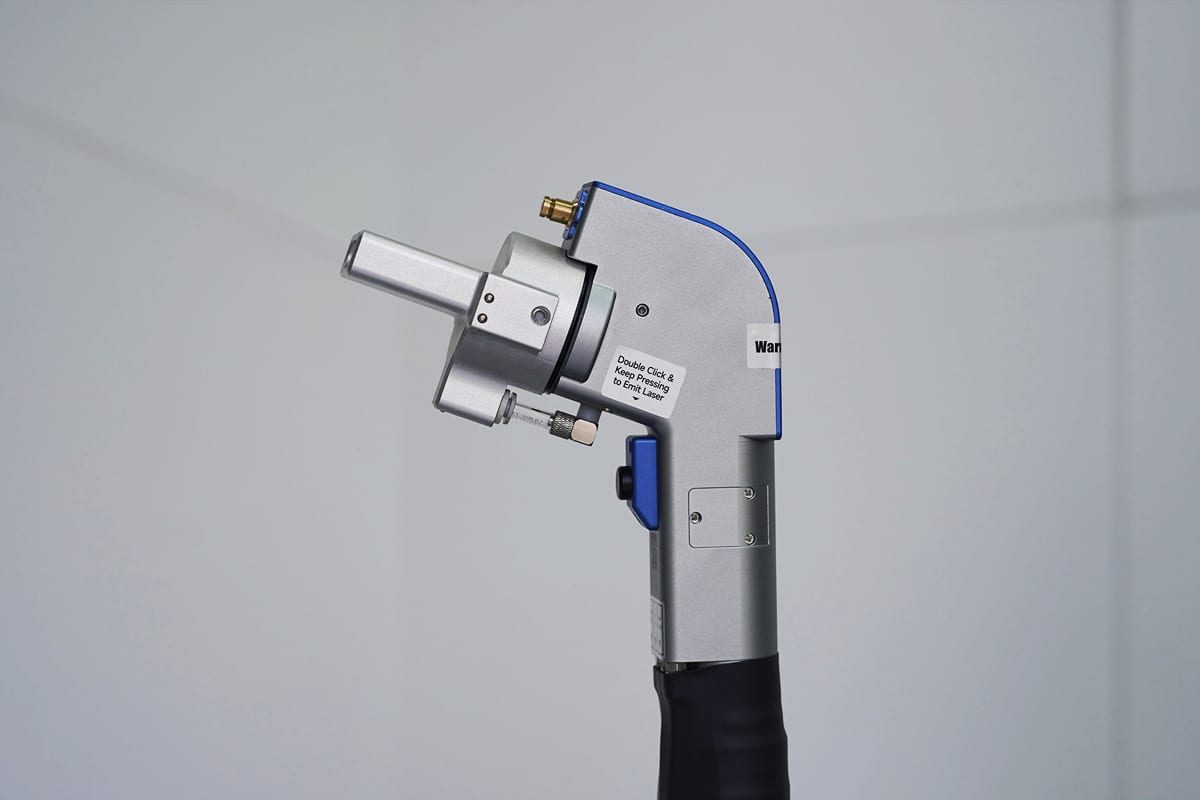
What Do We Mean by “Effectiveness”?
Technical Outcomes
- Cleanliness: The primary goal of laser cleaning is to remove contaminants, such as rust, paint, oil, dirt, or corrosion, from a material’s surface. Laser cleaning’s effectiveness in achieving cleanliness is measured by the degree to which these contaminants are completely or adequately removed without leaving residues. The high precision of laser beams allows for selective cleaning, ensuring that only the target contaminants are removed while leaving the base material untouched.
- Selectivity: Selectivity refers to the laser’s ability to target specific contaminants on a surface without affecting the underlying material. The effectiveness of this feature depends on the laser’s wavelength, intensity, and focus. A laser cleaning system that offers high selectivity ensures that delicate materials like metal alloys, plastics, or composite materials are cleaned without causing damage.
- Uniformity: A key measure of effectiveness is how consistently the cleaning process can be applied across a surface. Uniformity ensures that contaminants are removed evenly across the entire area, preventing patchy or inconsistent results. This is especially important for larger surfaces or complex geometries where even cleaning can be challenging.
- Surface State: After cleaning, the surface of the material should maintain its structural integrity and be in a state suitable for subsequent processes, such as coating, painting, or welding. Laser cleaning offers the advantage of preserving the surface roughness and finish, which is essential for many applications, as it can enhance bonding or adhesion properties.
Operational Outcomes
- Cycle Time: Cycle time refers to the duration of the cleaning process. Laser cleaning is often faster compared to traditional methods, such as sandblasting or chemical cleaning, due to the precision and speed at which lasers can remove contaminants. Shorter cycle times lead to higher throughput, which is critical for industries with high production demands.
- Yield and Quality: Yield refers to the amount of clean material produced, while quality indicates the degree of cleanliness and surface integrity after the cleaning process. Laser cleaning is known for its high yield and excellent quality, as it can clean surfaces with minimal material loss or damage, ensuring that the final product meets the required specifications.
- Cost and Sustainability: One of the significant advantages of laser cleaning is its cost-effectiveness and sustainability. Unlike abrasive cleaning methods that require ongoing material replenishment (such as sand or chemicals), laser cleaning typically involves lower operational costs in the long run. Additionally, it generates minimal waste, reducing the environmental footprint. This makes laser cleaning a more sustainable option, especially for industries focusing on reducing their ecological impact.
- Safety: Laser cleaning is inherently safer compared to traditional methods. The absence of chemicals or abrasive materials reduces the risks associated with handling hazardous substances or the need for protective gear typically used in sandblasting or chemical cleaning. Additionally, laser cleaning machines are equipped with safety features that ensure controlled exposure to laser light, safeguarding operators from potential harm.
How Laser Cleaning Works
Photothermal Ablation
Photomechanical Spallation
Photochemical Effects
Plasma/Steam Micro-Explosions
Selective Absorption
Key Levers That Determine Effectiveness
Wavelength
Pulse Duration
Fluence (J/cm²) and Peak Power
Repetition Rate and Overlap
Spot Size and Scanning Strategy
Assist Gas and Shielding
What Laser Cleaning Is Best At
Oxide and Rust Removal on Metals
Paint and Coating Stripping
Oil, Grease, and Carbonaceous Films
Weld Preparation and Post-Weld Cleaning
Selective Area Cleaning and Maskless Patterning
Heritage and Stone/Brick Conservation
Where It’s Less Effective
Highly Reflective, Polished Metals
Thick, Flexible, Ductile Coatings
Deep Recesses and Complex Internal Geometries
Heat-Sensitive Substrates
Embedded Contamination
Throughput and Economics
Cycle Time Drivers
Cycle time refers to the time required to clean a given surface or area. In laser cleaning, cycle time is influenced by several factors:
- Laser Power and Fluence: The power of the laser and the energy density (fluence) applied during cleaning are directly related to the time it takes to achieve effective cleaning. Higher power lasers can remove contaminants faster, reducing cycle time. However, too high a power setting may risk damaging the substrate, so the correct balance must be struck.
- Contaminant Type and Layer Thickness: The type and thickness of the material to be cleaned have a significant impact on cycle time. For example, thin layers of contaminants like light rust or paint can be cleaned faster than thick, stubborn layers of grease, oil, or corrosion. The cleaning process for more difficult contaminants may require longer exposure to the laser to achieve the desired results.
- Material Type and Surface Characteristics: The material being cleaned—whether it is metal, plastic, or composite—also affects cleaning time. Materials with highly reflective surfaces, such as aluminum, may require more time to absorb the laser energy effectively, increasing cycle time. On the other hand, materials that absorb laser energy efficiently may be cleaned faster.
- Laser Spot Size and Scanning Speed: The size of the laser beam and the speed at which the laser scans the surface are critical cycle time factors. A larger spot size covers more surface area in each pass, reducing the overall cleaning time. Similarly, faster scanning speeds can improve throughput but must be balanced with the risk of incomplete cleaning or inconsistent results.
- Environmental and Safety Considerations: Depending on the application, environmental and safety factors—such as the presence of hazardous materials, the need for protective shielding, or the use of assist gases—can also affect how quickly the cleaning process can be conducted. For example, working with materials that emit harmful fumes or require cooling may slow down the process.
Cost Model
The cost model for laser cleaning encompasses both the upfront investment in the laser cleaning system and the operational costs associated with its use. When considering the economics of laser cleaning, several factors come into play:
- Initial Investment: The upfront cost of purchasing a laser cleaning machine can be significant, particularly for high-powered or specialized systems. However, laser cleaning machines are typically built to last longer than traditional equipment like sandblasters, reducing long-term replacement and maintenance costs. The initial investment needs to be weighed against the long-term benefits, such as lower operating costs and improved cleaning quality.
- Energy Consumption: Laser cleaning systems can consume varying amounts of energy depending on the power settings, the duration of use, and the efficiency of the laser system itself. While laser cleaning is often more energy-efficient compared to methods like sandblasting or chemical cleaning, it’s essential to factor in the electricity costs, especially if the system runs continuously or in high-demand applications.
- Maintenance and Consumables: Unlike traditional cleaning methods that require ongoing purchases of consumables such as abrasives, chemicals, or solvents, laser cleaning requires minimal consumables—typically only maintenance for the laser system itself. These systems may need occasional replacement of components like lenses, focusing optics, or fiber cables, but overall, they have lower ongoing costs than traditional methods. The lower need for consumables helps to offset some of the initial investment costs.
- Labor Costs: Laser cleaning systems are often automated or semi-automated, which reduces labor costs associated with manual cleaning methods. Operators need specialized training to handle laser systems effectively, but overall labor requirements tend to be lower compared to traditional abrasive or chemical cleaning methods, where more manual intervention is often necessary.
- Waste Disposal: One of the main advantages of laser cleaning from an environmental and cost perspective is that it produces minimal waste compared to other cleaning methods. Unlike sandblasting or chemical cleaning, which can result in large amounts of waste materials that need to be disposed of, laser cleaning generates only vaporized contaminants and small amounts of particulate matter, significantly reducing disposal costs and environmental impact.
Typical ROI Patterns
Laser cleaning’s return on investment (ROI) patterns depend on the specific industry and application, but several general trends emerge when evaluating the economic benefits:
- Faster Cleaning and Higher Throughput: One of the key drivers of ROI is the reduction in cleaning time. With laser cleaning, surface preparation or cleaning can be done faster compared to traditional methods, leading to higher throughput in manufacturing settings. This speed not only increases productivity but also reduces downtime, which can be a major cost factor in industries that operate under tight production schedules.
- Lower Labor and Consumable Costs: As mentioned, laser cleaning reduces the need for labor and consumables. Over time, the cost savings on chemicals, abrasives, and labor can make laser cleaning more cost-effective than traditional methods. For example, industries that previously used sandblasting or chemical cleaning may see significant reductions in operational expenses as the need for additional materials and worker hours decreases.
- Reduced Maintenance and Downtime: Laser cleaning systems generally require less maintenance than traditional systems like sandblasters or chemical cleaning setups. The elimination of consumables, along with fewer moving parts, means that laser cleaning systems can operate for longer periods with less frequent servicing. This not only increases system uptime but also reduces maintenance costs, further contributing to a strong ROI.
- Longer Lifespan of Equipment: The precision of laser cleaning and the absence of abrasive wear mean that the equipment being cleaned can last longer and require fewer repairs or replacements. For instance, in industries like aerospace, laser cleaning can help prevent excessive wear on delicate components, thereby extending their life and reducing replacement costs. The longevity of equipment is an important factor in calculating the overall ROI.
- Environmental Benefits: Laser cleaning’s reduced environmental impact—thanks to minimal waste production and no need for hazardous chemicals—can help businesses comply with increasingly strict environmental regulations. While this might not be immediately measurable in financial terms, the avoidance of fines and the potential for tax breaks or incentives related to sustainability can make a significant difference in the long-term ROI.
Comparisons to Other Methods
Abrasive Blasting
Abrasive blasting (also known as sandblasting) involves propelling abrasive materials such as sand, glass beads, or aluminum oxide against a surface to remove contaminants like rust, paint, or corrosion. While abrasive blasting is effective for large-scale cleaning tasks, it has several drawbacks compared to laser cleaning:
- Surface Damage: Abrasive blasting can be harsh on the surface being cleaned, especially for delicate materials. It often results in unwanted roughening or etching of the substrate, which can affect the surface integrity or the final appearance of the material. In contrast, laser cleaning is non-abrasive and can be finely tuned to remove contaminants without damaging the underlying surface.
- Waste Generation: Abrasive blasting generates significant amounts of waste, including used abrasives, removed contaminants, and dust. This requires proper disposal, which can increase both environmental and operational costs. Laser cleaning, on the other hand, generates minimal waste, primarily vaporizing the contaminants and leaving behind small amounts of particulate matter, reducing cleanup and waste management efforts.
- Precision and Selectivity: Abrasive blasting is less precise than laser cleaning, often affecting surrounding areas that are not targeted for cleaning. Laser cleaning allows for selective cleaning with minimal risk of unintentional damage to adjacent surfaces. This makes laser cleaning particularly advantageous in applications where precision is critical.
- Health and Safety: Abrasive blasting generates airborne dust and debris, which can pose significant health risks to operators if proper safety measures are not in place. Laser cleaning, while requiring some safety precautions (e.g., protective eyewear due to laser light exposure), does not produce the same hazardous dust, making it a safer option in many environments.
Dry Ice Blasting
Dry ice blasting uses solid CO2 pellets, which are propelled at high speed toward the surface to remove contaminants. The pellets sublimate upon contact, leaving no residue behind. Here’s how dry ice blasting compares to laser cleaning:
- Surface Impact: Like abrasive blasting, dry ice blasting can be more aggressive, especially when dealing with tough contaminants. It can cause slight surface damage or deformation, especially to delicate or sensitive materials. In contrast, laser cleaning offers more control and precision, cleaning surfaces without direct physical contact or abrasive impact.
- Effectiveness: Dry ice blasting is effective for certain types of cleaning, especially for removing oils, greases, and residues. However, it may struggle with tougher materials like rust or heavy paint layers, where laser cleaning can be more efficient. Laser cleaning works well across a broad range of materials and contaminants, making it more versatile in comparison.
- Waste Generation: Dry ice blasting does not produce solid waste in the same way that abrasive blasting does, as the dry ice sublimates completely. However, it still requires significant energy for the production and transport of CO2, which can increase operational costs. Laser cleaning, being highly efficient, generally produces less operational waste and is more environmentally friendly in the long term.
- Cost and Maintenance: Dry ice blasting systems can be expensive, requiring a continuous supply of dry ice, which adds to ongoing operational costs. Laser cleaning machines, while having a higher upfront investment, generally incur lower operational costs, as they do not require consumables like dry ice.
Chemical Stripping
Chemical stripping uses various solvents or chemical agents to dissolve or break down coatings, paint, rust, or other contaminants from a surface. Here’s how it compares to laser cleaning:
- Health and Environmental Impact: One of the significant disadvantages of chemical stripping is the potential for harmful chemical exposure, both for the operators and the environment. The chemicals used in stripping can be toxic, flammable, and corrosive, requiring careful handling and disposal. Laser cleaning is much more environmentally friendly, as it does not involve harmful chemicals and generates minimal waste.
- Effectiveness: Chemical stripping can be highly effective for certain applications, especially for thick paint layers. However, it is not always suitable for all contaminants or materials, and there is always a risk of uneven results or residue left behind. Laser cleaning, on the other hand, can be precisely controlled and used for a wider variety of contaminants, offering superior consistency and performance.
- Time and Labor Intensive: Chemical stripping can take significant time to dissolve or break down contaminants, and it may require multiple applications to fully remove coatings or rust. Additionally, labor-intensive post-treatment, such as rinsing or neutralizing chemicals, may be necessary. Laser cleaning provides faster, more efficient results, with minimal need for follow-up steps or additional cleaning methods.
- Surface Damage: Some chemical strippers can be harsh on the material being cleaned, especially when used incorrectly or on sensitive substrates. This can lead to surface degradation, discoloration, or chemical reactions that damage the substrate. Laser cleaning, when properly adjusted, is non-abrasive and minimizes the risk of damage to the underlying material.
Mechanical Hand Prep (Sanding/Scraping)
Mechanical hand preparation methods, such as sanding, scraping, or wire brushing, are manual techniques used to remove contaminants from surfaces. These methods are often labor-intensive and physically demanding. Here’s how they compare to laser cleaning:
- Labor and Efficiency: Mechanical hand prep is time-consuming, requiring significant manual labor and physical effort. This makes it less efficient than laser cleaning, which can clean large surfaces quickly and with minimal human intervention. Laser cleaning’s automation capabilities further enhance productivity and reduce labor costs.
- Precision and Control: Mechanical methods lack the precision that laser cleaning offers. Hand prepping can result in uneven cleaning, potentially causing surface damage, wear, or scratching. Laser cleaning can be fine-tuned to target specific areas and remove contaminants without damaging surrounding surfaces.
- Surface Integrity: Mechanical methods often involve physical contact with the surface, which can lead to scratches, gouges, or other forms of surface damage. This is particularly concerning when dealing with delicate or intricate surfaces. Laser cleaning, on the other hand, is a non-contact method that reduces the risk of such damage, making it ideal for cleaning sensitive or high-precision parts.
- Waste and Clean-Up: Like abrasive blasting, hand prepping generates dust, debris, and waste that need to be cleaned up after the process. Laser cleaning generates far less waste, primarily in the form of vaporized contaminants, reducing the need for post-cleaning and waste disposal.
Materials and Contaminants: What to Expect
Metals
Carbon Steel and Stainless Steel
Carbon steel and stainless steel are among the most commonly cleaned materials in industrial settings, particularly for removing rust, corrosion, and other surface contaminants. Laser cleaning is highly effective for these materials, as they tend to absorb laser energy well.
- Rust and Oxide Removal: Carbon steel is prone to rusting and forming oxide layers when exposed to moisture and air. Laser cleaning quickly removes these contaminants without damaging the underlying steel. Stainless steel, which is more resistant to corrosion, may still develop surface contamination or discoloration over time. Laser cleaning efficiently restores the clean, shiny surface, leaving little to no residue.
- Considerations: Carbon steel and stainless steel are typically good candidates for laser cleaning due to their high absorption of laser energy. However, adjustments to laser settings (such as power, wavelength, and pulse duration) are required to avoid causing heat damage, especially for thinner materials or intricate parts.
Aluminum, Copper, and Brass
Aluminum, copper, and brass are widely used in industries like aerospace, automotive, and electronics. These materials present unique challenges for laser cleaning.
- Aluminum: Aluminum, while lightweight and durable, is highly reflective, which means it tends to reflect a large portion of the laser energy. This can make cleaning less efficient unless the laser’s wavelength and intensity are carefully adjusted to improve energy absorption. Laser cleaning can effectively remove contaminants such as oxides or paint, but extra care is required to prevent damage due to the material’s low melting point.
- Copper and Brass: Copper and brass, while not as reflective as aluminum, still require careful tuning of the laser system. Copper, in particular, is a good conductor of heat and may quickly dissipate laser energy, requiring higher intensity or multiple passes to achieve effective cleaning. Brass, an alloy of copper and zinc, can be challenging because it may have a variety of surface contaminants that need to be carefully removed without altering its surface properties.
- Considerations: These metals are more difficult to clean than carbon steel or stainless steel due to their reflective properties and heat dissipation. Special attention to the laser settings, such as wavelength and power, is critical to ensure effective cleaning without damaging the surface or altering its appearance.
Titanium and Nickel Alloys
Titanium and nickel alloys are known for their strength, heat resistance, and corrosion resistance, making them commonly used in aerospace, military, and industrial applications.
- Titanium: Titanium alloys are highly resistant to corrosion and often form an oxide layer on the surface. Laser cleaning can be highly effective for removing this oxide layer or other surface contaminants, particularly when precision is required. Laser cleaning can also be useful in welding applications, where clean surfaces are needed to ensure proper bonding.
- Nickel Alloys: Nickel alloys are used in extreme environments, such as turbine blades or chemical processing equipment. These materials are typically resistant to corrosion, but laser cleaning is essential for removing stubborn contaminants, such as oils, grease, or carbonaceous films. The cleaning process must be carefully controlled to avoid altering the material’s integrity, especially in highly stressed areas.
- Considerations: Both titanium and nickel alloys have unique thermal properties that require careful tuning of the laser parameters, such as power, pulse duration, and fluence, to avoid damage or unwanted thermal effects.
Polymers and Composites
Laser cleaning is not limited to metals; it is also effective for cleaning polymers and composites, particularly for removing surface contaminants like paint, adhesives, or grease.
- Thermosets: Thermosetting plastics, such as epoxy or phenolic resins, are characterized by their resistance to heat and their durability once set. These materials can be difficult to clean, as they often require high energy for surface cleaning. Laser cleaning can effectively remove surface contaminants, though care must be taken to prevent damage to the material’s surface integrity due to its brittle nature.
- Thermoplastics: Thermoplastics, such as polyethylene and polypropylene, are more heat-sensitive compared to thermosets. Laser cleaning can be effective for these materials, particularly for cleaning off coatings or surface oxidation. However, lasers must be used with caution, as excessive heat can cause the material to deform or melt.
- Elastomers: Elastomers, including rubber and silicone, are flexible and resistant to deformation. They can accumulate oils, greases, and dirt, which can be effectively removed using laser cleaning. However, because these materials are soft, excessive heat or energy from the laser can cause the material to scorch or deform. The laser’s settings must be adjusted to avoid damage.
- Considerations: Polymers and elastomers often require lower laser power and shorter pulse durations to avoid overheating or melting the material. The high precision of laser cleaning allows for targeted cleaning without damaging sensitive polymer surfaces.
Ceramics, Stone, and Glass
Stone/Brick
Laser cleaning is an excellent option for delicate materials like stone and brick used in heritage conservation or restoration projects. These materials can accumulate dirt, soot, or graffiti over time, which can be difficult to remove without damaging the surface.
- Cleaning Effectiveness: Laser cleaning can effectively remove surface contaminants like dirt, algae, and graffiti, preserving the integrity of the stone or brick. The ability to finely control the laser beam allows for non-invasive cleaning that maintains the texture and appearance of historical monuments, sculptures, and buildings.
- Considerations: Stone and brick can absorb laser energy differently depending on their composition, and improper settings may lead to surface damage, such as cracks or discoloration. It’s essential to use lower power levels and carefully monitor the process to ensure the material is not compromised.
Glass/Ceramics
Glass and ceramics are often cleaned in industries like electronics, automotive, and optics. Laser cleaning is effective for removing contaminants such as fingerprints, coatings, or chemical residues from these fragile materials.
- Glass: Laser cleaning is particularly useful for removing contaminants from glass surfaces in a controlled, non-abrasive manner. However, the challenge lies in the material’s brittleness. The laser power and pulse duration need to be adjusted to avoid causing cracks or thermal stress on the glass.
- Ceramics: Ceramics, which are often used in high-temperature or abrasive environments, can accumulate surface contaminants that must be removed without affecting the material’s properties. Laser cleaning provides an efficient method for cleaning ceramic surfaces without abrasive wear, but care must be taken to avoid cracking or chipping.
- Considerations: Both glass and ceramics require careful control of the laser’s energy to prevent damage due to their fragile nature. Precision and minimal heat exposure are crucial to avoid thermal stress or cracking.
Common Pitfalls
Over-processing
Over-processing occurs when the laser remains on a surface longer than necessary, delivering excess energy that can damage the underlying substrate. While laser cleaning is designed to be precise and non-abrasive, improper settings or operator error can lead to surface pitting, warping, discoloration, or unwanted texture changes.
- How to Avoid: Establish process parameters carefully by testing on representative samples before full production. Use monitoring tools such as real-time sensors or cameras to detect when contaminants have been removed. Automation and programmed scan strategies can help prevent excess dwell time on sensitive areas.
Shadowing and Redeposition
Shadowing happens when parts of the workpiece obstruct the laser beam, leaving behind uncleaned areas. Similarly, redeposition occurs when ablated material (such as rust or paint particles) settles back onto the surface instead of being fully removed, creating new contaminants.
- How to Avoid: Optimize part positioning and ensure clear line-of-sight for the laser beam. For complex geometries, consider multi-axis scanning or robotic systems to reach hidden areas. Using assist gases like air or nitrogen can help carry away debris and prevent redeposition. Regularly cleaning the workspace to manage loose particles also ensures more consistent results.
Inconsistent Results Across Lots
Inconsistency between batches or lots can undermine confidence in laser cleaning as a production tool. Variations in contaminant thickness, material composition, or operator technique can lead to uneven cleaning quality.
- How to Avoid: Standardize cleaning recipes for each material and contaminant type, and document the parameters (wavelength, fluence, pulse duration, scanning speed, etc.). Use automated systems to minimize operator variability and perform periodic calibration of the laser system. Consistent part preparation and handling before cleaning also improve repeatability across lots.
Ignoring Optics Health
Laser cleaning systems rely on high-quality optics—lenses, mirrors, and protective windows—to deliver energy precisely to the target surface. Over time, these optics can become contaminated with debris, dust, or vaporized material, reducing efficiency and even risking system damage.
- How to Avoid: Implement a routine maintenance schedule to inspect, clean, and, when necessary, replace optics. Use appropriate protective windows to shield delicate optical components from debris. Monitoring system output power can also alert operators when optics degradation is starting to affect performance.
One-size-fits-all Recipes
A common mistake is assuming that a single set of laser parameters will work for all materials, contaminants, or applications. In reality, effectiveness depends heavily on factors such as material type, contaminant thickness, reflectivity, and heat sensitivity. Applying the same recipe universally can lead to incomplete cleaning, surface damage, or wasted energy.
- How to Avoid: Tailor cleaning recipes to each specific application, and validate them with trials before deployment. Train operators to understand how adjustments in wavelength, fluence, pulse duration, and scanning strategy affect outcomes. For advanced operations, consider integrating adaptive process control systems that automatically adjust parameters based on sensor feedback.
Summary
Get Laser Cleaning Solutions
Choosing the right cleaning technology can determine whether your operations run efficiently, safely, and sustainably. Laser cleaning is not just an alternative to traditional methods—it is a transformative solution that offers unmatched precision, minimal waste, and long-term cost savings. Whether your priority is removing rust from steel, stripping coatings from aerospace components, preparing welds, or conserving historical artifacts, laser cleaning delivers results that are cleaner, faster, and safer than conventional techniques.
At AccTek Group, we specialize in designing and manufacturing professional laser cleaning machines tailored to meet the needs of diverse industries. Our systems are built with advanced technology that allows you to optimize parameters such as wavelength, fluence, and scanning strategy, ensuring the highest levels of effectiveness across different materials and contaminants. Beyond performance, our machines are engineered for durability, low maintenance, and user safety—making them a reliable investment for long-term productivity.
By partnering with AccTek Group, you gain more than just a machine—you gain a complete solution. From expert consultation and application testing to after-sales support and training, we help businesses integrate laser cleaning into their workflows seamlessly. If you are ready to upgrade to a smarter, greener, and more effective cleaning method, AccTek Group provides the solutions to get you there.