

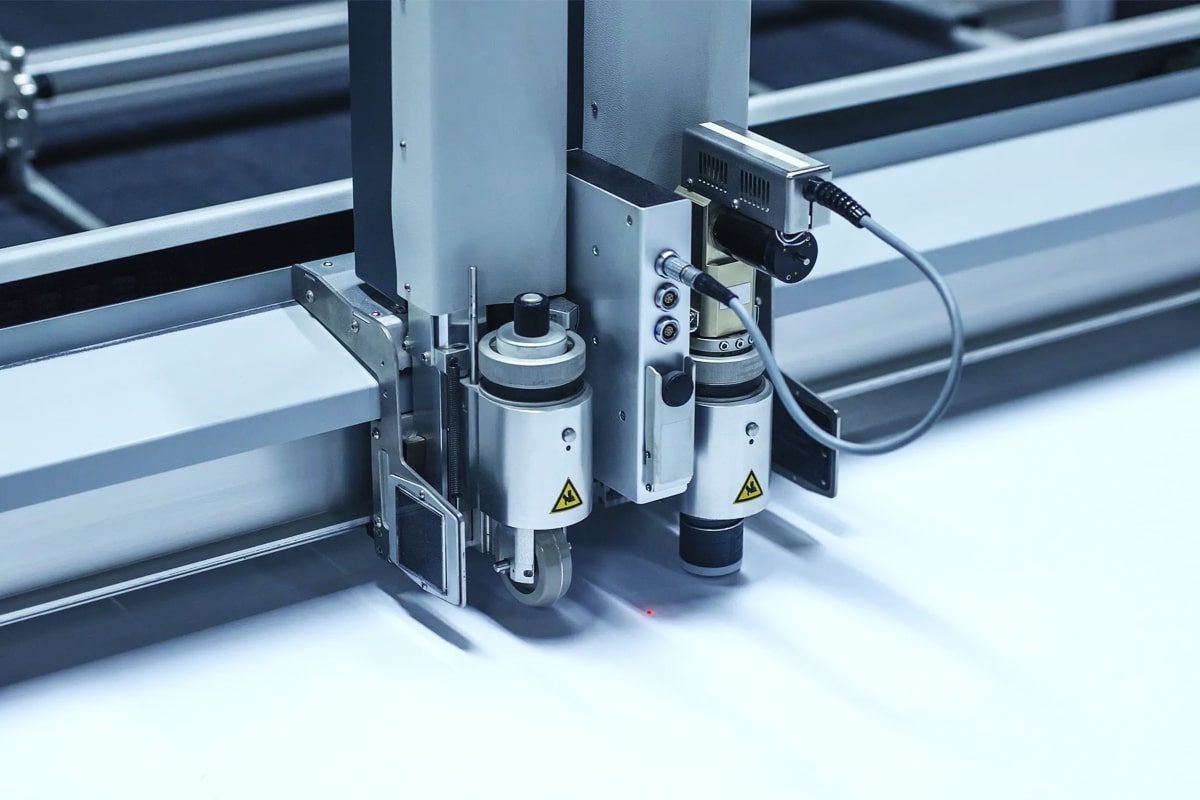
Principles of Oscillating Knife Cutting
Mechanism of Oscillating Knife Cutting
Types of Oscillating Blades
Various types of oscillating blades are available to suit different materials and applications, with each designed to enhance the cutting performance for specific tasks. The main types include:
- Straight Blades: These are the most common blades, featuring a simple straight edge. They are ideal for cutting through flexible and soft materials such as textiles, foams, nonwoven fabrics, and thin plastics. The straight edge provides an efficient, clean cut, especially in materials where precision is paramount, such as for fashion or automotive upholstery.
- Tapered Blades: These blades are characterized by a slanted, angled edge. The taper allows the blade to slice through thicker, more rigid materials by reducing resistance during the cutting process. Tapered blades are particularly beneficial for cutting dense materials like thick plastics, composites, and rubber, where a straight blade might struggle to penetrate.
- Wave Blades: A wave-shaped edge provides a unique saw-like action that helps the blade cut through more difficult materials, such as layered fabrics or foams. The wave design enhances the cutting power by allowing the blade to push through thicker substrates with a more controlled, less forceful motion. This design also minimizes the risk of material deformation as the wave pattern reduces pressure at any single point along the blade’s cutting path.
- Perforated Blades: Perforated oscillating blades have holes or openings along the blade surface, which reduce material resistance and increase the cutting speed. These blades are particularly effective when cutting soft materials such as paper, textiles, and thin plastics, where a clean, smooth cut is important for aesthetic or functional reasons.
- Serrated Blades: Serrated blades feature teeth along the edge, making them suitable for cutting through tougher or fibrous materials like ropes, fibrous composites, or certain types of thick rubber. The teeth grip and cut through the material more effectively than a smooth blade, offering precision while maintaining the integrity of the material.
Advantages of Oscillating Knife Cutting
Oscillating knife cutting offers several key advantages that make it an appealing choice for industries seeking high precision, efficiency, and minimal material waste:
- High Precision and Accuracy: One of the biggest advantages of oscillating knife cutting is its ability to achieve high-precision cuts with minimal material distortion. The fine oscillation and controlled cutting pressure allow for very accurate results, making it suitable for industries that require intricate patterns or tight tolerances, such as fashion or aerospace manufacturing.
- Reduced Heat Generation: Unlike methods such as laser cutting, which generate heat that can alter the properties of sensitive materials, oscillating knives produce little to no heat. This is especially beneficial when working with materials like foam, fabric, and plastics that could be damaged by thermal stress. The heat reduction also minimizes the risk of material discoloration, warping, or degradation.
- Reduced Material Deformation: The oscillating motion minimizes the force applied to the material, resulting in less deformation. This is particularly crucial when working with flexible materials that can stretch, bend, or shift under pressure. The clean cuts produced by oscillating knives preserve the material’s structural integrity and shape, which is important for both aesthetic and functional applications.
- Minimal Blade Wear and Maintenance: Since the cutting action is not continuous, the oscillating blade experiences less wear compared to traditional rotary blades, which are constantly in motion. This results in a longer lifespan for the blade, reducing the frequency of blade replacements and associated downtime. Regular maintenance, such as cleaning and occasional sharpening, is sufficient to keep the blade operating efficiently.
- Versatility: Oscillating knife cutting is highly adaptable and can be used on a wide variety of materials, from soft textiles to more rigid composites. This versatility allows manufacturers to streamline their production processes by using a single cutting method for multiple materials, improving efficiency and reducing the need for specialized equipment.
- Efficiency in Complex Cuts: Oscillating knife cutting excels at performing complex cuts such as curves, angles, and intricate shapes. Unlike other cutting methods, it can achieve these shapes with greater ease and speed, making it ideal for the mass production of parts with complex geometries.
Limitations and Potential Drawbacks
While oscillating knife cutting has several advantages, it also comes with certain limitations that must be considered before adopting it in a production environment:
- Limited Cutting Depth: Oscillating knife cutting is not ideal for cutting very thick materials. The cutting depth is generally limited to a few millimeters to a few centimeters, depending on the material. For thicker materials, such as metal or very dense composites, other cutting technologies like water jet or laser cutting are typically more suitable.
- Blade Wear and Maintenance: Although oscillating blades generally experience less wear than traditional rotary blades, they still require regular maintenance. Frequent use, particularly on tough materials, may lead to blade dulling or chipping, necessitating periodic replacements. This could increase operational costs in high-volume production environments.
- Noise and Vibration: The high-speed oscillation of the blade generates noise and vibration, which can be disruptive in some work environments. While modern systems have noise-reduction technologies, excessive vibrations can affect the accuracy of the cuts and may lead to operator fatigue or damage to nearby equipment.
- Material Limitations: Oscillating knife cutting is best suited for softer, flexible, and thinner materials. For very hard or thick materials, the cutting action may not be as effective or efficient. In these cases, other methods like laser cutting, die-cutting, or water jet cutting may be better suited to the task.
- Initial Equipment Cost: The cost of oscillating knife cutting machines can be high, especially for systems equipped with advanced features like automated material handling and precision controls. The investment required to purchase and maintain these systems may not always justify the benefits in smaller-scale operations or for applications with low cutting volumes.
Material Deformation Explained
What is Material Deformation
Types of Deformation
There are several types of deformation that materials can undergo when subjected to external forces. These can be broadly categorized into two main groups: elastic deformation and plastic deformation.
- Elastic Deformation: Elastic deformation occurs when a material is stretched, compressed, or bent, but the deformation is temporary. Once the applied force is removed, the material returns to its original shape. This type of deformation happens within the material’s elastic limit, meaning the internal molecular bonds are only temporarily displaced and will return to their equilibrium state. Elastic deformation is generally reversible, and in many cases, it is not a concern in cutting processes because the material returns to its initial shape after the force is removed. However, excessive elastic deformation can lead to issues like temporary bulging or bending, which may affect the final cut quality.
- Plastic Deformation: Plastic deformation is permanent and occurs when the material changes shape that does not reverse once the external force is removed. This can happen when the applied force exceeds the material’s yield strength, causing permanent shifts in the internal structure. Plastic deformation often results in stretching, warping, or other long-lasting changes that alter the material’s form. In cutting processes, plastic deformation is more problematic. For example, when cutting soft metals or polymers, excessive pressure from the cutting tool can cause the material to permanently stretch or distort, leading to issues such as dimensional inaccuracies or weakened material properties.
- Bending Deformation: Bending occurs when a material is subjected to a force that causes it to curve. This type of deformation can happen to both rigid and flexible materials, and the extent of bending depends on the magnitude of the force and the material’s properties. In cutting applications, bending deformation is often a concern for materials like thin plastic sheets or delicate fabrics, which may warp when force is applied unevenly.
- Shear Deformation: Shear deformation occurs when two opposing forces are applied in parallel to each other, causing layers of the material to slide past one another. In cutting processes, this type of deformation can be observed when the blade of the cutting tool moves through the material, shearing it apart. If the forces are too high or the material too soft, the material may shear unevenly, leading to rough edges, cracks, or tears.
- Tensile Deformation: Tensile deformation occurs when a material is stretched along its length. Materials that are more flexible, like rubber or certain plastics, may experience significant tensile deformation when pulled, leading to elongation. In the cutting process, tensile deformation can cause materials to stretch and become thinner in certain areas, potentially affecting the quality of the cut and the material’s final use.
- Compressive Deformation: Compressive deformation happens when a material is squeezed or compacted, causing it to decrease in size or volume. This type of deformation can be an issue in softer materials, such as foams or fabrics, where excessive pressure from the cutting tool can compress the material and result in uneven cutting or surface damage.
Factors Leading to Deformation
Several factors contribute to material deformation during the cutting process, especially when oscillating knives are involved. These include the material’s physical properties, the cutting conditions, and the specific characteristics of the cutting tool. Understanding these factors is essential for determining whether oscillating knife cutting can lead to material deformation.
- Material Properties: The type of material being cut plays a crucial role in how it will react to the forces applied during the cutting process. Some materials, such as metals or composites, are more resistant to deformation than softer materials like foam, fabric, or rubber. The stiffness, ductility, and tensile strength of the material all influence how it will deform under stress. For example, materials with high tensile strength, like metals, are less likely to deform under oscillating knife cutting than soft polymers or rubber, which are more prone to plastic deformation.
- Cutting Force and Pressure: The amount of force applied by the oscillating knife plays a major role in whether material deformation occurs. If the cutting force is too high for a given material, the result may be excessive deformation, such as stretching or compressing the material. This is particularly a concern in materials with low resistance to deformation, like soft foams or thin plastics, where even moderate forces can cause significant changes to their shape or structure.
- Oscillation Frequency and Amplitude: The frequency and amplitude of the oscillating knife’s motion also impact the extent of deformation. A higher frequency of oscillation typically reduces the cutting force applied to the material at any given point, which can help minimize deformation. However, if the oscillation amplitude is too large or the frequency too low, the knife may apply more force than necessary, leading to deformation or an uneven cut. Balancing the oscillation characteristics is critical to ensuring minimal material deformation.
- Cutting Speed: The speed at which the oscillating knife moves through the material can also affect the degree of deformation. Higher speeds may generate more friction and heat, which could lead to thermal deformation or cause the material to stretch or tear more easily. Slower cutting speeds, on the other hand, may result in a more controlled cut with less risk of deformation but might also increase the likelihood of material buckling if the forces are not properly balanced.
- Sharpness of the Blade: The sharpness of the oscillating knife’s blade is another important factor. A sharp blade typically exerts less force on the material, resulting in a cleaner cut with less deformation. A dull or damaged blade, however, may require more force to cut through the material, which increases the risk of deformation and poor-quality cuts. Regular blade maintenance is essential to prevent unwanted material changes.
- Material Thickness and Density: The thickness and density of the material being cut will influence its ability to resist deformation. Thicker and denser materials are typically more resistant to deformation because they have a greater structural integrity. In contrast, thinner and less dense materials are more prone to bending, stretching, or tearing when subjected to cutting forces.
Interaction Between the Oscillating Knife and Material
Cutting Forces
Material Response to Cutting Forces
The way a material responds to the cutting forces from an oscillating knife is heavily influenced by its intrinsic properties, including its hardness, flexibility, and structure. These properties dictate whether the material will deform elastically or plastically under the applied forces, as well as how it will recover, if at all, after the cutting process.
- Elastic Response: When the cutting forces are within the material’s elastic limit, the material deforms temporarily but returns to its original shape once the forces are removed. Materials with high elasticity, such as rubber or certain plastics, can absorb cutting forces without sustaining permanent deformation. These materials are generally more resilient to oscillating knife cutting, as the forces involved in the process are usually not sufficient to exceed their elastic limits.
- Plastic Response: Materials that are less elastic and more prone to plastic deformation may undergo permanent changes when subjected to excessive cutting forces. For instance, certain polymers or metals may experience permanent stretching, bending, or thinning if the knife applies too much force. This is particularly true for materials with low yield strength, where even modest cutting forces can cause significant deformation. In these cases, the oscillating knife’s pressure and force distribution are key factors in determining the extent of plastic deformation. If the material experiences too much localized pressure or force, it can lead to issues such as warping or tearing.
- Shear Response: Shear deformation occurs when layers of the material slide past one another due to the cutting forces. Oscillating knife cutting often involves a shear force, where the material is not only compressed by the blade but also sheared apart as the knife moves through it. Materials with low shear strength, such as soft foams, may be more susceptible to shear deformation, resulting in uneven cuts or damage to the material. Conversely, materials with higher shear strength, like metals or rigid plastics, resist this type of deformation better.
Heat Generation
Factors Affecting Material Deformation
Material Properties
The properties of the material being cut are among the most significant factors that influence how it will respond to the forces exerted during oscillating knife cutting. Materials can vary widely in their stiffness, elasticity, ductility, and tensile strength—all of which determine how they will deform under stress.
- Stiffness and Rigidity: Stiffness refers to a material’s resistance to deformation when subjected to an applied force. Rigid materials, such as metals and hard plastics, tend to resist deformation under cutting forces and are less likely to experience significant changes in shape when cut. Conversely, softer, more flexible materials, such as foams, fabrics, or rubber, have lower stiffness and are more prone to deformation when cutting forces are applied. These materials may stretch, bend, or compress more easily, especially under higher cutting forces, leading to potential distortion.
- Elasticity and Plasticity: Elastic materials are those that can return to their original shape after deformation, while plastic materials undergo permanent deformation when subjected to stress beyond a certain threshold. Materials that exhibit high elasticity, such as certain rubbers or textiles, will typically deform elastically under cutting, meaning they will return to their original shape once the cutting force is removed. However, if the applied force exceeds the material’s yield strength, it may undergo plastic deformation, resulting in permanent changes. In materials with low elasticity (like some plastics or soft metals), even a small amount of force can lead to permanent deformation.
- Tensile Strength: Tensile strength refers to a material’s ability to withstand pulling or stretching forces before breaking. Materials with high tensile strength, such as steel or high-strength polymers, are less likely to deform under oscillating knife cutting, as they can absorb more force without experiencing changes in shape. On the other hand, materials with low tensile strength, such as lightweight foams or thin fabrics, may stretch or tear under the same cutting conditions.
- Thickness and Density: The thickness and density of a material also play a significant role in its deformation during cutting. Thicker materials, especially those with high density, tend to be more resistant to deformation because they are stiffer and require more force to cut through. In contrast, thinner and less dense materials are more likely to experience deformation because they offer less resistance to the applied forces. The thinner the material, the more likely it is to bend, stretch, or warp under the knife’s oscillating motion.
Blade Speed and Oscillation Frequency
The speed at which the oscillating knife moves and the frequency of its oscillation are crucial factors in determining how much force is applied to the material and how the material responds. Both the speed of the blade and the frequency of oscillation affect the force distribution and the nature of the cut.
- Blade Speed: Blade speed refers to how fast the oscillating knife moves through the material. Faster blade speeds typically result in a quicker cutting process, but they may generate more heat and cause higher cutting forces. A higher blade speed can also lead to increased friction, which may cause material softening or even melting in some cases, especially for heat-sensitive materials like certain plastics. On the other hand, slower speeds can allow for more controlled cutting with less heat generation, reducing the likelihood of deformation but potentially increasing cutting time.
- Oscillation Frequency: The frequency of oscillation refers to how many times per minute the knife moves back and forth during the cutting process. A higher frequency means the knife oscillates more rapidly, which can result in a more delicate cutting action with less force exerted at each point of contact. This generally leads to fewer chances of material deformation, particularly for softer materials. However, if the frequency is too low, the blade may exert more force on the material over each oscillation, increasing the risk of deformation or uneven cuts. Proper tuning of oscillation frequency is essential to minimize deformation, especially for delicate materials.
Cutting Parameters
The cutting parameters, including the applied force, cutting speed, and the angle of the blade, all directly affect how the material deforms during the cutting process. These factors must be carefully controlled to ensure that the cutting process does not exceed the material’s deformation limits.
- Applied Force: The amount of force exerted by the oscillating knife during cutting is perhaps the most significant factor in determining whether material deformation will occur. Higher applied forces can lead to plastic deformation, stretching, or tearing of softer materials, while lighter forces are more likely to result in cleaner, more controlled cuts with minimal deformation. The cutting force depends on both the sharpness of the blade and the resistance of the material. For example, a sharp blade requires less force to cut through a material than a dull one, reducing the risk of material deformation.
- Cutting Speed: Cutting speed refers to the rate at which the knife moves through the material. Faster cutting speeds can lead to higher forces and increased friction, potentially causing more material deformation, especially if the material is sensitive to temperature or mechanical stress. Slower speeds, however, may allow for greater control over the cutting process and reduce the risk of deformation. In some cases, slowing down the cutting speed can help achieve a more precise cut without damaging the material, especially in cases where intricate cuts are required.
- Blade Angle: The angle at which the blade makes contact with the material can also influence deformation. A steeper blade angle typically applies more localized pressure to the material, which may increase the likelihood of deformation, especially in softer or more flexible materials. A shallower blade angle distributes the force over a wider area, potentially reducing the risk of material deformation and providing a cleaner cut.
Blade Condition
The condition of the oscillating knife blade is another crucial factor in preventing material deformation during cutting. A dull or damaged blade increases the cutting force needed to slice through the material, which can lead to excessive material deformation and poor-quality cuts. Regular maintenance and blade sharpening are essential to ensure optimal cutting performance.
- Sharpness: A sharp blade is critical for minimizing the cutting force required to penetrate the material. Sharp blades exert less pressure on the material, reducing the likelihood of both elastic and plastic deformation. A dull blade, on the other hand, creates more friction, leading to higher forces being applied to the material. This can result in more deformation, such as tearing, stretching, or excessive heat generation that may damage the material.
- Wear and Tear: As blades are used, they naturally experience wear and tear, especially when cutting tougher materials. Over time, the edge of the blade can become rounded or chipped, reducing its effectiveness and requiring more force to cut. The increased cutting force can cause greater deformation in the material, as the blade will struggle to cut cleanly and will apply uneven pressure. Regular inspection and maintenance of the blade are necessary to avoid these issues and ensure consistent cutting performance.
- Blade Material: The material from which the blade is made also affects its cutting efficiency and the likelihood of material deformation. High-quality, durable blade materials such as carbide or high-speed steel tend to retain their sharpness longer and can handle tougher materials with less force. In contrast, blades made from softer materials may wear more quickly, leading to the need for more force and potentially resulting in more deformation of the material.
Material Deformation in Different Industries
Textile Industry
Textiles are often lightweight and flexible, which means that they can stretch, warp, or fray if the cutting force is too high or the blade is not sharp enough. Oscillating knife cutting minimizes these issues by applying minimal force and preventing heat buildup, which is crucial for materials like synthetic fabrics that can melt or discolor when exposed to excessive heat. However, excessive cutting force or inappropriate blade settings can lead to deformation such as:
- Stretching: Fabrics with low tensile strength may stretch under excessive force, leading to changes in the dimensions of the material.
- Fraying: Some textiles, especially woven fabrics, may experience fraying or edge damage during cutting, which can affect the quality of the final product.
- Warping or Bending: Thin fabrics can also be prone to warping or bending if the oscillating knife’s pressure is not carefully controlled.
Packaging Industry
Materials used in packaging are usually relatively rigid but may be flexible in certain applications, such as flexible films or corrugated boards. In these cases, oscillating knife cutting offers a clear advantage in reducing material deformation. However, improper settings can still result in the following issues:
- Material Compression: When cutting thick materials like cardboard, excessive pressure from the oscillating knife can lead to compression, causing parts of the material to lose their structural strength and deform.
- Bending or Buckling: In flexible packaging materials, especially plastic films or foams, cutting forces that are too high can lead to bending, twisting, or even tearing along the edges, which may reduce the integrity of the packaging.
- Rough Edges: If the oscillating knife is not sharp or if the cutting speed is not optimized, it can cause rough, jagged edges on the material, which can impact the aesthetic appearance of the packaging and create difficulties during assembly or further processing.
Automotive and Aerospace Industries
The materials used in automotive and aerospace applications are often complex, combining composites, rubbers, and lightweight foams to achieve specific performance characteristics. Oscillating knife cutting is advantageous in these industries because it can handle a wide range of materials without generating excessive heat or causing material degradation. However, material deformation can still be a concern, especially for the following reasons:
- Layered Materials: Automotive and aerospace components often involve multi-layered materials (e.g., composite materials), which can deform if the oscillating knife does not maintain consistent pressure or if it moves too quickly. Uneven cutting can cause delamination or internal stress within the layers.
- Rubber and Foam Deformation: Rubber and foam materials are flexible and compressible, which makes them more susceptible to deformation when too much pressure is applied. Oscillating knife cutting helps minimize compression, but if cutting forces are not well-controlled, the materials may become flattened, leading to reduced performance or fit issues in the final product.
- Dimensional Inaccuracy: For precise components in the automotive and aerospace sectors, even slight deformation during cutting can lead to dimensional inaccuracies, which are unacceptable in highly engineered parts where exact tolerances are critical for performance and safety.
Medical Device Manufacturing
Medical-grade materials are often engineered to have specific mechanical properties, such as elasticity, softness, or toughness. Oscillating knife cutting provides several benefits, including precise, clean cuts with minimal heat generation, which is essential for maintaining the integrity of these materials. However, the potential for deformation remains a concern:
- Compression and Stretching: Medical foams and soft materials may become compressed or stretched under excessive cutting force, leading to a change in their thickness or shape. In medical applications where exact measurements are critical, such deformation could lead to non-compliant products.
- Surface Imperfections: The precise cutting required in medical device manufacturing means that even slight imperfections—such as rough edges or uneven surfaces—can be problematic. Deformation during cutting can cause such imperfections, impacting the sterility, usability, and comfort of the medical device.
- Material Bonding: Some medical materials may require bonding to other components. If deformation occurs during the cutting process, such as stretching or warping, it can affect the material’s ability to bond effectively with other parts, leading to poor adhesion or sealing.
Preventing Material Deformation During Oscillating Knife Cutting
Optimizing Cutting Parameters
One of the most effective ways to prevent material deformation during oscillating knife cutting is to carefully optimize the cutting parameters. These parameters include the cutting speed, oscillation frequency, and the force applied by the blade. Each of these elements affects how the material responds to the cutting action, and optimizing them for the specific material can greatly reduce the risk of deformation.
- Cutting Speed: The speed at which the oscillating knife moves through the material is a crucial factor in preventing deformation. If the cutting speed is too fast, excessive force may be applied to the material in a short amount of time, potentially causing stretching, compression, or heat buildup. On the other hand, cutting too slowly can result in longer exposure to the cutting action, which can also lead to unwanted deformation or an inconsistent cut. It is important to adjust the cutting speed based on the material’s properties; more rigid materials might tolerate faster cutting speeds, while softer materials may require slower speeds to maintain material integrity.
- Oscillation Frequency: The frequency at which the blade oscillates—how quickly it moves back and forth—can influence the force distribution during cutting. Higher oscillation frequencies typically reduce the force applied at each contact point between the blade and the material, helping to prevent localized deformation. For delicate or flexible materials, a higher oscillation frequency can minimize stress and deformation. However, if the frequency is set too low, the blade may apply more pressure during each oscillation, which could lead to material distortion. Carefully tuning the oscillation frequency for the specific material being cut is essential for achieving clean cuts without excess deformation.
- Cutting Force: The force exerted by the oscillating knife on the material must be controlled carefully. Too much force can lead to plastic deformation, stretching, or tearing, while too little force can cause inefficient cutting, leading to excessive friction and possible material damage. Adjusting the force based on the material’s rigidity and thickness ensures that the cutting action is effective without exceeding the material’s yield strength.
Material Selection
The choice of material is another critical factor in preventing deformation during oscillating knife cutting. Some materials are more susceptible to deformation under the forces applied during the cutting process, while others can withstand higher cutting forces without significant distortion. Understanding the material’s physical properties, such as its tensile strength, flexibility, elasticity, and resistance to compression, is essential for selecting the appropriate cutting technique.
- Elasticity and Flexibility: Materials that are highly elastic or flexible, such as certain fabrics, rubber, or foams, may be more prone to stretching or warping when cut. In these cases, optimizing the cutting parameters (such as reducing cutting speed or oscillation frequency) can help minimize deformation. For materials with lower elasticity, such as metals or rigid plastics, oscillating knife cutting may cause less deformation, but care should still be taken to control cutting forces.
- Material Thickness: Thicker materials often require more force to cut through, which increases the potential for deformation. Thicker foams or rubber, for example, may be more compressible, while thicker metals or composites might be more resistant to deformation. For materials that are thick or dense, the oscillating knife’s settings must be adjusted to prevent excessive compression or warping, which can alter the material’s dimensions or structural integrity.
- Material Softness: Softer materials, like certain foams, plastics, or textiles, are more likely to deform under the cutting pressure. For these materials, reducing cutting force and oscillation amplitude can help prevent stretching or compression. On the other hand, harder materials may require higher cutting forces but will be less susceptible to deformation.
Blade Maintenance
The condition of the oscillating knife blade is another key factor in preventing material deformation. Over time, blades can become dull, chipped, or worn down, which can increase the force needed for cutting and result in higher levels of material deformation. Regular maintenance of the blade ensures that it performs at its best, minimizing material damage and promoting clean, accurate cuts.
- Sharpness: A sharp blade is crucial for minimizing deformation. When the blade is sharp, it requires less force to cut through the material, reducing the likelihood of excessive pressure that could deform the material. Dull blades, on the other hand, create more friction, which increases the force required to cut and can cause the material to stretch or tear. Regular inspection and sharpening of the blade help maintain optimal cutting performance and prevent unwanted deformation.
- Blade Alignment: Misalignment or damage to the blade can also contribute to material deformation. If the blade is not aligned properly, it may apply uneven pressure to the material during cutting, leading to inconsistent cuts and increased deformation. Ensuring the blade is securely mounted and properly aligned can help maintain cutting accuracy and prevent the risk of material distortion.
- Blade Replacement: Over time, blades will naturally experience wear, even with regular sharpening. When blades become excessively worn or damaged, they should be replaced to avoid poor cutting quality and excessive material deformation. Continuing to use worn blades can result in inconsistent cuts and may compromise the material’s integrity.
Cooling and Lubrication
Heat buildup during the cutting process can be a major contributor to material deformation, particularly for materials that are sensitive to temperature. Excessive heat can soften materials, leading to unwanted changes in shape or structure, such as warping or melting. Cooling and lubrication strategies can help mitigate these risks by reducing friction and maintaining a stable cutting environment.
- Cooling: Cooling systems, such as air or liquid cooling, can be employed to dissipate heat generated by friction during oscillating knife cutting. Cooling helps maintain the material’s temperature within a safe range, preventing heat-induced deformation. This is particularly important for heat-sensitive materials like plastics, foams, or certain composites, which may degrade or deform when exposed to high temperatures. A cooling system ensures that the cutting action remains smooth and efficient, reducing the risk of thermal deformation.
- Lubrication: In some cases, lubrication can be applied to reduce friction between the oscillating knife and the material. This is particularly useful for cutting materials that have high friction coefficients, such as rubber or certain plastics. Lubrication creates a smoother cutting surface, reducing heat generation and the risk of material deformation. It can also prolong the life of the blade by preventing excessive wear and maintaining cutting efficiency.
- Airflow: In addition to traditional cooling and lubrication, ensuring proper airflow during the cutting process can also help maintain a stable temperature. Airflow systems or air jets can help cool both the blade and the material during cutting, reducing the accumulation of heat and preventing deformation in sensitive materials.