

Product Introduction
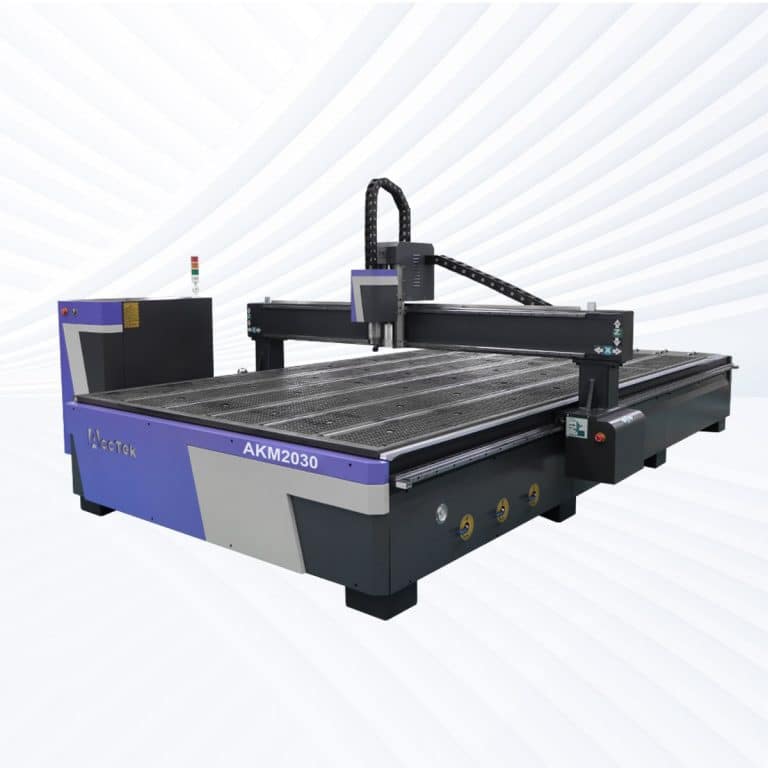
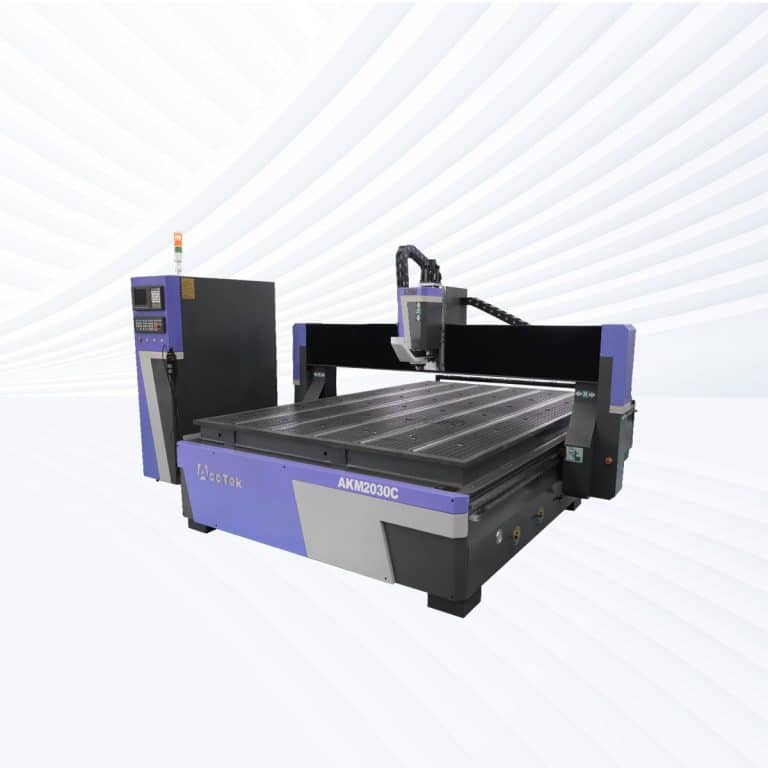
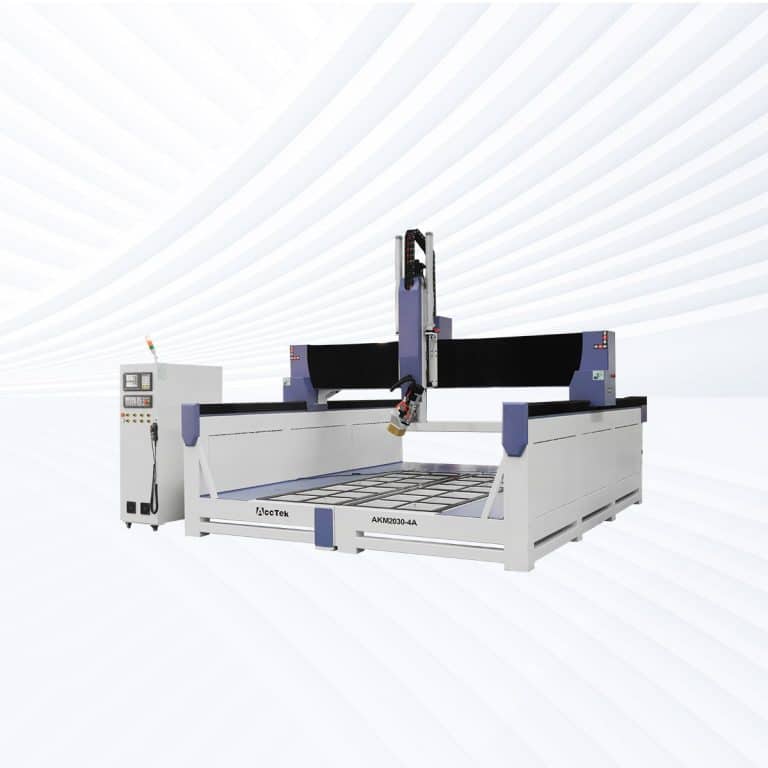
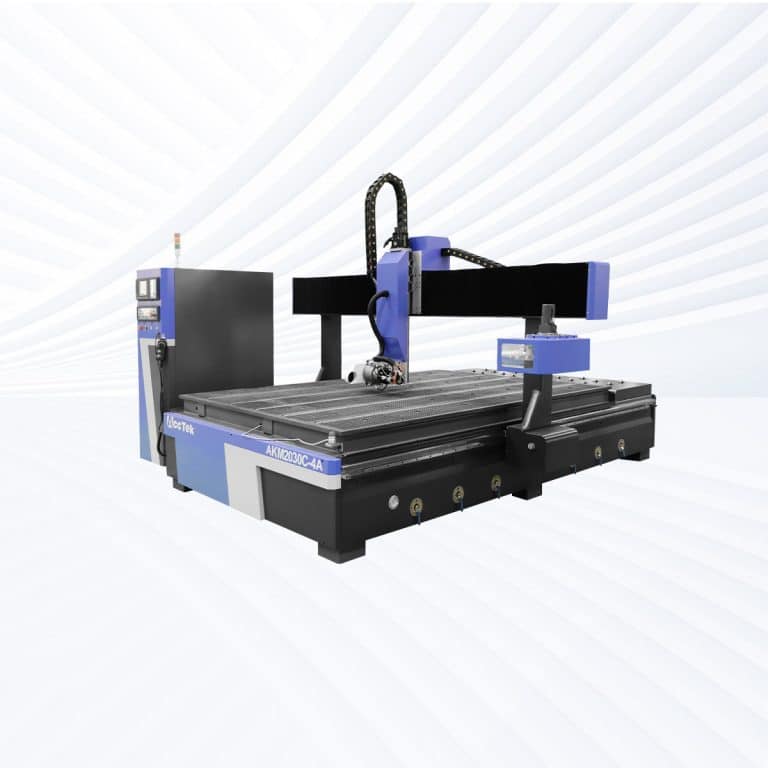
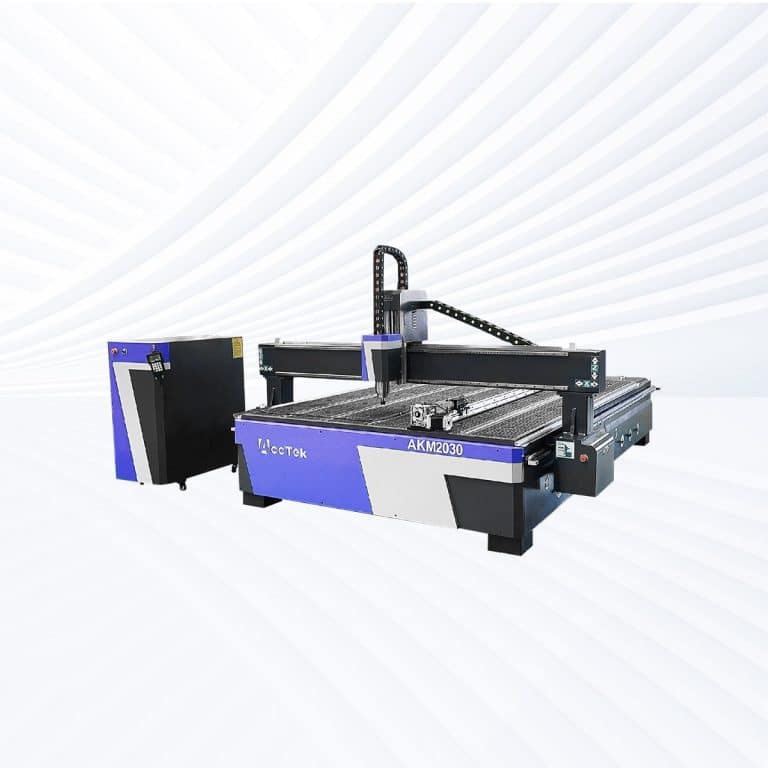
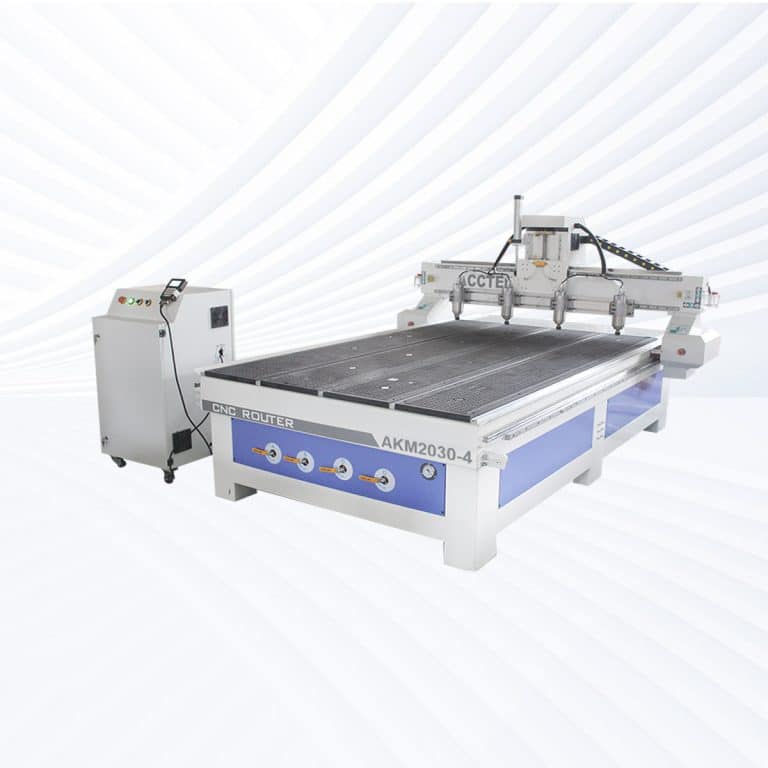
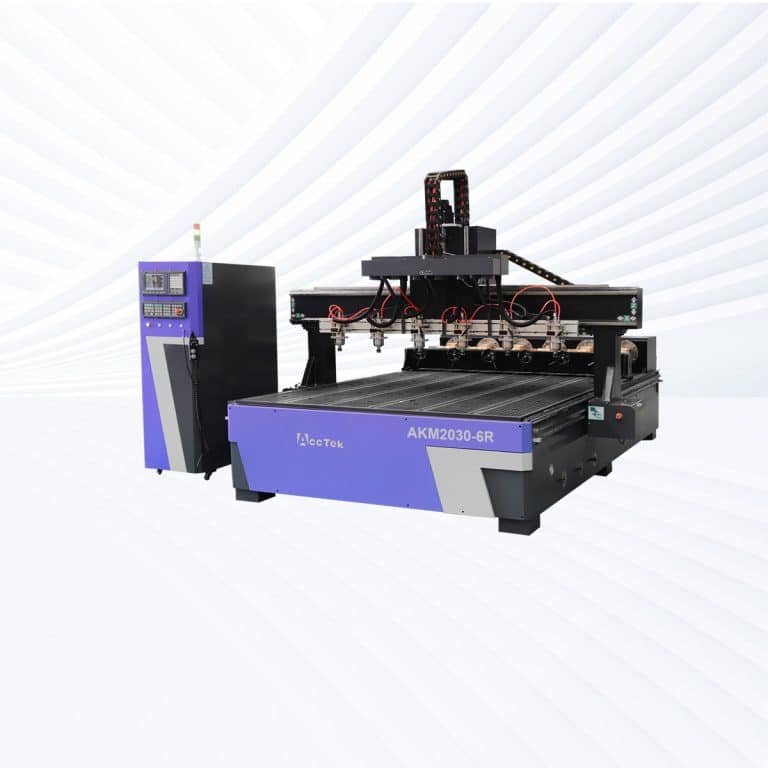
Material Routing Capability
| Material Type | 1.5 kW | 2.2 kW | 3.0 kW | 3.2 kW | 3.5 kW | 4.5 kW | 5.5 kW | 6.0 kW | 7.5 kW | 9.0 kW |
|---|---|---|---|---|---|---|---|---|---|---|
| Softwood | Light Cutting | Standard Cutting | Fast Cutting | Fast Cutting | Fast Cutting | High-Speed Cutting | Heavy-Duty Cutting | Heavy-Duty Cutting | Industrial Cutting | Industrial Cutting |
| Hardwood | Light Duty | Standard Cutting | Stable Cutting | Stable Cutting | High-Precision | Heavy-Duty | Heavy-Duty | High-Torque Cutting | Industrial Cutting | Industrial Cutting |
| Plywood/MDF | Basic Cutting | Smooth Cutting | Fast, Clean Cutting | Fast Cutting | High-Precision | Heavy-Duty | Heavy-Duty | Industrial Smooth Cuts | High-Volume Cutting | High-Volume Cutting |
| HDF/Particle Board/Melamine | Light Cuts | Standard Cuts | Clean Cuts | Clean Cuts | High-Precision | Heavy-Duty | Heavy-Duty | Industrial | Industrial | Industrial |
| Acrylic(PMMA) | Thin Sheets | Clean Cutting | Fast, Clean Edges | High Clarity | High Clarity | Smooth Finishing | Smooth Finishing | Industrial Clarity | Industrial Clarity | Industrial Clarity |
| Polycarbonate/PETG | Thin Sheets | Clean Cutting | Stable Cutting | Stable Cutting | Precision Cutting | Heavy-Duty | Heavy-Duty | Industrial | Industrial | Industrial |
| ABS/PVC Foam Board | Light Duty | Standard | Fast Cutting | Fast Cutting | High Stability | Heavy-Duty | Heavy-Duty | Industrial | Industrial | Industrial |
| HDPE/LDPE/PP/Nylon | Light Cuts | Standard Cuts | Stable Cuts | Stable Cuts | Deep Routing | Heavy-Duty | Heavy-Duty | High-Torque | Industrial | Industrial |
| Delrin/UHMW | Light Duty | Standard | Accurate Routing | Accurate Routing | High-Precision | Heavy-Duty | Heavy-Duty | Industrial | Industrial | Industrial |
| Solid Surface (Corian) | Very Light | Standard | Strong Cutting | Clean Cutting | High-Precision | Heavy-Duty | Heavy-Duty | Industrial Cutting | Industrial Cutting | Industrial Cutting |
| Fiberglass/Carbon Fiber Sheet | Light Trimming | Standard | Precise Routing | Precise Routing | High-Precision | Heavy-Duty | Heavy-Duty | Industrial | Industrial | Industrial |
| Phenolic/Bakelite | Limited | Standard | Clean Routing | Clean Routing | Precision Routing | Heavy-Duty | Heavy-Duty | Industrial | Industrial | Industrial |
| Foam(EVA, XPS, EPS, PU) | Very Easy | Very Easy | Fast Cutting | Fast Cutting | Ultra-Fast | Ultra-Fast | Ultra-Fast | High-Speed | High-Speed | High-Speed |
| Rubber/Leather/Cork | Light Duty | Standard | Clean Edges | Clean Edges | Faster Routing | Heavy-Duty | Heavy-Duty | Industrial | Industrial | Industrial |
| Cardboard/Paperboard | Easy | Easy | Fast Cutting | Fast Cutting | Ultra-Fast | Ultra-Fast | Ultra-Fast | Industrial | Industrial | Industrial |
| ACP/ACM (Surface Routing Only) | Very Light | Standard | Clean Grooves | Clean Grooves | High Precision | Heavy-Duty | Heavy-Duty | Industrial | Industrial | Industrial |
Compatible Materials
Application of 2030 CNC Routers


Customer Testimonials
Comparison VS Other Engraving Technologies
| Comparison Item | CNC Routing | Laser Engraving | Hand Engraving | Chemical Etching |
|---|---|---|---|---|
| Working Principle | Mechanical cutting with rotating tools | Vaporizing or melting material with laser beams | Manual carving with handheld tools | Chemical reaction removes material from surface |
| Material Compatibility | Wood, plastics, composites, foam, soft metals | Wood, plastics, coated metals, some stones | Wood, metal, soft materials | Metals, glass, ceramics |
| Cutting Ability | Full-depth cutting, profiling, pocketing | Mostly engraving; cutting only on thin materials | Limited cutting; slow | No cutting capability |
| Engraving Depth | Deep engraving and 3D carving | Mostly shallow | Depends on skill | Shallow and uniform |
| Precision Level | High accuracy and repeatability | Extremely high precision | Low–moderate | Moderate |
| Detail Resolution | Good for small to complex features | Excellent for fine patterns | Skill-dependent | Good but limited by process |
| Production Speed | Fast for cutting and shaping | Fast for engraving, slow for deep cuts | Slow | Medium |
| Complexity of Designs | Handles 3D relief, contours, pockets | Excellent for detailed 2D/2.5D work | Limited | Works well for flat patterned designs |
| Setup Requirements | Medium (tooling, fixturing) | Low (mostly software) | None | Medium (chemical prep, masks) |
| Learning Curve | Moderate; requires training | Easy to moderate | High skill required | Moderate process knowledge |
| Operating Cost | Low (bits + electricity) | Low–medium (laser tube wear) | Very low | Medium–high (chemicals, disposal) |
| Maintenance Needs | Regular lubrication + tool changes | Optics care + tube replacement | Minimal | Chemical disposal + equipment cleaning |
| Safety Concerns | Debris, noise, tool hazards | Laser radiation, fumes | Very low | Chemical burns, toxic fumes |
| Best Applications | Cutting, shaping, 3D carving, prototyping | Fine engraving, marking, small detailing | Artistic, custom craftsmanship | Serial marking, metal patterns, surface textures |
| Ideal Use Case | Versatile machining for production & fabrication | High-precision engraving on many materials | Artistic, low-volume, handmade work | Uniform, shallow metal designs at scale |
Why Choose Us
High Precision & Efficiency
AccTek CNC routers deliver fast, accurate results with minimal errors, supporting intricate designs and mass production across the woodworking, plastic, and metal industries.
Robust and Durable Design
Our machines are built with high-quality frames and components, ensuring long service life, high load-bearing capacity, and stability during high-speed operations.
Intelligent Control Systems
Equipped with user-friendly interfaces and smart controllers, our routers offer smooth motion control, automatic toolpath optimization, and easy integration with various CAD/CAM software.
Flexible Customization
From machine size to spindle power and motor type, we offer flexible configurations to suit different production needs, budgets, and material requirements.
Related Resources
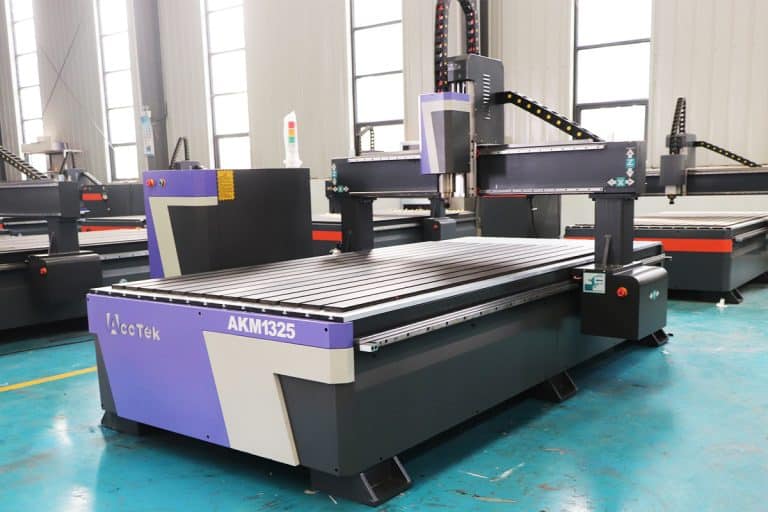
What Is The Lifespan Of CNC Routers
This article explores what determines the lifespan of CNC routers, including machine design, usage intensity, maintenance practices, accuracy drift, and when to repair, rebuild, or replace equipment.
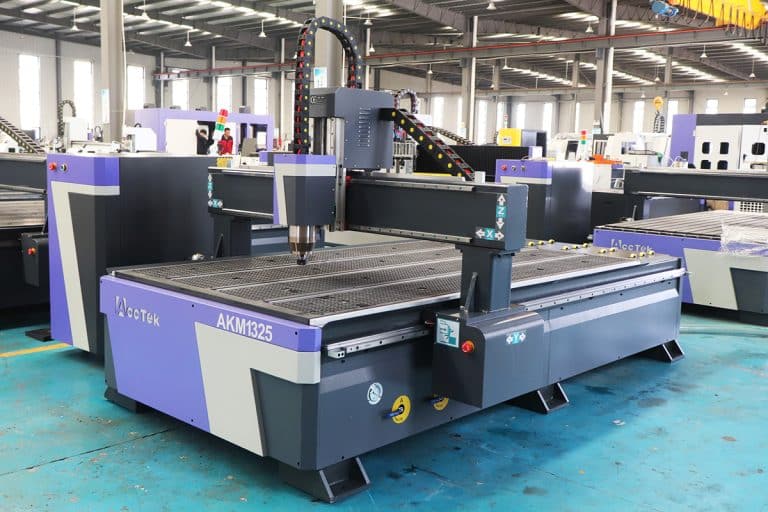
How Do CNC Routers Work
This article explains the working principle of CNC routers, from the motion system and cutting tools to the software workflow, materials, precision, and actual machining principles.
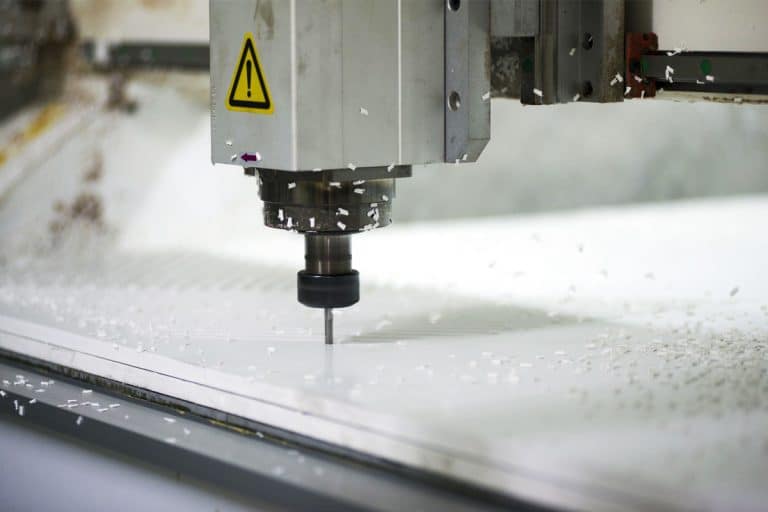
How To Maintain CNC Routers
This article provides a comprehensive guide on how to maintain CNC routers, covering essential tasks, troubleshooting tips, upgrades, and best practices to ensure optimal performance and longevity.
What Is The Accuracy Of CNC Routers
This article is a comprehensive guide that explains the precision of CNC routers, the key factors affecting precision, expected performance, and how to improve machining results.
Frequently Asked Questions
What Is The Price Of 2030 CNC Routers?
What Factors Affect The Price Of 2030 CNC Routers?
- Spindle Power and Cooling Method: Higher-power spindles (from 3.0 kW to 9.0 kW or more) significantly increase the cost due to improved cutting capability and continuous-duty performance. Water-cooled spindles are usually more expensive than air-cooled systems because they require pumps, chillers, and additional hardware.
- Control System: Entry-level systems like Mach3 are budget-friendly, while industrial-grade controllers such as Syntec, Weihong NK105, OSAI, or FANUC increase cost due to faster processing, smoother interpolation, and advanced automation features like tool compensation and servo diagnostics.
- Transmission System: Precision helical rack-and-pinion drives on X/Y axes and ball-screw systems on the Z axis raise the price due to higher accuracy and durability. Branded linear guides (HIWIN, PMI, THK) and heavy-duty gantry structures also increase machine cost.
- Worktable Type: Basic T-slot tables are economical, while vacuum tables—often with multi-zone suction and high-power pumps—add significant cost. Hybrid vacuum + T-slot tables further enhance flexibility and increase overall pricing.
- Motor and Driver Configuration: Stepper motors are cost-effective, while hybrid steppers and servo motors add to the price by offering greater precision, speed, and torque consistency. Industrial servo packages, such as Yaskawa or Delta, can greatly increase cost.
- Automatic Tool Changer (ATC): Adding an ATC spindle (carousel or linear magazine) dramatically raises the machine price because it enhances efficiency for multi-tool operations, furniture production, and continuous processing workflows.
- Enhanced Machine Structure: Thicker steel frames, reinforced gantries, and heavy-duty machining beds deliver higher rigidity and accuracy and therefore increase manufacturing cost.
- Included Accessories and Software: Dust collectors, mist-cooling systems, rotary attachments, tool setters, safety enclosures, and licensed CAD/CAM software influence the total price depending on the configuration package.
- Brand Reputation and After-Sales Support: Established manufacturers may charge higher prices due to better engineering quality, stronger customer support, and reliable spare-part availability.
What Is The Spindle Power Of 2030 CNC Routers?
- 3.0 kW Spindle: Suitable for standard woodworking, PVC cutting, acrylic engraving, and light composite processing. This spindle provides enough torque for everyday tasks but is best for medium-duty applications rather than heavy industrial cutting.
- 3.5 kW Spindle: A moderate upgrade that offers better cutting depth and more stable performance. Ideal for users who process hardwoods, HDPE, and denser sheet materials that require stronger torque and smoother finishes.
- 4.5 kW Spindle: Designed for heavier workloads, this spindle handles thick hardwoods, composite boards, and continuous cutting tasks more efficiently. It supports larger tool diameters and maintains torque at lower speeds, enhancing machining flexibility.
- 5.5 kW Spindle: A high-power option well-suited for industrial woodworking shops and sign-making factories. It performs well in long-duration machining, large sheet nesting, and roughing operations, offering improved stability and consistent cutting output.
- 6.0 kW Spindle: This spindle delivers strong cutting force for demanding materials such as hardwood, aluminum sheets, solid surface composites, and thick plastics. It is commonly used in furniture production and high-volume manufacturing environments.
- 9.0 kW Spindle: The highest-power option available for 2030 CNC routers, ideal for professional factories requiring fast feed rates, deep passes, and heavy material removal. This spindle supports multi-bit machining and excels in continuous industrial operation.
What Type Of Motor Do 2030 CNC Routers Use?
- Stepper Motors: These motors are the most cost-effective choice and are commonly used in entry-level or mid-range 2030 CNC routers. Stepper motors provide reliable motion control for woodworking, acrylic cutting, PVC processing, and light-duty aluminum engraving. They offer good torque at low speeds but may lose steps during high-speed or heavy-load machining.
- Easy Servo Motors: Also known as closed-loop stepper motors, easy servos combine the affordability of stepper systems with the reliability of servo technology. They include encoders that prevent missed steps and improve positioning accuracy. Easy servo motors offer smoother operation, better torque stability, and faster speeds than standard steppers, making them ideal for medium-to-heavy workloads.
- Servo Motors: Servo motors are the highest-performance option and are commonly found in industrial-grade 2030 CNC routers. They deliver superior accuracy, high torque at all speeds, and smooth dynamic response during rapid movements. Servo systems are well-suited for continuous production, complex toolpaths, aluminum machining, and applications requiring high precision. Brands such as Yaskawa, Delta, and Mitsubishi are commonly used in advanced models.
What Are The Disadvantages Of 2030 CNC Routers?
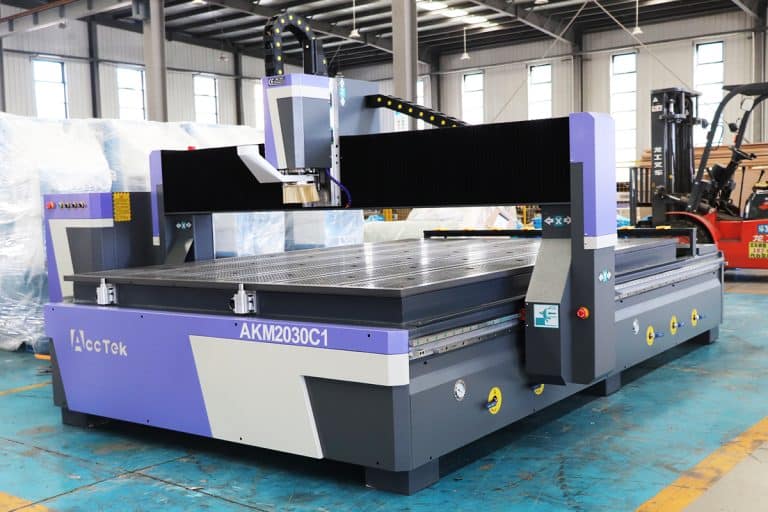
- Large Footprint and Space Requirements: The 2030 model features a 2000×3000 mm working area, requiring a spacious workshop for installation, operation, and material handling. Small businesses or limited workspaces may find the size difficult to accommodate.
- High Initial Investment: 2030 CNC routers cost more than smaller models due to their reinforced frames, larger motors, advanced controllers, and optional ATC systems. This makes them less accessible for hobbyists or small workshops with limited budgets.
- Higher Power Consumption: Larger spindles (5.5–9.0 kW), powerful vacuum pumps, and servo motors significantly increase electricity usage. This may raise operational costs and require robust electrical infrastructure.
- Complex Installation Requirements: Due to their size and weight, installation often requires forklifts, reinforced flooring, and careful alignment. Improper setup can impact accuracy and create long-term mechanical issues.
- Increased Maintenance Needs: Larger CNC routers contain more complex systems—including multi-zone vacuum tables, heavy gantries, and advanced servo packages—which require regular lubrication, calibration, and inspection. This increases maintenance time and cost.
- Noise and Dust Production: High-speed cutting over large panels generates significant noise and dust. Without effective dust extraction, fine particles may accumulate on rails, electronics, and workspace surfaces.
- Not Suitable for Very Small Parts: The large table is ideal for full sheets, but machining tiny components may be less efficient, requiring additional jigs or clamping solutions.
- Weight and Stability Challenges: These machines are heavy and may require strong, level concrete flooring. Uneven floors can lead to frame distortion or reduced cutting accuracy.
- Learning Curve for New Operators: Advanced features, larger toolpaths, and more powerful spindles require additional training, especially when using industrial controllers like Syntec or OSAI.
How To Choose 2030 CNC Routers?
- Determine Your Material Requirements: The materials you process—such as plywood, MDF, hardwood, acrylic, PVC, composites, or aluminum—directly influence spindle power, motor type, and table configuration. Harder materials benefit from stronger spindles and servo systems.
- Select the Appropriate Spindle Power: 2030 CNC routers offer spindle options from 3.0 kW to 9.0 kW. Lighter woodworking and signage work can use 3.0–4.5 kW spindles, while furniture production, composite machining, and aluminum processing perform better with 5.5–9.0 kW spindles.
- Choose the Right Motor Type: Stepper motors are suitable for basic routing and cost-sensitive buyers. Easy servo motors provide better torque and stability for mid-range workloads. Full servo motors are recommended for industrial, high-speed, or high-precision applications.
- Evaluate the Control System: Controllers like Mach3 are budget-friendly, while Syntec, Weihong NK105, OSAI, or FANUC offer faster processing, smoother interpolation, and advanced automation features. Industrial controllers improve accuracy and reduce programming errors.
- Consider the Worktable Configuration: T-slot tables are flexible for irregular shapes and thicker materials, while vacuum tables are ideal for full-sheet processing and high-speed nesting. Hybrid vacuum + T-slot tables offer maximum versatility.
- Assess Frame Strength and Build Quality: A reinforced steel frame and heavy gantry improve stability and precision. Machines with thicker beams, welded structures, and branded linear guides deliver better long-term accuracy.
- Check Optional Features: Automatic tool changers (ATC), rotary attachments, mist-cooling systems, tool setters, dust collectors, and safety enclosures enhance efficiency but increase cost. Choose features according to your workflow.
- Review After-Sales Support: Reliable technical support, spare parts availability, training, and warranty coverage are essential for large-format industrial CNC routers, ensuring minimal downtime.
What Training Is Required To Operate 2030 CNC Routers?
- Basic Machine Operation Training: Operators must learn essential functions such as powering the machine on and off, homing the axes, controlling manual jog movement, loading materials, and setting work origins. Understanding the emergency stop mechanism and safety interlocks is crucial for safe operation.
- Controller Training: Depending on the configuration—Mach3, Syntec, Weihong NK105, OSAI, or FANUC—operators must be trained to load G-code, adjust feed and spindle speeds, set coordinate systems, use soft limits, and interpret alarms or error messages. Industrial controllers require more in-depth instruction due to their advanced automation features.
- CAD/CAM Software Training: Since CNC routers rely on digital toolpaths, training must cover design and programming software such as ArtCAM, Aspire, Mastercam, or Fusion 360. Operators learn drawing tools, toolpath strategies, nesting techniques, post-processing, and exporting compatible G-code.
- Tooling Knowledge and Setup: Training includes selecting appropriate router bits—spiral, compression, ball-nose, V-bits, single-flute, or aluminum-specific cutters—based on material characteristics. Operators must practice safe tool installation, collet tightening, and tool length calibration.
- Material Machining Techniques: Each material—wood, MDF, acrylic, PVC, composites, or aluminum—responds differently to cutting force and heat. Training covers feed rate optimization, chip load calculation, spindle speed selection, and strategies for avoiding burning, melting, or chatter.
- Safety Procedures and PPE Use: Operators must learn to wear correct PPE, keep distance from moving gantries, monitor spindle behavior, and manage dust extraction. Training also includes safe material loading, clamp setup, and handling large sheets.
- Maintenance and Troubleshooting: Routine tasks such as lubrication, rail cleaning, screw tightening, vacuum pump inspection, and dust-collector maintenance must be taught. Operators should also learn to identify signs of tool wear, motor issues, or alignment problems.
- Workflow and Production Management: Large 2030 machines often handle full-sheet nesting or batch production, so training includes optimizing toolpaths, sequencing jobs, and minimizing downtime.
What Are The Special Requirements For The Workshop Floor For 2030 CNC Routers?
- Level and Even Flooring: A flat, level floor is essential to maintain machine alignment and structural stability. Uneven surfaces may cause frame distortion, reduced cutting precision, or premature wear on linear guides and transmission components. Professional leveling during installation ensures optimum performance.
- Strong Load-Bearing Capacity: 2030 CNC routers are significantly heavier than smaller models, often weighing over a ton with vacuum pumps, gantry reinforcements, and accessories. The workshop floor must support this weight without sinking, cracking, or shifting. Concrete floors with adequate thickness are ideal.
- Vibration-Free Foundation: External vibrations from nearby heavy machinery, compressors, or production lines can affect cutting accuracy. The machine should be placed on a stable foundation away from major vibration sources. Anti-vibration pads may be added if necessary.
- Dust-Resistant and Durable Surface: The floor should be made from durable materials such as sealed concrete or industrial epoxy coatings. Smooth, dust-resistant surfaces make cleaning easier and prevent fine dust from accumulating around rails, sensors, or electronics.
- Anti-Slip Safety: Since operators will frequently load large sheets of wood, plastics, or aluminum, the flooring should offer anti-slip properties to prevent accidents. Epoxy-coated floors with a light texture provide safer footing during material handling.
- Adequate Working Space Around the Machine: Large 2030 CNC routers require clear floor space for loading full-size panels, positioning vacuum hoses, and performing maintenance. This also reduces tripping hazards and ensures safe operator mobility.
- Moisture and Chemical Resistance: The floor should resist oil spills, coolant drips, and varying humidity levels. Excess moisture may lead to corrosion or surface warping that affects machine leveling.
- Accessible Electrical Routing: The workshop floor should accommodate cable trays, conduit routes, or power outlets placed safely around the machine without creating hazards or obstructing operator movement.